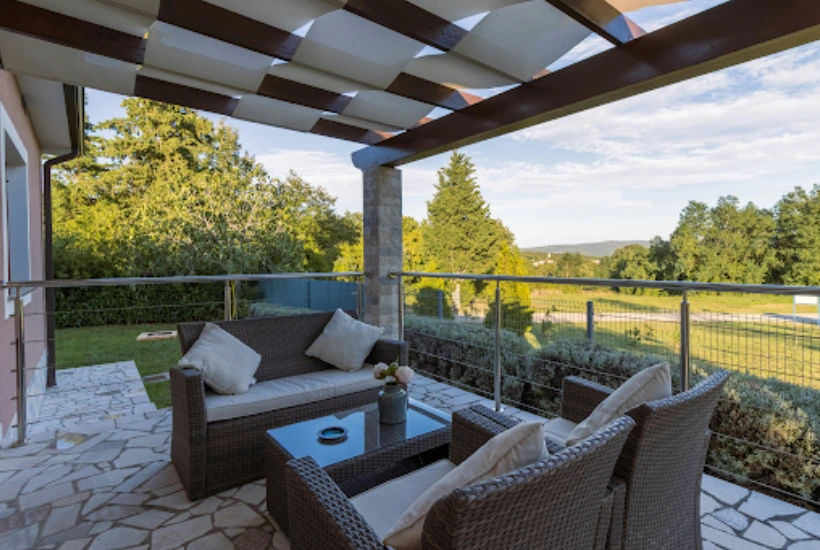
By early evening, most people have been moving since before they were ready and haven’t fully stopped since. The question of where to land — how to decompress, how to actually transition out of the day rather than just waiting for sleep — doesn’t get as much attention as it deserves.
For most of human history, the answer was outside. And the research, increasingly, suggests that instinct was correct.
What Happens to the Brain Outdoors
Spending time in nature results in mental restoration, increased positive emotions, and decreased anxiety and rumination, according to research cited by Harvard T.H. Chan School of Public Health. The mechanism is well-studied: outdoor environments offer the kind of gentle, diffuse stimulation that allows the prefrontal cortex — the part of the brain that handles focus, decision-making, and emotional regulation — to recover from the concentrated demands of the day.
Cornell University research found that it takes as few as 10 minutes in a natural setting for measurable reductions in both physical and psychological stress to occur.
Ten minutes. The barrier to accessing that benefit isn’t time — most people spend longer scrolling a phone after dinner than it takes to feel meaningfully different outside. The barrier is usually comfort: whether there’s a place to actually be outdoors that feels genuinely restful rather than transitional.
That’s where furniture enters the equation as a practical consideration.
The Ritual of Stepping Outside
Spring and summer evenings carry a particular quality that no interior can replicate. The shift in light as the afternoon softens. The sound of the neighborhood settling. The warmth that stays in the air after the sun has moved. These are the conditions under which unwinding outdoors stops being aspirational and starts being something you actually do — consistently, as a practice, rather than occasionally when the conditions are perfect.
The American Psychological Association notes that spending time in nature produces both cognitive benefits and improvements in mood and emotional wellbeing, and that even a felt connection with nature — looking out at a garden, sitting in the presence of green, hearing the birds sing, feeling the wind blow — produces measurable benefits without requiring a hike or a drive. For most people, this means the outdoor space immediately adjacent to the home: the back patio, the deck, the small courtyard between the building and the street.
What that space offers at the end of the day is a function of how well it’s set up to receive you. An outdoor area with furniture that’s merely functional — chairs that serve their basic purpose without inviting you to stay — will get used occasionally. One that’s genuinely comfortable, in the fuller sense of the word, becomes a place you go to on purpose.
What Comfortable Actually Means Outdoors
The physical qualities that make indoor furniture restful — depth, cushion support, the sense of being held rather than perched — translate directly to how long someone stays outside and how much benefit they actually derive from being there. Mayo Clinic notes that making time for nature is important for maintaining resiliency and self-care in a world that demands a great deal from us — and that the stress-reduction benefits of being outside compound with the physical experience of genuine comfort rather than tolerated discomfort.
Choosing comfortable outdoor furniture that provides real support — deep seating, cushions built for sustained contact rather than occasional use, frames that don’t shift or flex beneath you — is what makes the difference between an outdoor space that gets used as a destination and one that remains a surface. A chair or sofa that feels as inviting at 8 p.m. as it does at noon, that stays comfortable across a full evening rather than just the first twenty minutes, is the one that builds the habit of being outside rather than just the intention of it.
Materials matter here as much as design. Performance outdoor cushions engineered with quick-dry foam and UV-resistant fabrics maintain their comfort and appearance across a full season of daily use, not just occasional weekends.
Frames in teak or powder-coated aluminum stay structurally sound without the maintenance demands of materials that need seasonal attention to remain usable. The furniture that’s easiest to maintain is the furniture that gets used most consistently — because nothing interrupts the quiet ritual of stepping outside like finding that the chair needs attending to before you can sit in it.
The Space That Receives You
There’s a version of the outdoor space that’s beautiful from inside the house but doesn’t quite work as a place to actually be. The furniture is there, but the arrangement is wrong, or the seating is too firm, or the pieces feel impermanent in a way that makes the space feel like somewhere to pass through rather than arrive.
The American Heart Association notes that spending time in nature can help relieve stress and anxiety, improve mood, and boost feelings of happiness and wellbeing — benefits that require actually being outside, in a way that allows the mind to slow down rather than continuing to process. A space that genuinely receives you at the end of the day makes that possible. One that doesn’t, however appealing in photographs, leaves those benefits unrealized.
The investment in making an outdoor space truly comfortable — choosing furniture that prioritizes how it feels to be in it, not just how it looks from a distance — is modest relative to what it returns. A spring and summer spent ending the day outside, in a space that’s set up to actually hold you, amounts to something more valuable than the furniture costs. That’s not an argument for spending more. It’s an argument for spending wisely, on the pieces that make the habit possible.
Related posts:
Top Safety Checks Every Garage Door Needs for Safety
Stamped Concrete Ideas That Make Your Outdoor Space Look Custom, Not Cookie-Cutter
22+ Best Pom Pom Garland Ideas for
15+ Epic Football DIY Wall Art Ideas To Kick Up Your Decor
Space-Saving Solutions for Small Bathrooms
30+ Valentine's Day Cricut Projects to Melt Hearts With

- Why Dispensary Location Matters More Than You Think in Sarasota - October 8, 2026
- Slow-Living Weekend Build: The Sideboard I Made for Our Dining Nook - October 8, 2026
- Creative Projects for Journal Lovers Who Say They Can’t Draw - October 7, 2026
Leave a Reply