
Kitchen appliances can show warning signs long before they stop working. A refrigerator that runs constantly, a dishwasher that leaves standing water, or a washing machine producing excessive suds may have a simple underlying cause.
In Suwanee, seasonal pollen, summer humidity, water conditions, and appliance age can make certain maintenance issues more noticeable. Knowing what to watch for can help homeowners address problems before they become major repairs.
Key Takeaways
- Use the appropriate amount of detergent for your washer, load, and water conditions.
- Check accessible refrigerator coils for dust and pollen buildup.
- Inspect refrigerator door gaskets when frost or condensation appears.
- Pay attention to standing water, unusual noises, and poor cleaning in dishwashers.
- Address unusual appliance behavior before the appliance stops working completely.
1. Washing Machines That Oversud or Drain Poorly
Soft water generally requires less detergent than harder water. Using too much detergent can create excessive suds and may contribute to drainage or spinning problems.
Watch for excessive suds, longer cycles, clothes coming out unusually wet, drain errors, or difficulty during the spin cycle.
Start by reviewing the detergent and washing machine manufacturer’s instructions. If reducing excess detergent does not resolve the problem, the drain hose, filter, pump, or another component may need to be inspected.
2. Refrigerators That Run Constantly
Dust and seasonal pollen can accumulate around the accessible condenser coils of the refrigerator, restricting airflow. The refrigerator may then have to run longer to maintain its temperature.
A refrigerator that runs unusually long, struggles to maintain temperature, or becomes warmer around the outside may need attention.
If the model allows safe access to the coils, check and clean them according to the manufacturer’s instructions. If the refrigerator continues running constantly afterward, the problem could involve a fan, thermostat, door seal, refrigerant-related issue, or another component.
3. Refrigerator Frost and Condensation
Warm, humid weather can make refrigerator door-seal problems more noticeable. A worn or damaged gasket can allow warm air into the refrigerator, causing condensation and eventually frost.
Look for moisture around the door, frost in the freezer, temperature changes, or a door that does not seal firmly.
Try the paper test by closing the door over a piece of paper and gently pulling it. If the paper slides out easily, inspect the gasket for damage or gaps. If frost continues after the seal is addressed, professional diagnosis may be necessary.
When an appliance problem continues after basic troubleshooting, it is often better to have it professionally diagnosed rather than replacing parts or the appliance unnecessarily. Home owners should trust professionals with appliance repairs when a problem involves electrical components, refrigerant systems, persistent drainage issues, or symptoms that return after basic maintenance.
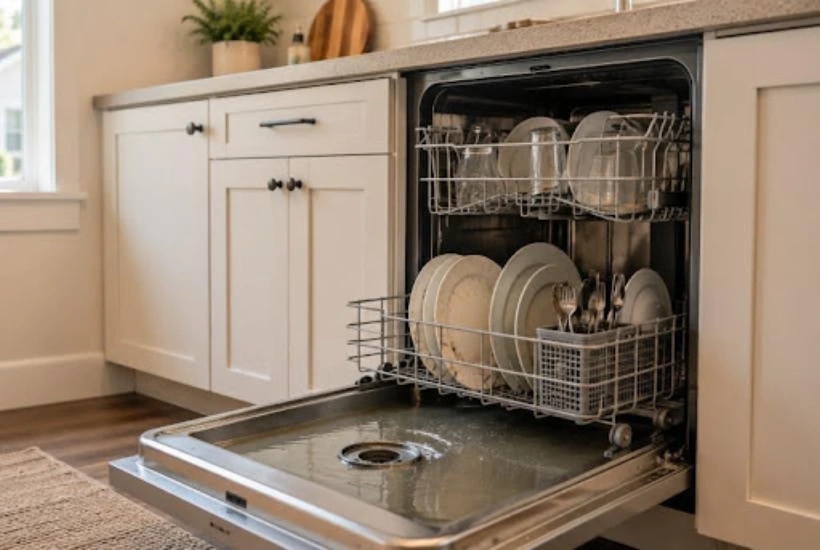
Alt text: Modern kitchen with an open dishwasher showing standing water and dishes, illustrating common dishwasher drainage and cleaning problems.
4. Dishwashers With Drain or Cleaning Problems
As dishwashers age, components such as drain pumps, inlet valves, and spray arms can wear out.
Common warning signs include:
- Standing water after a cycle
- Cloudy or gritty dishes
- Unusual humming
- Longer cycles
- Poor washing performance
- Repeated error messages
Start by checking the filter, spray arms, drain area, and detergent use, following the manufacturer’s instructions. If standing water or unusual noises continue, have the dishwasher diagnosed before deciding to replace it.
Seasonal Appliance Maintenance
Seasonal checks can help identify problems early. During spring, inspect accessible refrigerator coils for dust and pollen. Before summer, check refrigerator door gaskets and watch for frost or condensation.
Throughout the year, pay attention to changes in washing machine cycles, excessive suds, dishwasher drainage, unusual noises, and changes in refrigerator temperature.
Common Mistakes to Avoid
One common mistake is assuming that more detergent means better cleaning. Excessive detergent can cause problems, particularly in soft water.
Another is waiting until an appliance stops working completely. Longer cycles, unusual noises, standing water, frost, and temperature changes can all be early warning signs.
It is also worth identifying the actual problem before replacing an appliance. A worn gasket, clogged filter, pump, or other individual component may be repairable.
If you’re considering replacing appliances or renovating the kitchen, it’s also worth checking the surrounding plumbing, electrical system, flooring, and cabinet areas before committing to an upgrade. See what to check before a kitchen renovation or upgrade to avoid unexpected problems during the project.
When to Call an Appliance Repair Technician
Professional diagnosis may be appropriate when:
- A refrigerator continues running constantly after basic maintenance
- Frost repeatedly returns
- A washer continues having drainage or spinning problems
- A dishwasher repeatedly leaves standing water
- An appliance makes unusual noises
- Error codes continue to appear
- A problem returns after basic troubleshooting
Repair or replacement should be considered based on the appliance’s age, condition, repair cost, repair history, and expected remaining service life.
Frequently Asked Questions
How much detergent should I use with Suwanee’s soft water?
There is no universal amount. Follow the manufacturer’s instructions and consider the detergent concentration, load size, washing machine, and water conditions.
How often should I check refrigerator coils?
Checking accessible coils once or twice a year can be a reasonable starting point. Spring is a useful time to check for pollen and dust buildup, with another inspection before summer.
Is a 10-year-old dishwasher too old to repair?
Not necessarily. Age alone does not determine whether repair makes sense. Usage, maintenance, repair history, condition, and repair cost should all be considered.
Can I fix refrigerator frost myself?
Checking the door gasket is a reasonable first step. If the gasket is damaged, replacement may be possible on some models. Recurring frost can also indicate a defrost, airflow, or temperature-control problem that requires professional diagnosis.
Who can I contact for appliance repair in Suwanee?
Local homeowners can consider appliance repair providers such as Appliance EMT for refrigerator, dishwasher, and washer problems. Compare the diagnosis, repair cost, warranty, and potential replacement cost before approving a repair.
Stay Ahead of Kitchen Appliance Problems
Kitchen appliances often provide warning signs before they fail completely. In Suwanee, homeowners should pay particular attention to detergent use, refrigerator airflow and door seals, dishwasher drainage, and seasonal maintenance.
Addressing unusual symptoms early can help prevent minor problems from becoming more expensive repairs and may extend an appliance’s useful life.
Related posts:
28 Best Spice Rack & Organization Ideas For
15+ Epic DIY Treehouse Ideas That Will Blow Your Mind!
20+ Forest-Inspired Bedroom Decor Ideas
Creative Ways to Personalize Your Home with Custom Decor Projects
How to Inspect Your Garage Door After a Monsoon Storm
30+ DIY Paper Star Decorations Ideas & Tutorials In

- Easy DIY Shelving Projects for Beginners - October 6, 2026
- How Do You Know When Your Garage Door Needs Professional Repair in Houston? - October 6, 2026
- How to Make Healthy Habits Feel Less Like a Chore - October 6, 2026

Leave a Reply