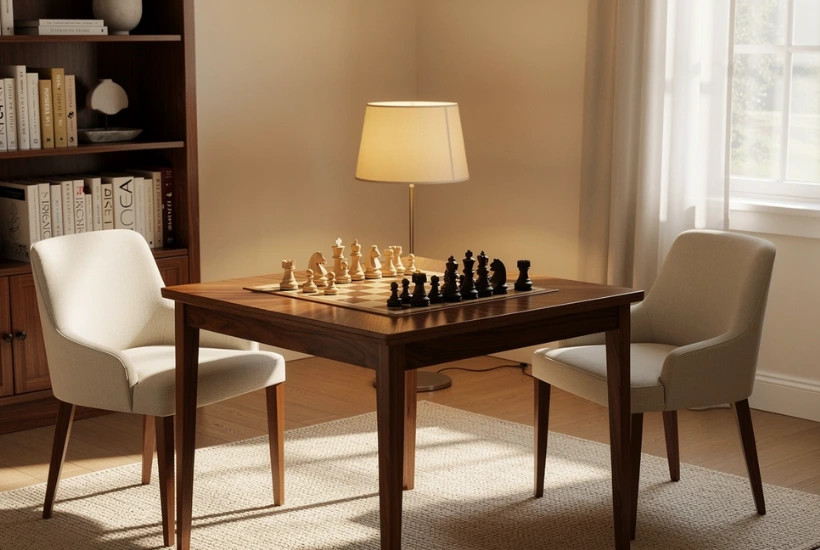
A cozy chess corner needs less floor space than most people expect. A 30-inch-deep table can comfortably support a board and two players when chairs can slide back without meeting a wall or sofa. The goal is to keep the board visible, the pieces easy to reach, and the seating comfortable enough for a full game. Whether it occupies a window ledge in a studio or one end of a living room, a home chess area works best when it feels like part of the room’s daily rhythm. Good chess room decor also leaves the playing surface clear, so the set remains both a game and a visual anchor.
A chess corner earns its place when it is ready for a game in under a minute.
| Chess-corner decision | Practical target |
|---|---|
| Tabletop footprint | About 30 to 34 inches wide for a standard board and captured pieces |
| Clearance behind chairs | 24 to 30 inches where the room allows |
| Best light source | A shaded lamp aimed at the board, plus daylight from the side |
| Everyday storage | A basket or drawer within one arm’s reach |
Choose a spot that gives your cozy chess corner room to breathe
Start by looking for underused edges of a room rather than an empty room. A table by a window offers daylight and a natural pause from screens, provided direct sun will not bleach the board or make pale pieces hard to see. In a living room, place the setup at the end of a sofa rather than in the main traffic lane. An existing reading nook can also become a chess nook with one compact table and a second chair brought in when needed.
A small-space game area needs a clear route around it. Allow roughly 24 inches behind each chair for a tight arrangement, or closer to 30 inches where people regularly walk past. If the chairs face each other, avoid pushing one player against a wall. That position makes it awkward to sit down, stand up, and view the board from a comfortable angle.
For renters, a round pedestal table or a slim square dining table is often more flexible than a built-in chess table. A dedicated table can be rewarding when chess is played several times a week, but it should still earn its footprint. Choose a piece with a stable base, a matte finish that will not reflect the lamp, and enough edge space for a clock or a mug.
To compare contemporary wooden sets with magnetic versions, visit Chess And Board. Clean-lined boards can fit a modern interior without looking like tournament equipment. Magnetic pieces are especially practical when the table must be moved, or when children and pets share the room. Their lower risk of accidental displacement can make a visible board easier to live with.
Plan the chess table and seating around real play
A board should never feel crowded by the furniture beneath it. One custom setup uses 55-millimeter squares, a generous size that gives the pieces breathing room and makes the position easier to read across the table. Its table measures 34 inches wide and 30 inches from player to player. That leaves about 8 inches of spare tabletop at each side of the board and more than 6 inches between the board and each player.
Those figures are useful reference points, rather than fixed rules. A compact board with 40- to 45-millimeter squares can suit a side table, while 50- to 55-millimeter squares usually need a wider top. If the board is displayed permanently, leave a small zone for captured pieces. Keeping them off the floor matters during a close endgame.
Table height has a greater effect on comfort than many chess corner ideas imply. Standard dining height, near 29 inches, pairs well with chairs that have supportive backs and seats around 17 to 19 inches high. In one carefully planned arrangement, both the table and adjacent cabinet stand 29 inches high, while 26 inches of legroom remains beneath the first support. Those proportions prevent knees from striking a crossbar.
Choose comfortable seating with a firm seat and arms that can tuck under the table. Two matching upholstered dining chairs create a polished look. For a lower-cost approach, combine a simple wood chair with a thin lumbar cushion, then keep a folding chair in a closet for guests. Avoid deep lounge chairs, which make it tiring to lean forward for a move.
Choose a chess set that complements the furniture
The board deserves the visual priority in a home chess area. A warm walnut board settles easily beside oak, leather, brass, and muted green upholstery. Darker woods such as ebony or stained sheesham create stronger contrast on a pale table, but need soft, even lighting so the black squares do not visually disappear. Light boxwood pieces bring clarity to darker boards and remain easy to identify in evening play.
Piece shape matters as much as wood tone. Traditional Staunton pieces have a practical advantage because the king, queen, bishop, and knight read clearly from across the board. More sculptural pieces can work as a decorative chess set, yet they should remain distinct enough for casual players to recognize without stopping the game. Weighted bases also reduce knocks on a small table.
A wooden chess set works best as decor when its board echoes one or two materials already present in the room. Pair a walnut board with a walnut frame or side table, for example, rather than adding several unrelated wood finishes. Keep the board centered and remove remote controls, magazines, and candles before play. The empty border around the pieces makes the whole arrangement calmer.
When comparing woods, board sizes, folding designs, and sets with built-in storage, browse wooden chess sets in classic Staunton, travel-ready, and display-focused formats. A folding board suits an apartment where the table serves several roles. A full-size board with a fitted case makes more sense when the chess nook can stay assembled.
Layer light, storage, and restrained chess room decor
Lighting should reveal the board without turning it into a stage. Put a shaded table lamp or swing-arm floor lamp beside the board, with the bulb positioned above and slightly behind one player. A warm bulb around 2,700 Kelvin usually flatters wood and prevents the hard blue cast of cooler lighting. Avoid a bare overhead fixture, which creates glare on varnished squares and throws shadows from tall kings and queens.
A small rug can define the zone without making a multipurpose room feel crowded. In an affordable setup, use a flatweave rug that extends a few inches beyond the chair legs. For a more tailored result, choose a low-pile wool rug in rust, olive, or charcoal, then repeat one color in a cushion or lampshade. The texture should frame the chess table, not compete with the board’s pattern.
Storage is what turns a styled corner into an active one. A lidded basket can hold a clock, score sheets, pencils, and a cleaning cloth while keeping visual clutter out of sight. A short nearby bookshelf works well for chess books, but leave its top mostly empty. One framed print or a small plant is enough.
A movable side cabinet is especially useful in a narrow room. It can align with the table to create one continuous work surface, then roll to either side for a left-handed player or for serving drinks. In a compact apartment, that flexibility is often more valuable than a large fixed chess cabinet.
Make the corner part of ordinary life. Leave the board set up for a ten-minute game after dinner, or reserve a weekend hour for a longer match with a friend. Rotate the opening position only after a game has finished, and return the pieces to their starting squares. A chess nook that always looks ready is far more likely to be used than one that must be rebuilt each time.
Related posts:
Smart Home Improvements That Boost Comfort and Energy Efficiency
The Ultimate Guide to Fall Home Maintenance Checklist
Roof Refresh Tips That Enhance Style and Functionality
23+ Creative Patterned Dresser Ideas for
Creating Your Ultimate Wardrobe
How to Design a Timber Frame Interior That Feels Modern: 5 Fixes for Too Much Wood

- Creative Projects for Journal Lovers Who Say They Can’t Draw - October 7, 2026
- How to Create a Cozy Chess Corner You’ll Actually Use - October 7, 2026
- Easy DIY Shelving Projects for Beginners - October 6, 2026

Leave a Reply