Beyond Beauty: Red Light and Infrared Light Therapy for At-Home Wellness
At-home wellness has been an unassuming phenomenon far greater than the face mask and bubble baths. People are creating deliberate habits for recovery, sleep and skin health and tech is becoming an integral part of that. One area that has truly gone from a professional to a home application is light therapy, and resources like Red Light Therapy Digest now make it easier to find credible, fact-based information on it.
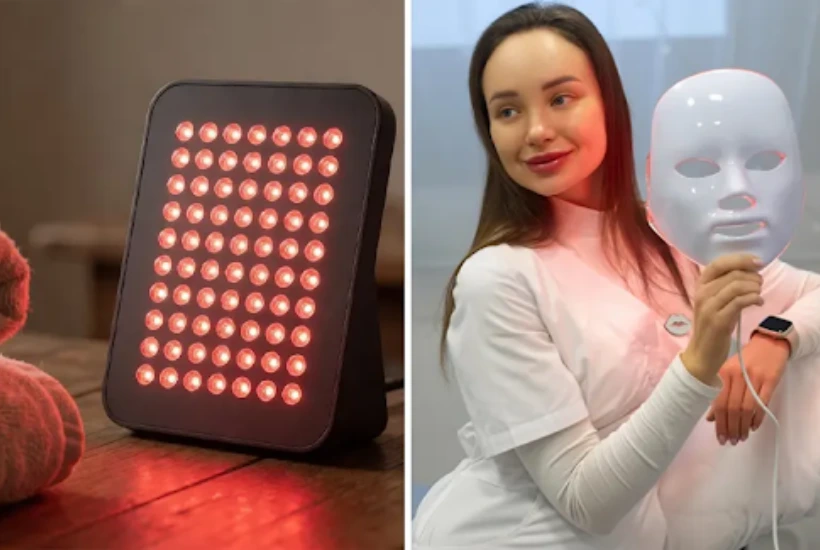
The choice of devices currently available is quite extensive. In addition to full-body panels, handheld devices for the spot treatment, and wraps for joints and muscles, LED face masks are also available. Each has different wavelengths, intended uses, and features.
For anyone curious about where to start, browsing infrared light therapy devices for at-home wellness gives a useful overview before committing to anything specific.
What Are Red Light and Infrared Light Therapy?
Red light therapy involves wavelengths between 630–660 nanometers that interact with the tissue at the cellular level. It’s non-invasive, free of UV light, and doesn’t generate significant heat. Near-infrared light is beyond the sensitivity of the human eye, typically in the range of 810 to 850 nanometer wavelengths, and has greater depth of penetration. This makes it more relevant for muscle, joint, and deeper body applications.
There are many devices that integrate both into a single unit for added flexibility. However, the wavelength, power output, treated area, and instructions vary greatly from product to product. A LED face mask and a full-body red light therapy panel are fundamentally different tools, even if both technically fall under the “red light therapy” label.
Beyond Skincare: Why People Explore Light Therapy for Wellness
Skincare gets most of the attention, but it’s far from the only reason people use these devices.
Muscle recovery is one of the more researched areas. Some studies suggest photobiomodulation may support certain aspects of post-exercise recovery, including soreness reduction and tissue repair. Results vary across studies depending on device, wavelength, and protocol, but there’s enough research interest to explain why active people have started including it in their routines.
Everyday aches and discomfort is another area gaining traction. Research into light therapy for joint and muscle applications has produced mixed but genuinely promising results in several controlled trials. It’s not a replacement for professional assessment, and anything persistent should be properly evaluated. But for the low-grade physical tiredness that comes with an active lifestyle, many people find it a practical addition.
Sleep and relaxation are another reason people try light therapy at home. Some early research has looked at whether red light may support sleep quality, though the evidence is still limited. For others, a short session can simply become part of an evening routine that helps them slow down and unwind. Results vary, and red light therapy shouldn’t be treated as a proven solution for sleep problems.
General wellness is probably the most honest framing for a lot of home users. A 15-minute evening session that requires nothing from you is appealing in its own right, whether the benefit is physiological, a reliable wind-down ritual, or both.
LED Light Therapy Masks and At-Home Skincare
LED face masks are the most recognizable entry point for most people, and for good reason. They’re hands-free, practical, and slot naturally into a skincare routine that’s already happening.
Red light modes are most commonly marketed for skin appearance, fine lines, texture, and tone, based on research into how red wavelengths may support collagen production over time. Many masks also include blue light for acne, amber for brightening, and sometimes near-infrared for deeper effects.
When comparing options, fit, comfort, light settings, session length, and eye-safety guidance are all worth checking. Not every mask is backed by the same level of evidence. Before buying, spending time comparing light therapy masks for at-home skincare helps cut through the marketing and focus on what each device actually delivers.
How to Choose a Light Therapy Device for Your Needs
The right device depends almost entirely on what you want to use it for.
For Skincare
The most convenient form is an LED mask for facial application. Check for one that has the correct wavelengths for your skin issues and has instructions on how many minutes you should spend during each session.
For Larger Body Areas
A panel or mat offers the coverage that a handheld or mask simply can’t replicate. Useful for the back, legs, or shoulders after training.
For Targeted Treatment
A large panel may be better suited for a more general purpose application, while a smaller sized wearable red light therapy wraps, belts or handheld units might be more effective for targeted applications.
For Everyday Convenience
Take into account session duration, ease of setup, controls, storage and cleaning. A device used consistently three times a week will always outperform a more powerful one that rarely gets touched.
There is one thing that can be clearly stated: increased number of LEDs, increased number of wavelengths, and higher claimed power do not guarantee higher performance. It is important that the device is used for the purpose it is designed for, with appropriate wavelengths, irradiance, treatment distance, and session duration to support the intended results.
Making Light Therapy Part of a Realistic Routine
Keep it simple. It can be used as a skin care step between cleansing and serums. For recovery, a session post-workout or before bed makes the most sense. Don’t assume that longer and more frequent sessions are better – stick to the manufacturer’s guidelines.
Sleep, nutrition, movement, and consistent skincare still do the heaviest lifting in any wellness routine. Light therapy works best as a sensible addition to those habits, not a shortcut around them.
Safety and Realistic Expectations
Follow the device instructions, use eye protection where advised, and don’t assume longer sessions speed up results. Anyone on photosensitising medication should check with a doctor first.
Persistent pain or unexplained symptoms need professional assessment, not a light device. Results vary, and some marketed benefits have stronger research backing than others.
Final Thoughts
Light therapy has moved well past a niche beauty trend. Whether the draw is skin health, post-exercise recovery, or just a reliable way to wind down, there’s likely a device format that fits your life.
Don’t pick based on the hype, but rather on what it does, what it is said to do and what you think you can expect it to do. The tools that are used regularly are the ones that are worth having.
Related posts:
5 Baby Girl Clothing Essentials for a Newborn's First Wardrobe
Creating a Family Emergency Plan Without Adding Stress
How to Make Healthy Habits Feel Less Like a Chore
5 Ways to Reduce No-Shows for Kids’ Trial Classes
How to Protect Your Inheritance During a Probate Dispute
How to Reduce the Mental Load of Managing Your Child’s School Life

- Why an Electric Fireplace Can Be a Useful Addition to a Guest Room - October 27, 2026
- The Benefits of Taking a Thoughtful Approach to Dog Food - October 27, 2026
- Top 3 Coffee Beans with Rich Flavors for Espresso Machines - October 27, 2026

Leave a Reply