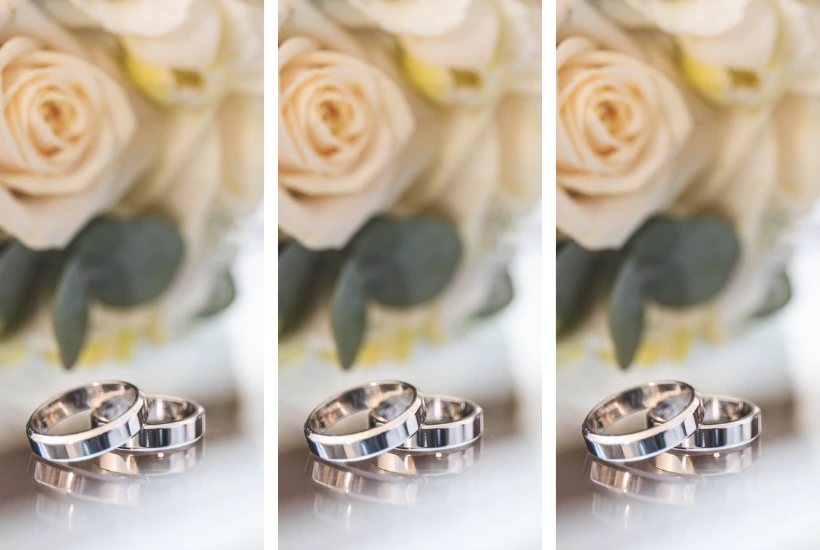
For a lot of men, the wedding band is the first ring they’ve ever owned. It gets picked in one shopping trip, often after the engagement ring has taken all the attention, and then it’s worn every day for decades.
Choose it the way you’d choose a good tool: for the job it has to do. A band that suits a desk job can be a nuisance at the lathe, and a ring that looks sharp in the shop window can feel too wide by the end of the first week.
Start with what your hands do all day
Think about an ordinary Tuesday before you think about the wedding photos. Someone who types all day can wear almost anything. If you sand, carve, lift or fix things, your ring will take knocks from wood, metal and stone, so look for a band that holds up or is easy to refinish.
Woodworkers, mechanics and anyone who works near spinning tools are usually told to take rings off for that work anyway. If that’s you, the band only has to cope with the rest of the day, and a precious metal you can polish back up makes more sense than a hard alternative metal you can’t resize.
Width and hand size
Most men’s bands fall somewhere between about 4 and 8 millimeters wide. Wider bands look in proportion on bigger hands and longer fingers, and narrower ones suit slim fingers or men who don’t want to notice the ring at all. Wider bands also fit more snugly, so they often need to be a touch larger than a thin band on the same finger.
Width is hard to judge from numbers, so it helps to see several bands side by side, on a screen or on your own hand. Browsing Best Brilliance’s modern men’s wedding bands in plain metal, classic and channel-set styles gives you a feel for how a band reads before you try one on. Those bands come in 14K gold, 18K gold and platinum. If the wedding is only weeks away, the quick ship filter on the Best Brilliance site narrows the list to bands that go out fast.
Metals and how each one wears
Every metal ages a little differently. Gold and platinum scratch and can be polished back to new, while the hard alternative metals resist scratches but are harder or impossible to adjust. Tungsten carbide can’t be sized at all, and stainless steel is stiff enough to make sizing a challenge, according to GIA’s rundown of alternative jewelry metals for men.
| Metal | How it wears | Weight on the hand | Resizing |
| 14K gold | Scratches but polishes back; a little harder than 18K | Medium | Yes |
| 18K gold | Richer color, softer, shows wear sooner | Medium to heavy | Yes |
| Platinum | Scratches into a soft satin patina, polishes back | Heavy | Yes |
| Titanium | Hard, scratch resistant and very light | Very light | Difficult |
| Tungsten carbide | Extremely scratch resistant but brittle, can crack under a hard knock | Heavy | No |
| Stainless steel | Hard and scratch resistant, stiff to work | Medium | Difficult |
Fourteen karat gold is 58.3 percent gold and 18 karat is 75 percent, so 14K carries more of the harder alloy metals. White gold is usually plated with rhodium for its bright white color, and that plating wears thin over the years and gets redone at a jeweler.
Comfort fit or standard fit
A standard fit band is flat on the inside. A comfort fit band is slightly rounded on the inside, so it slides over the knuckle more easily and sits a little looser on the finger. If you’ve never worn a ring, a comfort fit usually feels less strange in the first weeks, and the difference shows most on wider bands.
Polished, matte or brushed
A polished finish shines like a mirror and shows every scratch from day one. A matte or brushed finish hides small marks better, though it gradually polishes itself in the spots that rub most, and a jeweler can refresh the texture when that happens. If your band will spend time around a workbench, a brushed finish is the most forgiving choice.
Plain metal, diamonds, or a match for your partner’s ring
Plain bands are the classic, and they’re the easiest to resize and refinish. A diamond-set band, usually with stones sunk into a channel so nothing sticks up, adds a little sparkle without catching on gloves or pockets.
Matching rings don’t need to be identical. Lots of couples pick the same metal and let each ring keep its own shape, or echo one detail, such as a milgrain edge or a brushed finish, on both. A good test is to hold the two rings together and see whether they look like a pair at arm’s length.
Sizing it right, then engraving it
Fingers shrink in the cold and swell in the heat, and GIA’s ring size guide recommends having a jeweler measure with proper finger gauges instead of string or paper, which can stretch. Get measured more than once, at different times of day, and tell the jeweler how wide your band will be.
Engraving goes on the inside of the band: a date, initials, coordinates, or a private joke only the two of you will get. Keep it short on a narrow band, and ask whether it can be done on your chosen metal, since the hardest alternative metals usually need laser engraving.
Final thoughts
Pick the metal for your hands, the width for your fingers and the finish for how you treat things, and the rest is taste. Book your sizing appointment for late afternoon on a normal day, when your hands are at their usual size, and wear a sample band of your chosen width for a few minutes before you decide.
FAQ
What is the most durable metal for a men’s wedding band?
For scratch resistance, tungsten carbide and titanium lead. For a band that can be resized and repaired for decades, platinum and 14K gold are the safer long-term bet.
How wide should a men’s wedding band be?
Most men wear between about 4 and 8 millimeters. Try a few widths on, because the same number looks different on different hands.
Should a men’s band match the engagement ring?
It doesn’t have to. Matching the metal is the most common way to tie the two rings together.
Can a tungsten ring be resized?
No. Tungsten carbide can’t be sized, so the band has to be replaced if the fit changes.
Related posts:
Easy Daily Occupational Therapy Activities Parents Can Practice at Home
15 Timeless Mid-Century Modern Decor Ideas and Tips
DIY Garage Fixes That Improve Function Without Major Work
How to Prove Negligence in a Slip and Fall Case
What to Check in Your Kitchen Before Any Renovation or Upgrade
Remodeling Small Kitchens: Creative Ideas to Make the Most of Limited Space

- Metal or Solid Wood? Choosing Materials for Custom Furniture - October 30, 2026
- Thanksgiving Hosting Hack: Where to Keep Extra Chairs, Tables, and Coolers - October 30, 2026
- How to choose a men’s wedding band: metal, width, fit and finish - October 30, 2026
Leave a Reply