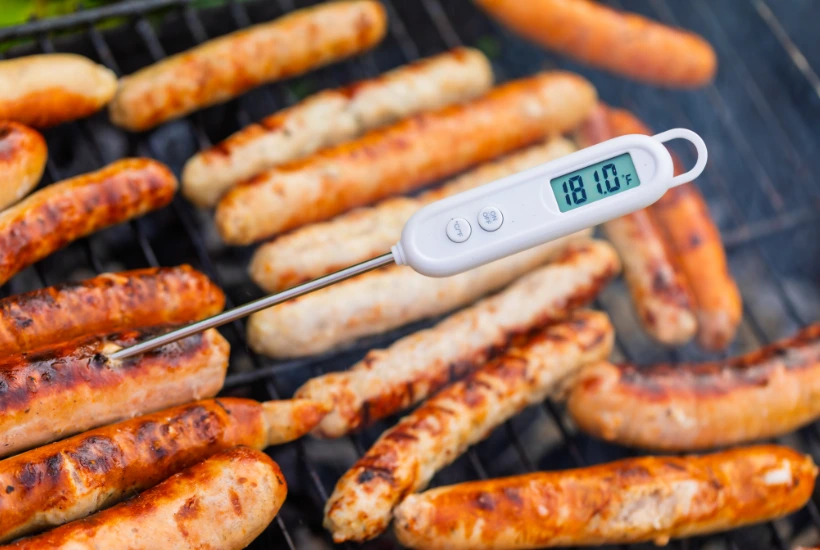
yIt used to be easy to choose between a wired and wireless meat thermometer: you just had to decide which was more convenient. But that gap has gotten a lot smaller as kitchen technology has improved. You know the struggle is real if you’ve ever been stuck to your oven by a braided cable or lost your connection as soon as you stepped outside to get a drink.
The right tool for you depends on how you like to cook, how much you can stand cables, and how much you want to be able to move around while the grill is on.
The Wired Meat Thermometer: The Old Standby
For years, wired thermometers have been the best choice, especially for serious indoor cooks and pitmasters. A heat-resistant wire connects the probe to a base station in these units. The base usually sits on your counter or another magnetic surface and shows the temperature in real time.
Why people still like them:
- No Latency: You always have a physical connection. You don’t have to worry about Bluetooth pairing or signals dropping through thick walls of smoke.
- Battery Life: The probes don’t need batteries because the base station does all the work.
- Price: Quality wired units are generally cheaper upfront than premium wireless ones.
The Bad Part:
The “cable juggle” is the most annoying part. Wires get tangled in drawers, they can kink and break over time, and they make it almost impossible to use a rotisserie. And if you don’t have a “remote” base station, you have to be within a few feet of the appliance to read the temperature.
The Wireless Meat Thermometer: Complete Freedom
Wireless thermometers, such as the Typhur wireless thermometer, have changed everything by getting rid of the physical connection between the probe and the display. The probe itself is where all of the technology is.
The Advantages of Going Wireless:
- Ready for the rotisserie: You can spin a chicken or a roast without any wires getting in the way.
- Long-Range Monitoring: With today’s wireless technology, you can keep an eye on your cook from the couch or even while you’re out running an errand, depending on the range.
- Clean Workspace: There are no cords hanging over the counter or stuck in the oven door seal.
A Deep Dive into the Typhur Sync Gold Experience
The Typhur stands out in the top tier of wireless tech because it fixes the two biggest problems people have with wireless: range and accuracy.
It has two probes connected to a base station with a built-in Wi-Fi bridge. This means you can check on your brisket from anywhere in the house, not just within the short range of regular Bluetooth.
The Sync Gold’s main features are:
- Two sensors: Each probe has more than one sensor to keep track of both the meat’s internal temperature and the pit or oven’s outside temperature.
- High-Heat Resistance: The ceramic handle can handle the heat of an open flame or a grill that is very hot.
- The Base Station: Many competitors only use a phone app, but the Sync Gold has a big, clear display on the charging base so you can see the numbers right away without having to unlock your phone.
Which of the options is best for your kitchen?
Let’s look at which device wins in different cooking situations to help you make your choice.
For the Baker and Roaster Inside
If you only cook a turkey or roast on Sundays, a wired thermometer is fine. The wire can easily slip through the oven door seal without losing heat.
For backyard smoking
Wireless options work best. You can monitor a pork shoulder for 12 hours from your phone while handling other tasks, making long cooks much easier.
For the person who loves rotisserie
You can’t use a wired thermometer with a rotisserie. If you want to pull that spinning roast at the right temperature, you really need a Typhur wireless thermometer.
Care and Longevity
Many bloggers overlook how these gadgets perform long-term and hold up with regular use.
Wired probes often fail at the “neck,” where the wire connects, especially if water gets in during cleaning. You need to be very careful to only clean the metal part.
Wireless probes are usually tougher and can handle water better. For example, the Sync Gold probes are easy to clean, but you have to remember to keep the “charging contact” on the end of the probe clean so it can charge in the base station.
Making the Last Decision
Still unsure? Try asking yourself these three questions:
Do I hate having too much stuff? If you can’t stand cables on your counter, go wireless.
How far do I need to go? A wired unit is great if you stay in the kitchen while you cook. The Tybur wireless thermometer is the best choice if you like to spend time in the yard or living room.
Wired is cheaper, but wireless is worth it for the ease of use.
The Decision
Wired thermometers are great for people who want a simple, low-cost way to keep an eye on the oven without having to do anything. But for the modern cook who wants to be able to use the grill, the air fryer, and the rotisserie in different ways, a wireless system is hard to beat.
The Typhur wireless thermometer (Sync Gold) is the best example of this kind of technology. It has the range and flexibility of a premium wireless device, but it is as reliable as a wired connection. It’s about making sure that every steak, bird, or roast comes out exactly how you want it, without having to guess.
Related posts:
20 Cinco de Mayo Tacos to Spice Up Your Fiesta
Savor the Flavor: 20+ Delicious Pork Keto Recipes
16 Best Homemade Pancake Recipes For A Delicious Breakfast
35+ Christmas Fudge Recipes to Make Your Holiday Sweeter
30+ Mediterranean Christmas Recipes To Unleash Festive Flavors
30+ Irresistible Savory Pumpkin Dish Recipes This Fall

- Best house cleaning services in Phoenix - October 23, 2026
- 12 Best Gifts for Plant Lovers (Including One They Can’t Overwater) - October 23, 2026
- Creating a Family Emergency Plan Without Adding Stress - October 22, 2026

Leave a Reply