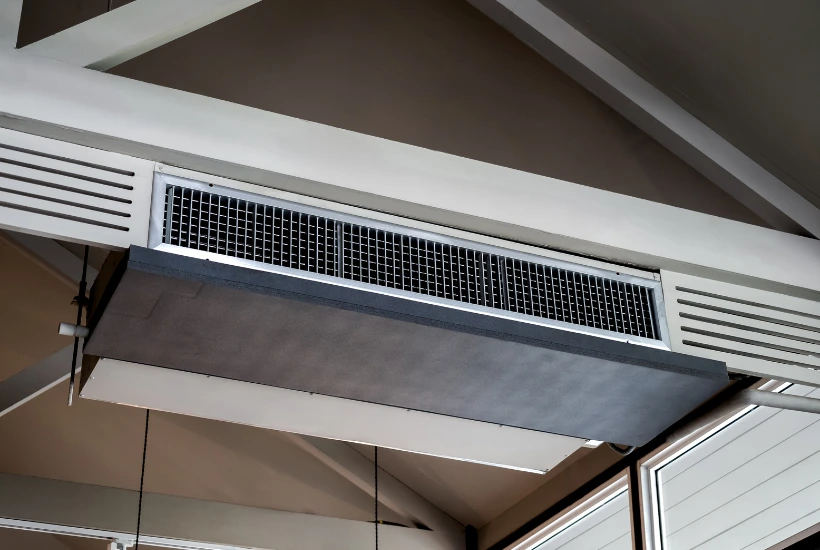
Ventilation has moved from a background mechanical consideration to a central part of how multifamily and hospitality properties are designed, renovated, and operated. Apartment owners, hotel operators, developers, and facility managers increasingly recognize that indoor air quality affects far more than occupant comfort.
Moisture management, odor control, energy consumption, acoustic performance, and long-term building durability are all tied to how effectively air moves through enclosed spaces. Bathrooms, kitchens, corridors, laundry rooms, fitness areas, and other shared spaces can generate significant humidity and airborne contaminants during normal daily use.
When those conditions are not managed consistently, they can contribute to lingering odors, condensation, premature material deterioration, and complaints from residents or guests. Panasonic ventilation solutions are therefore relevant not simply as individual fans, but as components within a broader strategy for maintaining healthier and more predictable indoor environments.
The challenge becomes more complicated in apartments and hotels because a single property may contain dozens or hundreds of enclosed rooms operating under very different conditions. A residential bathroom may experience short bursts of intense humidity, while a hotel bathroom can cycle through repeated periods of use as occupancy changes.
Shared laundry facilities may produce sustained moisture, and fitness centers can experience elevated heat, humidity, and odor levels during peak hours. Mechanical systems must respond to these conditions without creating excessive noise or consuming unnecessary electricity. They also need to work reliably even when occupants have little interest in manually controlling ventilation equipment. For building owners, this combination of performance, automation, efficiency, and reliability makes ventilation equipment selection an operational decision as much as an engineering one.
The economics are also becoming harder to ignore. A poorly ventilated property can generate maintenance issues that accumulate slowly before appearing as expensive repairs, including damaged finishes, persistent moisture problems, and corrosion around fixtures or mechanical components.
Conversely, simply installing oversized exhaust fans is not necessarily an effective solution because excessive airflow can create pressure imbalances and waste conditioned air. The objective is controlled ventilation that matches the actual requirements of the space.
Panasonic’s approach to residential and light-commercial ventilation has generally emphasized efficient airflow, quiet operation, flexible installation, and controls that can help ventilation respond more intelligently to occupancy or moisture. Those characteristics can be particularly valuable in properties where hundreds of small operating decisions ultimately determine annual maintenance and energy costs.
Matching Panasonic Ventilation to Multifamily Properties
Apartment buildings present a distinctive ventilation problem because private living spaces are packed closely together while sharing walls, floors, ceilings, shafts, and common areas. Bathrooms are among the most important spaces to address because showers can rapidly increase relative humidity and place moisture stress on ceilings, paint, cabinetry, and surrounding construction.
An effective exhaust fan removes humid air before it migrates deeper into the unit or condenses on cooler surfaces. Quiet performance is also important because residents are far more likely to tolerate, and consistently use, a ventilation system that does not dominate the room acoustically.
Panasonic ventilation fans are often considered for these applications because the manufacturer’s product philosophy has long focused on balancing airflow with low operating noise. In a multifamily environment, that balance can improve both occupant experience and the likelihood that ventilation operates as intended.
Once a project team establishes the required airflow, sound levels, duct configuration, and control strategy, the next challenge is identifying equipment that meets those specifications and can be sourced consistently across the project. This is especially important in multifamily work, where contractors may be purchasing ventilation products for dozens of units and need access to compatible electrical components.
Established suppliers can simplify procurement by bringing ventilation equipment together with broader electrical products required during renovations and new construction. BuyRite Electric, a source for lighting, electrical supplies, and tools, gives contractors, property managers, and homeowners access to products suited to these projects. Its selection includes Panasonic ventilation fans, making it easier to review suitable models once performance requirements are defined. Final purchasing decisions should still be guided by airflow needs, duct conditions, room use, controls, and building requirements.
Multifamily projects also benefit from standardization, particularly when dozens of similar bathrooms or utility spaces require comparable equipment. Using a consistent ventilation platform can reduce the number of replacement parts, installation methods, and maintenance procedures that facility teams must manage.
Technicians become familiar with mounting requirements, duct connections, control arrangements, and troubleshooting patterns across the property. Standardization can also make future renovations easier because purchasing teams have clearer specifications when units need replacement. Panasonic ventilation equipment can fit this model when project designers identify suitable configurations and apply them consistently across appropriate room types. For owners managing a portfolio of apartment buildings, that operational simplicity can become nearly as valuable as the performance of the fan itself.
Hotel Ventilation Requires Quiet, Continuous Reliability
Hotels place unusual demands on ventilation because guest expectations are high while opportunities for maintenance are limited. A bathroom exhaust fan may seem like a minor amenity until a guest encounters excessive humidity, a noisy motor, or an unpleasant odor that remains long after the bathroom has been used. In a hospitality setting, those small mechanical shortcomings can influence perceptions of cleanliness and overall room quality.
Hotel operators therefore need ventilation equipment that performs consistently without drawing attention to itself. Quiet operation is particularly important because mechanical noise can disrupt sleep, conversations, or the sense of privacy expected in a guest room. A ventilation system that moves air efficiently while remaining acoustically unobtrusive supports the larger hospitality goal of making building systems nearly invisible to the guest.
Reliability becomes equally important when hundreds of rooms are involved. A fan failure in a private home may affect one household, but repeated failures across a hotel can create a rolling maintenance burden that consumes labor and complicates room availability. Engineering teams must identify failed units, obtain replacement equipment, coordinate room access, and complete repairs between guest stays whenever possible.
Equipment that is designed for durable operation can therefore reduce disruption beyond the direct cost of the fan itself. Panasonic ventilation systems are frequently associated with efficient motor technology and engineering intended to support consistent airflow under real-world operating conditions. For hotel operators, the potential benefit lies in reducing the frequency with which a simple ventilation component becomes a guest-service problem.
Hotels also have to account for variations among rooms that appear similar on architectural plans. Duct lengths may differ, elbows can create additional resistance, and renovations can change airflow characteristics over time. A fan must therefore be selected according to the actual static pressure and airflow conditions expected in the installation rather than solely according to room dimensions. This is especially important in multistory buildings where exhaust pathways may be more complex than those found in detached residential construction.
Designers should evaluate duct size, termination points, backdraft protection, makeup air, and interactions with other mechanical systems. Panasonic ventilation options can form part of that design, but proper system engineering remains essential. Even a well-built fan cannot compensate for an exhaust path that is fundamentally undersized, obstructed, or poorly configured.
Shared Bathrooms, Laundry Rooms, and Fitness Areas Need Different Strategies
Shared facilities require a different ventilation mindset because usage patterns can be far more intense than those of individual apartments or hotel rooms. A common restroom may experience intermittent traffic throughout the day, while a laundry room can generate heat and moisture for hours at a time.
Fitness rooms add another combination of heat, humidity, odors, and high occupant density. These spaces should not automatically receive the same exhaust strategy simply because they are located within the same building. Ventilation rates, operating schedules, controls, and makeup-air requirements should correspond to each room’s actual function.
Panasonic ventilation equipment can be incorporated into these environments when its airflow range and application characteristics align with the design requirements established for the space.
Laundry areas deserve particular attention because moisture problems can develop gradually and may remain unnoticed until finishes or surrounding spaces begin showing damage. Washers, utility sinks, and damp clothing can increase indoor humidity, while clothes dryers create separate exhaust requirements that should not be confused with general room ventilation.
A dedicated room ventilation strategy can help remove background heat and humidity that remains after individual appliances operate. In multifamily properties, the problem may be amplified by repeated use throughout the day as different residents cycle through the facility. Sensors, timers, or building controls can help ventilation respond to occupancy and moisture rather than relying entirely on users to activate a switch. The result can be more consistent performance without requiring the fan to run unnecessarily at full output around the clock.
Fitness centers and shared restrooms raise a different set of concerns because occupant density and odors can change rapidly. A lightly used fitness room in the middle of the afternoon may need considerably less ventilation than the same room during a busy evening period. Common restrooms can experience similarly uneven demand as residents, employees, visitors, or hotel guests move through the building.
This makes control strategy particularly important, especially when building owners are trying to balance air quality with energy consumption. Occupancy-responsive controls and appropriately designed ventilation schedules can help equipment operate when conditions warrant it. Panasonic fans and related controls can support parts of this approach, although larger shared facilities may also require integration with centralized mechanical ventilation systems rather than relying exclusively on local exhaust fans.
Moisture Control Is About Protecting the Building
One of the most important functions of ventilation in apartments and hotels is controlling moisture before it becomes a construction problem. Warm, humid air from showers can condense on colder surfaces, particularly during winter or in heavily air-conditioned buildings. Repeated condensation can affect paint, drywall, grout, sealants, cabinetry, and other finishes that were never intended to remain damp for long periods.
Moisture can also migrate into concealed cavities where problems are more difficult to detect. Effective exhaust ventilation reduces the amount of water vapor available to condense and helps rooms return to normal humidity conditions after use. For owners, that makes ventilation part of the building-envelope protection strategy rather than merely a comfort feature.
The speed at which humid air is removed matters, but raw airflow is only one part of the equation. Fan performance can be reduced by long duct runs, restrictive fittings, dirty grilles, undersized ducts, or poorly designed exterior terminations. A unit advertised for a particular airflow level may deliver less air after these system losses are taken into account.
This is why designers and installers should consider pressure conditions as part of fan selection rather than relying exclusively on nominal ratings. Panasonic has developed ventilation products intended to maintain practical airflow across common installation conditions, which can be useful when duct layouts are not perfectly straightforward. Still, field conditions should be evaluated carefully because actual system performance depends on the complete exhaust path.
Controls can further improve moisture management by keeping ventilation active after a user leaves the room. Many occupants switch off bathroom fans at the same time they turn off the lights, even though substantial moisture may remain in the air after a shower. A timer can extend operation for a predetermined period, while a humidity-responsive control can react to changing room conditions. These approaches reduce reliance on individual behavior, which is especially useful in rental housing and hotels where building managers cannot train every occupant.
Automated ventilation can also help avoid excessive runtime when the space no longer requires additional exhaust. The strongest moisture-control strategy combines appropriate fan capacity, sound duct design, effective controls, and regular maintenance rather than relying on any single component.
Energy Efficiency Matters Across Hundreds of Rooms
Energy consumption that appears insignificant at the room level can become meaningful when multiplied across an entire property. A hotel with several hundred guestrooms or an apartment complex with hundreds of bathrooms may have a substantial number of ventilation fans installed throughout the building. If those fans operate for long periods, differences in motor efficiency can accumulate over thousands of operating hours each year.
Building owners therefore have an incentive to evaluate electrical consumption alongside airflow and acoustic ratings. Panasonic has emphasized efficient motor technology within many of its ventilation products, which aligns with the broader industry shift toward lower-energy building systems. The financial significance becomes greater as portfolio size, operating hours, and electricity costs increase.
Ventilation efficiency, however, should not be measured solely by the wattage consumed by the fan. Every cubic foot of conditioned indoor air exhausted from a building may eventually need to be replaced by outside air and heated, cooled, or dehumidified. Excessive ventilation can therefore increase loads on heating and air-conditioning equipment even when the exhaust fan itself is efficient.
This is one reason demand-responsive control strategies can be valuable in bathrooms and common areas with variable occupancy. Fans can operate when moisture or occupancy conditions require ventilation and reduce operation when demand declines. Proper sizing also helps avoid the common mistake of treating more airflow as automatically better.
Energy-conscious building design may also combine local exhaust with broader fresh-air strategies. Depending on the property, climate, code requirements, and mechanical design, that can include dedicated outdoor-air systems, balanced ventilation, or energy-recovery equipment. Local Panasonic exhaust fans may handle specific moisture or odor sources while centralized systems manage whole-building air exchange.
The precise arrangement will vary significantly between a small apartment conversion and a large full-service hotel. Designers should therefore evaluate ventilation as an interconnected system rather than a collection of independent fans. Efficiency gains are strongest when airflow, controls, heating and cooling, building pressure, and occupancy schedules are considered together.
Acoustic Performance Can Shape Occupant Satisfaction
Noise is one of the most underestimated variables in ventilation design. A fan can technically provide adequate airflow and still be a poor choice if occupants find the sound distracting enough to avoid using it. In apartments, excessive bathroom fan noise can travel into bedrooms or neighboring living spaces, particularly during nighttime use.
In hotels, even modest mechanical noise can become more noticeable because guestrooms are intentionally designed to provide a quiet environment. Shared facilities also benefit from controlled sound levels because constant fan noise can make restrooms, lounges, and fitness areas feel more institutional.
Panasonic’s reputation in ventilation has been strongly associated with efforts to deliver airflow at relatively low sound levels, making acoustic performance a meaningful part of product evaluation.
Sound ratings should nevertheless be interpreted in the context of installation quality. A quiet fan can become noticeably louder if vibration is transferred into framing or if the duct system generates turbulence.
Sharp bends, restrictive transitions, loose fittings, and undersized ductwork can all create airflow noise that users may incorrectly attribute to the fan motor. Installers should therefore follow appropriate mounting and duct-design practices rather than treating acoustic performance as a factory specification alone.
Grilles and terminations should also remain clean enough to allow air to move without unnecessary restriction. The completed system is ultimately what occupants hear, not the fan operating under laboratory conditions.
Low noise can also support longer and more consistent ventilation operation. People are generally more tolerant of a fan that operates quietly in the background, particularly when automatic controls extend runtime after a bathroom has been used. That matters because moisture often remains in the room after the most visible steam disappears.
A noisy fan encourages occupants to disable it quickly, undermining the purpose of the ventilation system. Quiet operation therefore has a behavioral dimension in addition to an acoustic one. For apartment owners and hotel operators, selecting quieter equipment can help the building’s ventilation strategy function more consistently without requiring occupants to think about it.
Installation Quality Determines Real-World Performance
Ventilation equipment should be selected with installation conditions in mind from the beginning of a project. Ceiling depth, joist spacing, duct orientation, electrical access, fire-rated assemblies, and service clearances can all affect what type of fan can be installed successfully.
Existing buildings create additional challenges because contractors may need to work around framing, plumbing, wiring, or ducts that were installed decades earlier. Renovations in occupied apartments or hotels also place a premium on efficient installation because access windows may be limited.
Panasonic ventilation products are available in configurations intended for a range of common residential and commercial installation scenarios, but suitability should always be verified for the specific project. A fan that looks ideal in a product schedule can become difficult or costly to use if site conditions have not been investigated.
Ductwork deserves particular scrutiny because it is responsible for carrying exhausted air out of the occupied space. Contractors should avoid unnecessary bends and restrictions where practical, while maintaining duct dimensions appropriate for the required airflow. Connections should be secure, and ducts passing through unconditioned areas may require insulation to reduce condensation risk.
Exterior terminations should prevent unwanted entry of weather, pests, and outdoor air while allowing exhaust to leave without excessive resistance. Backdraft control can also be important, particularly in multifamily buildings where pressure relationships are complicated. These details may seem secondary to fan selection, but they often determine whether the finished system performs close to its intended capacity.
Commissioning and verification are equally important on larger projects. Simply hearing a fan operate does not confirm that the required volume of air is actually reaching the exterior.
Airflow testing can identify restrictions, installation errors, incorrectly configured controls, or unexpected pressure conditions before the project is fully occupied. In hotels and multifamily developments, testing a representative sample or following the commissioning requirements established for the project can reduce the risk of discovering systemic problems later.
Maintenance teams should also receive clear information about filters, grilles, sensors, controls, and other components that require periodic inspection. Ventilation performance is most dependable when design, installation, commissioning, and maintenance are treated as consecutive parts of the same process.
Controls and Automation Reduce Dependence on Occupants
One of the central weaknesses of traditional ventilation systems is their dependence on human behavior. A wall switch assumes that residents or hotel guests will recognize when ventilation is necessary, activate the fan, and leave it running for an appropriate amount of time. In practice, some people forget to use exhaust fans while others shut them off immediately because of noise or habit.
Facility managers then have little control over whether moisture is being removed effectively from individual rooms. Automated controls can reduce this uncertainty by allowing ventilation to respond to humidity, occupancy, schedules, or predetermined operating periods. Panasonic ventilation systems that can be paired with suitable control strategies may therefore offer building managers greater consistency than manually operated ventilation alone.
Humidity-responsive operation can be particularly useful in bathrooms because the control variable is closely related to the problem ventilation is intended to address. When humidity rises substantially during a shower, the system can respond without requiring the occupant to make a decision.
Depending on the control design, operation can continue until conditions move back toward an acceptable range. Motion or occupancy sensing can be useful in restrooms and other shared facilities where usage patterns vary throughout the day. Timers provide another straightforward option by extending fan operation beyond the period when a switch is initially activated. The appropriate approach depends on room use, climate, building controls, maintenance requirements, and applicable regulations.
Automation should still be designed carefully because inappropriate settings can create their own problems. A humidity sensor in a naturally humid climate, for example, may behave differently from the same device in a dry climate if control thresholds are poorly selected.
Occupancy controls must also account for the fact that pollutants or moisture may remain after people leave the room. Building operators should understand what triggers the ventilation system and how long it is expected to run under typical conditions. Periodic review can reveal whether settings need adjustment as occupancy patterns or building use change. Well-designed controls make ventilation less dependent on occupant behavior while still giving facility teams a clear framework for managing performance.
Building a Long-Term Ventilation Strategy
The strongest ventilation programs begin with an understanding of the entire property rather than a rush to replace individual fans. Owners should identify recurring moisture complaints, rooms with persistent odors, areas with visible condensation, equipment with high failure rates, and spaces where occupants regularly disable ventilation because of noise. Those observations can help reveal whether the underlying issue is insufficient airflow, poor controls, defective equipment, restrictive ductwork, or a larger building-pressure problem.
A systematic assessment is particularly valuable in older apartment buildings and hotels where mechanical systems may have been altered repeatedly during renovations. Panasonic ventilation equipment can be part of the solution, but the equipment should be selected in response to diagnosed conditions. Replacing one fan with another without understanding the system around it can simply reproduce the same problem with newer hardware.
Lifecycle cost should also influence purchasing decisions. The lowest initial equipment price may not represent the lowest cost once installation labor, electricity use, service calls, replacement frequency, and occupant disruption are considered. Hotel engineering departments are especially sensitive to this calculation because entering a guestroom for repeated mechanical repairs can interfere with revenue-generating operations.
Multifamily owners face similar concerns when maintenance personnel need recurring access to occupied apartments. Durable, efficient, serviceable ventilation equipment can reduce some of those indirect costs even when the financial benefit is distributed across several years. Property managers should therefore compare ventilation options according to total operating requirements rather than concentrating exclusively on acquisition price.
Ventilation ultimately sits at the intersection of indoor air quality, energy management, occupant satisfaction, and building preservation. Panasonic solutions can be particularly relevant in apartments, hotels, and shared facilities because these environments require equipment to operate quietly, efficiently, and consistently under highly variable conditions. The best results come from matching fan capacity and controls to the room, designing an appropriate duct path, commissioning the installation, and maintaining the system after occupancy.
Owners should also coordinate ventilation decisions with mechanical engineers, electrical contractors, code professionals, and facility teams whenever project complexity warrants it. No single fan can solve every indoor-air challenge, but thoughtfully selected ventilation equipment can eliminate many common sources of moisture, odor, and operational frustration. For properties containing dozens or hundreds of occupied spaces, getting those seemingly small decisions right can have a measurable effect on comfort, maintenance demands, and long-term building performance.
Related posts:
The Best Thing You Can Do at the End of a Long Day- You Just Need Somewhere to Sit
15 Timeless Mid-Century Modern Decor Ideas and Tips
Transform Your Garage into a High-Value Living Space Today
Matching Shower Doors to Enclosure Shapes: What Actually Works?
What Gadget Lovers Should Know Before Buying a Robotic Pool Vacuum
Designing Your Dream Kitchen on a Budget: Where to Save Without Sacrificing Style

- Strawberry Sago with Fresh Strawberries and Nata de Coco - September 28, 2026
- Panasonic Ventilation Solutions for Apartments, Hotels, and Shared Facilities - September 28, 2026
- How to Build a Wardrobe That Works for Your Cosy Days In - September 24, 2026

Leave a Reply