Why Indoor Air Quality Changes With Every Season
Most people think about air quality as an outdoor problem. Smog, wildfire smoke, exhaust fumes — these are the threats we picture. But according to the EPA, people spend roughly 90% of their time indoors, where pollutant levels can actually run two to five times higher than outside air.
What makes indoor air quality particularly challenging is that it doesn’t stay the same. It shifts with the seasons. Spring brings pollen and dust mites. Summer cranks up humidity and pushes VOCs from household products into the air. Fall marks the return of heating systems that may have sat dormant for months. Winter seals homes tight, trapping CO2, radon, and moisture with nowhere to go.
Each seasonal transition creates a new set of conditions that affect what you’re breathing every day. For homeowners in regions like Sacramento — where dry, triple-digit summers give way to cold snaps and wildfire smoke seasons — those shifts can be especially pronounced.
This guide walks through a practical, season-by-season indoor air quality checklist designed to help homeowners stay ahead of these changes. We’ll cover filtration, ventilation, humidity control, pollutant sources, and the role your HVAC system plays in keeping your indoor air clean year-round. Whether you’re dealing with allergy season or preparing your furnace for winter, the steps here give you a clear, actionable framework for every time of year.
How Sacramento’s Climate Creates Year-Round IAQ Challenges
Sacramento’s Mediterranean climate is beautiful in many ways, but it creates a uniquely demanding environment for indoor air quality management. Summers regularly push into triple-digit territory, placing enormous stress on cooling systems and driving residents to seal their homes tight against the heat. That same sealing effect traps pollutants, elevates humidity from cooking and bathing, and reduces the natural air exchange that keeps indoor air fresh.
Fall brings its own complications. Wildfire smoke from Northern California’s fire season can push particulate matter to hazardous levels outdoors, again forcing windows shut just as residents would otherwise be enjoying the cooler weather. Winter cold snaps — while mild compared to much of the country — are enough to push heating systems to their limits, especially systems that haven’t been serviced since the previous season.
Spring, meanwhile, delivers pollen from the region’s abundant trees and grasses, a particular challenge for the more than 82 million Americans who experience seasonal allergic rhinitis. Add in the region’s low humidity during dry months and elevated humidity during wet winters, and you have a climate that demands year-round attention to indoor air quality rather than a once-a-year fix.
Your Seasonal Indoor Air Quality Checklist: Spring and SummeR
Spring: Filtration, Airflow, and Allergy Season Prep
Spring is the season when indoor air quality complaints tend to spike. Pollen counts rise, dust mites become more active as humidity increases, and HVAC systems that have been running in heating mode all winter are suddenly asked to switch over to cooling. This transition period is one of the most important times of year to assess your system’s filtration and airflow performance.
Start with the filter. This is the most common entry point for IAQ conversations, and for good reason. Energy Star advises checking filters monthly and replacing them at least every three months. However, the right replacement interval depends on your specific household — homes with pets, allergy sufferers, or high dust levels may need more frequent changes. The filter you choose also matters. Higher-MERV filters capture smaller particles, including pollen and mold spores, but they can restrict airflow if the system isn’t designed to handle the added resistance. Always confirm that a higher-efficiency filter is compatible with your equipment before upgrading.
Go beyond the filter. If a homeowner reports that the house still feels dusty after a recent filter change, that’s a signal to look deeper. A thorough spring IAQ assessment should include:
- Testing the air handler’s blower performance to confirm it’s moving adequate air volume
- Checking return air pathways for obstructions or leaks
- Inspecting grilles and registers for blockages or buildup
- Examining ductwork for obvious disconnections or damage
- Looking at the indoor evaporator coil for dirt accumulation, which significantly reduces system efficiency and airflow
Coil buildup is particularly common after a long heating season. A dirty coil doesn’t just hurt efficiency — it creates a surface where mold and biological contaminants can thrive, sending those particles directly into your living space every time the system runs.
Get a professional tune-up. Spring is the ideal time to schedule a comprehensive AC maintenance visit before the Sacramento heat arrives in full force. NATE-certified technicians can evaluate every component of the system, from refrigerant levels to electrical connections, and identify issues that would otherwise go unnoticed until they cause a breakdown on a 105°F afternoon. Homeowners in the Sacramento area looking for that level of thorough, expert service can find it through Jaguar Heating & Air, a family-owned HVAC contractor with NATE-certified technicians who specialize in exactly this kind of preventative seasonal work.
Summer: Humidity Control and Ventilation in the Heat
Once temperatures climb, the IAQ focus shifts from filtration to humidity management and ventilation strategy. The ideal indoor relative humidity sits between 30% and 50%. Below that range, air feels dry and irritating to mucous membranes. Above it, conditions become favorable for mold growth and dust mite proliferation.
In Sacramento’s dry summer heat, low humidity is often the bigger concern. However, the interior of a home can accumulate moisture from cooking, bathing, and even human respiration — especially in a well-sealed house. Exhaust fans in kitchens and bathrooms are a first line of defense, pulling moisture-laden air out before it can settle into walls and surfaces.
Your HVAC system also plays a direct role in humidity control. A properly functioning air conditioner removes moisture from the air as part of the cooling process. The condensate drain line carries that moisture out of the home. If that drain line becomes clogged with algae or debris — a common summer issue — water can back up, creating moisture problems and potentially triggering a system shutdown. Clearing the condensate drain is a standard part of any professional summer tune-up.
Short-cycling is a humidity red flag. When an air conditioner turns on and off too frequently without completing a full cooling cycle, it doesn’t run long enough to adequately dehumidify the air. The result is a home that feels clammy even when the temperature reads correctly on the thermostat. Short-cycling can result from an oversized system, a dirty filter, low refrigerant, or other mechanical issues — all of which require professional diagnosis.
VOC management matters in summer. Volatile organic compounds from paints, adhesives, cleaning products, and furnishings off-gas more readily in warm temperatures. Choosing low-VOC products for any summer renovation projects, storing chemicals in sealed containers away from living areas, and improving ventilation during and after any painting or finishing work are all practical steps to reduce this source of indoor air pollution.
Your Seasonal Indoor Air Quality Checklist: Fall and Winter
Fall: Preparing Your HVAC System Before Cold Weather Arrives
Fall is the season most homeowners underestimate from an IAQ perspective. The weather is pleasant, windows are open, and the heating system hasn’t been needed yet. But that dormant furnace or heat pump is about to be asked to run continuously through the coldest months of the year — and if it hasn’t been serviced, it may not be ready.
A professional fall heating tune-up should cover the following:
- Blower motor inspection: The blower moves conditioned air through the home. A motor drawing excessive amperage or showing signs of wear can fail mid-winter, leaving a home without heat.
- Thermostat calibration: An inaccurate thermostat can cause the system to short-cycle or run longer than necessary, wasting energy and contributing to uneven temperatures throughout the home.
- Heat exchanger inspection: This is a critical safety check. Cracks in the heat exchanger can allow carbon monoxide — a colorless, odorless gas — to enter the living space through the ductwork. This is one of the most serious IAQ hazards a homeowner can face.
- Flame sensor and ignition system check: A dirty or failing flame sensor is one of the most common causes of furnace lockouts. Cleaning and testing these components prevents no-heat calls on the coldest nights.
- Filter replacement: Fall is a natural checkpoint for filter changes. A fresh filter going into heating season ensures the system starts the winter with unrestricted airflow.
- Duct inspection: Leaky ducts don’t just waste energy — they can pull in dust, insulation particles, and other contaminants from unconditioned spaces like attics and crawlspaces, distributing them throughout the home.
Carbon monoxide detectors should be tested and batteries replaced every fall. If your home doesn’t have CO detectors near sleeping areas and fuel-burning appliances, installation should be a priority before heating season begins.
Winter: Ventilation, Moisture, and Indoor Pollutant Control
Winter presents a distinct IAQ challenge: homes are sealed against the cold, and without adequate fresh air exchange, indoor pollutants accumulate. CO2 from human respiration builds up in tightly sealed spaces. Radon — a naturally occurring radioactive gas that enters through foundation cracks — has nowhere to escape. Moisture from cooking, bathing, and breathing raises humidity levels, creating conditions for mold growth in bathrooms, basements, and around windows.
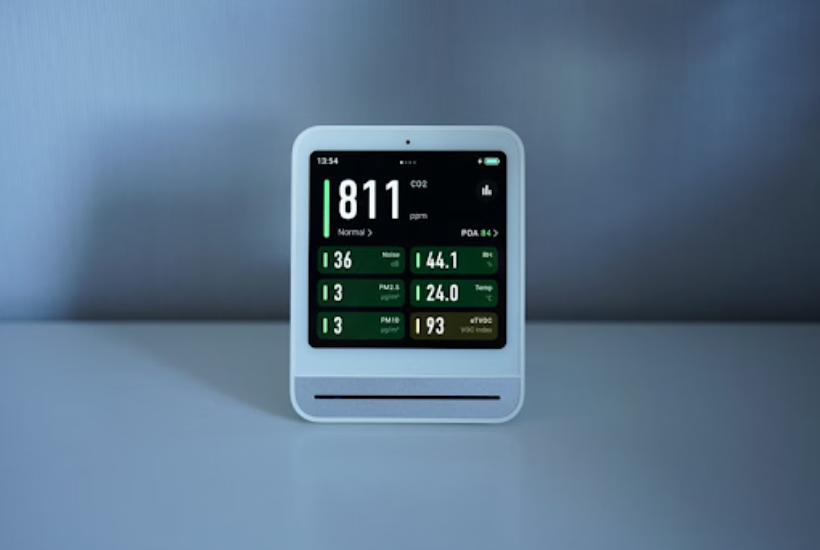
CO2 levels are a useful proxy for ventilation adequacy. Research suggests that indoor CO2 levels above approximately 1,100 ppm indicate that ventilation is insufficient for the number of occupants. At higher concentrations, cognitive performance can be measurably affected. While most residential spaces don’t reach the extremes seen in poorly ventilated schools or offices, the principle applies: stale, heavy air is a sign that fresh air exchange needs improvement.
Ventilation strategies for winter include:
- Heat Recovery Ventilators (HRVs): These devices bring fresh outdoor air into the home while recovering heat from the outgoing stale air, minimizing energy loss. They’re particularly well-suited to cold climates and tightly sealed homes.
- Energy Recovery Ventilators (ERVs): Similar to HRVs, but also transfer moisture between incoming and outgoing air streams, helping maintain balanced humidity levels.
- Exhaust fans: Running bathroom and kitchen exhaust fans consistently during winter helps remove moisture and pollutants at the source.
Older homes require additional attention. Homes built before 1978 may contain lead-based paint, and those built before the 1980s may have asbestos-containing materials. Renovation or disturbance of these materials can release hazardous particles into the air. If you’re planning any winter home improvement projects in an older property, testing for these contaminants before beginning work is an important safety step.
Radon testing is recommended for any home, particularly those with basements or ground-level living spaces. Radon is the second leading cause of lung cancer in the United States, and winter — when homes are most tightly sealed — is an appropriate time to conduct a test.
The Core IAQ Checklist Items Every Homeowner Should Know
Regardless of the season, certain IAQ fundamentals apply year-round. The following checklist items represent the foundation of a healthy indoor environment.
Monitor, Filter, and Ventilate
- Install and maintain air quality monitors to track pollutant levels, humidity, and temperature in real time
- Place carbon monoxide detectors near sleeping areas and all fuel-burning appliances; test batteries seasonally
- Test for radon, particularly in basements and ground-level spaces
- Replace HVAC filters on a consistent schedule — monthly checks, replacement every one to three months depending on conditions
- Schedule professional duct cleaning to remove accumulated dust, debris, and biological contaminants from ductwork
- Use HEPA-filter vacuums to reduce dust and allergens on floors and upholstered surfaces
- Run exhaust fans in kitchens and bathrooms consistently, not just when cooking or showering
- Open windows when outdoor air quality and weather permit, to dilute indoor pollutants with fresh air
- Keep vents and grilles unobstructed — furniture, rugs, and drapes placed over registers significantly reduce airflow and system efficiency
Control Pollutants at the Source
- Eliminate indoor smoking entirely; tobacco smoke introduces hundreds of harmful compounds that linger in surfaces and air long after the cigarette is extinguished
- Choose low-VOC paints, adhesives, and furnishings whenever possible, particularly for renovation projects
- Store cleaning products, pesticides, and chemicals in sealed containers in areas separated from living spaces
- Wash curtains, upholstery, and rugs frequently to prevent dust mite and allergen accumulation
- Place door mats at all entrances and establish a shoes-off policy to reduce the amount of outdoor particulate matter tracked inside
- Address mold promptly — wipe down damp surfaces in bathrooms and kitchens with appropriate solutions, and investigate any musty odors
- Repair leaks immediately — roof, plumbing, and window leaks create the moisture conditions that support mold growth
- Improve drainage around the home’s foundation to prevent water infiltration into basements and crawlspaces
When Your HVAC System Is the Root of the IAQ Problem
It’s easy to think of the HVAC system as a solution to IAQ problems. In many ways, it is — proper filtration, humidity control, and ventilation all depend on a well-functioning system. But a neglected or aging HVAC system can itself become a significant source of indoor air quality problems.
Signs Your Heating or Cooling System Is Hurting Your Air Quality
- Dusty vents and registers that accumulate visible buildup between cleanings suggest that the system is circulating more particulate matter than it should be. This often points to duct leaks, a dirty coil, or an inadequate filter.
- Musty or stale odors when the system runs are a common sign of biological growth on the evaporator coil or in the ductwork. Mold on HVAC components is a direct IAQ hazard, as spores are distributed throughout the home every time the system operates.
- Uneven temperatures and clammy air suggest that the system is struggling to maintain proper humidity control. As compressors age and wear, they lose the ability to dehumidify effectively. Modern systems with variable-speed technology handle humidity management significantly better than older single-stage equipment.
- Frequent breakdowns are a sign that the system is operating under stress. A system that requires multiple repair calls per year is likely running inefficiently, which affects both energy costs and air quality.
- Aging equipment deserves particular scrutiny. Central air conditioning systems typically last between 10 and 15 years. Gas furnaces generally last 15 to 20 years. Systems approaching or exceeding these thresholds may have fatigued components, harder-to-source parts, and declining efficiency. Older systems may also use R-22 refrigerant, which has been phased out due to environmental concerns — repairs involving R-22 have become significantly more expensive, and a refrigerant leak in an R-22 system often makes replacement the more practical path forward.
How Routine HVAC Maintenance Supports Long-Term IAQ
The most effective long-term IAQ strategy isn’t a single intervention — it’s a consistent maintenance routine that keeps the HVAC system operating at the level it was designed to perform.
A comprehensive professional tune-up addresses the mechanical and environmental factors that directly affect air quality:
- Evaporator and condenser coil cleaning restores heat transfer efficiency and removes the biological growth surfaces that develop on dirty coils
- Condensate drain clearing prevents water backup and the moisture problems that follow
- Lubrication of moving parts reduces friction-related heat and extends component life
- Thermostat calibration ensures the system runs accurate, complete cycles rather than short-cycling and leaving humidity unmanaged
- Temperature differential verification — checking the difference in air temperature between return and supply vents — confirms that the system is actually delivering the cooling or heating capacity it’s rated for
Maintenance plans that include two professional visits per year — one in spring before cooling season and one in fall before heating season — provide the most consistent protection against both IAQ problems and unexpected breakdowns. Priority scheduling through a maintenance membership also means that when issues do arise, service is available quickly rather than waiting in a queue during peak demand periods.
Frequently Asked Questions About Seasonal Indoor Air Quality
How often should I change my HVAC filter to maintain good indoor air quality?
The general guidance from Energy Star is to check filters monthly and replace them at least every three months. However, this is a baseline, not a universal rule. Homes with pets, multiple occupants, allergy sufferers, or high dust levels may need filter changes every four to six weeks. Conversely, a vacation home or a single-occupant space with minimal activity might stretch closer to the three-month mark. The filter’s MERV rating also plays a role — higher-efficiency filters capture more particles but create more resistance. Always confirm that a higher-MERV filter is compatible with your specific system before upgrading, as the wrong filter can reduce airflow, increase energy consumption, and accelerate equipment wear.
What are the most common indoor air pollutants by season?
Indoor air pollutants vary significantly by time of year:
- Spring: Pollen infiltrating through open windows and doors; mold spores as outdoor moisture increases; dust mites becoming more active
- Summer: VOCs off-gassing more readily in warm temperatures; particulate matter from wildfire smoke in regions like Northern California; biological growth on HVAC coils in humid conditions
- Fall: Particulate matter from wildfire smoke continuing into early fall; dust and debris disturbed when heating systems first activate after summer dormancy; mold from autumn moisture
- Winter: Carbon monoxide from fuel-burning appliances in tightly sealed homes; radon accumulating without adequate ventilation; CO2 buildup from occupants; moisture-related mold in bathrooms, basements, and around windows
Understanding which pollutants are most prevalent in a given season helps homeowners prioritize their IAQ efforts rather than applying a one-size-fits-all approach.
Can my HVAC system alone improve indoor air quality throughout the year?
The HVAC system is a powerful tool for IAQ management, but it has limits. Standard filtration captures particles but does not address gases, VOCs, or biological contaminants that pass through filters. Ventilation — the introduction of fresh outdoor air — is a separate function that filtration cannot replace. In tightly sealed homes, particularly during winter, dedicated ventilation equipment such as HRVs or ERVs may be necessary to maintain adequate air exchange.
Portable air cleaners can supplement central system filtration in high-use rooms, but ASHRAE notes that different filtration and air-cleaning technologies address different contaminants. No single device solves every IAQ problem. A whole-home approach — combining proper filtration, humidity management, source control, and ventilation — is the most effective strategy. The condition of the ductwork also matters significantly; even a high-quality filter won’t compensate for leaky ducts pulling in unconditioned air from attics or crawlspaces.
Conclusion
Indoor air quality is not a problem you solve once and forget. It’s a dynamic condition that shifts with every season, every weather pattern, and every change in how you use your home. The checklist framework laid out here — seasonal filtration checks, humidity management, ventilation strategy, pollutant source control, and consistent HVAC maintenance — gives homeowners a practical structure for staying ahead of those changes rather than reacting to them.
The most important takeaway is that your heating and cooling system sits at the center of your home’s IAQ ecosystem. A well-maintained system filters, dehumidifies, and circulates air effectively. A neglected one can become a source of the very problems you’re trying to prevent. Scheduling professional tune-ups twice a year, keeping filters on a consistent replacement schedule, and addressing mechanical issues before they escalate are the highest-leverage actions most homeowners can take.
For those in the Sacramento area navigating the region’s unique combination of dry heat, wildfire smoke seasons, and cold winter nights, connecting with experienced local professionals makes a meaningful difference. The team at Jaguar Heating & Air brings NATE-certified expertise and a thorough, systematic approach to both seasonal maintenance and IAQ-related HVAC concerns — the kind of consistent, knowledgeable service that supports healthier indoor air year-round.
Start with one season. Work through the checklist. Then build the habit of revisiting it every time the weather shifts. Your lungs — and your HVAC system — will be better for it.
Related posts:
Budget-Friendly Guide: How to Upgrade Your Garage
From Basic Contractor to In-Demand Pro: How EPA Lead Paint Certification Can Skyrocket Your Career
How to Choose Windows That Actually Improve Your Home Decor
How to Prevent Basement Flooding During Heavy Rain & Snowmelt
Installing Better Living: Thoughtful Upgrades for a More Comfortable Home
21 Best Christmas Bathroom Decor Ideas for

- A Practical Indoor Air Quality Checklist for Every Season - September 15, 2026
- What Happens During a Professional Furnace Installation? - September 15, 2026
- What to Consider Before Updating Your Home’s Exterior - September 15, 2026

Leave a Reply