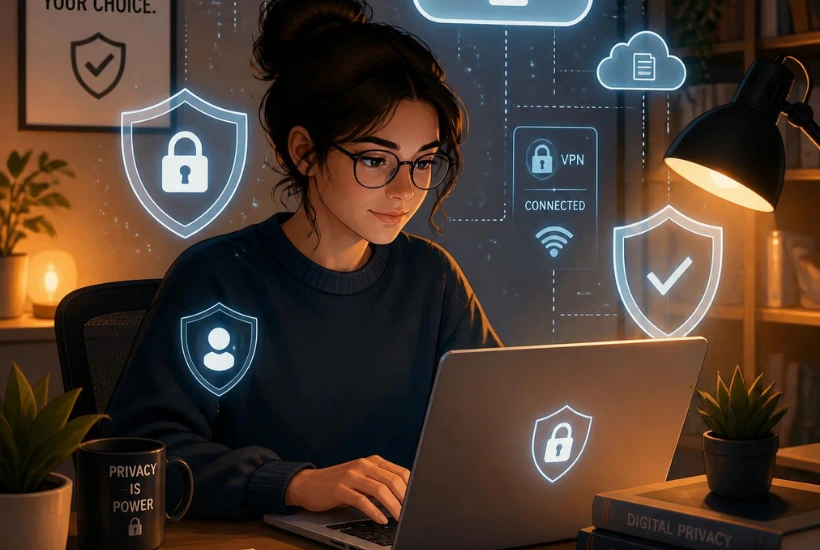
From online shopping and banking to social media and video calls, most of us spend a huge part of our lives online. While the internet makes everyday tasks easier, it also creates opportunities for scammers and cybercriminals. Fortunately, a few simple habits can go a long way toward protecting your privacy, so let’s take a closer look at them.
Build strong everyday security habits
Let’s begin with the fundamentals. When you want to authenticate yourself online, and prove that you are who you say you are, a weak password will not do. Ideally, it should be hard to guess, and unique to the particular service it’s attached to.
For sensitive accounts, like bank accounts, multi-factor authentication is a must. You might also set up automatic updates for things like operating systems and app stores.
The habits you develop can often form the first line of defense against online threats. Form good ones.
Protect your internet connection and browsing activity
In some cases, unsecured networks are what might trip you up. When you log onto a Wi Fi network in a cafe, or an airport, you might have no idea who owns the network, or what other people might be connected to it. You might also find that the services you’re connecting to can determine your location, based on your IP address.
You can also take extra steps to protect your privacy by learning how to change IP address. This can make it harder for websites and services to track your location and browsing activity.
Recognize and avoid online scams and phishing attempts
It’s worth treating everything you see online with a degree of skepticism. And this goes for the messages you receive through your email inbox, and platforms like Discord.
Don’t click on links if you don’t know where they came from. Treat every website as potentially fake unless you’ve navigated there yourself. If something feels unusual or too good to be true, it’s always worth double-checking before sharing any personal information. Phishing remains a constant threat in the United States, and, thanks to the development of AI, it’s one that’s becoming more sophisticated than ever.
Take control of your personal data and privacy settings
The way that your data is handled by the services you interact with can be difficult to control. Make sure that you look into the settings on your various accounts, and that you prefer services that offer you more of them. You might also tweak your app permissions, in order to limit how much information about you can be scraped over the months and years.
Small Changes Can Make a Big Difference
Staying safe online doesn’t require expert technical knowledge. By using strong passwords, avoiding suspicious links, being careful with public Wi-Fi, and regularly reviewing your privacy settings, you can significantly reduce the risk of your personal information falling into the wrong hands. A few simple precautions today can help you enjoy a safer online experience tomorrow.
Related posts:
The 5 Best 4-Person Office Pods for Modern Offices
Best Places to Travel With Kids: 7 Destinations Your Family Will Actually Enjoy
Why More Women Are Falling for Investment Scams on Instagram
Simple Tips To Get Organized For College In
Effective Strategies for AP Exam Preparation Success
Why Auctioneering School Is Important for Success

- 3 Best Furniture Brands for Modern and Minimalist Interiors - October 14, 2026
- How to build a backyard pool space that actually fits your daily life - October 13, 2026
- Garden room cladding: what survives a British winter - October 13, 2026

Leave a Reply