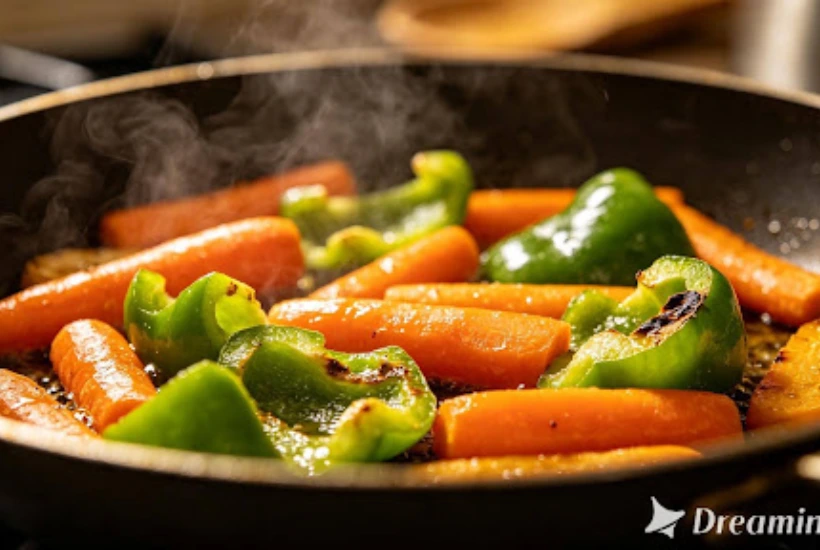
A recipe exists as instructions on a page — ingredients listed, steps numbered, techniques briefly described. Yet a recipe’s success depends on sensory experience that text cannot fully communicate. How does a sauce look when it’s properly reduced? What sound indicates oil is hot enough? How should dough feel at different stages? Text to video generation transforms recipes into visual cooking scenes that communicate what text alone cannot.
Dreamina’s Seedance 2.5 model was built to understand culinary processes, rendering footage that shows exactly how food should look, move, and transform throughout cooking, making recipes genuinely learnable through visual demonstration rather than requiring viewers to interpret written instructions through trial and error.
Why recipes need visual translation
A recipe provides information, but cooking requires understanding. A cook needs to know not just what to do but how to recognize when it’s done correctly. Written instructions say “cook until golden brown,” but golden brown means different things depending on light, pan type, and ingredient variations. Visual demonstration shows exactly what golden brown looks like, eliminating interpretation gaps that cause cooking failures.
Text to video transforms recipes from abstract instructions into concrete demonstrations. A prompt can show “how a sauce reduces, the visual change from thin liquid to glossy coating, the exact moment when consistency indicates proper doneness.” That visual clarity makes recipes actually teachable rather than just informative.
Technique visibility through generated video
Cooking techniques matter as much as ingredients. How finely to chop, how to hold a knife, the angle of a pan tilt — these technique details determine success. Yet describing technique in words creates confusion. Text-to-video allows techniques to be shown directly. A prompt can describe “the specific hand position for dicing, the knife angle that creates consistent cuts, the rhythm of cutting that professionals use.” That visibility transforms technique from mysterious to learnable.
Understanding ingredient transformation
Ingredients transform radically during cooking. Raw chicken is pale and dense. Cooked chicken is white and textured. Vegetables lose firmness and change color. These transformations are essential for recognizing doneness, yet they’re difficult to describe without visual reference. Video makes transformation visible.
A prompt can describe “how an onion transforms from sharp and translucent to soft and caramelized, the visual changes indicating progression through cooking stages.” That transformation documentation makes recipes genuinely learnable.
Pacing as cooking reality
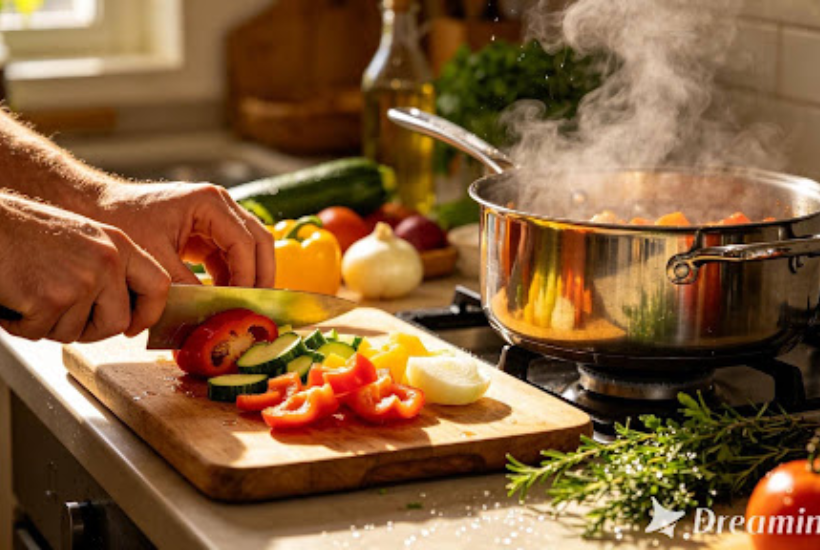
Cooking has rhythm and pacing. Some ingredients need quick heat, others need slow cooking. The time between steps matters. Text to video allows that pacing to be communicated. A prompt can specify “how quickly this dish comes together, the pace allowing viewers to understand time requirements and whether parallel prep is necessary.” That timing clarity helps viewers plan and execute successfully.
Bringing recipes to life: Your culinary vision
Step 1: Understand your recipe and write your cooking prompt
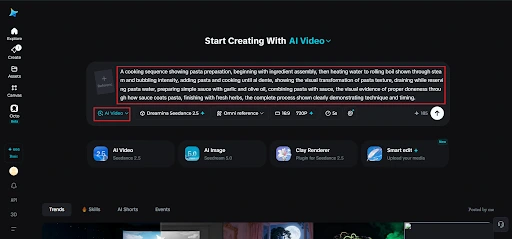
Visit Dreamina, sign in, and head to the “AI Video” section. Envision your complete cooking process from ingredient preparation through plating. Click “Add reference image” if you have photos of the finished dish or cooking inspiration. Write your cooking prompt describing ingredients, preparation, cooking techniques, how ingredients transform, timing, and what viewers should recognize as proper doneness.
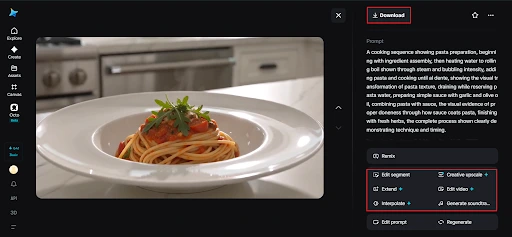
A detailed prompt for 60 seconds might read: A cooking sequence showing pasta preparation, beginning with ingredient assembly, then heating water to rolling boil shown through steam and bubbling intensity, adding pasta and cooking until al dente, showing the visual transformation of pasta texture, draining while reserving pasta water, preparing simple sauce with garlic and olive oil, combining pasta with sauce, the visual evidence of proper doneness through how sauce coats pasta, finishing with fresh herbs, the complete process shown clearly demonstrating technique and timing.
Step 2: Generate your cooking scene with Seedance 2.5
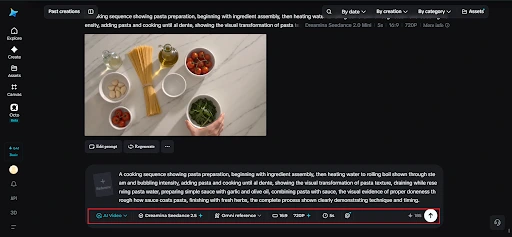
Select the Seedance 2.5 model for generation. Choose 45-90 seconds depending on recipe complexity and number of steps. Pick 16:9 for cooking content or educational platforms, 9:16 for social sharing. Click Dreamina’s generation icon and watch your recipe become visual cooking instructions.
Step 3: Enhance clarity and finalize your recipe video
Use Dreamina’s AI editing tools to strengthen instructional value. Upscale sharpens food details and technique visibility, making instruction clear, while Generate Soundtrack adds cooking ambiance — sizzling sounds, water boiling — that reinforces what’s happening visually. Review your cooking scene confirming techniques are visible, ingredient transformations are obvious, and timing is clear. Export and share.
Seedance 2.5’s Culinary Excellence
Seedance 2.5 was engineered specifically to render cooking processes with the clarity and detail that makes culinary instruction genuinely useful.
Food transformation visibility throughout cooking
The model shows how ingredients change during cooking — color shifts, texture changes, consistency transformations. These visual indicators help viewers recognize when steps are complete, making recipes learnable through visual cues rather than guesswork.
Technique demonstration with authentic physicality
The model renders hand positions, knife angles, and movement patterns showing proper technique. Viewers see exactly how professionals move through culinary tasks, translating technique knowledge visually rather than through difficult verbal description.
Steam and heat effects communicating cooking progress
The model renders visual effects indicating cooking activity — steam rising, bubbling intensity, surface changes. These visual signs communicate temperature and timing, helping viewers understand cooking progress without requiring external thermometers or timers.
Ingredient quality and preparation clarity
The model shows ingredient quality and preparation with precision. Viewers see exactly how finely to chop, what “roughly chopped” actually means, how ingredient preparation affects final results. That clarity prevents preparation mistakes that compromise recipes.
Extended duration for complete cooking sequences
Ultra-long Video Generation reaching 180 seconds allows complete cooking processes to unfold. Viewers experience entire recipes from preparation through plating, understanding complete flow rather than isolated steps.
Accessibility through visual learning
Many people struggle learning from written recipes. Visual learners benefit enormously from seeing cooking demonstrated. International audiences overcome language barriers through visual instruction. People with reading difficulties access recipes through visual means. Text to video democratizes recipe access.
Emotional dimension of cooking
Cooking involves emotion and intention, not just mechanics. A home cook preparing family recipes connects to tradition. An adventurous cook exploring unfamiliar cuisines engages differently than a practical cook preparing weeknight meals. Visual cooking scenes can communicate that emotional context alongside technical instruction.
When recipes become truly learnable
Cooking transforms when recipes become visual rather than just textual instructions. With Dreamina and its Seedance 2.5 model, recipes described in text become generated footage showing exactly how food should look, move, and transform throughout cooking, allowing text-to-video to make culinary knowledge genuinely accessible and learnable for anyone seeking to master cooking techniques.

- 3 Best Furniture Brands for Modern and Minimalist Interiors - October 14, 2026
- How to build a backyard pool space that actually fits your daily life - October 13, 2026
- Garden room cladding: what survives a British winter - October 13, 2026

Leave a Reply