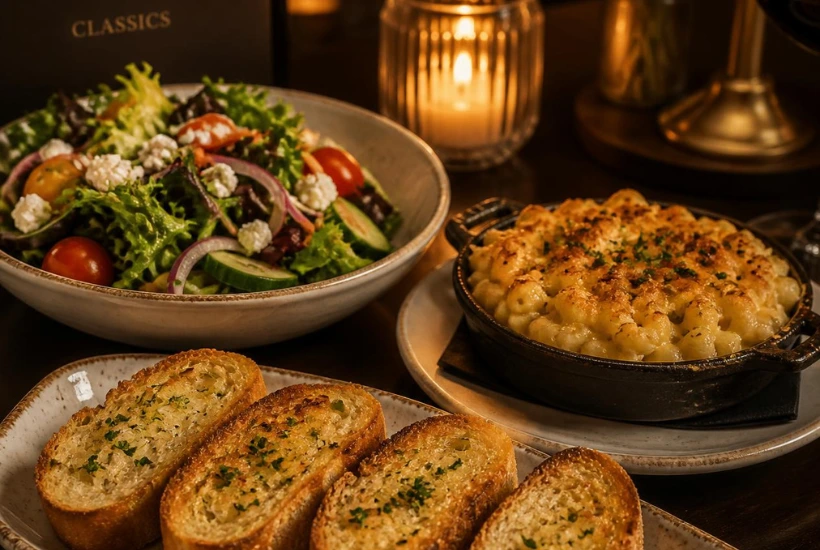
A steakhouse dinner earns its reputation through balance, not steak alone. Sides shape texture, temperature, and pacing across the table. A creamy spoonful, a crisp spear, or a warm roll changes how each bite lands. That contrast keeps richness from becoming tiring. Guests often remember the supporting plates because they balance the meal, whet the appetite, and give the main cut a setting that feels complete rather than heavy.
Potatoes Set the Tone
Potatoes usually define the plate before anything else does. Mashed potato servings bring a smooth, buttery cushion beside a firm seared crust. Baked halves add structure and a faint mineral note. Fries offer brittle edges and a satisfying crunch. Each version handles juices differently, which affects how the steak tastes from one bite to the next and gives the dinner a familiar, substantial center.
Creamed Spinach Balances Richness
Creamed spinach has stayed on traditional menus for good reason. Diners comparing classic side pairings, service rituals, and menu habits at a steakhouse in Greensboro, NC, often notice that this dish appears beside richer cuts again and again. Its gentle bitterness, soft leaf texture, and restrained cream help offset beef fat. That contrast keeps the plate balanced and prevents the meal from feeling dense too early.
Mac and Cheese Adds Comfort
Mac and cheese brings a different kind of satisfaction. A browned top provides a slight crispness, while the center stays loose and velvety. Steak benefits from that contrast in texture because charred meat meets creamy pasta without overwhelming the palate. Many tables share it, which changes the rhythm of dinner. The dish feels generous, yet a careful version still leaves room for the main cut to remain the focus.
Mushrooms Bring Earthy Depth
Sautéed mushrooms add savory depth without crowding the plate. Their browned surfaces echo the crust formed during a hard sear. That connection makes the pairing feel natural rather than forced. Butter can round the flavor, while herbs lift the aroma. Good mushrooms keep a gentle bite and release excess moisture rather than collapsing into a dark, overly soft pile beside the steak.
Onions Add Sweet Contrast
Caramelized onions supply sweetness where salt and smoke dominate. Slow heat softens their sharpness and draws out a mellow finish. That change adds another layer of flavor to the steak without drawing attention. Onions also pair well with potatoes, greens, and mushrooms, making them useful in many combinations. Even a modest portion can brighten the aroma and deepen the dinner’s overall balance.
Bread Starts the Meal Right
Warm bread often reaches the table first, yet it still matters after the entrée arrives.
A Simple First Signal
A crisp crust and tender center set expectations early. Bread slows the pace of opening and gives guests something familiar while stronger flavors wait. Butter adds quiet richness without turning the first course heavy. Later, a torn piece can catch juices or soften the salt on the palate. That small role helps the dinner feel measured from start to finish.
Asparagus Keeps the Plate Bright
Asparagus brings freshness that richer sides cannot provide on their own. Its slight snap clears the palate after bites of marbled beef or cheese. Roasting adds sweetness, while grilling contributes light smoke and a firmer texture. Either approach keeps the plate from sinking into sameness. Bright vegetables matter in a steakhouse setting because they restore contrast after every heavier forkful.
Brussels Sprouts Offer Crisp Edges
Brussels sprouts earn their place through texture first. Roasting creates brittle outer leaves and a tender middle, which pair well with a firm steak crust. Their faint nuttiness adds interest without reading as sharp or grassy. A little lemon can lift the flavor, while bacon adds smoke. The dish works because it feels hearty, though it still behaves like a vegetable.
Lobster Mac Creates a Splurge
Lobster mac signals a more celebratory mood at the table. Sweet shellfish softens the richness of cheese and pasta, creating a fuller, layered texture. Paired with filet or strip steak, it pushes the meal into special-occasion territory. Balance matters less here than abundance. Even so, the appeal lasts because the flavors remain recognizable and comforting, never confusing.
Salad Keeps the Meal Grounded
A simple salad may look modest beside richer dishes, yet its role is essential. Crisp greens and a light dressing reset the palate between butter, salt, and browned meat. Raw vegetables add water content and crunch, which keeps each course from blending together. That cooling effect helps the entire dinner stay composed. Sometimes restraint does more for the plate than another heavy side.
Conclusion
Classic steakhouse sides last because each one solves a different problem on the plate. Potatoes anchor the meal, greens provide lift, and richer dishes add warmth and fullness. Bread, onions, mushrooms, and salad bridge the gaps between those larger notes. Nothing feels accidental when the spread is chosen well. A proper steakhouse dinner reaches its best form when every side contributes texture, contrast, and a clear purpose.

- What Happens During a Professional Furnace Installation? - September 15, 2026
- What to Consider Before Updating Your Home’s Exterior - September 15, 2026
- 15 Cold Pasta Salad Ideas for Easy Meal Prep - September 12, 2026

Leave a Reply