Walk in your own front door and what do you see? Probably the mail. The mat that needs shaking. The jacket you meant to hang up.
A child coming through that same door sees something else: the dish with the lid, the clock ticking in the hall, the couch with rules. They’re filing all of it away.
Most of it, you stopped seeing years ago. Some of it, you stopped hearing or smelling. The rest, you never thought to ask about.
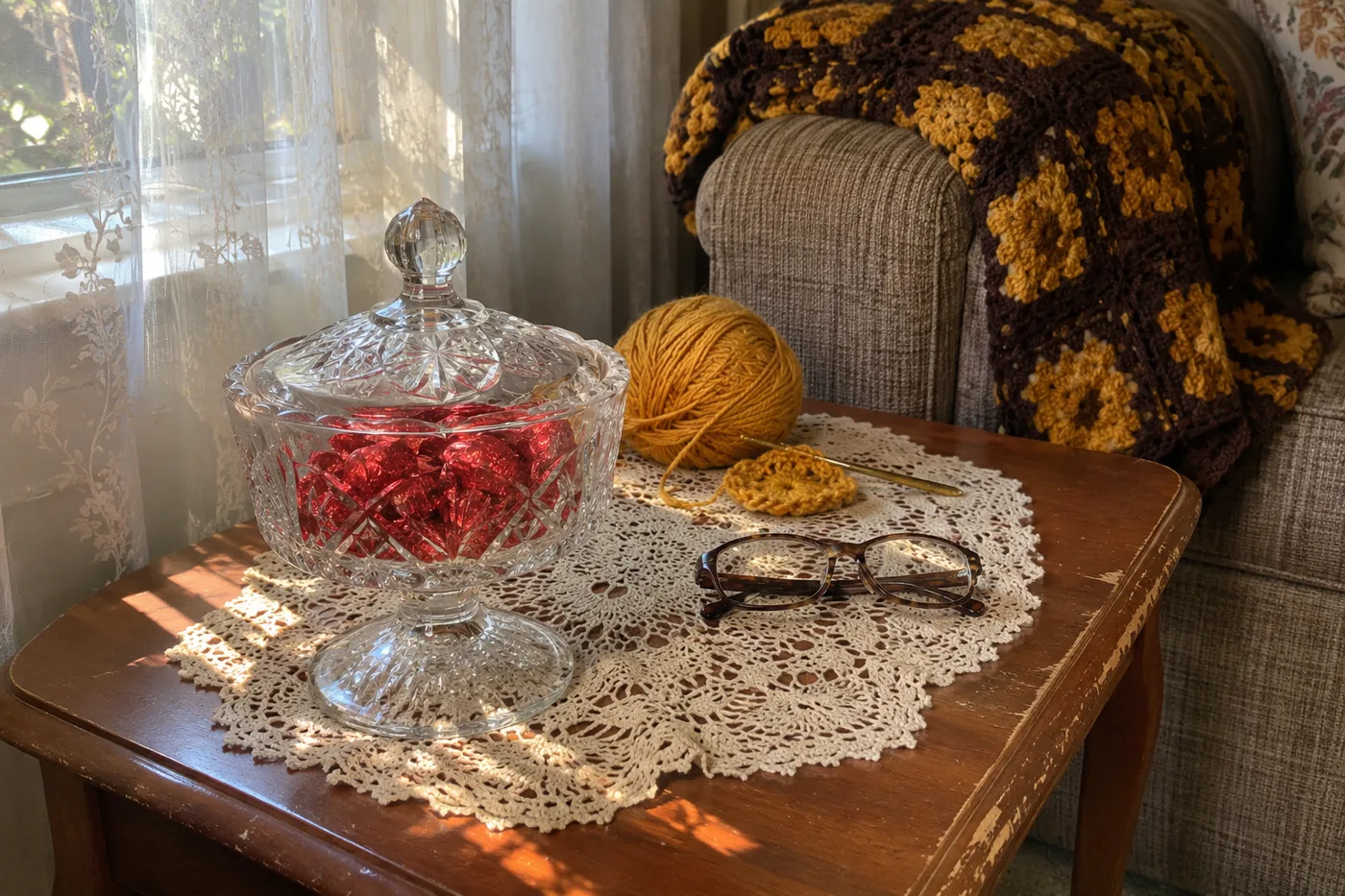
#26 The smell that greets you at the door
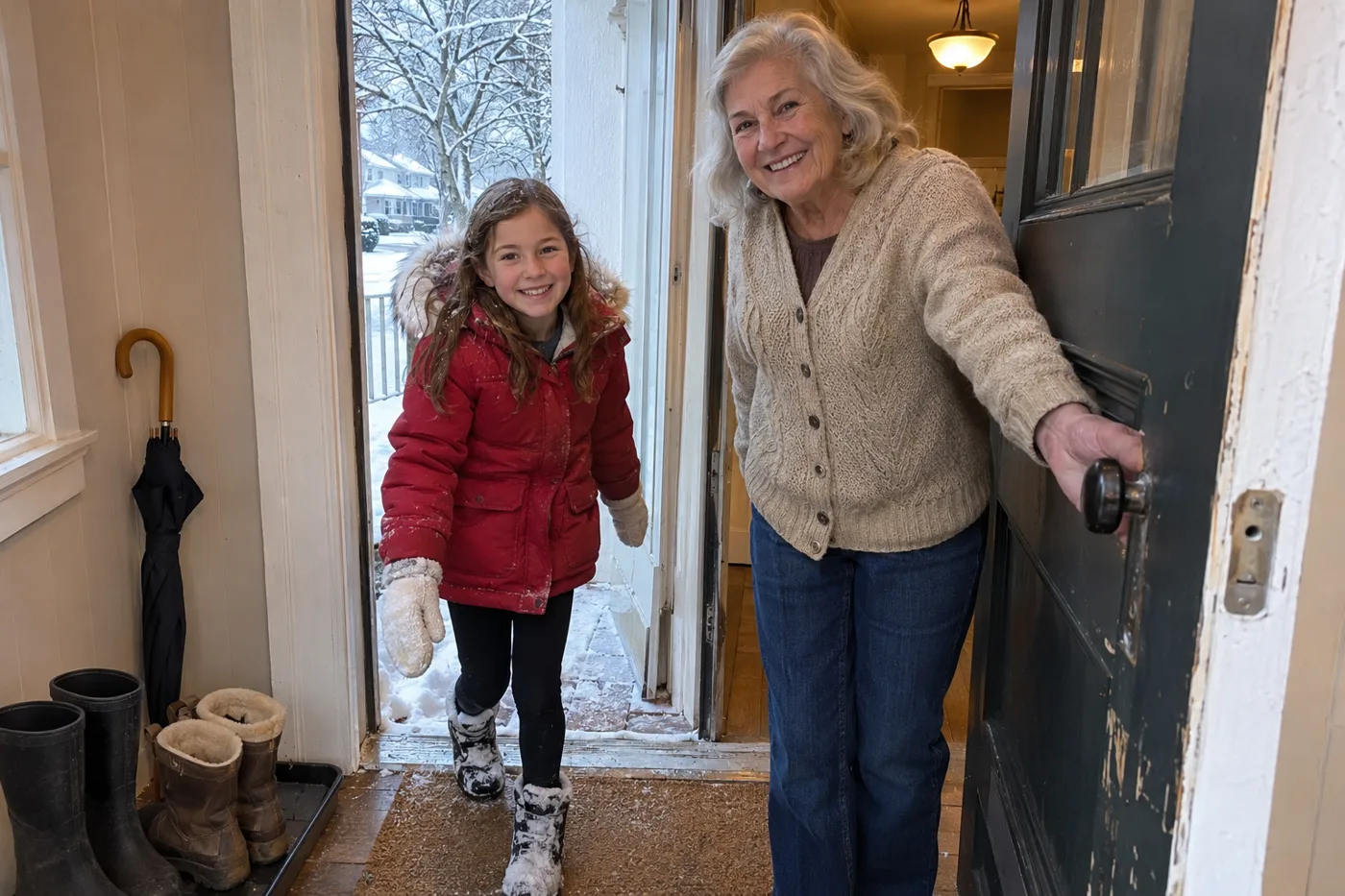
Every house has a smell. Yours does too, and you are the one person who can’t tell what it is.
Nothing’s wrong with your nose. Odor scientist Pamela Dalton explains that the nose adapts “very rapidly,” and then the brain starts filtering the signal out because there’s no reason to keep paying attention. She says a smell loses about half its strength in the first minute.
A grandchild walking in gets the whole thing at full volume. Coffee, a candle, last night’s pot roast, the bathroom soap, the furnace kicking on. Many people say the smell of a grandparent’s house is the first thing they’d name, before any room or object.
And it sticks. Researchers Johan Willander and Maria Larsson found that memories set off by smells tend to come from the first ten years of life, earlier than memories set off by words or pictures.
Want to know what your house smells like? A visitor can tell you, in that one breath before their nose gets used to it too.
#25 The candy dish of wrapped hard candies
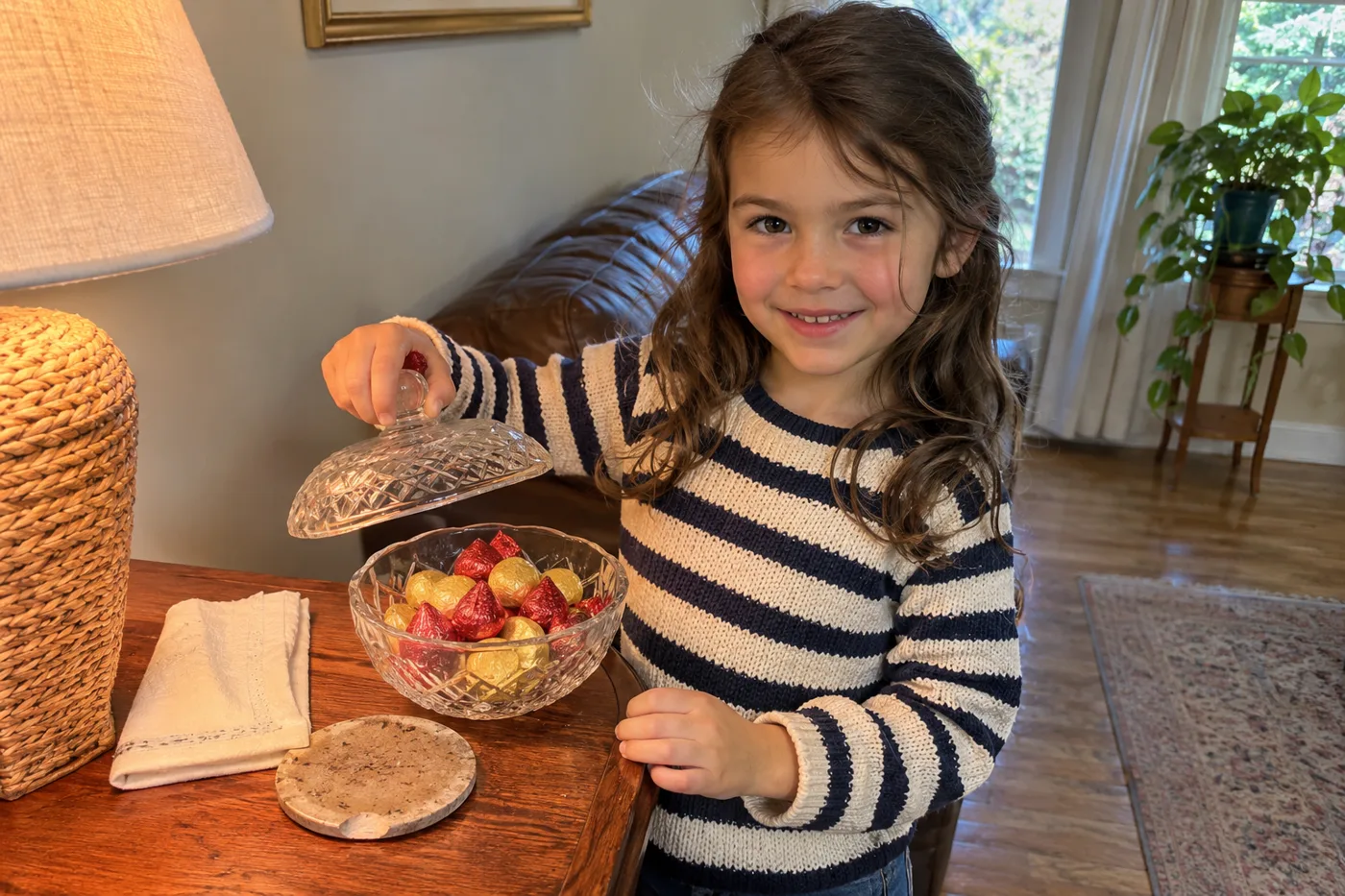
You know the sound. A glass lid lifted off a cut-glass dish, a little clink, and a small hand already digging toward the bottom for the good ones.
The good ones were usually the strawberries, in red foil printed like a berry with a green top. They have a name: strawberry bonbons, also known as “grandma candies.” They began in 1860s France, started showing up in candy dishes around the 1920s, and were already being called “old-fashioned” by the late 1950s.
The yellow butterscotch discs go back even further. An English newspaper in 1848 described “Doncaster butterscotch” as butter, sugar and treacle boiled together. The candy caught on in the U.S. around the turn of the last century.
Some houses had ribbon candy instead, glued into one sticky lump by February. You can still find the strawberry ones. They’re sold online, and they’re having a bit of a comeback.
Keep the lid on the dish. The clink is half the fun.
#24 Plastic slipcovers on the good couch
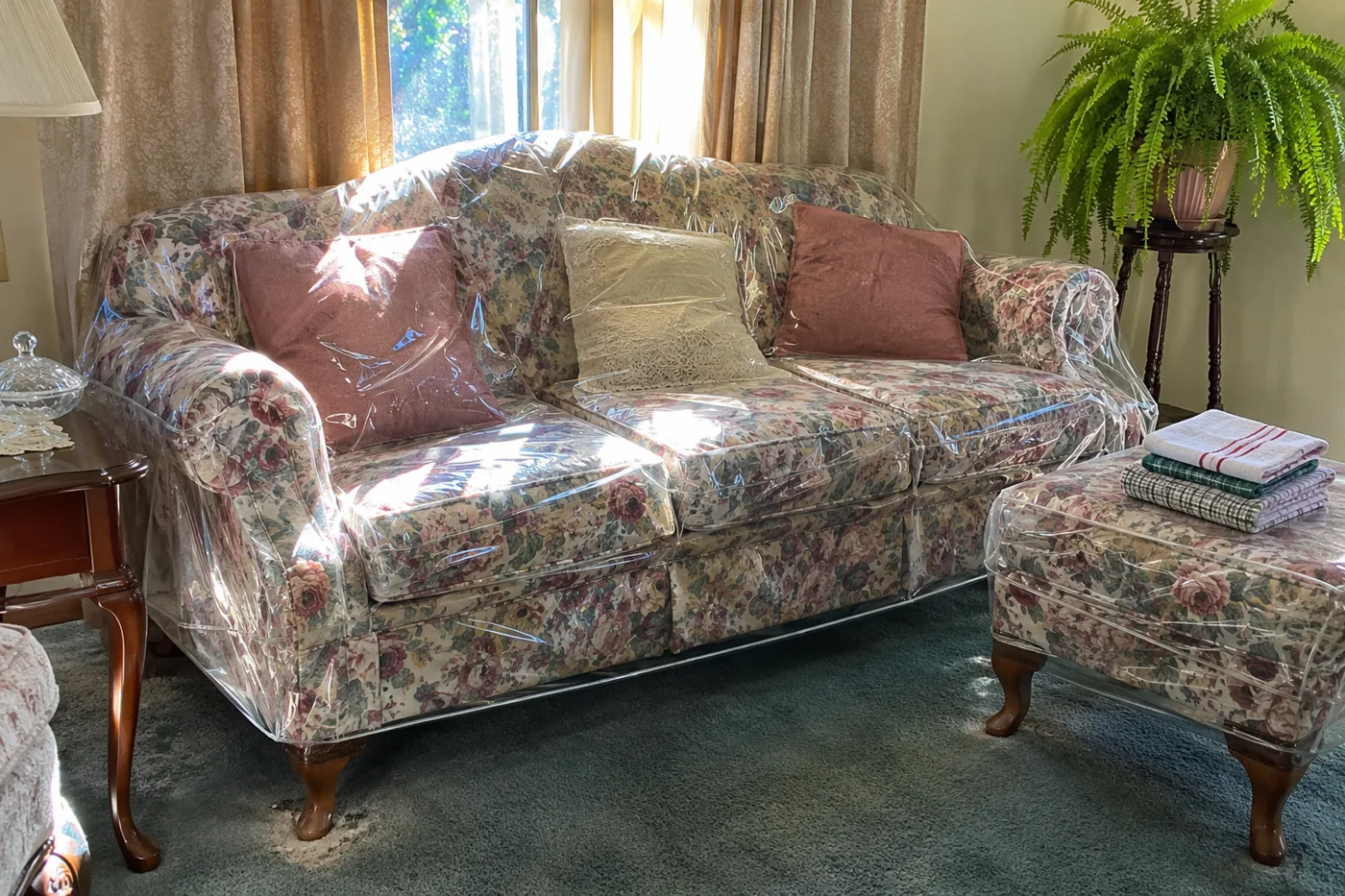
You remember the sound before anything else. That crinkle when you sat down, and the peeling noise when you stood up on a hot August afternoon in shorts.
The plastic had a reason behind it. Before most homes had air conditioning, people put slipcovers on upholstered furniture in the hot months to keep sweat off the fabric. Department stores such as Jordan Marsh sold clear vinyl versions, so you could protect the couch and still show it off.
Even Wikipedia admits the clear ones were “often very uncomfortable to sit on, particularly on hot summer days.” Every kid with bare legs could have told them that.
You’d have a hard time finding clear covers now. Modern upholstery is tougher and easier to clean, and clear vinyl covers are so rare that it’s “almost impossible” to get them without having them custom-made.
If your couch is uncovered today, the grandkids get the one thing that couch was saved for. Sitting on it.
#23 The good room nobody could enter

Plenty of families had one. A room with the good lamps, carpet with the vacuum lines still in it, and a couch nobody sat on unless the minister came by.
Kids knew it the way they knew a hot stove. You could stand in the doorway and look. That was it.
The room is older than anybody’s grandmother. Historian Thomas J. Schlereth called the Victorian parlor “a stage for special domestic events,” a place to display the family’s treasures. As early as the 1850s, farm magazines were campaigning to turn that little-used room into an everyday family sitting room.
If you still have a room like that, try this on the next visit: let the kids eat popcorn right there on the good couch, crumbs and all.
#22 “Eat, there’s more in the kitchen”
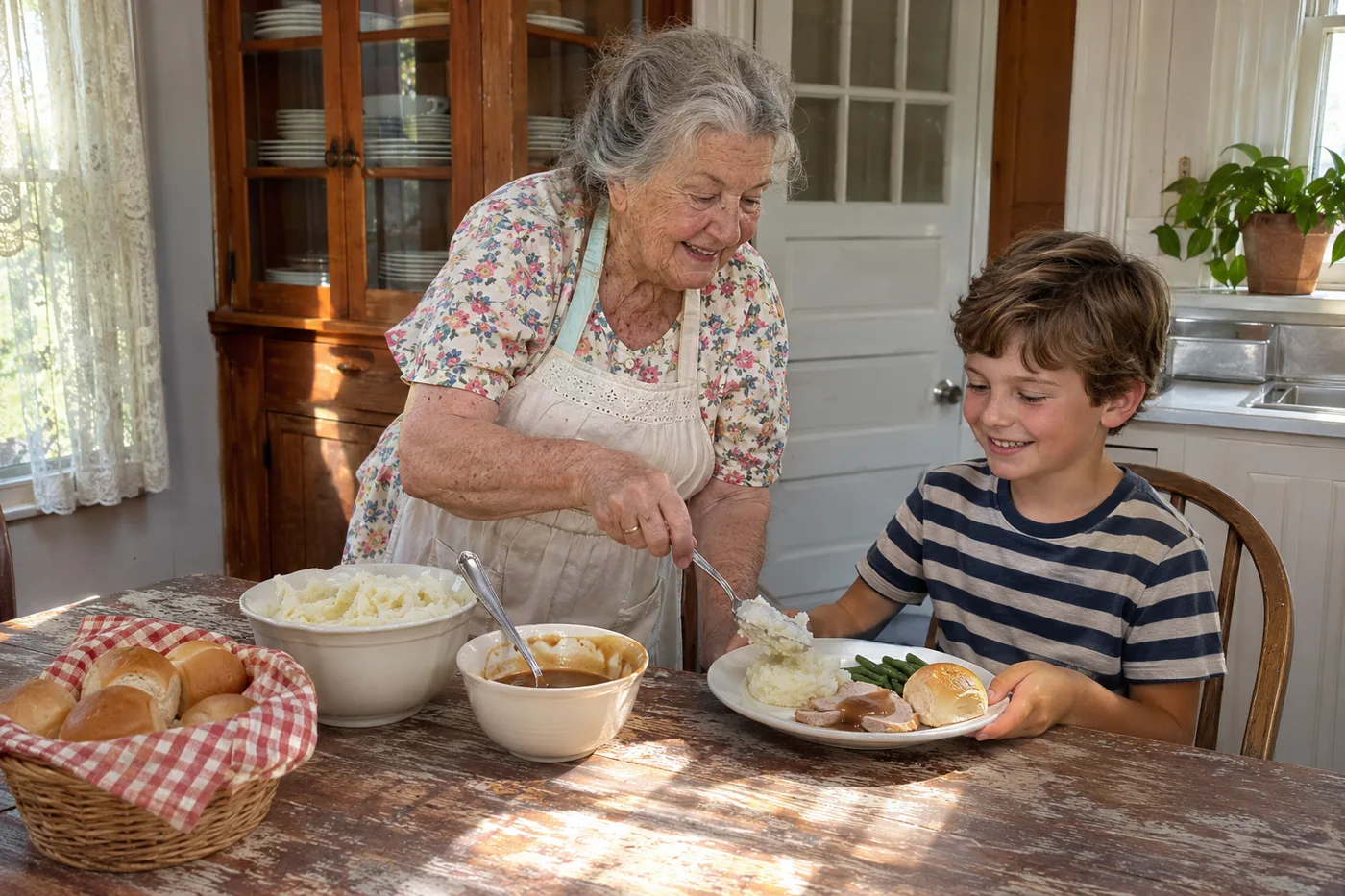
Nobody left hungry. Many people remember a favorite meal cooked even when money was short, a second helping landing on the plate before the first was gone, and a cookie slipped across the counter with a quiet warning not to tell their mother.
That habit is alive and well. In an August 2024 University of Michigan poll of grandparents, 61% had shared a meal with a grandchild in the past month. Almost half had cooked for one, and more than a third had baked or cooked right alongside one.
That last group is onto something. Researcher Kate Bauer said cooking with grandchildren can be a chance for “passing down knowledge and recipes.”
The meal is what they eat. The kitchen is where they learn which spoon you always grab, how you could tell the oil was hot, and whose job it was to crack the eggs, shells and all.
#21 The ticking clock you stopped hearing

Tick. Tock. Tick. In a quiet house at night, a child lying awake can hear the clock in the hall from two rooms away. You haven’t heard it in years.
Your brain did that on purpose. It’s called habituation, which simply means your reaction to a sound that repeats shrinks over time until your brain files it as background and stops passing it along.
Then there’s the chime. If your clock plays that familiar tune every quarter hour, you probably call it the Westminster Chimes. The church that owns the original says that’s a mix-up.
The tune is the Cambridge Quarters, composed in 1793 for Great St Mary’s in Cambridge, England, and later copied by Westminster Palace “and doorbells around the world.”
So the sound a child drifts off to in your hallway started in a church tower more than 230 years ago.
If it ever stops, they’ll be the first ones to notice, long before you do.
#20 Game shows blaring from the TV
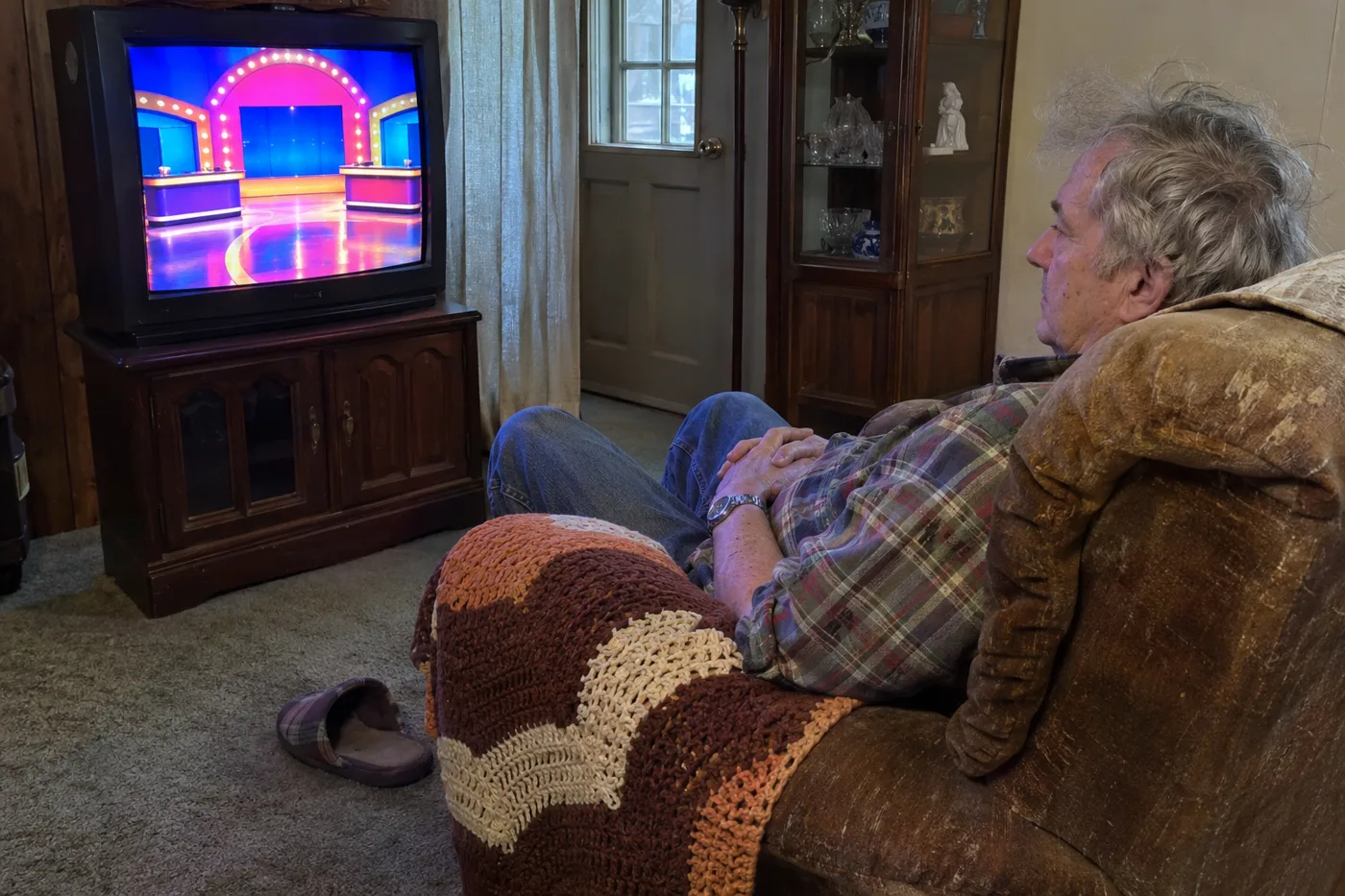
Come on down. If the TV was on, odds were good somebody was bidding on a dinette set, and the volume was set for the neighbors.
Many people remember those shows as the sound of the whole afternoon. It helps that the same ones ran forever. The Price Is Right premiered in 1972 and is “television’s longest-running game show,” according to the broadcasters’ own hall of fame.
Wheel of Fortune started on NBC’s daytime lineup in January 1975. Pat Sajak hosted for more than 40 years before Ryan Seacrest took over in September 2024.
That means a kid on your floor today is watching a show that’s been spinning that wheel for half a century, now with a new host.
And yes, they will shout the answer before the contestant does.
#19 The toy box kept just for them
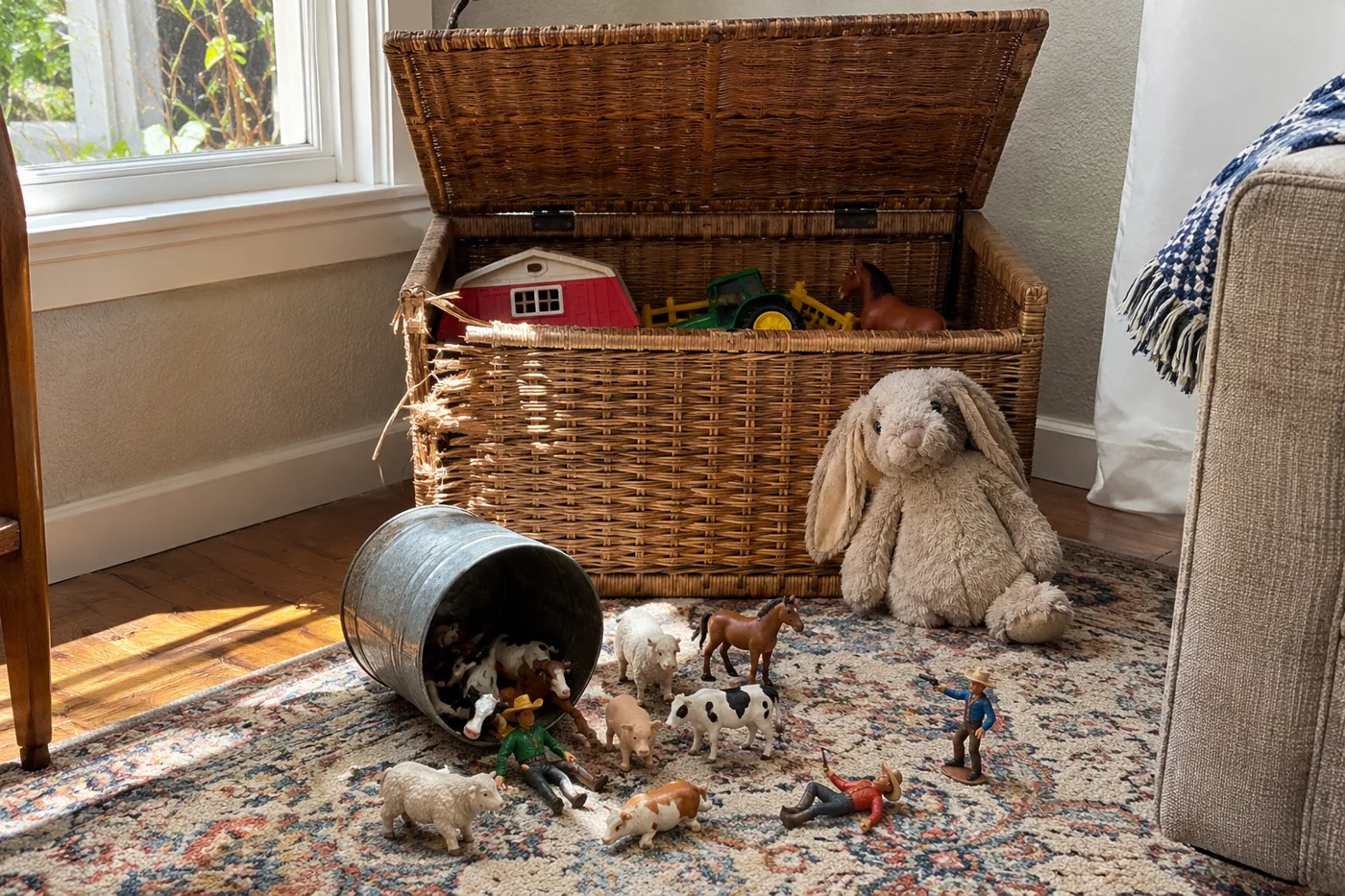
It might have been a wicker chest in the corner. A laundry basket in the hall closet. A couple of old coffee cans full of plastic cowboys and farm animals. Wherever it lived, kids walked in the door and went straight to it.
For a visiting child, the toy box is how they know part of the house belongs to them.
Some grown grandchildren now keep their own kids’ crayons in that same kind of coffee can. Keep yours stocked.
#18 Your perfume, remembered years later
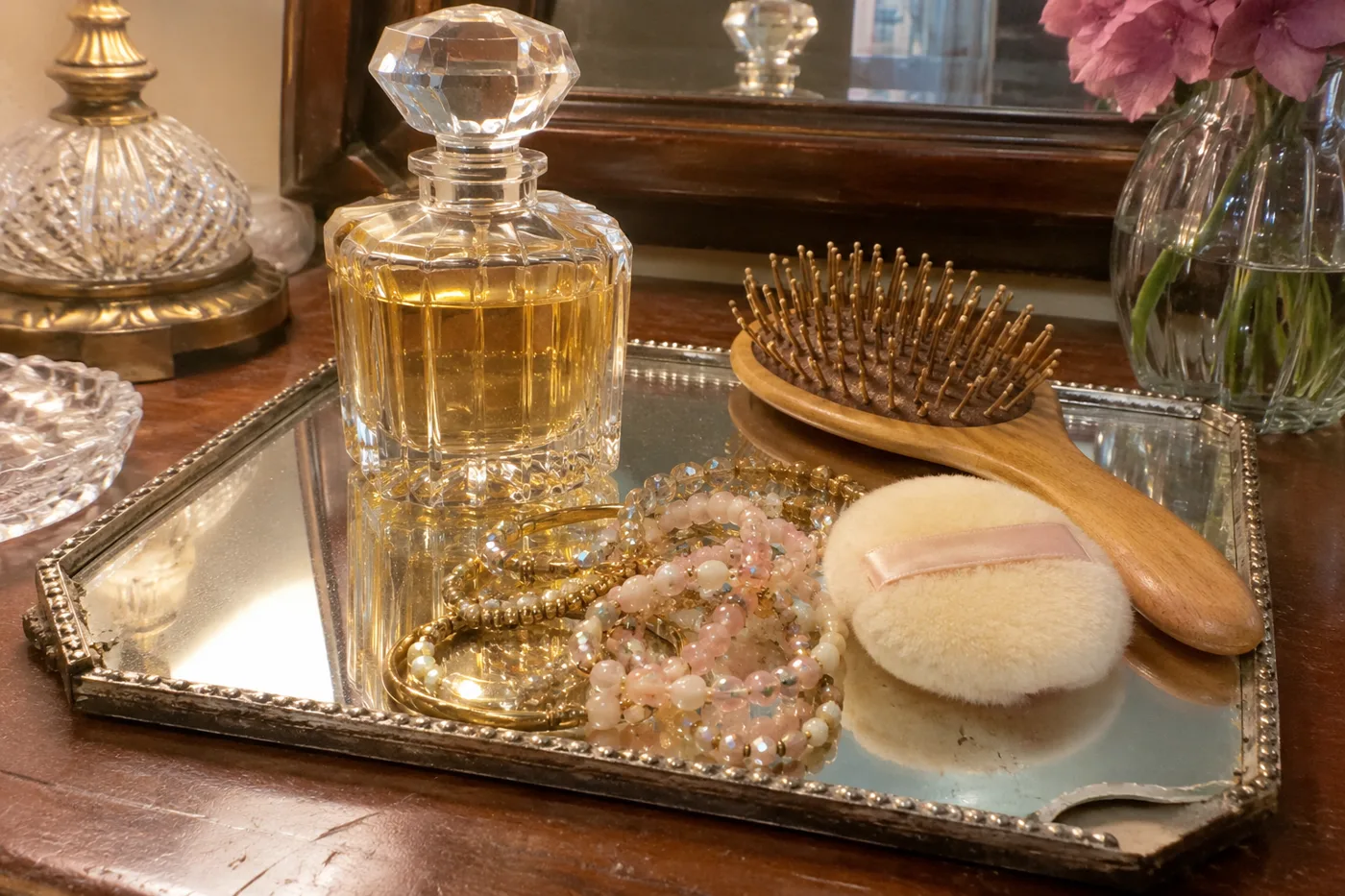
A woman passes in a store aisle, and suddenly you’re eight again, leaning on a vanity table next to a bottle with a glass stopper. A couple of people describe exactly that: a stranger’s perfume bringing a grandmother back, decades later.
There’s a reason it hits so hard. Every other sense passes through the thalamus, a kind of relay station in the brain, before it gets sorted.
Smell skips that step and goes straight to the parts that handle memory and emotion. So memories set off by a scent tend to feel stronger and reach further back.
The scent itself is likely to stay on store shelves, too. Classics hang on. Perfume critic Victoria Frolova writes that Chanel No. 5 “rarely gives up its position in the top five” on best-seller lists, and Shalimar keeps its place in the top twenty.
If you wear something every day, write its name on a card and tuck it in your dresser drawer. Someday a grown grandchild may want to buy a bottle just to smell it.
#17 Breakfast cooking before you woke up

The first sound of the morning was a skillet. Then bacon. Then a voice from the kitchen asking who wanted eggs.
Many people put waking up to breakfast already cooking near the top of their sleepover memories. They talk about the smell drifting down the hall before they ever opened their eyes.
None of it has to be fancy. Pancakes from a box count. So do cinnamon rolls from a tube.
Toast counts too, as long as it’s already going when they wake up.
#16 Cousins asleep on a pallet of quilts
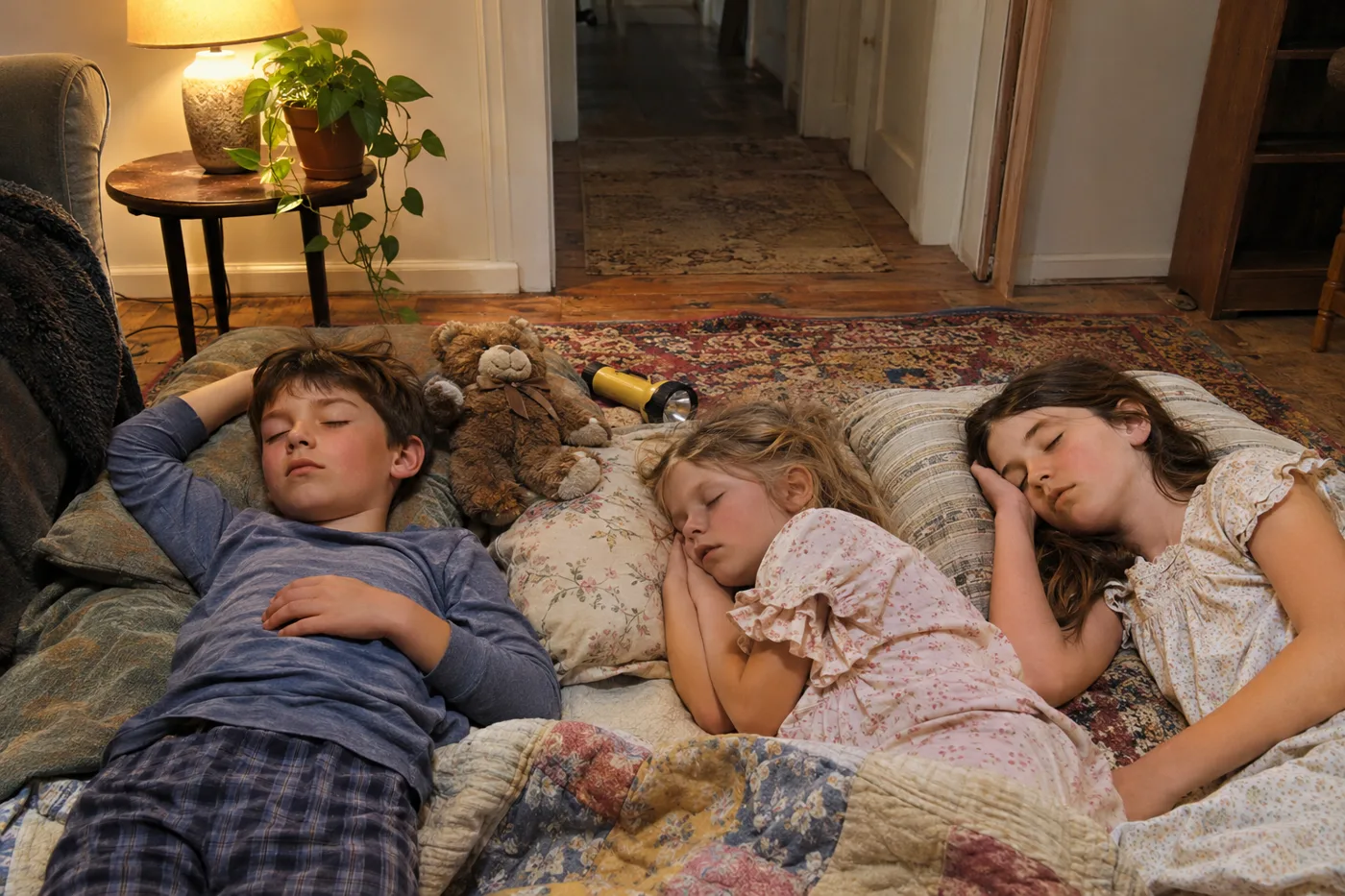
Every quilt in the house came down. The couch cushions too. By the end, the living room floor was one big bed with four cousins on it, still giggling after somebody said “Go to sleep” for the third time.
If you grew up in the South, you called that a pallet. The American Heritage Dictionary marks it “Chiefly Southern US”: a temporary bed of bedding on the floor, “especially for a child.”
Whatever your family called it, nobody slept much on it. Everybody remembers it.
#15 The crocheted afghan on the couch
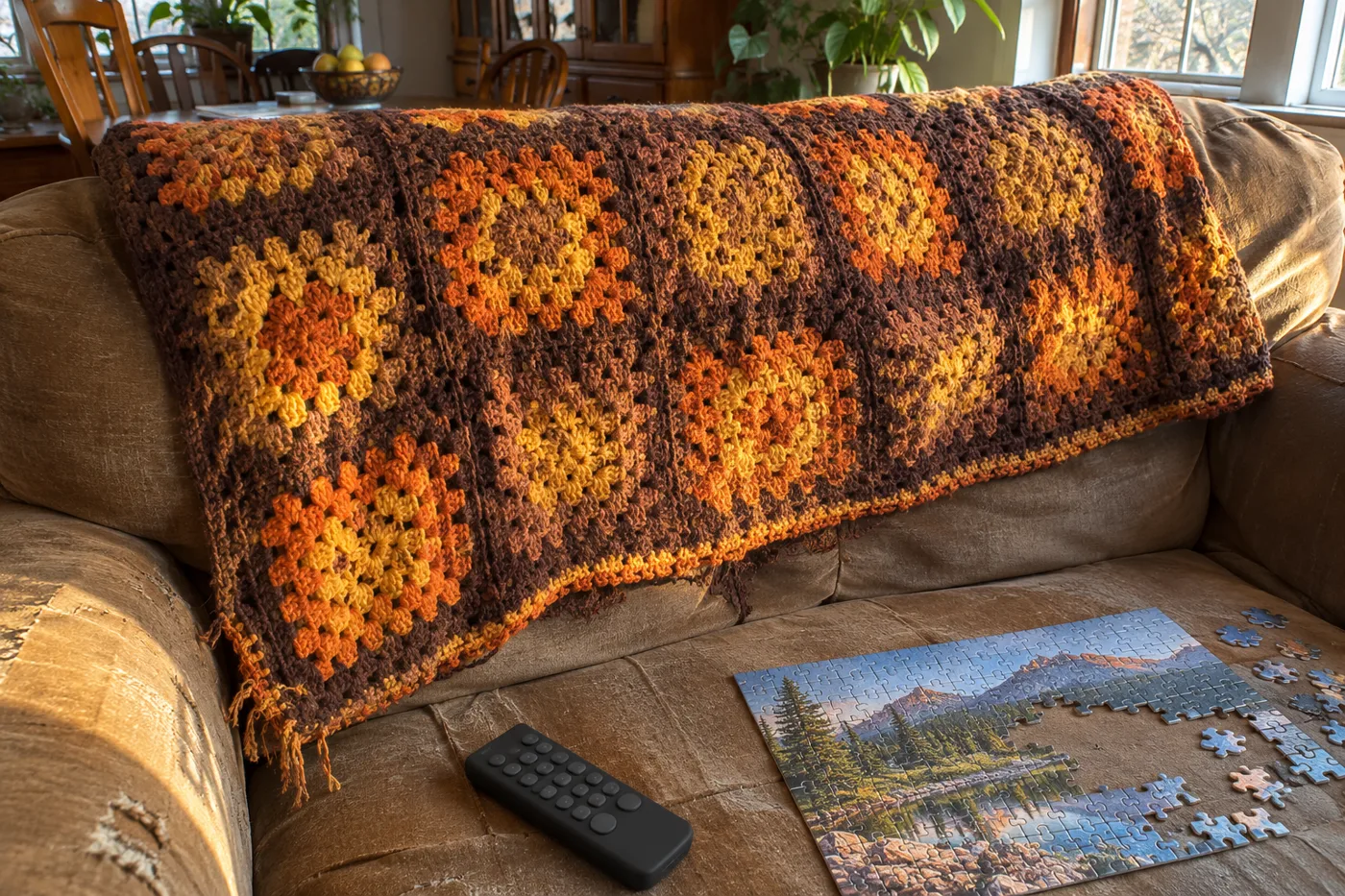
It lived folded over the back of the couch, in colors that matched nothing else in the room. Every kid who got sick, cold or sleepy ended up underneath it.
The granny square afghan is older than most people guess. The earliest known pattern ran in Prairie Farmer in April 1885. It was Mrs. Phelps’s “Crazy Afghan,” inspired by the crazy quilts of the day.
The names came later. “Granny afghan” shows up by 1933, and the words “granny square” first appear in a North Carolina newspaper on November 24, 1953.
So whoever crocheted the one on your couch, or the one you inherited, was working in a tradition well over a century old.
And the little holes in the pattern? Every kid in America has poked a finger through one.
#14 Getting scolded over coasters

“Use a coaster!”
Plenty of grown grandchildren can still hear it. A sweating glass of iced tea heads for the end table, and somebody across the room catches it before it lands. Cork coasters, tile coasters, a souvenir set from some long-ago trip, all stacked in a little holder by the lamp.
The scolding had a point. That white ring a cold glass leaves is moisture trapped in the finish, not in the wood itself. That’s good news, because it means you can often fix it.
Two home fixes come up again and again. Lay a dry cloth over the spot and press it with an iron on low heat to draw the moisture out.
Or spread mayonnaise on the ring and leave it for a few hours, since its oil can push the trapped moisture out.
Yes, mayonnaise. Next time a kid leaves a ring, skip the lecture and get the jar from the fridge.
#13 The wall phone with the long cord

It hung on the kitchen wall by the doorway, with a cord so stretched out it reached the pantry. Teenagers learned to walk it around the corner and shut the door on it for a little privacy. Little kids learned to stand on tiptoe and answer it in their best grown-up voice.
That phone has nearly vanished. For the second half of 2023, federal health surveys found about 76% of adults lived in homes with no landline at all.
So the phone with the curly cord may be the only one like it a grandchild ever sees.
If yours is still on the wall, let them answer it. They’ll be thrilled and slightly baffled.
#12 Pencil height marks on the door frame
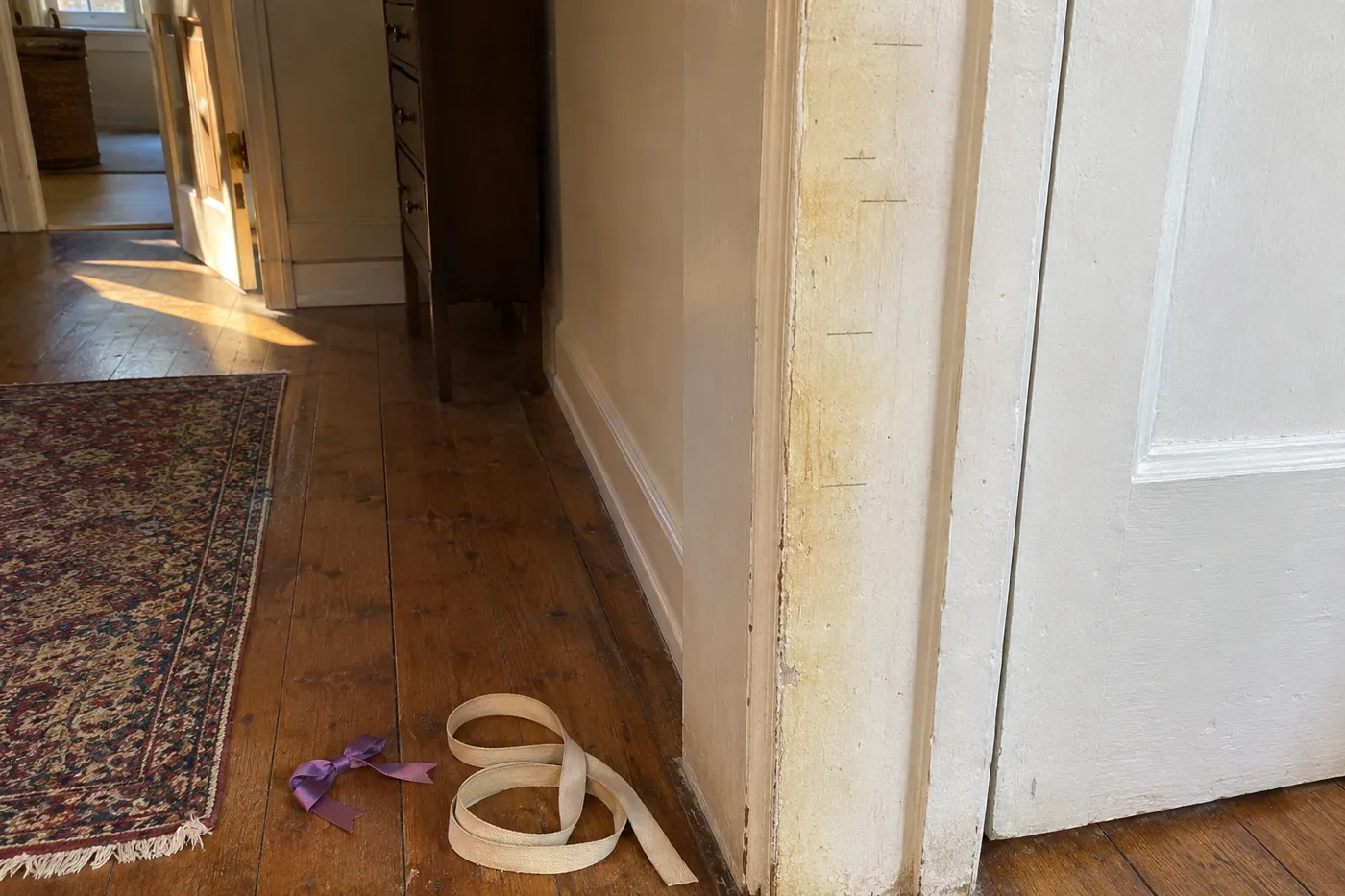
A book flat on the head. “Stand up straight, no tiptoes.” A pencil line, a name, a date, and then the tape measure to see how much they’d grown since summer.
Those little lines are the one part of a house people fight to take with them.
In a 2018 Globe and Mail essay, John Beattie told of a cottage seller who “pleaded to be allowed to take the old pencil-marked bathroom door,” and of a family who cut the whole side off a door before they sold their house.
If you have a door frame like that, take a good photo of it now, straight on and in daylight, so every name and date is readable. Paint happens. Moves happen.
And if you don’t have one yet, a pencil and a doorway are all it takes.
#11 A jigsaw puzzle always half-finished

The card table in the corner. A box lid propped up for the picture, and a thousand pieces of covered bridge in autumn, sorted into edges and sky. Anyone walking past was allowed to try one piece. That was the rule.
Puzzles started with maps. In 1763, London mapmaker John Spilsbury advertised himself as an “engraver and map dissector in wood.” He called his creations “dissected maps,” and he’s almost certainly the first person ever to sell jigsaw puzzles.
A half-done puzzle is perfect for a visiting kid, because there’s no wrong way to start. Leave one out on the table.
Then expect a fight over who gets to put in the last piece.
#10 Jelly jars used as drinking glasses
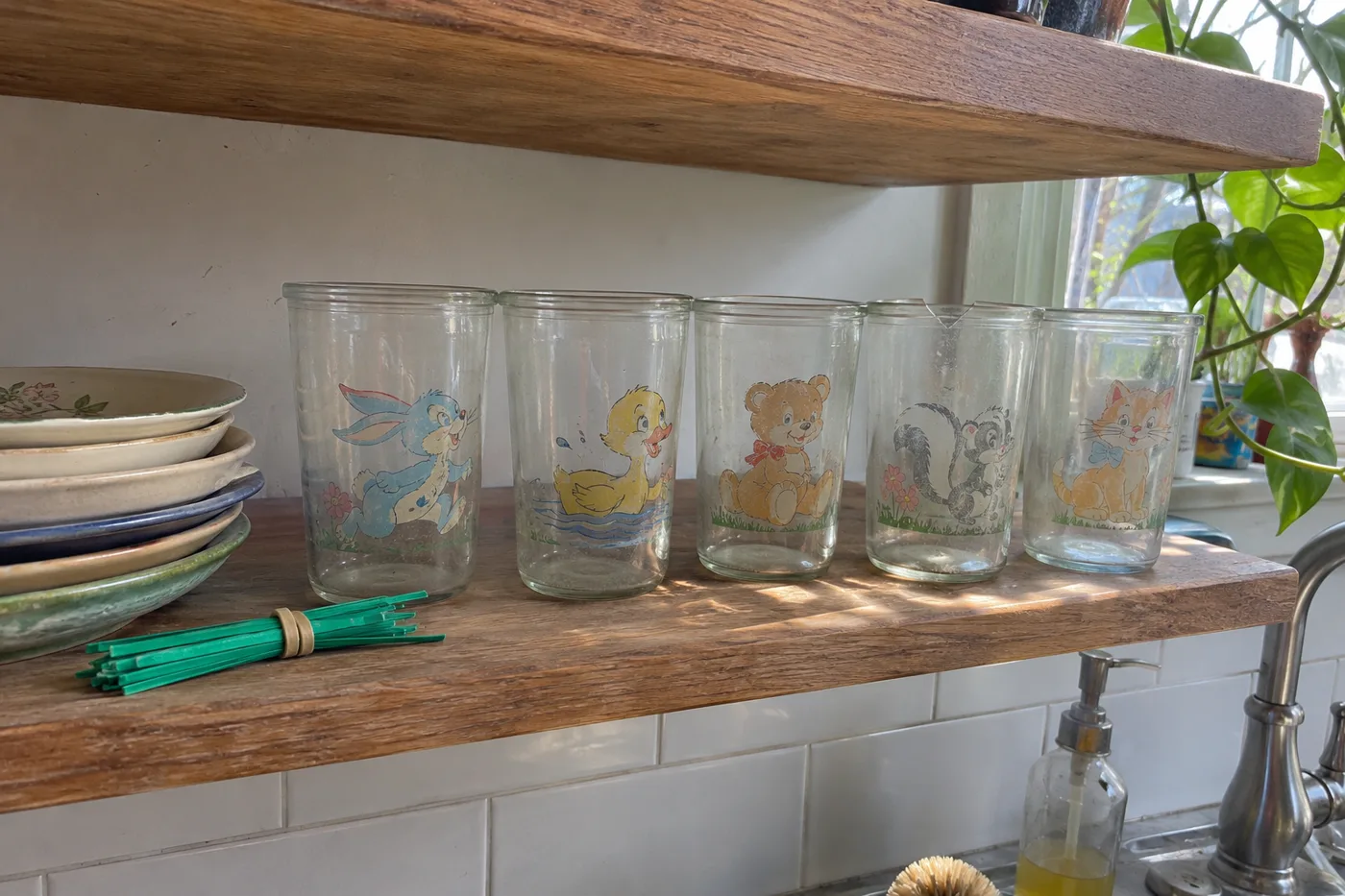
Nobody drank milk from a real glass. It came in a jelly jar with Fred Flintstone on it, or Bugs Bunny, or Archie and Veronica.
Those glasses were a clever bit of selling. Welch’s started printing characters on its jelly jars in the early 1950s, after sponsoring The Howdy Doody Show. A set usually had six to eight designs, so somebody had to keep buying grape jelly to finish the collection.
They ended after 1978. The newer, thinner glass chipped under the old pry-off lids, so Welch’s switched to screw tops.
If a few survived in your cupboard, they’re worth more smiles than dollars. A price guide built on 20 sales of the Flintstones glasses found an average of about $27, anywhere from $1 to $145.
They were made to be used, not kept behind glass doors.
#9 A bowl of fruit nobody could eat
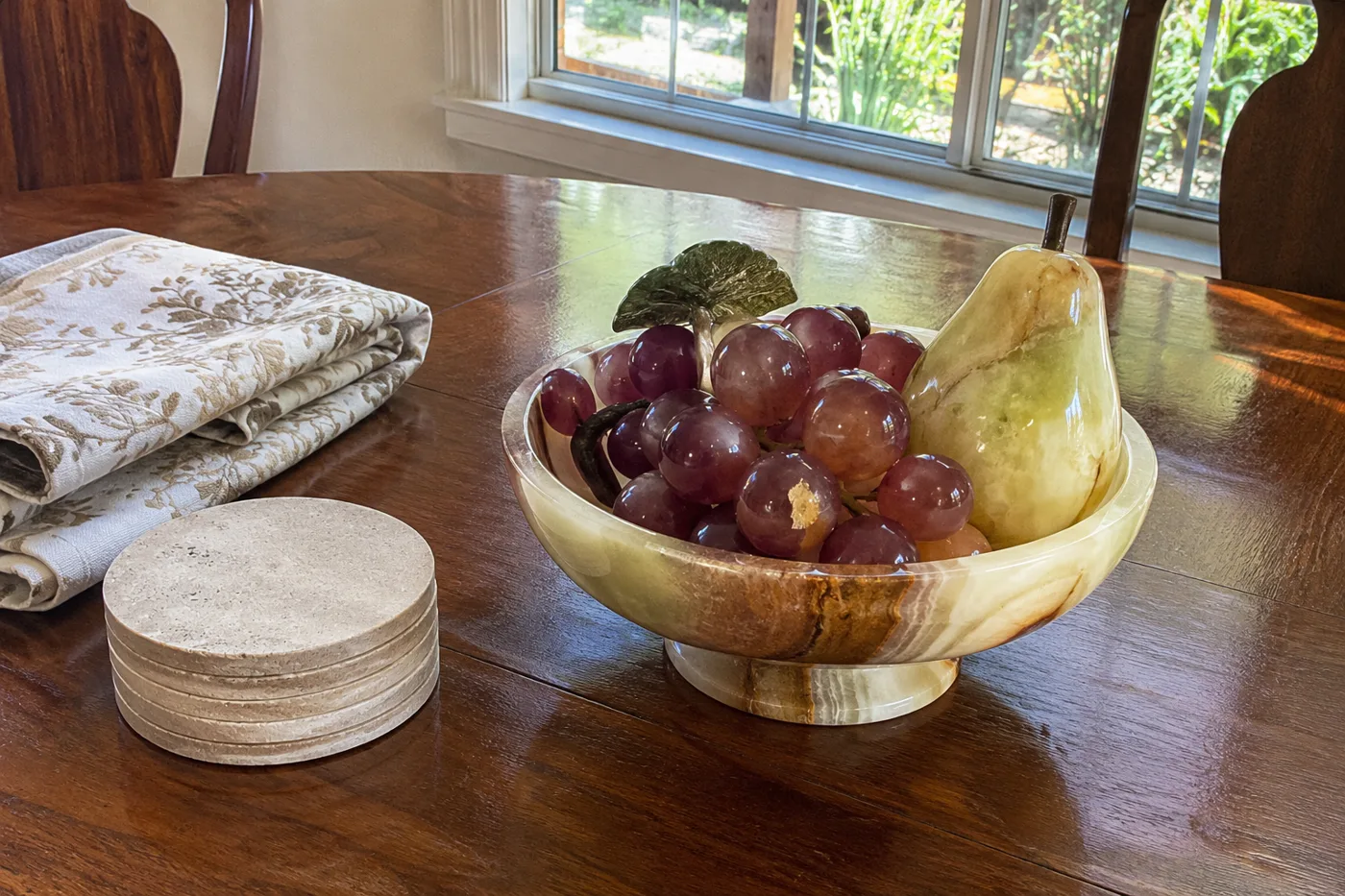
It sat in the middle of the dining table looking delicious, and nobody ever ate a bite. Plenty of kids found that out the hard way, with a tooth against a stone grape.
The heavy ones are usually carved Italian alabaster, according to Connecticut antiques dealer Carole Conn. The best pieces are 60 to 100 years old, and she prices a watermelon at $200 and up.
Her tip for telling them apart: a shiny finish or a plastic stem usually means a newer, cheaper piece.
Glass fruit had its moment from the 1950s through the 1970s. Pieces run from about $10 each up to $1,000 to $3,000 for the very finest sets, though the same guide admits “there’s not much demand for fruit made of glass.”
The plastic banana, meanwhile, is worth exactly what a five-year-old will trade for it.
#8 Your well-used mixing bowl and wooden spoon
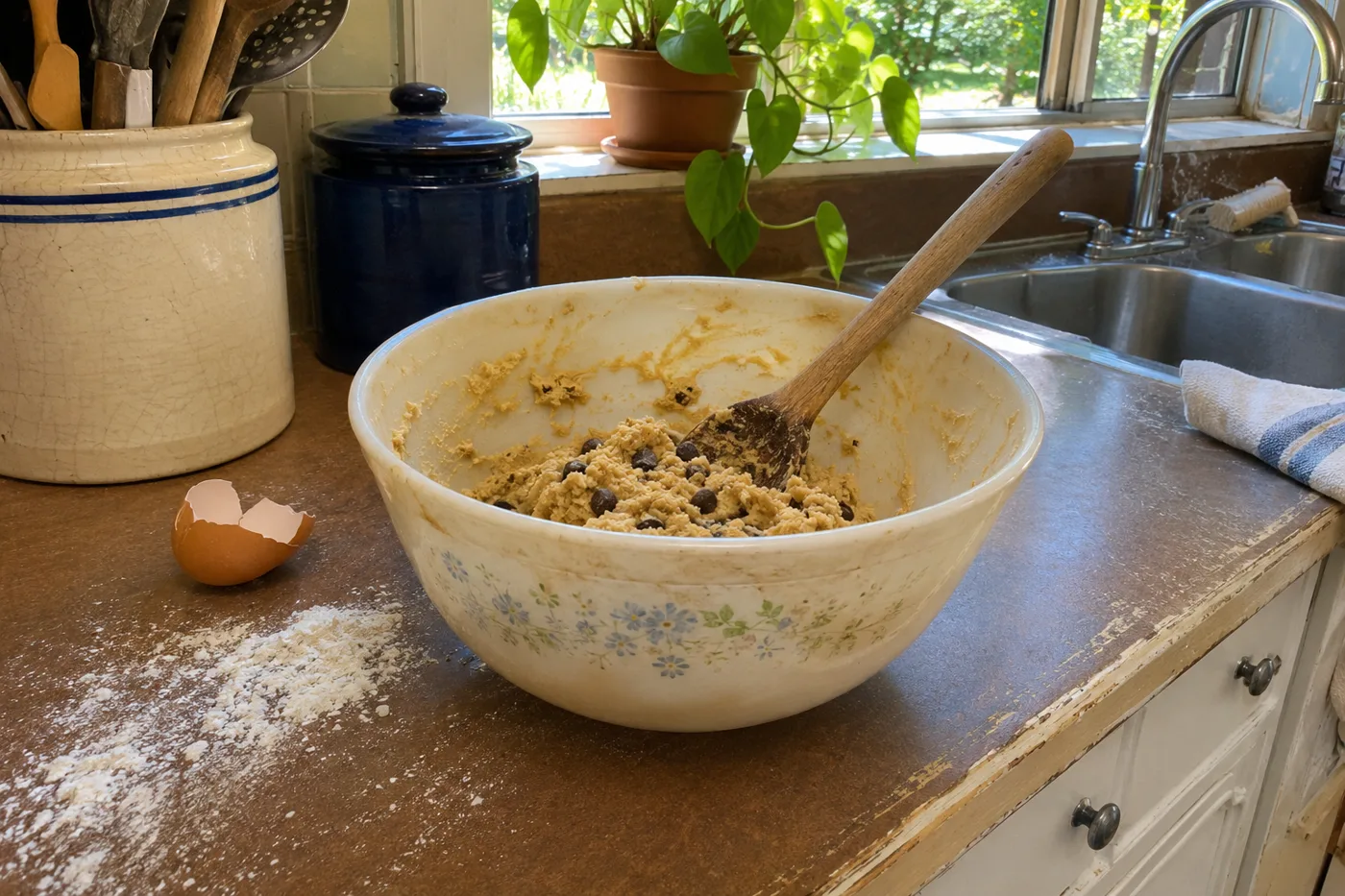
The bowl has a pattern faded from a thousand trips through the sink. The wooden spoon is stained dark at one end and worn flat on one side from years of scraping. To you, they’re just what’s in the cupboard.
To a kid who stood on a chair to stir cookie dough, they’re the most important things in the kitchen. The china gets looked at. The bowl gets used every single visit.
Every so often, an old bowl turns out to be something special. Pyrex’s 1959 “Lucky in Love” pattern, with little hearts and four-leaf clovers, was a limited test release made in Charleroi, Pennsylvania.
It’s been called the “holy grail of Pyrex,” and in July 2022 someone bid $22,100 for one on eBay before the bid was canceled.
Yours is almost certainly not that bowl. Look anyway.
Then hand it to a kid with a spoon and a box of brownie mix.
#7 The worn-out armchair nobody else sat in
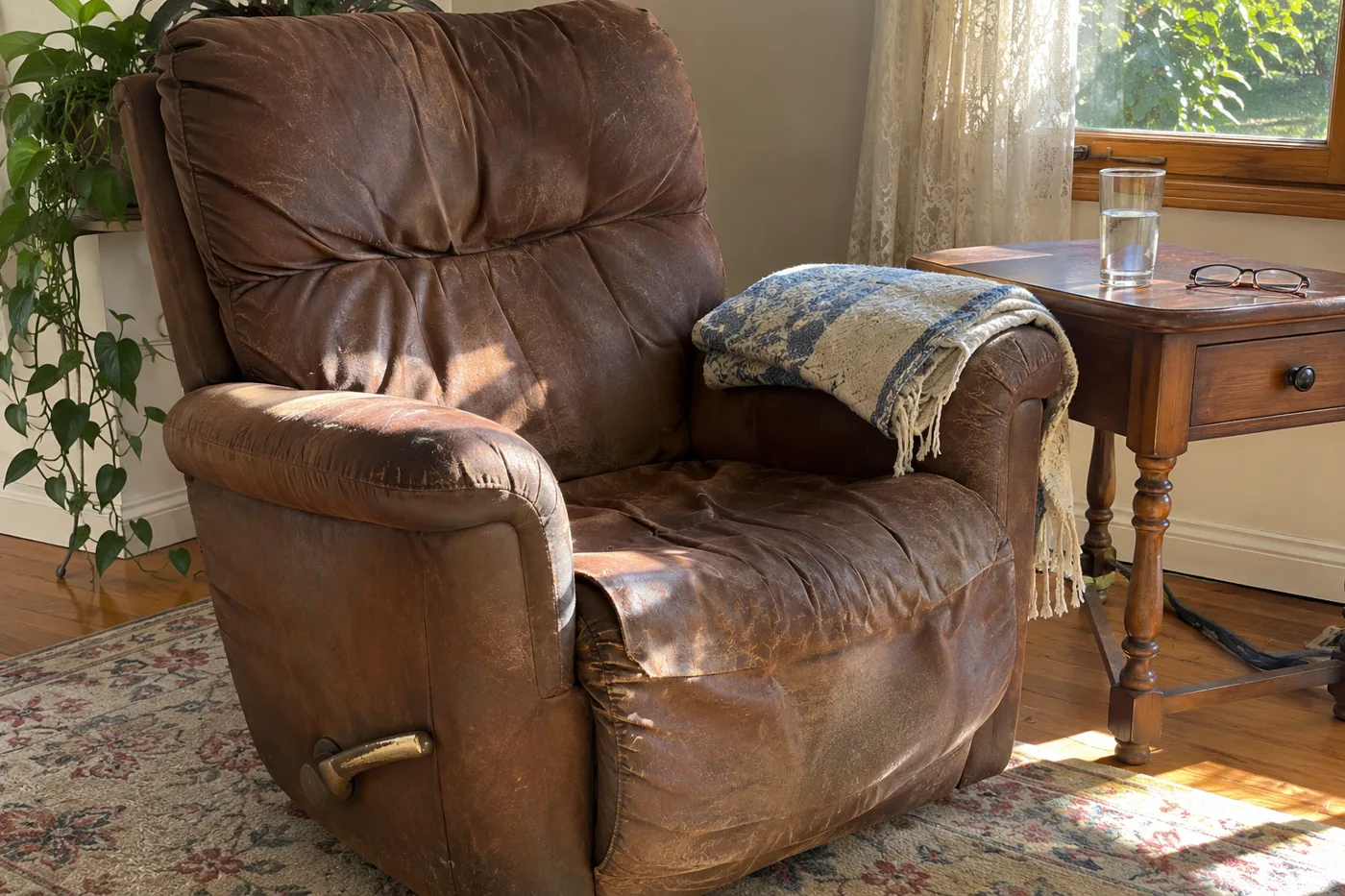
Most houses had one chair that belonged to one person. Maybe a recliner whose footrest came up with a thunk. Maybe a wingback with the arms worn shiny. Either way, the cushion had a dent shaped like its owner, and nobody else was supposed to sit there while they were home.
The recliner is older than it looks. Around 1850, the French had a reclining camp bed that could double as a chair. The American version came in 1928, when cousins Edward Knabusch and Edwin Shoemaker patented a wooden recliner, then an upholstered one in 1930.
Their very first one was built out of orange crates, designed for what they called “nature’s way of relaxing.” That turned into La-Z-Boy, out of Monroe, Michigan.
Kids loved those chairs for one reason. The second the owner got up, they climbed in, pulled the lever and leaned back like royalty.
The cushion still has that dent. Leave it.
#6 The ceramic Christmas tree with tiny lights
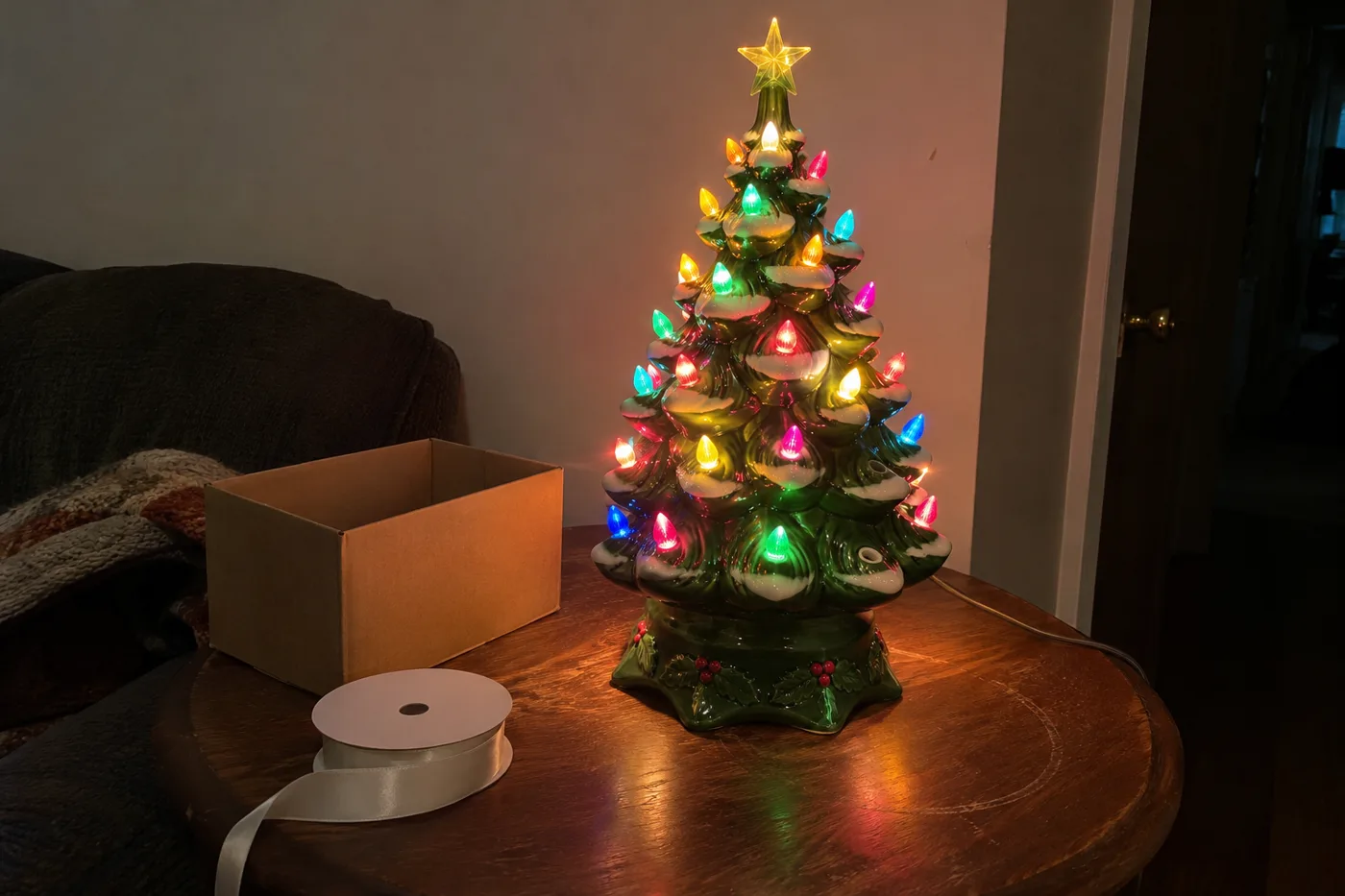
Most of the year, it’s in a box somewhere with tissue paper around it. Then December comes, it gets plugged in, and those little plastic bulbs glow from the inside.
That tree was a craft before it was a decoration. They were most popular in the late 1960s and early 1970s, and vintage expert Bob Richter told TODAY that “everyone who took a ceramics class and celebrated [Christmas] made one of these trees.” By the 1980s, they’d gone out of style.
Then they came back. In 2018, TODAY reported that vintage trees typically sold for $100 to $200 during the holiday season. In that article, Richter suggested shopping flea markets in summer, when he said trees went for $10 to $20.
Kids usually weren’t allowed to touch it. They counted the bulbs instead, or hunted for the one that was missing.
If yours is still packed away, set it on the table this year and tell them who painted it.
#5 Mothballs and cedar in the closets
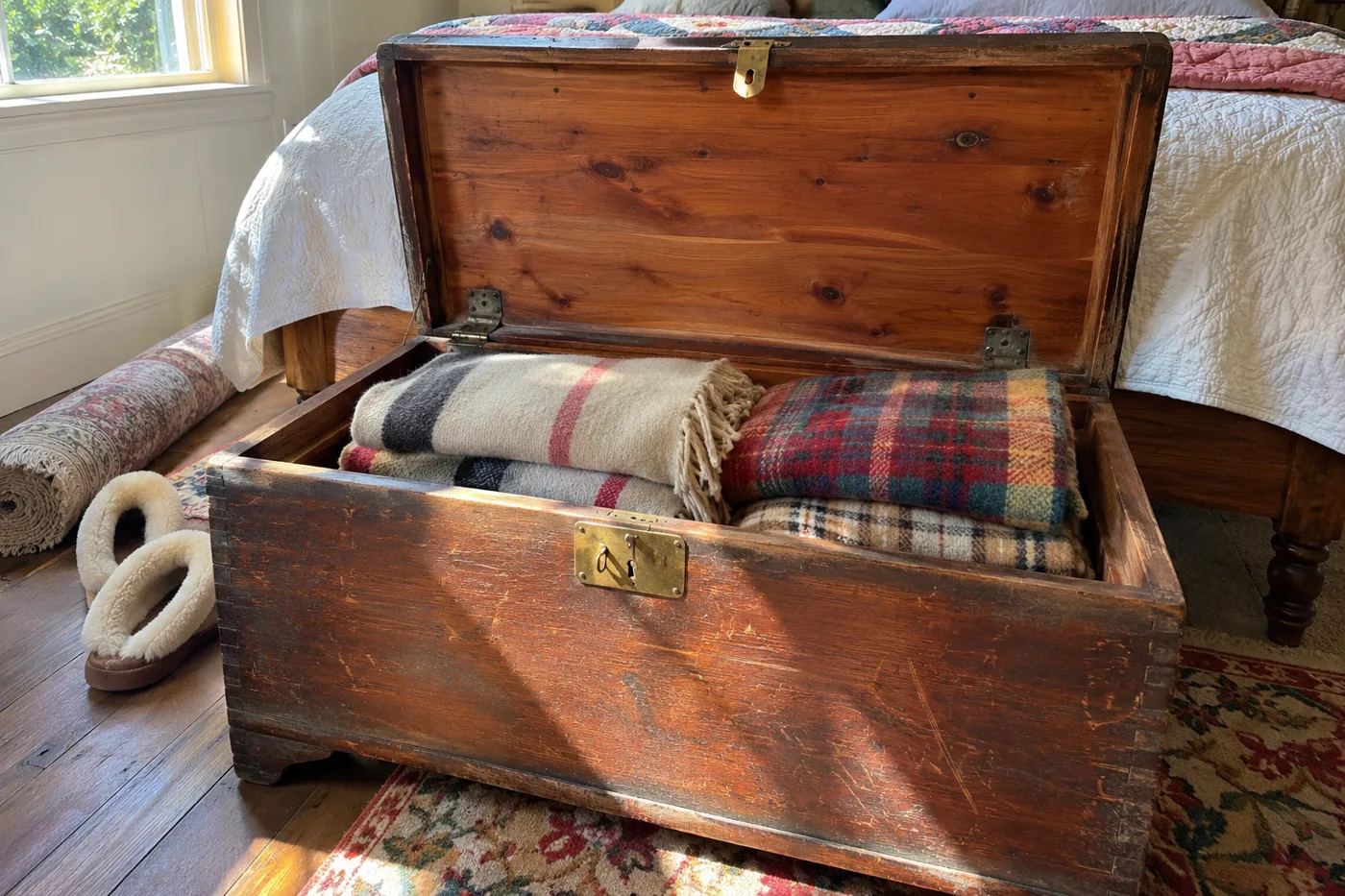
Open the hall closet in a lot of grandparent houses and there it was, all in one breath. Sharp, chemical, a little sweet if a cedar chest sat nearby. Mothballs come up again and again when people describe a grandparent’s house by smell alone.
Cedar added the sweeter note, like the inside of a pencil sharpener, though it was never as strong a protector as people believed.
Anyone who grew up with it would know it in a second.
#4 A pot of coffee always on
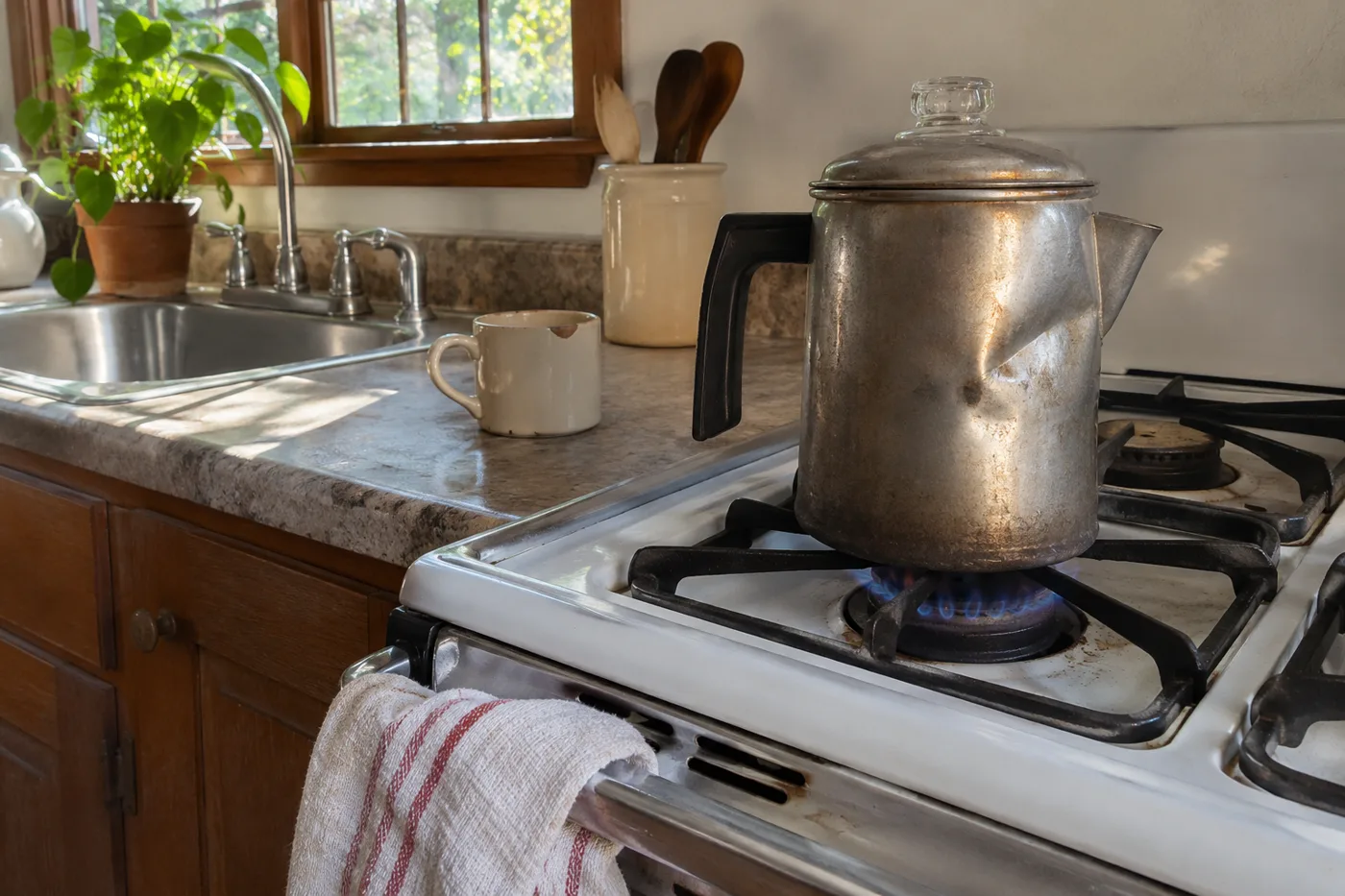
Morning, noon or after supper, there was coffee. The pot sat on its warmer all day, and the smell was as much a part of the kitchen as the curtains.
Many people name coffee brewing when they describe a grandparent’s house, even though most of them were far too young to drink it.
Before the drip machine came the percolator. It gurgled and bubbled up into that little glass knob on top, and because the heat and brewing time were all over the place, it often made bitter, burned-tasting coffee.
Then Mr. Coffee brought out its automatic drip machine in 1972, and it sold more than a million by April 1974.
Kids remember the sounds of both: the percolator’s burble, the drip machine’s hiss and sigh.
They also know which mug is yours. The one with the faded bank logo that nobody else is allowed to use. Pour one and leave the pot on.
#3 Figurines you were told not to touch
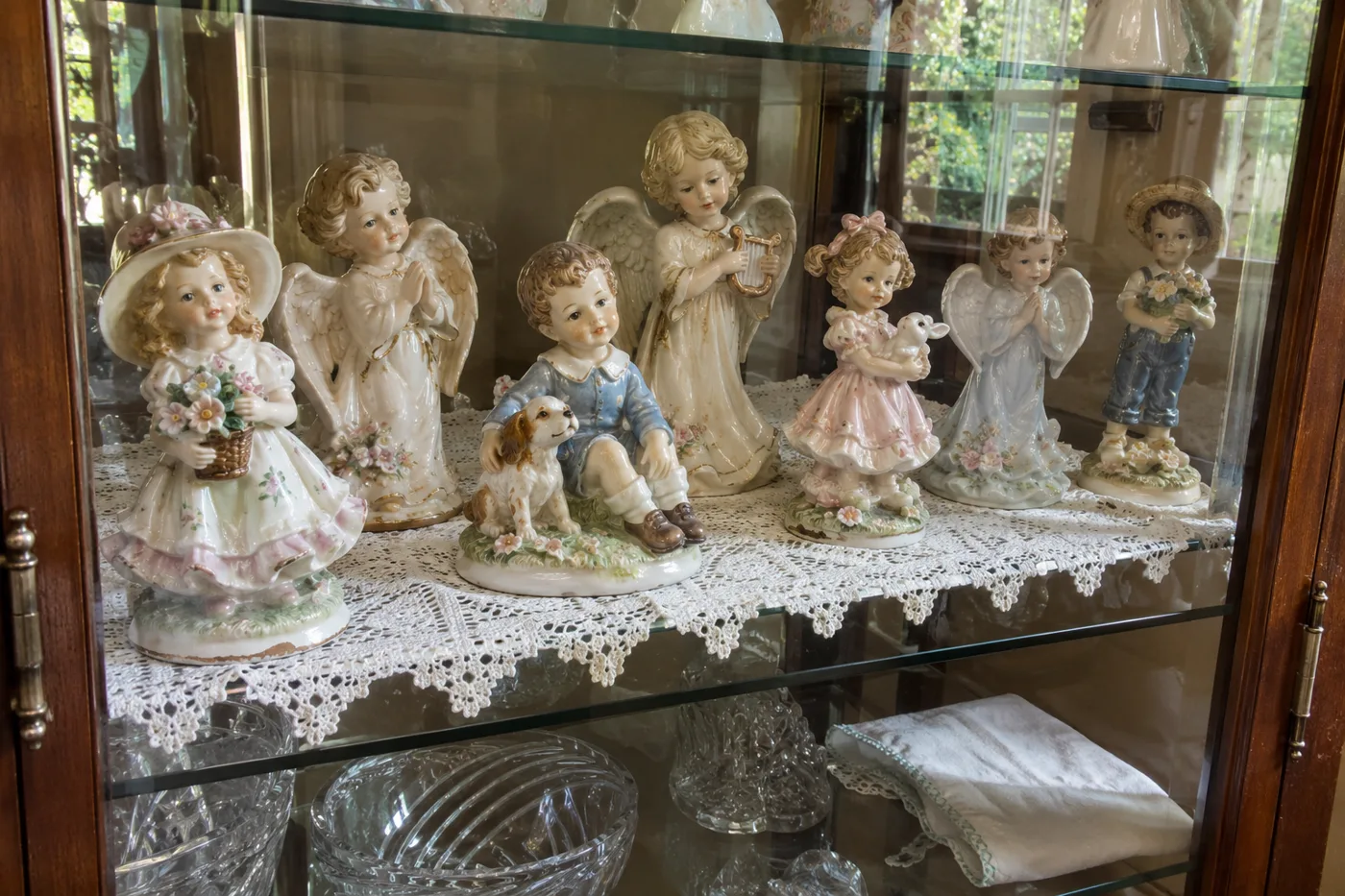
A little boy with an umbrella. A girl holding a goose. Wide-eyed angels lined up on a shelf just high enough to see and just low enough to be tempting. “Look with your eyes, not your hands.”
Hummels came long before Precious Moments. Goebel began making them in Germany in 1935, with 46 designs on sale by the end of that year. American soldiers mailed them home after World War II, and in the 1970s people bought them hoping their value would climb, which pushed prices way up.
The market has cooled. A look at eBay sales from August to October 2026 found that even Precious Moments pieces labeled “retired” sold for a median of $13, about the same as the $12 for the rest.
Nobody’s getting rich off that shelf. But a grandchild who stared at it for years can still tell you which one had the glued-back hand.
#2 The piano in the living room
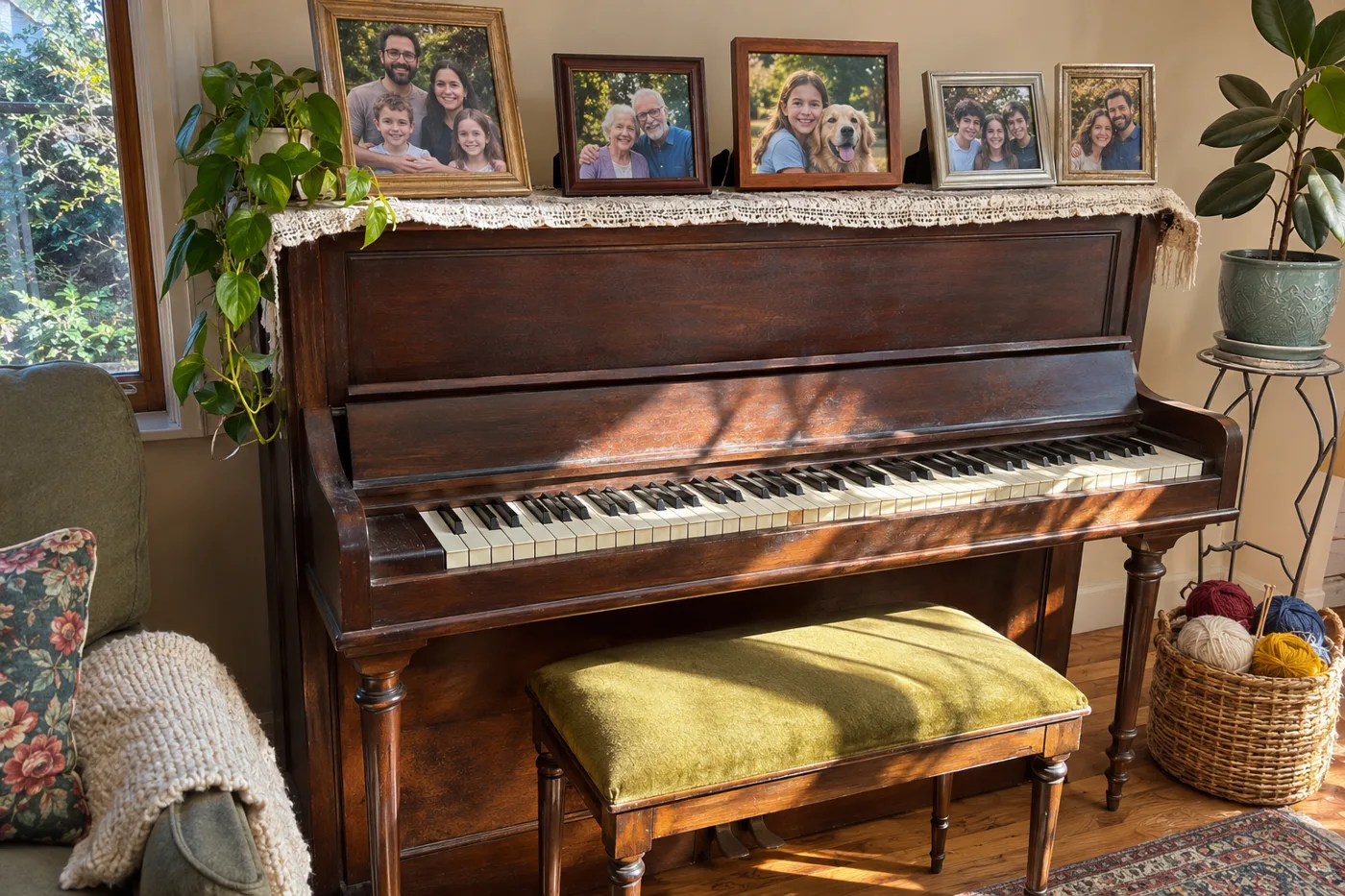
It sat against the living room wall with a runner on top and framed photos lined up across it. The bench lid lifted to reveal old sheet music, and at least one key stuck. Every kid who walked past hit a note, usually a low one, as loud as possible.
A piano used to be ordinary furniture. About a century ago, roughly half of American homes had a piano or a player piano.
In 2024, by the same account, fewer than 18,000 acoustic pianos sold in the whole country.
So the piano in your living room, if you have one, may be the only real one a grandchild ever gets to touch. It doesn’t matter if it’s out of tune or if nobody’s played a whole song on it in years.
Sit them on the bench and show them “Chopsticks.” Or just let them bang.
#1 Waving from the door until they’re gone

The car’s packed. The leftovers are in the cooler. Somebody’s already buckled in and kicking the seat. And you’re standing in the doorway, or out on the step under the porch light, waving.
You keep waving while the car backs out. You keep waving while it rolls down the street. You only stop when it turns the corner and you can’t see it anymore.
You’ve probably never once thought about it. It’s just what you do at the end of a visit.
Ask the kids in the back seat, though, years from now. That may be the picture they keep: someone in the doorway getting smaller, one hand up, the house lit up behind them. It’s the one thing on their list that isn’t in the house at all.
In plenty of families it turned into a quiet game. The kids twisted around in their seats to see if you were still there. Some families gave a little honk at the corner.
Next time, stay out there one second longer. Somebody in that back seat is checking.
The bottom line
Next time you come home, stop in the doorway for ten seconds before you set your bag down. Look at the room as if you’d never seen it. What catches your eye first?
Whatever it is, leave it right where it is.
You don’t have to stage anything. The house is already doing the work.
Bonus: 4 ways to save the little things before they change
- Turn on your phone’s voice recorder in the kitchen for two minutes on an ordinary morning. The clock, the coffee maker, the radio. It’s the one part of a house a photo can’t keep.
- Copy a handwritten recipe onto a dish towel. Printing a scan onto fabric lasts longest. Tracing it with a permanent marker works too. Iron-on transfer paper is fastest but cracks after a few washes.
- Tape an index card inside the china cabinet door that says where the set came from and who first owned it.
- Photograph each room with your phone held at about doorknob height. That’s the view the kids had.
Questions people also ask
Why can’t you smell your own house?
Your nose and brain tune it out because it never changes. Odor scientist Pamela Dalton says the nose adapts very quickly and the brain then filters the smell out as unimportant, cutting its strength by about half in the first minute. Even after a trip, she says, you get used to your home’s smell again faster, because you already know it.
Why do smells trigger such old childhood memories?
Smell skips the brain’s usual relay station and goes straight to the parts that handle memory and emotion. Scent-triggered memories also tend to come from early childhood rather than later years.
Are vintage Pyrex mixing bowls really worth thousands of dollars?
Only very rare pieces are. The 1959 “Lucky in Love” bowl, a limited test release with hearts and four-leaf clovers, sold for $5,994 at a Goodwill auction in 2017. A $22,100 eBay bid for one in 2022 was canceled, so treat the headline prices with care.
Do many homes still have a landline phone?
Fewer every year. Most households switched to cell phones. By 2024, only 0.9% of households relied on a landline alone, though nearly a fifth kept one alongside their cell phones.

- 26 Things Grandchildren Remember About Your House That You Never Notice - November 5, 2026
- 25 Church Bazaar Crafts Every Town Sold That Nobody Makes Anymore - November 5, 2026
- 23 Things People Over 60 Still Do When Decorating That Designers Beg Them to Stop - November 5, 2026

Leave a Reply