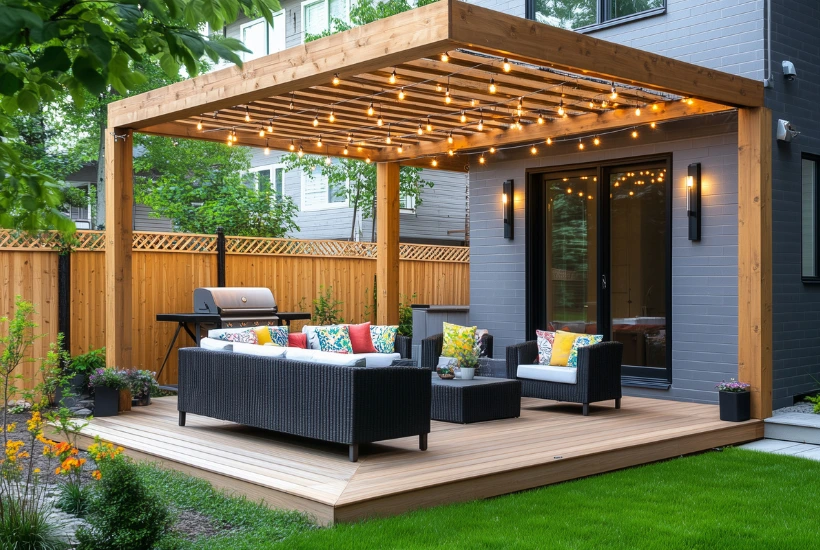
The way we use our homes has changed. Gardens are no longer viewed simply as areas for planting, entertaining in summer or storing outdoor equipment. Increasingly, they are becoming extensions of the living space: places to work, dine, relax and spend time with family throughout much of the year.
A pergola can play an important role in making that transition feel natural. Positioned between the house and garden, it creates an architectural link between indoors and outdoors while adding shelter, definition and a sense of purpose. More than a decorative feature, the right pergola can help transform an underused area into a genuine outdoor room.
Creating a Natural Extension of the Home
A successful indoor-outdoor living space should feel connected rather than divided. The transition from a kitchen, dining room or sitting room into the garden ought to be visually and practically seamless.
Pergolas help achieve this by introducing a defined structure immediately outside the property. Their posts and roof framework create a sense of enclosure, but without the solid walls associated with an extension or garden room. This balance is what makes them so versatile: you gain a feeling of shelter while retaining the openness of the garden.
Positioning matters. A pergola installed directly outside wide-opening doors can extend the visual lines of the interior into the garden. Matching materials, colours or finishes between the two spaces strengthens the connection. For example, paving that echoes an indoor floor tone can make the room appear to continue beyond the threshold, while timber details may complement wooden furniture or exposed beams inside.
Even where the pergola sits further into the garden, a clear path, consistent planting scheme or repeated material can guide the eye and make the structure feel like part of the overall home design.
More Than Shade: The Practical Benefits
The British climate makes outdoor living unpredictable. A bright morning can quickly become a cool afternoon, and an unexpected shower is enough to bring lunch or drinks indoors. A pergola does not eliminate these limitations, but it can make the garden considerably more usable.
Depending on the design, a pergola may provide:
- Shade during the warmer parts of the day
- A degree of protection from light rain and wind
- Support for climbing plants and outdoor lighting
- A framework for curtains, screens or retractable coverings
- A defined area for furniture, dining or entertaining
The sense of shelter is often as important as the physical protection. A table placed beneath a pergola feels like an intentional dining area rather than garden furniture left on a patio. Likewise, a sofa, armchair or outdoor daybed can create a comfortable retreat when positioned within a structured space.
For households that work from home, a pergola can even offer an alternative setting for taking calls, reading or completing less demanding tasks. It provides a change of scenery without requiring a major building project.
Choosing a Design That Suits the Property
Consider Scale and Proportion
A pergola should relate to both the house and the garden. A structure that is too small may look disconnected, while one that dominates the space can make the garden feel cramped.
Start by considering how the area will be used. A compact pergola may be sufficient for two chairs and a small table, whereas a dining arrangement, outdoor kitchen or corner sofa will require greater width and depth. Remember to leave comfortable circulation space around furniture; an attractive layout can quickly become impractical if people have to squeeze past one another.
The height of the pergola also affects its character. A taller structure feels more open and spacious, while a lower roofline can create a cosier atmosphere. It should still relate sensibly to nearby windows, doors and eaves.
Match Materials to the Setting
Timber pergolas tend to feel warm and organic, making them well suited to cottage gardens, mature planting and traditional properties. Powder-coated metal or modern composite options can offer a cleaner, more contemporary appearance and may work particularly well alongside rendered walls, glazed extensions or minimalist landscaping.
There is no single correct choice. The key is consistency. Look at the colours and textures already present in the garden, then select a finish that complements them rather than competing for attention. For homeowners comparing different proportions, roof styles and materials, exploring stylish pergola designs for gardens can provide useful inspiration before making a decision.
Designing for Comfort Throughout the Year
A pergola is most valuable when it supports more than occasional summer use. Small additions can make a significant difference to comfort and atmosphere.
Lighting is one of the simplest upgrades. Warm, low-level illumination can make the space inviting in the evening, while discreet integrated lighting helps with practical tasks such as serving food or moving safely between the house and garden. Avoid relying on one bright overhead fitting; a combination of wall lights, string lights or lanterns usually creates a softer effect.
Heating can also extend the season. Outdoor-rated heaters, fire pits or built-in seating with blankets may allow the space to remain comfortable during cooler evenings. However, any heating solution should be selected with ventilation, positioning and fire safety in mind.
For greater flexibility, consider side screens, outdoor curtains or adjustable roof systems. These features can reduce glare, block a breeze and offer privacy without making the pergola feel permanently enclosed. Climbing plants provide a more natural form of screening, although they require time, maintenance and suitable support.
Making the Pergola Feel Like a Room
The most successful pergolas are designed with the same care as indoor rooms. Think about the purpose first, then plan the layout around it.
If dining is the priority, position the table so there is enough space to move around it and consider how close it is to the kitchen. For lounging, orient seating towards the garden view, a fire pit or an outdoor focal point. If the pergola will serve several functions, use rugs, planters or changes in flooring to subtly divide the space into zones.
Storage should not be overlooked. Cushions, throws, tableware and gardening accessories need somewhere dry and accessible. A nearby bench with concealed storage or a compact outdoor cabinet can prevent the area from becoming cluttered.
Finally, consider the view from inside the house. A pergola is part of the garden, but it is also visible through windows and doors all year round. Its shape, planting and lighting should look appealing even when the space is not in use.
A Lasting Connection Between Home and Garden
A pergola bridges indoor and outdoor living by combining structure with openness. It creates shelter without closing off the garden, adds purpose without demanding a large extension, and gives everyday activities a setting that feels both relaxed and considered.
With careful attention to scale, materials, lighting and comfort, a pergola can become one of the most useful features in a garden. Rather than treating the outdoors as a separate space, it encourages a more fluid way of living—one where the boundary between home and garden feels less like a dividing line and more like an invitation.
Related posts:
Metal vs. Upholstered Bed Frames: Which One Should You Choose?
Quick DIY Repairs to Improve Your Garage’s Appearance
How To Choose Porch Flooring That Fits Your Home
Slow-Living Weekend Build: The Sideboard I Made for Our Dining Nook
How To Block Light From Top & Side Of Curtains | 10 Tested Methods For 100% Darkness
28 Best Spice Rack & Organization Ideas For

- How to build a backyard pool space that actually fits your daily life - October 13, 2026
- Garden room cladding: what survives a British winter - October 13, 2026
- Ditch the Wall! 7 Creative Ways to Use a Sectional as a Room Divider - October 13, 2026

Leave a Reply