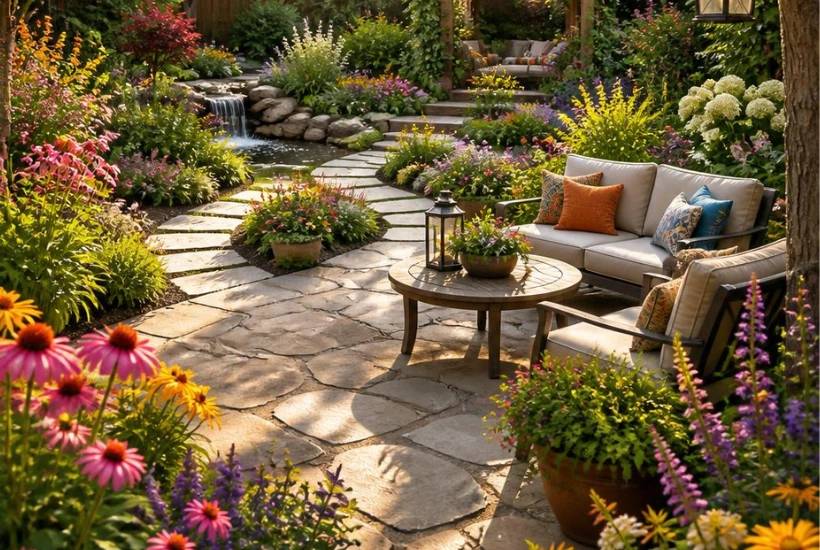
Most garden transformations start in the same place. You spend a few hours on Pinterest, save forty images of spaces that look nothing like your actual garden, order some plants, and then wonder six months later why the result does not quite match what you had in mind.
The gap between a garden that looks good in photos and one that actually works for the way you live is almost always a planning gap. Professional garden designers approach transformation projects in a way that most homeowners never do, not because the process is complicated, but because nobody shows you what it actually involves.
Here is what the professionals do before anything gets planted or built.
They Understand How the Space Is Actually Used Before They Touch the Design
The first thing a professional garden designer does is not sketch a layout. It is ask questions.
Who uses the garden and how? Do children need space to run and play? Is this primarily an entertaining space, a growing space, a quiet retreat, or some combination? How much time is realistically available for maintenance? What is the budget and how should it be prioritised? Are there views worth preserving or eyesores worth screening?
These questions sound basic but they fundamentally shape every decision that follows. A garden designed around outdoor entertaining looks completely different from one designed around growing vegetables, even if both are the same size and the same shape. A design that ignores maintenance reality produces a garden that looks beautiful for one season and exhausted for the next three.
According to Pehrsson Scott, an award-winning landscape design company operating throughout London and the Home Counties, involving the client deeply in the brief stage is what separates a garden that genuinely suits the household from one that looks impressive in photographs but does not work in practice. The design process should start with how you actually live, not with what is currently fashionable.
They Assess What Is Already There Before Deciding What to Change
Homeowners planning a garden transformation tend to start by thinking about what they want to add. Professionals start by thoroughly assessing what already exists.
An existing mature tree is twenty years of growth you do not have to wait for. A boundary hedge that has been there for decades provides privacy that would take years to replicate with new planting. Old paving may be worth lifting, or it may be worth working with if the layout is sound. Established plants that look tired may only need cutting back rather than replacing.
Soil condition is one of the most important assessments and one of the most commonly skipped. Understanding whether your soil is clay, sandy, or loamy, what its drainage characteristics are, and what its pH level is determines which plants will thrive and which will struggle regardless of how carefully they are chosen or planted. A design that ignores soil conditions produces plantings that never reach their potential.
Sun and shade mapping is another professional step most homeowners skip. Walk around your garden at different times of day across different seasons and note which areas receive full sun, partial shade, or full shade at different points. This information determines which plants belong where and where hardscape elements like seating areas and dining spaces will actually be comfortable to use.
They Design for the Future, Not Just the Present
A professional garden design accounts for how the space will look in one year, five years, and ten years, not just at the point of completion.
Fast-growing plants that provide immediate impact often become problems within a few years if their mature size was not accounted for in the layout. Trees planted too close to boundaries or structures create issues as they mature. Perennial planting schemes that look sparse in year one fill in beautifully by year three if they are designed with mature spread in mind.
This long-term thinking also applies to hardscape. A patio that is the right size for your current household may not accommodate a growing family. A path that is adequate for foot traffic may not handle a wheelbarrow when you start growing vegetables. Designing for how the garden will be used in several years rather than only for today produces spaces that continue to work as life changes.
They Budget Across the Whole Project Before Starting Any of It
One of the most common mistakes in DIY garden transformations is spending the budget on the visible and exciting elements, planting, furniture, decorative features, and then running out of money before the structural and foundational elements are complete.
Professionals allocate budget across the whole project before any work starts. Groundworks and drainage, which are invisible once the garden is finished, are typically more expensive than homeowners expect and more important than they realise. Hard landscaping, walls, paths, patios, and pergolas sets the structure that everything else hangs off. Planting, which is what most people think of as the garden, is actually the final layer that softens and completes the structure beneath it.
A garden transformation that gets the structure right and keeps planting simple will always look better than one that skips structural investment in favour of spending everything on plants.
They Phase the Project If the Budget Requires It
Not every garden transformation needs to happen at once. A professional approach to a limited budget is to design the whole space first and then implement it in phases, prioritising the elements that make the most immediate impact or that need to be in place for everything else to work.
Soil improvement and drainage need to happen before planting. Hard landscaping that involves excavation needs to happen before soft landscaping. Planting that takes time to establish should go in as early as possible. Features that are purely decorative can wait until the structural and planting elements are complete.
Designing in phases rather than approaching each phase separately as budget becomes available produces a coherent result that looks intentional rather than assembled over time without a clear direction.
The Difference a Plan Makes
The most important thing professional garden designers bring to a transformation project is not creative vision. It is a process that accounts for everything before anything is committed to, so the decisions made at the start produce the result intended at the end.
Most homeowners who are disappointed with a garden transformation can trace the disappointment to a decision made early in the process without enough information. A plan that addresses brief, site assessment, long-term growth, budget allocation, and phasing before any work starts removes most of those disappointments before they have a chance to happen.
The garden you want is achievable. The path to it starts earlier and with more questions than most people expect.
Related posts:
Signs It’s Time to Repair or Replace Your Garage Door in Denver
Sustainable Christmas Decorating: Ideas That Actually Work
18+ Brew-tifully Crafted DIY Coffee Stations Ideas
15+ Neutral Minimalist Bedroom Decor Ideas
12 DIY Dream Catcher Projects for Kids and Adults
Holiday Magic: 15 Christmas Centerpiece Ideas

- Strawberry Sago with Fresh Strawberries and Nata de Coco - September 28, 2026
- Panasonic Ventilation Solutions for Apartments, Hotels, and Shared Facilities - September 28, 2026
- How to Build a Wardrobe That Works for Your Cosy Days In - September 24, 2026
Leave a Reply