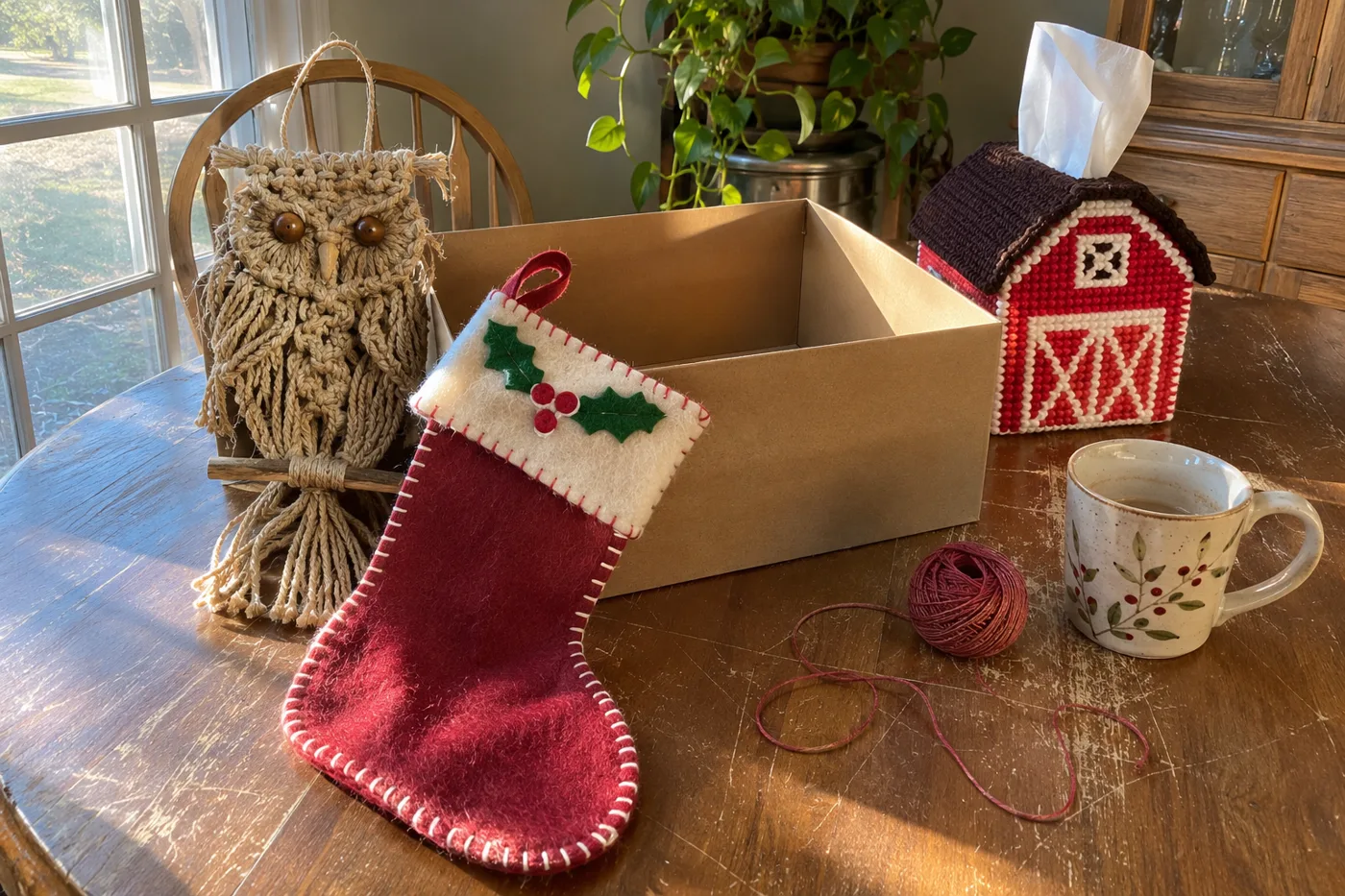
Reach past the winter coats on the closet shelf and there it is: a shoebox holding a felt stocking, a jute something with bead eyes, and a tissue box cover shaped like a little barn. You made all of it, or watched it get made. Hardly anybody makes any of it now.
Somebody out there is paying real money for exactly that kind of thing, and somebody else is dropping the same thing in a donation bin.
#24 Macramé plant hangers knotted from jute cord
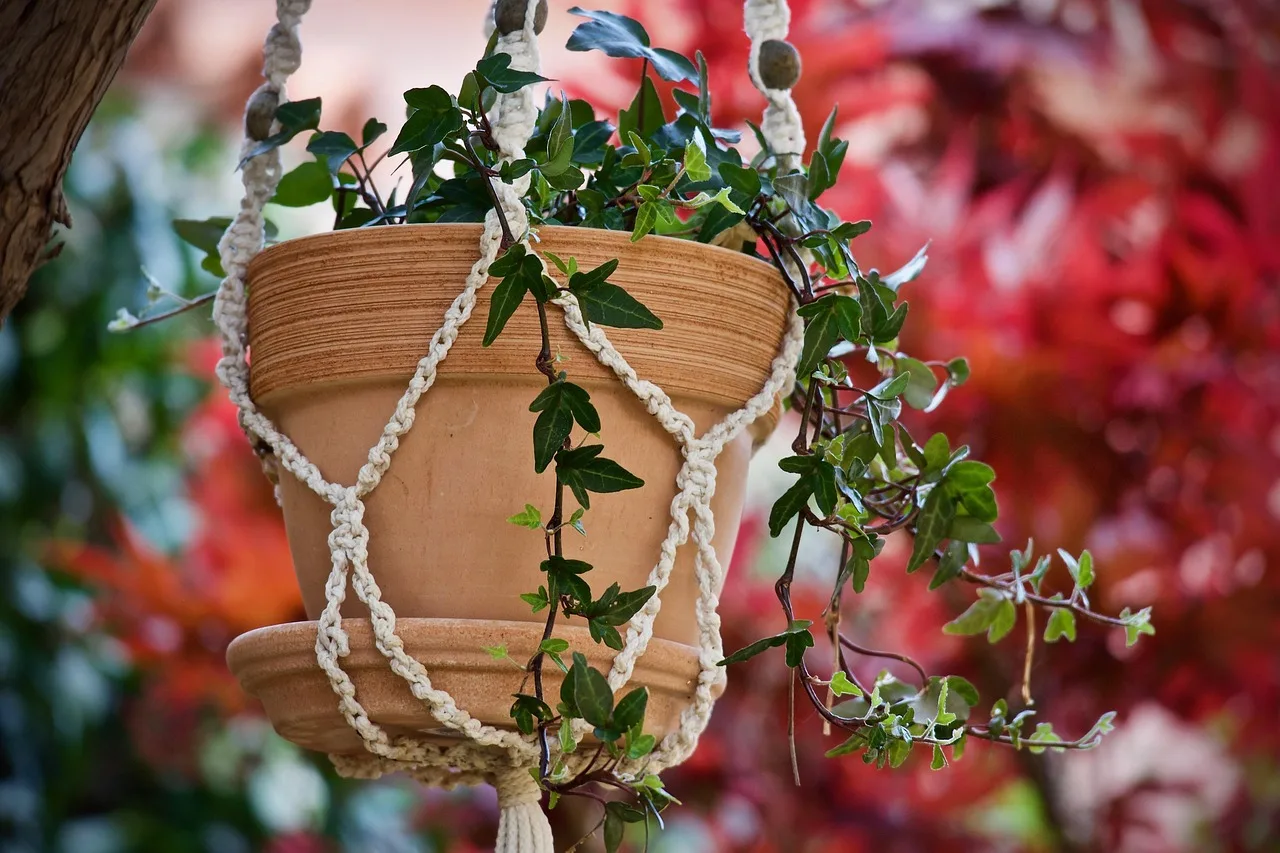
There was a spider plant, a clay pot, and a cradle of knots holding it up by the kitchen window. A big wooden bead usually sat where the cords gathered, and the whole thing turned slowly every time the furnace kicked on.
What nobody mentions is how much cord those hangers ate. A 1975 newspaper pattern called for 100 yards of jute cording. That’s 300 feet of scratchy brown twine, the length of a football field, for one plant.
The same piece said the macramé plant hanger “is becoming more popular in home interior design,” which turned out to be the understatement of the decade.
Jute holds dust like a grudge, so anything you kept needs a good shake outdoors before it goes back up. A hook in the ceiling is still the easiest way to give a trailing plant some sun.
#23 Macramé owls with wooden-bead eyes
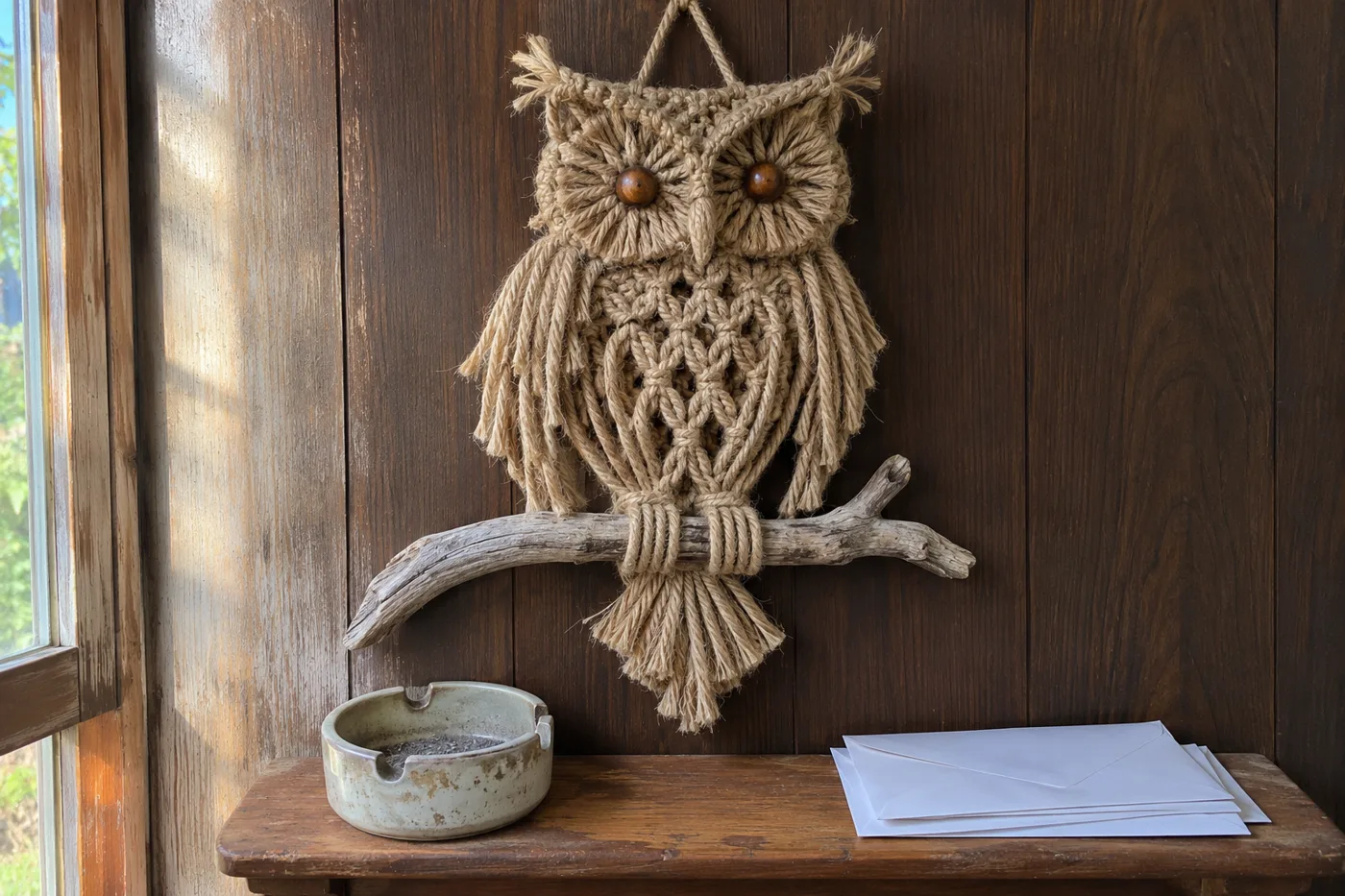
“Give a hoot; don’t pollute!” If that slogan just played in your head, you already know half the reason the living room had an owl on the wall.
The U.S. Forest Service created Woodsy Owl in 1971. Around the same time, owls perched on everything from cookie jars to kitchen towels, and the jute owl with wooden-bead eyes and a driftwood perch was the queen of them all.
Auburn University design historian Dr. Anna Ruth Gatlin explains the craze: “There was a longing for nature, which is why owls were such a popular motif.” Macramé owls, she says, combined that longing with a rising handicraft movement.
A 1977 newspaper pattern asked for 90 yards of jute and came with a fair warning: “Macrame is like eating peanuts.” One owl led to another, then a plant hanger, then a belt.
#22 The crocheted doll on the spare toilet-paper roll
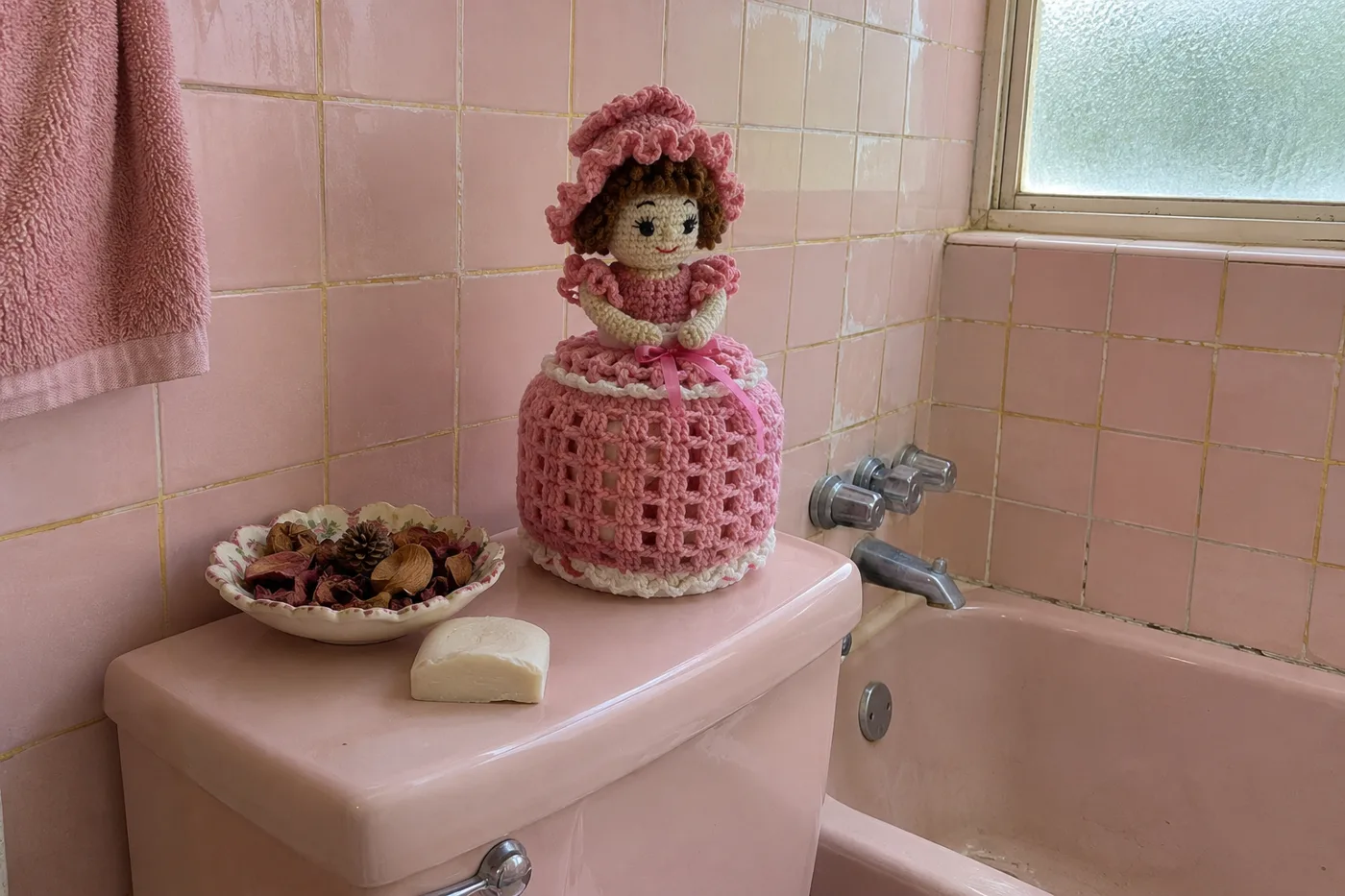
Who decided the spare roll needed to wear a ball gown? Nobody knows, and people have tried to find out.
Science writer Josie Glausiusz went looking and came up empty. The dolls, she wrote, “arose, multiplied, and inhabited bathrooms in the United States, England, and Australia” sometime in the 1960s or ’70s.
Glausiusz does have a theory. Ever since Charmin was marketed in 1928 with a picture of an elegant woman’s head, toilet paper had been sold on softness and femininity instead of on what it’s for.
The doll on the tank lid, skirt crocheted to match the bath mat, just finished that thought in yarn.
#21 Push-pin and sequin ornaments on foam balls
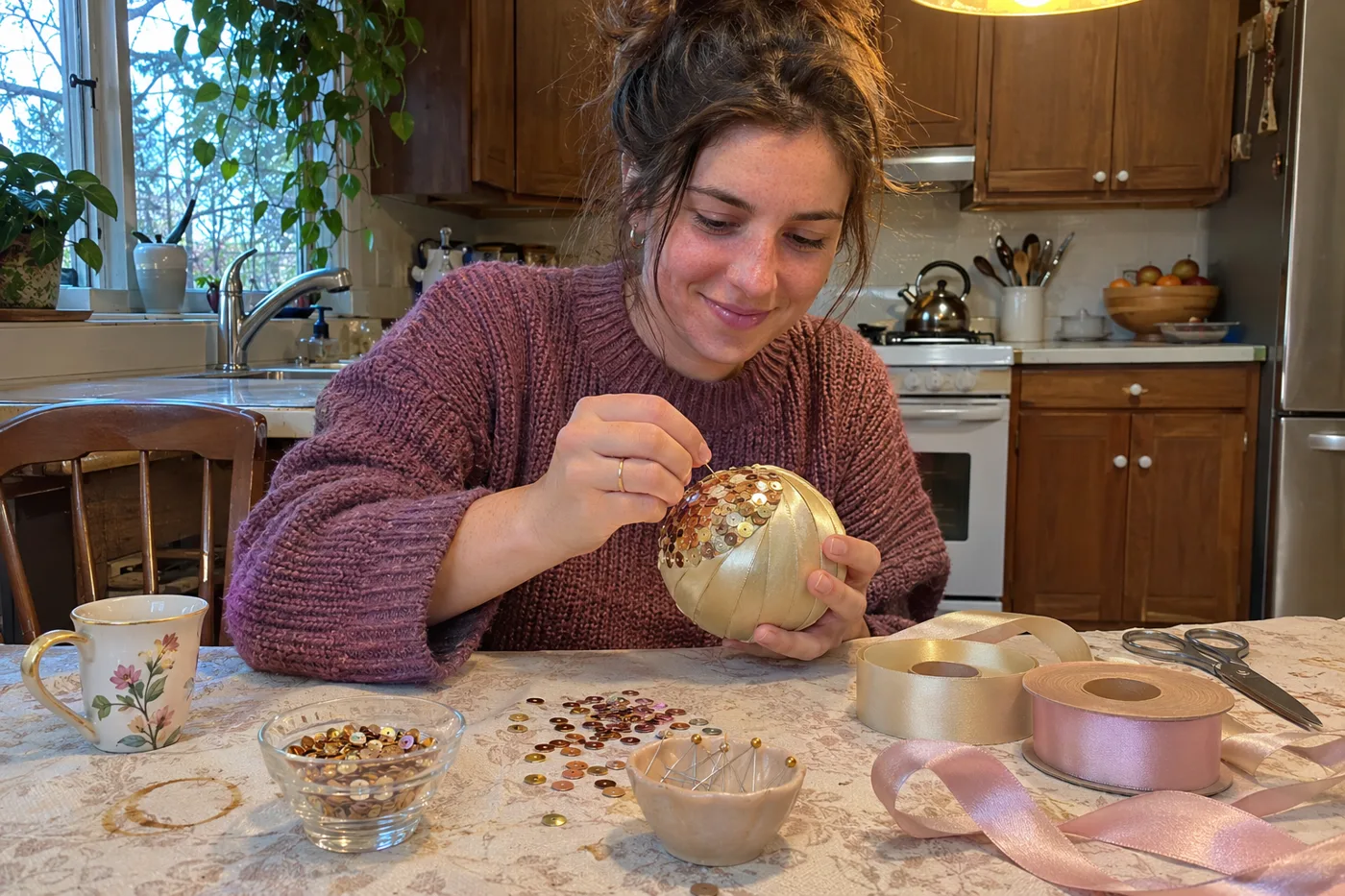
You probably remember your thumb better than the ornament. Push enough straight pins into a foam ball in one evening and the pad of it stays dented until Tuesday.
They went together like this. You wrapped a foam shape in satin ribbon, slid a sequin or bead onto a pin, and pushed it in. Then you did it again, a few hundred times. Braid covered the seams, and a loop went on top. Walco, LeeWards and Bucilla all sold kits.
Some families once called them tacky. Now plenty of people say these are exactly the ornaments they hope to have handed down.
Resale sites back that up. Finished vintage ones commonly sell for around $15 to $25 each, and the fancy ones go higher. A box of a dozen is not a box of junk.
#20 Latch-hook rugs hooked in front of the TV
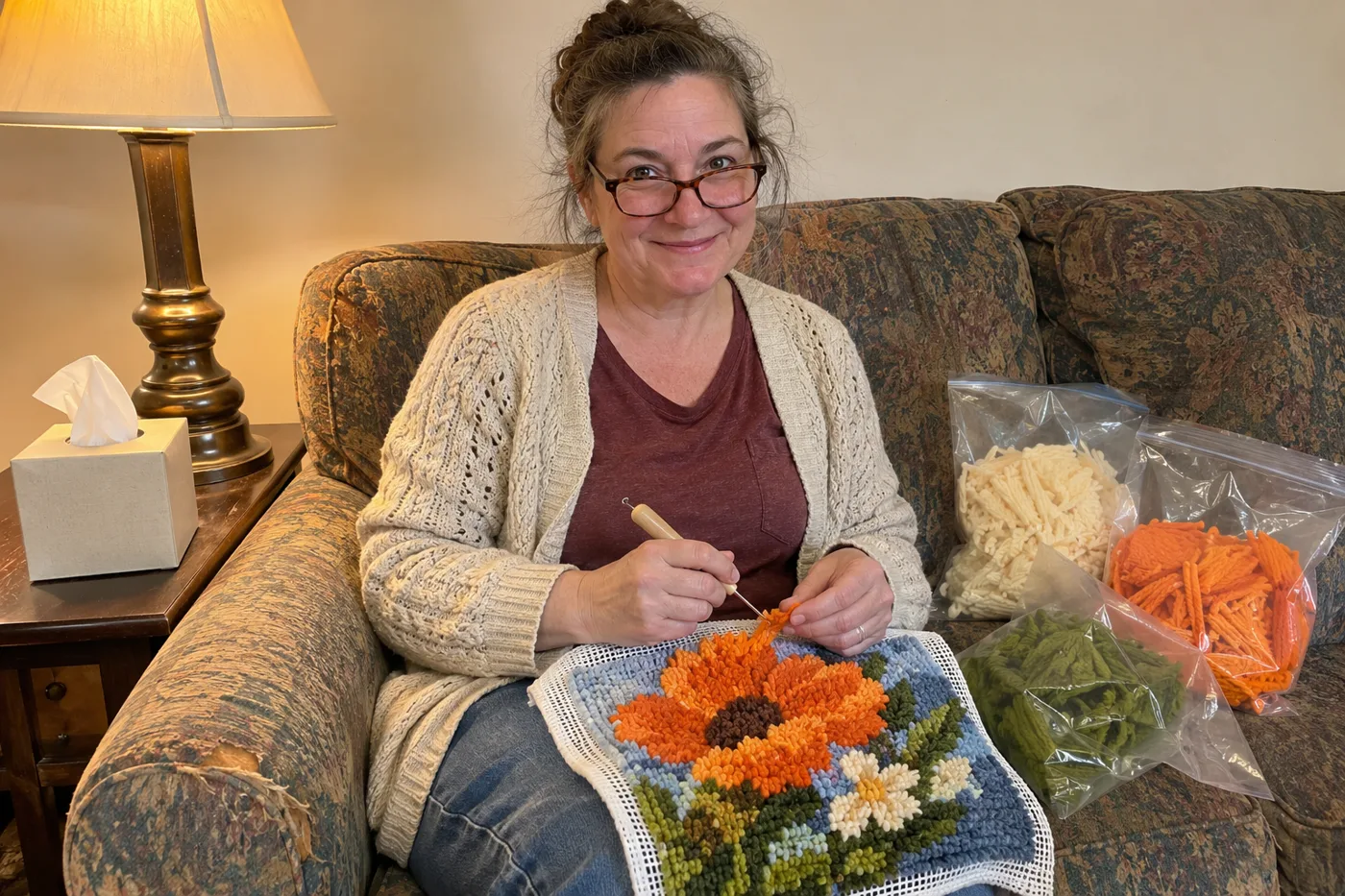
Hook, loop, pull, click. The tiny hinged latch snapped shut on the yarn so neatly you could do it without looking, which is exactly why latch hook lived in front of the television.
It came as a kit: a canvas with the picture printed on it, a bag of precut yarn sorted by color, and that hook.
One latch-hook supplier says the craft exploded in popularity in the United States during the crafting boom of the 1970s. Anyone who ever saw a fuzzy rainbow or a shaggy lion on a bedroom wall can believe it.
Few of those rugs were ever stepped on. They went on the wall, over the back of a chair, or into a drawer with three inches left to go and one color all used up.
#19 String art nailed and threaded on velvet
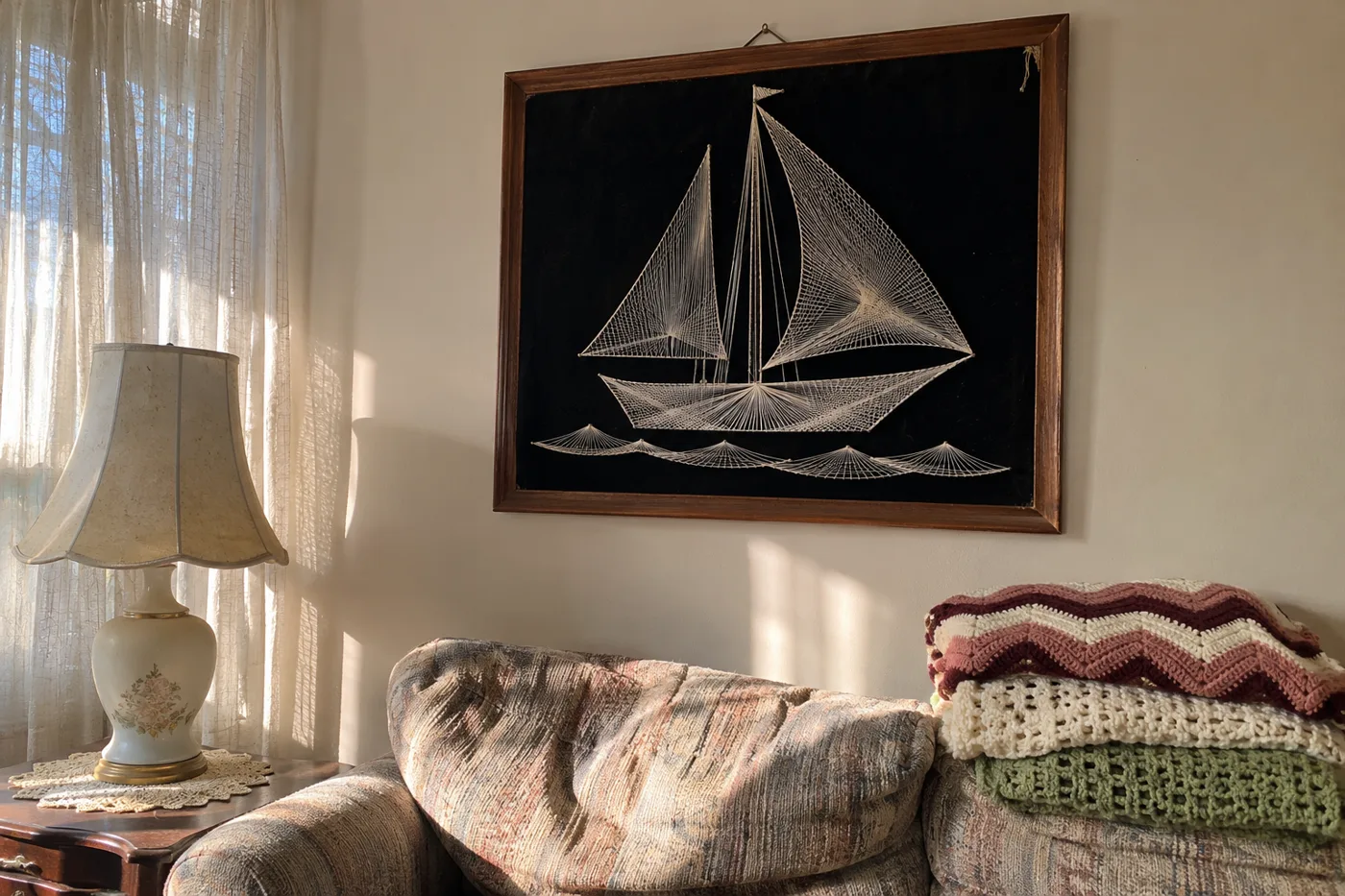
All those straight threads somehow made a curve, and that was the magic of it. You needed a board covered in black or navy velvet, a hammer, a box of small nails and a spool of white or metallic thread. An afternoon later, a sailboat or a swirling star hung over the sofa.
You were secretly doing math. String art grew out of “curve stitch” activities that mathematician Mary Everest Boole invented at the end of the 1800s to make mathematical ideas easier for children to grasp. Kits and books turned it into a decorating craft in the late 1960s.
So if anyone ever said you were no good at geometry, there’s a velvet sailboat in the garage that says otherwise.
#18 Decoupage plaques with darkened, “antiqued” edges
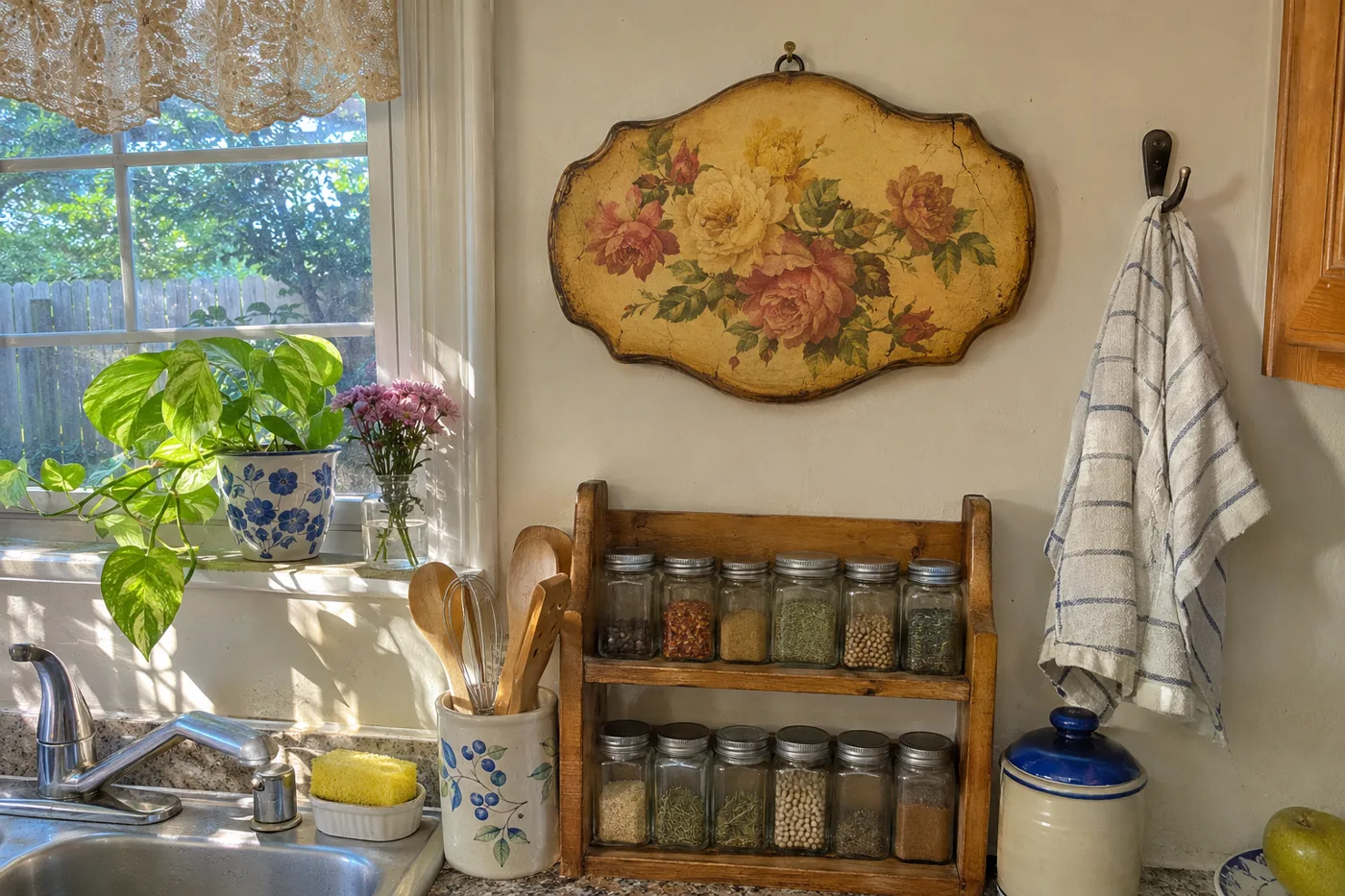
Every kitchen seemed to have one: a pine plaque with a print glued on, the edges darkened until the whole thing looked like it had survived a pioneer cabin fire.
The word is French, from découper, “to cut out,” and the craft is old. It reached Europe in the 1600s through Venice’s trade with the Far East. What made it a 1970s kitchen-table hobby was a jar.
Atlanta interior designer Jan Wetstone introduced Mod Podge in 1967. It was glue, sealer and finish all in one, and it was water-based. Before that, decoupage meant strong-smelling varnishes, open windows, long drying times and sanding between every coat.
Suddenly everyone and her sister had a plaque. The jar did the hard part.
#17 Painting ceramic greenware at the local shop

The shop smelled like wet chalk. Shelves held rows of plain white pieces waiting for someone: cookie jars, frogs, nativity sets, and the Christmas tree with holes for the little plastic lights.
Those pieces were greenware, meaning clay poured into a mold and dried but not yet fired. They were so fragile you held them like eggs. You scraped the seams smooth, painted them, and left them for the kiln.
A ceramics designer’s history of the hobby says that in the 1960s and ’70s, “every town had a ceramics shop like this,” and some claimed it was the biggest hobby in America. His reason for its fade is plain: it was mostly a pastime for stay-at-home moms, and women went to work.
Paint-your-own studios, with pieces already fired, took its place.
#16 Wire flowers dipped in liquid plastic
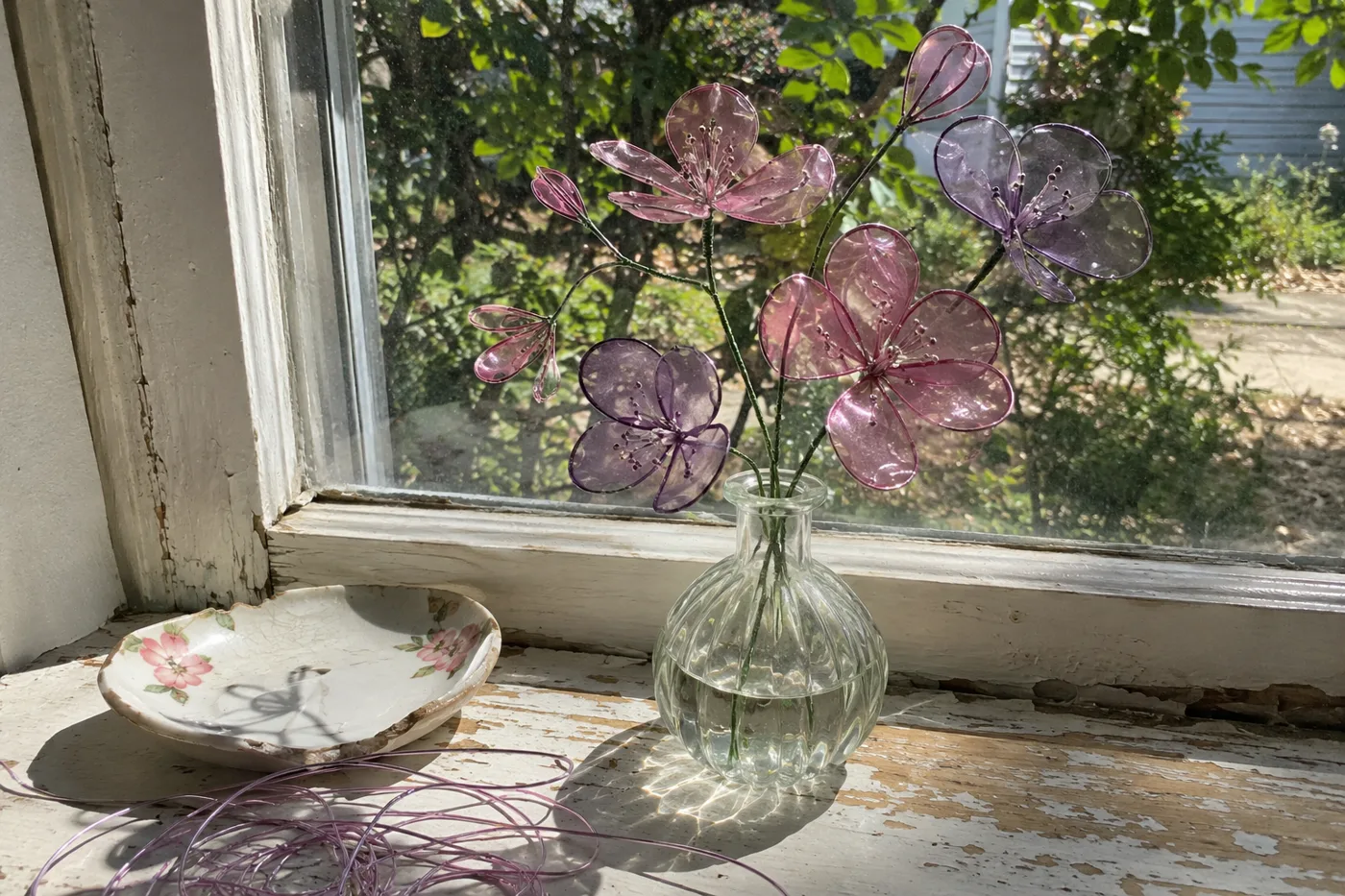
Bend wire into a petal, dip it in the jar, and pull it out slowly. A thin, colored skin stretched across the loop like a soap bubble that decided to stay.
Those see-through flowers sat in bud vases and on windowsills all through the ’60s and ’70s. When crafters on one forum tried to remember what was in that jar, names like Fun Film and Whimsey Dip came back like old friends.
Crafters who tried wood glue in place of the dip report everything from “a good substitute” to “doesn’t work well.”
Hardly anyone in the US dips wire flowers anymore. In Japan, though, Sakae, an artist who makes traditional hair ornaments, bends wire and dips it in liquid resin to make “dip flowers.”
#15 Lucite grape clusters on driftwood
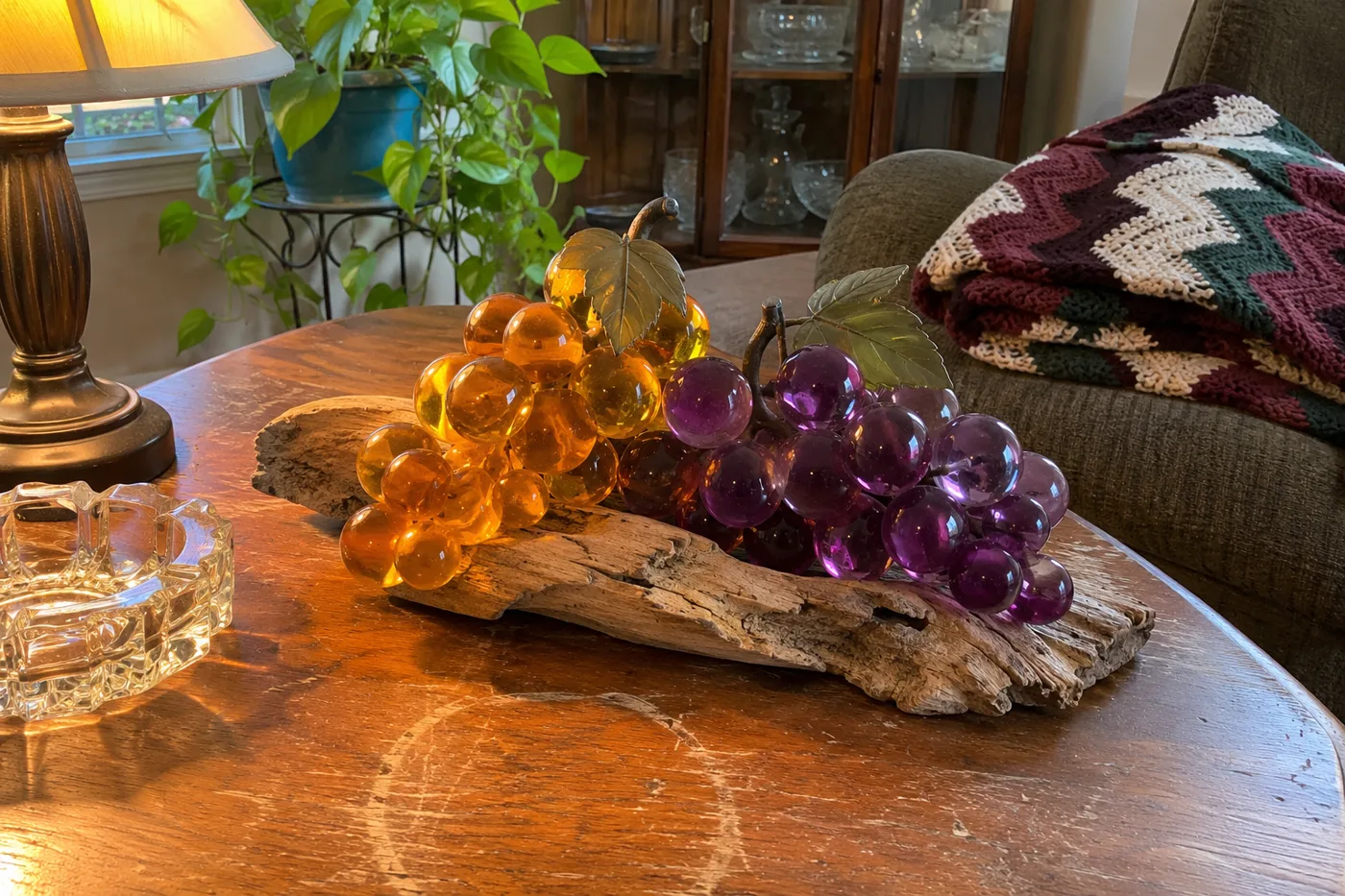
Every toddler who saw them tried to take a bite. Fat, glossy grapes in amber or purple sat clustered on a hunk of driftwood on the coffee table, catching the lamplight.
They weren’t glass. You made them by pouring resin through a funnel into small round molds and popping the grapes out about a day later, then wiring them into bunches.
Check before they go in the donation bin. One dealer lists a large 1960s yellow cluster at $250 and a grape-cluster table lamp at $300. Those are asking prices, not sales, but nobody asks that for something they think is junk.
#14 Liquid embroidery paint pens at home parties
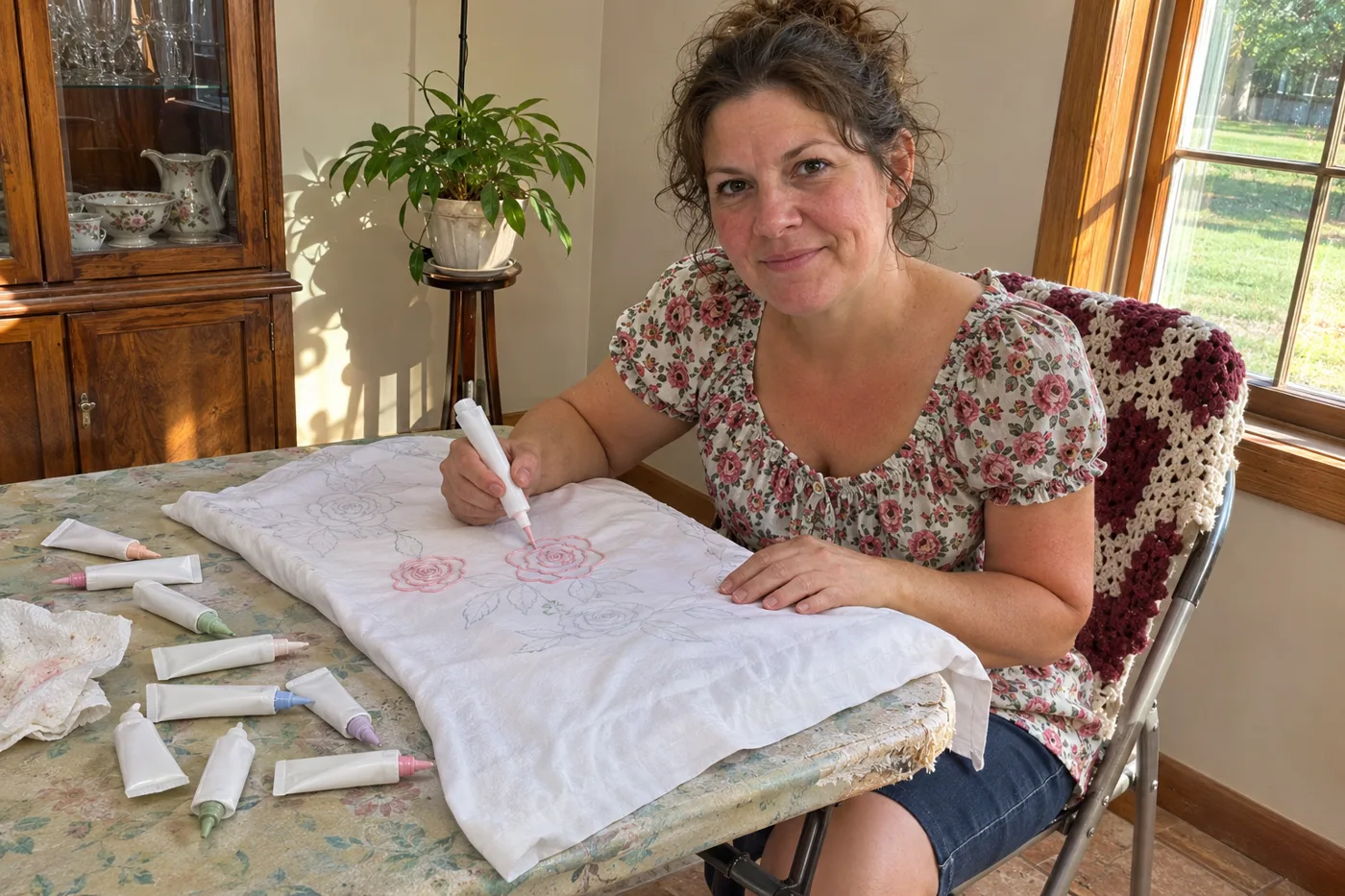
A card table in a neighbor’s living room, a plate of something homemade, and a hostess passing out little tubes of paint with ballpoint tips. You squeezed along the stamped lines on a pillowcase, and the raised line dried looking almost like real stitching.
That was liquid embroidery, and it was sold the way Tupperware was. A former Tri-Chem instructor remembers them as popular home parties especially in small towns and farm country. Artex and Cameo sold competing paints.
That rivalry ended the usual way. A collector who follows the brand says Tri-Chem bought out Artex in the 1980s and absorbed the company.
A pillowcase with raised-paint roses, if you’ve still got one, came straight out of one of those living rooms.
#13 Plastic canvas tissue box covers
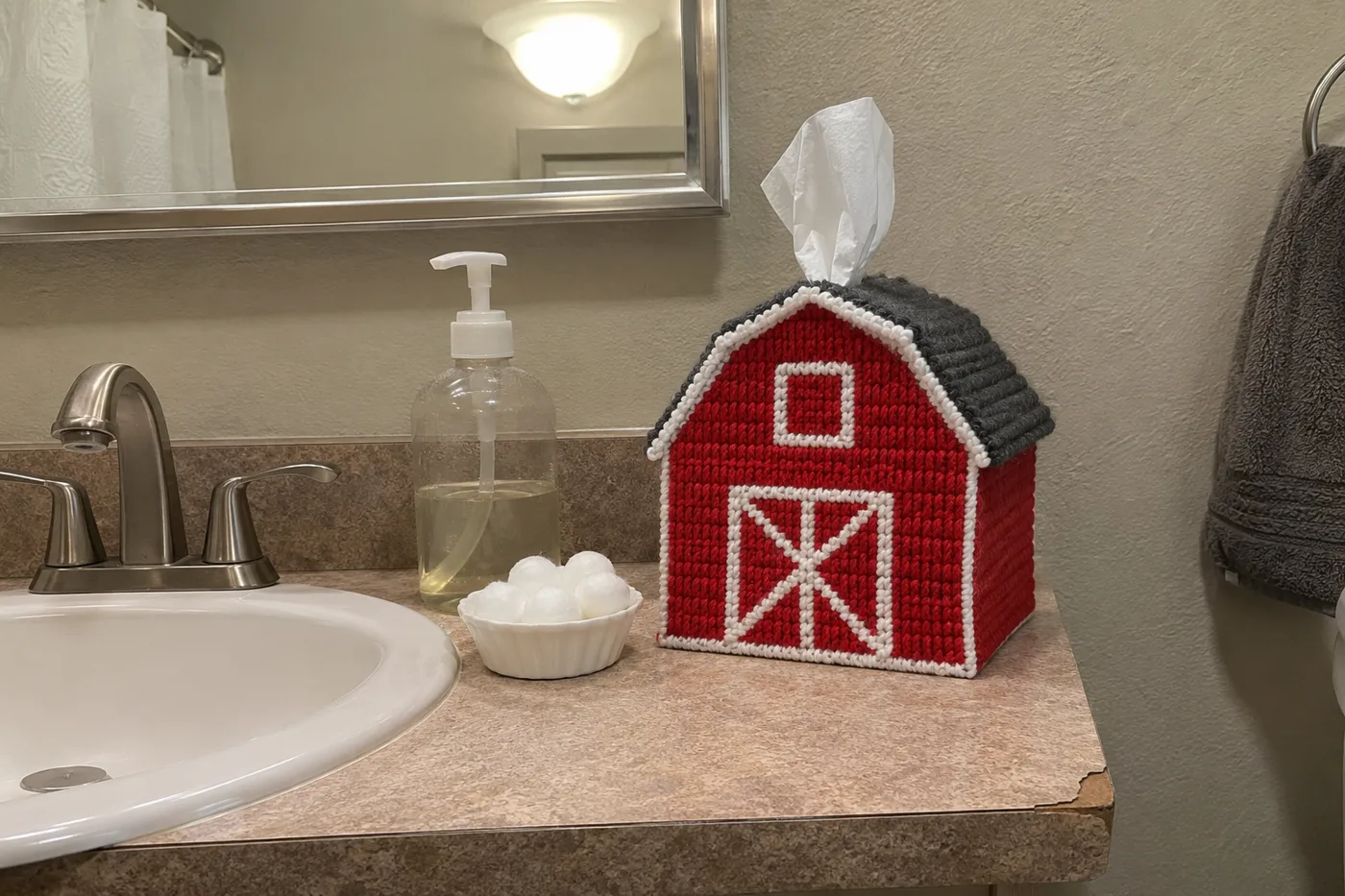
A tissue box cover shaped like a little red barn. Or a cottage with yarn shingles, or a gingerbread house for December. One of them is surely still sitting in a guest bathroom somewhere, being useful.
Plastic canvas came along in the 1970s as an easier way to learn needlepoint. Unlike floppy fabric, it held its shape while you stitched and could be cut with ordinary scissors. That’s why it turned into boxes, coasters and all those cheerful houses.
It’s lightweight vinyl that comes in several mesh sizes, from fine to chunky, and craft stores still stock it.
#12 Sewing your own clothes from paper patterns
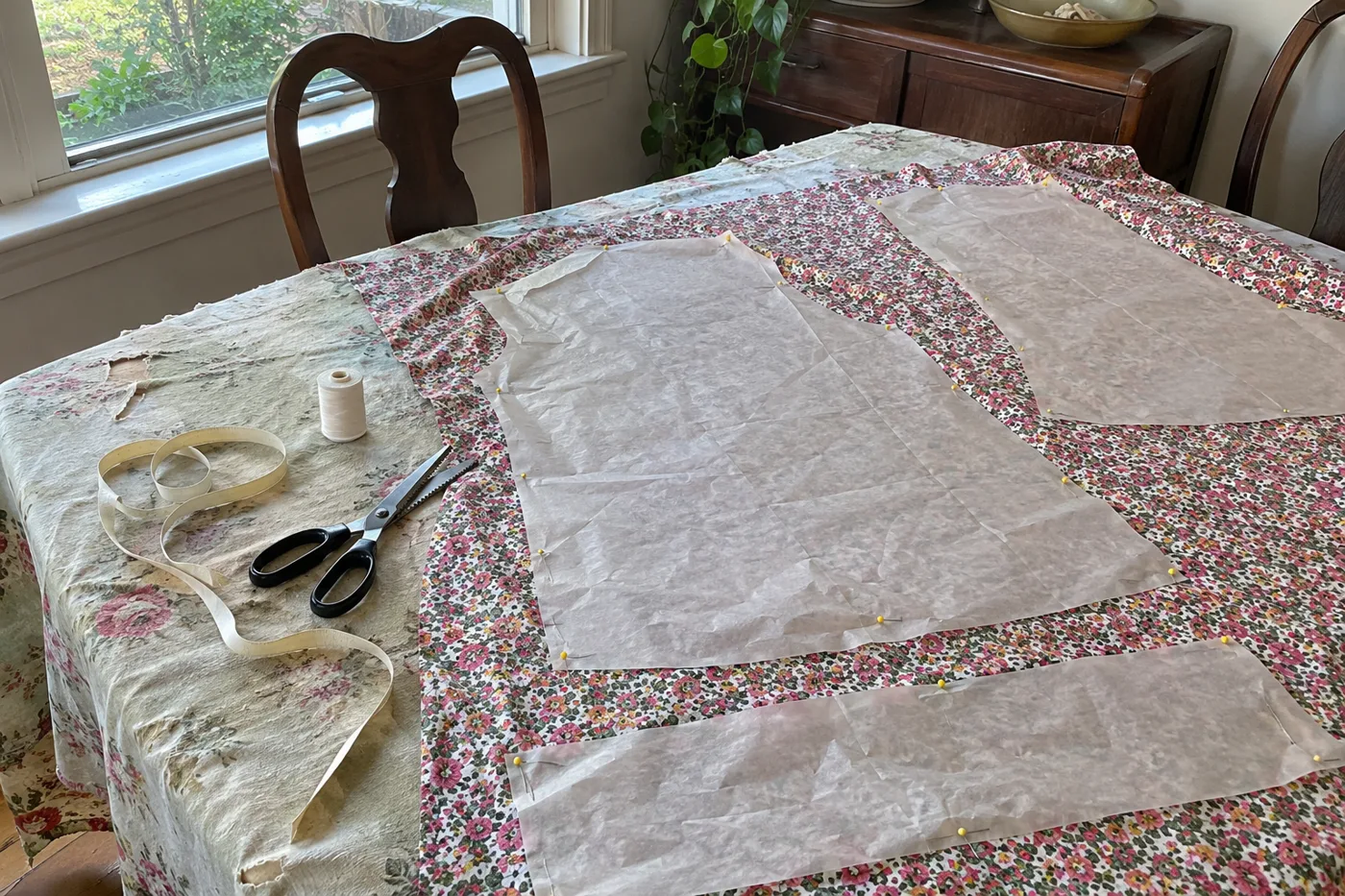
Remember the pattern books? Big, heavy catalogs on a slanted counter at the fabric store, and the metal drawers where you found your number. Then came the tissue pieces pinned to fabric across the dining table, and the house rule that nobody walked through during cutting.
Then the math turned. The National Women’s History Museum says home sewing actually peaked back in 1958, and the 1970s brought a steep drop as more women had their own money and their own careers. By the 1980s, homemade clothes cost more than ready-made ones.
Fewer women were sewing, but the ones who did kept buying patterns for a while: Americans bought 170 million in 1976, falling to 50 million by 1988.
The pattern drawers are mostly gone. The pinking shears are probably still in a drawer somewhere, and they still cut.
#11 Crocheted hats cut from beer cans
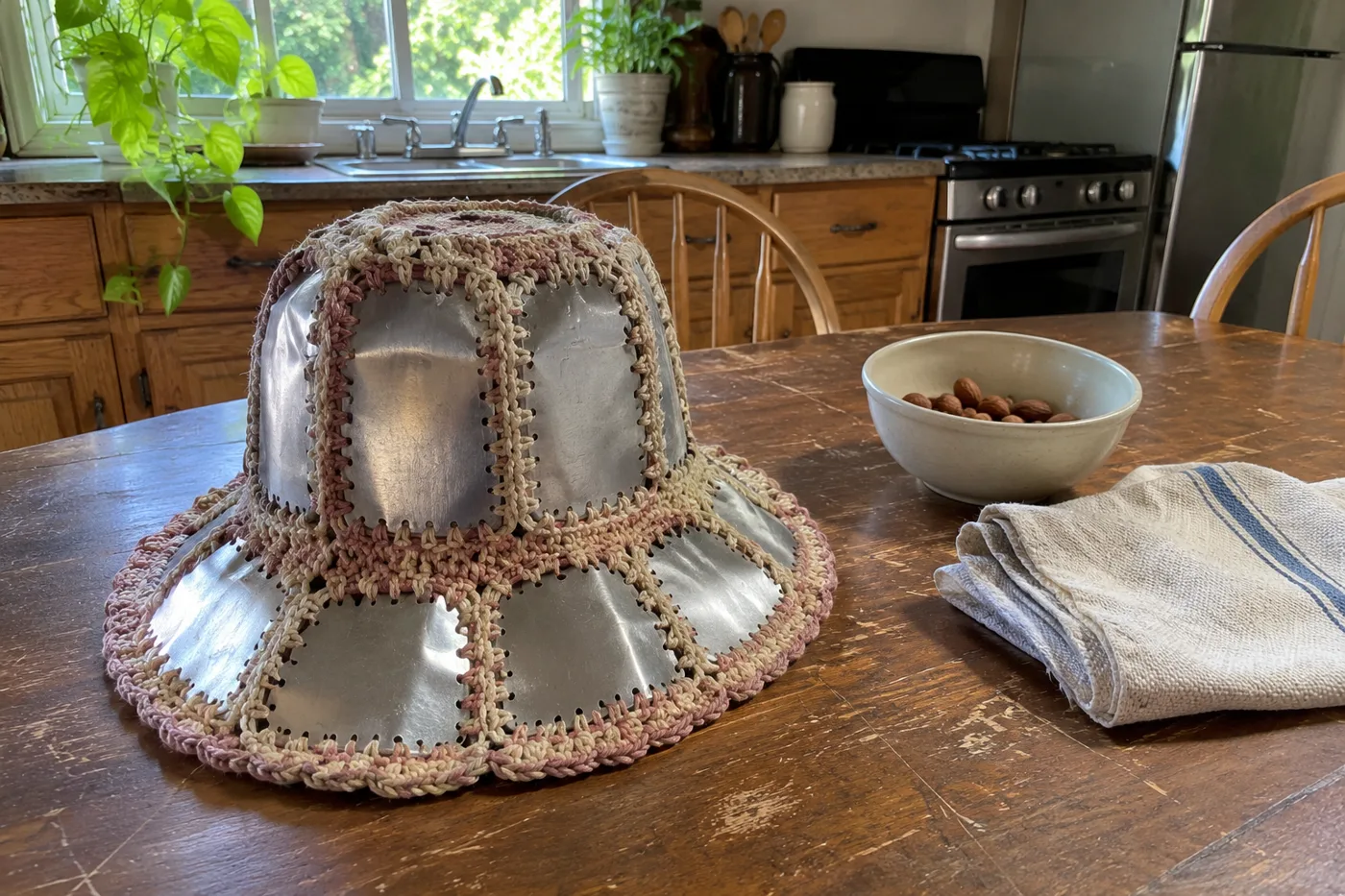
It started with empty beer cans. They were cut to size, punched with holes all along the edges, and crocheted together into a hat.
A fashion museum keeps one in its collection, which should settle any argument about whether it counts as a craft. The museum’s crochet can hat dates to 1968 to 1970 and is made of aluminum beer cans and acrylic yarn.
It came from a printed pattern, a home project like any other. The museum counts it as part of a late-1960s revival of handmade clothes.
So the hat somebody wore to every summer cookout is, technically, museum quality.
#10 Bread-dough or salt-dough Christmas ornaments
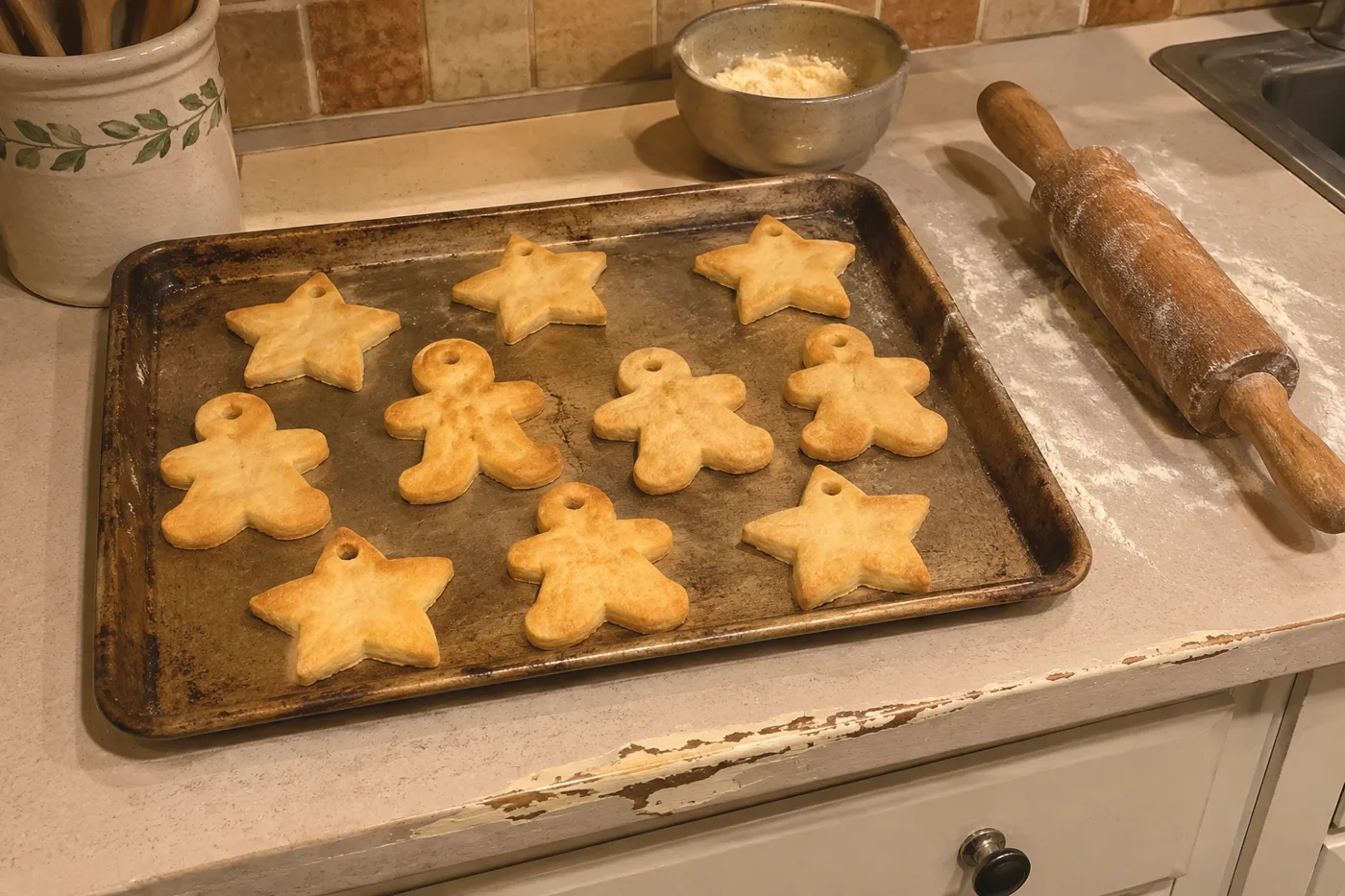
Out of the oven they came, puffed and a little lopsided: gingerbread men, wreaths, a star with somebody’s thumbprint baked right into it.
If you’d like the old recipe, here it is. A 1974 version was 2 cups flour, 1 cup salt and 1 cup water. Bake at 325°F until light brown, about an hour, or skip the oven and let it air-dry for 48 hours.
The smoother cousin was bread dough, used for little figures. A small batch is 3 slices of white bread worked together with 2 tablespoons of white glue. A few drops of lemon juice keep it from going sour. The ones made without it may explain a certain smell in some ornament boxes.
#9 Cutting glass bottles into drinking glasses
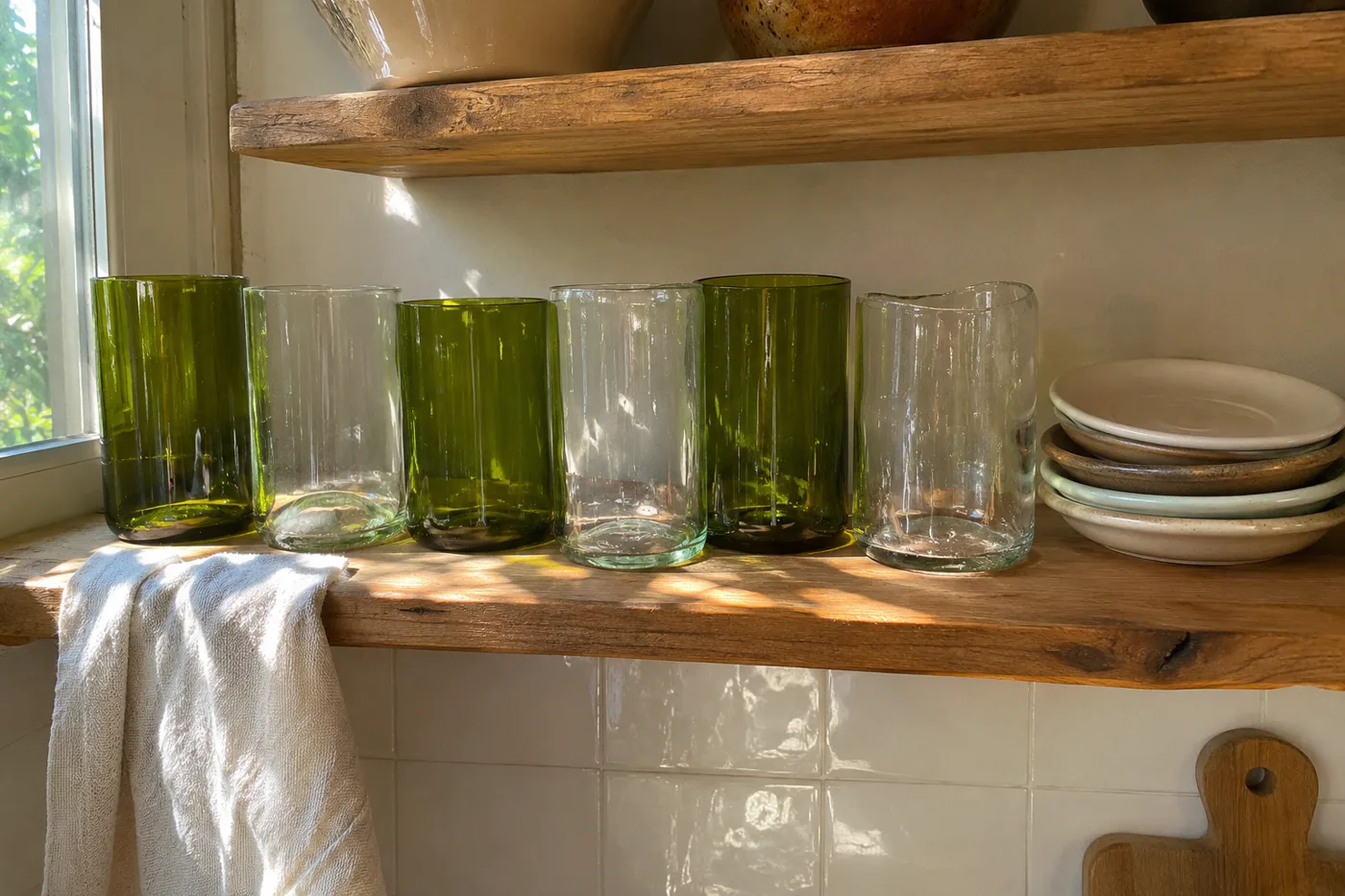
Wine jugs became vases. Green soda bottles became juice glasses. For a while, a cupboard full of matching bottle-bottom tumblers was a point of pride.
Popular Mechanics said in November 1972 that bottle cutting had “caught on like wildfire.” By 1983 it was being called a fad of the decade before, which is about how fast a wildfire goes out.
One old trick, a kerosene-soaked string set on fire, broke bottles “in half a dozen different directions,” according to one cutter maker. That kerosene trick is also why jagged green glass rings still turn up in some garages.
#8 Doilies stiffened with sugar into baskets
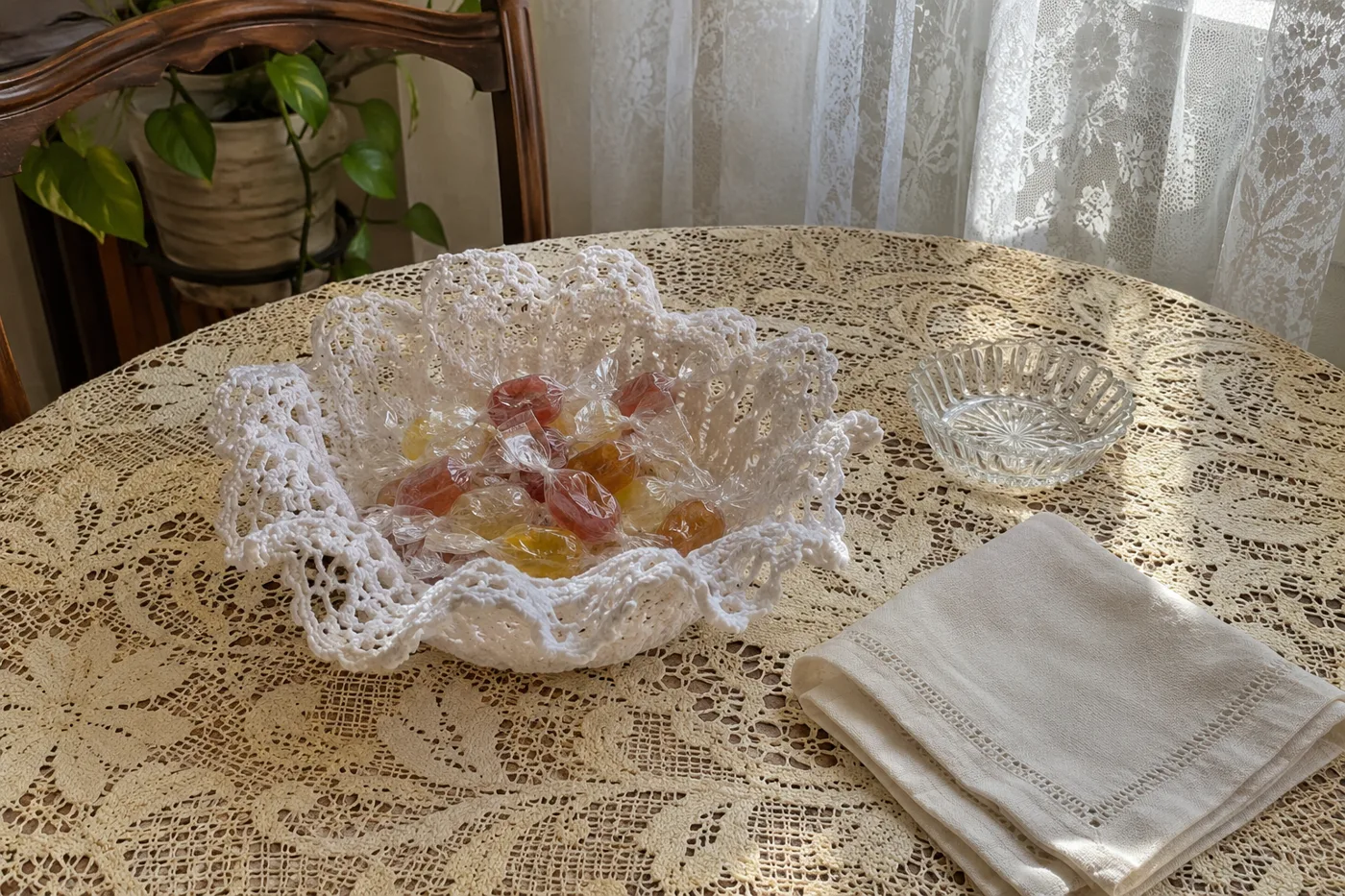
Wet doily, upturned bowl, a long night of drying, and by morning you had a lacy basket stiff enough to hold Easter candy or a few wrapped mints.
The stiffener was often nothing but sugar. One crafters’ recipe is ¾ cup sugar in ¼ cup water, stirred over low heat until clear, without ever letting it boil.
That sugar is also why crafters still argue about them. Some warn that sugar-stiffened pieces draw ants, roaches and silverfish, especially in humid places. Others swear a properly done basket never attracts a single ant.
If yours live in a damp closet, check them for bugs. The same crafters suggest equal parts white glue and water as an alternative stiffener for any new ones.
#7 Cornhusk dolls with no faces
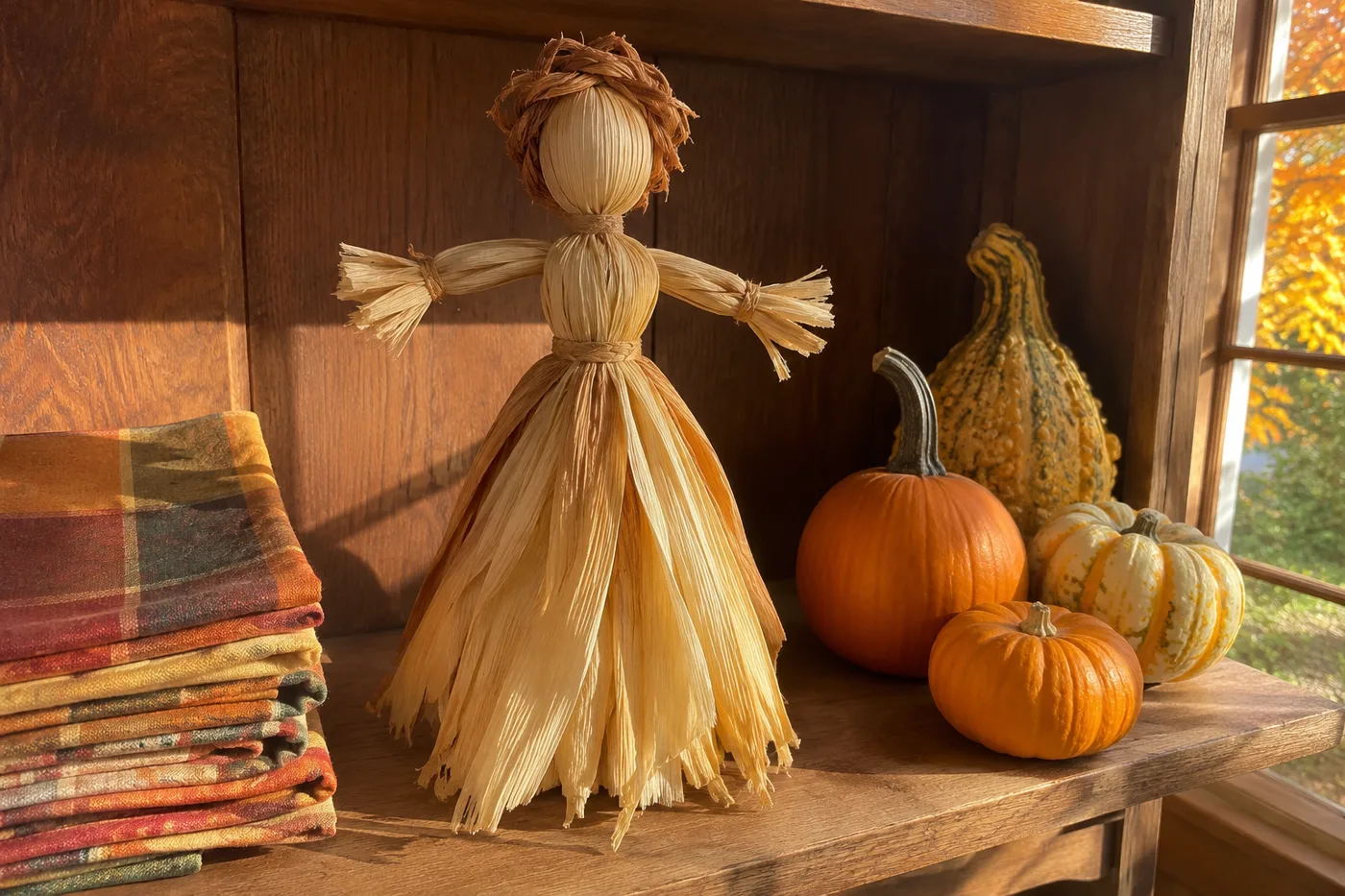
Ask anyone who made one and they’ll say the same thing: the husks had to soak first, or they cracked the second you bent them. Then came a lot of string, a skirt that wouldn’t sit straight, and a doll with a smooth, blank face.
That blank face was on purpose. The Cayuga Museum of History and Art explains that cornhusk dolls come from Native peoples of the Northeast, including the Seneca and other Haudenosaunee nations.
In a Seneca legend, a doll grew so vain about her beauty that her face was taken away. Traditional dolls have gone without one ever since.
So nobody needs to draw a face on the one sitting with the Thanksgiving decorations. She knows the story.
#6 Bucilla jeweled felt Christmas stockings

Tiny sequins held on with an even tinier bead, one at a time, by lamplight. A felt Santa, a felt sleigh, a name stitched across the white cuff in loopy letters. In a lot of families, that stocking still comes out every December, a little faded and missing two sequins.
Today the Bucilla name belongs to Plaid, the same company that owns Mod Podge, so two of those old craft drawers share a family tree.
The number on the kit envelope, if it survived, can date the stocking. A collector’s guide says four-digit Bucilla kits ran from 1955 to 1979.
#5 God’s eyes woven on crossed sticks
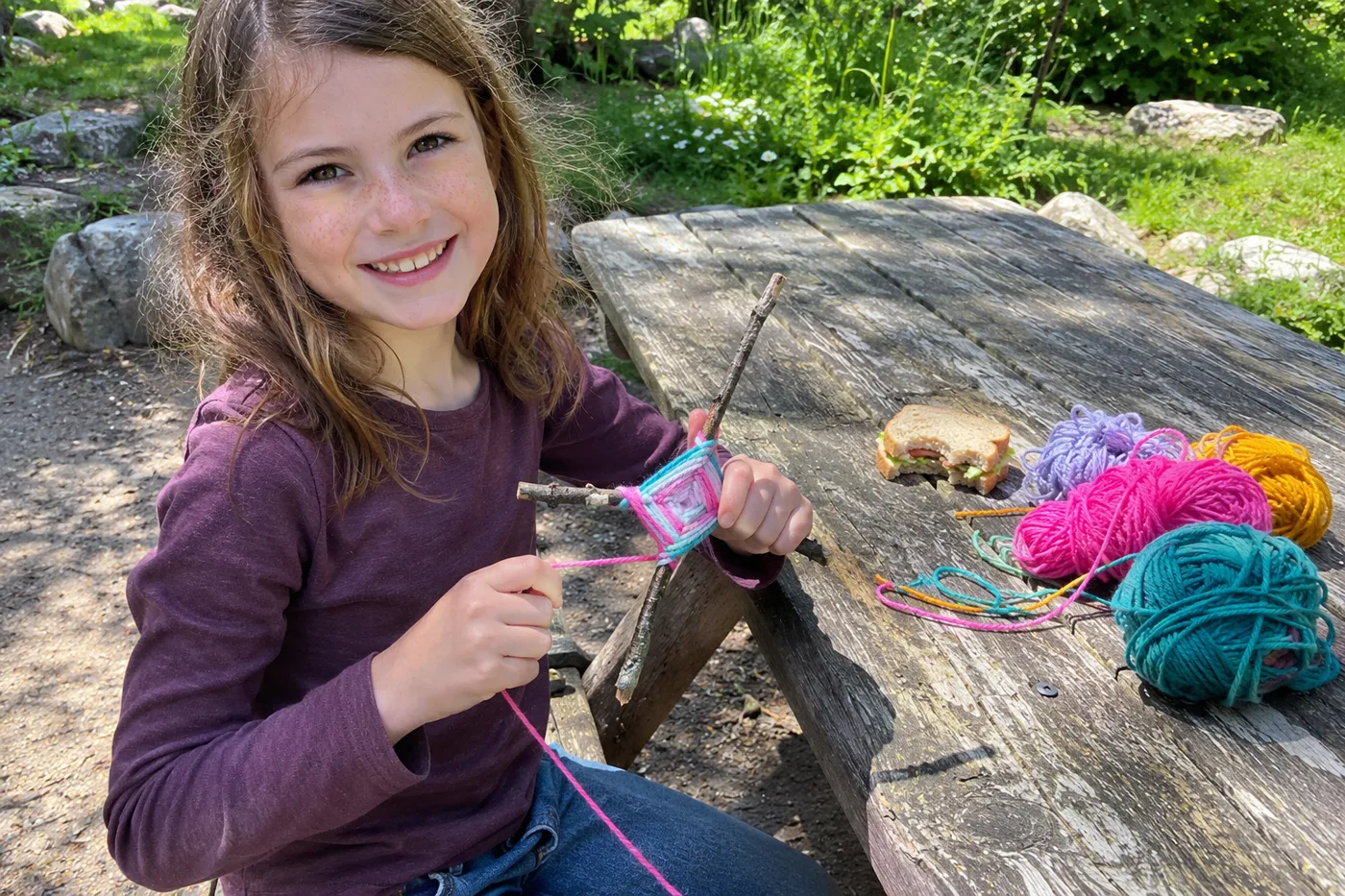
Two sticks tied in a cross and a skein of yarn. Over, around, over, around, switch colors, keep going, until a diamond of rainbow stripes filled the center. Camp counselors handed out supplies by the armful.
The design comes from the Huichol and Tepehuan peoples of western Mexico. The Huichol word, Tsikuri, means “the power to see and understand things unknown.” Traditionally, a father weaves the center when a child is born and adds a color each year until the child turns five.
Then it took a strange road. In the late 1960s, West Coast counterculture picked it up, and giant versions showed up at gatherings like the 1967 Be-In.
These days some Sunday schools use them as a Christian teaching aid. That’s quite a trip from the Be-In.
#4 Tissue paper flowers for parties and showers

Tissue flowers were the backbone of homemade party decorating. Make twenty and the church basement was ready for a bridal shower.
In plenty of houses, that’s simply how parties got decorated. Store-bought was for somebody else.
Tissue paper reached Mexico on Manila galleons from the Philippines, which is why it was called “papel de China.” Paper flowers first decorated churches and home altars, then spread to every kind of party for the reason you already know: tissue was cheap, and a roomful of real flowers wasn’t.
The trick still works. A pack of tissue and one evening will fill a room with color for less than a single bouquet.
#3 Weekly tole painting classes
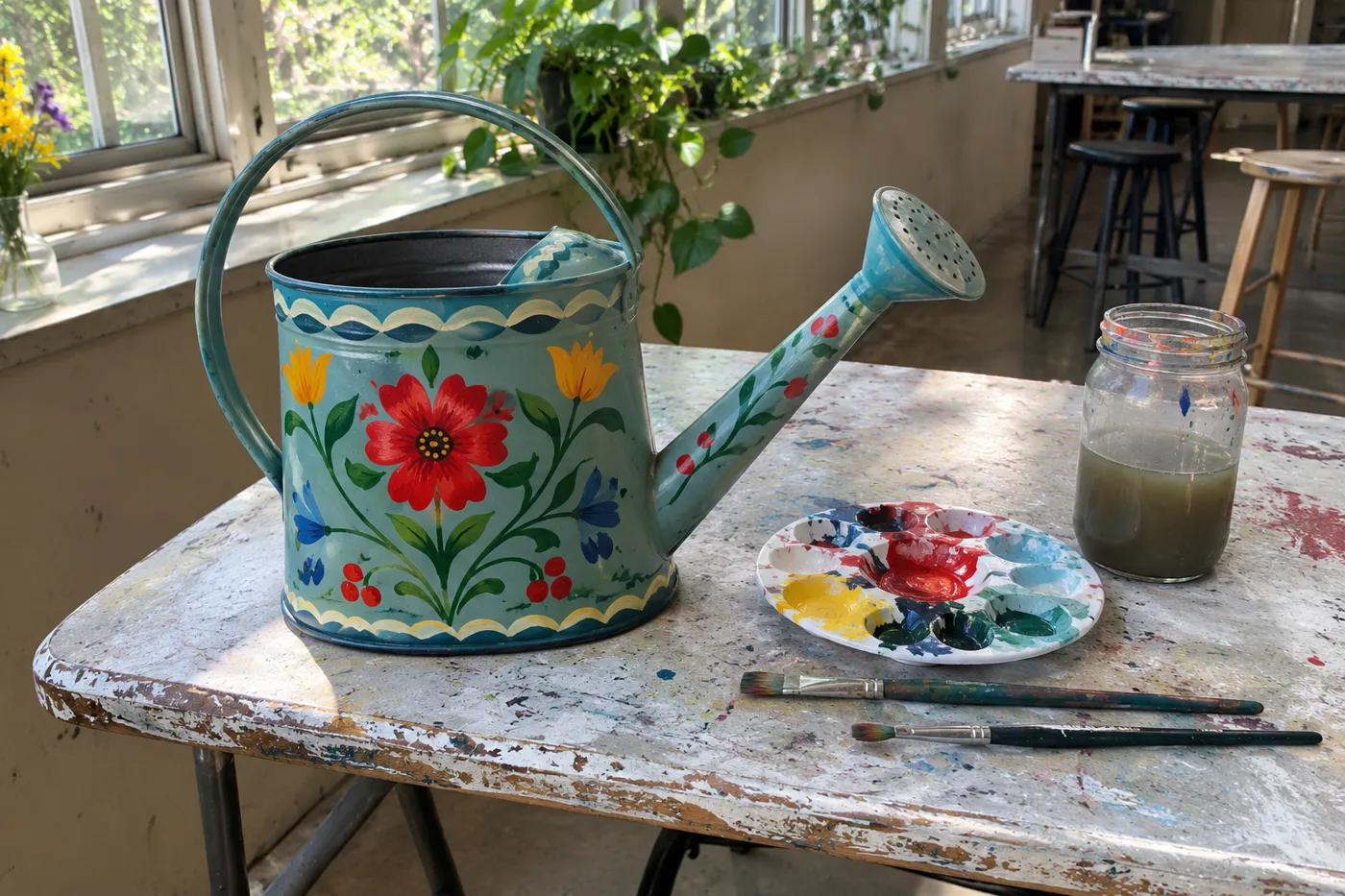
“Press, lift, pull.” Every tole teacher said some version of it, over and over, while a roomful of women at folding tables tried to make one perfect comma stroke. You went home with a painted tin watering can or a wooden goose, plus the best gossip in town.
The name comes from the French tôle peinte, “painting on sheet metal.” It came back in the 1960s as teachers opened studios around the country. Priscilla Hauser opened Priscilla’s Little Red Tole House in Tulsa in 1968, and in 1972 she started a national society for tole and decorative painters.
That group, the Society of Decorative Painters, disbanded in December 2022, fifty years after it began.
The wooden geese from all those Tuesday nights have outlasted the club that taught the strokes.
#2 Embroidered and patched denim jeans
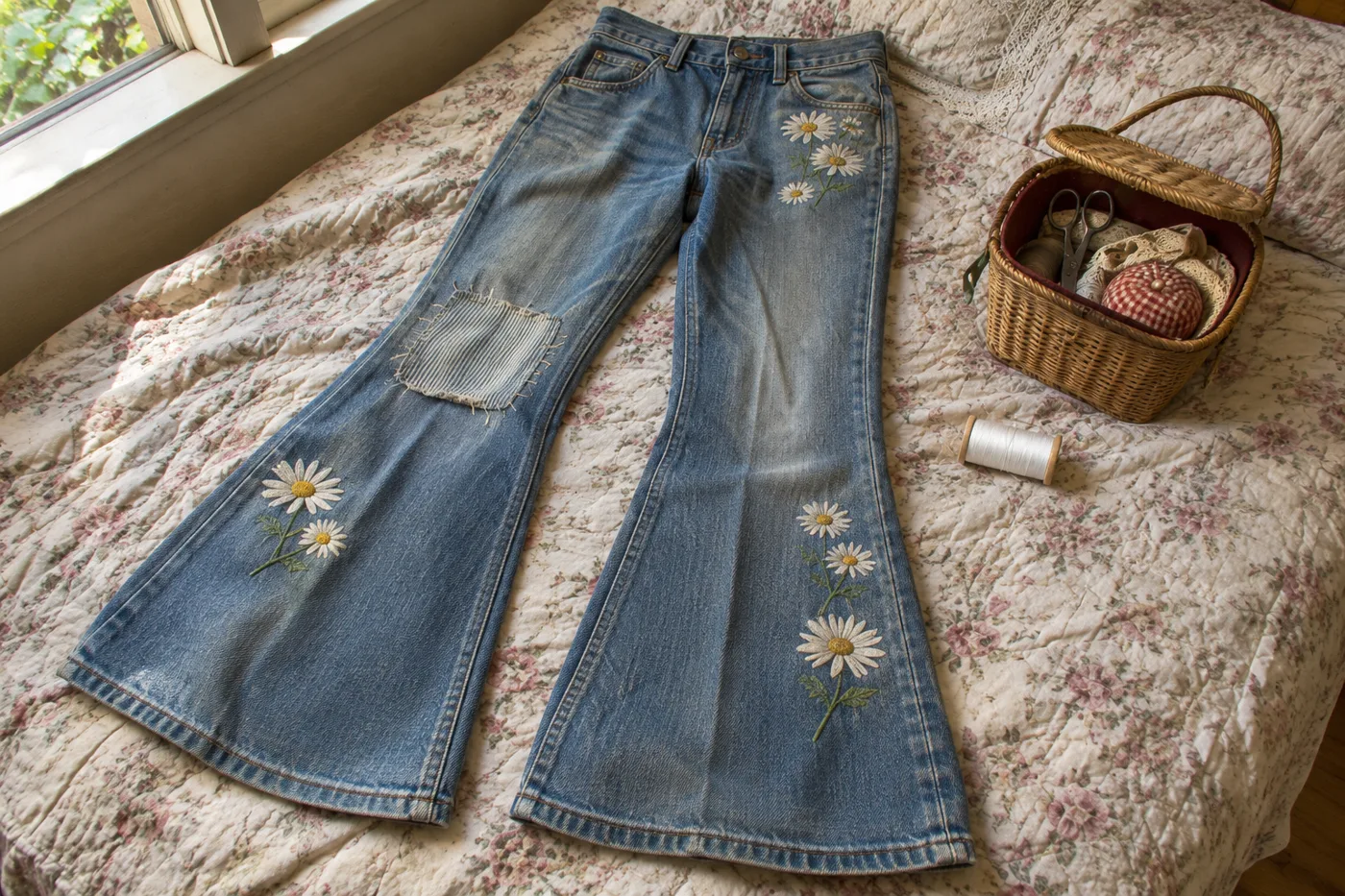
Daisies chain-stitched down one leg. A butterfly over a worn-through knee. A patch that started as a repair and turned into the best part of the jeans.
It got so common that Levi Strauss & Co. held a Denim Art Contest in 1973 and 1974 and received thousands of entries, embroidered, painted, beaded and patched. The judges included photographer Imogen Cunningham and designer Rudi Gernreich. The winners then toured American museums for 18 months.
So if you ever sat on a bedroom floor stitching flowers onto a hem, those jeans had cousins hanging in museums. If yours are still in a cedar chest, don’t let anyone call them old clothes.
#1 Red-white-and-blue Bicentennial quilts for 1976
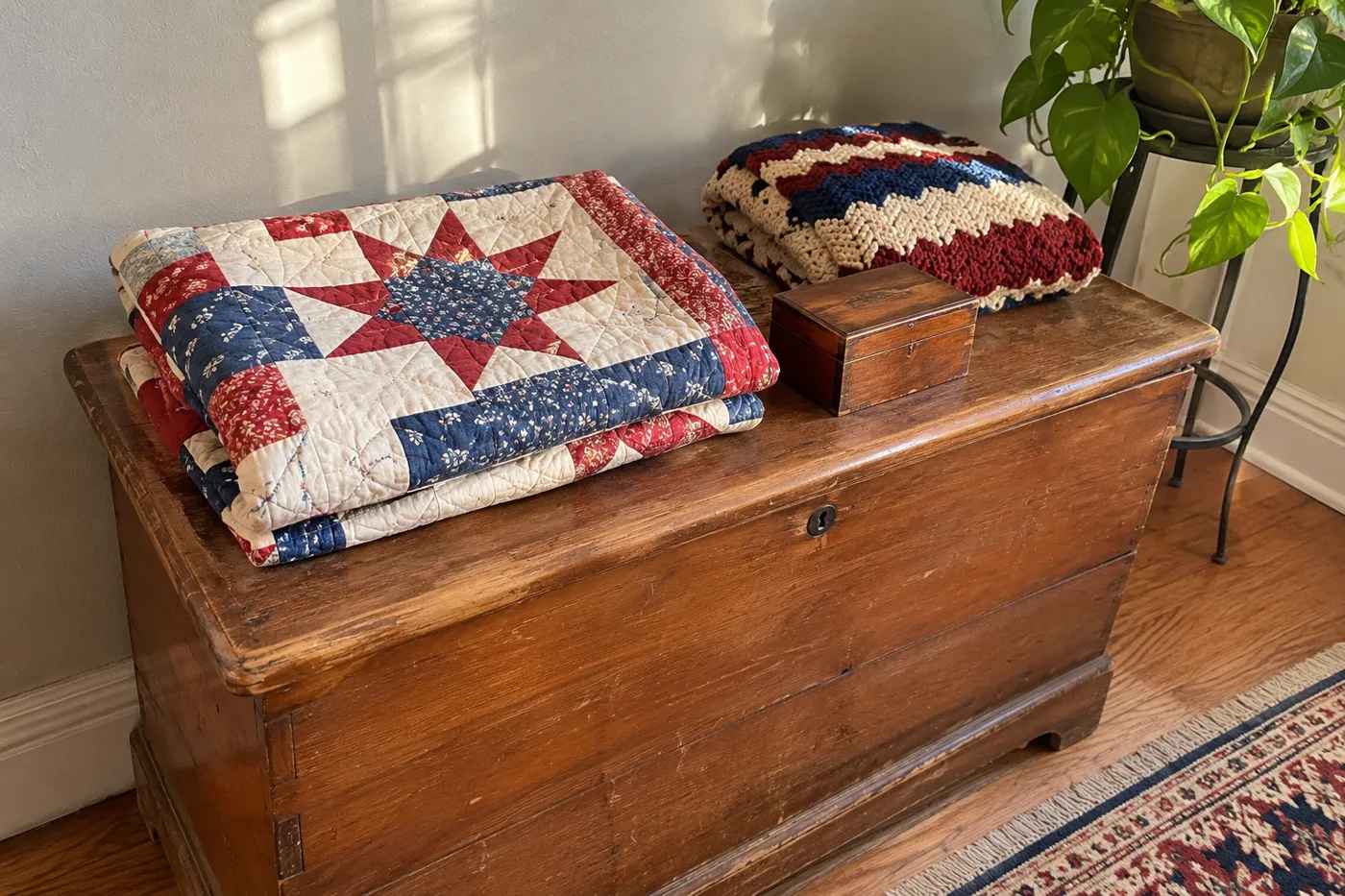
In 1976, the whole country went red, white and blue at once. Fire hydrants got painted like little soldiers, towns held parades, and quilting came roaring back.
The official Bicentennial emblem had a lot to do with it. The Northwest Museum of Arts and Culture says it appeared in national women’s magazines as a quilt pattern, sparking interest in quilting all over again. In North Carolina, Bicentennial preparations focused on historic crafts. Church groups, guilds and whole classrooms got to work.
These quilts already have a place in history. The Northwest Museum keeps one from around 1976 with blocks embroidered by a class of sixth graders. A local history group wrote up the Hopewell quilt in 2023, nearly fifty years after the last stitch.
If there’s a Bicentennial quilt folded on a shelf in your house, take it out tonight. Write down who made it, where, and for what occasion, and stitch a cloth label with those words to the back.
Then call your local historical society. They may be very glad to hear it exists.
The Bicentennial, By the Numbers
- About 10,000 entries in the “Great Quilts of America” contest, billed as “the largest quilt contest ever conducted in the world”
- 44 women in Hopewell, New Jersey, who spent April 1975 to May 1976 on one finalist quilt
- 17 women in Wake County, North Carolina, behind the “Historical Landmarks of Wake County” quilt
- 1 red, white and blue quilt that won Jinny Beyer the 1976 Quilter’s Newsletter Magazine contest and launched her career
The bottom line
Most of what came out of those kits was never meant to last. It got hung up, given away, washed and walked on. The surprise is how much of it is still here.
Before anything goes in the donation box, try one question on each piece. Do you know who made it? If you do, it deserves five minutes with a pen before it goes anywhere.
The skills are still sitting where you left them, too. The crochet stitches, the comma stroke, the click of the latch hook. Some younger people are asking to learn exactly those things, and a craft night needs only one person who remembers how.
Questions people also ask
How were push-pin Christmas ornaments made?
Crafters wrapped a foam ball or shape in satin ribbon, then pushed straight pins topped with sequins or beads into the foam until it was covered. Braid hid the seams, and a loop went on top for hanging. Walco, LeeWards and Bucilla all sold kits for them.
Why were owls such a popular 1970s decorating motif?
Owls answered a 1970s longing for nature, according to Auburn University design historian Dr. Anna Ruth Gatlin. She says macramé owls combined that longing with a rising handicraft movement. The U.S. Forest Service also introduced Woodsy Owl in 1971, with the slogan “Give a hoot; don’t pollute!”
Where did the crocheted toilet-paper-doll cover come from?
No one has pinned down its exact origin. Science writer Josie Glausiusz found the dolls turned up in the 1960s or 1970s in bathrooms across the U.S., England and Australia at about the same time.
What is tole painting?
Tole painting is decorative brushstroke painting on tin, metal or wood. The name comes from the French tôle peinte, meaning painting on sheet metal. It had a big American revival in the 1960s and 1970s, when teachers opened studios and weekly classes filled up.

- 24 Crafts Every Woman Made in the 1970s That Nobody Does Anymore - November 5, 2026
- 26 Things Grandchildren Remember About Your House That You Never Notice - November 5, 2026
- 25 Church Bazaar Crafts Every Town Sold That Nobody Makes Anymore - November 5, 2026

Leave a Reply