Picture a kitchen oven with the light on and two kids on the linoleum, noses at the glass, watching a plastic charm curl, buckle and shrink. Plenty of kitchens saw that in the 1970s.
In the next room somebody was knotting jute, gluing felt, or crocheting a ball gown for a roll of toilet paper. Most of it went out the door as gifts.
#21 The granny square afghan on the couch
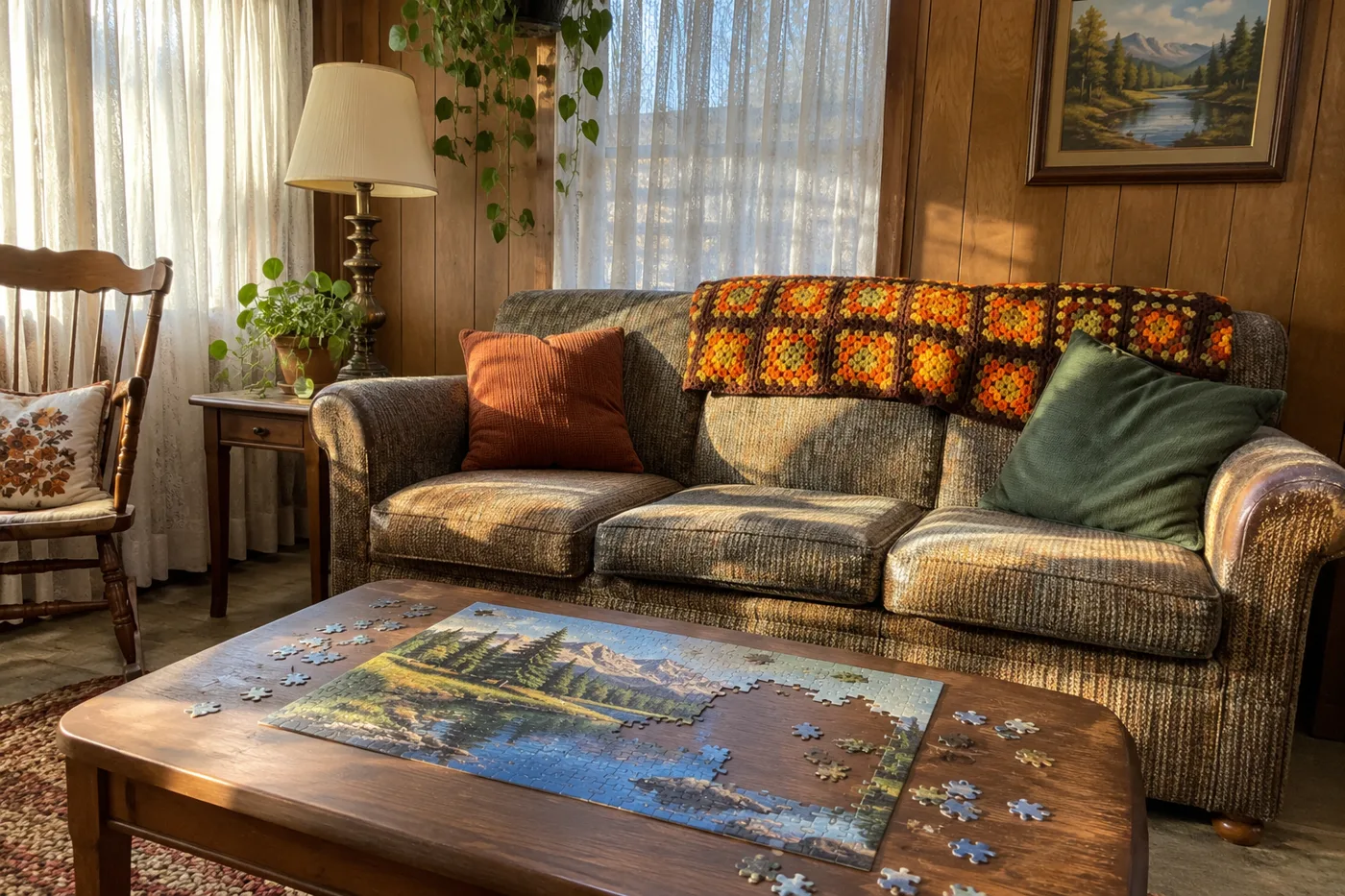
Orange, brown, avocado, repeat. One was folded over the back of somebody’s couch, and if you napped on it long enough you woke up with a waffle print on your cheek.
Those colors were picked on purpose. Design historian Sarah Archer says avocado and harvest gold peaked in the ’70s as a deliberate break from 1950s pastels, which by then looked conservative and suburban.
The square itself is much older than the couch. The earliest known pattern ran in April 1885 in a Chicago farm magazine called Prairie Farmer. It came from a reader known only as “Mrs. Phelps,” and she named it a “Crazy Afghan.”
Plenty of those 1970s afghans are still on beds today, turquoise and burnt orange and all.
Keep the Story With the Gift
- Keep a photo of the maker with the piece, along with any notes or cards.
- Tuck an index card into the fold of the afghan: who made it, about when, and who it was for.
#20 The macramé owl in the den
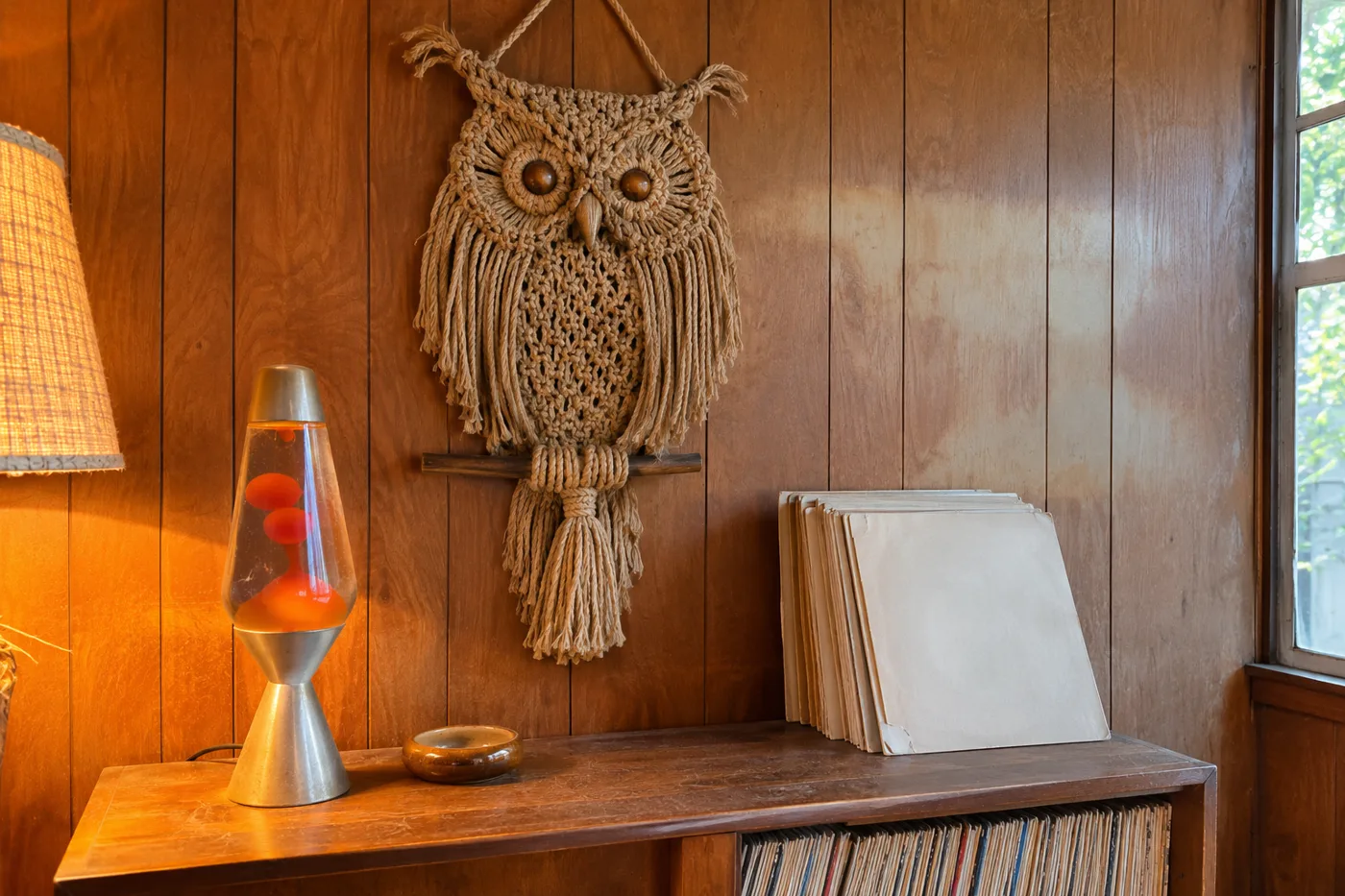
Two wooden beads for eyes. Wooden curtain rings around them. A single scale pried off a pinecone for the beak.
That’s straight from a 1977 newspaper pattern by Ed and Stevie Baldwin in the Montgomery Advertiser. Their owl was 3 by 5 feet, used 90 yards of jute and “almost all the basic knots used in macrame,” and could be “easily finished by a beginner.”
Why owls? Dr. Anna Ruth Gatlin of Auburn University says “Macramé owls combined the desire for nature with a rising handicraft movement.” The first Earth Day came in 1970, and suddenly every wall wanted something with feathers, even if the feathers were twine.
#19 The macramé plant hanger with a spider plant
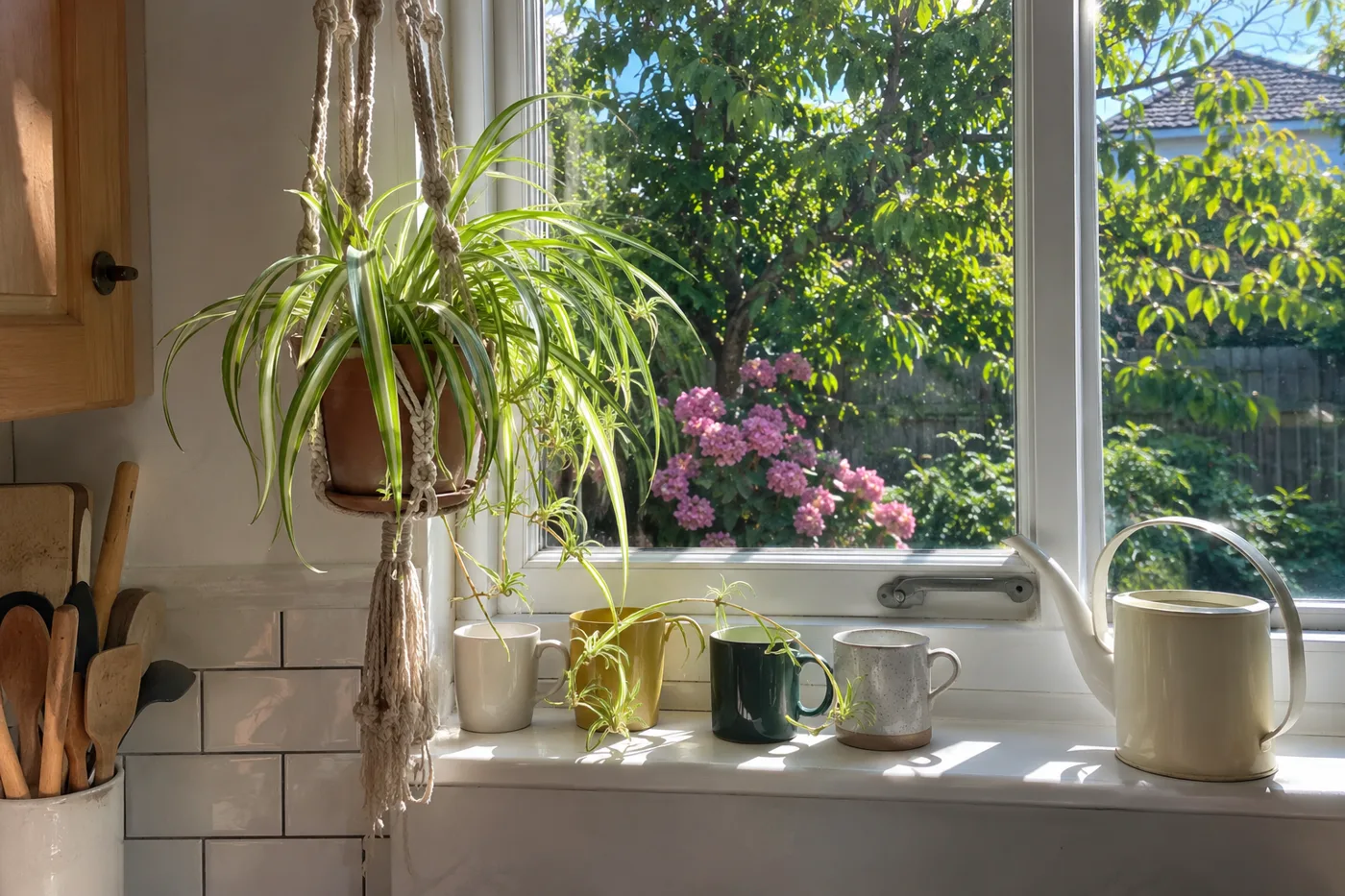
It hung in the corner by the window, swaying a little when the furnace kicked on, with spider plant babies dangling over the side like they were thinking about jumping.
A 1975 tutorial in the Zanesville Times Recorder in Ohio called for “100 yards of jute cording,” six 1-inch wooden beads and one “O” ring. The main knot was the plain square knot.
The plants were the real story. That same year, New York magazine ran a cover called “The Secrets of the Plant People.” Writer Anne Helen Petersen ties the boom to middle-class Americans “getting in touch” with an earthier, more authentic self.
The spider plant usually outlived the hanger. Its great-grandbabies are probably on a windowsill somewhere right now.
#18 Loop potholders from the little metal loom
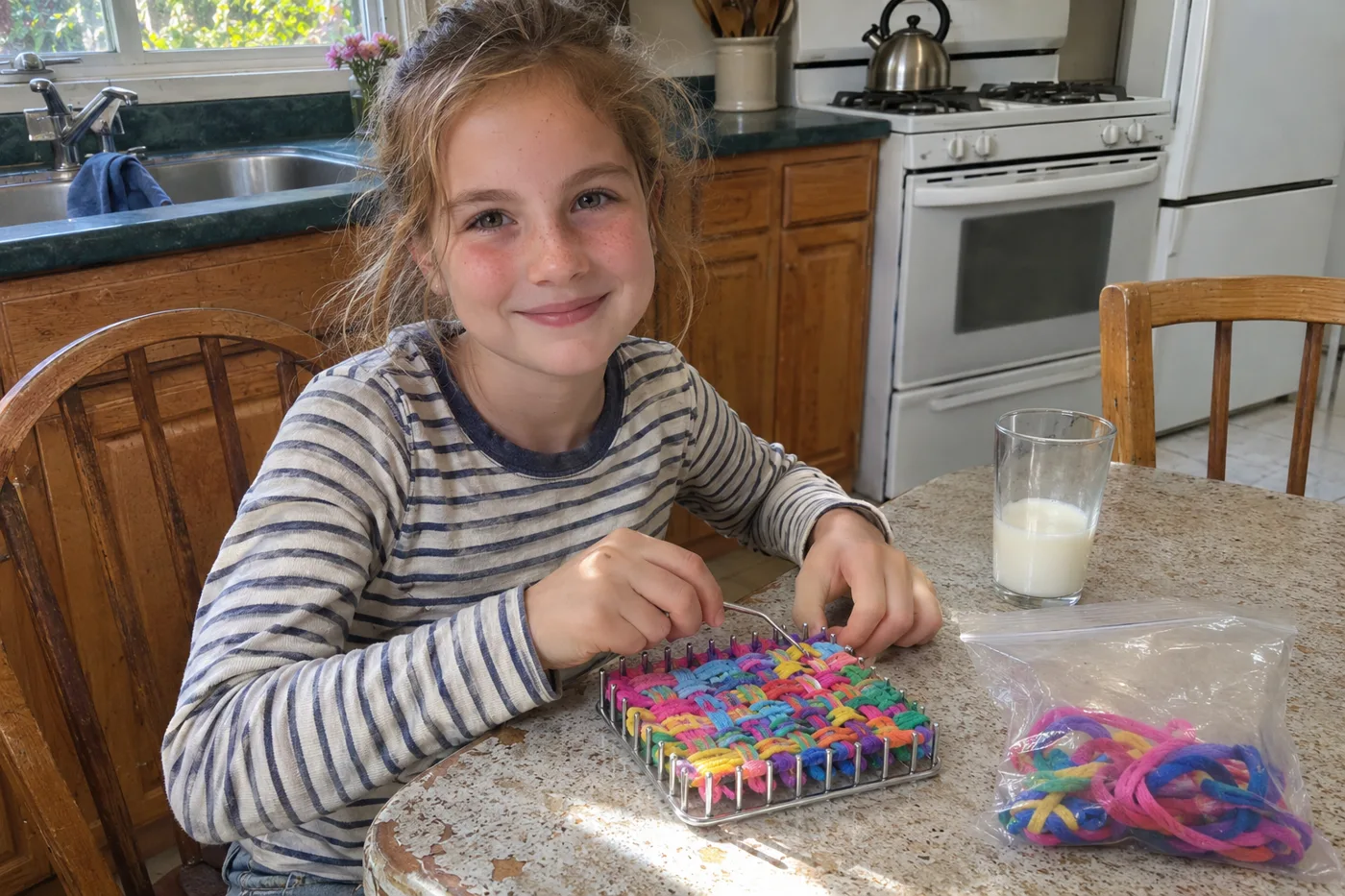
A square metal frame with teeth all around it, a crochet hook, and a plastic bag of stretchy loops in colors that never quite matched. Grandma got one at Christmas. Then she got four more.
Here’s the part nobody told the kids: those loops were leftovers. The loom has been around since the 1930s, and Handwoven magazine says it was “designed to use off-cuts of factory-woven socks.” It was used by “thrifty housewives and, even more, by clever children.”
With a little practice, the same article says, you can weave one in ten minutes.
Ten minutes, a bag of sock trimmings, and somebody’s kitchen drawer got fuller.
#17 Salt-dough ornaments made at the kitchen table
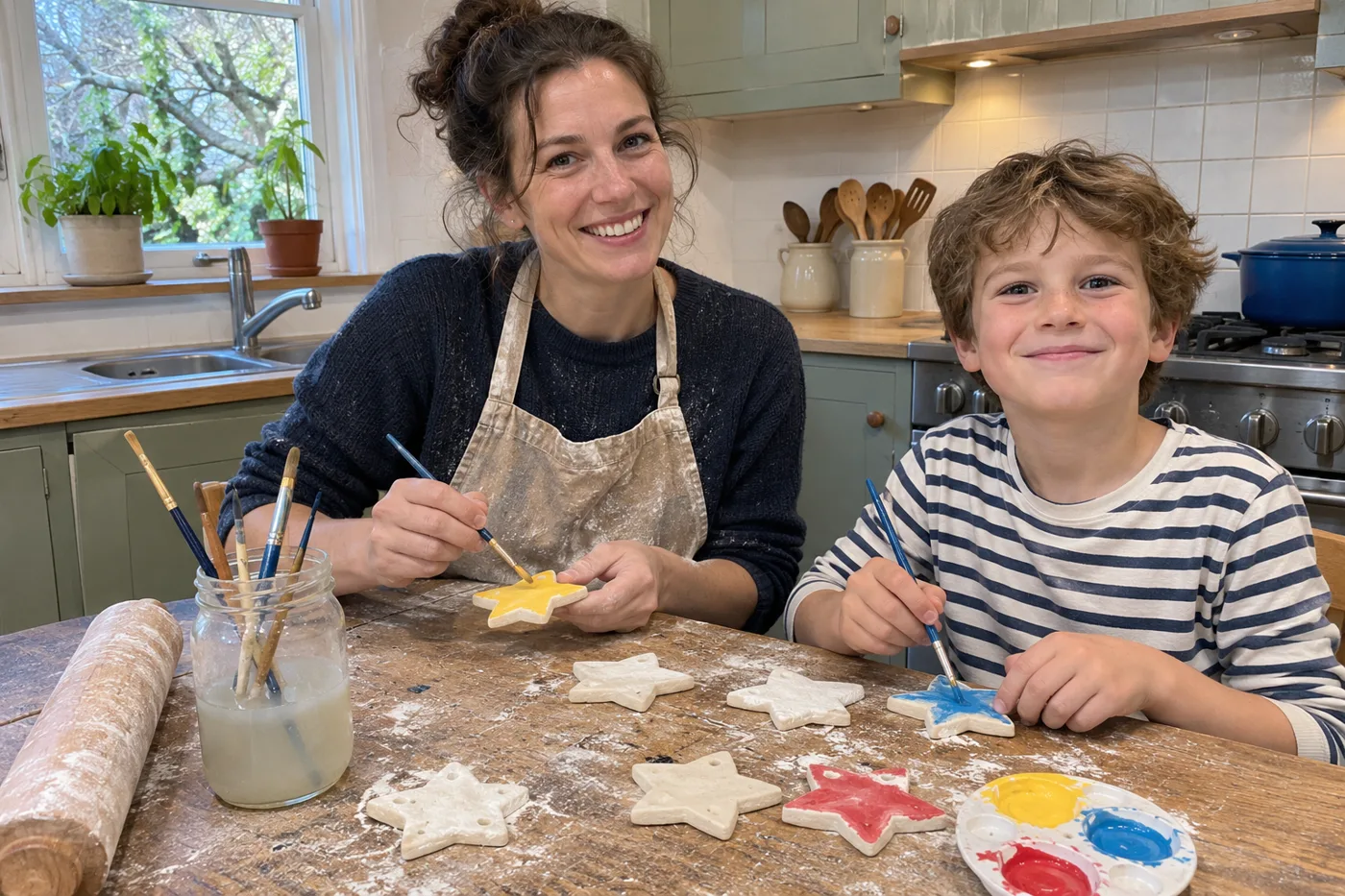
Flour on the table, flour on the floor, cookie cutters in stars and bells, and a drinking straw poked through the top of each one for the ribbon. Then a whole afternoon of painting with a brush that was too big.
Food Network’s version keeps it to three things from the pantry. One extra step makes them last: several coats of clear acrylic sealer on both sides.
Salt Dough Ornament Basics
- 2½ cups all-purpose flour, ½ cup kosher salt and 1 cup warm water, kneaded 5 to 7 minutes
- Roll it ¼ inch thick and bake at 300°F for about an hour
- Spray several coats of clear acrylic sealer on both sides, so they can come out again next Christmas
#16 Sand candles poured in the backyard
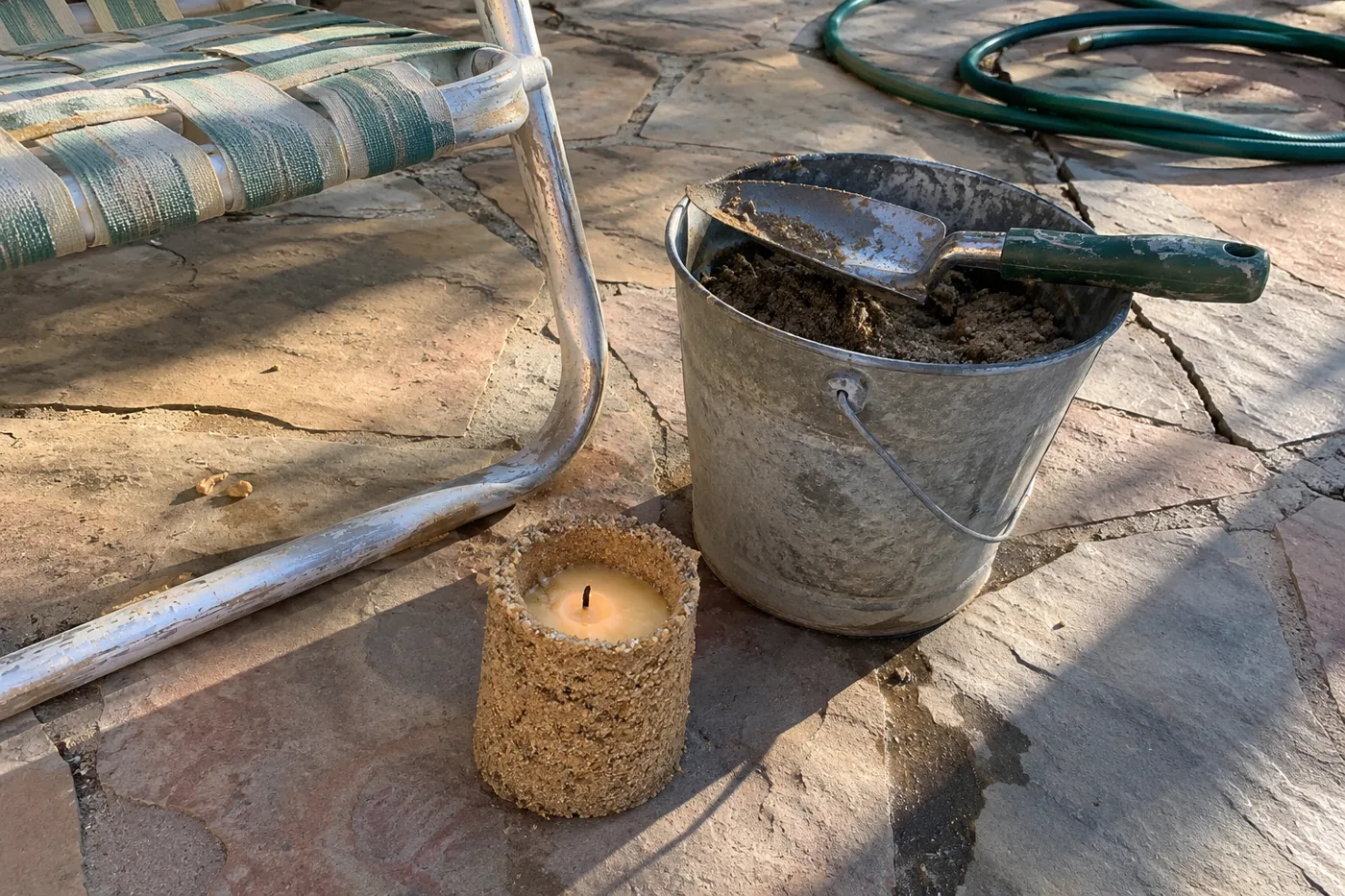
A bucket of damp sand, a hole scooped out with a fist, and a coffee can of melted wax sitting in a pot of water on the stove. That pot was a double boiler, the old way of melting wax over gentle heat.
The method hasn’t changed. Dampen the sand “like a sandcastle mix,” pour, set the wick, and leave it overnight. In the morning, lift it out and brush off the loose sand.
The surprise is the crust. Hotter wax makes a thicker sand shell, so the person at the stove was quietly deciding how rugged the candle would look. That pot still needs watching, though. Wax can catch fire if it gets too hot, so follow the heating limits for your particular wax.
Plenty of them came out with a fingerprint in the crust, courtesy of whoever couldn’t wait till morning.
#15 The crewel mushroom picture on the wall
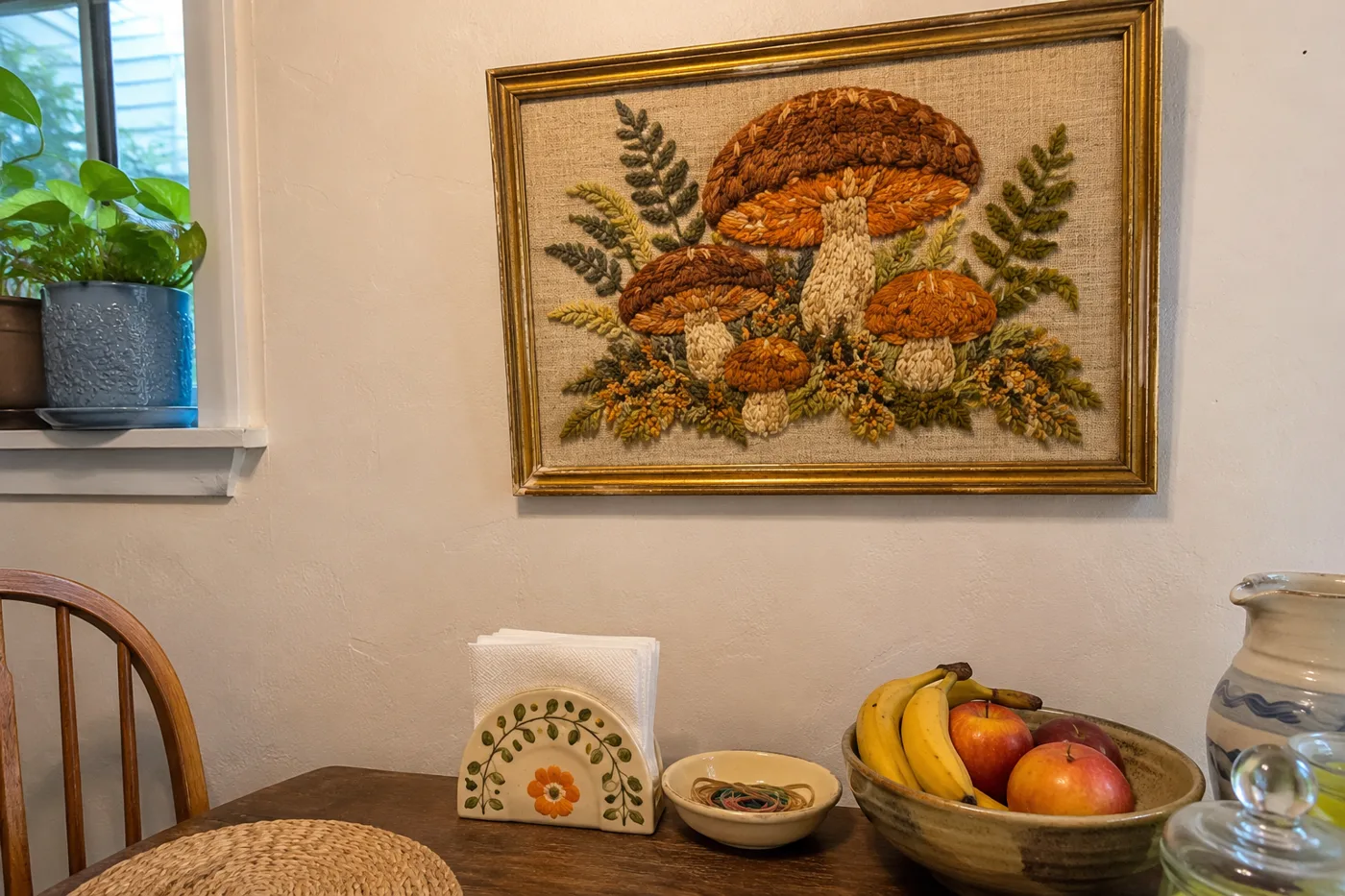
Fat brown mushrooms with orange caps, stitched in wool on oatmeal-colored cloth, framed and hung over the kitchen table.
That fuzzy yarn is what made it crewel. The word means surface embroidery worked in wool rather than silk or cotton, and the earliest known example is the Bayeux Tapestry. Your mushrooms were in fairly grand company.
As for why mushrooms were everywhere in the 1970s, a lot of the credit goes to Sears. Its Merry Mushroom line was sold only through the catalog and ran to more than 250 pieces in browns and oranges.
Those came out of a catalog. The one over the kitchen table came out of somebody’s lap.
#14 The hand-knit poncho for school picture day
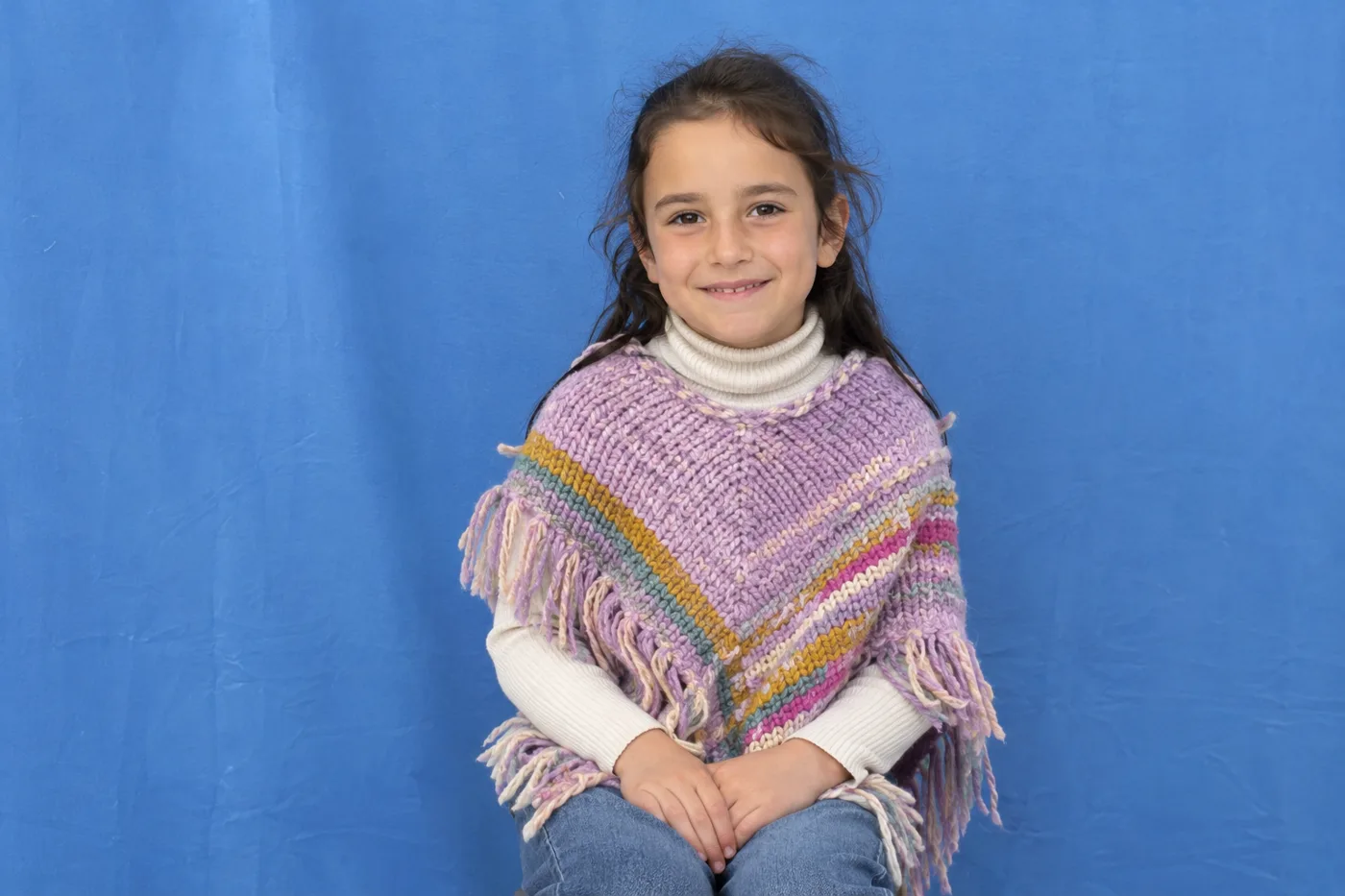
Fringe to the elbows, a turtleneck underneath, and a photographer telling you to tilt your head.
Ponchos caught on in the late ’60s and early ’70s, when clothes from other cultures were all the rage. Nostalgia Central puts it neatly: “Hippies adopted the Mexican serape blanket, while grandmas hand-knitted a homemade fashion for the little ones.”
So the same garment was a protest on a college campus and a picture-day outfit in second grade. It was an early-1970s fashion right alongside tie-dye shirts and peasant blouses.
The proof is still out there, in a school photo with a blue backdrop, fringe and all.
#13 The God’s eye from yarn and two sticks
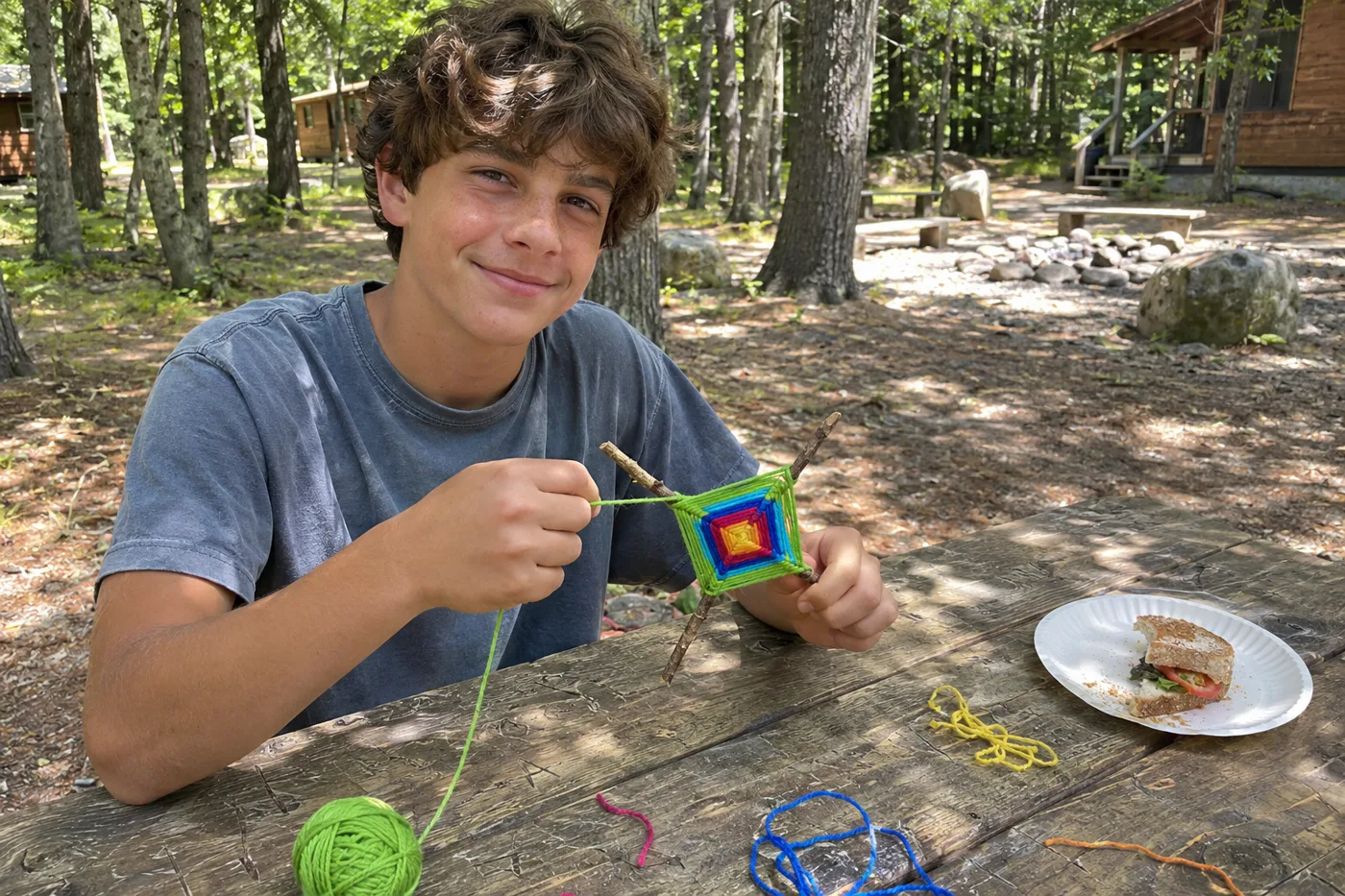
Two sticks lashed in a cross, yarn wound around and around, color after color, until you ran out of yarn or patience. Camps made them.
The craft comes from the Huichol and Tepehuan peoples of western Mexico. The Huichol call it Tsikuri, “the power to see and understand things unknown.” By custom, a father wove the center when a child was born and added a color each year until age five.
Spanish colonists named them “ojos de dios,” and the West Coast counterculture picked them up during the Summer of Love. From there it was a short trip to the camp craft table.
#12 The string art sailboat with nails and thread
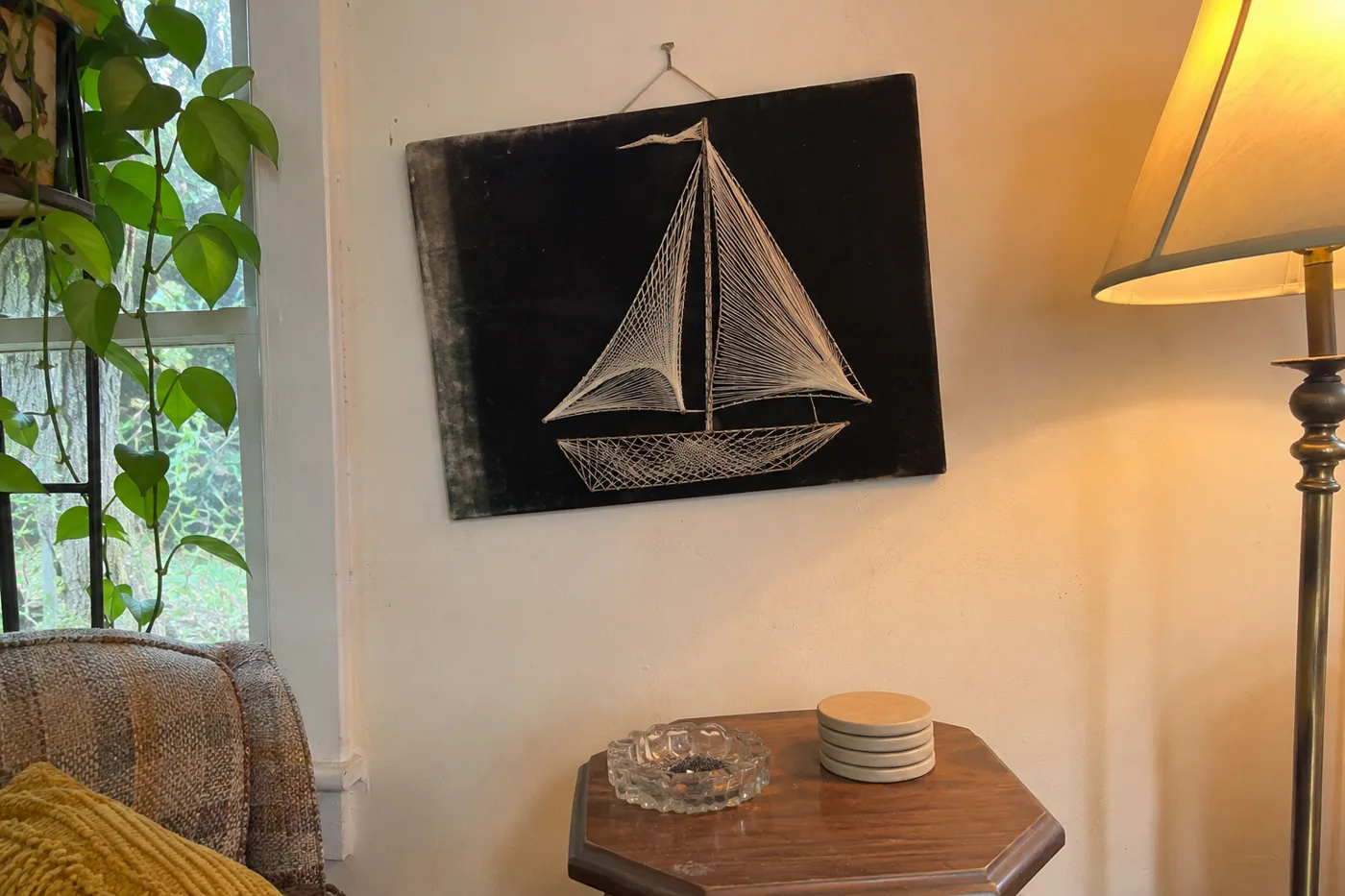
A board covered in black velvet, a few dozen little nails tapped in along a pencil line, and white thread wound from nail to nail until a sailboat appeared.
It started as a math lesson. String art grew out of the “curve stitch” activities Mary Everest Boole invented in the late 1800s to make mathematical ideas easier for children to grasp. Kits and books turned it into a hit craft in the late 1960s.
So the den had a geometry lesson hanging over the couch, and nobody noticed.
Look closely at one sometime. Every swooping curve in those sails is made entirely of straight lines.
#11 The terrarium in a closed jar
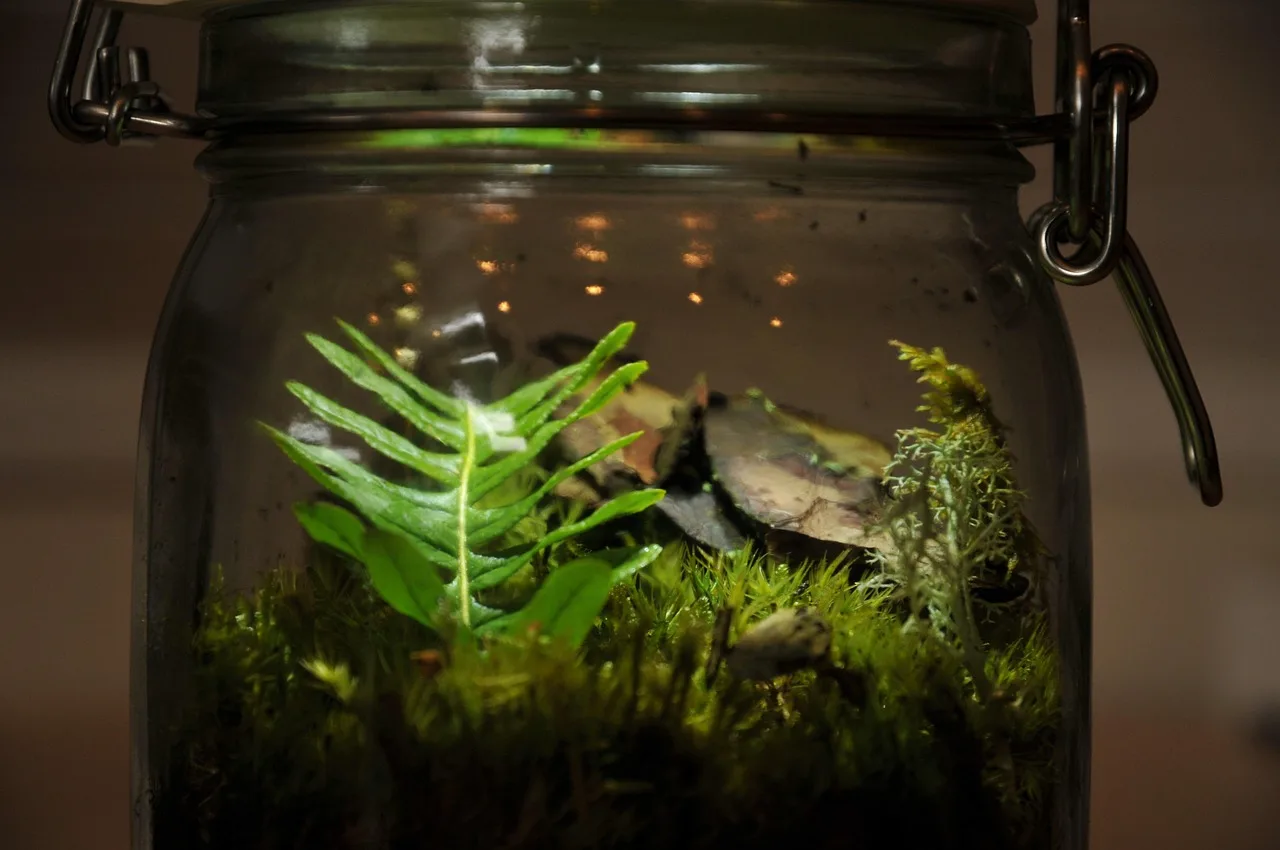
Moss on the bottom, a little fern, maybe a tiny ceramic frog, all sealed inside a jar with the lid screwed on tight. It seemed wrong. Plants need water, don’t they?
They had it, the whole time. In a closed terrarium, water rises from the soil, collects on the glass and falls back down like rain. Once it’s balanced, Mississippi State University Extension says, it can go weeks or even years without more water.
The idea came from a London doctor, Nathaniel Bagshaw Ward, who noticed by accident in the 1800s that ferns and grass had sprouted in a sealed bottle and lived for years.
Some of the 1970s ones sat on bookshelves for years without a drop, which is more than anyone can say for the spider plant.
#10 The tie-dyed T-shirt from a backyard bucket
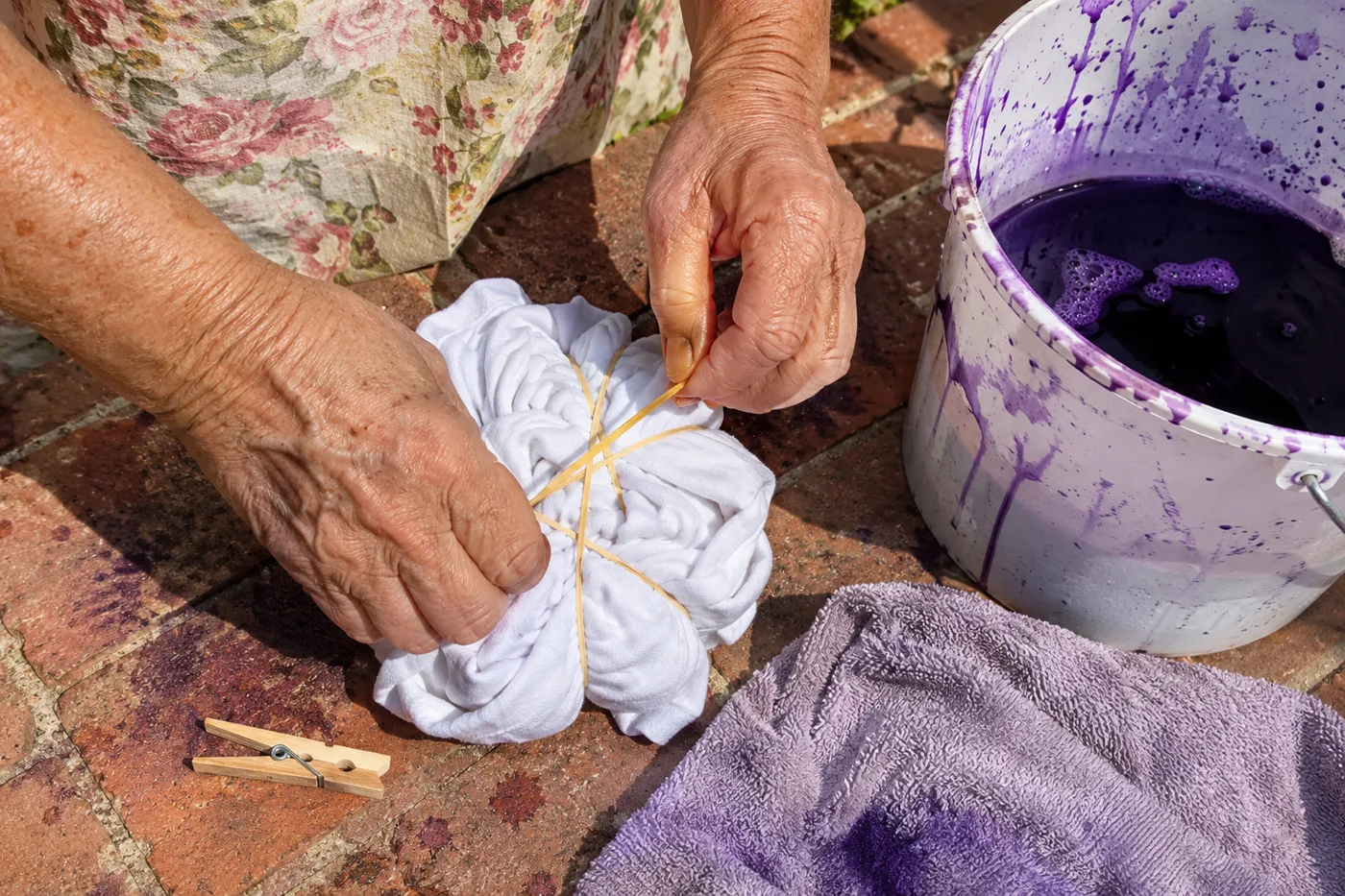
White T-shirts, a pocketful of rubber bands, and a bucket of dye on the patio. Somebody always skipped the gloves.
Rit, the dye in that bucket, was close to bankruptcy in the early 1960s, until marketer Don Price brought it to Greenwich Village artists and pushed liquid dyes. He then paid artists to make hundreds of tie-dye shirts for Woodstock in 1969, and Rit became “the official hippie dye.”
The style peaked around 1970, helped along by cheap household dyes like Rit. That’s about when it reached the backyards.
#9 The denim quilt from outgrown jeans
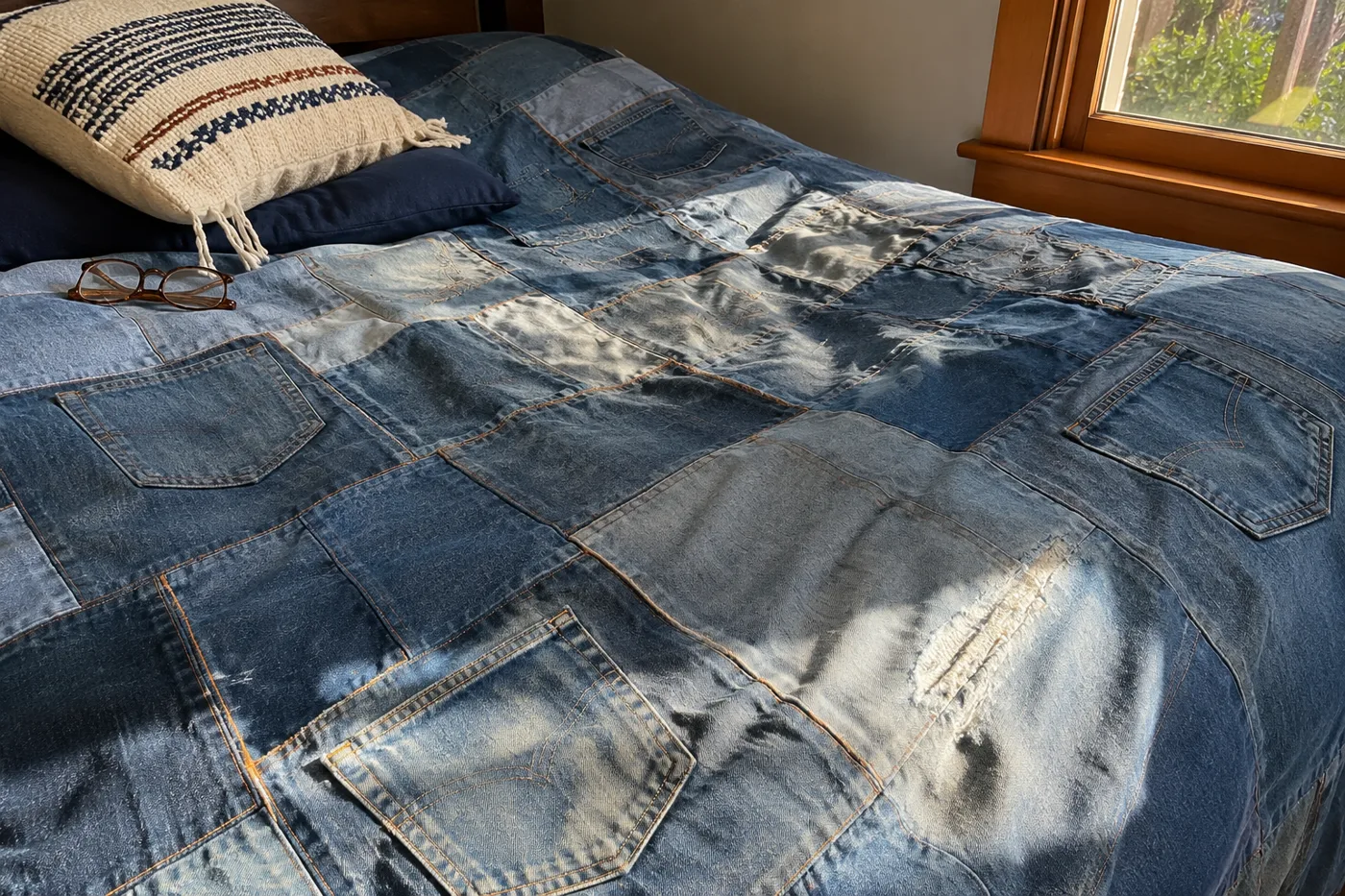
Knees worn white, back pockets still stitched on, a bit of orange thread showing at the seams. Every square was somebody’s old pair of jeans.
Patchwork became fashion in the late ’60s because, London’s Victoria and Albert Museum says, it was “inexpensive, easy to do yourself” and added individuality. One modern maker used about 36 pairs for a quilt roughly 6 feet square, so that’s a lot of outgrown legs.
It was hardly new. The women of Gee’s Bend, Alabama, have made quilts from salvaged denim since the 1800s, and their work now hangs in major museums.
#8 The hand-tooled leather belt from a kit
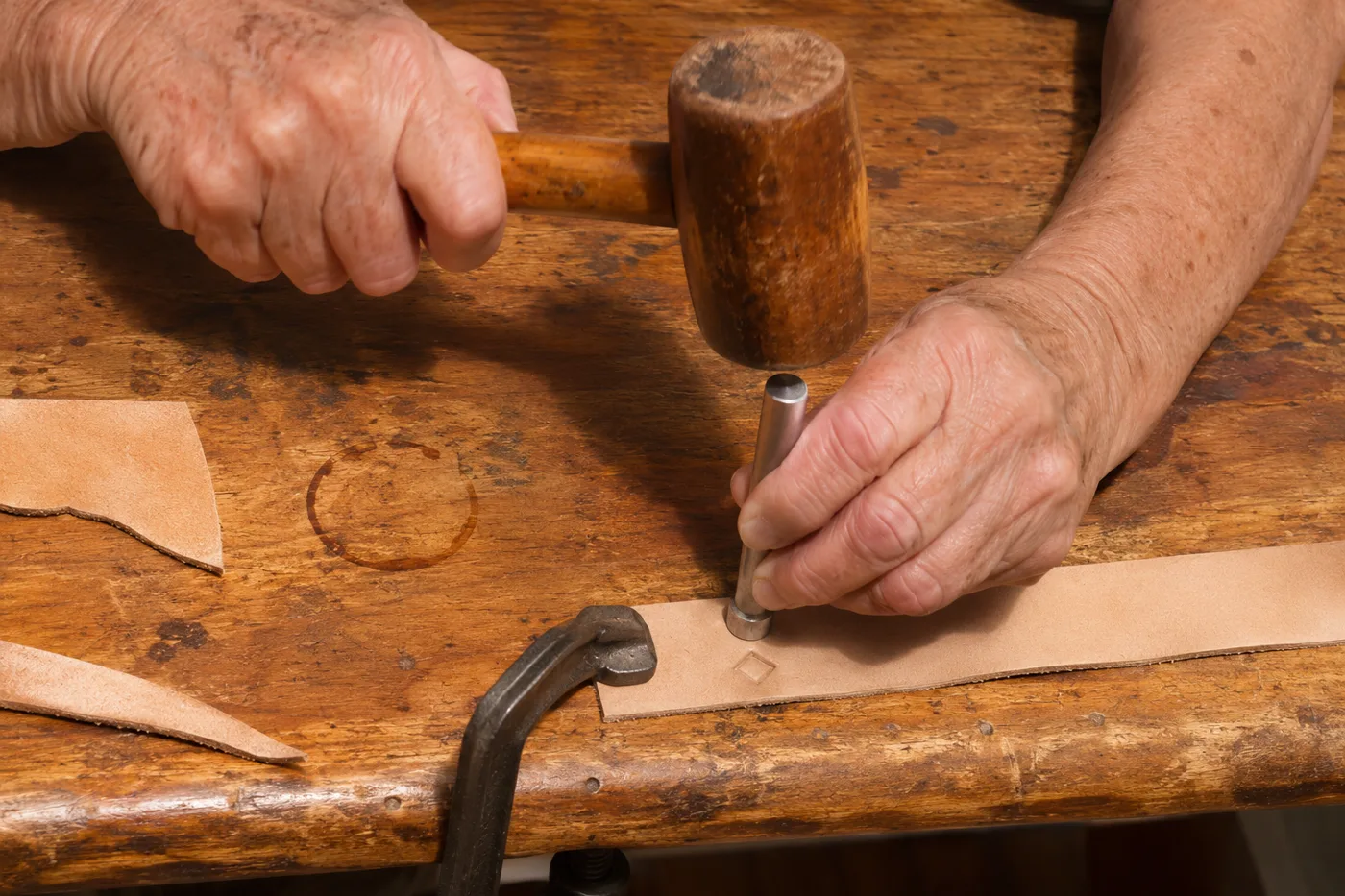
A strip of pale leather, a set of metal stamps, a wooden mallet, and a kitchen table that shook with every whack. Initials went on the back. Somebody’s dad wore it for twenty years.
The kits came from Tandy Leather, which started in 1919 as a shoe-supply company, then turned to hobby leathercraft during wartime leather rationing. By 1961 it had 125 stores across the US and Canada.
There are still more than 100 locations today, so the smell of that raw leather is still out there.
#7 The rag doll with yarn hair
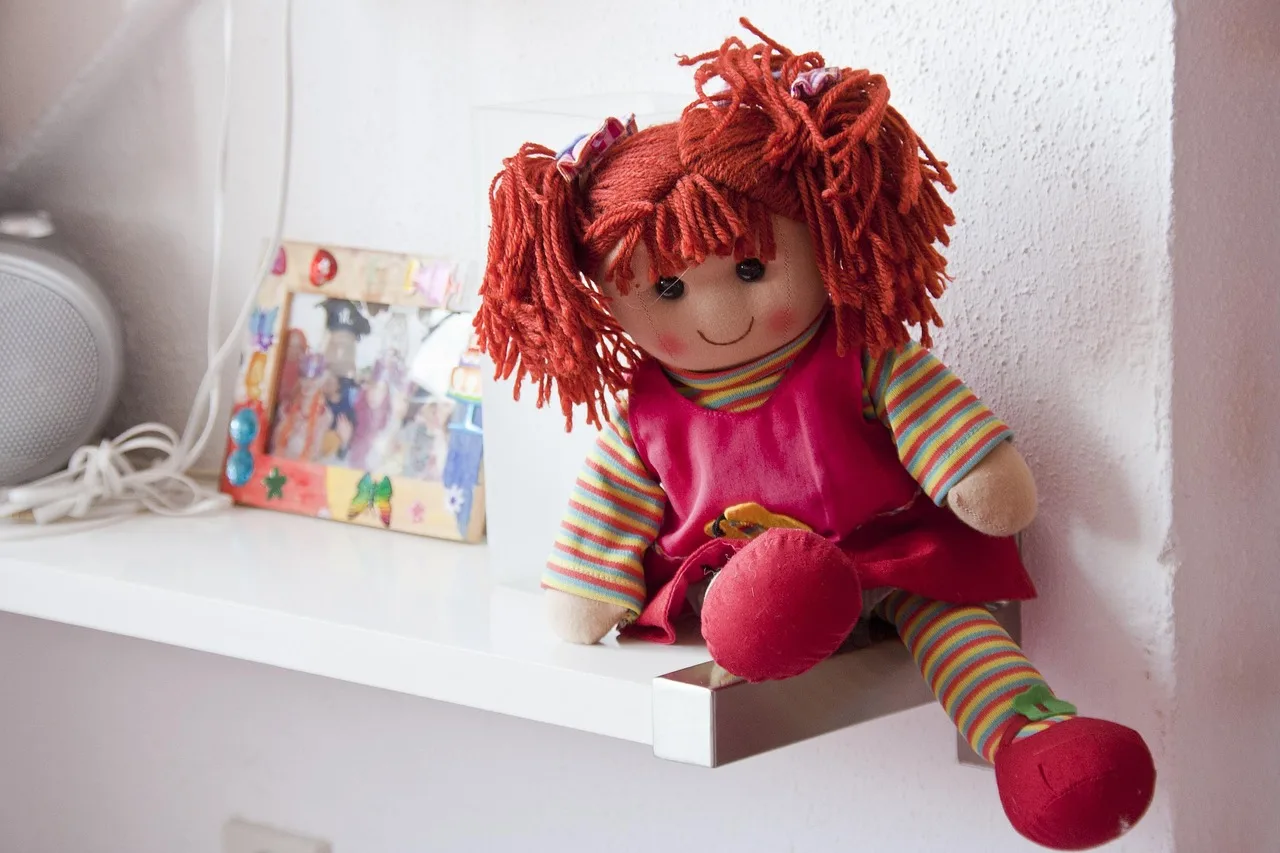
Muslin body, embroidered face, and a mop of red yarn hair that came loose a strand at a time.
If yours looked a lot like Raggedy Ann, there’s a reason. McCall’s sold Raggedy Ann sewing patterns starting in 1940 with Pattern #820 and kept updating them through the 1980s.
The look itself goes back further. Johnny Gruelle patented the design in 1915: a rag doll with red yarn hair and a triangle nose. By the 1970s that red hair was more than fifty years old, and still coming loose a strand at a time.
#6 The plastic canvas tissue-box cover
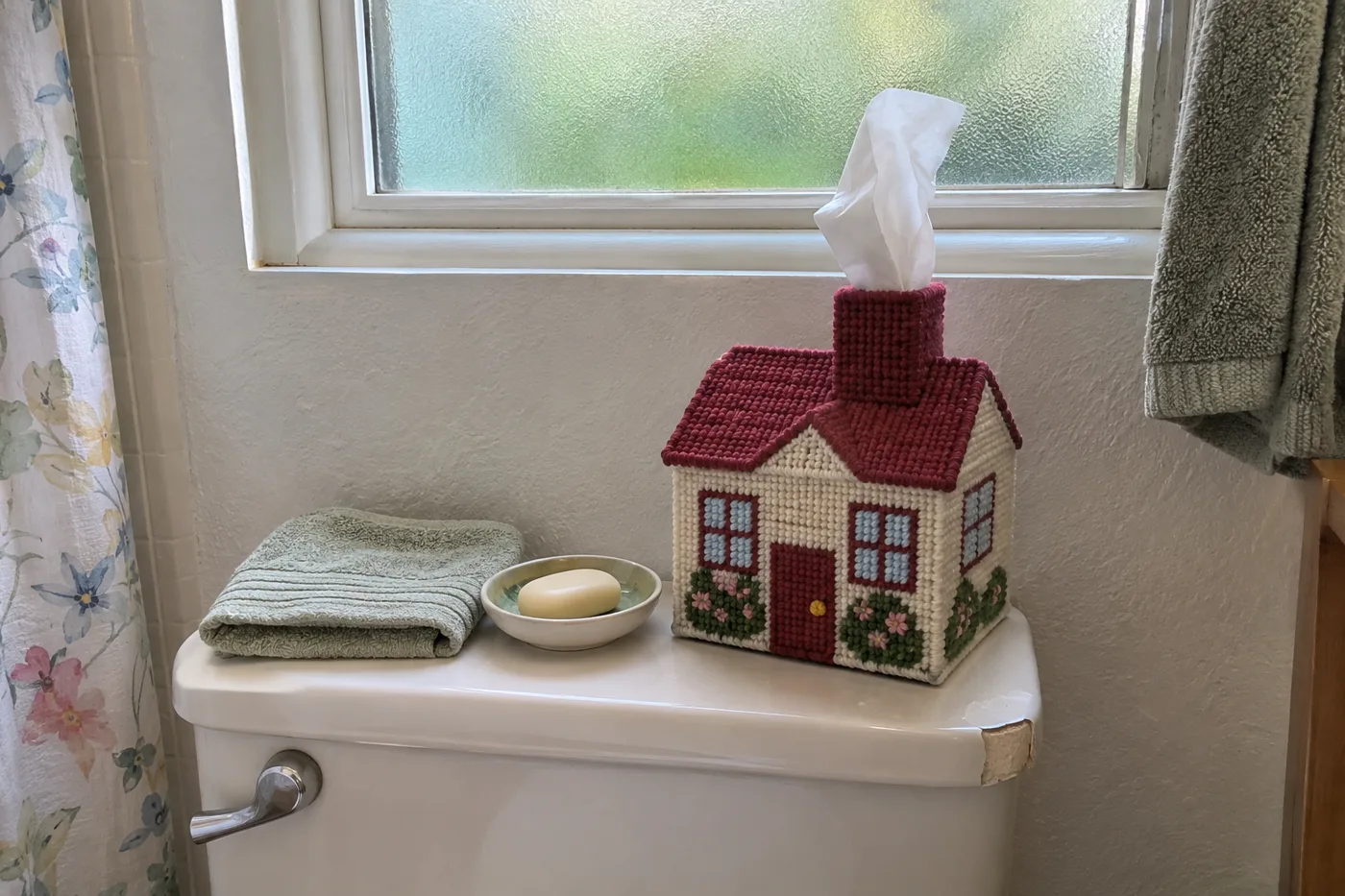
It sat on the back of the toilet, stitched in yarn, sometimes shaped like a little house with the tissue poking out of the chimney.
Plastic canvas has been sold since the 1970s. It’s lightweight vinyl sheeting with evenly spaced holes, usually seven to the inch, which made it perfect for boxes and purses that had to stand up on their own.
One writer calls tissue box covers “a rite of passage for grandparents in the ’70s and ’80s,” and says every friend she had owned some little plastic canvas piece, usually in the bathroom, from a grandparent or aunt.
It was also the one room where guests were guaranteed to see it.
#5 The decoupage plaque with a varnished verse
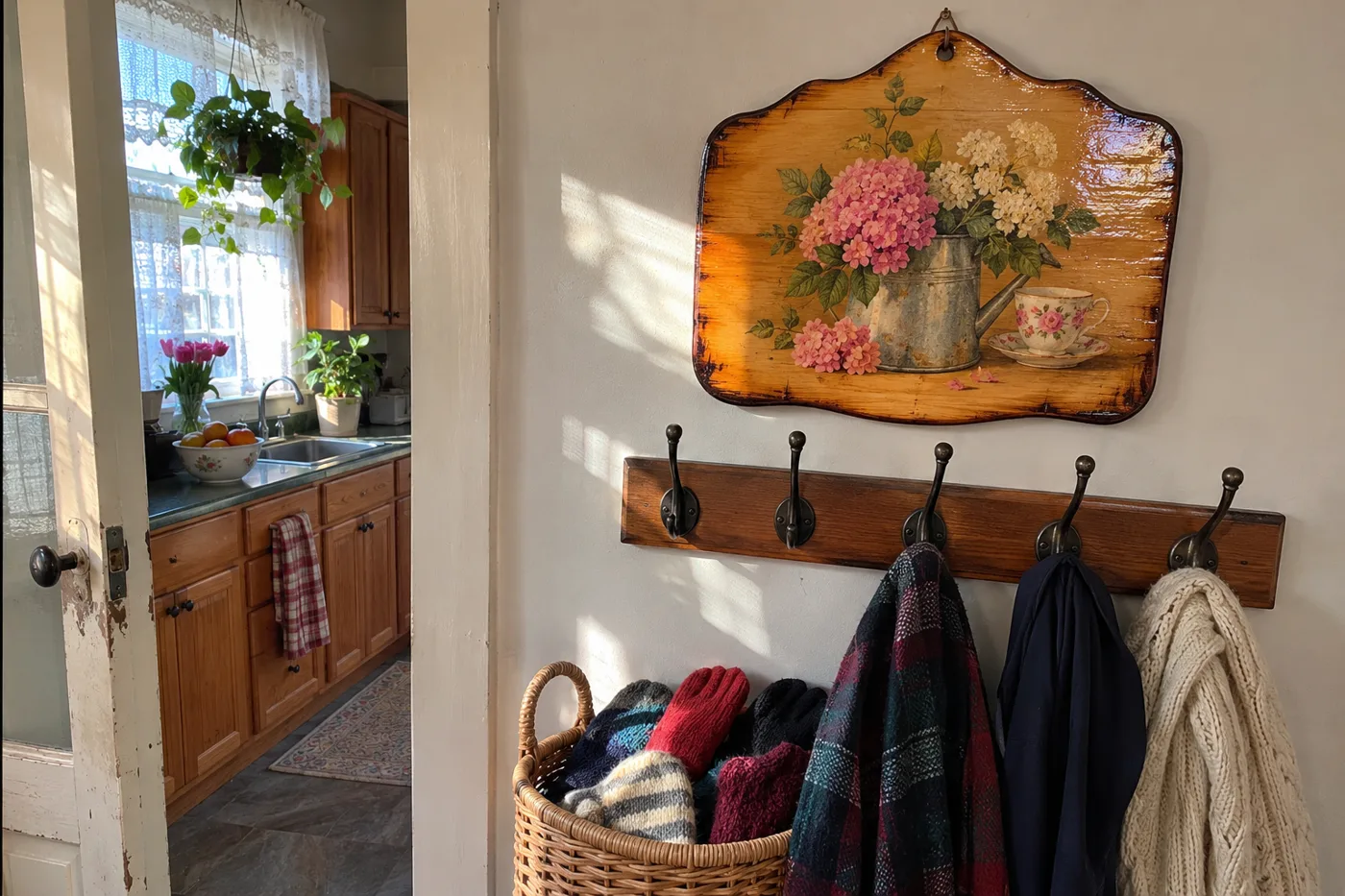
A slab of pine, edges darkened, a printed verse or a pretty picture glued in the middle, and a shine so thick you could see your face in it.
The word comes from the Middle French decouper, “to cut out.” The classic method used 30 to 40 layers of varnish, sanded smooth, so the cutout looked painted on rather than pasted.
It had its own craze in the 18th century. One woman of that time, Mary Delany, made 1,700 botanically accurate paper pieces between the ages of 71 and 88.
Most 1970s plaques got a few coats of varnish and a sawtooth hanger on the back, and went straight onto the wall by the kitchen door.
#4 The felt Christmas stocking covered in sequins
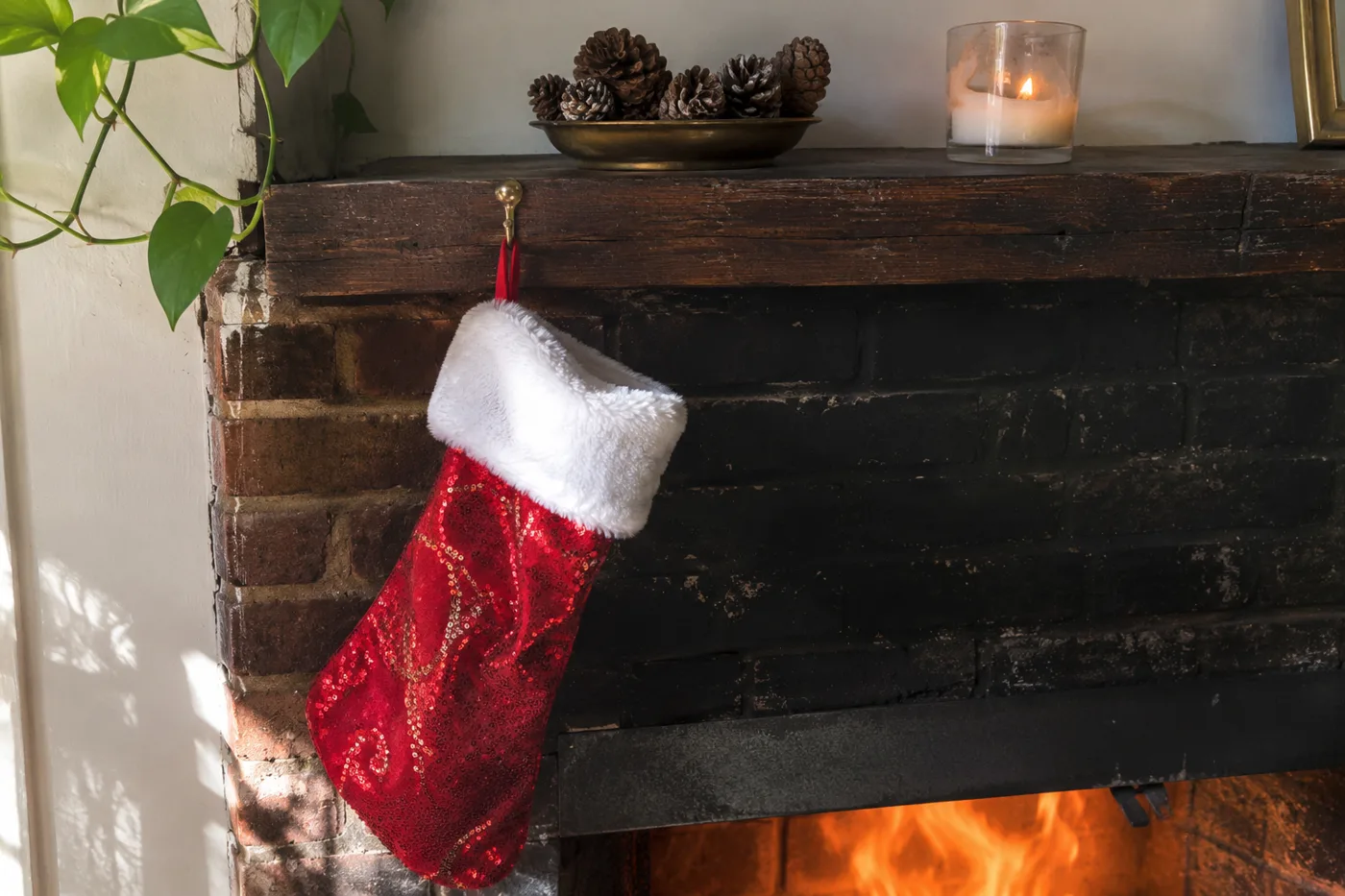
A kit with pre-printed felt pieces and a packet of sequins and tiny beads. Your name went across the white cuff.
The name on most of those kits was Bucilla. It was founded in 1867 by Bernhard Ulmann, an immigrant in New York who started out selling from a pushcart. By the 1960s it had turned to needlework kits, and its felt Christmas kits were first marketed that decade.
The company supplied the felt and the sequins. Sewing on every last one was up to somebody at home.
#3 The hand-painted ceramic tree with plastic lights
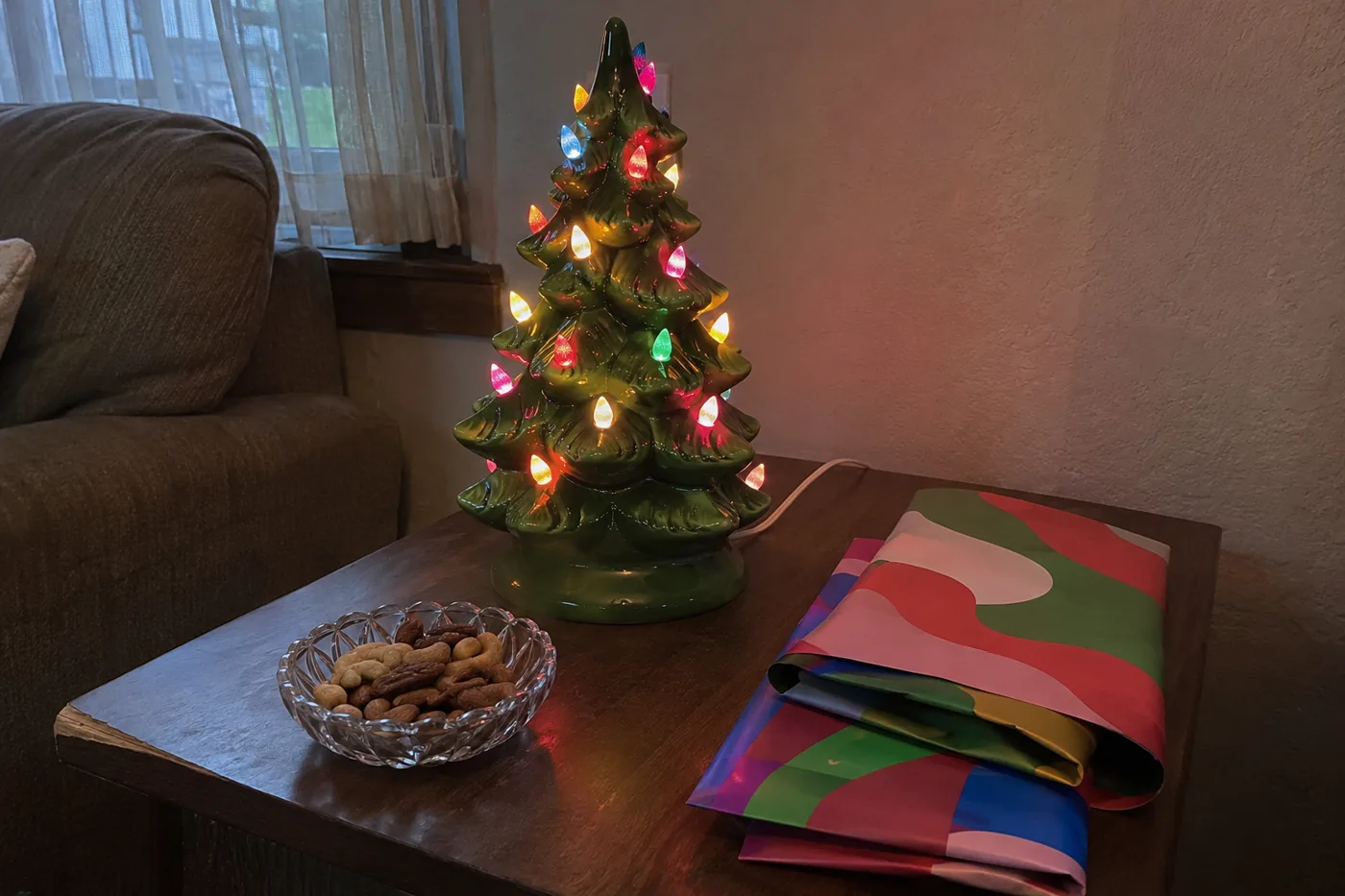
A green tree on the end table, a cord out the back, and little plastic bulbs in red, yellow and blue that glowed when you flipped the switch.
Many of them were made at ceramics-studio workshops in the 1960s and ’70s, where customers made their own trees from molds. One of the first mass-produced designs, the A-64, was copyrighted by Atlantic Mold in 1958. Inside, one bulb lit all the little plastic ones.
The catch: the date stamped on the bottom is the mold’s copyright date, not the year the tree was made.
So that tree marked 1958 might have been glazed in 1976 by someone you know.
#2 The Shrinky Dinks keychain
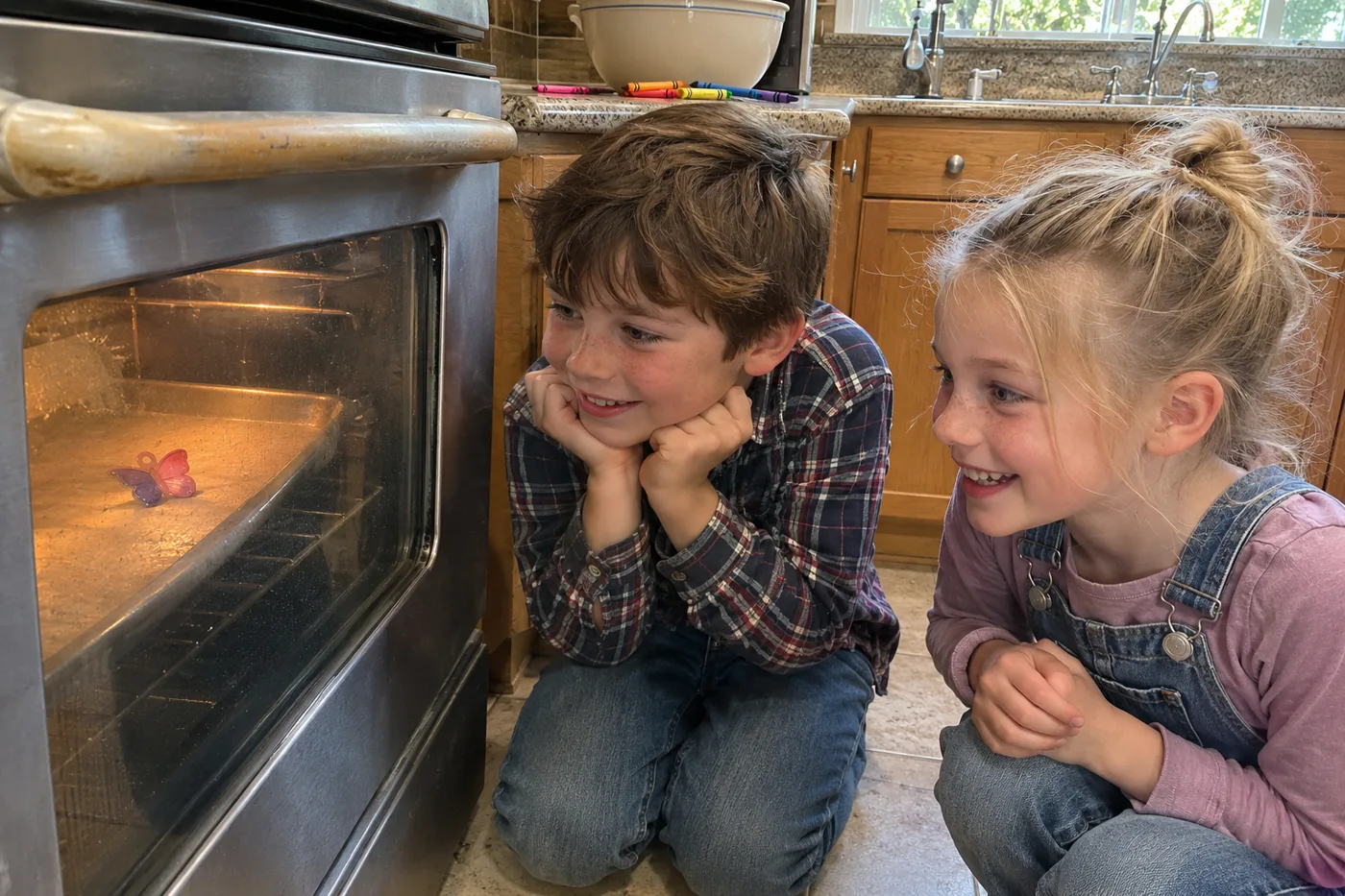
Back to the oven window. You traced a picture onto a clear sheet, colored it, cut it out and watched it curl up like it was in pain before it flattened out.
Shrinky Dinks were invented by two mothers, Betty Morris and Kathryn Bloomberg, as a Scout project with their sons. They first sold them in 1973 at a mall in Brookfield, Wisconsin. Baked, a piece shrinks to one-third its size and gets about nine times thicker.
The trick is in the plastic. The sheet is stretched and cooled fast, which locks it in its stretched state. The oven’s heat lets it shrink back.
The brand is still around, but a keychain someone traced and colored at the kitchen table in 1975 is one of a kind.
#1 The crocheted doll hiding the spare toilet roll
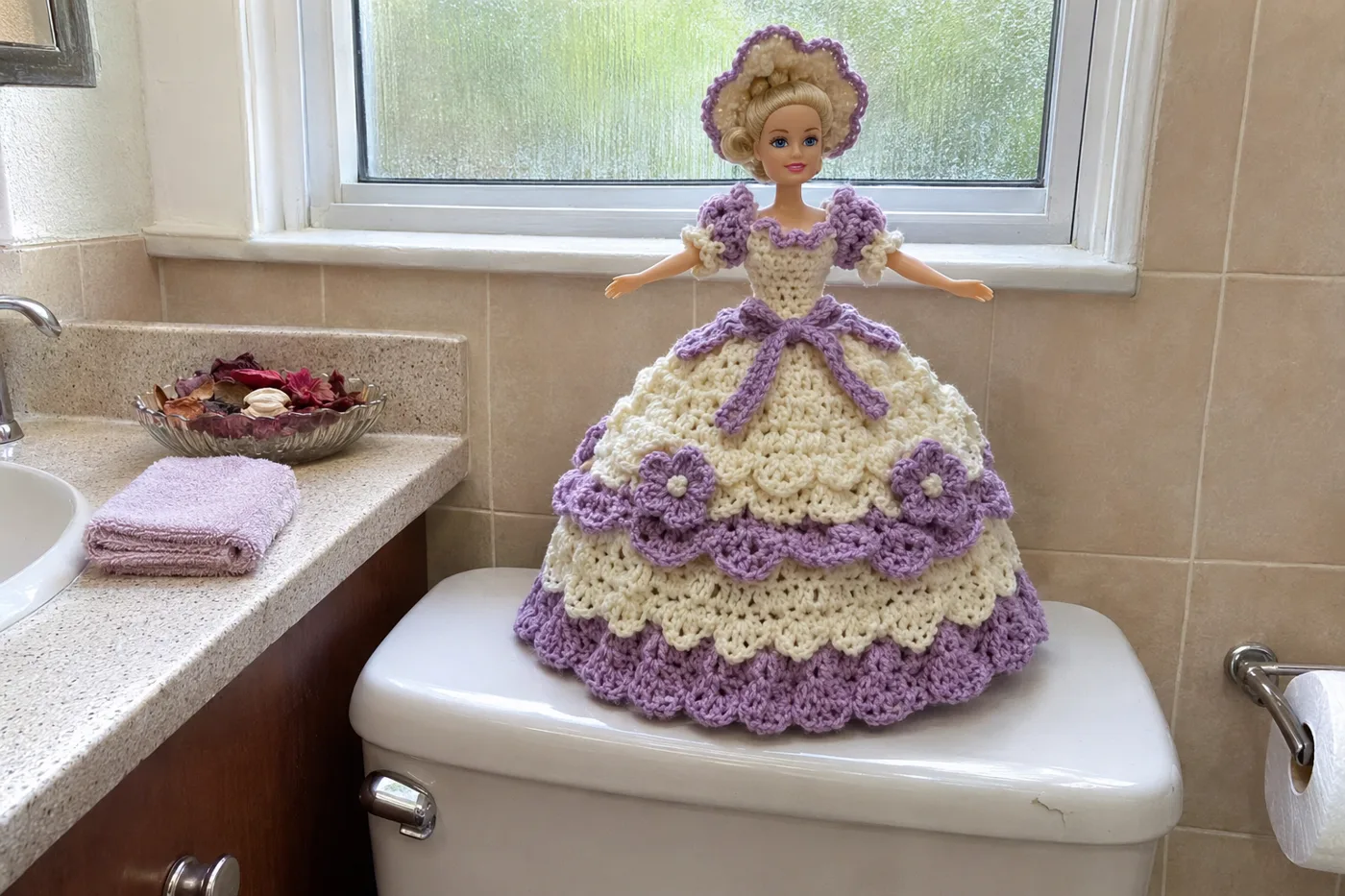
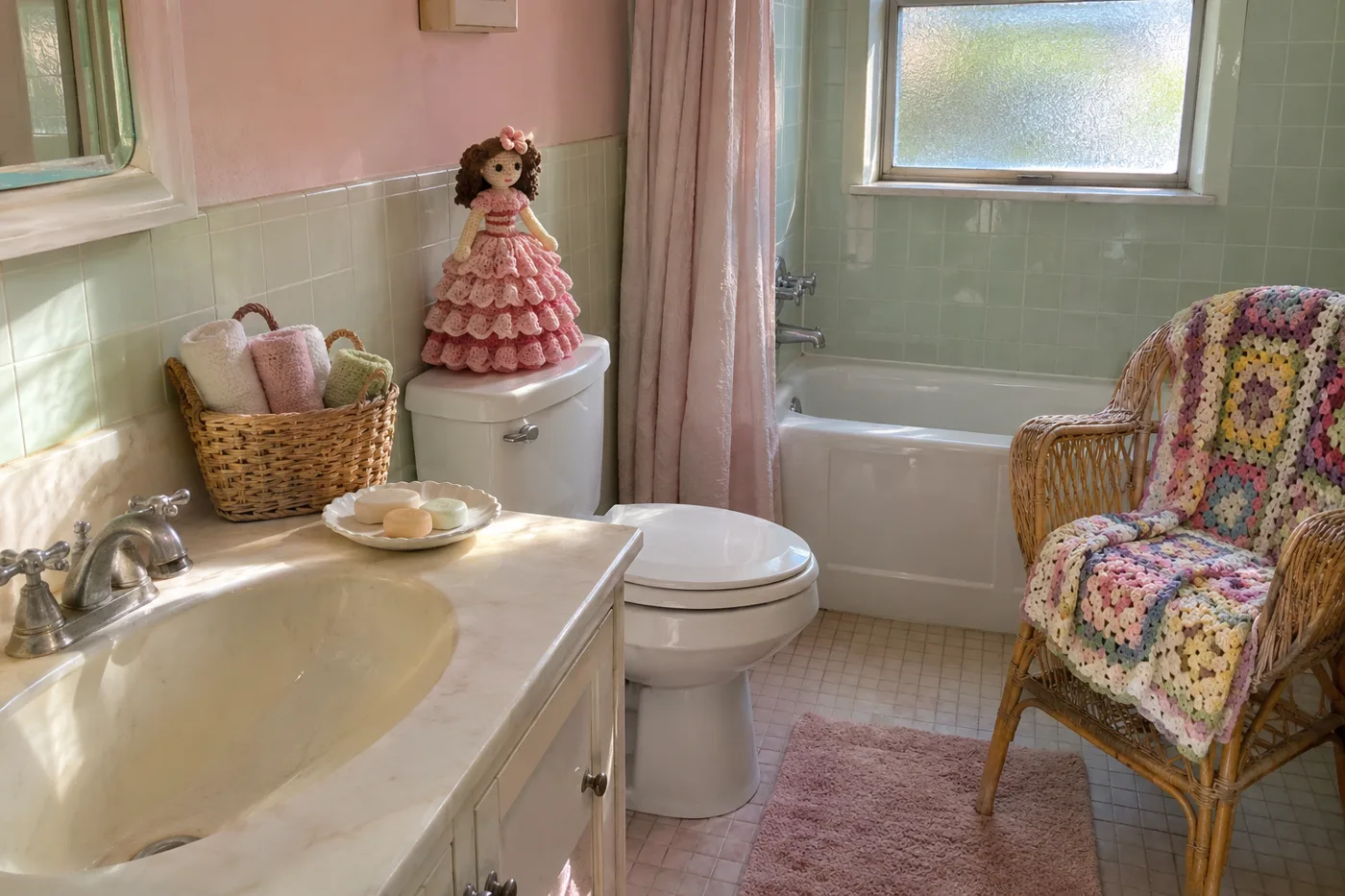
She stood on the back of the toilet in a ruffled crocheted ball gown, plastic arms out, hair stiff, smiling at whoever came in. Under that skirt was one roll of toilet paper.
Nobody knows who started it. The American Scholar says the dolls appeared sometime in the 1960s or ’70s in bathrooms in the United States, England and Australia, and their origin “seems shrouded in mystery.”
The same essay offers a theory for that skirt. Starting in 1928, toilet paper ads used an illustration of an elegant woman’s head so they’d never have to mention what the product was for. The doll’s skirt may do the same job: a lady on top, the unmentionable underneath.
Her cousin, the crocheted poodle bottle cover, was a different kind of novelty. Patterns from the 1960s and ’70s show these were made for using up leftover yarn and selling at charity bazaars.
So that doll was manners, crocheted. She was hiding the roll from you.
The bottom line
Here’s a question worth an afternoon: which of these did you make, and who did you give it to? If the answer is a name you haven’t said in years, that’s the one to write down.
And if one of these is still in your house, it’s worth a minute to turn it over and look. Plenty of them have a date, a name or a scrap of masking tape nobody’s read since.
A closet shelf is a good place to start.
Bonus: Three things to know before you make one
- Search the old names. Try “jersey loop potholder loom,” “curve stitch,” “ojo de dios” and “plastic canvas 7-mesh,” which means plastic canvas with seven holes to the inch.
- Pick the kind that gets used. Many people who still give handmade gifts lean toward potholders, candles and food, things that earn their keep in a kitchen.
- Don’t count on thrift store bargains. Many crafters say secondhand yarn and supplies now cost close to new.
Questions people also ask
Are Shrinky Dinks still sold today?
Yes, they’re still made. The toy was invented in 1973.
What happened to all the ceramic Christmas trees people used to make?
They fell out of favor in the 1980s. By the 1990s, imported ceramics from Japan and China had largely taken the place of trees made in local ceramics studios.
What handmade gift can I make if I don’t own a sewing machine?
Salt-dough ornaments and Shrinky Dinks charms both work without a sewing machine. Salt dough needs flour, salt, water, a rolling pin, cookie cutters and an oven. Shrinky Dinks need shrink-plastic sheets, coloring supplies, scissors and an oven.
Why were owls such a popular macramé shape in the 1970s?
They fit the mood of the decade. Handicrafts were on the rise and nature was in, so nature themes turned up on walls everywhere.
How do I get a pin or needle out of a finished quilt without ruining it?
There are two common fixes. You can crush the pin’s head with pliers so nothing bulky is left, then pull out the metal, which leaves a tiny hole. Or you can unpick a few stitches beside the pin, take it out, and sew the seam closed by hand. Some people cover the spot afterward with a small embroidered flower.
Related posts:
18 Christmas Decorating Habits People Over 60 Still Have That Fire Experts Beg Them to Stop
22 Things You're Saving That Your Children Will Throw Away
24 Things People Over 60 Still Do When Cleaning That Experts Beg Them to Stop
26 Things Grandchildren Remember About Your House That You Never Notice
26 Church Cookbook Desserts That Nobody Makes Anymore
24 Things Your Grandchildren Will Remember About Your Christmas

- 24 Things People Over 60 Still Do When Cleaning That Experts Beg Them to Stop - November 6, 2026
- 21 Handmade Gifts From the 1970s Your Grandchildren Have Never Seen - November 6, 2026
- 25 Homemade Christmas Decorations From the 1960s, and What Became of Each One - November 6, 2026

Leave a Reply