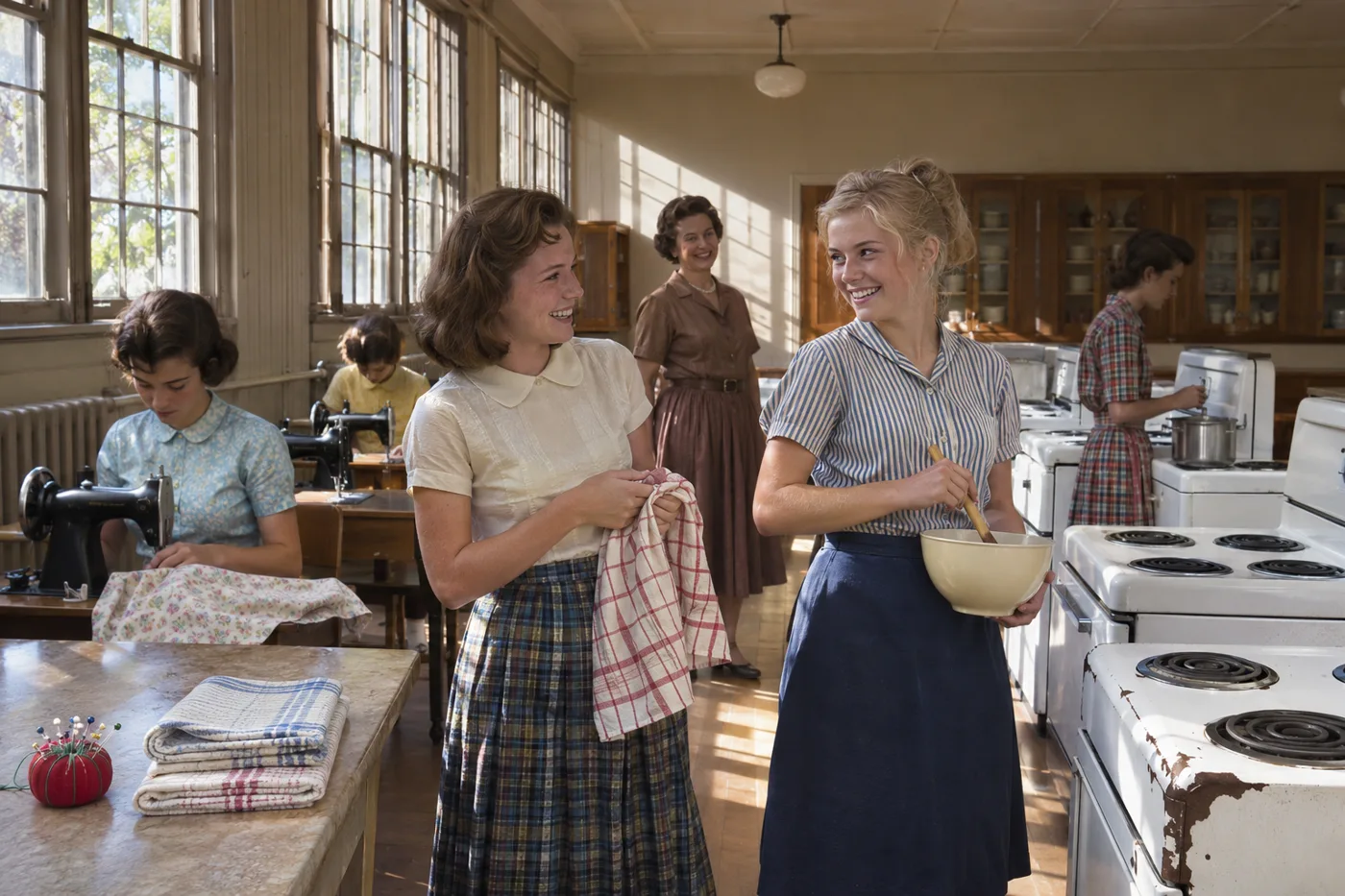
The room smelled like scorched butter and machine oil. Sewing machines lined one wall, stoves lined the other, and somebody’s cinnamon rolls were always either rising or burning.
That same class is still around, now called Family and Consumer Sciences. By 2013, though, only about one high school graduate in five earned a full year’s credit in it.
#22 The apron everyone sewed first
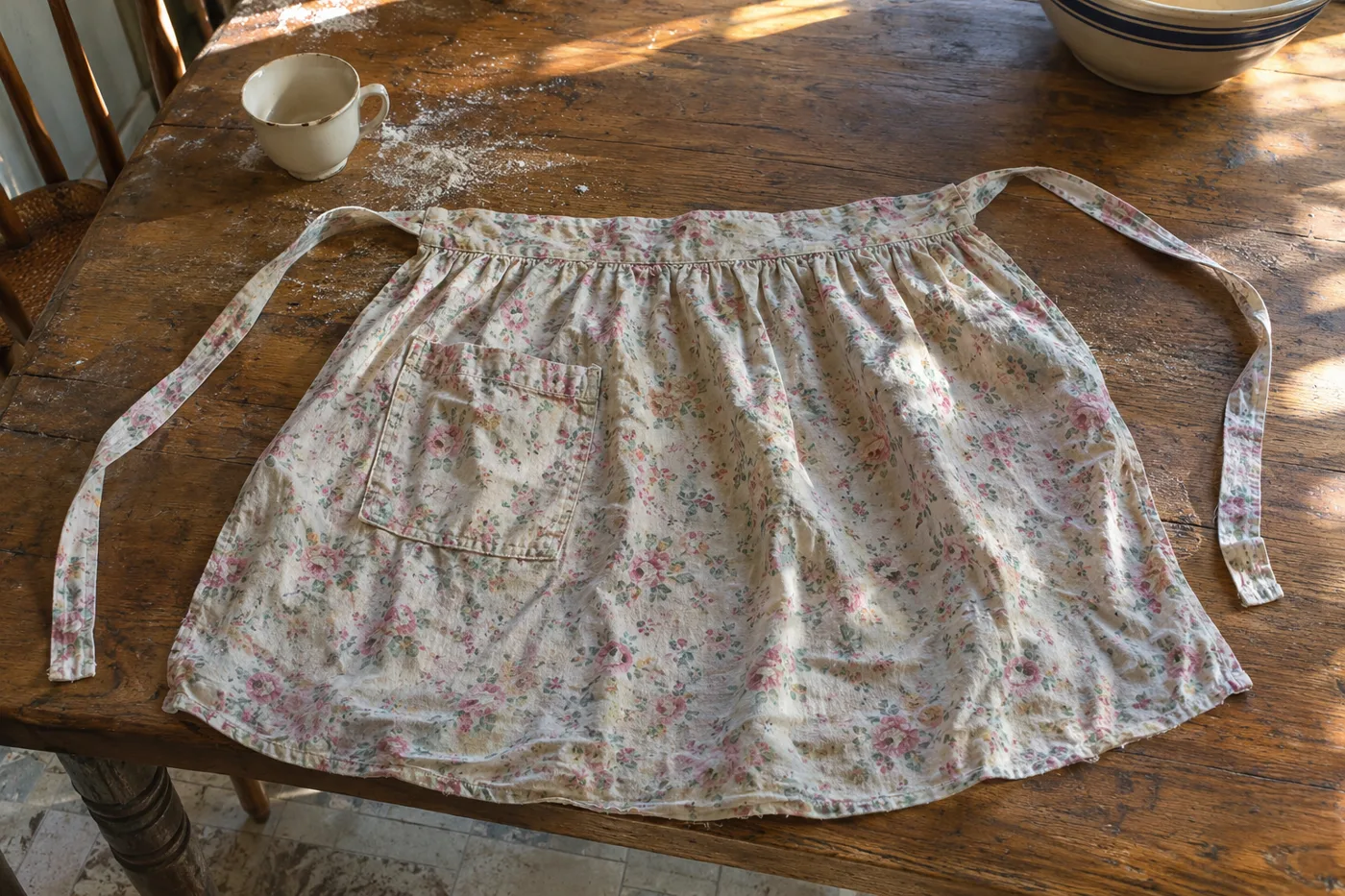
Two ties, one pocket, a straight hem. If you sewed anything first, odds are good it was an apron.
The National Women’s History Museum says aprons were a common first home ec project, and it’s easy to see why. There was no sizing, no zipper and nothing to fit. You learned to hem and attach ties on something that didn’t have to flatter anybody.
The timing mattered too. Home sewing in America hit its high point in 1958, so girls in the 1960s walked into class right behind the peak.
Plenty of those first aprons are still folded in a kitchen drawer somewhere, crooked pocket and all.
#21 Sewing your own dress from a pattern
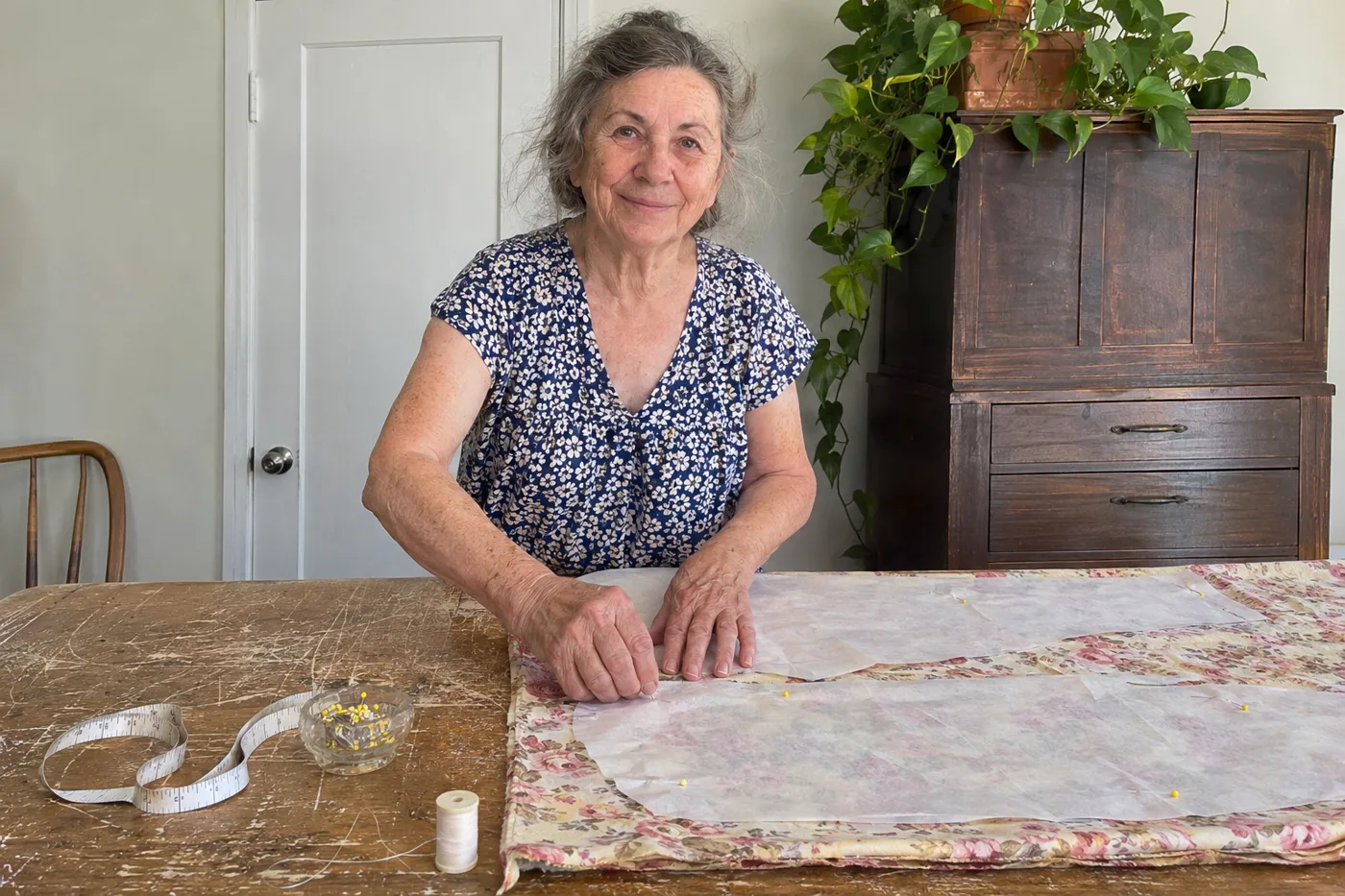
The tissue was so thin it tore if you breathed on it, and the cutting layout looked like a jigsaw puzzle.
Many schools got those patterns cheap. Simplicity ran an education department that peaked in the 1960s. Twice a year it sent teachers kits with posters, classroom materials and discounted patterns, which is how a whole room of girls could afford to make a dress at once.
Today’s national standards for the class list 42 smaller goals for textiles and clothing. Only two of them are about actually sewing a garment.
So if you can still pin a pattern piece along the folded edge of the fabric without reading the instructions, you have a skill today’s standards barely mention.
#20 Fork left, knife right, blade facing in

You could probably set it in the dark.
That layout is older than your teacher was. Emily Post’s 1922 Etiquette put the knives to the right of the plate, “the edge of each toward the plate,” with forks on the left and the water goblet “at the top and to the right of the knives.”
The serving rule was spelled out in the 1975 edition, The New Emily Post’s Etiquette. Dishes are offered from the left, plates are cleared from the right, and glasses are filled from the right.
The usual reason is simple: a right-handed guest can help herself from a dish held on her left without twisting around.
At the next holiday dinner, watch for whoever clears from the right without thinking about it. That’s a home ec graduate.
#19 The Basic Four poster on the wall
Four colored sections at the front of the room: milk, meat, fruits and vegetables, breads and cereals.
The USDA’s Basic Four ran from 1956 until 1992, when the Food Guide Pyramid replaced it. There was also a quiet fifth category called “other foods,” which covered butter, oils and syrups. Those never got a spot on the poster.
Thirty-six years is a long run for anything taped to a classroom wall. If you had to plan a menu for class, you planned it to hit all four.
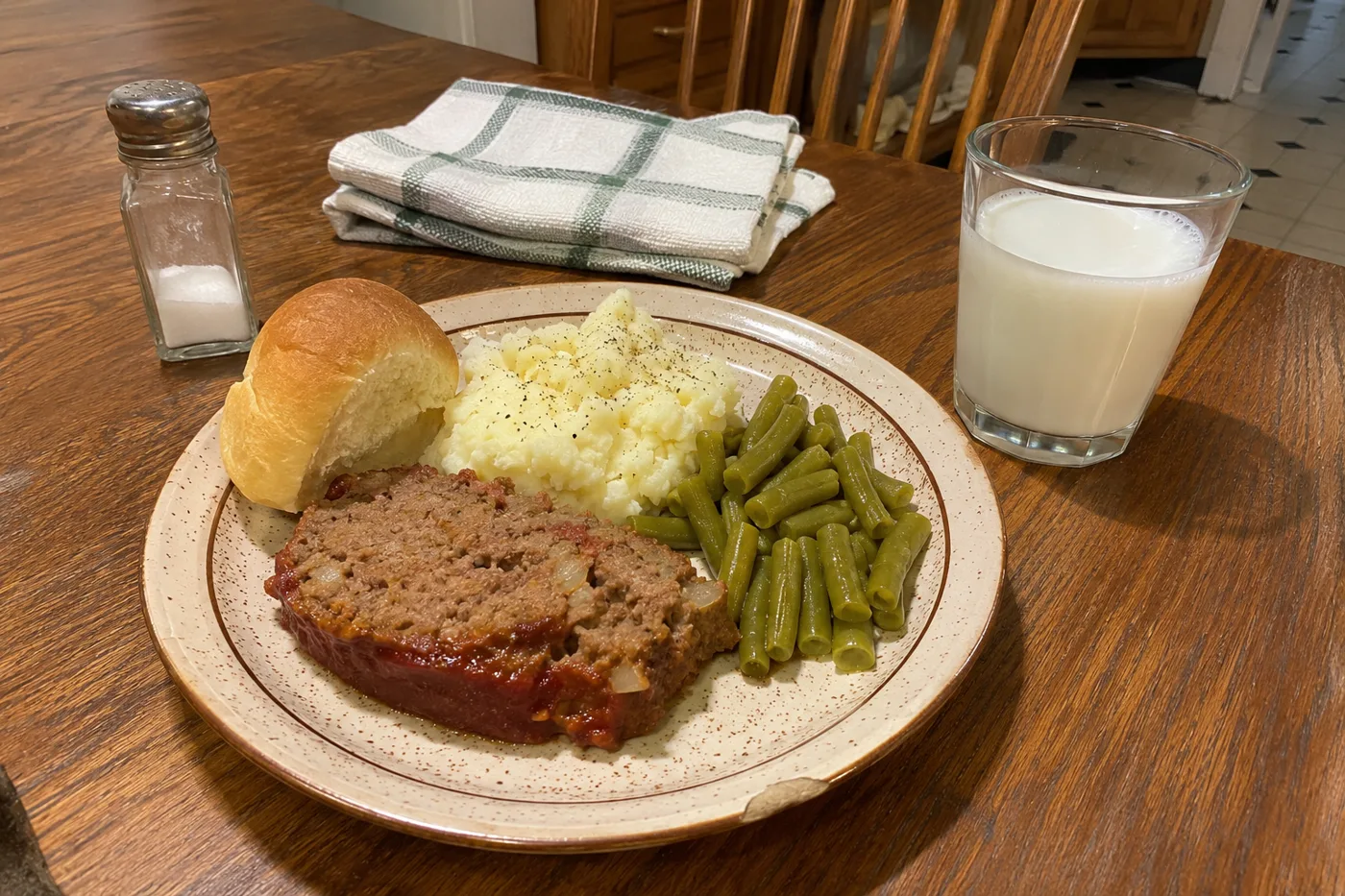
Meat loaf, mashed potatoes, green beans, a dinner roll and a glass of milk. One plate, whole poster.
#18 Darning socks over a wooden egg
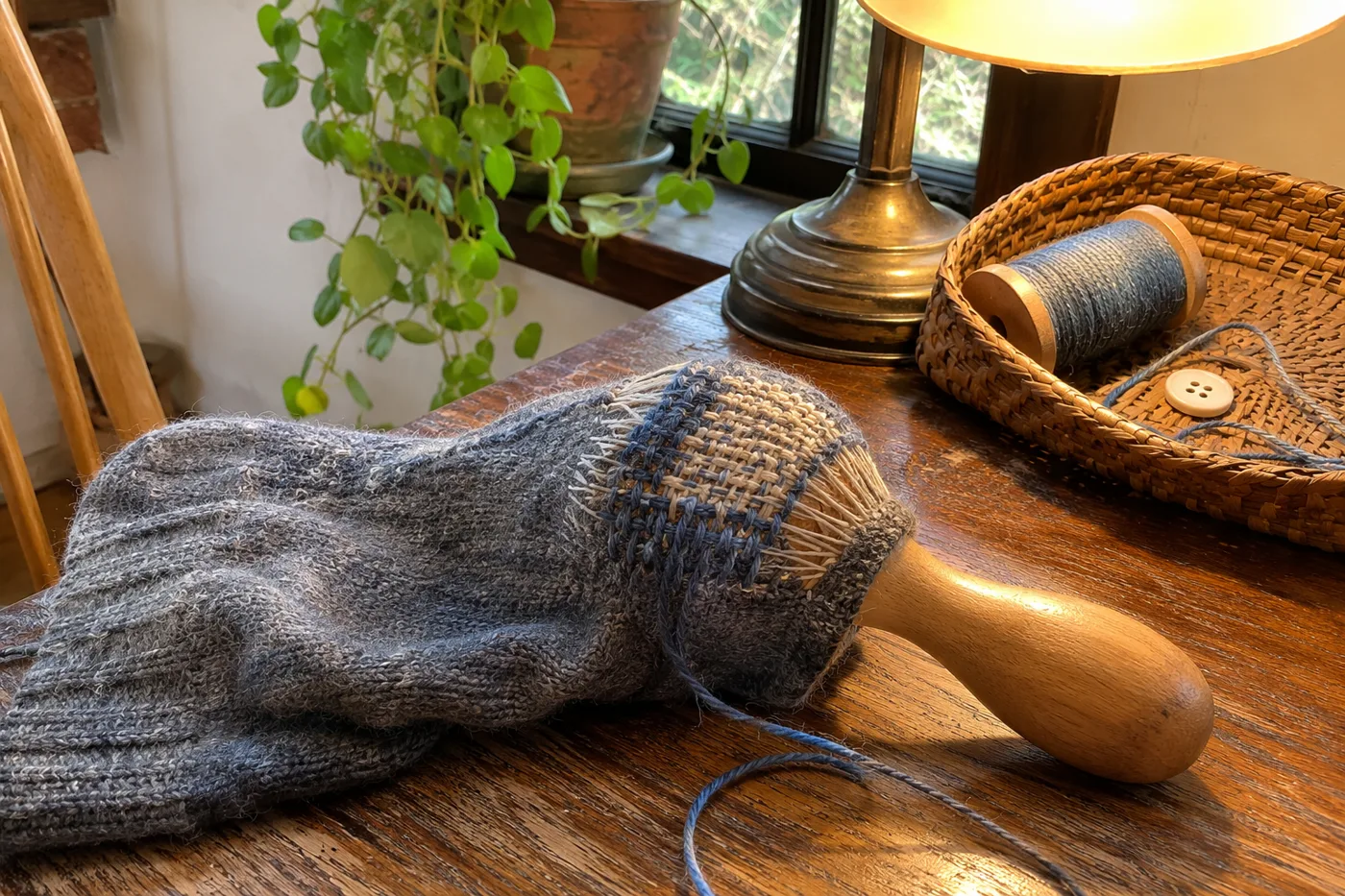
A smooth wooden egg on a handle, slipped inside the sock so the hole stretched tight across it.
Some families called it a darning egg and some called it a darning mushroom, and both names are right. New Zealand’s national museum put a plain wooden one on display as an everyday object worth keeping.
The museum describes the method: stitch around the hole, then weave across and down until you’ve made a little patch of new cloth.
Darning faded once socks came from the store instead of somebody’s knitting needles. Now it’s coming back, with people mending on purpose to keep clothes out of the trash.
If there’s a darning egg in your sewing basket, it just came back into style.
#17 Hand-hemming a skirt with a blind stitch
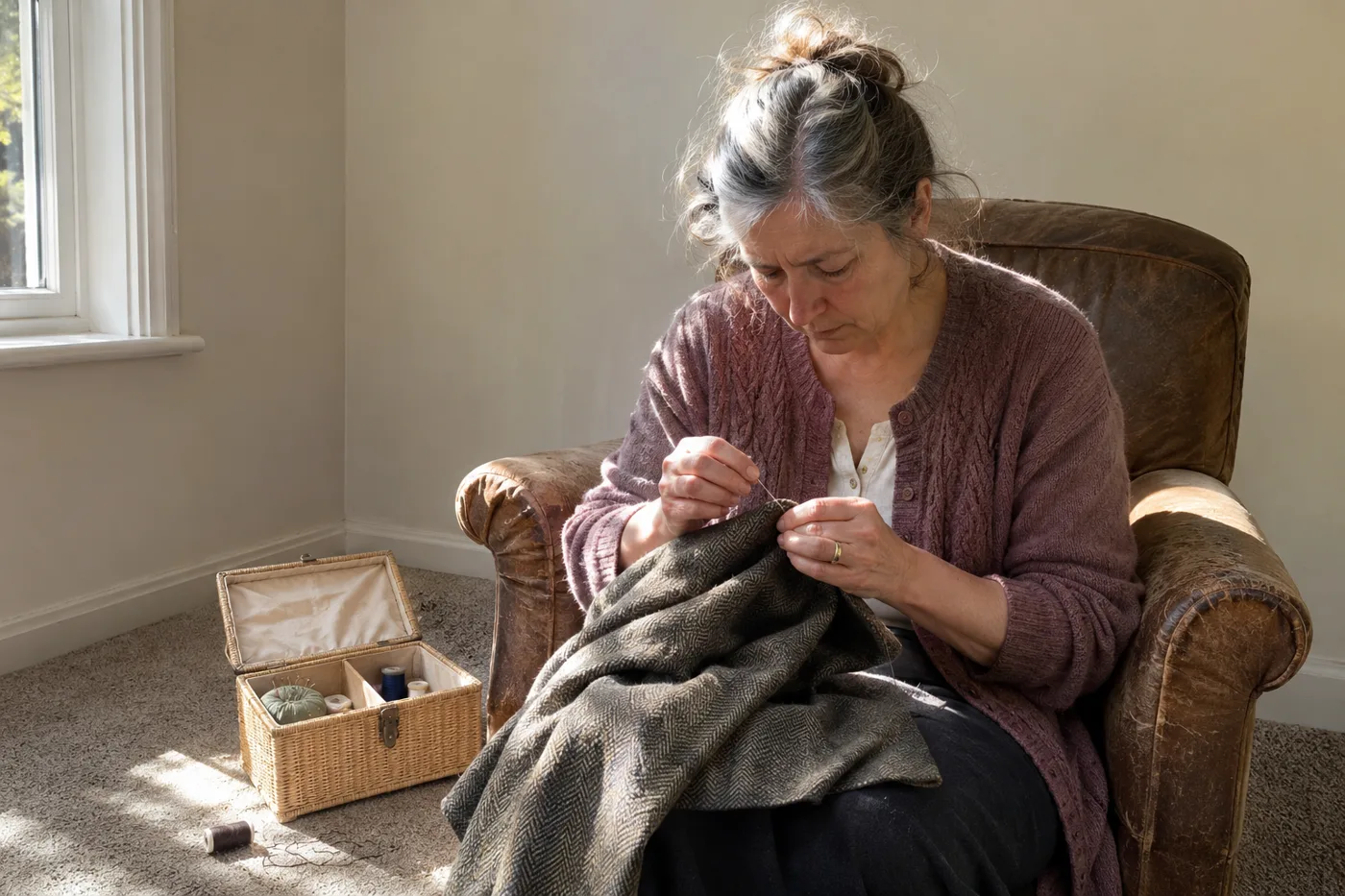
The whole point of a blind stitch is that nobody sees it. Each pass catches only a few threads of the fabric, and the fold of the hem hides the rest.
The 1960s gave that stitch a workout. Early in the decade, hemlines stayed below the knee. By the middle, miniskirts at the upper thigh had taken over among young women. By 1969 the floor-length maxi skirt had arrived.
That’s a lot of taking up and letting down in ten years. With a blind stitch you could take a skirt up, or let it down as far as the extra cloth in the hem allowed.
It works just as well on store-bought pants that drag on the floor.
#16 Ironing a man’s shirt the right way
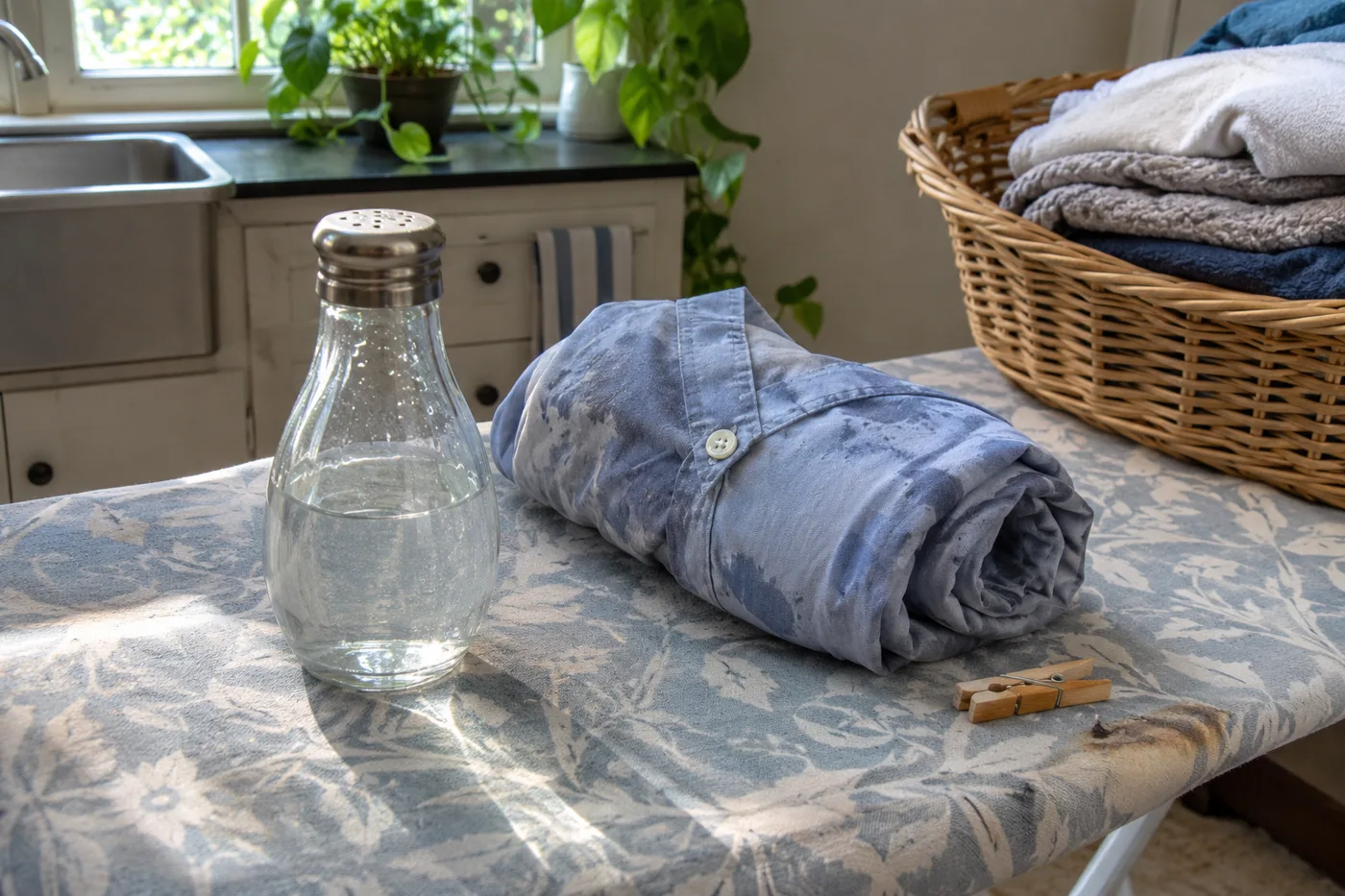
The shirt lesson was serious business, with printed step-by-step guides for ironing a shirt faster and better.
Remember the bottle with the sprinkler cap stuck in the top?
Before steam irons took over, you dampened the laundry, rolled each piece up tight, and sometimes put the bundle in the refrigerator so it wouldn’t dry out before you got to it.
Then a USDA chemist named Ruth Benerito led the team behind permanent press cotton, which treats the fibers so they resist wrinkles. USDA says not needing an iron is what brought cotton back.
She was inducted into the National Inventors Hall of Fame in 2008. The ironing board went to the back of the closet.
Collectors now hunt those old sprinkler bottles.
#15 Bluing and the clothesline
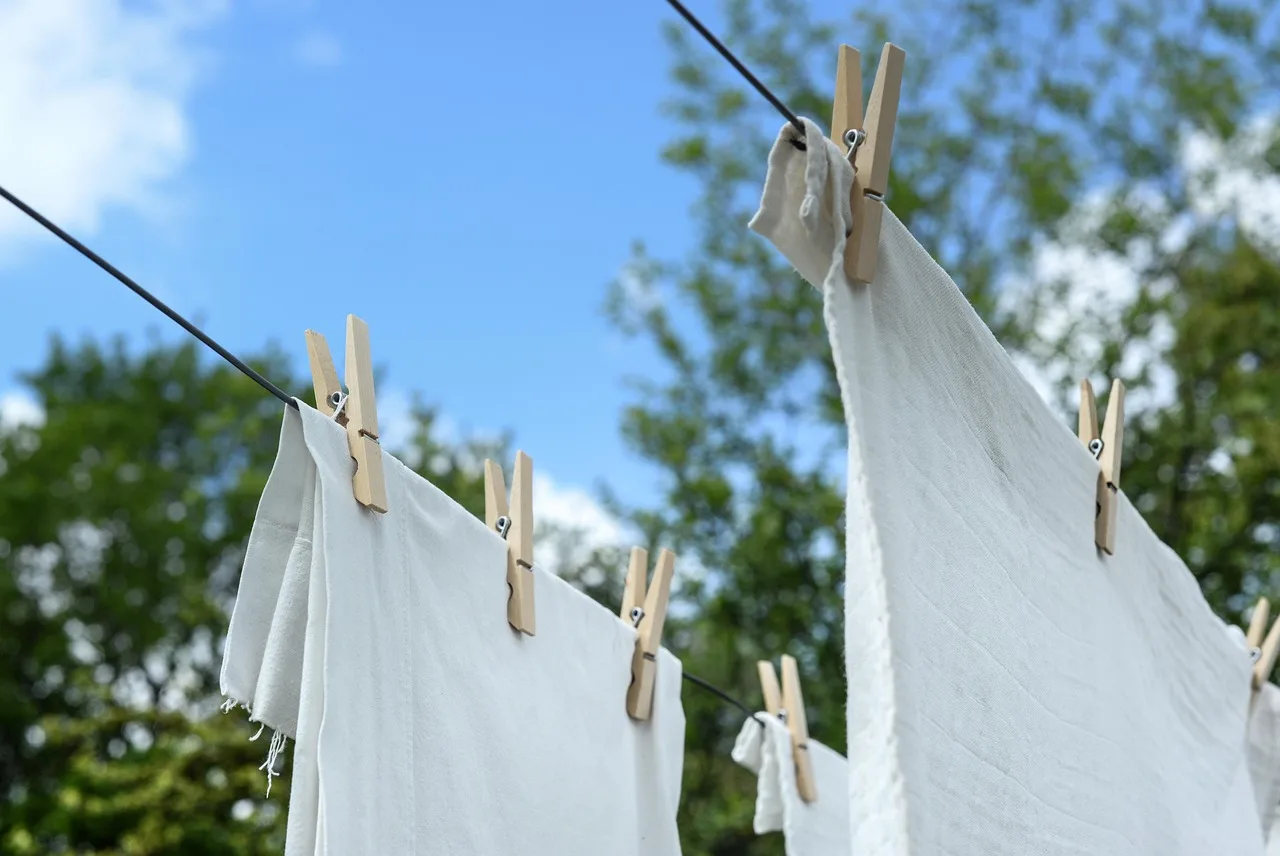
Three tubs: wash, rinse, and one with a few drops of bluing that turned the water the color of a summer sky.
Adding blue to get white sounds backward. But the whitest white to the human eye has a slight blue tint. New white fabric comes with that tint, and it washes out over time. Bluing puts it back. It won’t take out a stain, though.
Then everything went on the line. In the mid-1950s, only about 10% of American households owned a clothes dryer, and by 1970 it was still only about 45%. For most of the decade, a sunny day was part of the laundry plan.
#14 Leveling flour and measuring exactly
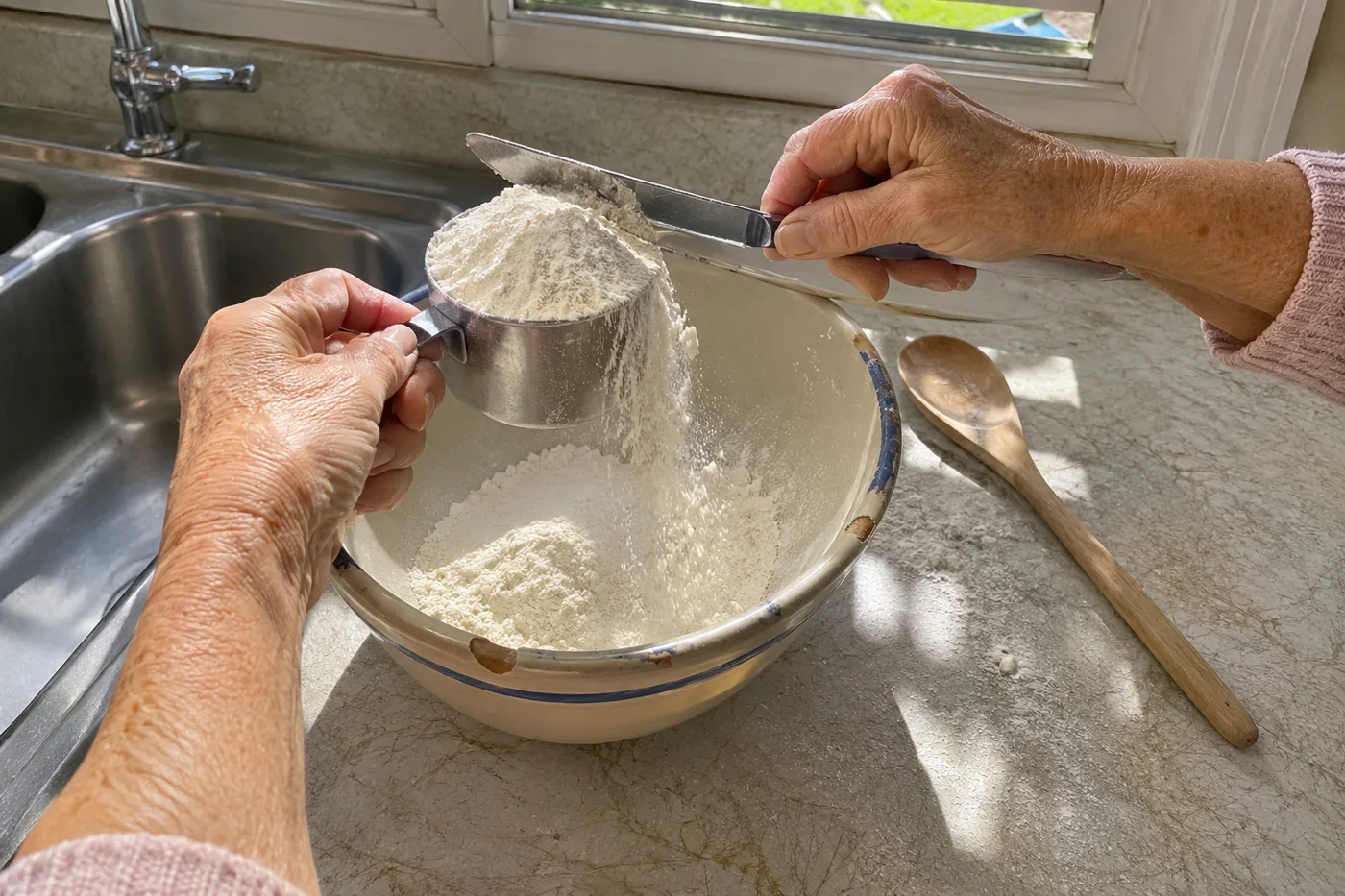
Spoon the flour in, don’t pack it down, and run the back of a knife across the top.
That level cup goes back to Fannie Farmer, known as the mother of level measurements, who spelled out the method in her 1896 cookbook.
Sifting came from older flour, which sometimes arrived with chaff, seeds and the occasional bug. Today’s flour is cleaner, so sifting is mostly optional, though it still helps with angel food cake and with flour that’s packed down.
The measuring lessons that stuck hardest were the mistakes. Plenty of people still remember a cup of salt going in where a teaspoon belonged, or a tablespoon of yeast that puffed a pizza up like a blimp.
Tsp. and Tbsp. look a lot alike when the teacher is watching.
#13 The kitchen safety saying that stuck for life

Never put water on a grease fire.
That rule holds up. Yale’s fire marshal puts it in capital letters: DO NOT USE WATER on a grease fire. Slide a lid over the pan, turn off the burner, and leave the lid on until the pan is completely cool.
The lid that fits your skillet belongs within arm’s reach of the stove.
#12 Canning jam the old way

Hot jam ladled into hot jars, lids screwed on, jars flipped upside down on a towel to cool. Then that little pop.
That was open-kettle canning, once used for jams, jellies and pickles, and the recipes still sit in old USDA and extension pamphlets. But extension educators stopped teaching it as safe in the 1980s. The food isn’t heated enough to kill molds and yeasts, and the seal is weak.
The doubts started earlier than you’d guess. By 1936, experts were already warning that food could easily be contaminated while it was being poured into the jars.
If a family jam recipe ends with “turn the jars over,” that’s open-kettle canning, and leaving the jars upright won’t fix it. The whole method is not recommended. Penn State’s advice is to always process canned goods, so find a current tested recipe before you make it.
#11 Baking yeast bread from scratch
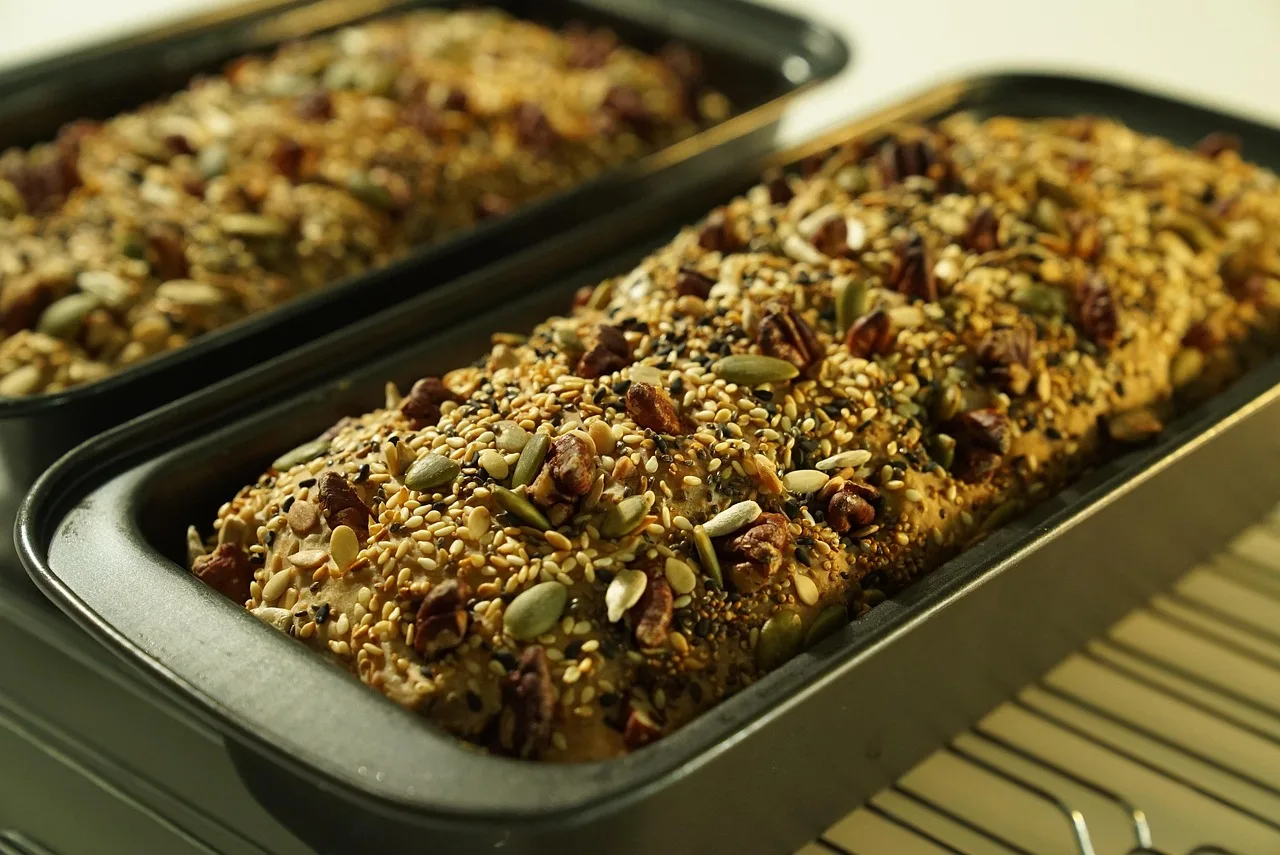
Plenty of classes had a loaf that just sat there. Flat, pale and heavy enough to prop open a door.
Nobody ever agreed whose fault it was. What most girls didn’t know was that the little packet they were blaming was fairly new. Fleischmann’s says its labs developed active dry yeast during World War II so soldiers could have home-baked bread, and it didn’t need a refrigerator.
That packet still took the blame for every doorstop loaf.
#10 White sauce, the “mother” sauce

Butter, flour, milk, and a wooden spoon that never stopped moving.
White sauce was the base for a long list of casseroles. Learn it once and you could cook half the cookbook.
Then the can moved in. Campbell’s began making cream of mushroom soup in 1934 and sold it as a sauce, too.
In 1955, Dorcas Reilly of Campbell’s own home economics department used it to create green bean casserole. As of 2020, the company figured about 40% of its cream of mushroom goes into that one dish.
The old ratios still work.
White sauce, by the cup of milk
- Thin: 1 Tbsp butter + 1 Tbsp flour
- Medium (the everyday one): 2 Tbsp butter + 2 Tbsp flour
- Thick: 3 Tbsp butter + 3 Tbsp flour
- Heavy, for holding croquettes (breaded, fried patties) together: 4 Tbsp butter + 4 Tbsp flour
#9 Pinning cloth diapers on a doll
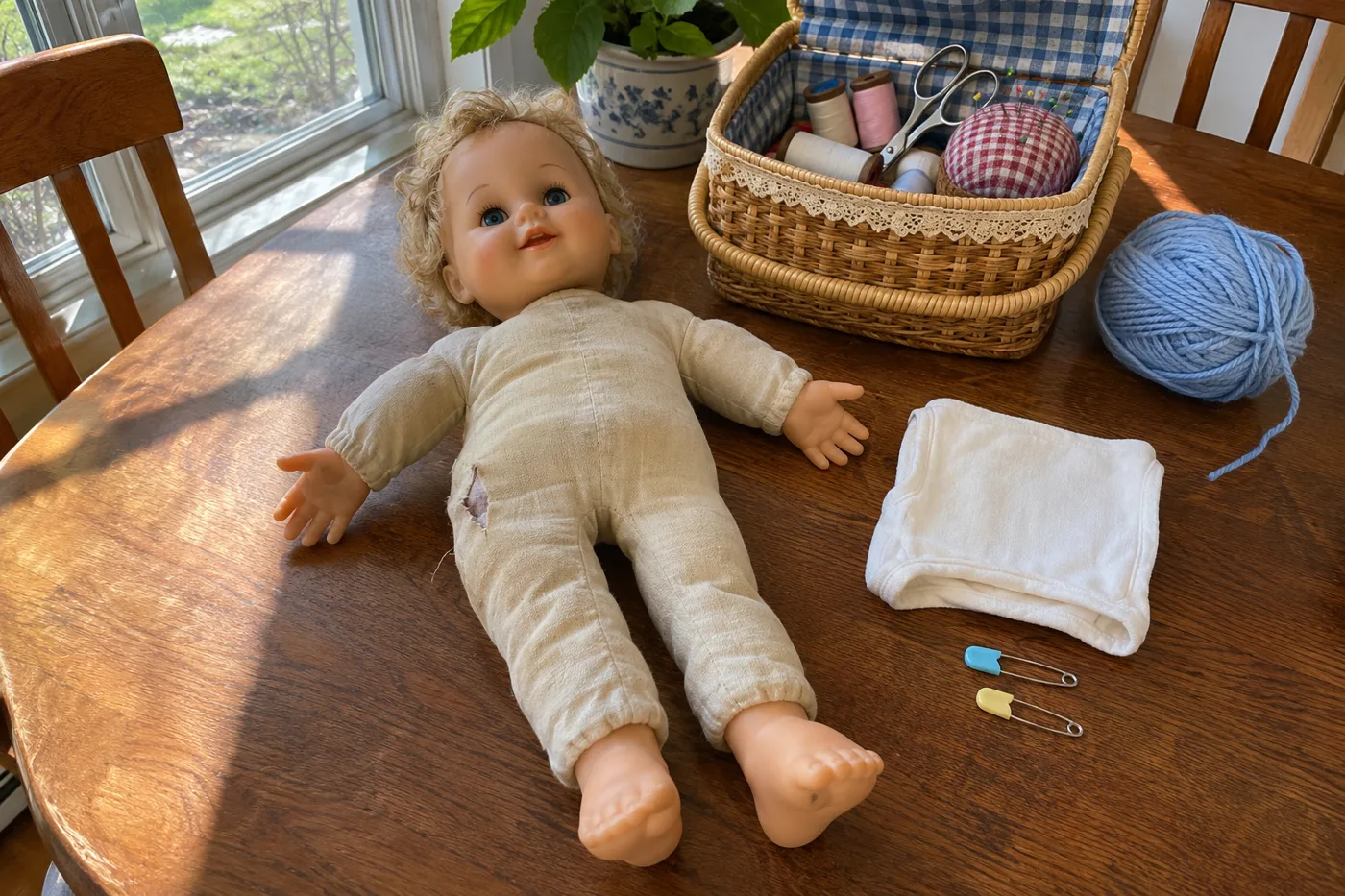
A doll on the table, a folded square of cloth, and two big safety pins with plastic heads. Fingers between the pin and the baby, always.
In 1956, disposable diapers were used in fewer than 1% of diaper changes in the United States. Pampers launched in 1961 and went national in 1969. In the 1970s, tapes replaced the pins.
Those pins still turn up in sewing boxes, handy for threading elastic through a waistband.
#8 Posture, grooming, and charm lessons
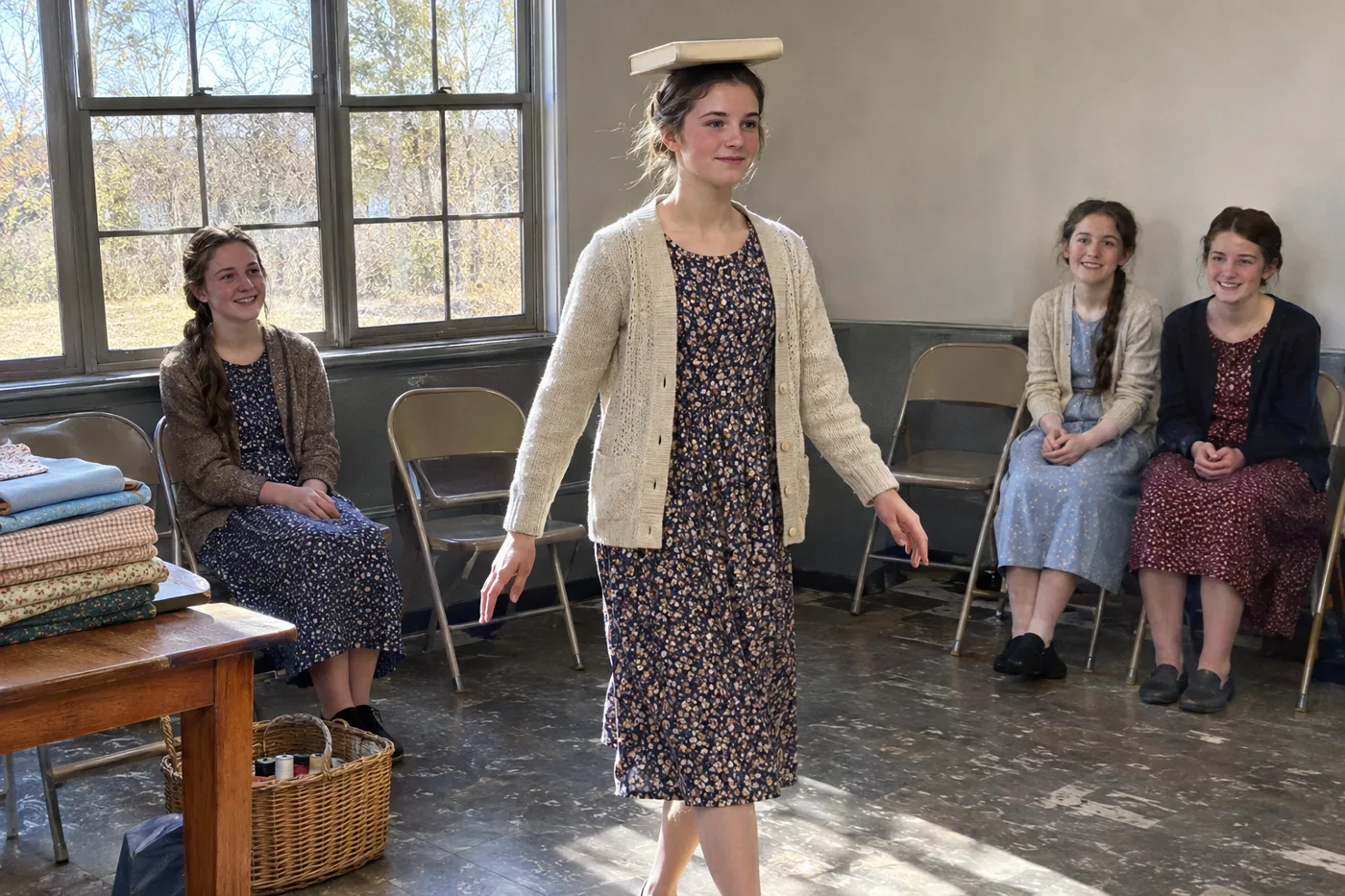
Walk across the room with a book on your head. Sit down without plopping.
Posture got its own lesson. A 1964 home ec curriculum guide suggested teachers put up bulletin boards of “attractive teenagers” as models. It blamed slouching on laziness, lack of sleep, ill-fitting shoes and poor diet.
Grooming had a place in the textbooks too. The 1967 Teen Guide to Homemaking lists personal grooming right alongside cooking and budgeting.
Some of it was good sense. Some of it was a bulletin board of strangers telling you to stand up straight.
Somebody says “posture” and you still sit up a little. Admit it.
#7 Comparing prices and reading labels

Two cans of peas, two sizes, two prices. Which one is the better deal?
In the 1960s you did that math in your head, because the little shelf tag that does it for you didn’t exist yet. Unit pricing showed up in the 1970s, and even now only nine states and D.C. require stores to post it.
The labels were thin, too. The first federal nutrition labeling rules, in 1973, only covered foods that made a nutrition claim. The Nutrition Facts panel didn’t reach most foods until 1994.
Next trip, look for the price per ounce in small print on the shelf tag. Whether you find it depends on the store as well as your state’s rules.
#6 Judging fabric by its fiber and feel
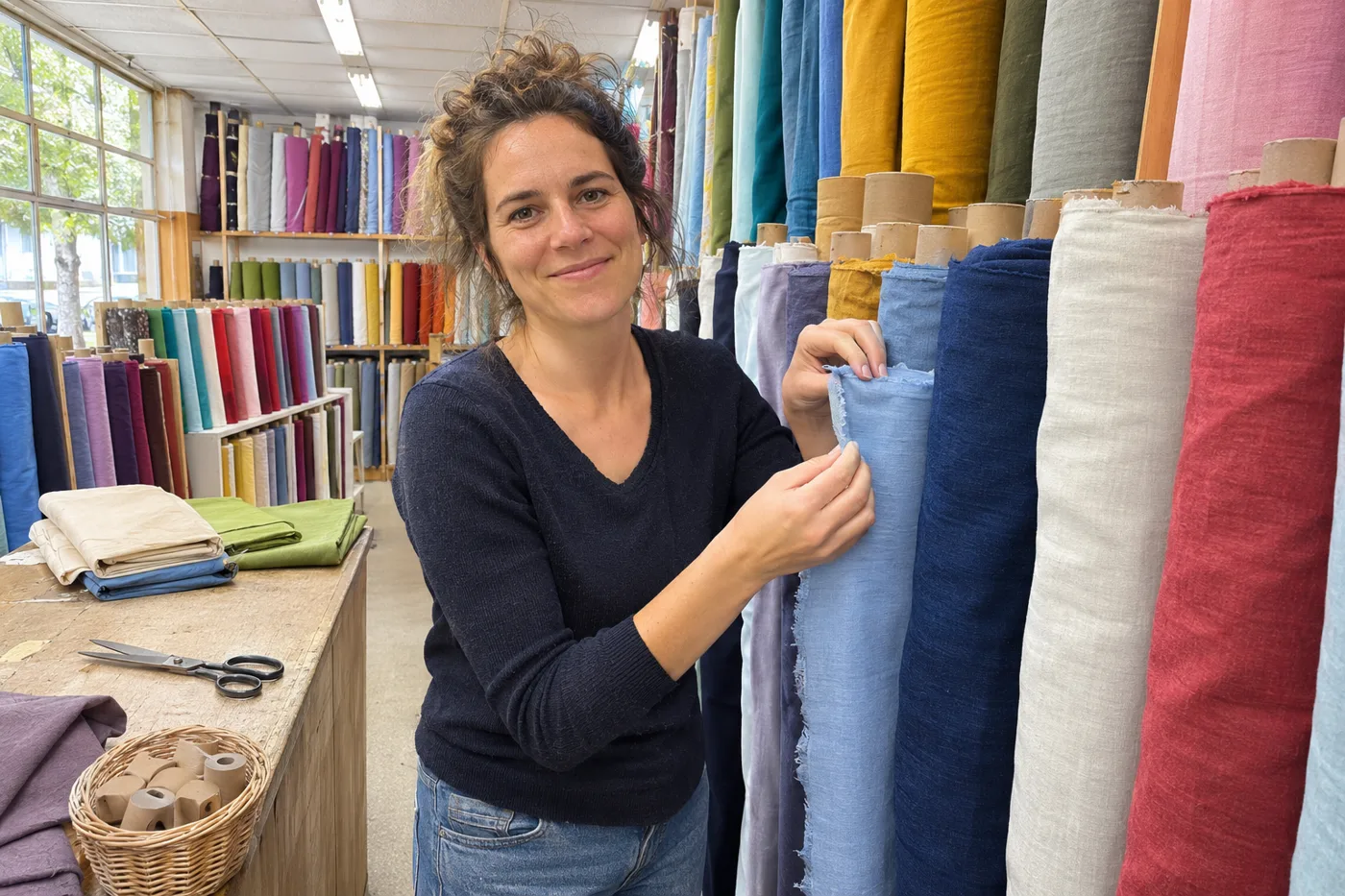
Rub it between your fingers. Check how it hangs. Then find the tag.
The tag was brand new in the 1960s. A federal law in force by 1960 made sellers list the fiber content using plain names like nylon or acrylic, plus the country where it was made.
Girls in 1960s sewing rooms were some of the first to shop with a fiber label on everything.
For plenty of people, it’s the class skill they use most. They can feel cheap fabric on a rack before they ever see the price.
#5 Keeping a household account book
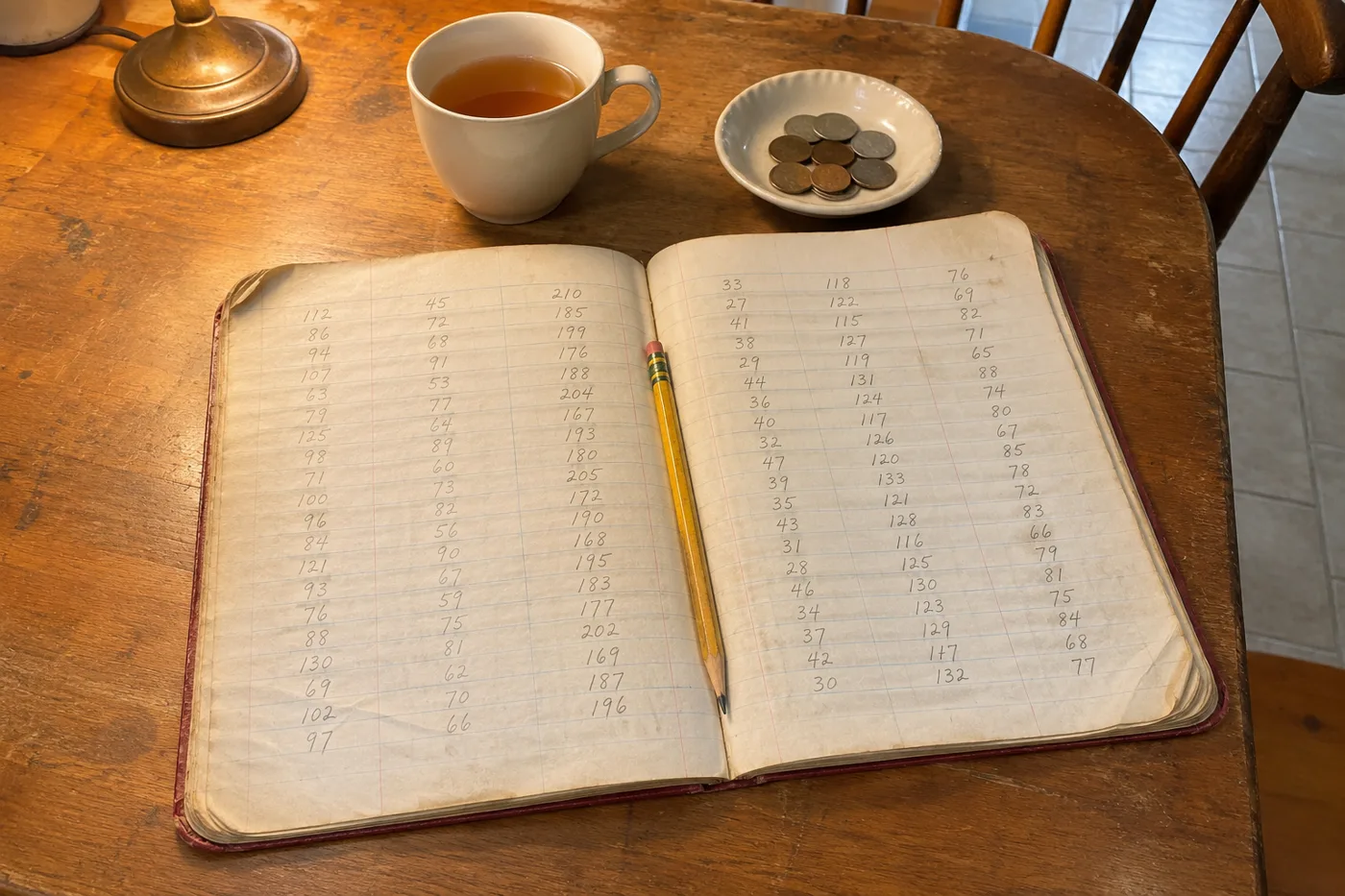
A ruled notebook, two columns, and the rule that every penny had to land somewhere.
Budgeting was in the books. The 1967 Teen Guide to Homemaking lists it among its topics. How much your own class did with it varied a lot. Some people remember checkbooks and even taxes. Others say money never came up once.
The odd part is that money lessons are turning up again in a different class. As of fall 2026, 30 states guarantee a standalone personal finance course for high school graduation. The rule is in full effect in 11 of those states and still phasing in for the other 19.
Those schools don’t call it home ec, and nobody hands out a ledger.
#4 Modeling your homemade dress in a style show

The gym bleachers, a borrowed microphone, and you walking the length of the floor in a dress you made yourself.
The style show was the final exam everyone could see. Simplicity backed school sewing with traveling representatives and fashion shows. At state fairs, 4-H girls had their own version.
Everyone could see whether your collar lay flat. Everyone could see whether your hem dipped on one side.
#3 Planning a hope chest for marriage

Cedar, a little brass lock, and that smell when the lid came up.
For millions of girls, the first one was the size of a jewelry box. Lane, the Virginia furniture maker, started its Girl Graduate Plan in the late 1920s, giving miniature cedar chests to high school graduates, usually with a discount on the full-size chest.
By 1962 about 7 million girls had one. Company executives later estimated more than 27 million were made.
The full-size chest was where the planning went, all of it gathered ahead of a wedding that might or might not ever come.
Lane stopped making cedar chests in 2001. If a tiny cedar chest turns up at an estate sale, odds are it was somebody’s graduation present.
What went inside a hope chest
- Clothing
- Table linens and towels
- Bed linens and quilts
- Now and then, dishes
#2 Making a bed with hospital corners
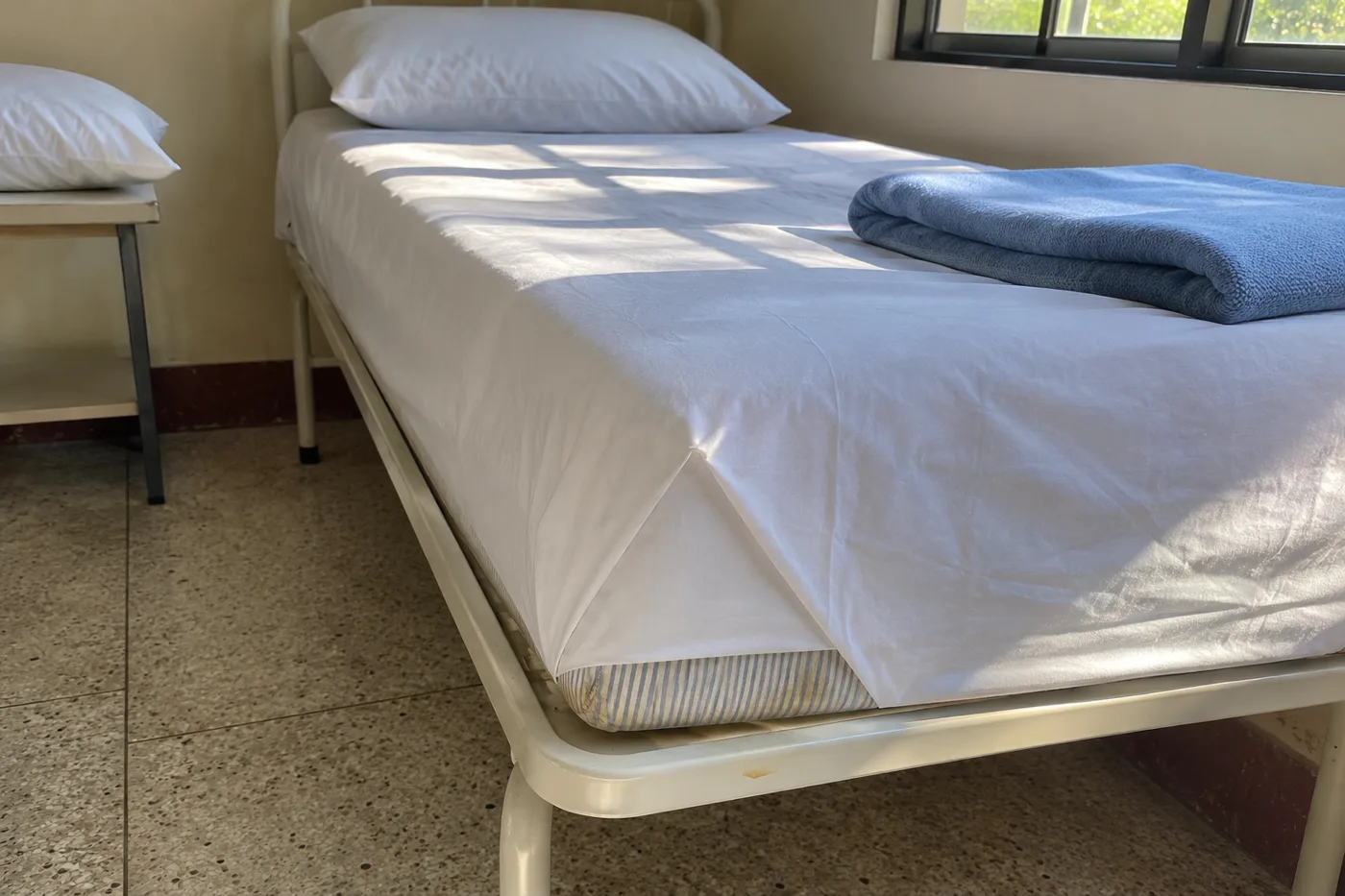
Tuck the sheet, lift the side, fold the corner at a sharp angle, tuck again. Tight enough to bounce a quarter, or that was the idea.
The name gives away where it came from. The fold is a 45-degree angle borrowed from 19th-century nursing, and the name “hospital corner” was already in use by 1907. The military picked it up later as an inspection standard.
So the corner you fold without thinking was designed for hospital wards and drill sergeants, then handed to a classroom of girls with a practice mattress.
#1 Keeping a quiet house for your husband
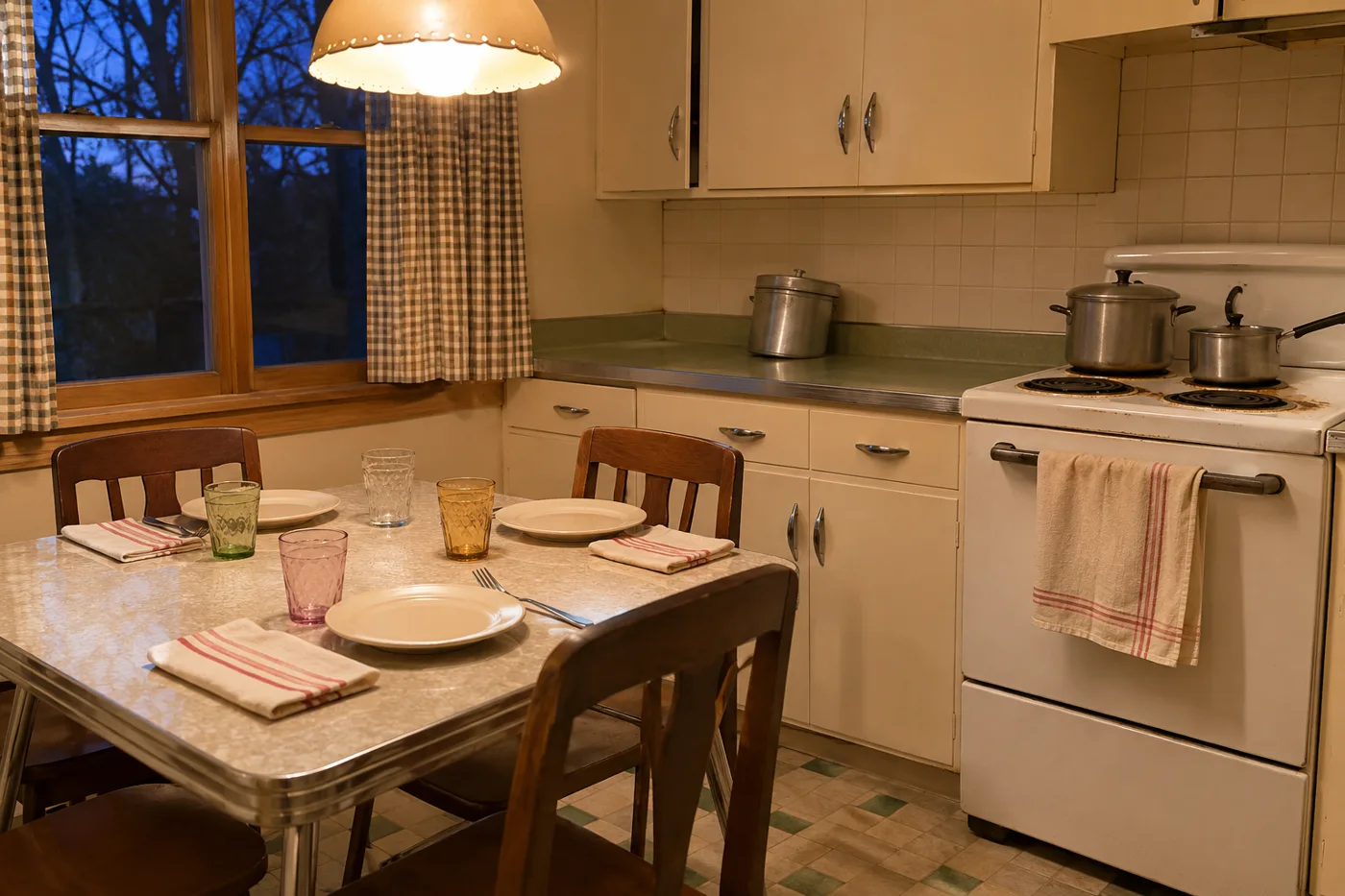
Supper on the stove, the kitchen tidied, and the pots set down gently so they wouldn’t clang.
Describe that lesson to anyone under 30 and watch their face.
They may even have seen the “Good Wife’s Guide” making the rounds online, credited to a 1955 magazine called Housekeeping Monthly. It’s considered a hoax. Its image carries a watermark from an archive that wasn’t founded until 1990, and no magazine by that name has ever been verified.
So the most famous “proof” of that lesson is a fake. That doesn’t settle what any one teacher said. If yours told you to set the pots down quietly for a husband, you never needed a magazine to prove it.
The bottom line
Here’s a question only you can answer: which of these could you still do without looking anything up? The white sauce? Darning a sock? The hospital corner?
Pick that one and show somebody. A niece, a neighbor, the kid next door who has never seen a darning egg. Five minutes at a kitchen table is how it got passed along the first time.
Bonus: Five more home ec tips
- To start a beginner, pick a pattern with just one to three pieces, like the Simplicity Jiffy patterns the company says classes used to get girls sewing fast.
- If someone younger asks what the bottle with the sprinkler cap was for, tell them it came before the steam iron, which goes back to a 1934 patent by Max Skolnik of Chicago. His Steam-O-Matic was the first steam iron to catch on.
- Every time you polish silver, you take off a thin layer of it, and the National Park Service says to keep silver away from rubber bands, which speed up tarnish.
- One florist’s rule of thumb is to keep table centerpieces under 12 inches or above 24, because arrangements in between often block guests’ view of each other.
- The Emily Post Institute says it’s never too late to send a thank-you note, and it doesn’t have to turn into a catch-up letter.
Questions people also ask
Why did schools stop teaching home economics the way they used to?
Funding dropped, priorities shifted, and many teachers and administrators came to see hands-on skills like garment sewing as less valuable. That’s how researchers writing in 2020 explained the loss of clothing construction classes.
Is home economics still taught in schools today?
Yes, under the name Family and Consumer Sciences, adopted in 1994. Fewer students take it, though. In 1990, about 45% of high school graduates earned some credit in it, compared with 37% in 2013.
Was the “Good Wife’s Guide” a real 1950s publication?
No. It’s considered a hoax, and the magazine it’s credited to has never been verified.
Why is open-kettle canning no longer considered safe?
It doesn’t get the food hot enough to kill all molds and yeasts, and the seal it leaves is weak.
Related posts:
25 Homemade Christmas Decorations From the 1960s, and What Became of Each One
25 Church Bazaar Crafts Every Town Sold That Nobody Makes Anymore
24 Things People Over 60 Still Do When Cleaning That Experts Beg Them to Stop
19 Holiday Traditions Women Over 60 Have Quietly Stopped Doing
26 Christmas Cookies From the 1960s That Nobody Bakes Anymore
22 Things You're Saving That Your Children Will Throw Away

- 24 Things People Over 60 Still Do When Cleaning That Experts Beg Them to Stop - November 6, 2026
- 21 Handmade Gifts From the 1970s Your Grandchildren Have Never Seen - November 6, 2026
- 25 Homemade Christmas Decorations From the 1960s, and What Became of Each One - November 6, 2026
Leave a Reply