Hold out for #1. It’s sitting in a jewelry box, and the home tests people try on it can ruin it.
There’s a drawer by the stove in a lot of kitchens. It holds a Cool Whip lid with no tub, a fistful of twist ties, three birthday candles, a battery nobody trusts and a key nobody can place. A professional organizer would have it empty in ten minutes.
Some of what’s in there deserves to go. Some of it still has a job to do, and an organizer would be wrong to toss it.
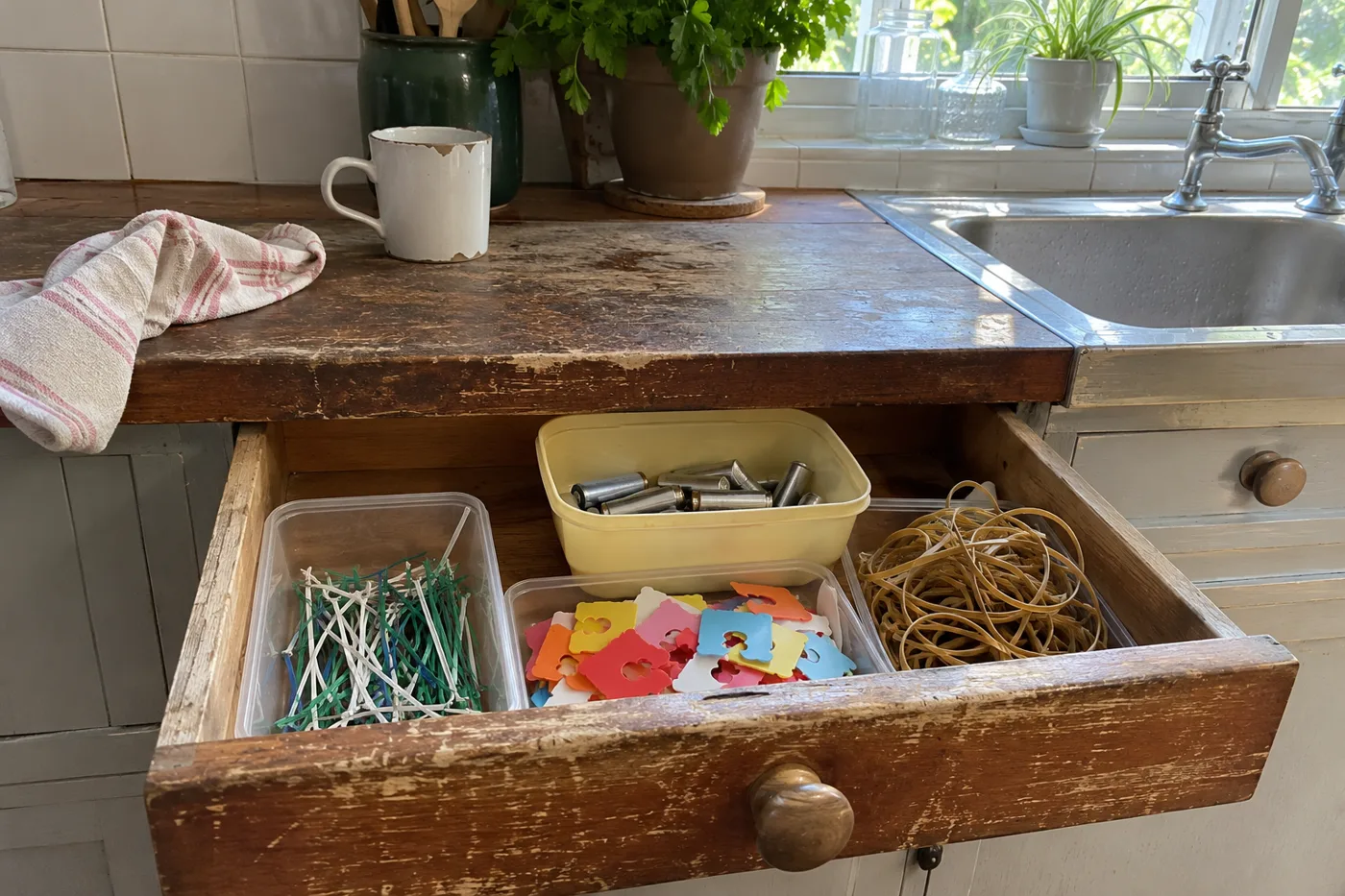
#23 Margarine tubs saved for leftovers
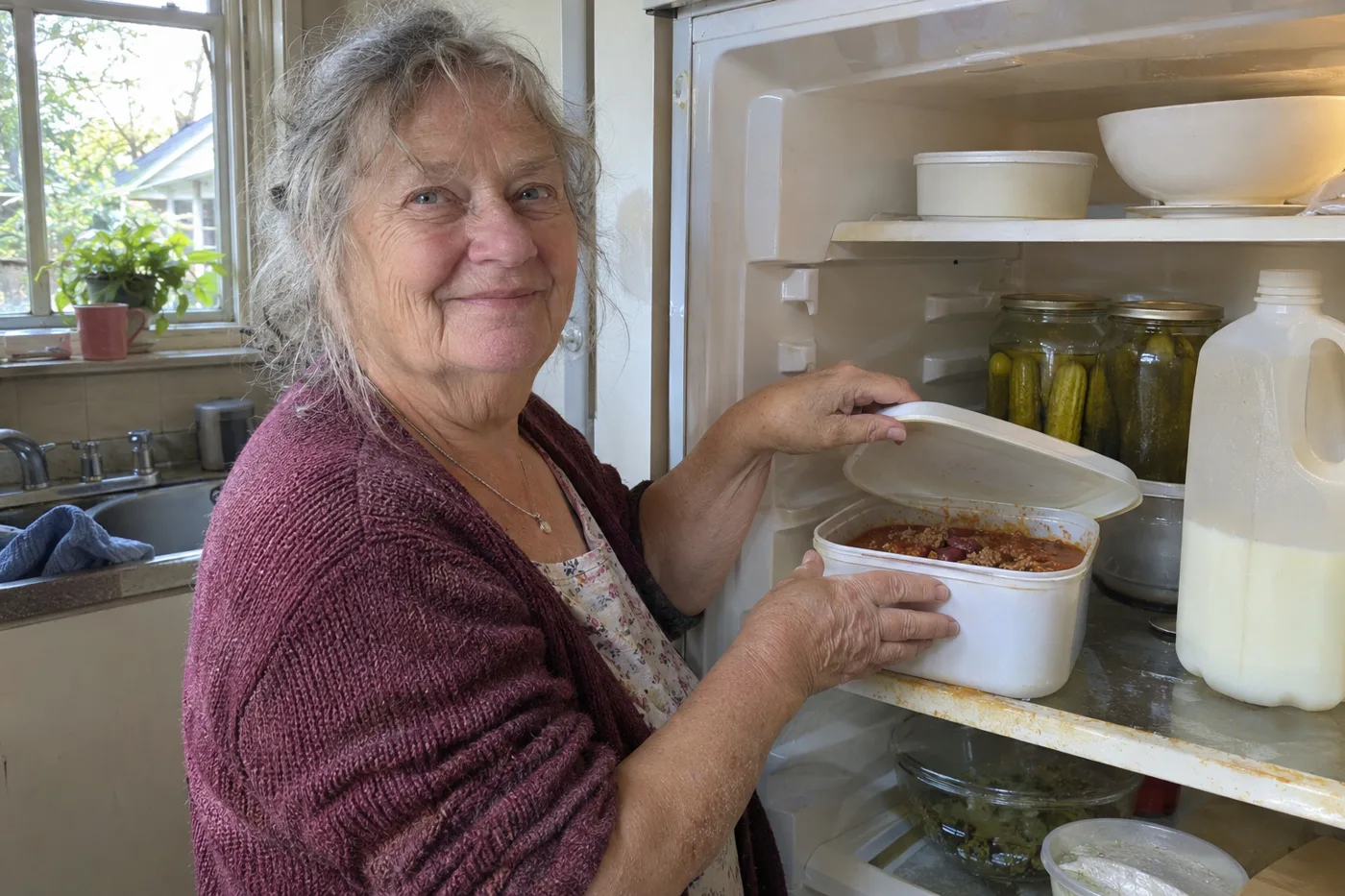
Lift the lid on a margarine tub in plenty of refrigerators and you’ll find chili. Or green beans. Or gravy from Sunday. Nobody in the house has expected margarine in there for years.
Cool Whip tubs, around since 1966, got the same second career.
Keeping them for the fridge is fine. The microwave is where they get into trouble. The appliance maker Sub-Zero/Wolf lists margarine tubs, cottage cheese and yogurt cartons as unsafe to heat, because they’re “not approved for cooking, and chemicals can migrate into food.”
Keep the tub for the chili, but warm it up in a microwave-safe dish instead.
#22 The bag stuffed with plastic grocery bags
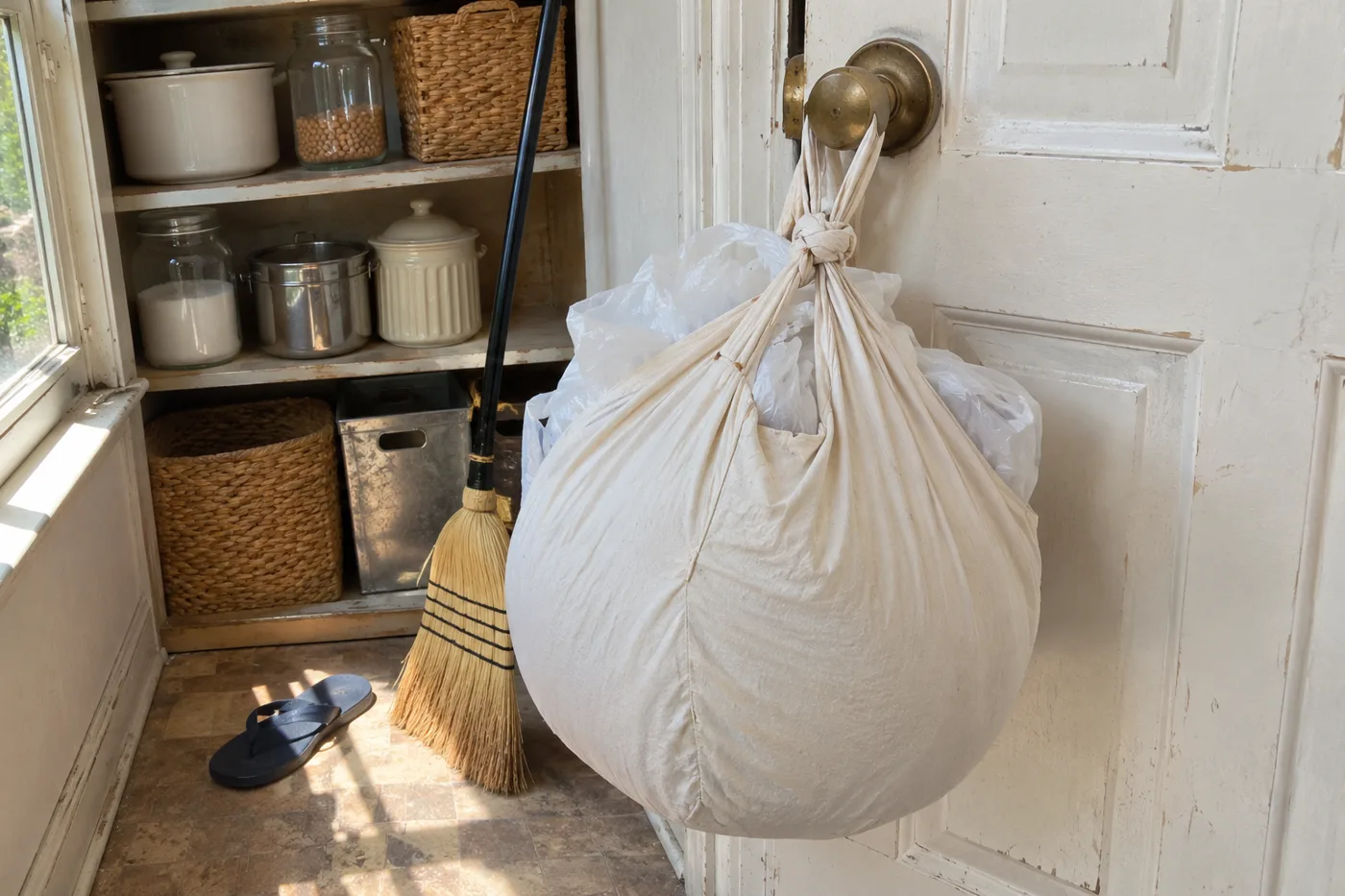
It hangs on the pantry doorknob or lives under the sink, fat as a sofa cushion. Every time you push one more in, two fall out.
Toss-it lists want them gone, but plenty of people line the bathroom wastebasket with them, which is more use than most things in the house get. The mistake is the recycling bin.
The Georgia Recycling Coalition says bags tangle around the sorting machines, and workers have to pull them out by hand. Only about 3% of bags ever get recycled.
The better route is the front of the grocery store. Many have a bin for them, including most Kroger, Walmart and Publix stores. Bundle them clean and dry inside one bag, and they can come back as composite lumber, outdoor furniture or new bags.
That lump on the doorknob could be somebody’s porch bench someday.
#21 Twist ties and bread clips in a drawer
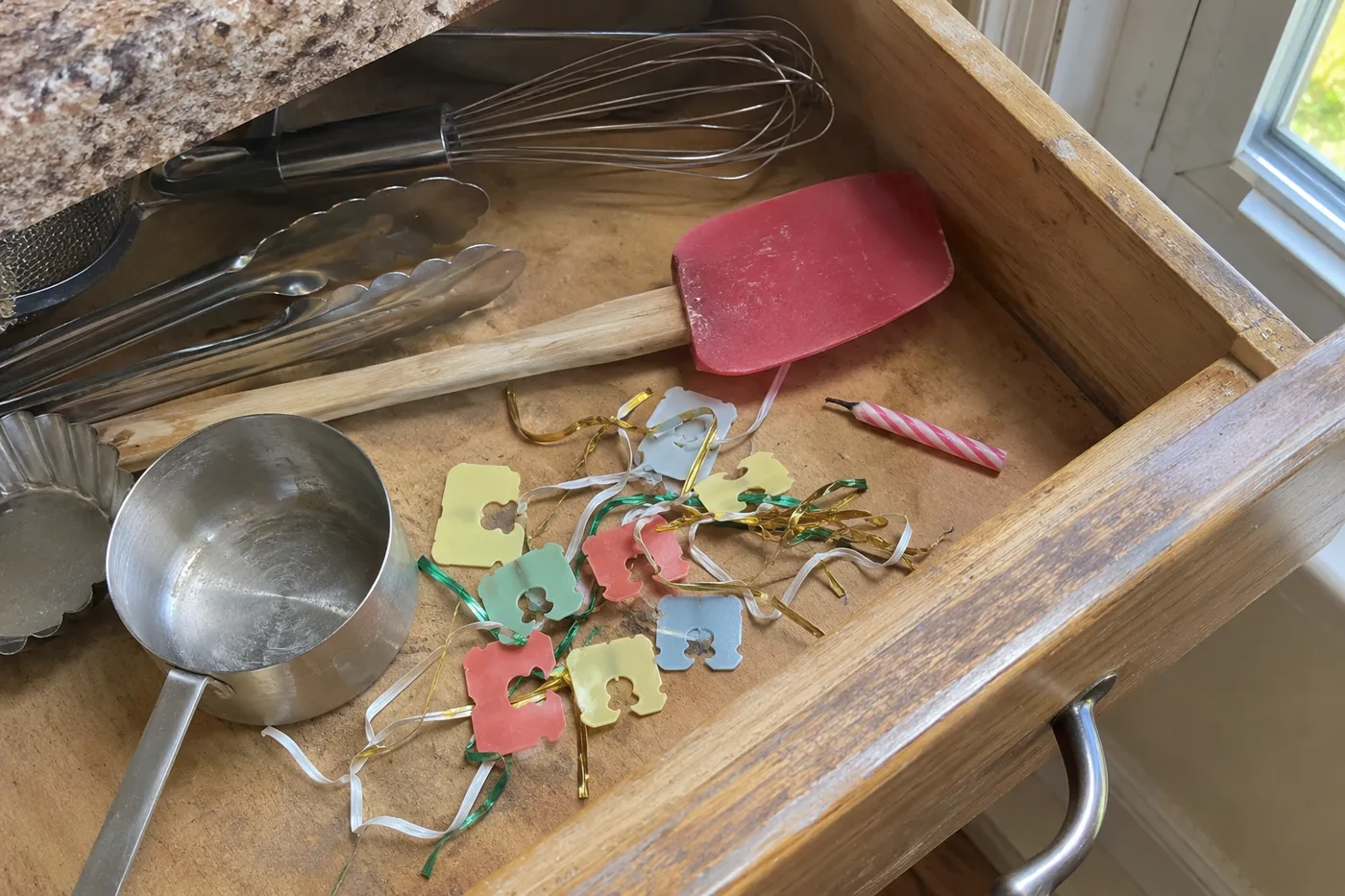
A rubber band, six twist ties and a pile of those little square bread clips in every color the bakery ever used. They rattle every time the drawer opens.
The bread clip has a nice story behind it. Floyd Paxton said the idea came to him on a 1952 flight, when he opened a bag of peanuts and had no way to close it again.
Most of those clips are a kind of plastic that’s hard to recycle, so a clip on a bag beats a clip in the trash.
So keep a small handful of clips and twist ties to use on the next open bag, and let the rest of the pile go.
#20 Christmas wrapping paper folded for next year

Many people remember Christmas mornings when nobody was allowed to rip. Tape got peeled, paper got folded on somebody’s lap, and the bows went into a bag for next year. Some families even ironed the tissue.
A professional organizer would call that bag of paper and bows trash. A recycler might not be so quick to agree, because the fancy stuff is exactly what can’t go in the bin.
A Sioux Falls recycler says paper with metallic finishes, glitter or a plastic coating belongs in the trash, and so do ribbons and bows. Its advice: “save and reuse if you can.”
It also has a quick scrunch test. Crumple a sheet. If it stays crumpled, it can probably go in the bin. If it springs back, fold it flat and save it for December.
#19 Aluminum foil washed and reused
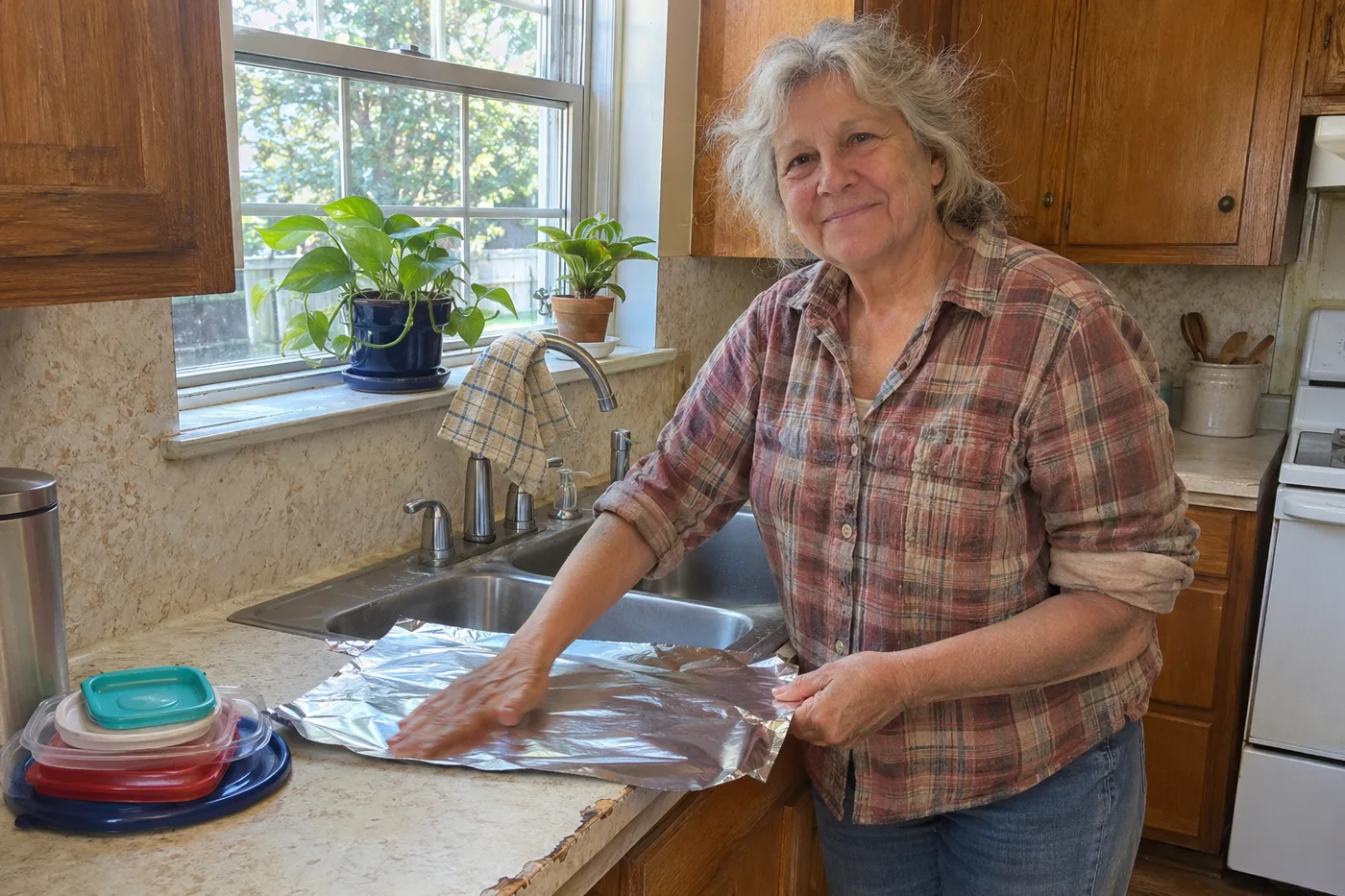
Foil off the casserole, rinsed under the tap, smoothed flat on the counter with the side of a hand and tucked back in the box. Plenty of kitchens have done it for decades, and people have teased them for it just as long.
The teasers lose this one. Recipe developer Maya Krampf says plainly, “You can wash and reuse foil.” It has to be clean and in one piece. Foil that wrapped raw meat or fish goes, and so does any with food stuck on that won’t wash off.
When a sheet finally tears, rinse it and ball it up. Clean foil can be recycled, though not every town’s bin takes it, so check before it goes in.
#18 Old towels kept as rags
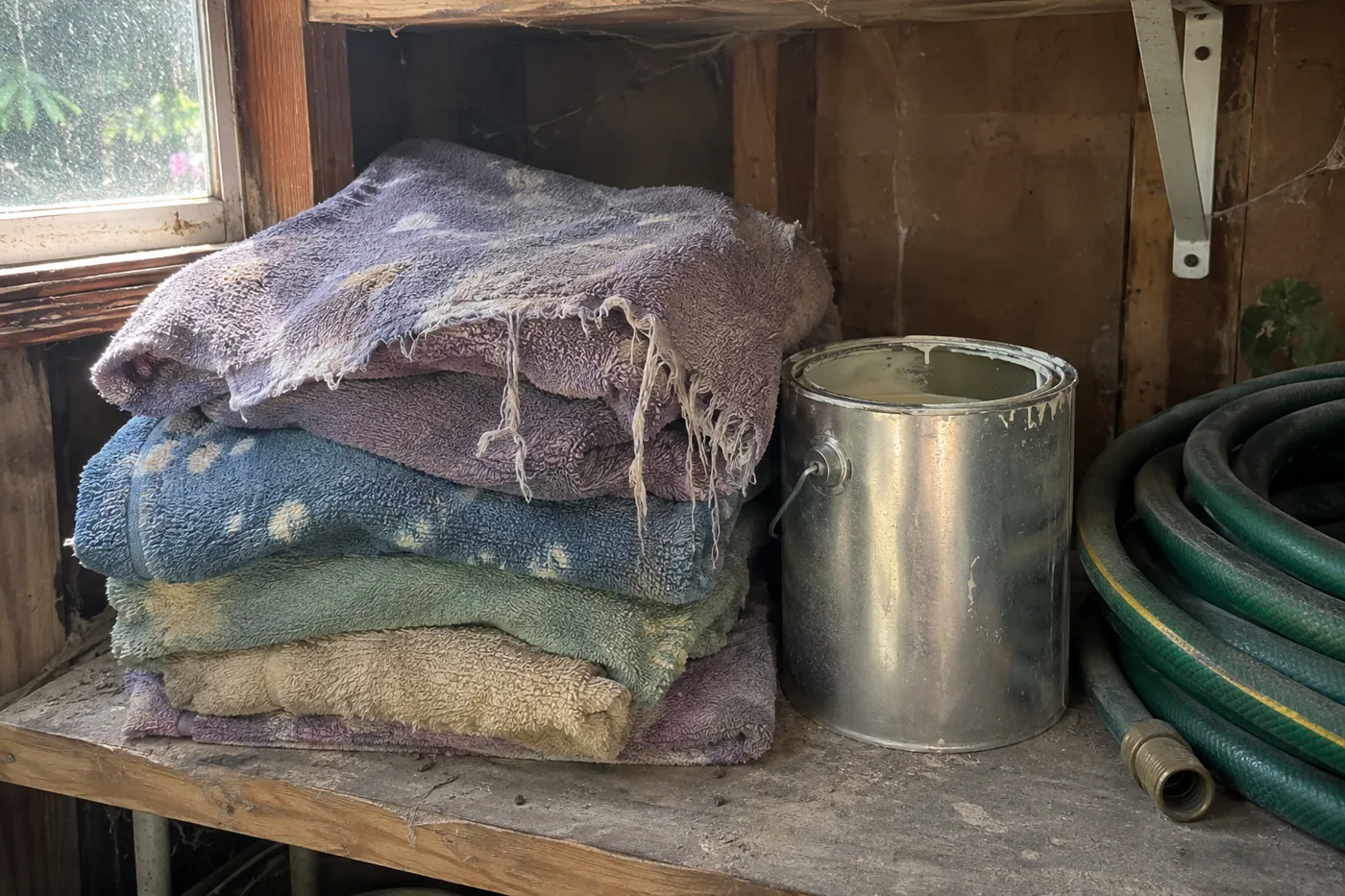
The thin ones live in the garage or under the sink. One has bleach spots. One has dried the car, the dog and a wet basement floor. Organizers’ toss-it lists want them gone. They take up space, sure, but they’re also staying out of the landfill.
Old sheets make good drop cloths and packing for breakables. Animal shelters go through towels fast. The Humane Society of Huron Valley in Michigan ran through its whole supply in 2023 after a single animal transport.
Call your local shelter before you load the trunk. Each one wants something a little different.
#17 Jars from pickles and spaghetti sauce
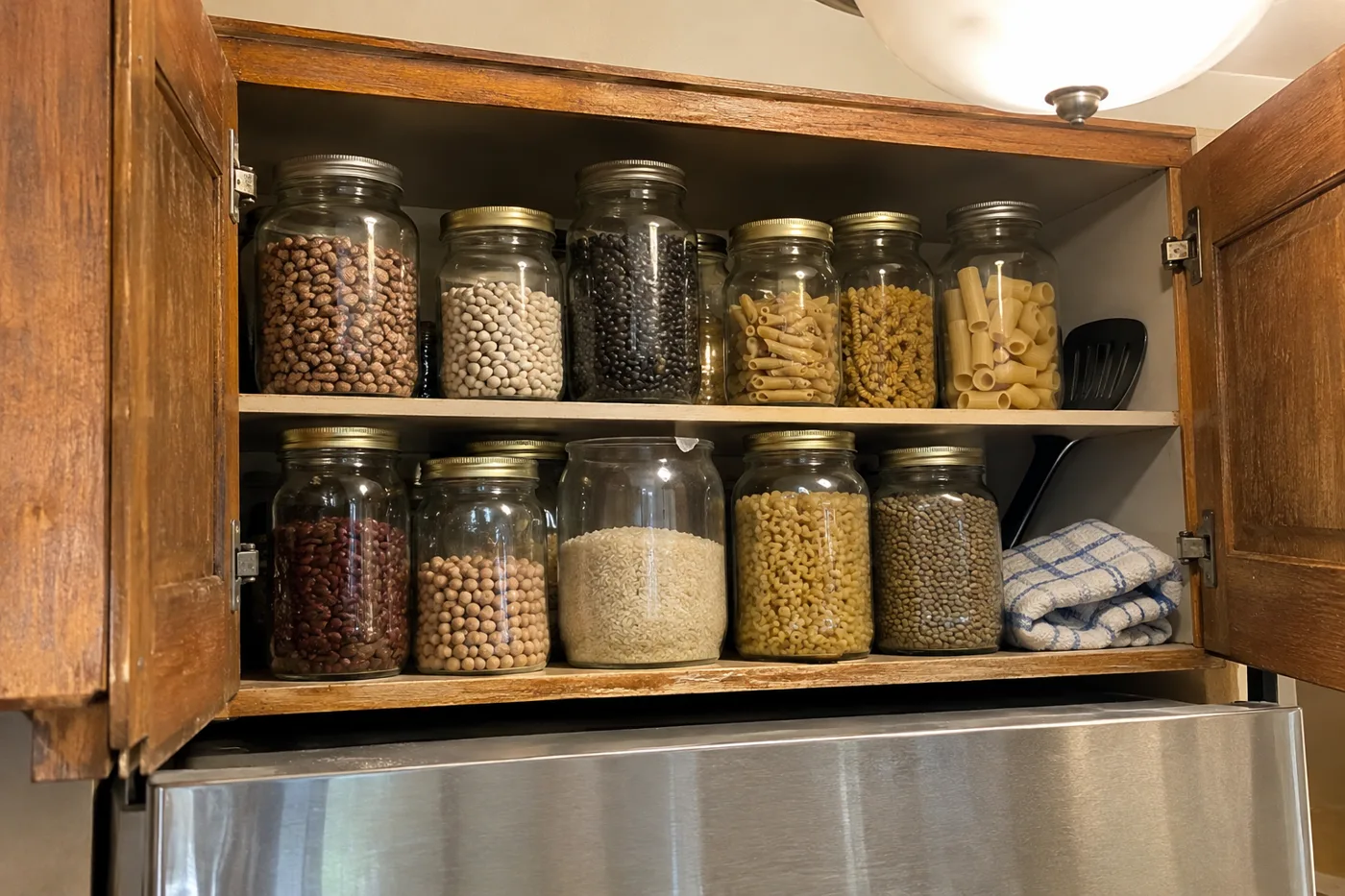
The cabinet over the refrigerator, crowded with clean jars of every size. The lids are in a bag somewhere, not quite matched up.
If you put up jam or pickles, it’s tempting to use them. The University of California’s food preservers warn that store jars may not be tempered to survive canning heat, and even when a canning lid seems to fit, the seal can fail.
The National Center for Home Food Preservation goes further. Store jars that won’t take a two-piece canning lid (a flat lid held on by a screw band) are “not recommended for use in canning any food at home.”
The California group says those same jars are fine for dry food. Rice, beans, oatmeal, pasta, the good buttons.
Put the jam in a real canning jar with a brand-new lid, and let the dried beans keep the pickle jar.
#16 Boxes from appliances you already own
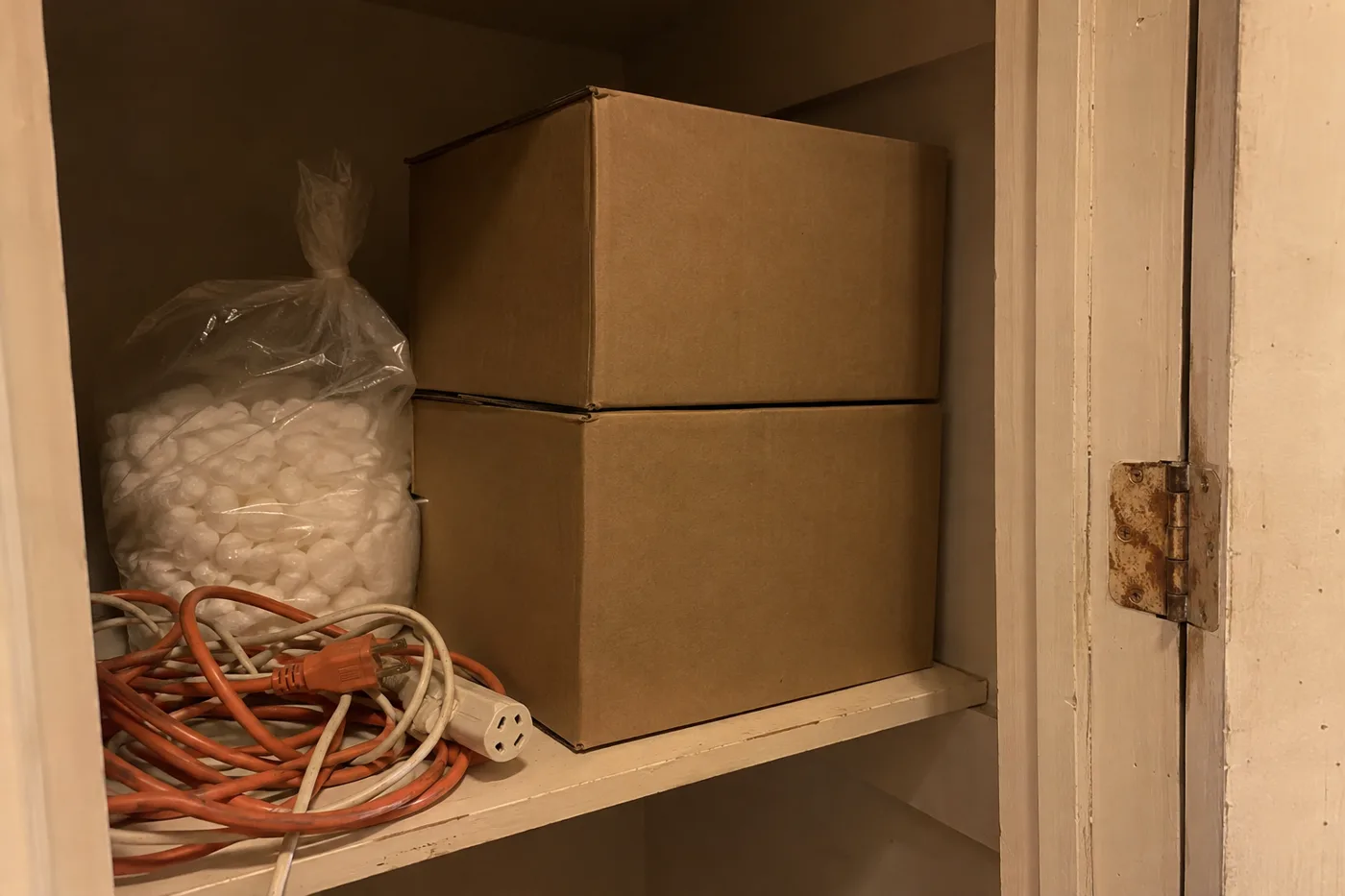
The blender box is in the hall closet. The coffee maker box is in the attic, next to the box from the vacuum and a bag of the foam pieces that came in all of them.
Most people keep them for the warranty. Under a “full” warranty, the Federal Trade Commission’s guide says the company can ask only one thing of you: tell them it needs fixing. Packaging never comes up. And distributors usually honor a warranty whether you have the box or not.
Where a box matters is a return. Most store return windows run 14 to 90 days.
The Declutter Darling, a UK professional organizer, puts boxes from appliances you already own right on her list of things people keep just in case.
Keep the box until the return window closes. After that, the recycling truck can have it.
#15 Manuals for appliances long gone

There’s a folder, or a drawer, or a manila envelope gone soft at the corners. Inside: the manual for the dishwasher, the one for the dishwasher before that, and one for a VCR.
Plenty of people keep manuals for as long as the appliance is in the house, and that’s sensible. A binder left behind for whoever buys the house next is a kindness the new owner won’t see coming.
GE lets you type in a model number and download the manual, along with care guides and installation sheets. Your own maker’s site is worth a look too.
Copy the model number of each appliance you still own onto an index card and tuck it in the front of the folder. The VCR left years ago. Its manual can catch up.
#14 A jar of mystery screws “just in case”
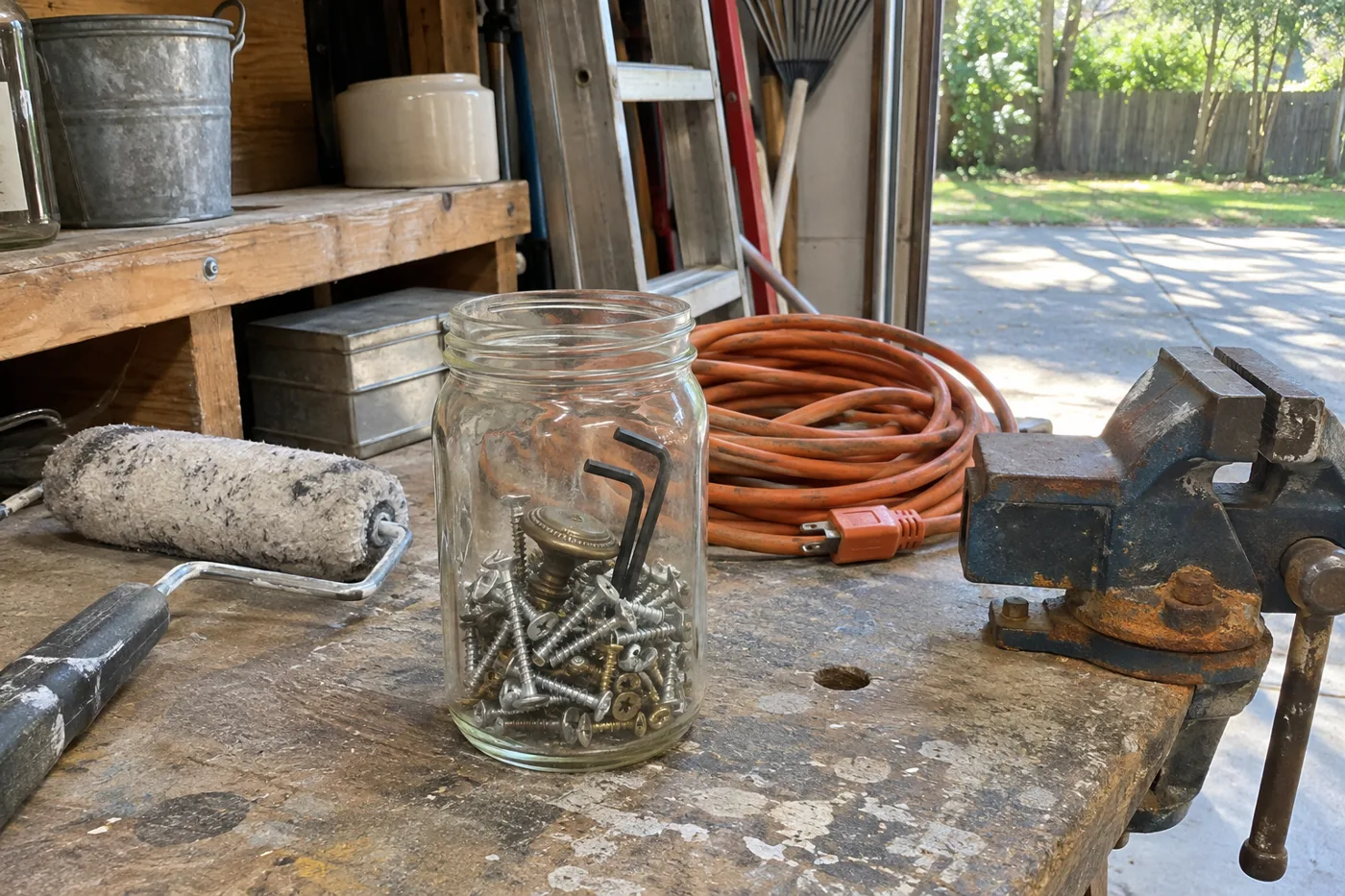
It’s an old peanut butter jar, or a coffee can, or a sandwich bag holding a hinge pin, two little Allen wrenches, a drawer knob and nine screws that match nothing in the house.
The Declutter Darling has a line for exactly this: “If you’ve been keeping a mystery screw in case something falls apart and you’ve had it for nine years, I think we’re safe now.”
There’s more good news if the furniture came flat in a box. IKEA US will ship spare hardware free when the part has a six-digit number, even for something bought years ago. Parts without a number take a trip to the store.
Save the Allen wrenches. Let the nine-year screws go.
#13 Dead batteries mixed in with new ones
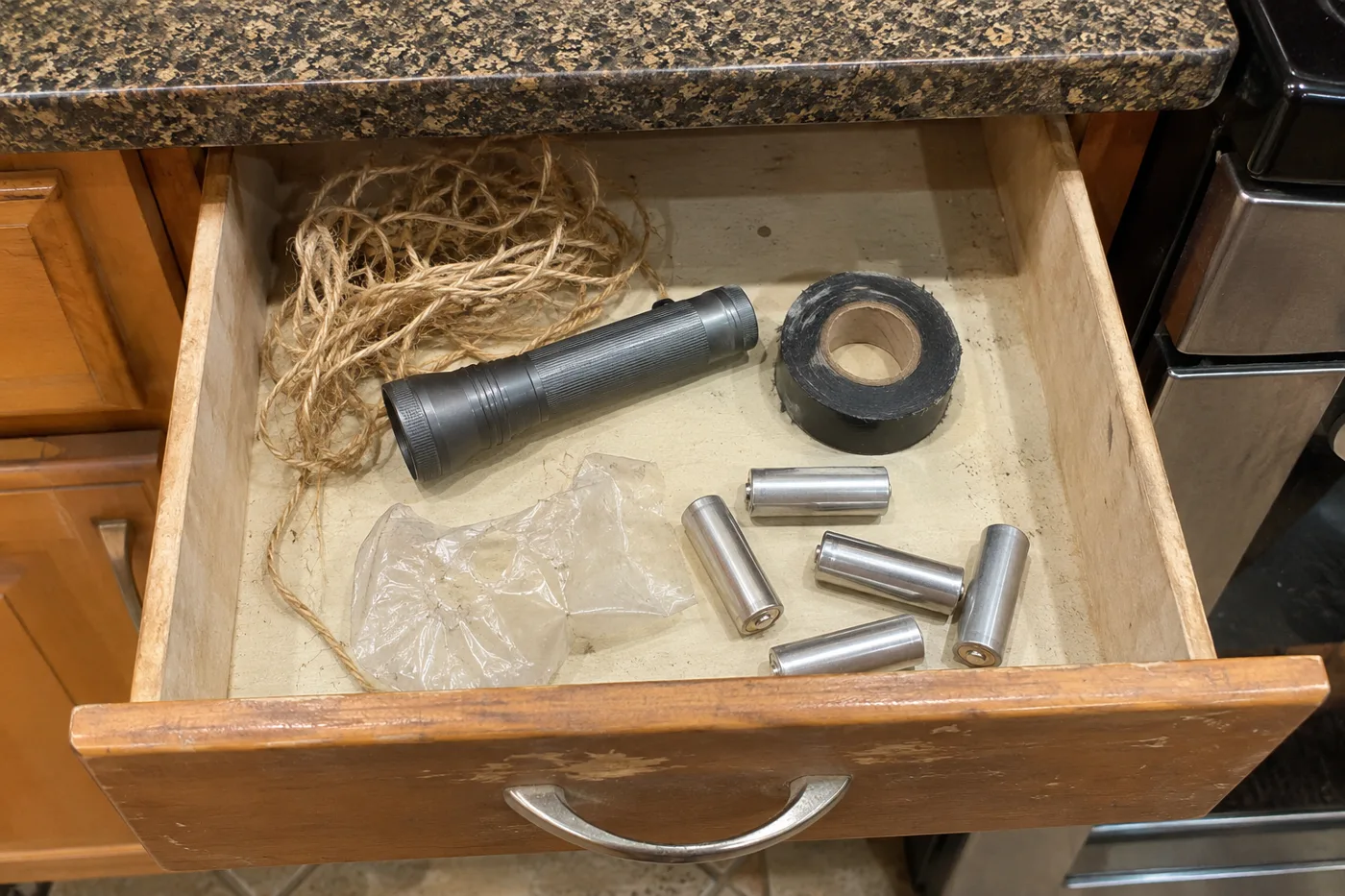
AA batteries roll loose in the junk drawer, a few new, a few dead, and no telling which. So you drop one on the counter and watch how it bounces.
That trick has a grain of truth in it. Princeton researchers found in 2015 that alkaline batteries really do get bouncier as they drain. The catch is that the bounce peaks long before the battery is dead, so a lively bounce tells you very little.
The Declutter Darling puts dead batteries mixed in with new ones on her list, too. The easiest rule: when a battery comes out of something because it quit, it never goes back in the drawer with the good ones. Set it aside for recycling, and follow the steps below if it says lithium.
Check for lithium first
- Look for the word “lithium” on the label before you decide where it goes.
- Lithium batteries can start fires if they get damaged in the trash.
- Put electrical tape over the ends of each lithium battery, bag it on its own, and take it to a battery recycler or household hazardous waste drop-off.
#12 Wire hangers from the dry cleaner
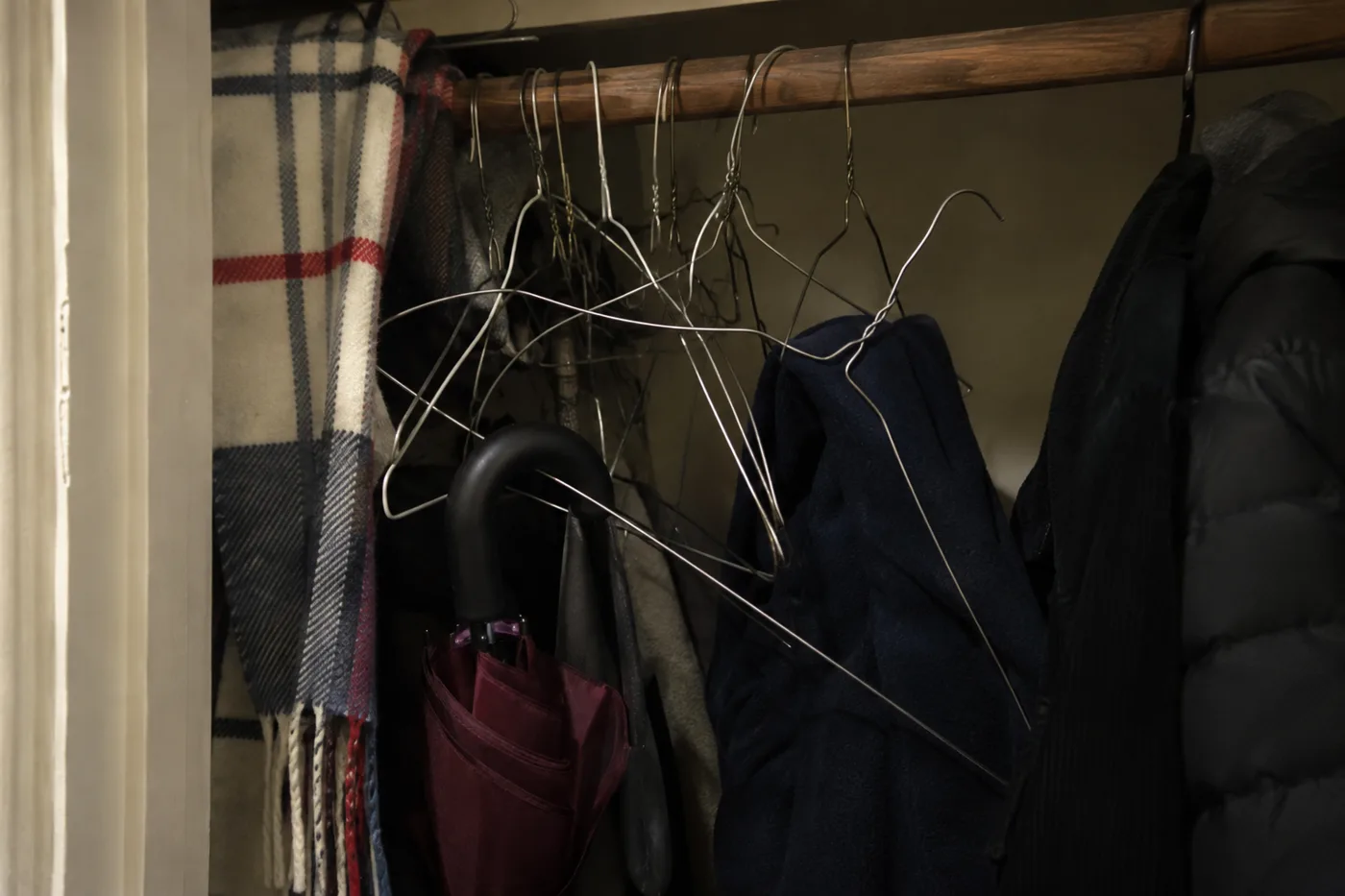
They tangle in the hall closet. Pull one coat out and three hangers come with it, clanging on the floor.
Toss-it lists go after mismatched hangers, and here they have a point. A closet company says thin wire presses on a few small points of a garment, leaving shoulder bumps and stretched necklines. In a damp closet, wire can rust and stain your clothes. The good blouse deserves a better hanger.
The wire ones just need a different home. Keep them out of the recycling bin, because Recology, a West Coast recycler, says they jam the equipment at the plant. Its advice is to take them back to the dry cleaner: “That’s reuse which is even better than recycling.”
Twist a bundle together with a bread bag twist tie and drop it off with the next coat.
#11 A chipped mug too sentimental to toss
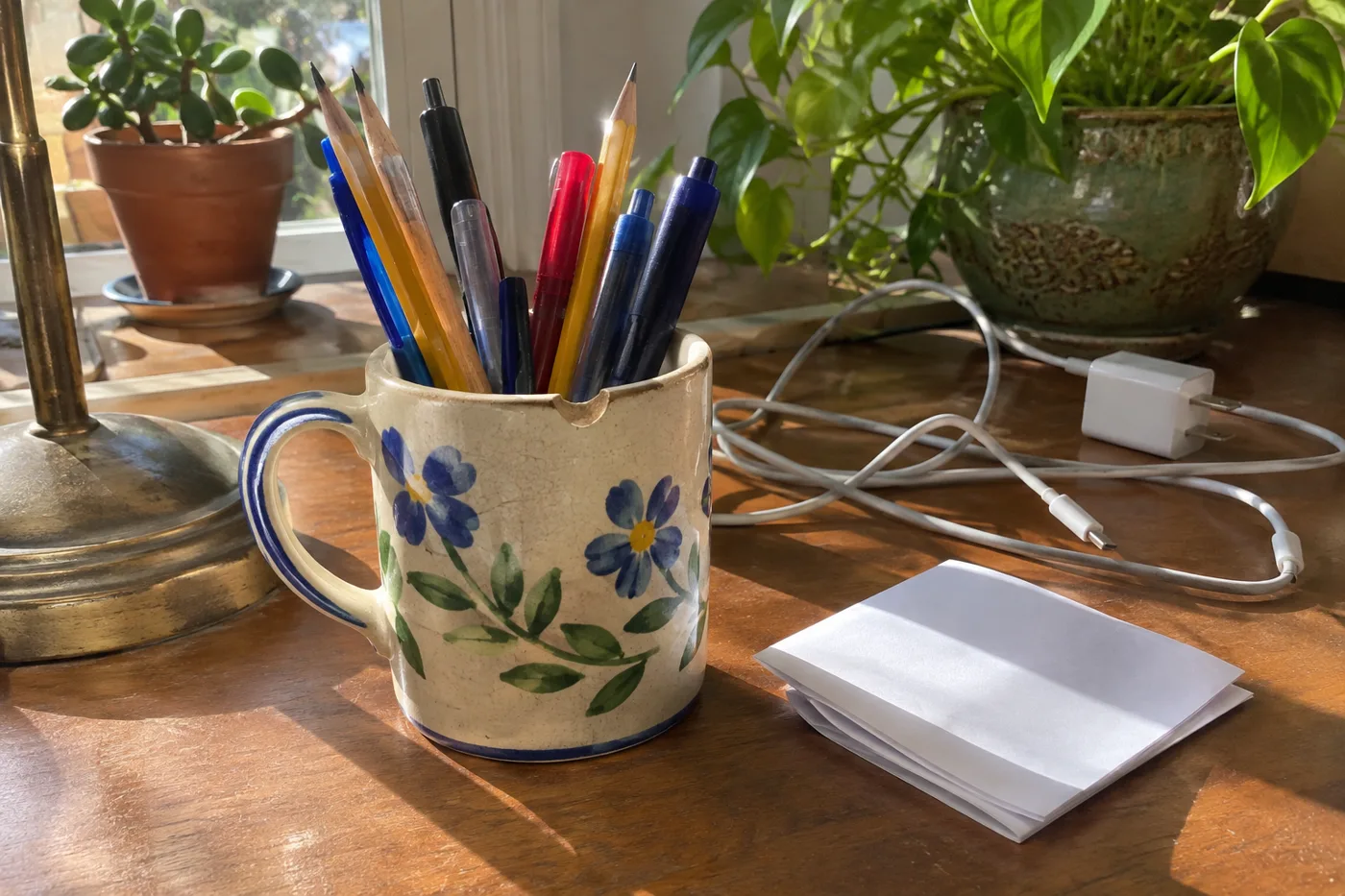
It came from a trip, or a friend, or an office that closed years ago. There’s a chip on the rim, and you’ve learned to turn it so your lip misses.
An organizer would say toss it. Before you decide, look for cracks around that chip. Taste of Home explains that a cracked or crazed mug (one covered in fine cracks) lets liquid seep into the ceramic, where bacteria can settle. Old mugs carry an extra worry, since vintage glazes may contain lead.
You still don’t have to toss it. The same advice suggests giving the mug a new job: pens on the desk, odds and ends by the door, a little plant on the windowsill.
It still gets looked at every morning, just not washed anymore.
#10 Every old pair of prescription glasses
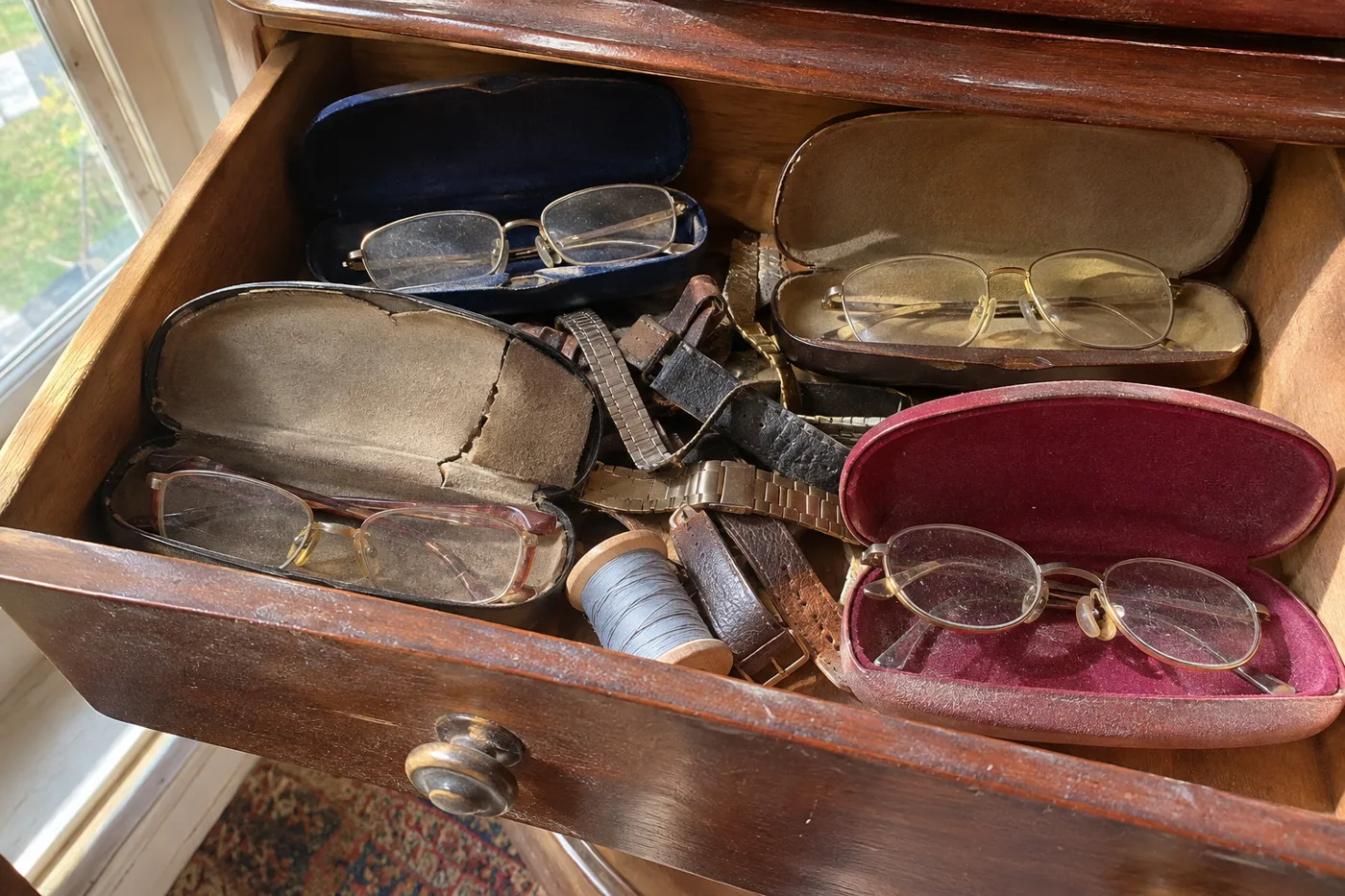
The drawer holds them all. The big frames, the wire ones, the pair that was a little too purple, each in a case that snaps shut like a clam.
One spare makes sense, and even the Declutter Darling allows it. All About Vision says it’s “always a good idea to keep a backup pair” for the day the current pair goes missing.
The rest can do real good, and your local Lions Club is the place to try. The Denver club, for one, has more than 100 drop boxes in optical shops, medical offices and churches.
Volunteers clean the glasses, read the prescriptions and send more than 50,000 pairs a year to places with little eye care.
Each club sets its own rules, and some don’t take the cases, so check with yours before you make the trip.
#9 The good china used once a year
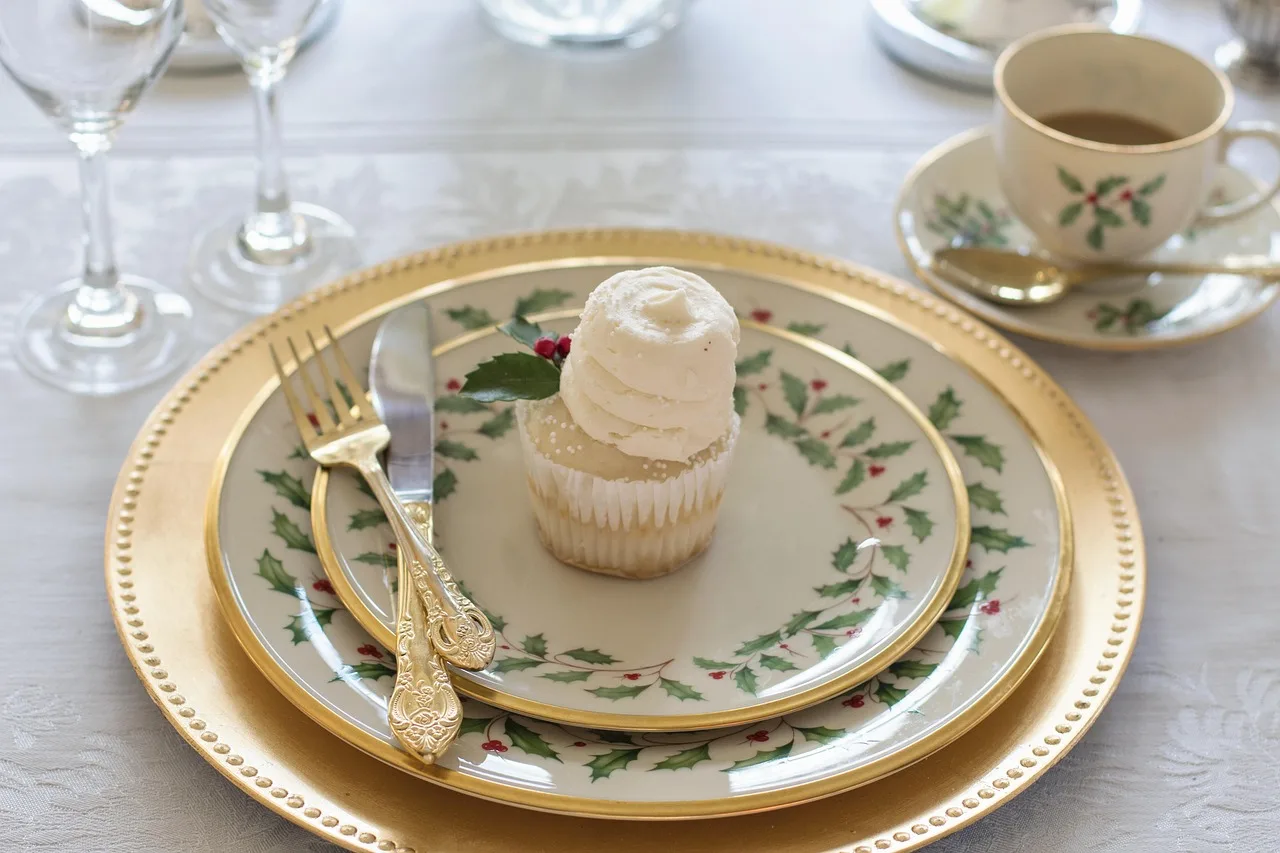
It lives behind glass in the dining room, rimmed in gold, and comes out for Thanksgiving. Afterward it gets washed by hand, one plate at a time, long after everyone’s gone home.
Organizers say use it more or sell it. Selling can sting. One owner told a reselling site that the china dealer Replacements was charging $26 for her pattern’s dinner plate and offered her $6. That’s one seller’s experience, not a price list, and the company only buys pieces with no chips or cracks.
Using it more is the other option. Royal Doulton says its china can go in the dishwasher at no more than 149°F, and pieces with gold or platinum trim must never go in the microwave. Other makers differ, so turn a plate over, find the maker’s mark and check that maker’s care instructions first.
Then set the table on a Tuesday.
#8 Holiday cards saved for years
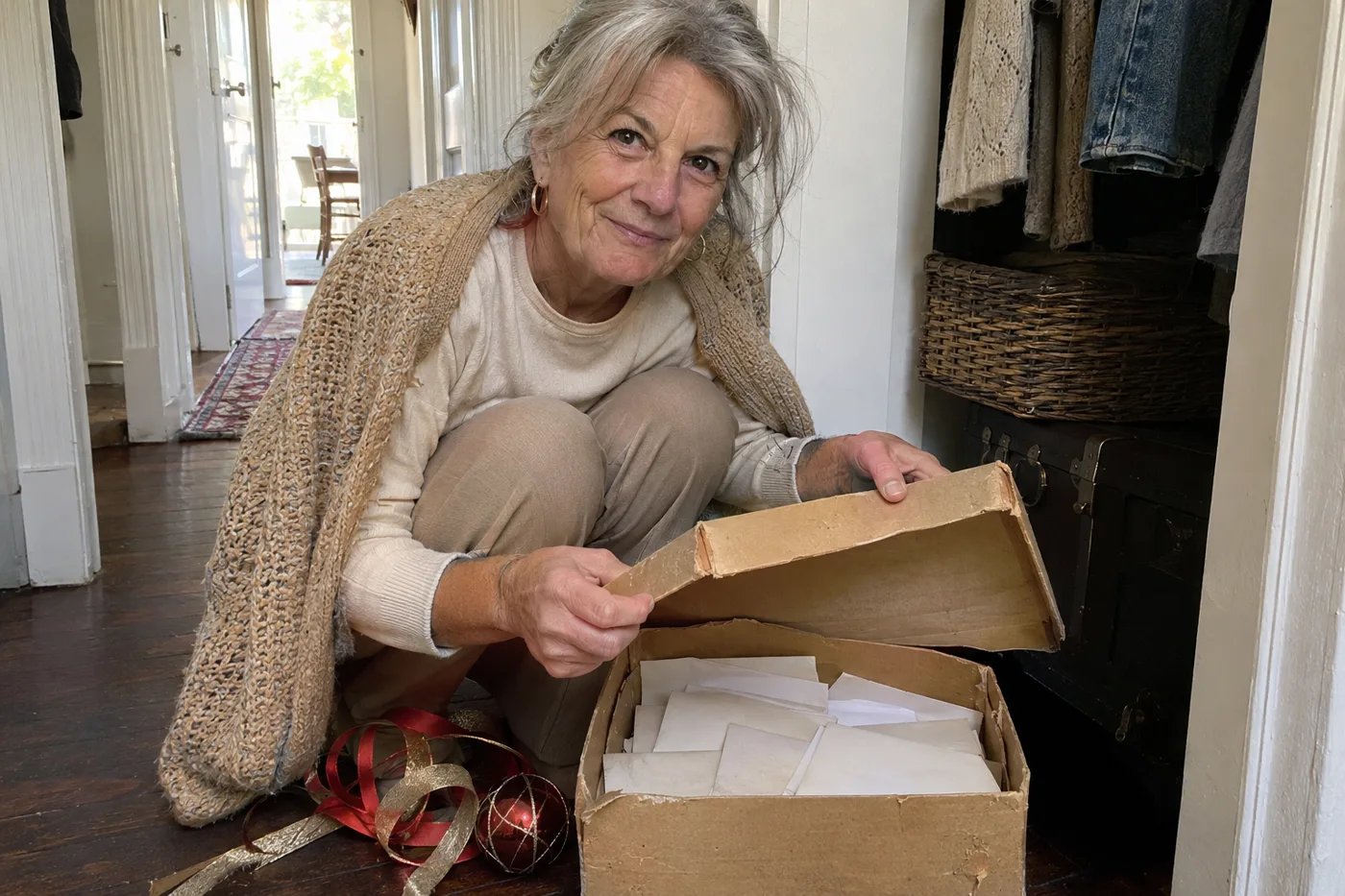
A shoebox in the closet, or three. Christmas cards with long letters folded inside, photo cards, the handwriting of people you still miss.
Those cards are a bigger share of the mail than most people guess. The Postal Service counted more than 1.3 billion holiday cards in its 2018 fiscal year, about 43% of all the personal mail American households sent. That shoebox is where a lot of the handwriting in your life ended up.
Tidy-up advice often says to photograph them and recycle the lot. The trouble is that those pictures rarely get looked at again, and the clutter just moves into online storage you pay for every month.
Keep the cards you’d want to hold again, for the message, the handwriting or the person who sent them. Let the rest go.
#7 Children’s drawings, report cards, baby teeth
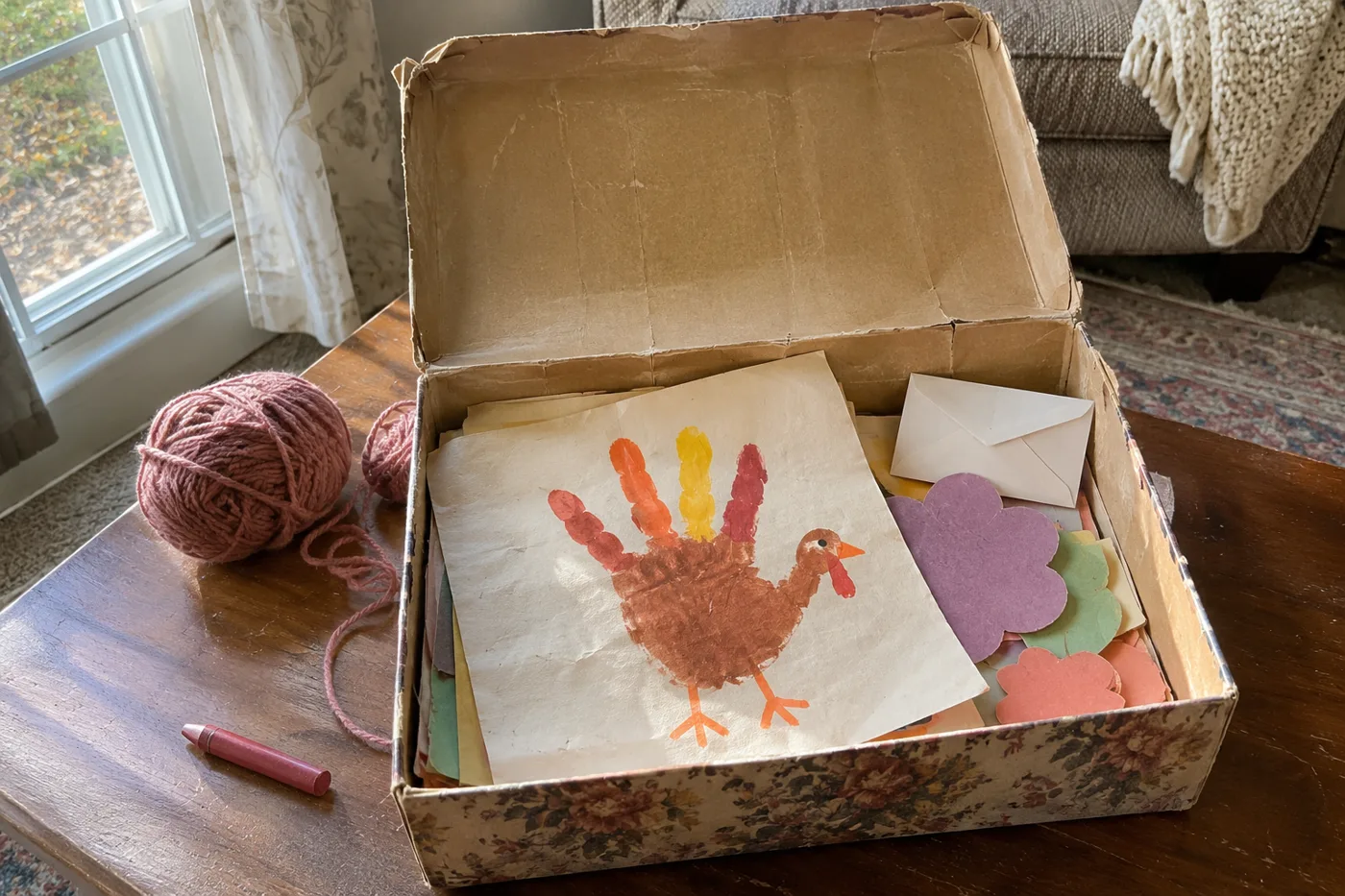
If you raised children, or helped raise someone else’s, there’s probably a box. Handprint turkeys. Report cards. A tiny envelope with a tooth in it, labeled in pencil.
One small memory box often works better than a scanner. Pick the pieces that make you laugh or catch your breath, tiny envelope included, and give those a good home.
The Library of Congress has advice for paper that suits a crayon turkey just fine. Keep it somewhere cool, fairly dry and steady, away from attics, basements and anywhere that might leak. Use acid-free folders and boxes.
And take the rubber band off the report cards. The Library of Congress says no rubber bands, no paper clips, no tape and no glue.
#6 The blue cookie tin full of buttons
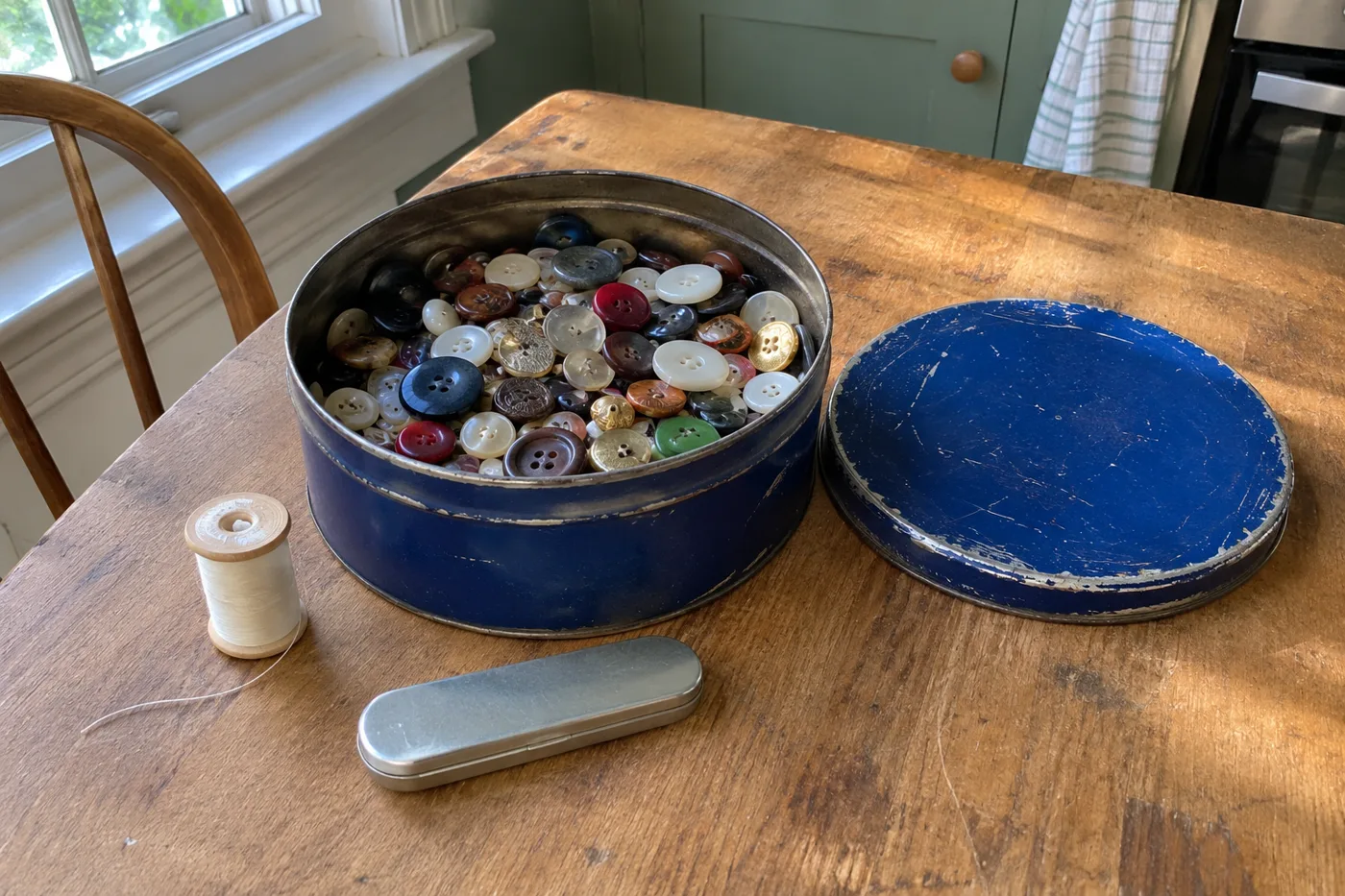
You know the moment. You pry the lid off a blue cookie tin, hoping for butter cookies, and find buttons.
Royal Dansk started selling those cookies in 1966 in Helsingør, Denmark, and the farmhouse on the lid is a real one on the island of Funen.
Could the buttons in yours be worth something? Don’t plan the cruise yet. At button shows, the bargain boxes run 25 cents to $5 a button. Collectible ones bring $10 to $500, depending on material, age, condition and rarity.
Tip the tin out on a dish towel one rainy afternoon and hunt for the odd ones. Then put them all back where they belong.
#5 One earring waiting for its mate
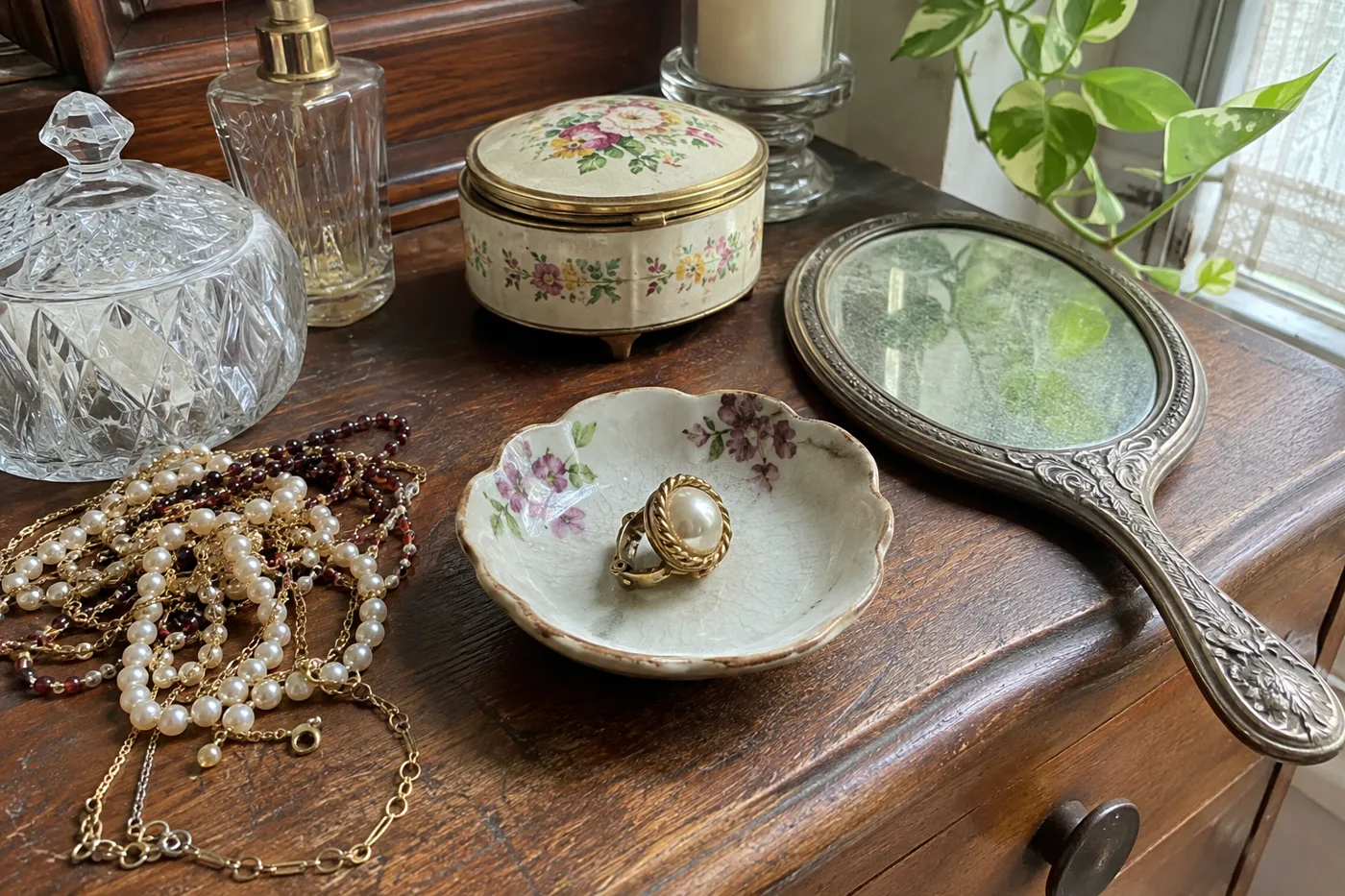
The single clip-on sits in a dish on the dresser, or in its own little slot in the jewelry box. Its mate went down a drain, or into a coat lining, or nowhere anyone can figure out.
Organizers usually say toss it. Many people report what happens the minute they do: the missing one turns up.
Dr. Lori Verderame, an antiques appraiser with a doctorate in art history, takes the earring’s side. “There’s a lot you can do with just one earring,” she says.
A single from a known maker can be worn alone or sold to jewelry makers. “Some people will reuse them or repurpose them, maybe they’re going to make them into a pendant just like that by putting it onto a chain.”
So put the single on a chain. If its mate turns up behind the dresser, you’ve got a set again.
#4 Fabric scraps and yarn from old projects
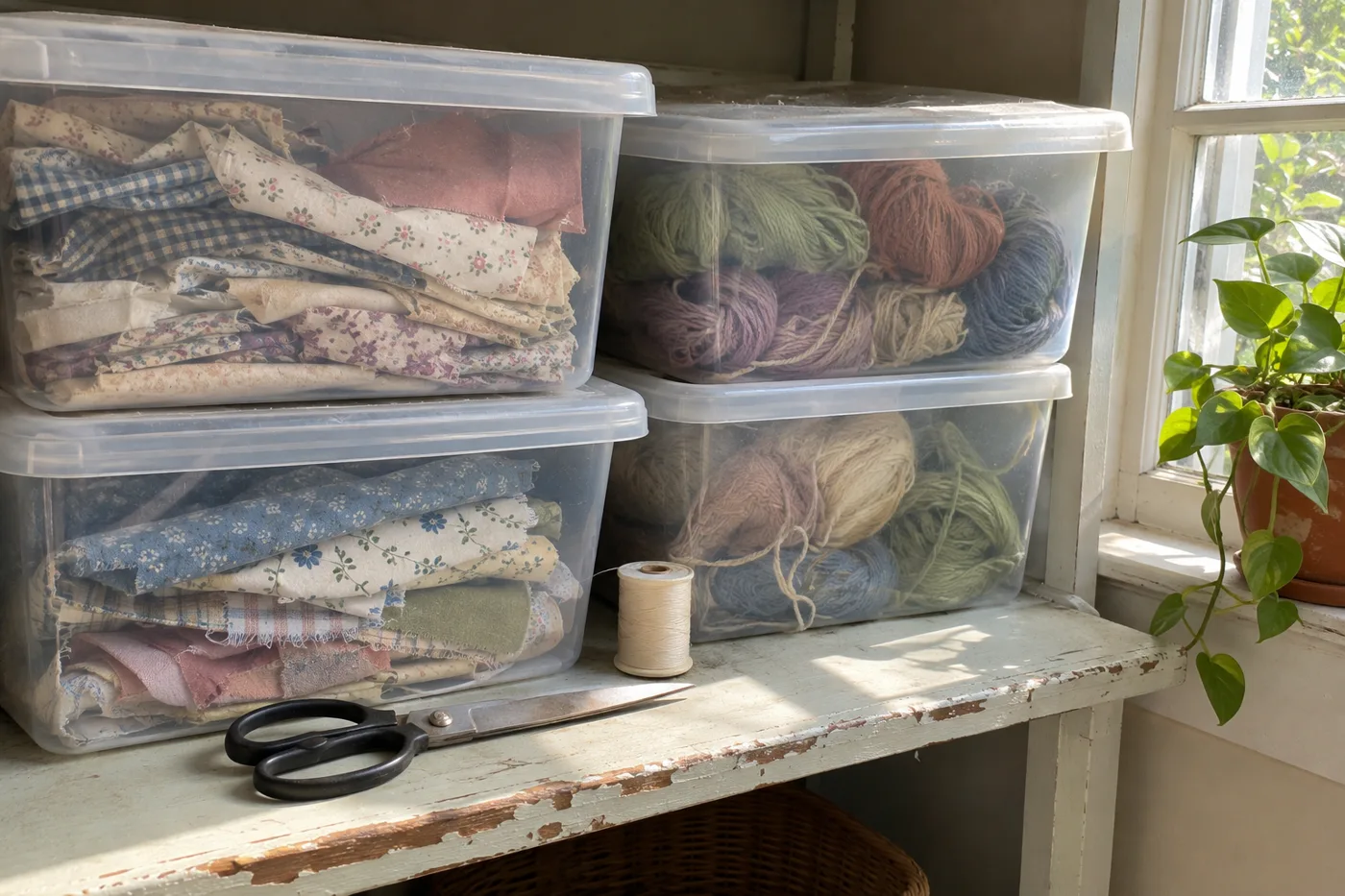
Bins of it. Fat quarters bought for a quilt that became a different quilt. Half skeins left from an afghan. A bag of cotton prints too pretty to cut.
The usual advice is use it up or give it away. The yarn, at least, is in no hurry. A yarn retailer says that kept “cool, dry, dark, and sealed, wool and cotton last for decades.” Moths, damp and sunlight do the damage. If you suspect moths, freeze the yarn for 72 hours.
If you’d like to pass some on, people are waiting for it. Project Linus makes blankets for children who are seriously ill or have been through trauma, and one chapter asks for 100% cotton fabric and acrylic yarn, no wool. Check your own chapter’s list before you pack a box.
The group Warm Up America! sews 7-by-9-inch knitted and crocheted pieces into blankets, so even half a skein has somewhere to go.
#3 Mother’s handwritten recipe cards
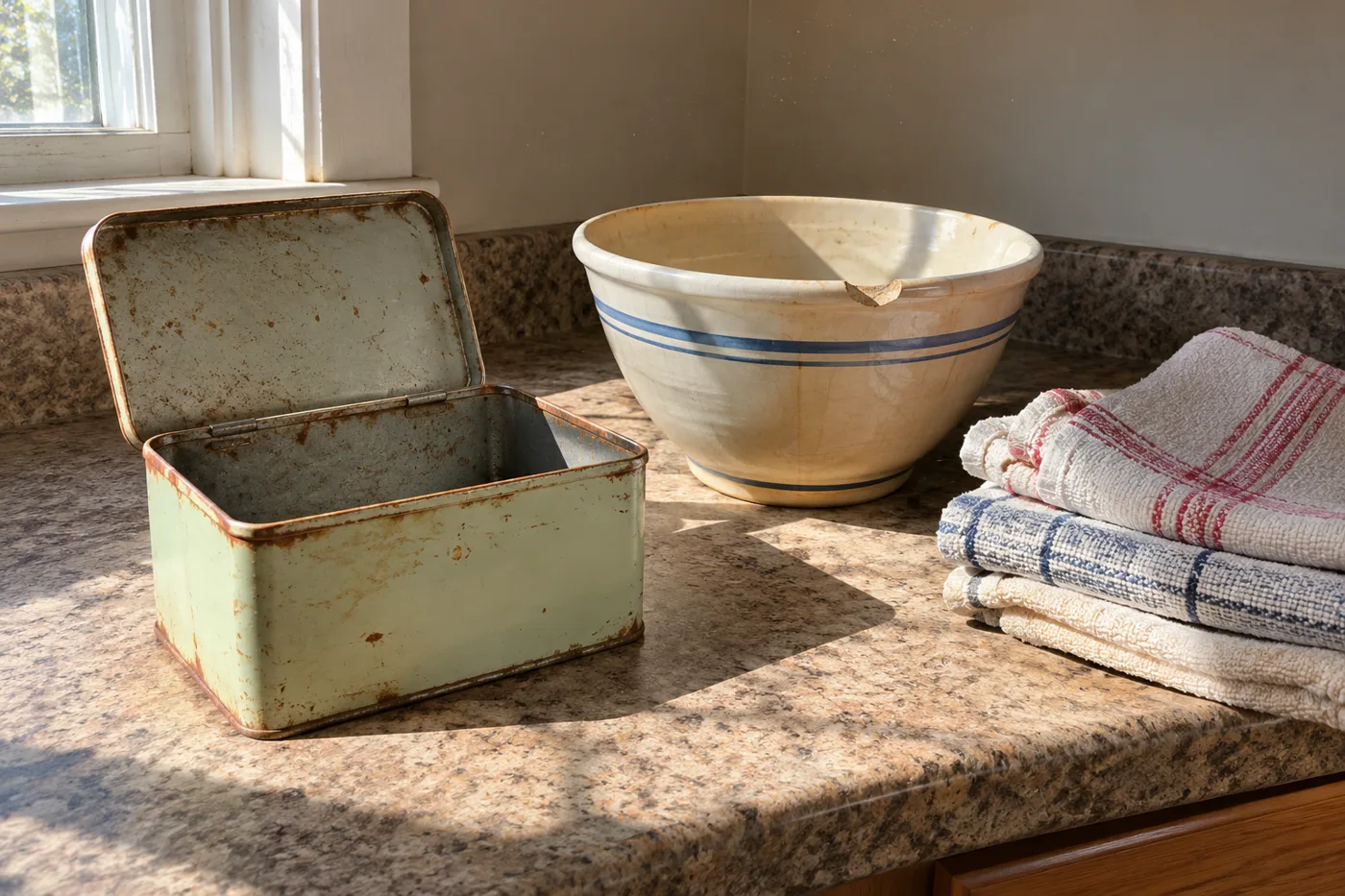
A tin box on the counter, the cards soft at the corners. “Oleo.” “Bake till done.” A butter fingerprint on the pound cake. The pie card with a note in the margin that just says “Good.”
The tidy move would be typing them up and recycling the originals, but Mary Lynn Ritzenthaler, a conservator at the National Archives, wants the cards themselves looked after. Original recipe cards, she says, “evoke wonderful memories and keep traditions alive.” The grease spot is part of the memory.
Whether they came from your mother, a grandmother or the neighbor down the road, this is how Ritzenthaler says to keep them.
Keeping recipe cards safe
- Store them lying flat, not standing up on edge in the box.
- Slip the card you’re cooking from into a clear polyester sleeve.
- Keep a bigger collection in acid-free archival folders or boxes.
- Skip “magnetic” self-stick photo albums. They discolor paper over time.
#2 Old family art backed with cardboard
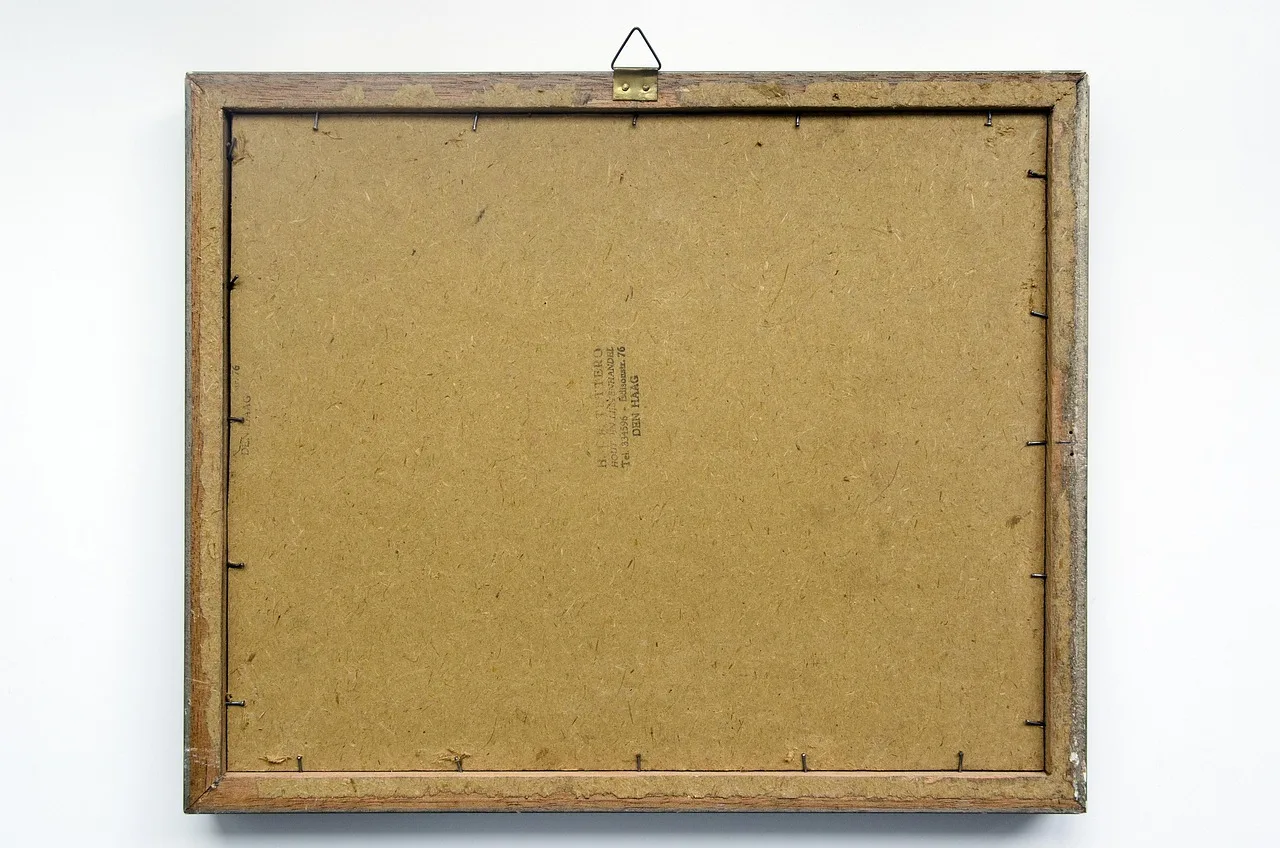
The print over the sofa came from someone else’s house before it came to yours. Turn it over and there’s brown paper torn at one corner, a sheet of cardboard under that, and a hanging wire gone dark.
Keep the picture. Lose the cardboard. The Conservation Center, a fine-art lab, says cardboard is not recommended as a backing, because its acid moves into the art and stains it. Anything framed 15 or more years ago is due for a look.
Dr. Lori is blunter: “Cardboard is acidic and it will damage your artwork.” Swap in archival board instead. She wants a mat between the print and the glass, too, because “you don’t want your artwork kissing the glass.”
Hang it out of direct sun, away from the kitchen, the bathroom and the fireplace. Don’t dust or polish the artwork itself. And don’t write it off for being a print. “Don’t think that all the prints are always just junk,” she says.
#1 Mother’s costume jewelry and pearls
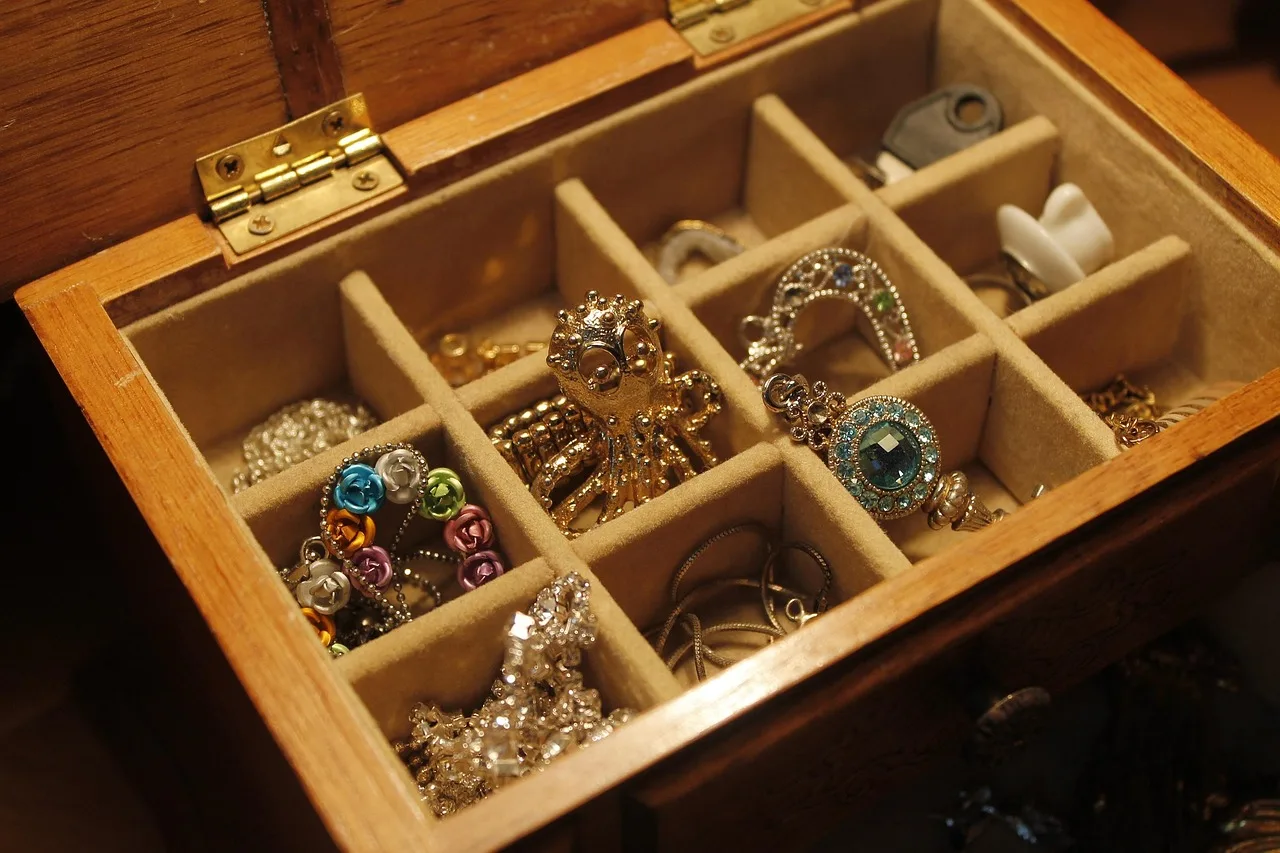
If your mother’s jewelry box came to you, or a grandmother’s, you know what’s in it. Brooches. Clip-ons. A gold-tone bracelet. A strand of pearls that went to church and weddings and never anywhere else.
An organizer could have it cleared out in an afternoon. Before that happens, most people want to know one thing: is any of it real? And there are home tests for that.
Skip them. The classic gold test means rubbing the piece on a stone and dabbing on acid.
Thermo Fisher Scientific, which sells metal testers that don’t use acid, says the rubbing removes a small amount of metal, the acid can leave a mark, and the acids are hazardous to handle.
The pearls are at the same risk. Dr. Lori, the appraiser who stood up for the single earring, warns that acid and scratch tests on pearls can damage them and drag down their value.
So take the whole box to a jeweler and ask for a check that doesn’t scratch or use acid. Then, real or not, put the pearls on and wear them to the grocery store.
The bottom line
A lot of decluttering advice asks whether you love a thing or use it. Most of what’s in your drawers passed a different test a long time ago: does it still have a job?
Trouble starts when something loses its job and nobody notices. The battery that quit. The hanger stretching out a good blouse. The chipped mug still riding through the dishwasher.
Next time you open the drawer by the stove, ask each thing what it does now. Start with the batteries. Nobody will miss the dead ones.
Bonus: What a professional organizer actually does first
- Kayleen Kelly, a professional organizer in Olympia, Washington, who started her business in 2014, shares how she starts in two short videos (one, two).
- She sets a timer for 15 minutes and picks one room. “This is gonna help you stay focused,” she says.
- Trash on the floor goes first. Then she sorts loose things into piles by the room they belong in. Then she does the same for the tabletops.
- She aims for okay, not perfect. Her phrase for it: “It is good enough for who it’s for.”
- On most of her jobs, the client buys nothing new. “We utilize what they already have,” she says, because the first thing most people do when they decide to get organized is run out for bins.
- Before you hire anyone, she suggests a consultation, in your home or by video.
Questions people also ask
Is it safe to microwave food in a margarine or Cool Whip tub?
No. Sub-Zero/Wolf puts margarine, cottage cheese and yogurt tubs on its list of containers not meant for the microwave, and family physician Dr. Rob Danoff, quoted by the American Osteopathic Association, says those same tubs “should always be avoided when heating food in a microwave.” Store the leftovers in the tub, then warm them up in something microwave-safe.
What can I do with plastic grocery bags besides throw them away?
The grocery store, not the curbside bin. Many stores keep a bag collection bin near the front door, and bundled, clean bags dropped there can come back as composite lumber, trash liners or new bags. Thrown in with your regular recycling, they just tangle the sorting machines.
Can you reuse aluminum foil?
Yes, as long as it’s clean and in one piece. Throw it out if it wrapped raw meat or fish, or if food is stuck on that won’t wash off. When it’s finally done, clean foil can often be recycled, but check what your local program takes.
Can I use a store-bought pickle or spaghetti sauce jar for home canning?
It’s not recommended if the jar won’t take a two-piece canning lid. Store jars also may not be tempered to survive the heat, so they’re more likely to break or fail to seal. Use store jars for rice, beans and other dry goods. For canning, choose jars made for it and use new canning lids.
Where can I donate old prescription glasses?
Try your local Lions Club. In Denver alone, the club has more than 100 drop boxes in optical stores, medical offices and churches, though rules vary from club to club. Before you donate, keep your current pair and one working backup.
Should I keep the owner’s manuals for my appliances?
Keep them as long as the appliance is in the house if you like, though you can often get a copy online. GE lets you download the manual by model number, and your own maker’s site is worth checking too. Keep a note of each model number and recycle the manuals for appliances you no longer own.
Related posts:
23 Thanksgiving Dishes From the 1970s That Faded From the Table
21 Holiday Party Foods From the 1970s That Would Horrify Guests Today
26 Things Grandchildren Remember About Your House That You Never Notice
18 Christmas Decorating Habits People Over 60 Still Have That Fire Experts Beg Them to Stop
17 Things in Your Mother's Sewing Box Worth Keeping
25 Homemade Christmas Decorations From the 1960s, and What Became of Each One

- 24 Things People Over 60 Still Do When Cleaning That Experts Beg Them to Stop - November 6, 2026
- 21 Handmade Gifts From the 1970s Your Grandchildren Have Never Seen - November 6, 2026
- 25 Homemade Christmas Decorations From the 1960s, and What Became of Each One - November 6, 2026
Leave a Reply