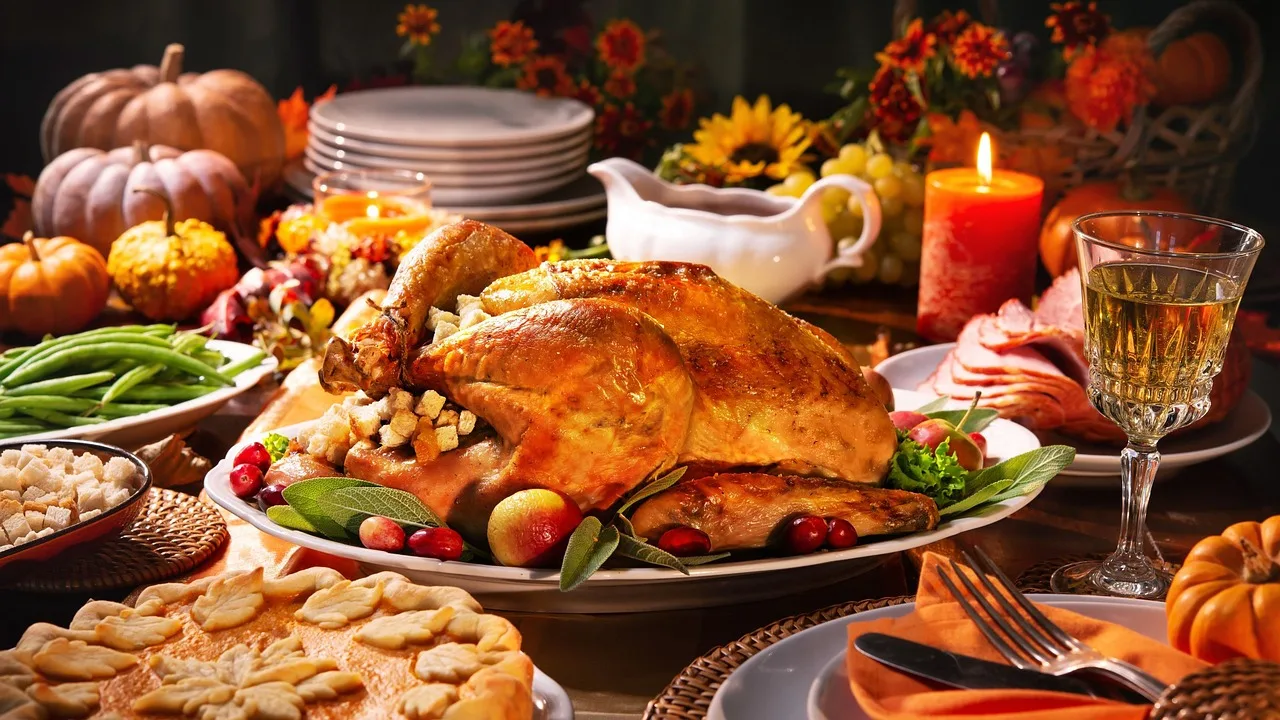
The good tablecloth came out with its fold lines still showing. Extra chairs got carried in from the kitchen, and a card table went up at the far end for whoever drew the short straw. Then the dishes started arriving, one after another, until there wasn’t a bare inch of cloth left.
Look at a Thanksgiving table today and a surprising number of them have gone missing, or hang on in just a few kitchens.
#23 Watergate salad, the green stuff
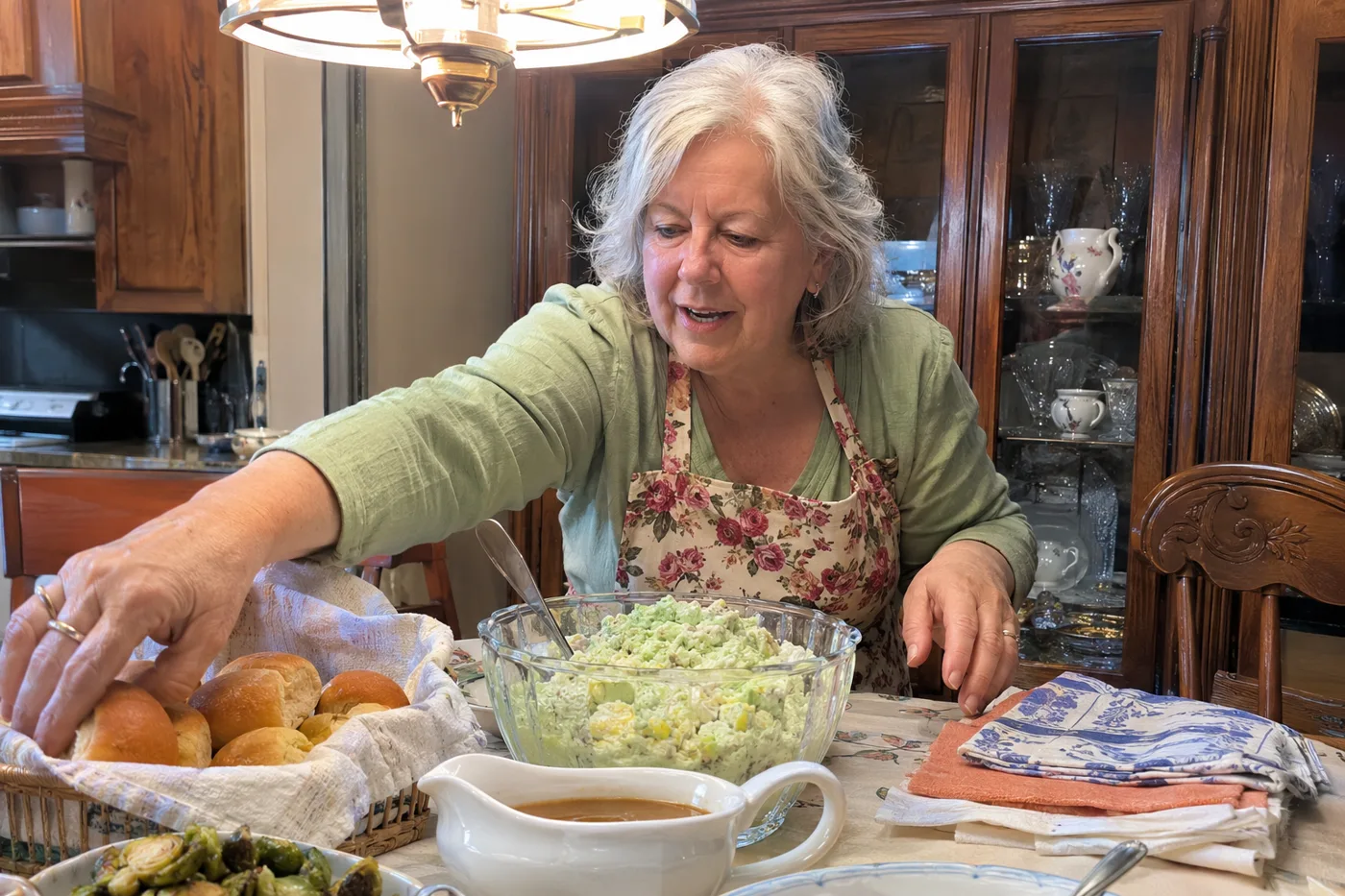
It came to the table in a glass bowl, pale green and full of bits: pistachio pudding, pineapple, nuts, all folded together. Half the family called it Watergate salad. The other half called it green stuff and refused to budge.
Kraft says it developed the recipe in 1975 under a much duller name, Pistachio Pineapple Delight, the same year pistachio pudding mix came out. How it got tied to a political scandal is still a mystery.
Kraft’s best guess is that a Chicago food editor renamed it in her column to get readers’ attention. As for every other story, the company says, “we can’t substantiate any of them.”
Advice columnists Anne Adams and Nan Nash-Cummings had the funniest theory. The salad, like the scandal, was “full of nuts.”
It isn’t the fixture it once was, but some families still set it out every November, along with the same argument about what to call it.
#22 The wobbly lime gelatin ring
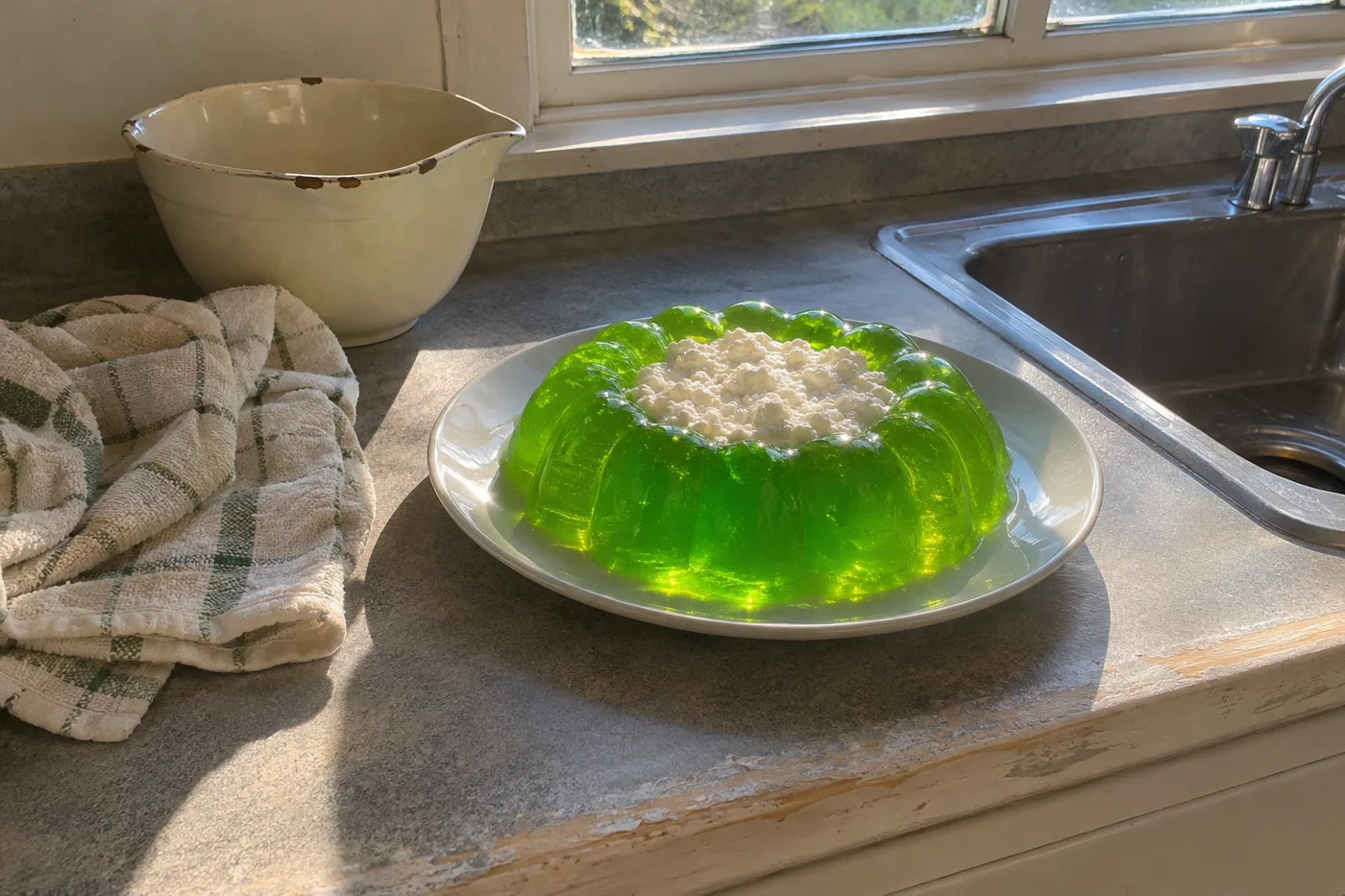
It came out of the refrigerator upside down on a plate. Somebody ran warm water over the mold, everyone held their breath, and then came that soft little thunk. Green, glossy, and a little too tall to trust, with cottage cheese tucked inside and maybe some fruit or nuts.
Lime Jell-O arrived during the Great Depression, and gelatin salads hit their peak in the 1950s suburbs, where they were seen as “a marker of sophistication, elegance and status.” Then Julia Child came along, and French cooking became the thing to aim for.
Sugary dishes started looking suspect, and the sweet gelatin salad lost its shine through the 60s and 70s.
What many people remember most is where it lived the night before: on the refrigerator shelf everyone else was told not to touch.
#21 Ambrosia, the coconut and marshmallow salad
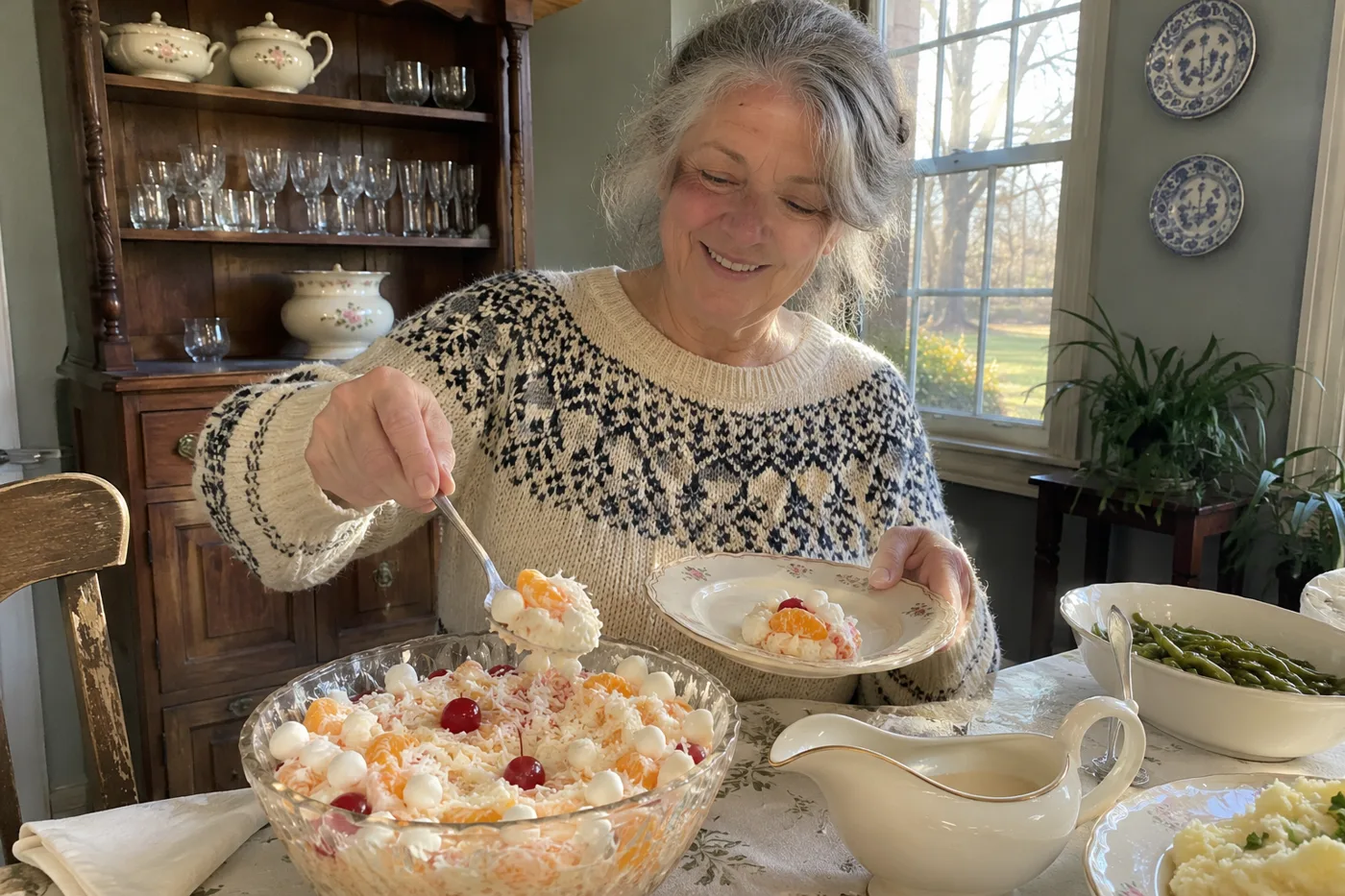
Of everything on the table, it had the grandest name. Ambrosia was the food of the Greek gods, and somehow it ended up as a bowl of canned fruit and coconut.
The earliest known mention is in an 1867 cookbook called Dixie Cookery by Maria Massey Barringer.
Today’s usual version has pineapple, mandarin orange slices, miniature marshmallows and coconut, often with maraschino cherries and whipped topping stirred through. If your family’s bowl had the cherries, they were the first thing to go.
It’s no longer on every table, but it never fully left. Some families still won’t sit down to Thanksgiving without it. Some people even call the green stuff back in #23 ambrosia, which settles nothing.
#20 The cut-glass relish tray
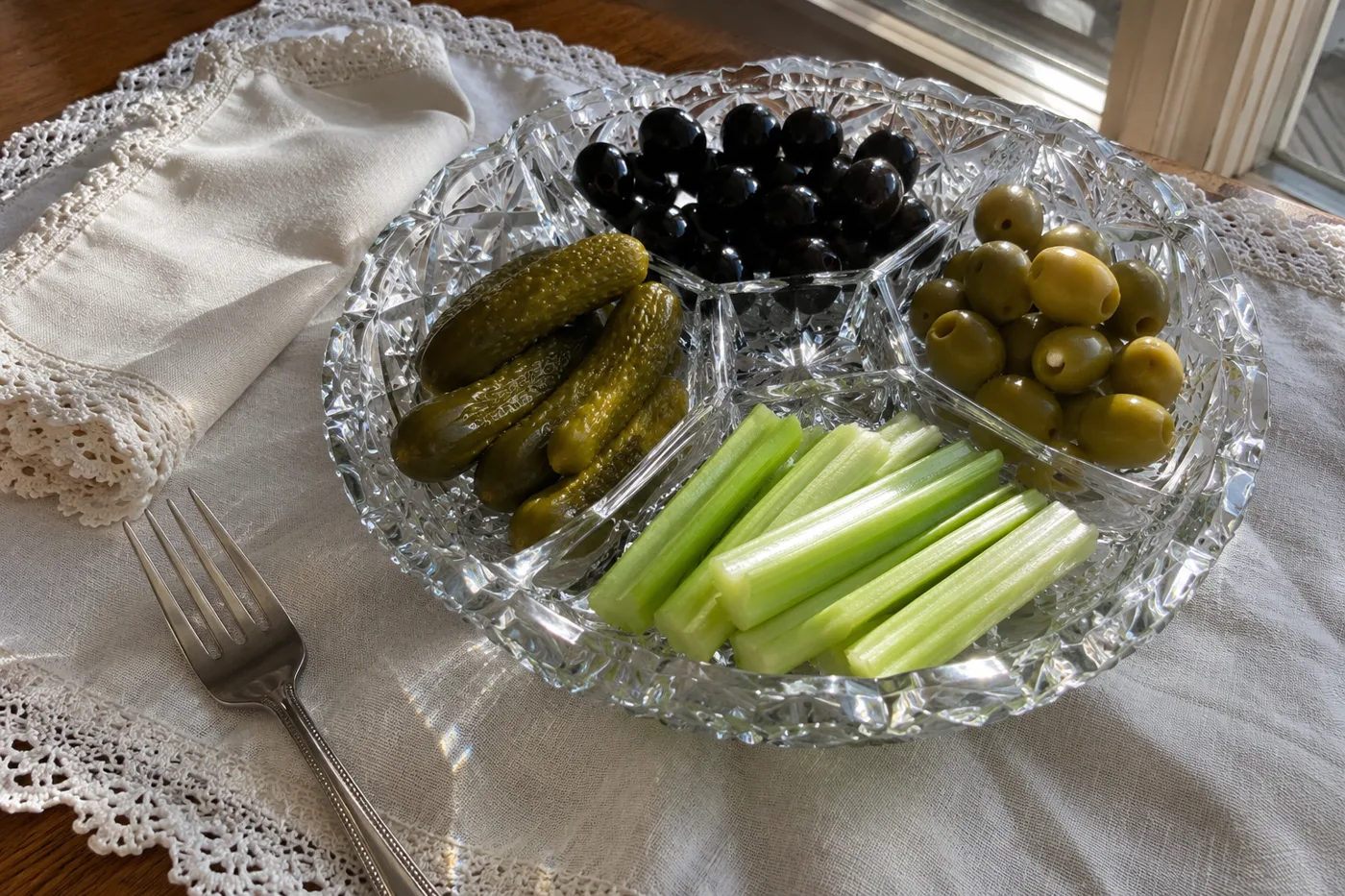
Before the turkey came out, there it was: the divided glass tray with black olives, green olives, sweet pickles and celery sticks. Kids wore the black olives on their fingertips like little hats, and nobody stopped them.
The tray has a fancier past than it looks. In wealthy 19th-century homes, celery was so expensive that it sat in the middle of the table to show off. Once celery got cheap, it moved into those divided trays, and the setup stayed in style for about 70 years.
Then celery’s reputation slid. Food historian Andy Smith put it this way: “Celery moved from being a special vegetable to a normal vegetable to a health and diet food.” By the 1970s, more food choices and a new interest in nutrition were crowding the tray off the table.
How to make a 1965 carrot curl
- Peel a carrot, then shave thin strips the long way with a vegetable peeler.
- Wrap a strip around your finger “as you would a pin curl,” said American Home magazine.
- Hold it with a toothpick.
- Drop it in ice water to crisp.
#19 Stuffing baked inside the bird
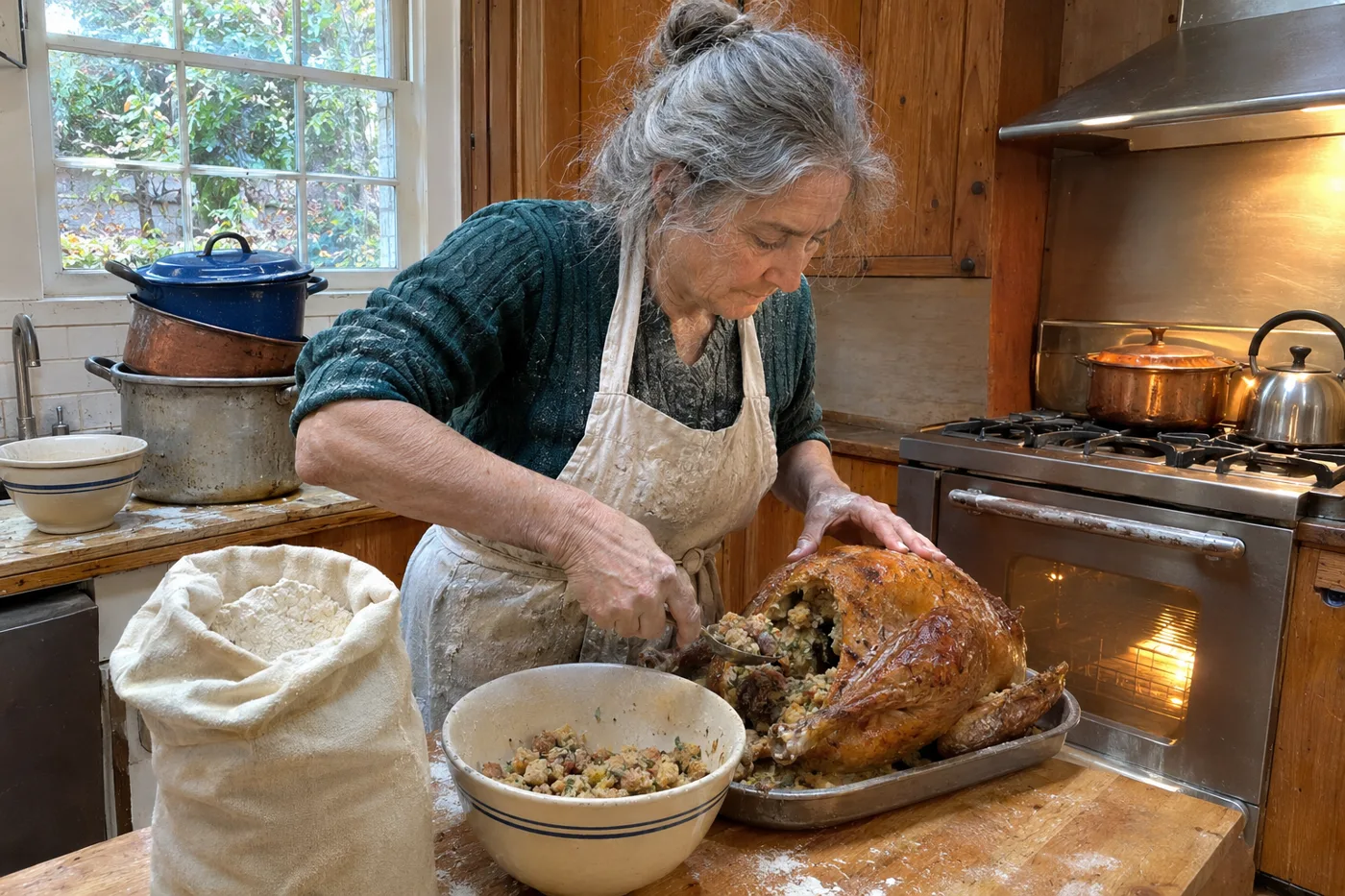
Somebody reached into the turkey with a long spoon and came out with stuffing that was darker, softer and tasted of the bird. If there was a second pan of the extra stuffing on the side, everyone still fought over the batch from inside.
Today’s safety advice is against it. The U.S. Department of Agriculture now recommends cooking stuffing separately, because stuffing the turkey “is not a safe practice.” If you do stuff the bird, both the turkey and the very center of the stuffing need to reach 165°F.
So the side pan, the one nobody fought over, is the one you’re supposed to make now.
#18 The turkey that roasted all night

“Put the bird in before bed.” In a lot of houses that was the plan. The oven went on low, everybody went to sleep, and the smell of roasting turkey woke the whole house before sunrise. It freed up the oven for pies and rolls in the morning, too.
Current guidance has put an end to it. The advice now is to roast at 325°F, no lower, because a turkey cooked overnight at 200 to 250°F gives bacteria room to grow.
So the bird goes in after breakfast these days, and the coffee pot has to do the waking up.
#17 Cranberry relish from the hand-crank grinder
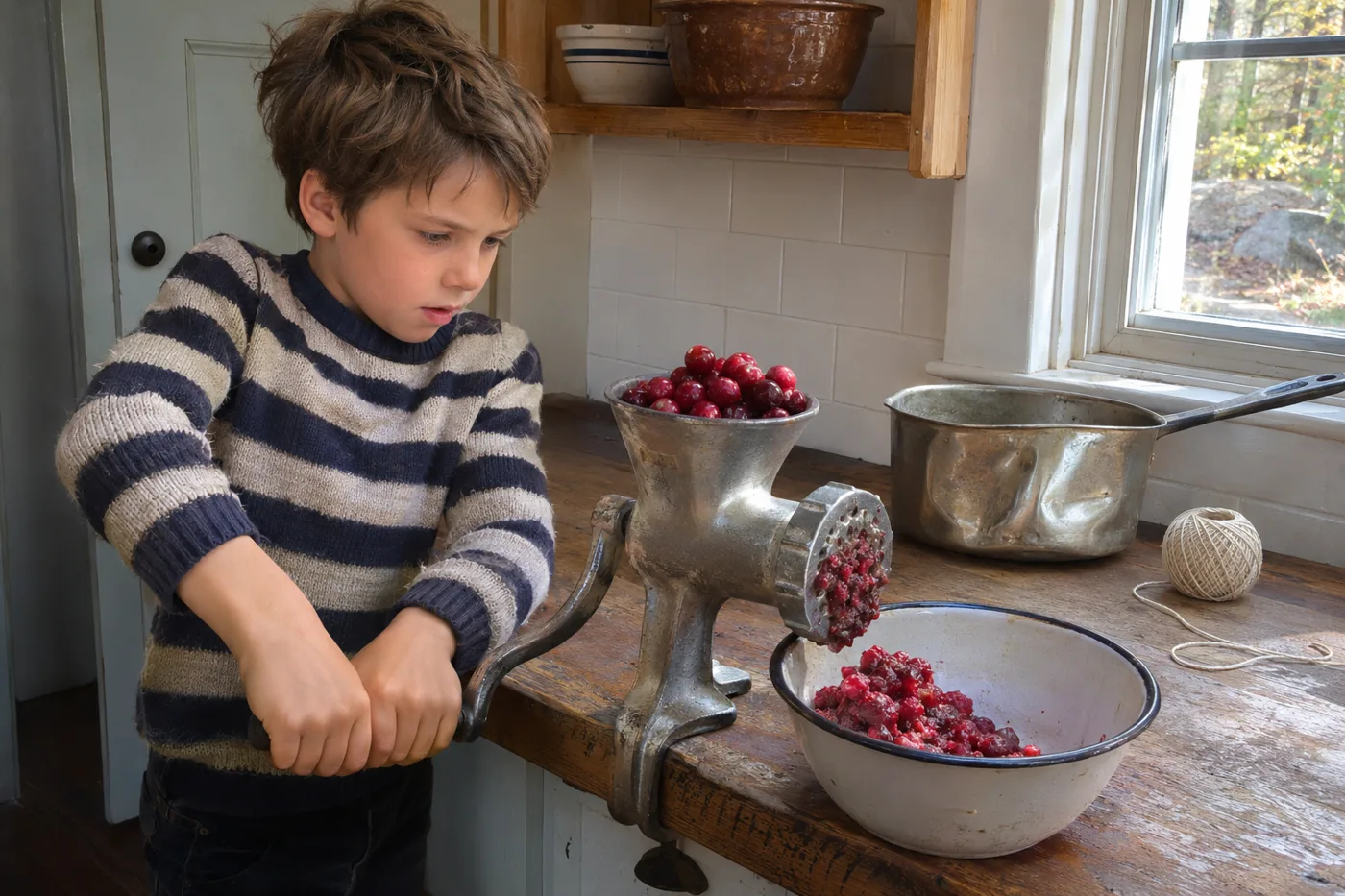
The grinder clamped onto the edge of the counter. Somebody tightened the screw, somebody fed whole cranberries in the top, and somebody, usually the youngest person in the kitchen, turned the handle until their arm gave out.
Food columnist Jim Dixon remembers that exact job as a boy in Roseburg, Oregon: “cranking a meat grinder clamped to the kitchen counter,” following “the recipe on the back of the Ocean Spray bag.” Then his mother got a Cuisinart in the early 1970s.
In Dixon’s kitchen, the relish survived. What faded was the grinder, and the kid turning it.
#16 Mincemeat pie from a jar
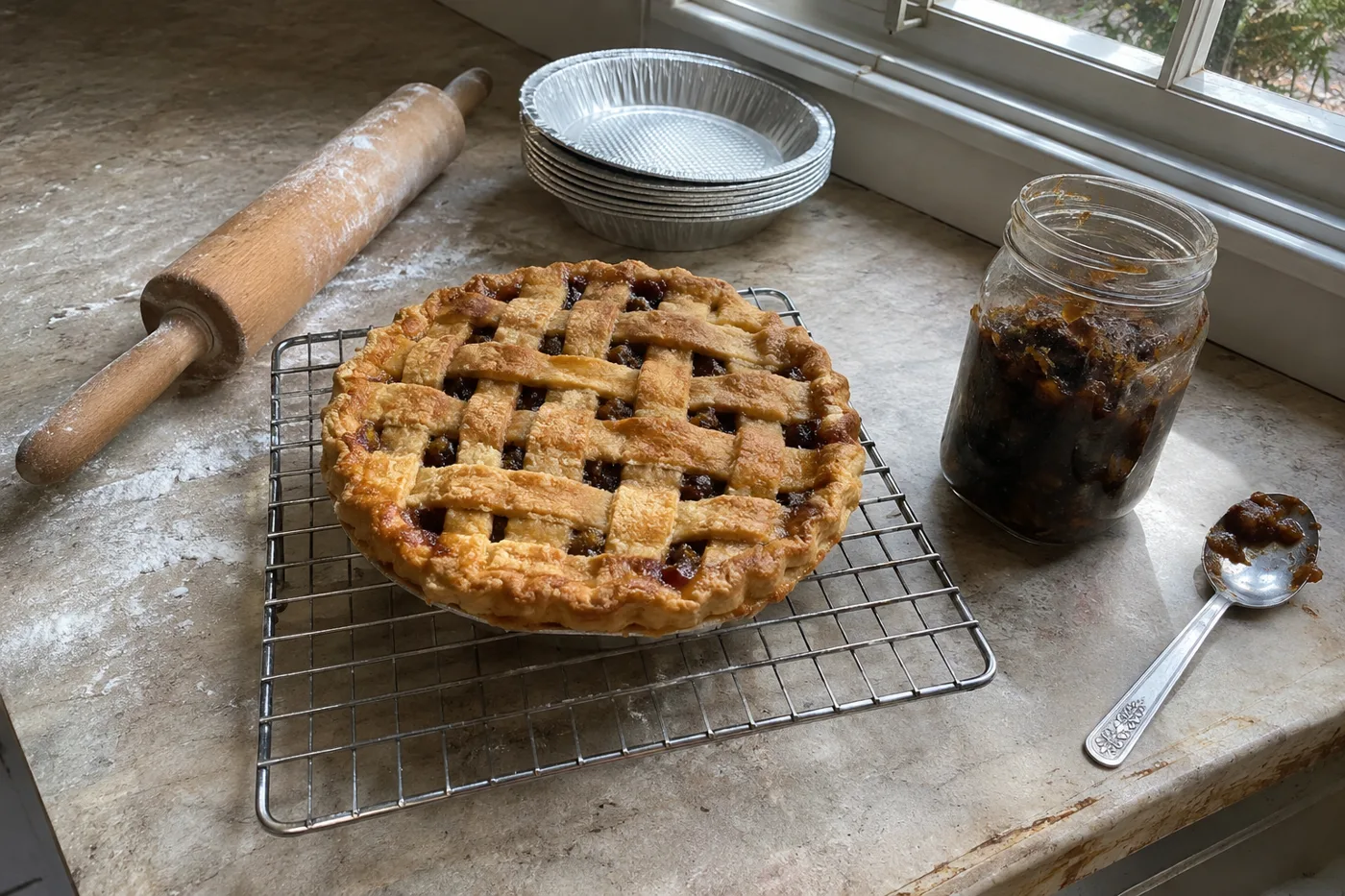
Was there ever really meat in mincemeat? For a long time, yes. Some recipes used beef or venison, and some used heart.
By the middle of the 20th century, though, most recipes had dropped the meat entirely. Extra sugar had been pushing the filling away from a savory dinner dish and toward dessert, and eventually dessert won.
By the 1970s it was usually the pie one relative loved and the kids eyed from across the table.
It came out of a jar or a box, and that jar seemed to sit in the pantry forever.
#15 Oyster dressing in the turkey
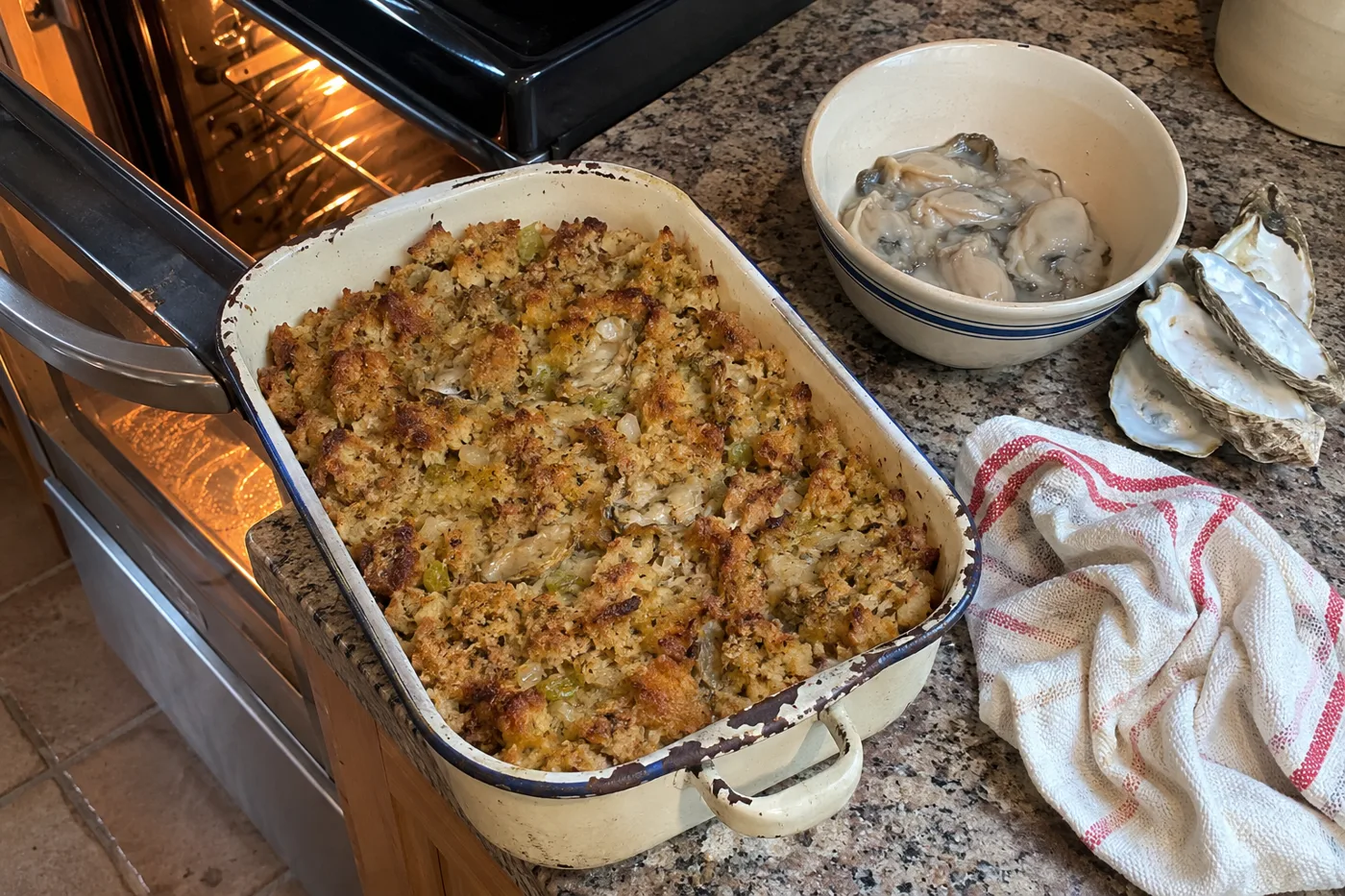
Oyster dressing wasn’t only a seaside thing. The Pullman Company, which ran the sleeping cars on America’s trains, served oyster dressing inside its Thanksgiving turkeys. The same dish rolled across the country by rail.
Back then the oysters were cheap. Between 1880 and 1910, oysters cost less than beef, poultry or fish. New Yorkers ate about 600 a year each.
Those cheap oysters are long gone. At about $2 apiece on the East Coast, a pan of oyster dressing is no small thing today.
#14 Pumpkin chiffon pie, the fancy one
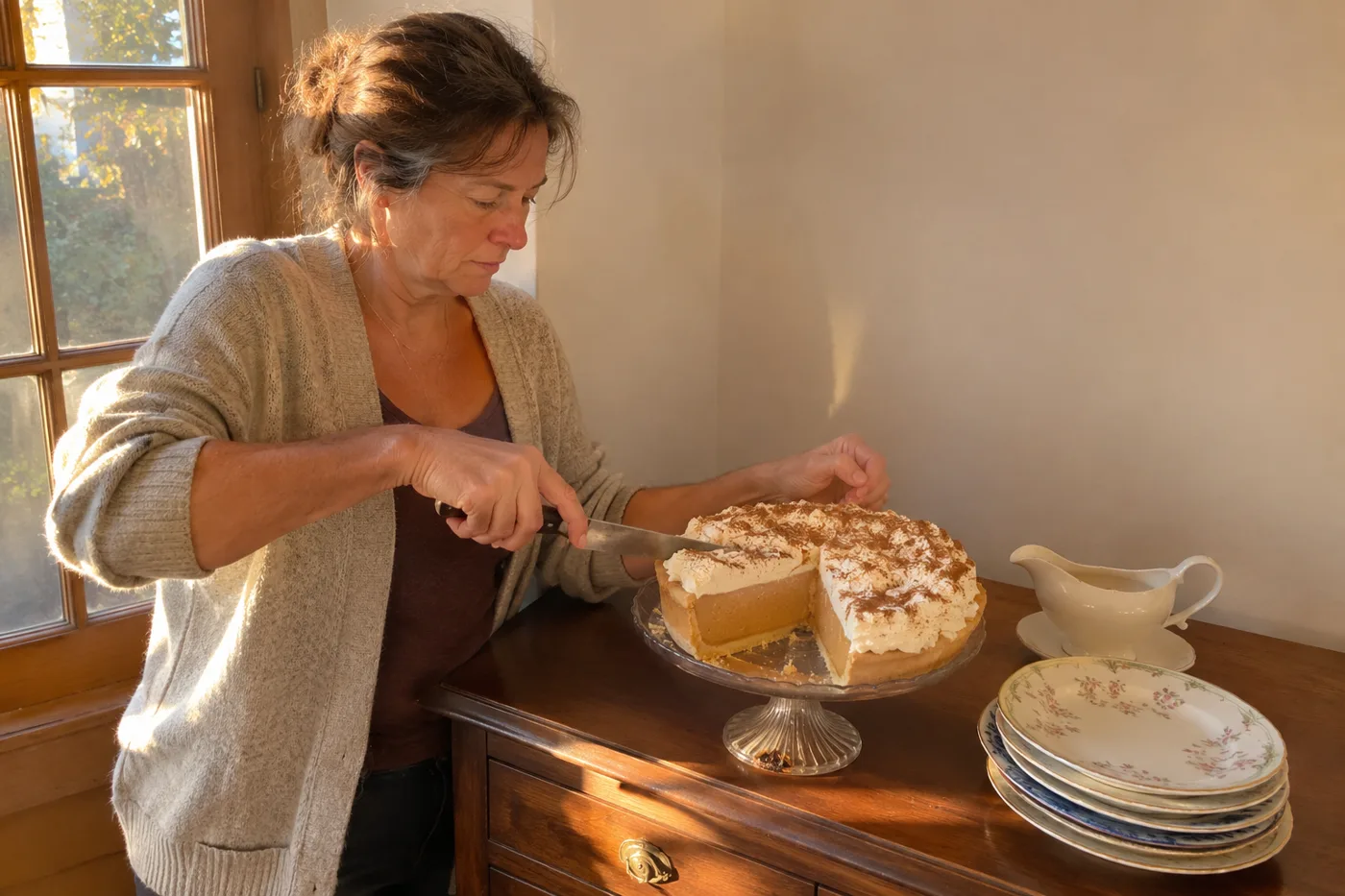
Ordinary pumpkin pie was dense and dark. Chiffon pumpkin pie was pale, tall and so light it barely sat on the fork. It was the one that came out when company was coming.
Chiffon pie was invented in Los Angeles in 1926 by Monroe Boston Strause, known as “the Pie King.” He traveled about 30,000 miles a year teaching hotels and restaurants how to make it, and home cooks took it up through the middle of the century.
The fluff came with a catch. Many chiffon pies got their lift from raw beaten egg whites, and a 1996 newspaper column warned they could carry salmonella, a food-poisoning risk, and suggested whipped cream or whipped gelatin instead.
Versions made with whipped cream or gelatin are still around, and they still weigh about as much as a cloud.
#13 Grasshopper pie in mint green
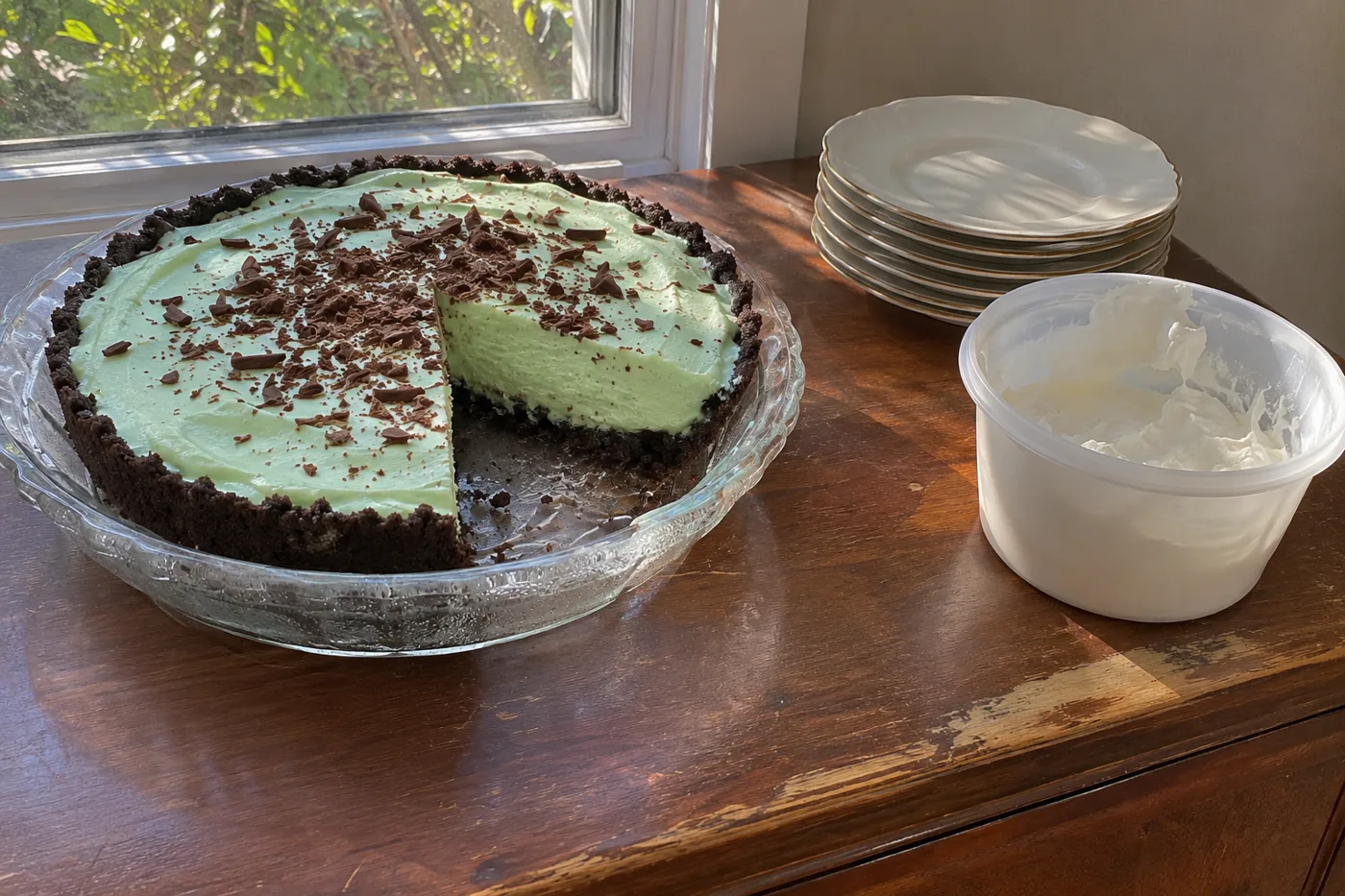
Pale green filling, dark chocolate crumb crust, no oven required. It looked like something from a nicer restaurant than anyone actually went to.
The pie takes its name from the Grasshopper cocktail, and it borrowed the drink’s liqueurs too: crème de menthe for the mint and crème de cacao for the chocolate. The filling was whipped cream folded into melted marshmallow or cream cheese, then chilled until it set.
It mostly left the Thanksgiving table. These days it turns up at Easter, which is quite a hop from November.
#12 Pink cranberry fluff
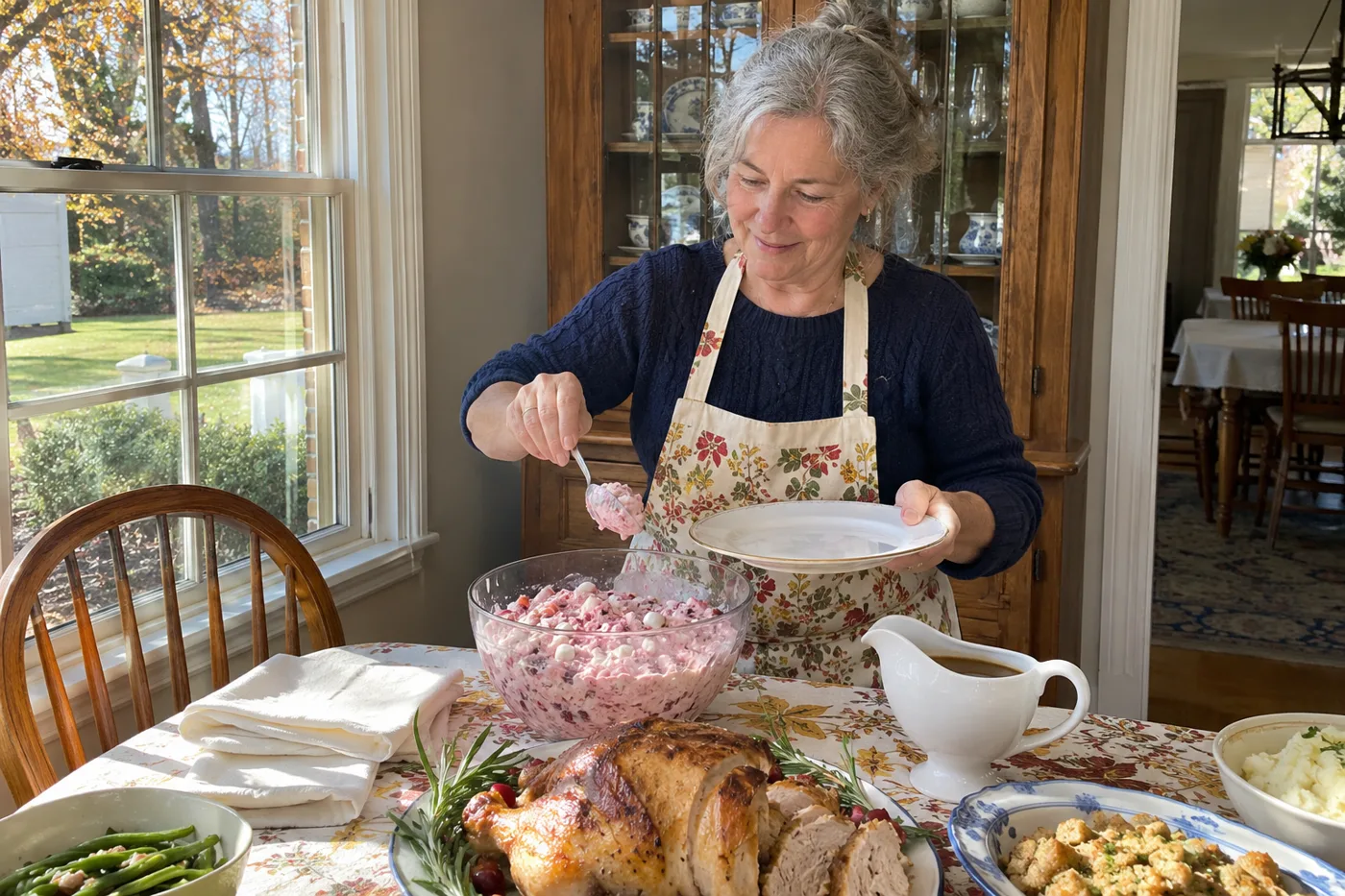
A bowl of something bubblegum pink, sweet and tart at the same time, sitting right next to the turkey as if it were a vegetable. Somebody always called it a salad, and nobody argued.
It owed a lot to one tub. Cool Whip went on sale in 1966, invented by food scientist William A. Mitchell as a topping that could be shipped frozen. Within two years it was the biggest moneymaker in the Birds Eye line.
The surprise is that the pink stuff is older than the tub. A 1952 recipe already combined marshmallows, milk, cooked cranberries and whipped cream in a frozen version.
#11 Grape jelly meatballs in the chafing dish
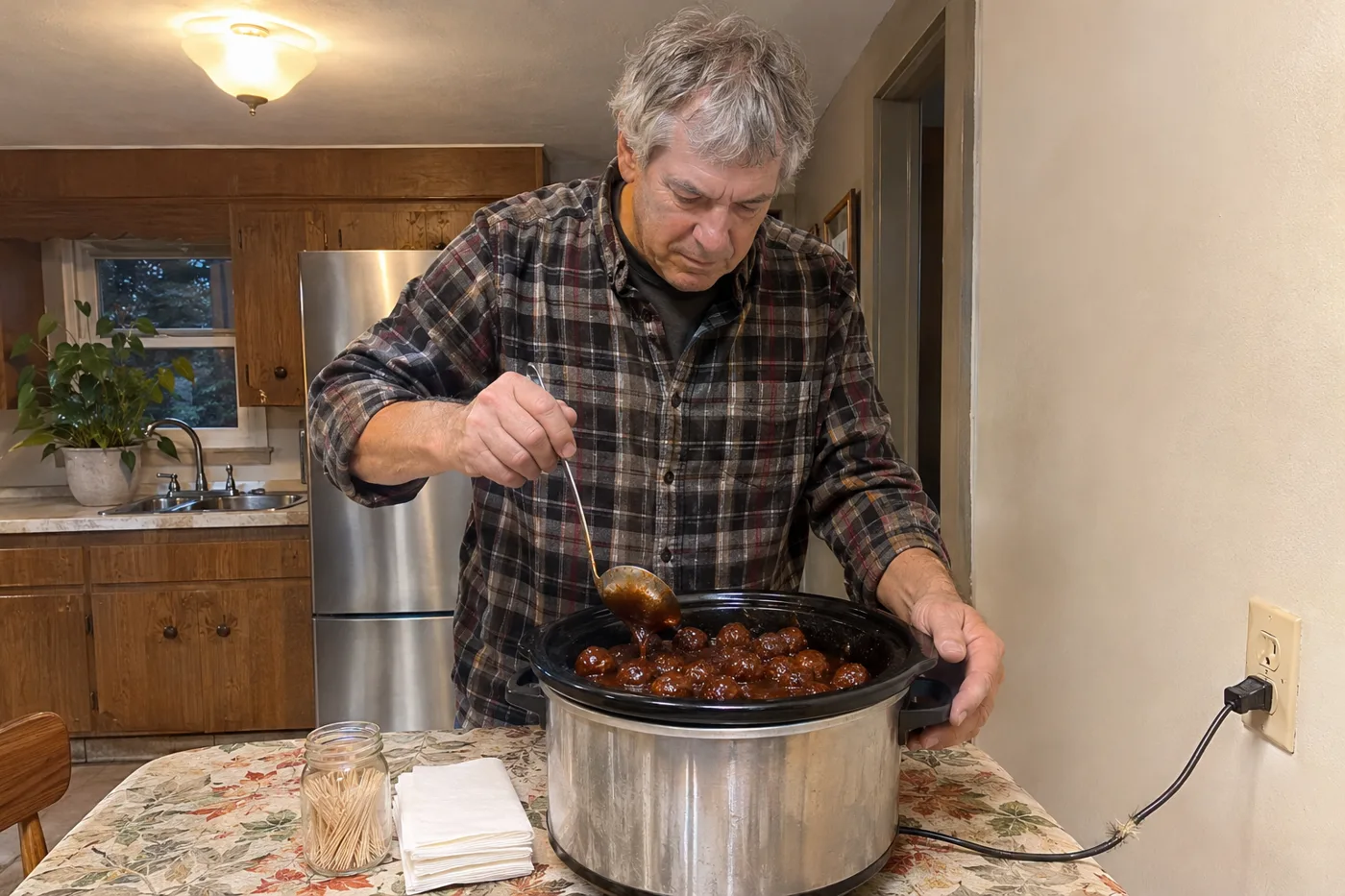
“Grape jelly? In meatballs?”
That reaction has been around as long as the recipe. In 1966 one writer noted that “every person who gets the recipe thinks the ingredients are a mistake.” The dish traces back to a 1960s cookbook, Elegant but Easy by Marian Burros and Lois Levine, where it went by the name Chafing Dish Meatballs.
Then the chafing dish got competition. The Crock-Pot made its debut at a Chicago housewares show in 1971, and sales went from $2 million in the first year to $93 million by 1975. The meatballs climbed in and never climbed back out.
The chafing dish is the part that faded. Some cooks still make the meatballs every holiday, and still get asked what’s in the sauce.
#10 Tomato aspic with the hole in the middle
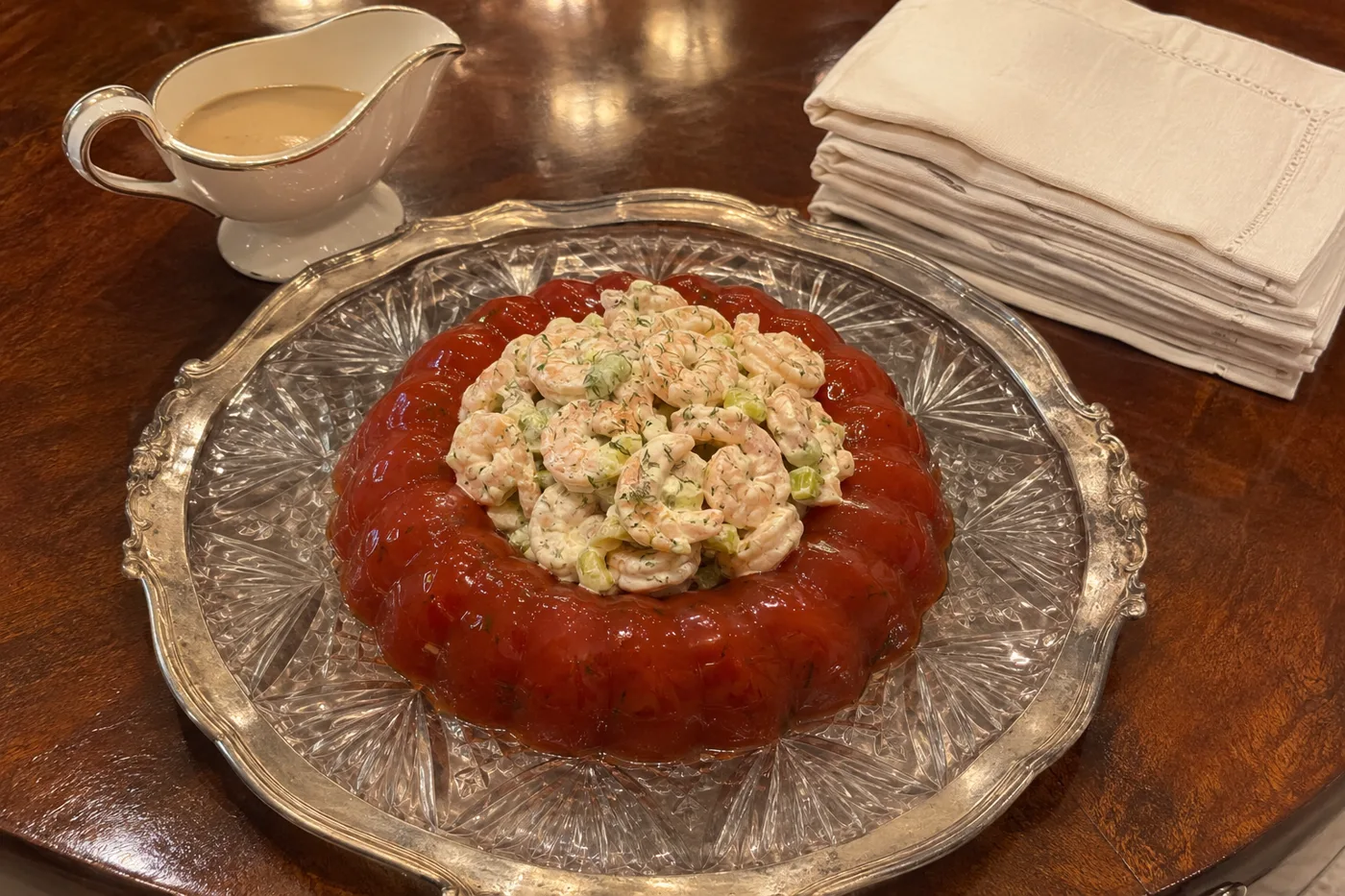
A shiny red ring, firm enough to slice, savory instead of sweet. It tasted a bit like a cold Bloody Mary that had given up on the fun.
It was one of the most recognizable mid-century recipes, and the best part was the hole. Whatever the cook was proudest of went right in the middle: shrimp salad, cut-up raw vegetables, anything that looked festive.
It isn’t a new idea, either. Aspic shows up in print as far back as around the year 1300. After a 700-year run, it can afford to sit out a few decades.
#9 Spiced crab apples and watermelon rind pickles
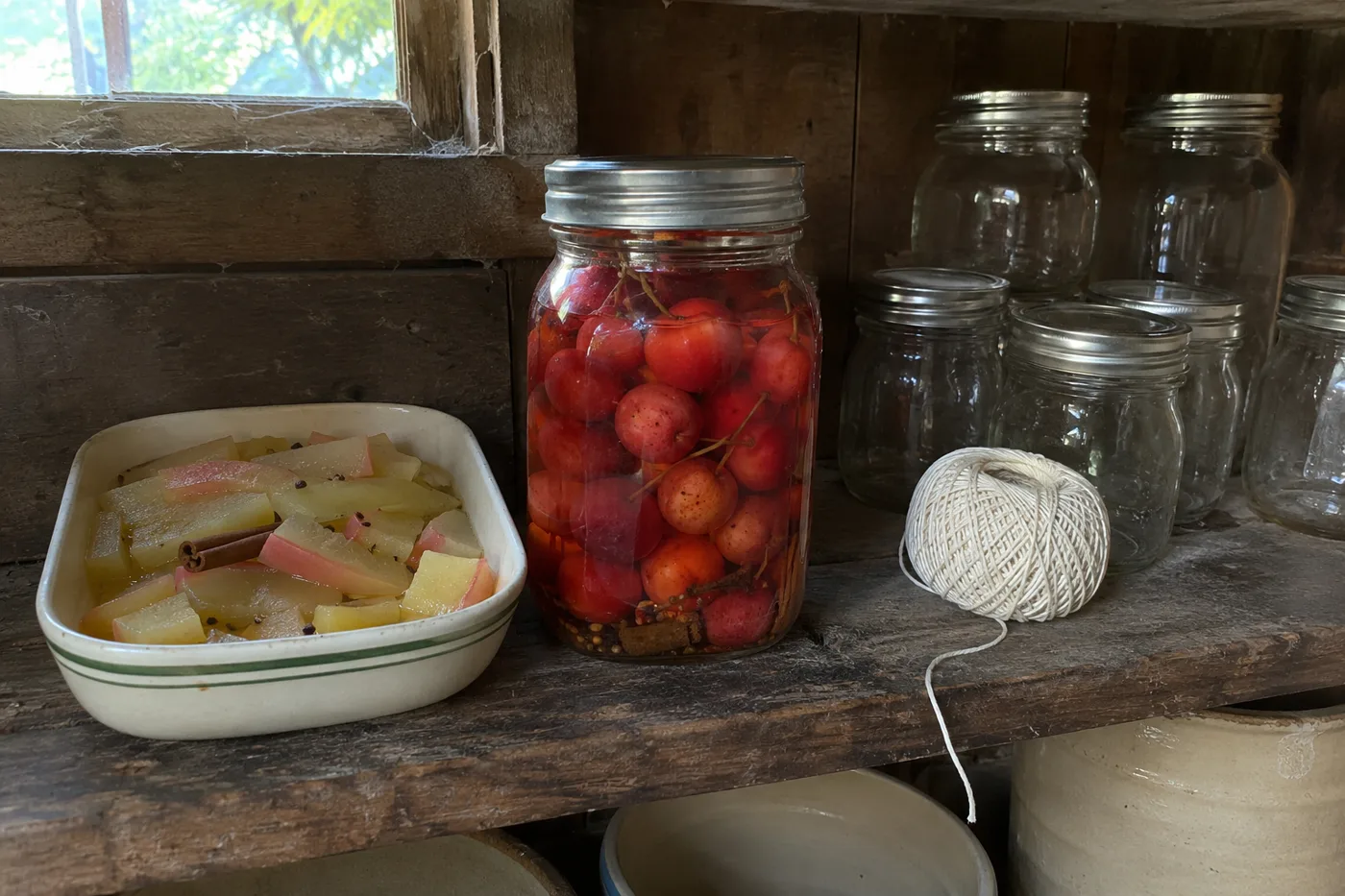
Tiny whole apples, stems still on, glowing deep red in a glass jar. Next to them, maybe, a dish of pale, see-through watermelon rind pickles. Both came out of somebody’s pantry, put up months before.
That pantry was the catch. In just 10 years, from 1954 to 1964, home canning dropped from 44 percent of American households to 34 percent, as store-bought cans and home refrigerators took over.
A specialty producer who still sells spiced crab apples calls their disappearance “stunning,” given how common they were 50 years ago. He blames the end of home canning, plus store versions with “lurid red coloring and no flavor.”
#8 The cheese ball rolled in nuts
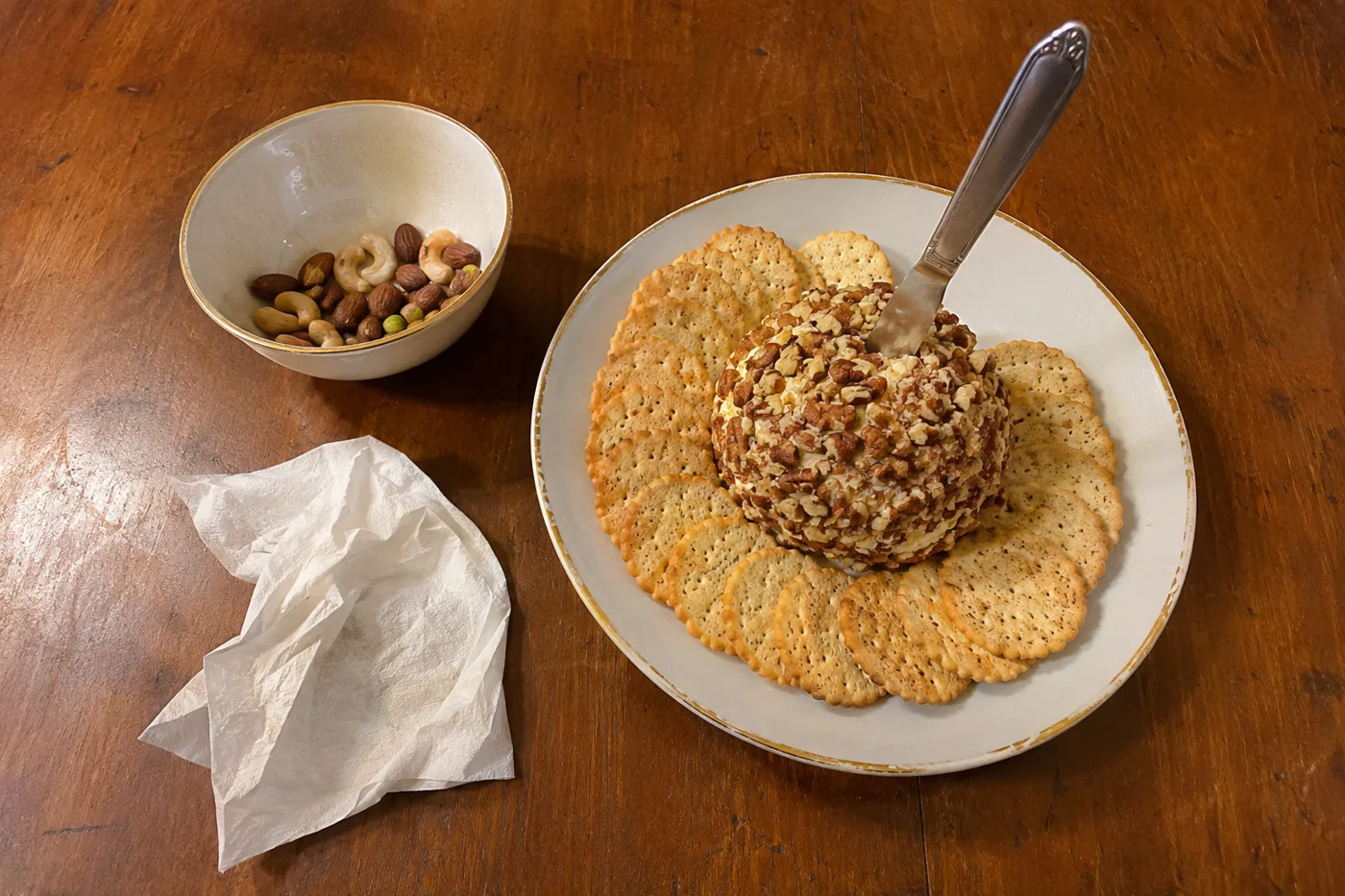
By the 1970s the cheese ball was everywhere, rolled in chopped nuts, sitting on a plate with crackers fanned around it and a butter knife stuck in the top. The first cheese ball recipe appeared in a 1944 cookbook by Virginia Safford, a newspaper columnist in Minneapolis.
Then the name turned on it. By the late 1980s, “cheeseball” had become slang for anything lacking style.
The word stuck around longer than the snack’s reputation did. Set one out before dinner this year and see how long it lasts.
#7 Harvey Wallbanger Bundt cake
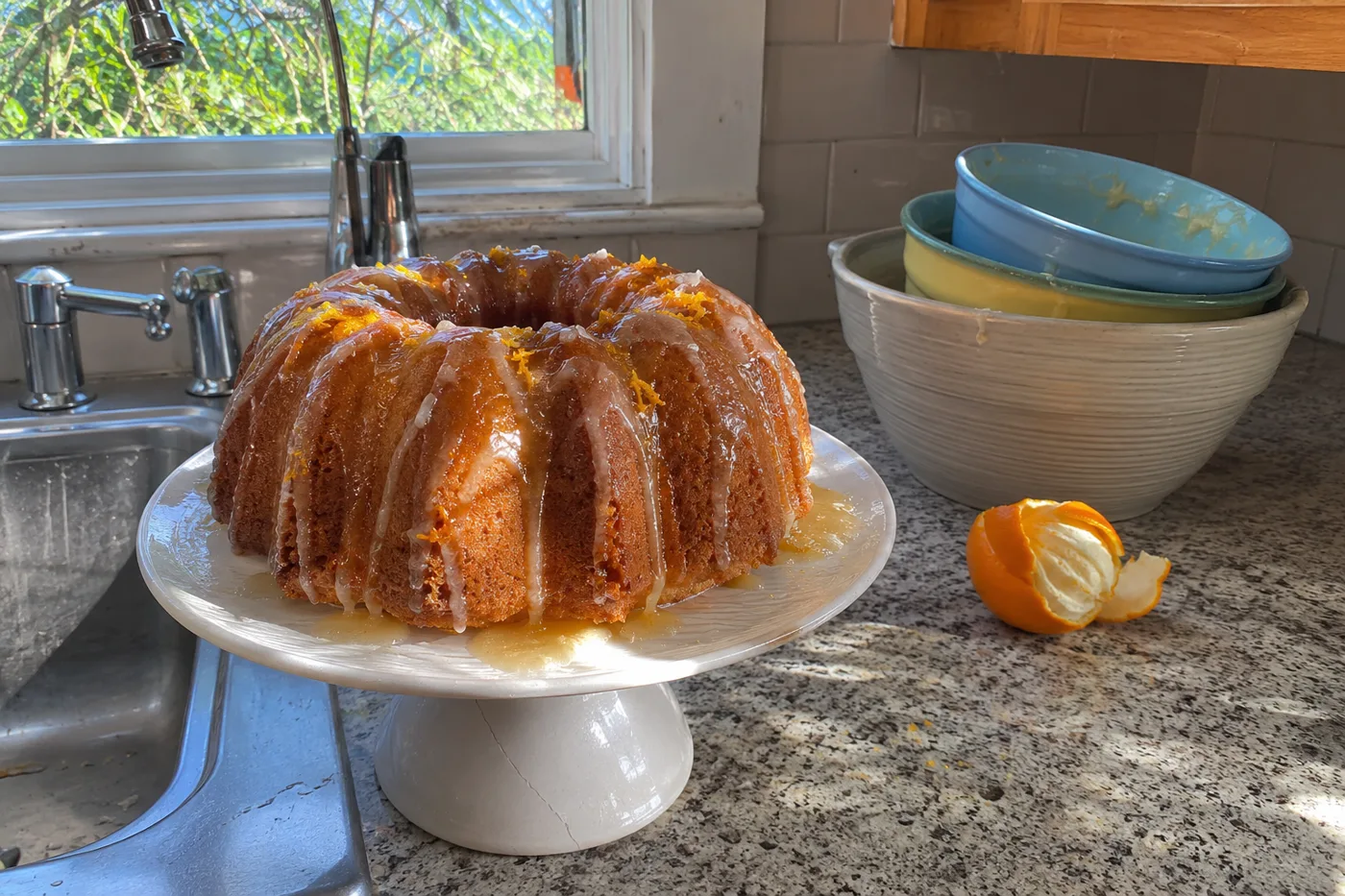
This one was a cocktail first. Galliano, a sweet yellow Italian herb liqueur, needed selling, so its importer invented the Harvey Wallbanger in 1969 as an advertising campaign. The slogan: “Harvey Wallbanger is the name. And I can be made!”
The cake needed a pan, and the Bundt was ready. Nordic Ware introduced it in the 1950s, and when a Tunnel of Fudge cake took second place at the 1966 Pillsbury Bake-Off, the Bundt pan became a household staple.
B. Dylan Hollis, author of the bestselling vintage-recipe cookbook Baking Yesteryear, baked a 1972 version. “Well, it was a big drink in the 70s,” he said. His verdict on the orange-glazed cake: “It’s like a very summery pound cake. It’s really pleasant.”
#6 Clam dip and a bowl of potato chips
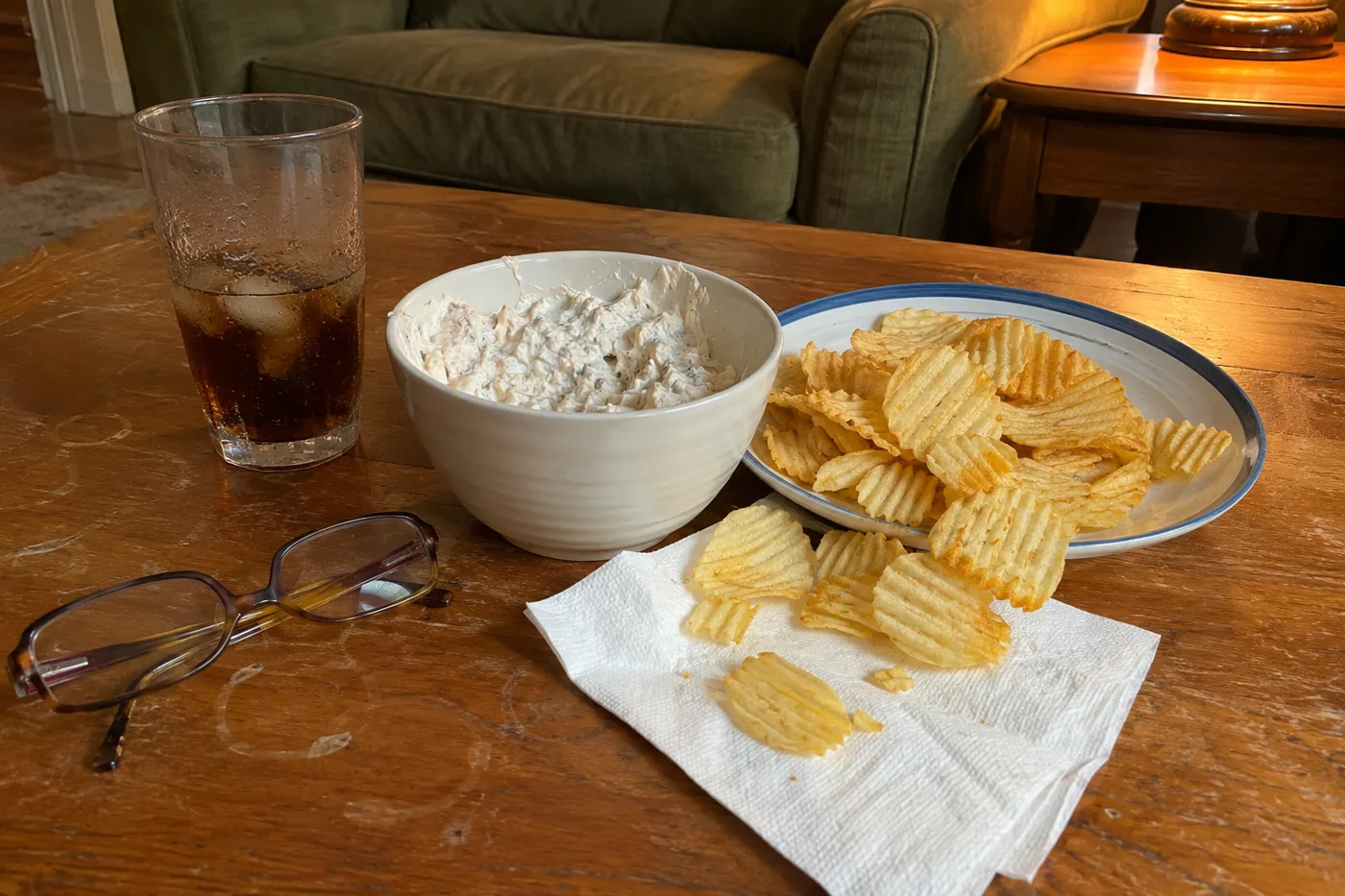
Before dinner, while the turkey rested, there was a bowl of clam dip and a bag of ridged chips. The dip was thick, cold and a little salty, and the chips broke off in it.
It got famous fast. In the early 1950s, a recipe made with canned minced clams and cream cheese ran on NBC’s Kraft Music Hall, and canned clams in New York City reportedly sold out within 24 hours.
The dip stayed popular through the 60s and 70s, then faded in the mid to late 1980s as salsa took over the chip bowl.
#5 Waldorf salad with apples and walnuts
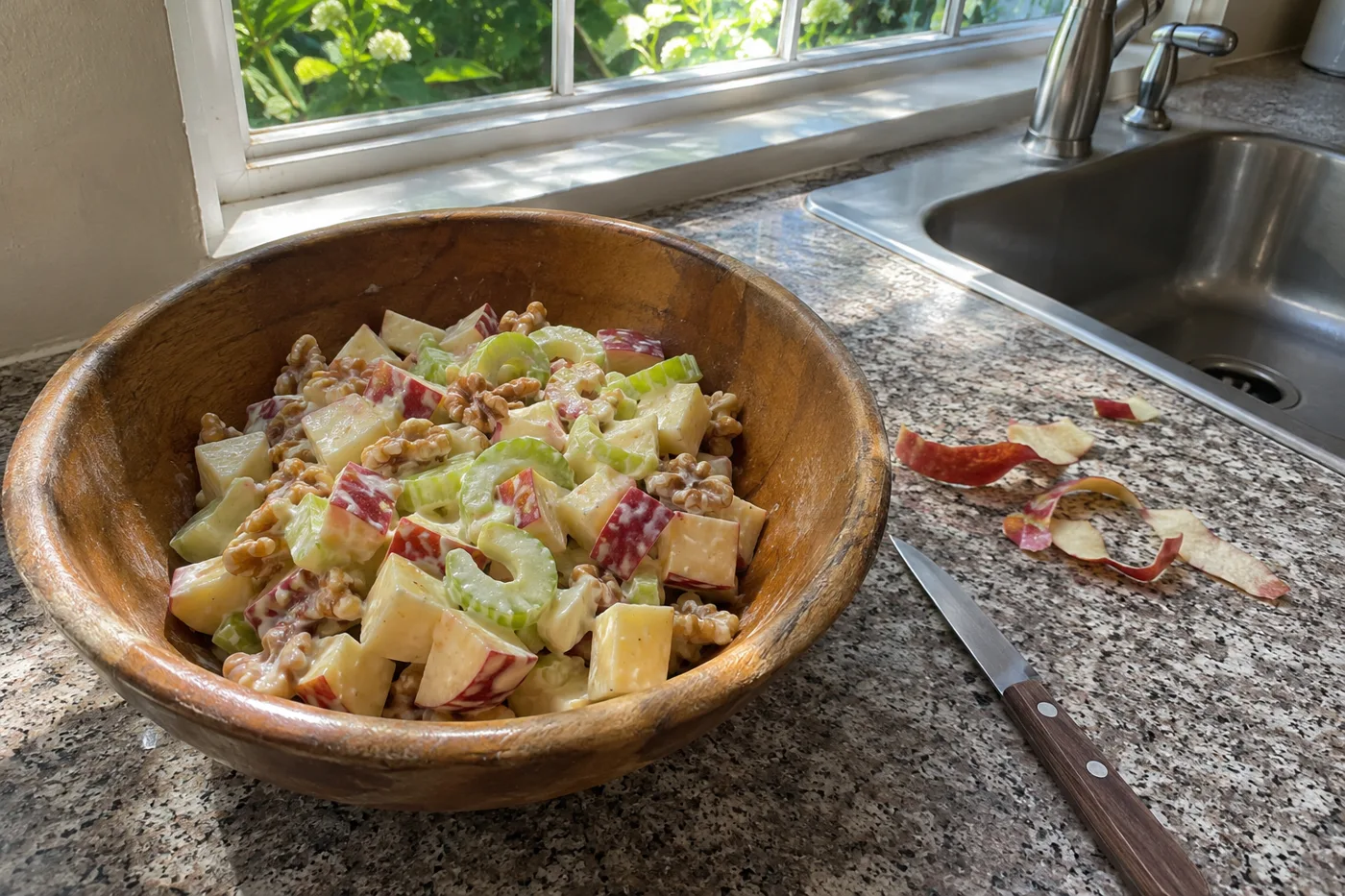
Red apples cut in cubes with the peel left on, celery, mayonnaise and a handful of walnuts. In a lot of houses there were grapes or raisins too, and in some, marshmallows.
It started somewhere much fancier than a holiday buffet. The salad was created at New York’s Waldorf-Astoria hotel on March 13, 1896, for a charity ball, and is usually credited to Oscar Tschirky, the man who ran the hotel’s dining room.
The original was just apples, celery and mayonnaise. The walnuts came later, by 1928.
So whatever your family tossed in, they were following a 130-year tradition of fiddling with it.
#4 Homemade party mix from the oven
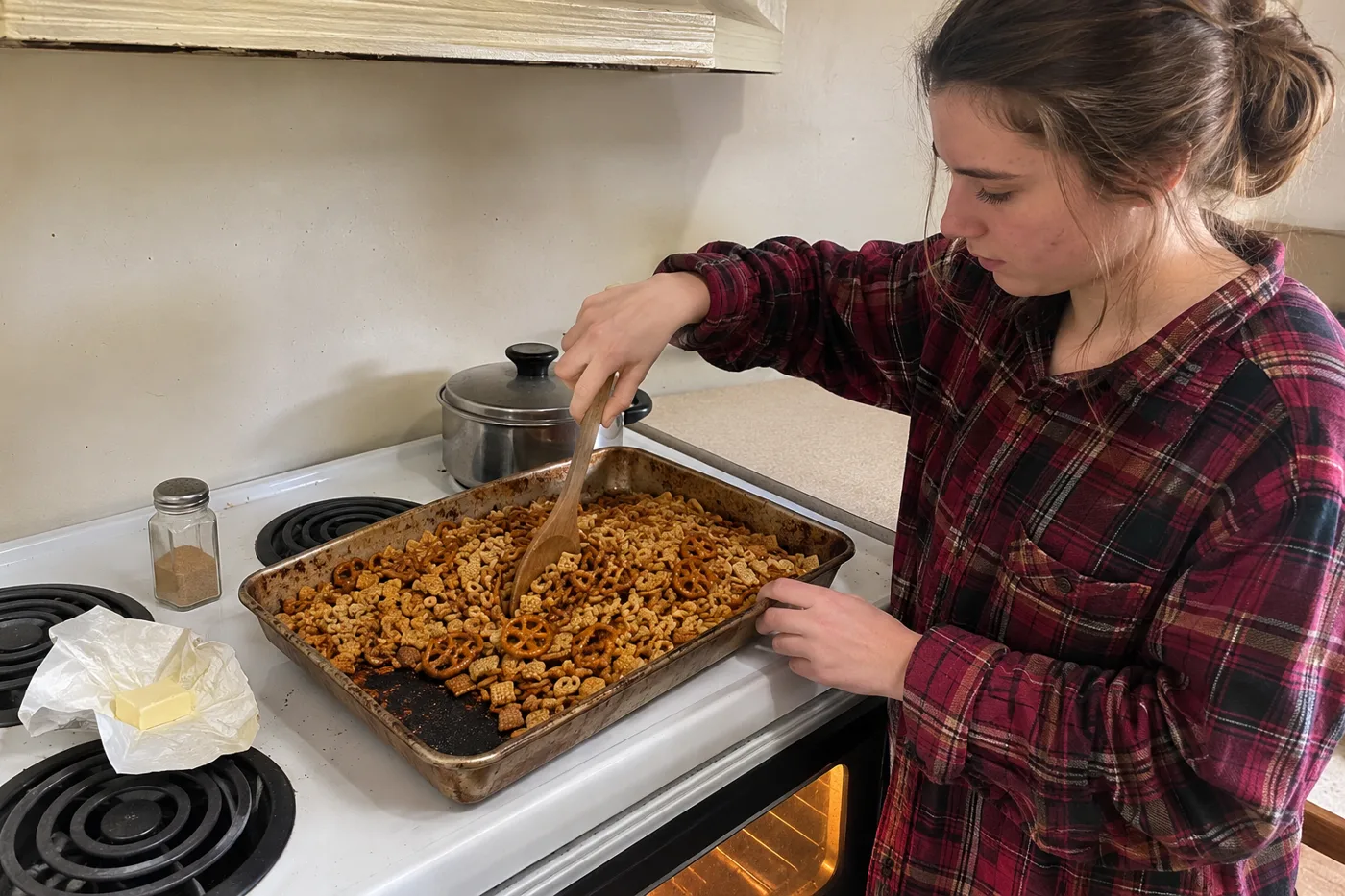
The roasting pan came out early, the butter melted, and the whole house smelled like toasted cereal and seasoning. Every so often somebody opened the oven to stir, and somebody else snuck a handful.
The recipe goes back to a 1952 Life magazine ad using Wheat and Rice Chex. In 1985, Ralston Purina started selling it ready-made in bags, and the oven batch began disappearing from a lot of kitchens.
The bag is perfectly fine. It just never comes with anyone fighting over the darkest, butteriest pieces from the corners of the pan.
#3 Dates stuffed with walnuts and rolled in sugar

Sticky, sweet and crunchy on the outside, sitting on the candy dish next to the nuts. A walnut half pressed into each one, and a coat of sugar that ended up on everyone’s fingers.
They have a long holiday history. Food historian David Shields writes that stuffed dates arrived in America in the 1850s, sold in French candy shops in eastern cities. They became a season-only treat, “appearing at Thanksgiving (after the Civil War)” and gone once the holidays ended.
The dates themselves aren’t hard to find. One box, a bag of walnut halves and a saucer of sugar is all it takes.
#2 The frozen pumpkin pie made days ahead
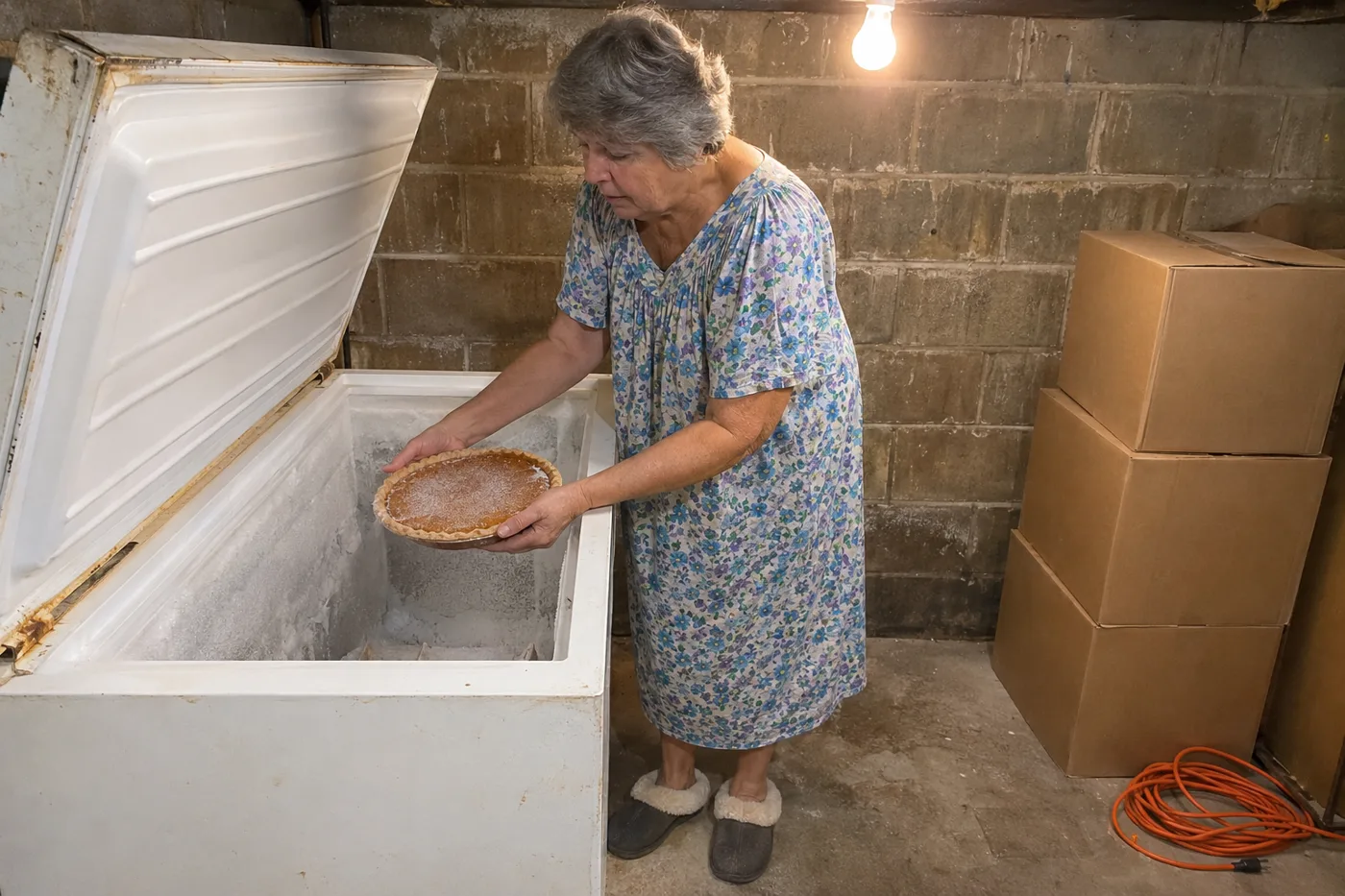
Whoever was hosting had one oven and about nine things that needed it. The frozen pumpkin pie solved that. It had a light, whipped filling that got made days before, waited in the freezer, and came out on Thursday looking like no effort at all.
The freezer made it possible. By 1977, nearly half of homes with electricity had one, and cooks put it to work.
A 1969 recipe from Louisville restaurant owner Erma Biesel Dick shows how fancy it could get. The filling was set with whipped cream and egg whites, and the crust could be graham cracker or, for company, ground Brazil nuts.
#1 Turkey à la king on Friday night
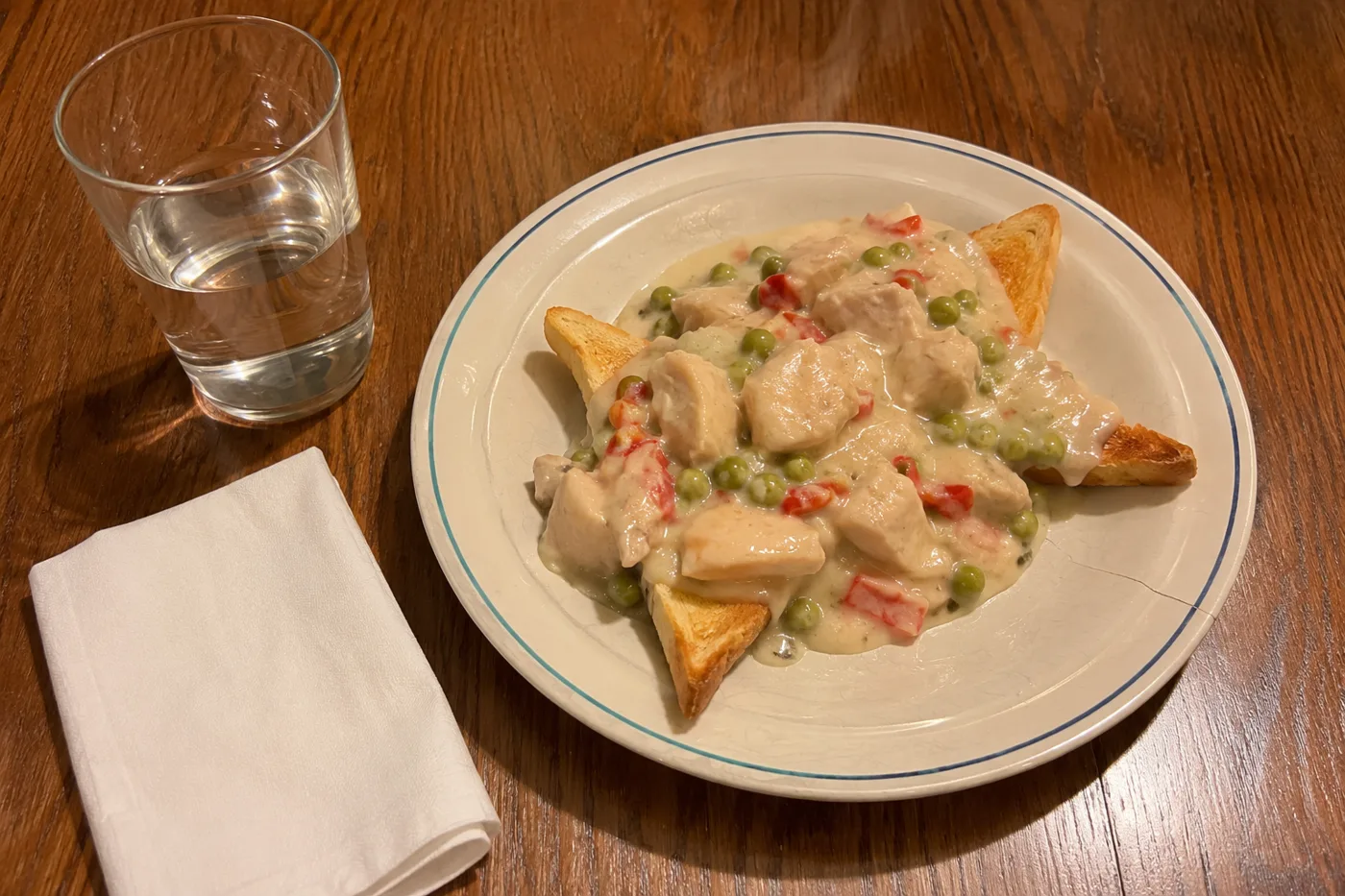
The day after Thanksgiving, the leftover turkey got cubed and stirred into a creamy sauce with peas and pimentos, then spooned over toast points or into little pastry shells. It was supper, and it felt like a restaurant.
The dish started out with chicken. Turkey was the easy swap when there were leftovers.
Then turkey became more of an everyday food. Federal estimates put it at about 4 pounds per person in 1970 and 8.2 pounds by 1989. Once the bird stopped feeling like an occasion, a fancy Friday supper made from the leftovers may have felt like less of one too.
The bottom line
There’s usually one dish that nobody else can make right. The recipe tends to live in somebody’s handwriting on an index card, or in a spiral-bound church cookbook with stains on the good pages.
If you know where that card is, this might be the year to pull it out and make the one dish, whether you’re cooking for yourself or a houseful.
If you still have the old bowl it came in, use that too. As you’ll see below, it’s worth a second look before you ever part with it.
Bonus: What to know about the old serving dishes
- Don’t give them away yet. Antiques appraiser Dr. Lori Verderame says 1970s casserole dishes, teapots and percolators are in demand again. Most of the shoppers she sees are in their 20s and 30s and, in her words, “want their house and their collections to look like their grandmothers.”
- Look for the brown, rust and sunflower-yellow pattern she calls “spice of life.” It dates to the 1970s.
- Turn it over before you guess its age. “The marks matter,” she says, and the mark on the bottom tells you the decade.
- If you have dishes with the blue cornflower pattern, feel the rim. A lip and a dip around it means the piece dates to the 1980s, not earlier.
- Hang on to the matching lid, because buyers care. Two dishes in the same pattern may come from different product lines, so a lid that looks right may not be the real match.
Questions people also ask
Is it safe to cook stuffing inside the turkey?
No. The U.S. Department of Agriculture recommends cooking stuffing separately, because stuffing the bird is not considered a safe practice. If you do stuff it, push a thermometer through the cavity into the thickest part of the stuffing. Both the stuffing and the turkey need to reach 165°F.
What is the lowest safe oven temperature for roasting a turkey?
325°F, and no lower, according to Iowa State University Extension. That’s also why the old overnight method at 200 to 250°F is now considered unsafe: bacteria can easily grow in that range.
Why is Watergate salad called Watergate salad?
Nobody knows for sure. Kraft, which came up with the recipe in 1975, says it can’t confirm any of the stories floating around. The joke that stuck is that the salad, like the scandal, was full of nuts.
When did Cool Whip come out?
Cool Whip went on sale in 1966. Within two years it was the largest and most profitable product in the Birds Eye line. It made tub-and-spoon desserts like cranberry fluff quick and easy, though a frozen version of that pink salad dates back to at least 1952.
Did Americans start eating more turkey after the 1970s?
Yes, about twice as much. Federal estimates put it at about 4.0 pounds a person in 1970 and 8.2 pounds by 1989, then between 8 and 9 pounds through 2017.
Related posts:
26 Christmas Cookies From the 1960s That Nobody Bakes Anymore
24 Crafts Every Woman Made in the 1970s That Nobody Does Anymore
25 Homemade Christmas Decorations From the 1960s, and What Became of Each One
26 Church Cookbook Desserts That Nobody Makes Anymore
23 Things People Over 60 Still Do When Decorating That Designers Beg Them to Stop
17 Things in Your Mother's Sewing Box Worth Keeping

- 24 Things People Over 60 Still Do When Cleaning That Experts Beg Them to Stop - November 6, 2026
- 21 Handmade Gifts From the 1970s Your Grandchildren Have Never Seen - November 6, 2026
- 25 Homemade Christmas Decorations From the 1960s, and What Became of Each One - November 6, 2026

Leave a Reply