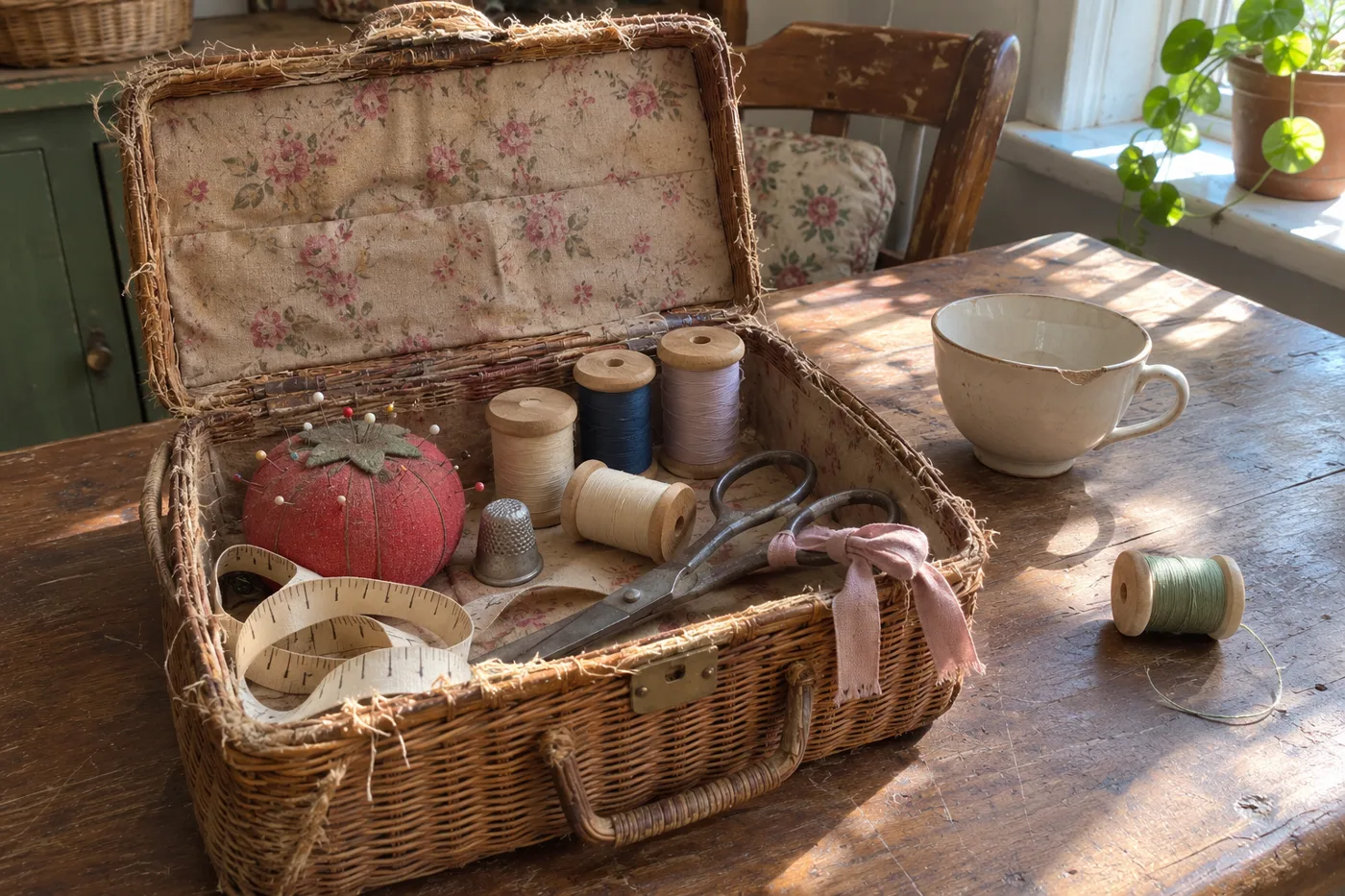
The lid sticks a little, the way it always did. Inside there’s a pincushion shaped like a tomato, a snarl of thread, a pair of scissors with a ribbon tied on the handle, and a dozen little things you saw every week and never once asked about.
Nearly all of them had a job. A few of them are worth more to you than anything else in the house.
#17 Cookie tin full of mismatched buttons
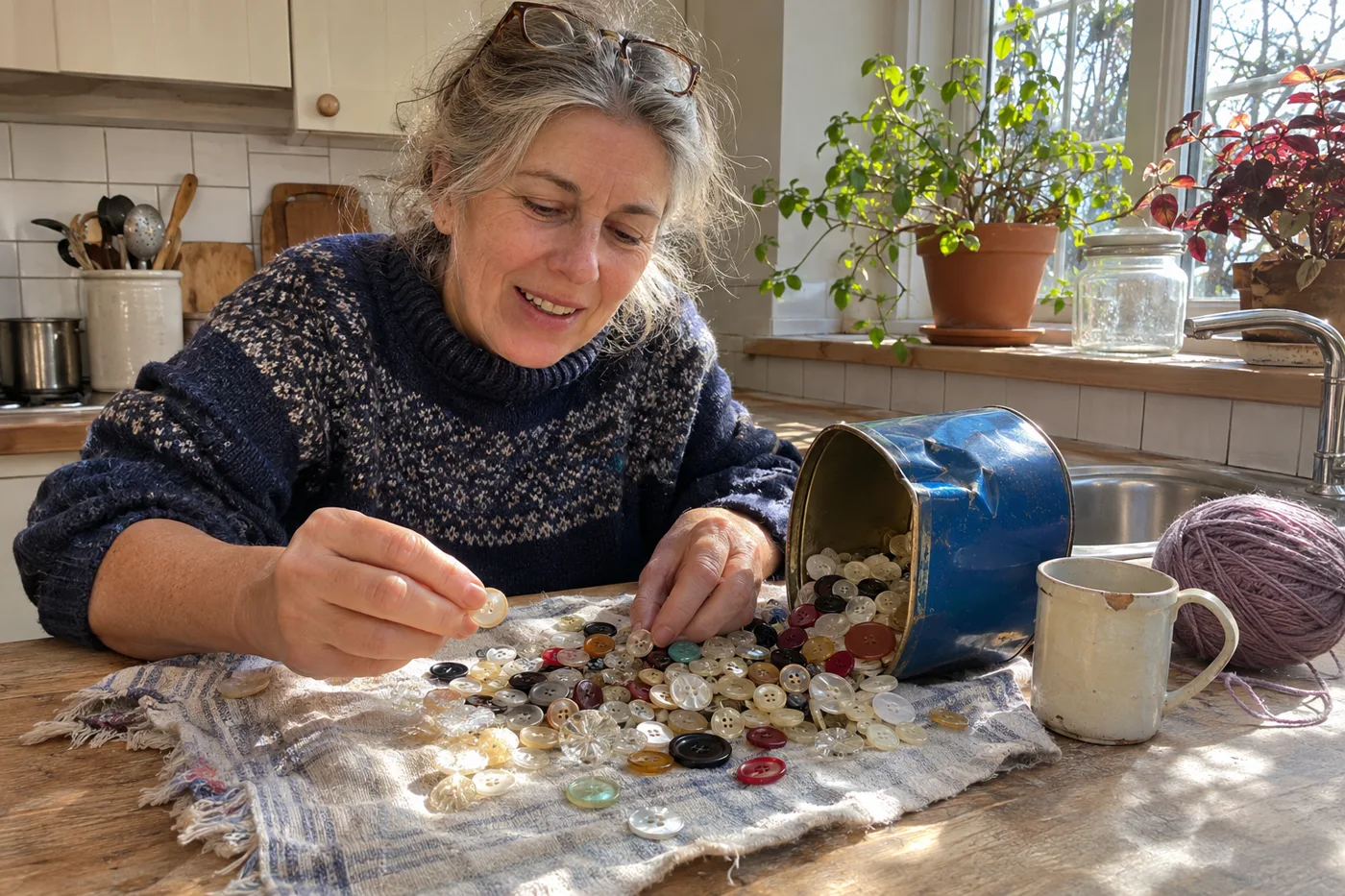
Every family seemed to have the same tin. It started out holding butter cookies. Then it held buttons, and opening it hoping for a cookie was practically an American rite.
Pour the buttons out on a towel and look closer. Rare old buttons tend to be porcelain, mother of pearl, glass, bone, tortoiseshell or metal, and any hand-painted one is one of a kind.
Keep your hopes sensible, though. Most old buttons sell for less than $50. The big exception is a 1789 Washington inaugural button that brought $2,750 in 2018. For most of these, the real worth isn’t the price tag. What matters is that she kept them.
If you’d like to hunt for something special, look for Bakelite, which you can test at home. A vintage dealer’s guide to Bakelite, written for jewelry, gives a home check you can try on buttons. Treat it as a strong hint, not proof.
How to spot real Bakelite
- Rub the button until it’s warm, or run it under hot water.
- Sniff it: real Bakelite gives off a formaldehyde smell when warmed.
- Rub it with a cotton swab dipped in Simichrome polish, and the swab turns yellow on Bakelite.
- A swab dipped in 409 cleaner does the same.
#16 Tomato pincushion with its tiny strawberry
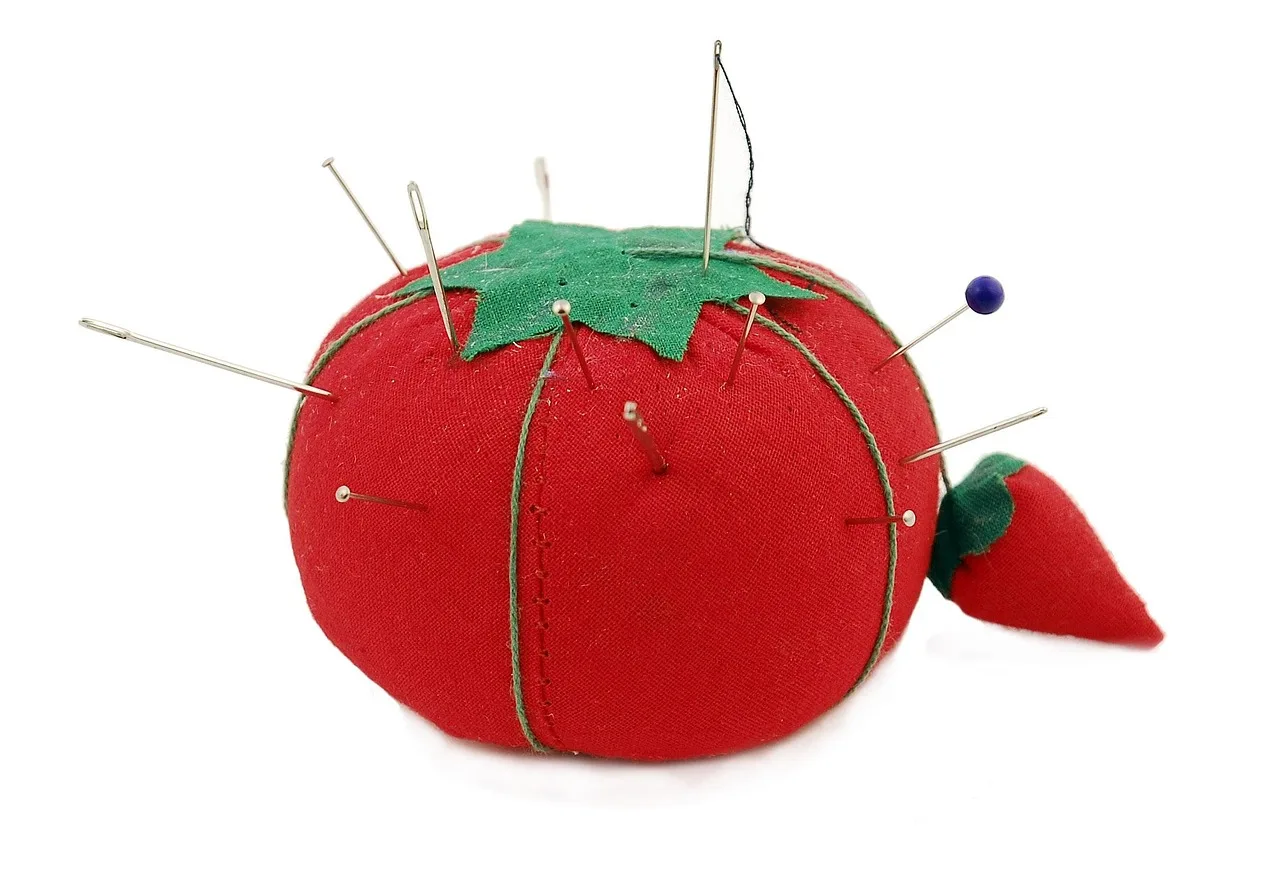
You know the one. Red, lumpy, a green felt cap on top, and a little strawberry dangling off it on a string like an afterthought.
It wasn’t an afterthought. The strawberry is filled with emery, a gritty material that sharpens needles the way a nail file works on a nail. Push a dull needle into the emery and it comes out sharper.
Why a strawberry? Most likely because it could be made from the same red and green material as the tomato, so it cost next to nothing.
As for why it’s a tomato at all, Mental Floss says the shape simply caught on after the Industrial Revolution because it was cute and it worked.
So now you know what the strawberry was for. Go ahead and stab it a few times.
#15 Her good scissors nobody was allowed to touch
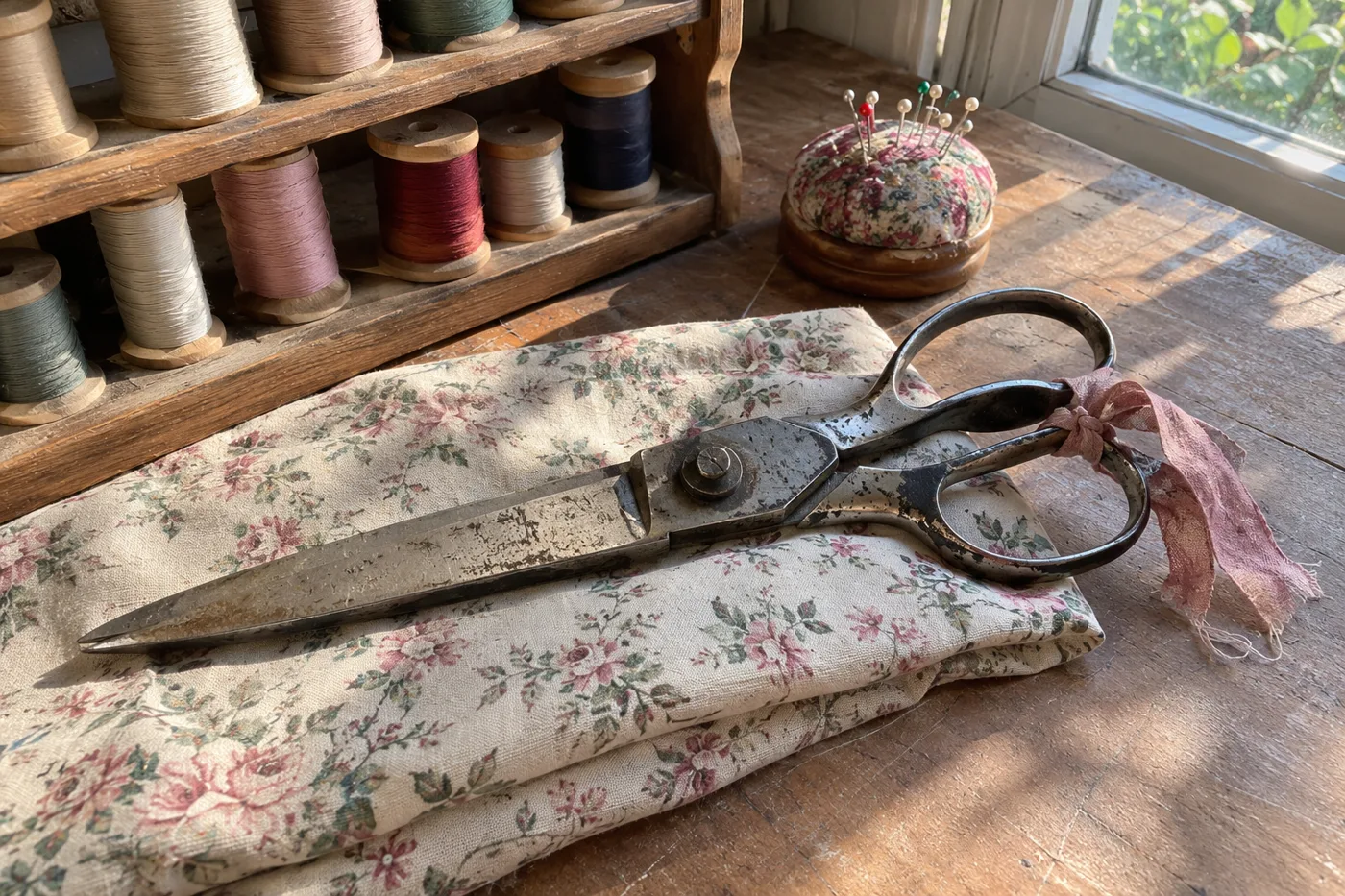
“Those are my sewing scissors.” In plenty of houses that sentence was said loud enough to stop anyone mid-snip. Not for paper. Not for wrapping ribbon. Not for anything.
She had a point. Scissor makers told Threads Monthly that paper really does dull fabric shears.
A maker at Ernest Wright, a Sheffield firm, says you can feel grit build up on the blades after cutting paper. Another big scissor maker says everything dulls scissors eventually, paper included. Either way, the fix is the same: wipe the blades clean and get them sharpened more often.
Then hide them in the same spot she did.
#14 Metal thimble, sometimes silver or a souvenir
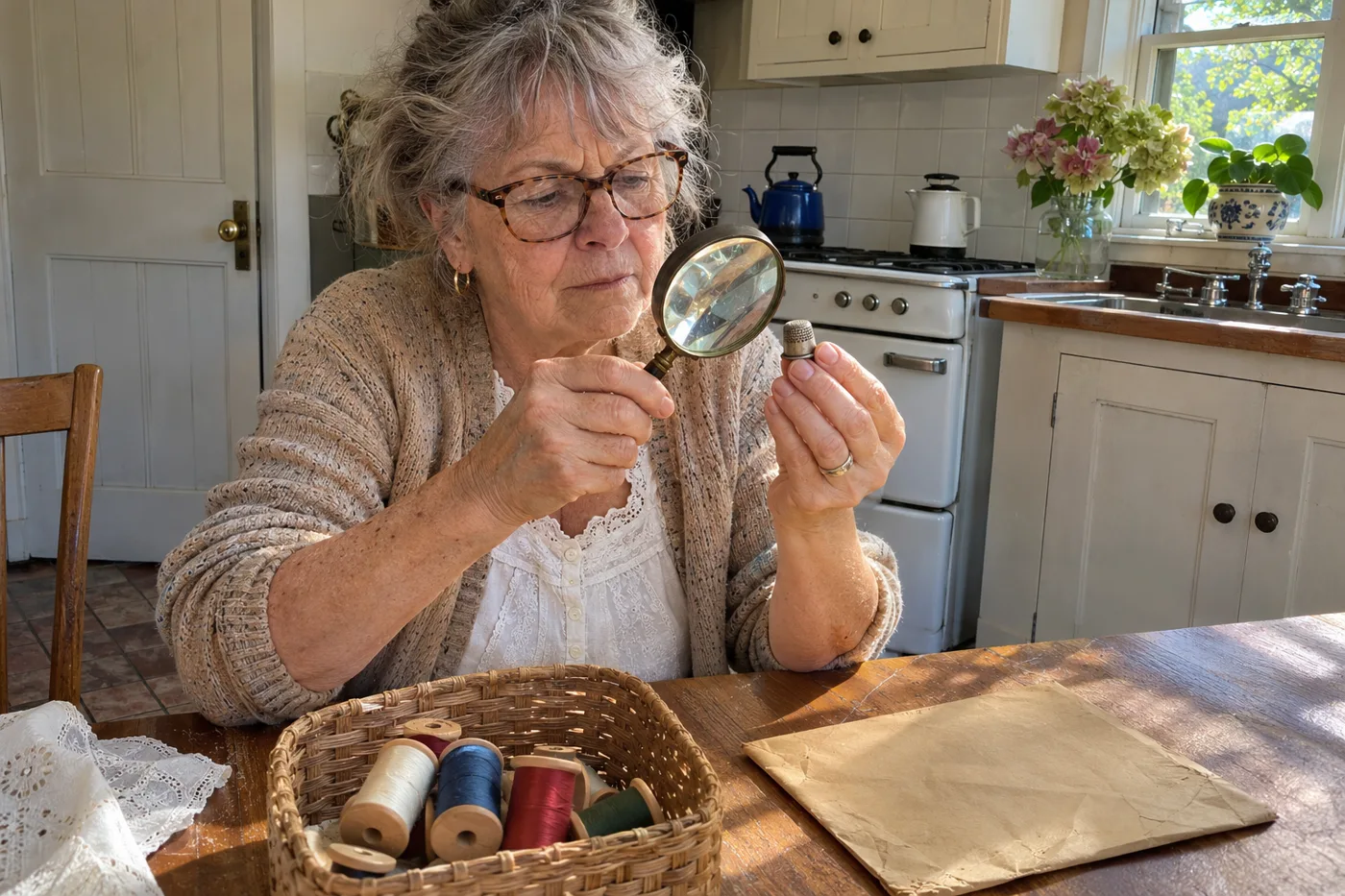
Some were plain steel, the dimpled top worn smooth on one side. Some were silver. Plenty were souvenirs, painted with a lighthouse or a state name, bought on a trip and never worn once.
If yours looks like silver, turn it over and look for tiny stamps near the rim. On an English thimble, those marks are a code: initials for the maker, a little lion meaning sterling silver, a mark for the office that tested the metal, and a letter that gives the year.
American makers had their own marks, such as “S” for Simons or “KMD” for Ketcham & McDougall.
No marks doesn’t mean no silver. Collector Sue Gowan told Collectors Weekly that before 1884, English silver thimbles didn’t legally have to be marked at all.
Get a magnifying glass and look for the lion or those initials.
#13 Wooden thread spools with old thread still wound on

The wooden spools are the ones that clack when you shake the box. Kids stacked them into towers, strung them into toy snakes and rolled them under the couch.
They also tell time. Thread makers quit wooden spools in the early 1970s and moved to plastic. So thread on wood has likely been sitting in that box for around fifty years.
Is it still any good? The sewing historian behind The Dreamstress says to unroll about a yard and tug on it as hard as you can.
If it doesn’t break easily, sew with it. She found fewer than 1 in 100 of her vintage spools failed, and says quality matters more than age.
Other sewers aren’t so trusting. Give yours the tug before it holds up a hem.
#12 Old paper patterns in worn envelopes
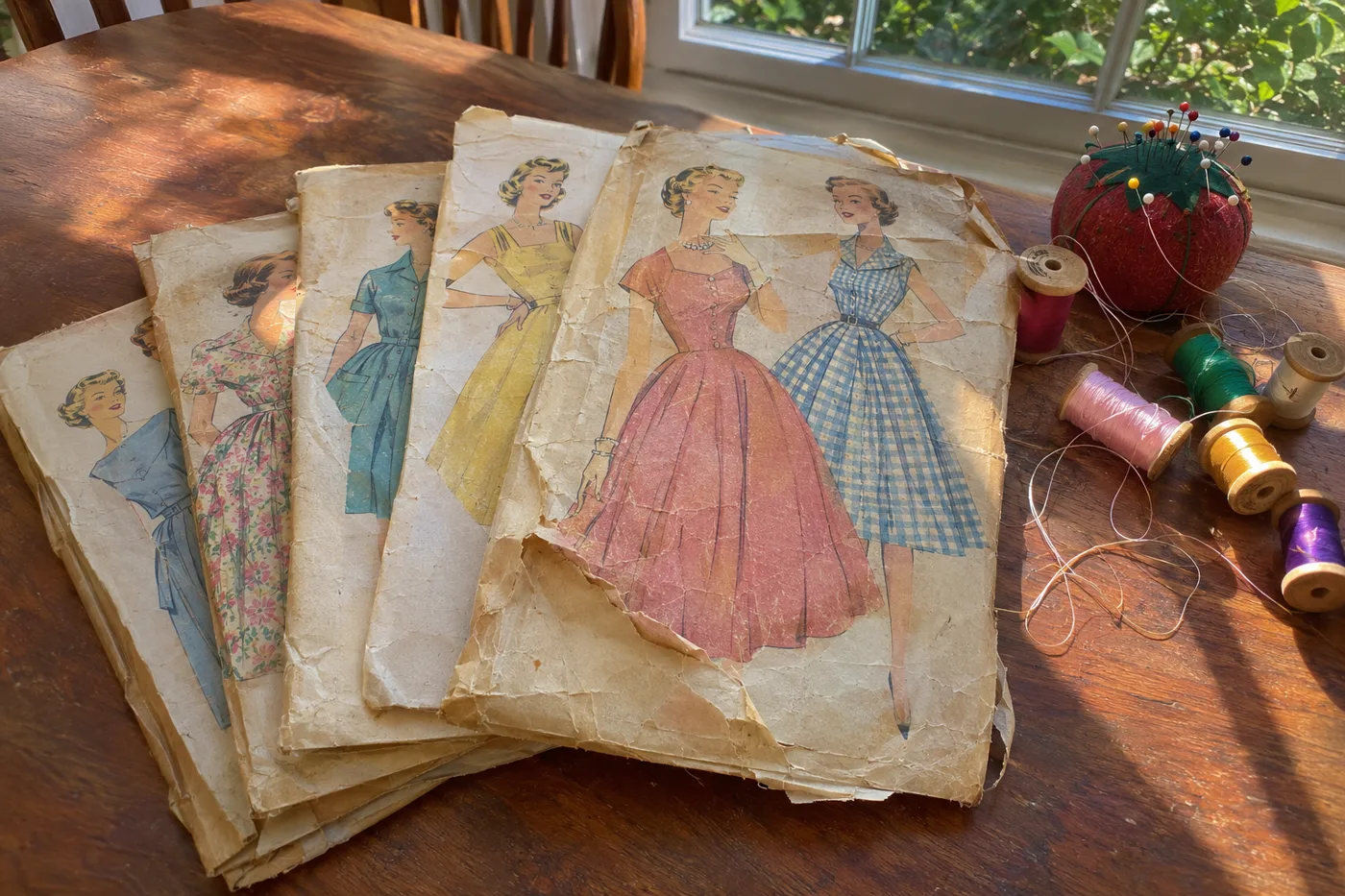
The envelopes have gone soft as cloth, split at the corners, with a drawing of a woman in a belted dress on the front. The tissue inside is usually fine. It’s the paper around it that gave up.
Before you cut into one, know that vintage pattern sizes run much smaller than today’s clothing sizes. The whole pattern industry enlarged its sizes in 1968, and envelopes from 1968 to 1970 carry a “new sizing” logo.
People who sew from old patterns go by the measurements of the finished garment and ignore the size number. Many patterns in a stash have already been cut out at one size anyway.
Those who inherit a big pile tend to keep a few favorites. Some frame old envelopes with pretty cover art to hang in a sewing room. Others photograph every envelope into a folder, so they can browse the whole collection without handling the paper.
#11 Fabric remnants and leftover scraps
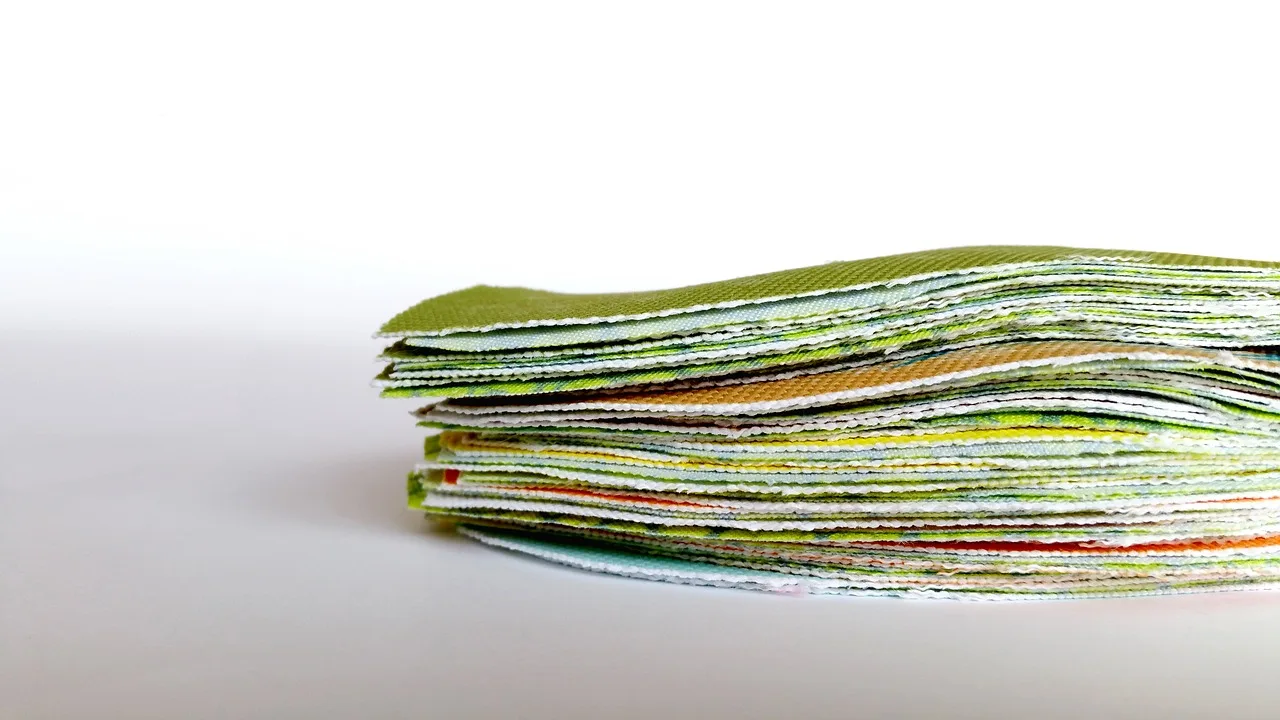
There’s always a bag. Leftover calico from an apron, a strip of the corduroy that became somebody’s pants, a piece of curtain fabric from a kitchen that’s long gone.
Hang on to it.
Casey Sibley, founder of Pattern Scout, wraps her larger pieces around cardboard cut from old boxes, as she shows in a video on how she organizes her fabric. They stack on a shelf like little bolts. The small scraps go in plastic bins.
Pieces too worn to sew? Designer Angel Chang, in TED-Ed’s lesson on the life cycle of a T-shirt, puts it plainly: “Instead of throwing them away at the end of their life, donate, recycle or reuse them as cleaning rags.”
#10 Soft cloth tape measure
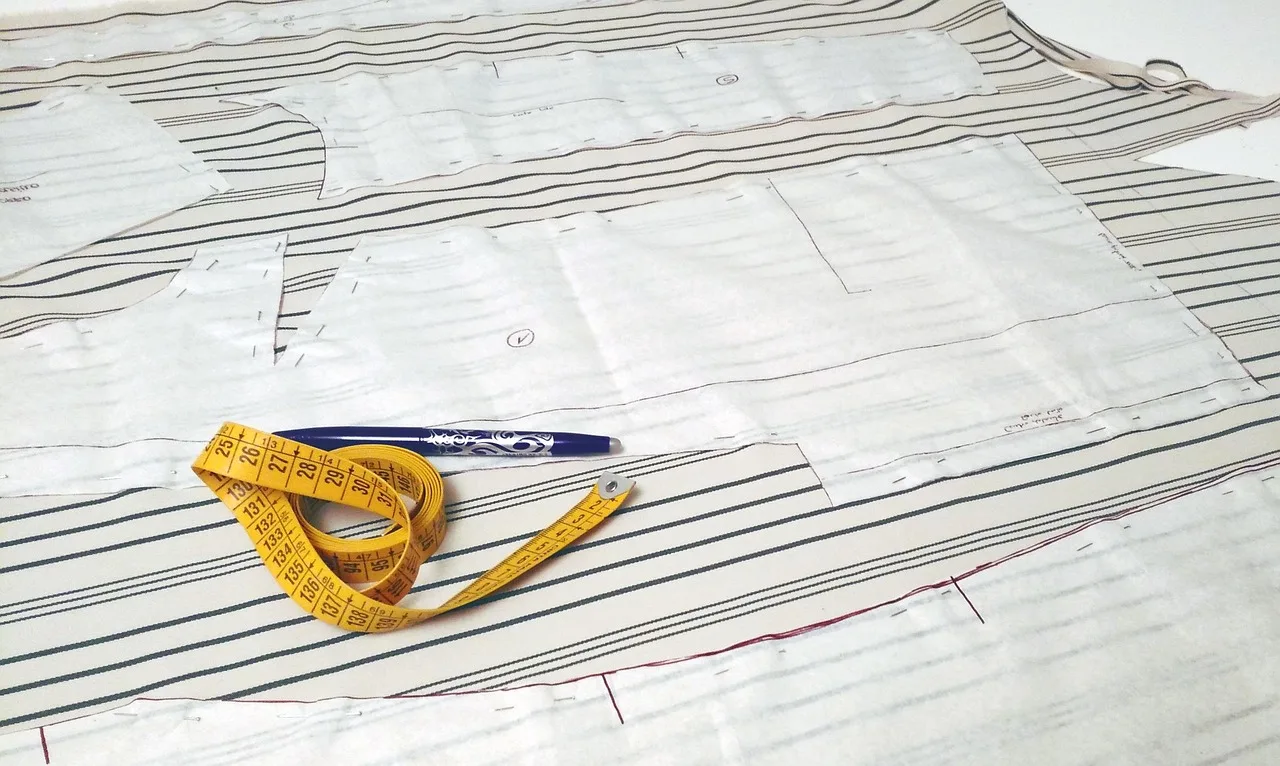
It’s the yellow or white one, floppy, with a metal tip at each end and the first few inches worn pale from being held in somebody’s teeth.
Trouble is, it may be fibbing. Soft tapes come in different materials, and a retailer’s guide says vinyl ones can stretch 0.5 to 2 percent with normal use. On a 40-inch measurement, 2 percent is most of an inch.
Check your tape measure
- Lay it flat beside a metal ruler and compare it at several points along its length.
- If the marks agree, keep using it. If they don’t, keep it for her sake and measure with something else.
- Suspect vinyl first, since it’s the kind that stretches with ordinary use.
- Fiberglass tapes change less than 0.1 percent, even after repeated washing.
- It helps to stick with one checked tape for an entire project.
#9 Check boxes holding buttons and notions
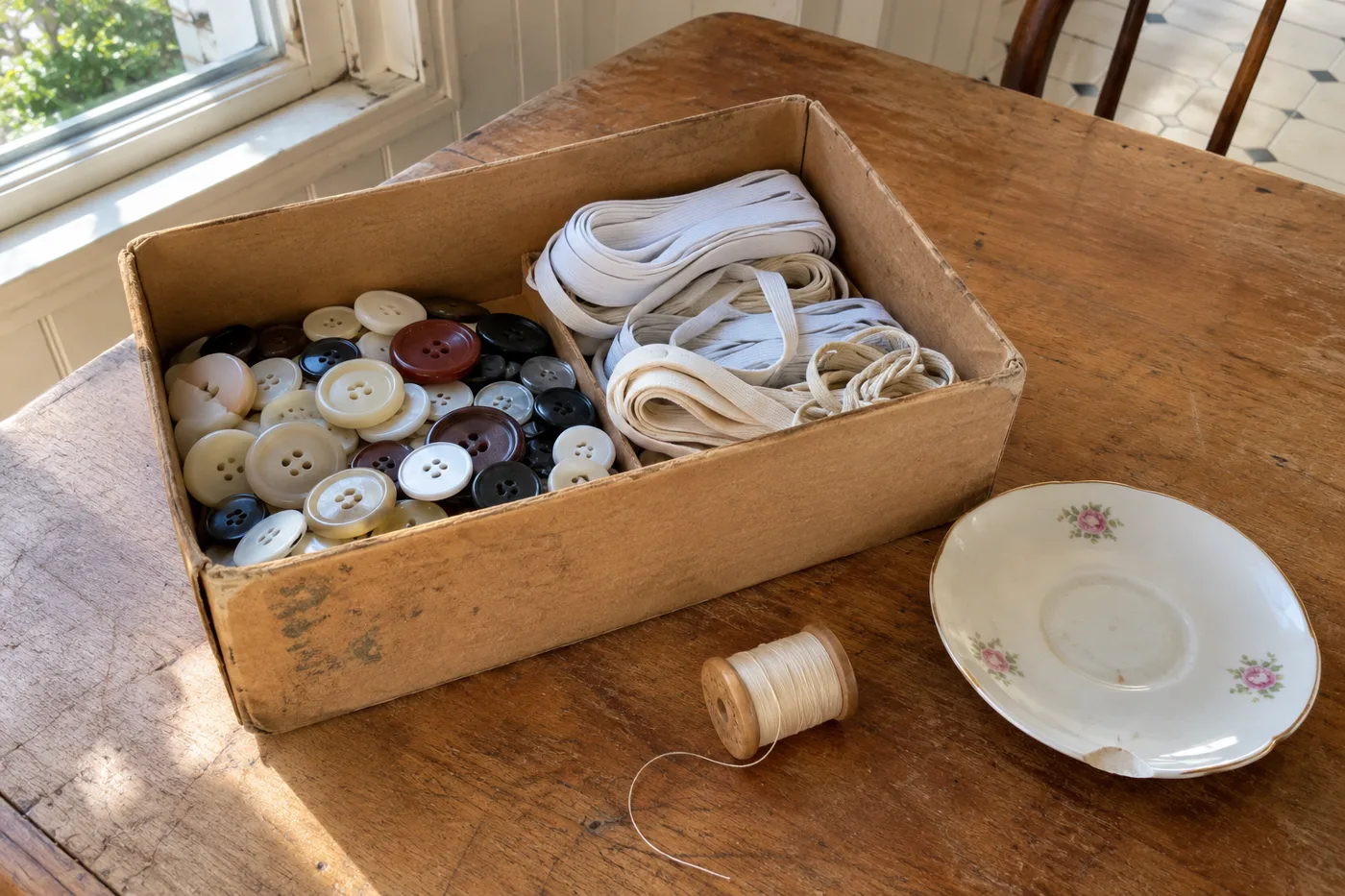
Many people remember checks coming in sturdy little cardboard boxes with lids that got reused instead of thrown out. Plenty went straight into the sewing box.
Ask around and the memories pour out. Kids sorting a mother’s buttons from one into piles by color on the kitchen table. Cut quilt pieces mailed to a relative in one. A teacher handing them out to a whole classroom.
Open yours and you may find the ends labeled in pencil or marker. That writing is part of the keepsake.
Keep the box with what’s inside it. A pile of loose buttons could be anyone’s. A check box of buttons with her writing on the end is hers.
#8 Needle threader stamped with a woman’s head
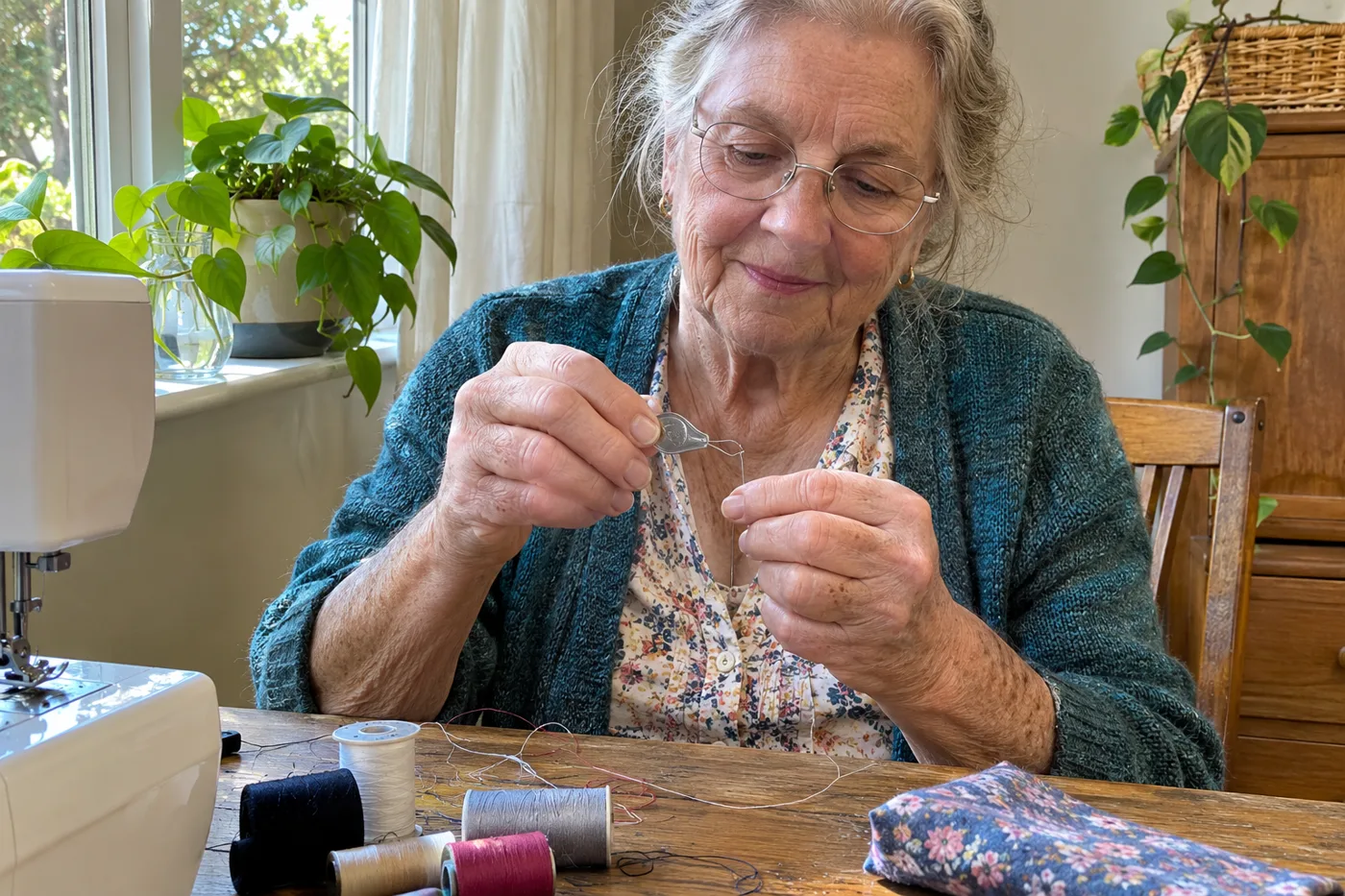
Thin as foil and about the size of a postage stamp, with a diamond of fine wire on one end and a woman’s face pressed into the other. Push the wire loop through the needle’s eye, pass the thread through the loop, then pull the threader back out, and you’re done.
But who is she? No maker has ever said. Wikipedia says she’s possibly Arachne or Minerva. A sewing blogger who compared many versions side by side decided “it has to be Minerva, Roman goddess of handcrafts.”
Needle threaders go back to Europe in the 1700s or early 1800s, and this same little design was still being sold into the 2000s.
So keep the old one even if the wire’s bent. You may have been holding a Roman goddess the whole time.
#7 Little gold stork embroidery scissors
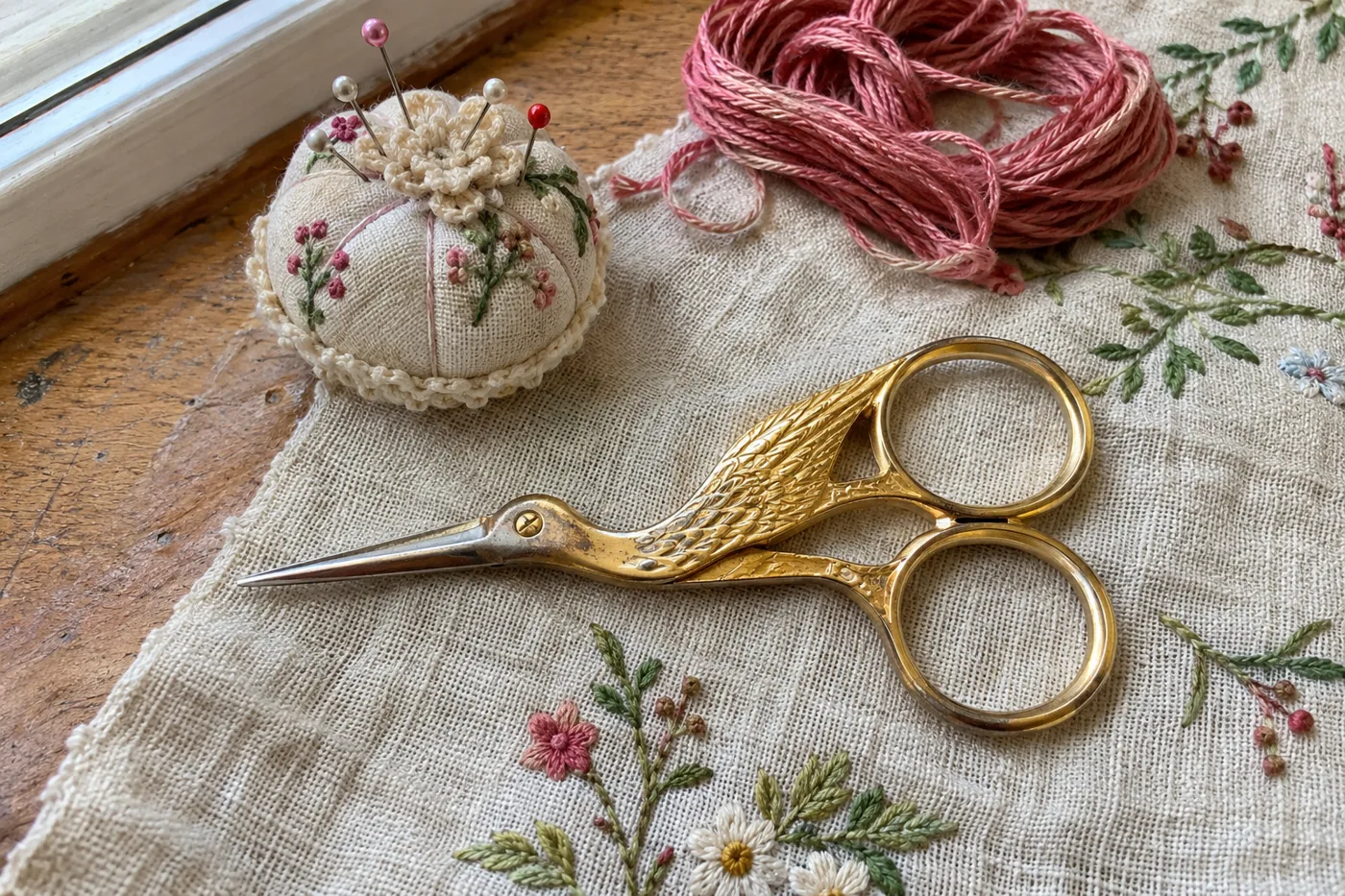
These were for snipping embroidery floss close to the cloth, and they were far too pretty for the job: gold-colored, shaped like a long-legged bird whose beak is the blades.
The bird has a story. Sheffield scissor maker Ernest Wright says it’s widely believed the stork shape came from similar clamps used by midwives, and that the design moved over to embroidery scissors in the 1800s. The stork, after all, is the one who delivers the babies.
Nobody has proven it. But the National Museum of American History holds a 1920s midwife’s kit with stork scissors in it.
Keep them, or pass them to someone who embroiders, with the story attached.
#6 Pinking shears with the zigzag blades
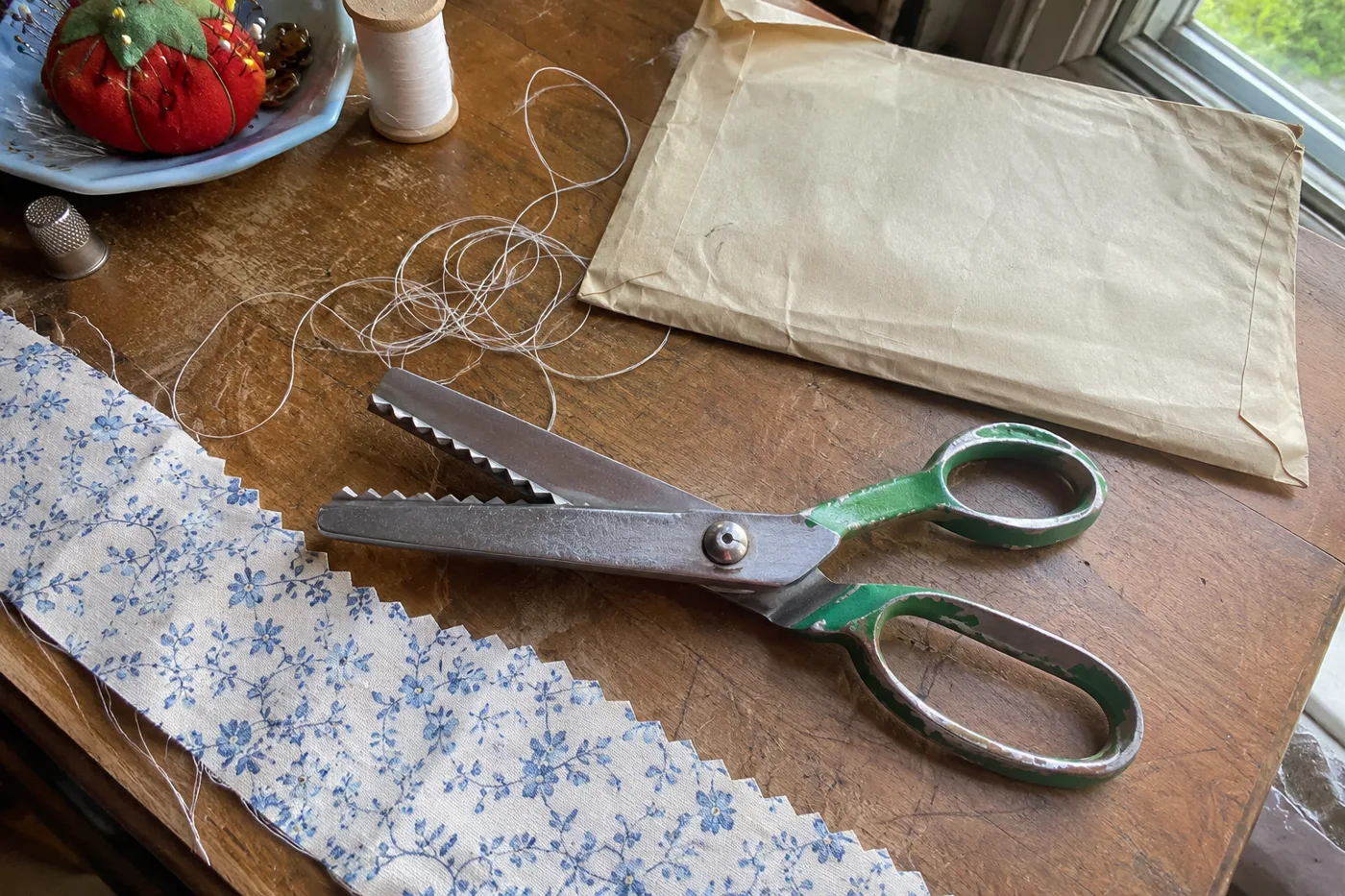
Heavier than they look, with blades that bite in a zigzag. Cut a straight line and you got a row of little teeth, which kids found far more thrilling than it deserved.
It looks like the zigzag should stop fabric from fraying. It doesn’t. The zigzag only limits how long the frayed threads can get, so any damage stays small. That’s why the inside seams of so many homemade dresses have that neat little sawtooth edge.
The best-known design was patented by a woman, Louise Austin, in 1893.
Same rule as the good scissors, by the way. Keep them away from paper, which leaves grit on the blades.
#5 Embroidery hoop with a half-finished piece

There it is, still clamped tight: a pillowcase or a dish towel with a few flowers done in floss and a few more waiting as faint blue lines. The needle may still be stuck in it.
If the piece is very old or delicate, Christina Garton of PieceWork Magazine suggests seeing a conservation professional. Otherwise, whatever you decide about finishing it, take it out of the hoop first. Garton warns that hoops, plastic or wood, aren’t acid free, so they aren’t safe for cloth over the long haul.
Plastic hoops grip especially hard, and one embroiderer warns they can ruin delicate fabric.
To show it off as it is, Garton suggests acid-free mat board with cotton fabric behind the piece, and glass that never touches the stitches.
Or pick up the needle where it was left. Nobody has to know which flowers were yours.
#4 Small metal hem gauge with a slider
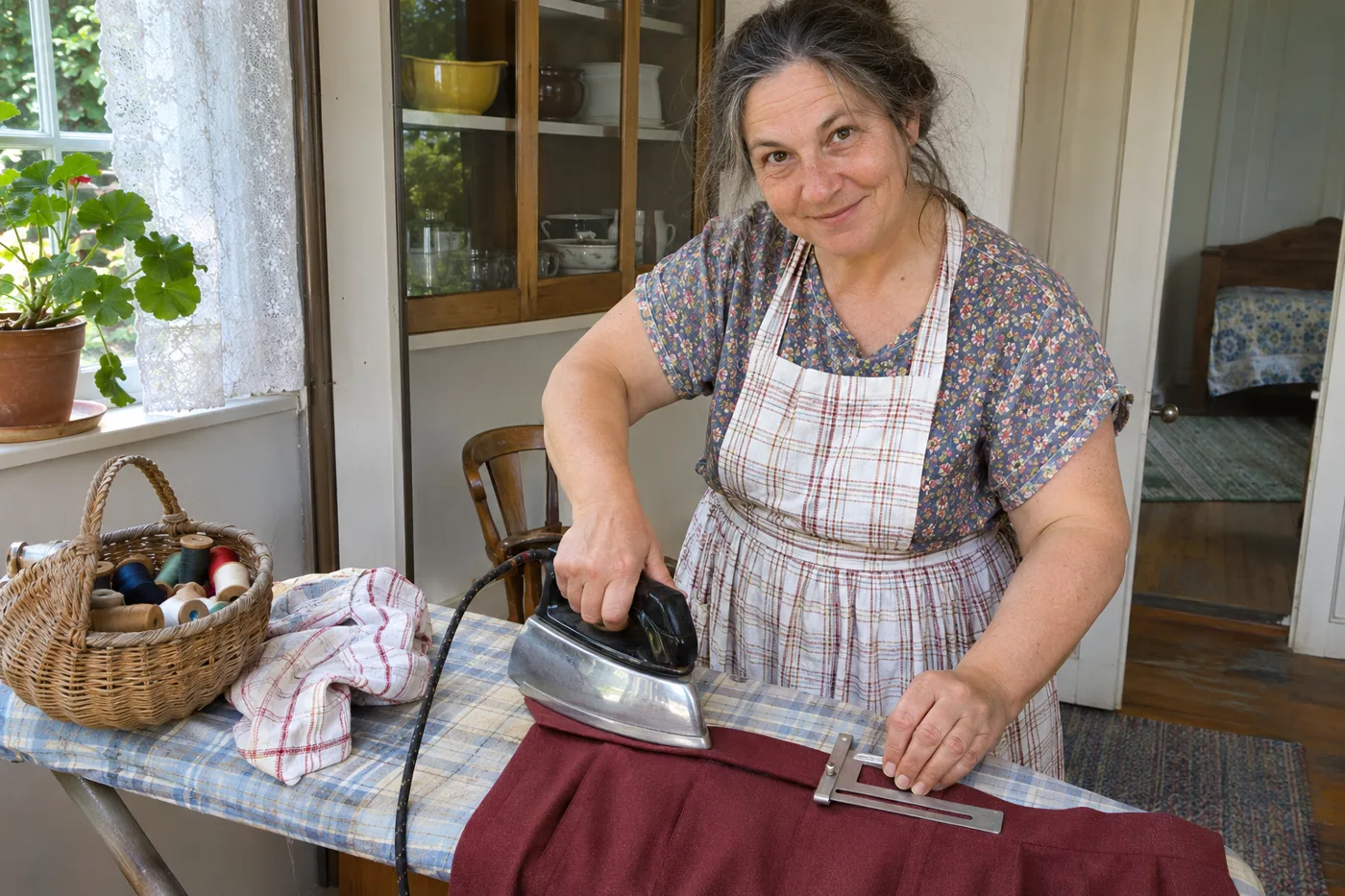
Six inches of thin metal with a little sliding pointer. It looks like a ruler that lost its nerve.
It’s the reason so many homemade hems came out looking store-bought. Set the slider to how deep you want the hem, hold the gauge against the fold as you work your way around, and press. Every inch comes up exactly the same.
Its list of jobs is longer than you’d guess, and one sewing blogger reaches for hers on buttonholes and pleats too.
What a hem gauge can do
- Mark exactly how much to take up a hem, all the way around.
- Space pleats and tucks evenly.
- Set buttonhole length and spacing.
- Draw a circle: pin the slider down, put a pencil in the hole at the end, and swing it like a compass.
#3 Cake of beeswax for thread
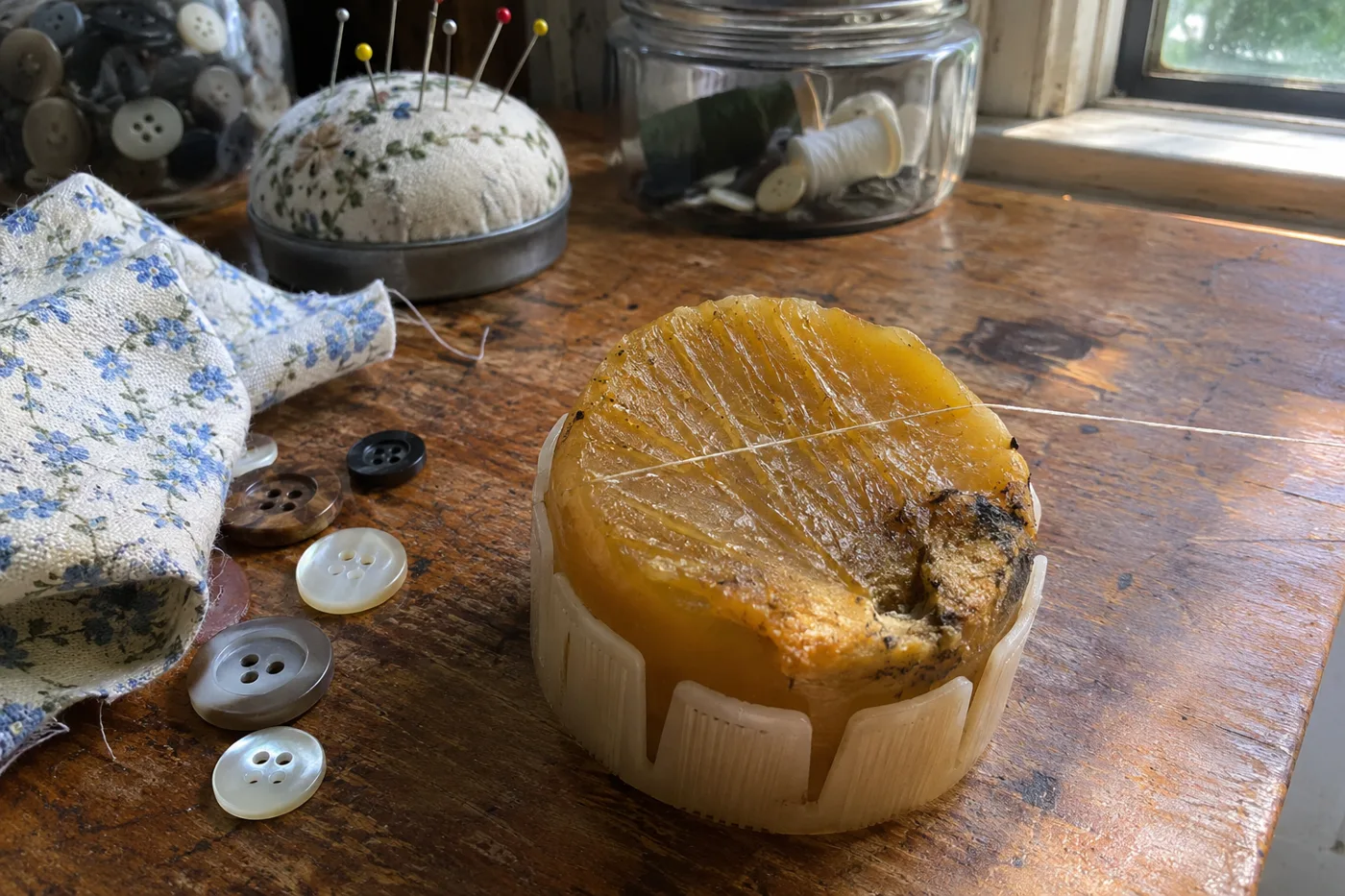
If you’ve found a small golden lump scored with thin grooves, maybe in a plastic holder with slots in the top, that’s beeswax. The grooves are where the thread went.
She pulled a length of thread across it a couple of times before sewing by hand. Embroidery expert Mary Corbet of Needle ‘n Thread says hand quilters use beeswax to make thread stronger and smoother and to cut down on tangles. Embroiderers who stitch with metal threads use it to keep them from wearing out.
Corbet has two warnings. Cheap wax tends to peel and flake off. And wax darkens colored thread.
Draw a white thread across it and watch the fuzz lie down flat.
#2 Mystery machine parts, screwdrivers and lint brushes
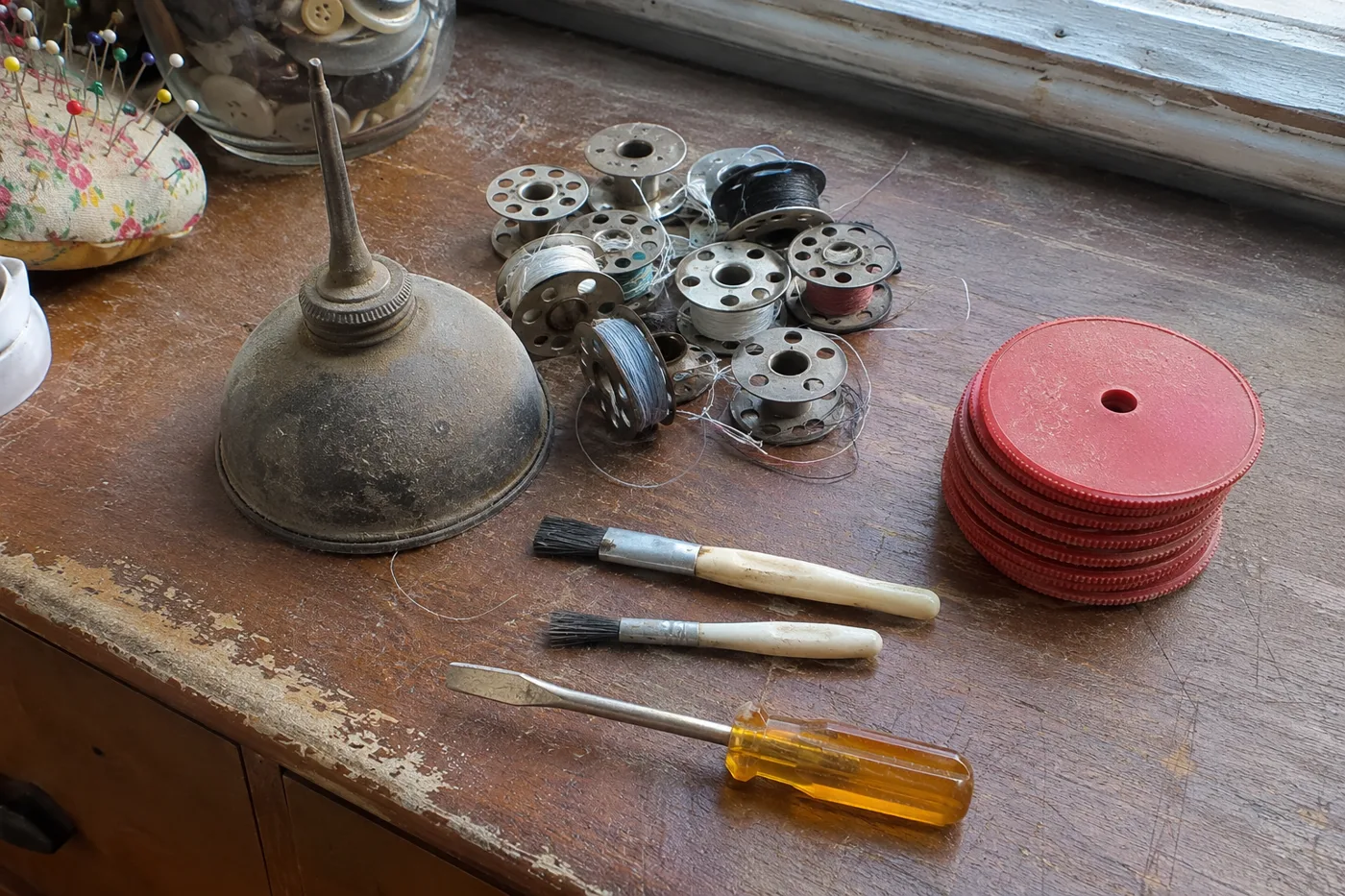
Every sewing box seems to have a bottom layer nobody can explain. A flat metal piece that looks like a paint-can opener. A couple of tiny stiff brushes. A long metal bar. A stack of red plastic discs, each stamped with a number.
People sorting through inherited sewing desks run into these all the time, and the answers are usually simple. The paint-can openers are small flat screwdrivers for the machine. The brushes clean out lint. A long metal bar that came with the machine often turns out to be a quilting guide.
The discs are the best part. On Singer machines they’re called special discs. A vintage machine site explains that a lever rides the edge of the disc and swings the needle side to side to form a fancy stitch.
There were 24 of them, from a plain zigzag to a long basting stitch. They fit only certain machines, so if hers is still around, keep them with it.
#1 Her handwritten notes and measurements
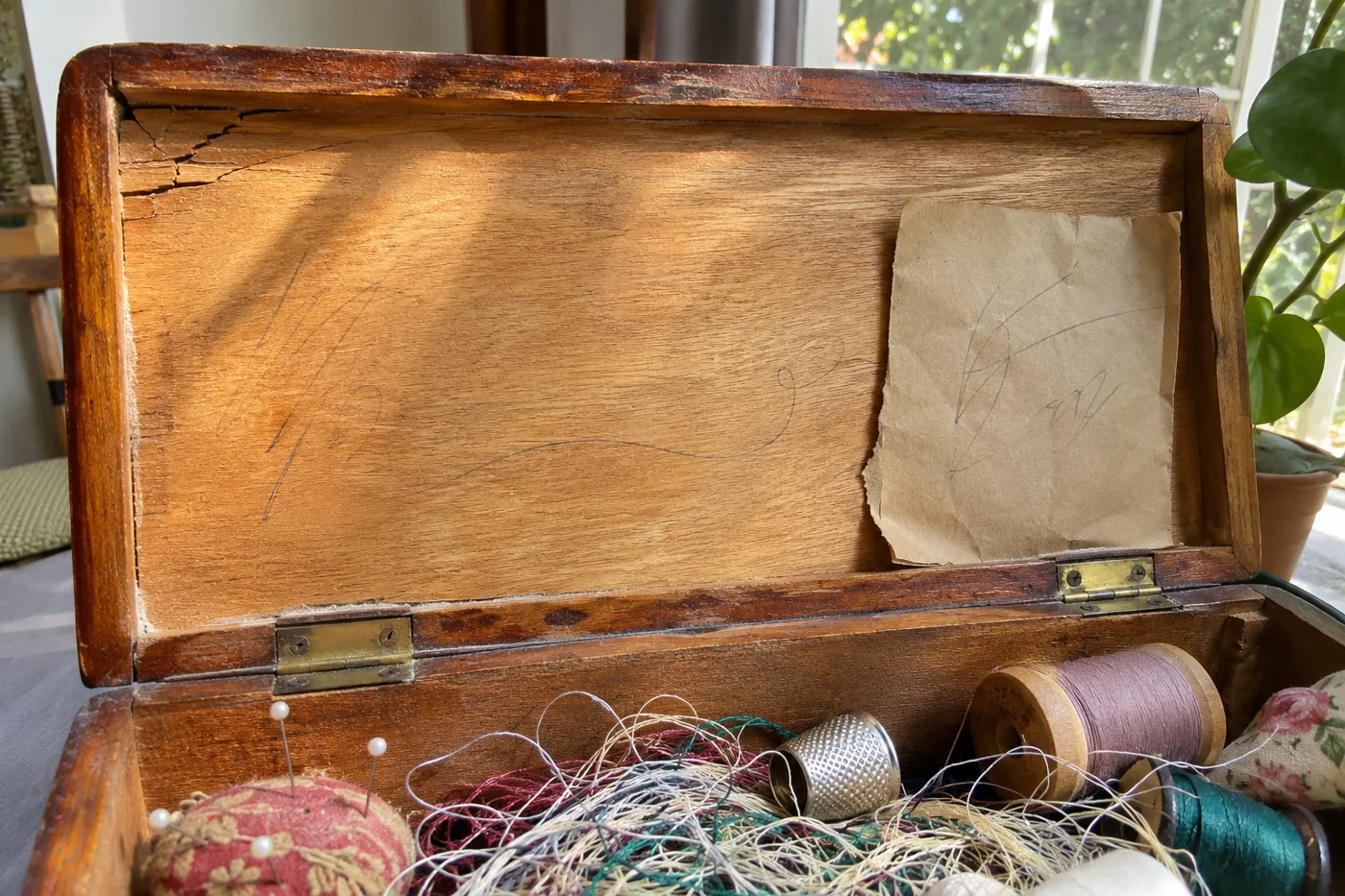
It might be a strip of brown paper bag tucked under the tray. An envelope with numbers down the side. Or the inside of the lid itself, written right on it in ballpoint: bust, waist, sleeve length, a hem depth, somebody’s name with a measurement beside it.
This is the thing most likely to get thrown out by accident, because it looks like scrap. It’s also the only thing in the box that could only be hers. The buttons could have come from anyone. The handwriting couldn’t.
Keep it somewhere you actually live, not the basement, the garage or a hot attic. The National Archives has more advice on storing family papers, if you want it.
Slide brittle scraps into polyester sleeves so they get handled less. Skip tape, rubber bands, rubber cement and PVC plastic.
On the outside of the sleeve, write whose measurements they were, and the year, if you know it.
The bottom line
You don’t have to keep the box exactly as she left it in order to keep it. Some of what’s inside will get used again, some will go to someone who sews, and some will stay just because.
Pick one small thing and use it. Sharpen a needle on the strawberry and put it back where she kept it.
Bonus: Four ways to give her sewing box a second life
- Pick one of her buttons that fits the buttonhole on a coat you wear every week, and sew it on in place of a plain one.
- Make a shadow box with a scrap of her fabric as the background and her thimble, a wooden spool and the threader pinned on top.
- Tie a strip of her fabric around a jar of her buttons and give it to someone who sews.
- Keep one pair of her scissors with your sewing things, for thread only, and enforce her rule.
Questions people also ask
What is the strawberry on a tomato pincushion for?
It’s a needle sharpener. The strawberry holds emery, a gritty material, so a dull needle pushed into it comes back out with a better point.
How can you tell if an old button is real Bakelite?
Warm it and sniff. A vintage dealer’s guide, written for jewelry, says real Bakelite smells of formaldehyde when warm. A cotton swab dipped in Simichrome polish or 409 cleaner also turns yellow on it. Both are good hints, not proof.
Does cutting paper really dull fabric scissors?
Yes, according to the scissor makers who’ve been asked. They say the clay and calcium carbonate in paper leave a gritty buildup that wears down the blades. One major maker points out that every material dulls scissors eventually, so wipe the blades clean and get them sharpened more often.
Is my mother’s old sewing thread still good to use?
Often it is, if it passes a tug test. The sewing historian behind The Dreamstress suggests unrolling about a yard and pulling as hard as you can, and if it doesn’t break easily, she says it’s fine to sew with. Not every sewer agrees, so test it before trusting it with anything important.
Who is the woman pictured on old needle threaders?
Nobody knows for sure, because no maker has ever named her. A sewing blogger who compared many versions concluded she has to be Minerva, the Roman goddess of handcrafts. Arachne is the other name that comes up.
Why do pinking shears cut in a zigzag?
The zigzag keeps fraying short. The cut edge still frays, but the points limit how long the loose threads can get, so the damage stays small. The best-known design was patented by Louise Austin in 1893.
Related posts:
18 Christmas Decorating Habits People Over 60 Still Have That Fire Experts Beg Them to Stop
24 Things People Over 60 Still Do When Cleaning That Experts Beg Them to Stop
24 Things Your Grandchildren Will Remember About Your Christmas
25 Church Bazaar Crafts Every Town Sold That Nobody Makes Anymore
26 Things Grandchildren Remember About Your House That You Never Notice
26 Christmas Cookies From the 1960s That Nobody Bakes Anymore

- 24 Things People Over 60 Still Do When Cleaning That Experts Beg Them to Stop - November 6, 2026
- 21 Handmade Gifts From the 1970s Your Grandchildren Have Never Seen - November 6, 2026
- 25 Homemade Christmas Decorations From the 1960s, and What Became of Each One - November 6, 2026
Leave a Reply