The tray came out from under its plastic wrap, and the wrap never went back on the same way. There were green wreaths with red candies stuck in them, and powdery snowballs that left sugar down your front. There was a pinwheel, something with a cherry on top, and a thin crisp that snapped.
Back then you could name every cookie on it. Try finding half of them now. A handful of presses, old recipes and tins are still around if you know where to look, but most of what was on that tray slipped away without anyone deciding to let it go.
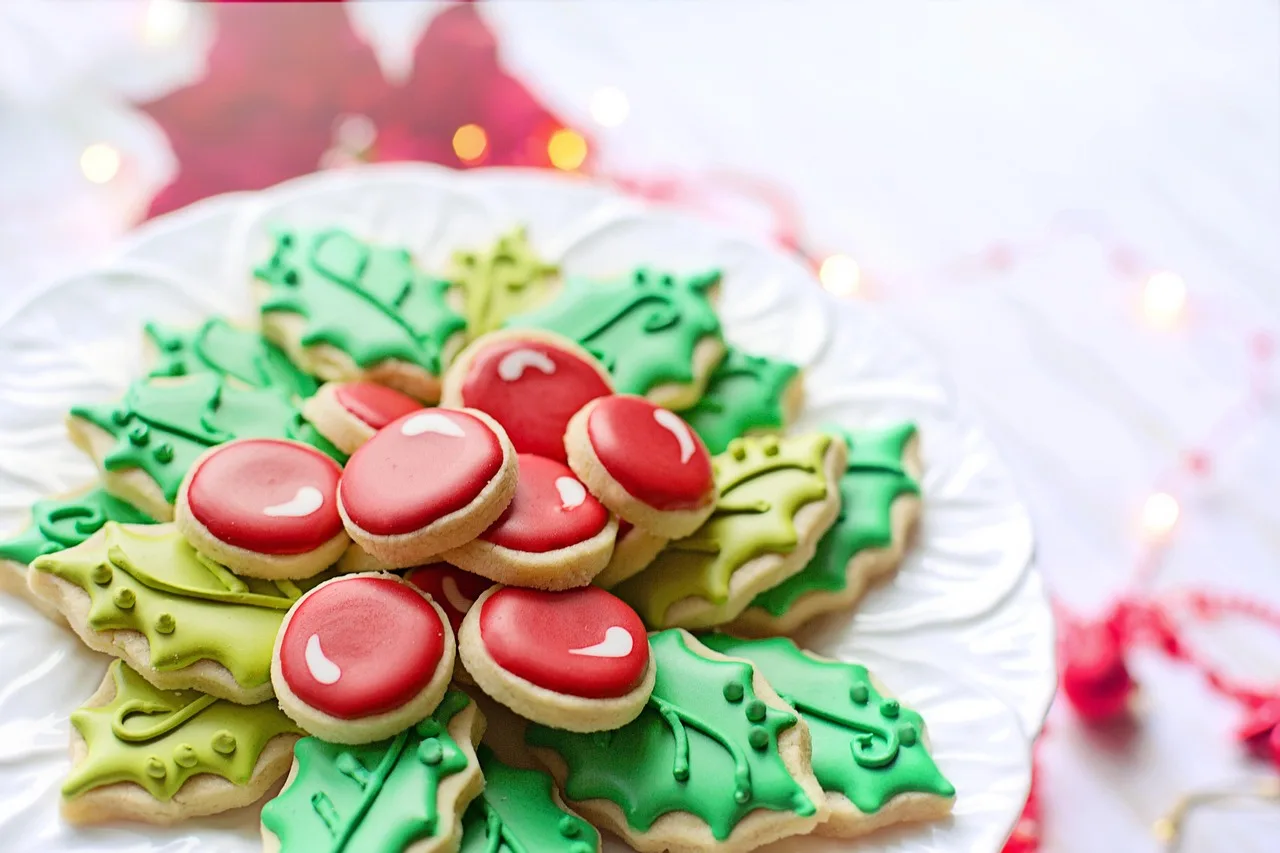
#26 Green cornflake wreaths with red hots
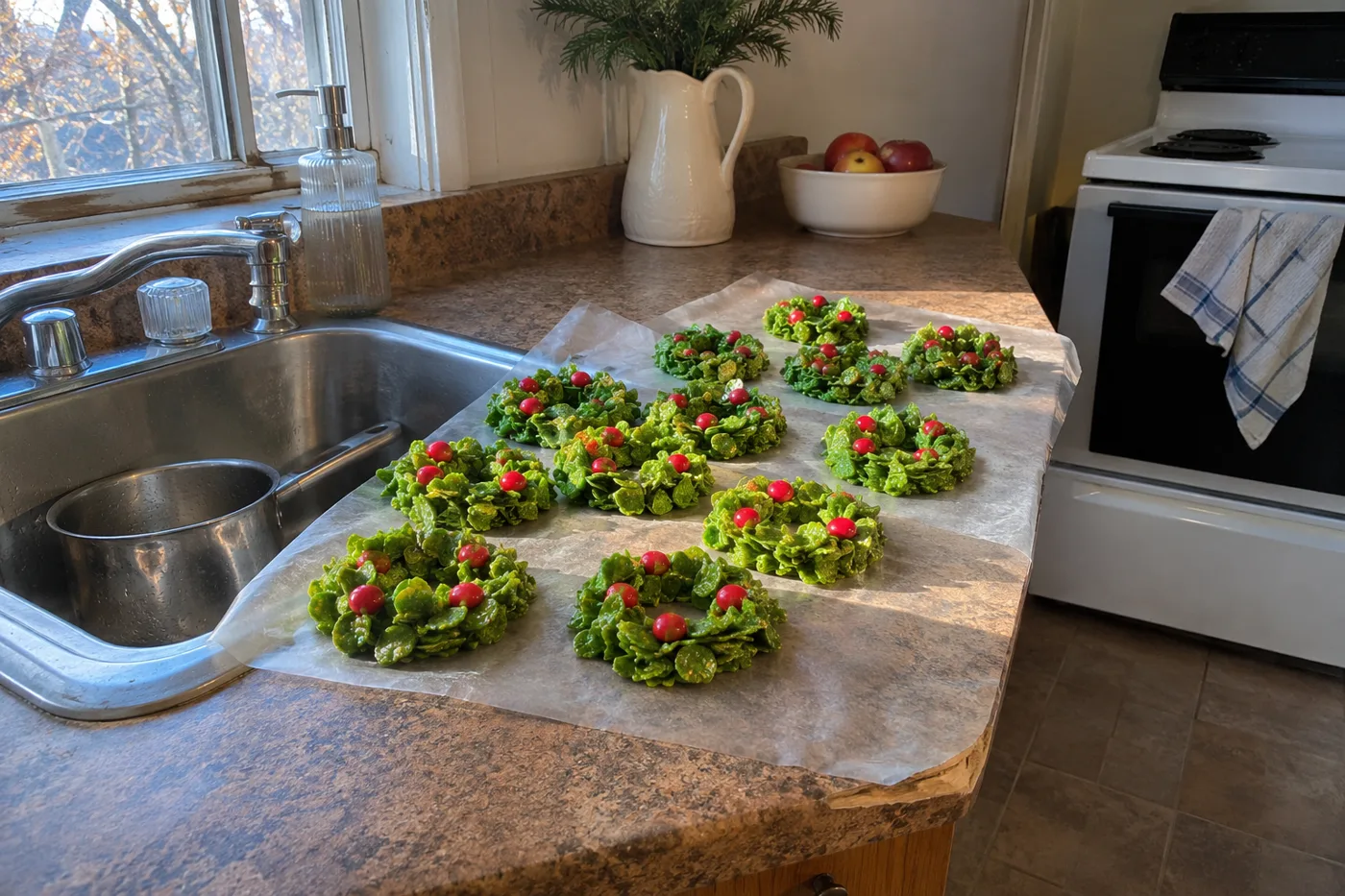
They were the cookie you didn’t bake. Butter and marshmallows melted in a pot and turned green with a few drops of food coloring. The cornflakes went in, and then came the race to shape the wreaths on waxed paper before the whole batch set like cement.
Somebody got the job of pressing in the red hots. Everybody got green fingers for the rest of the afternoon.
They faded quietly, the way a lot of no-bake treats did. They’re still about the fastest Christmas cookie there is. Butter your hands first, and the marshmallow lets go.
#25 Spritz cookies from Mom’s metal press
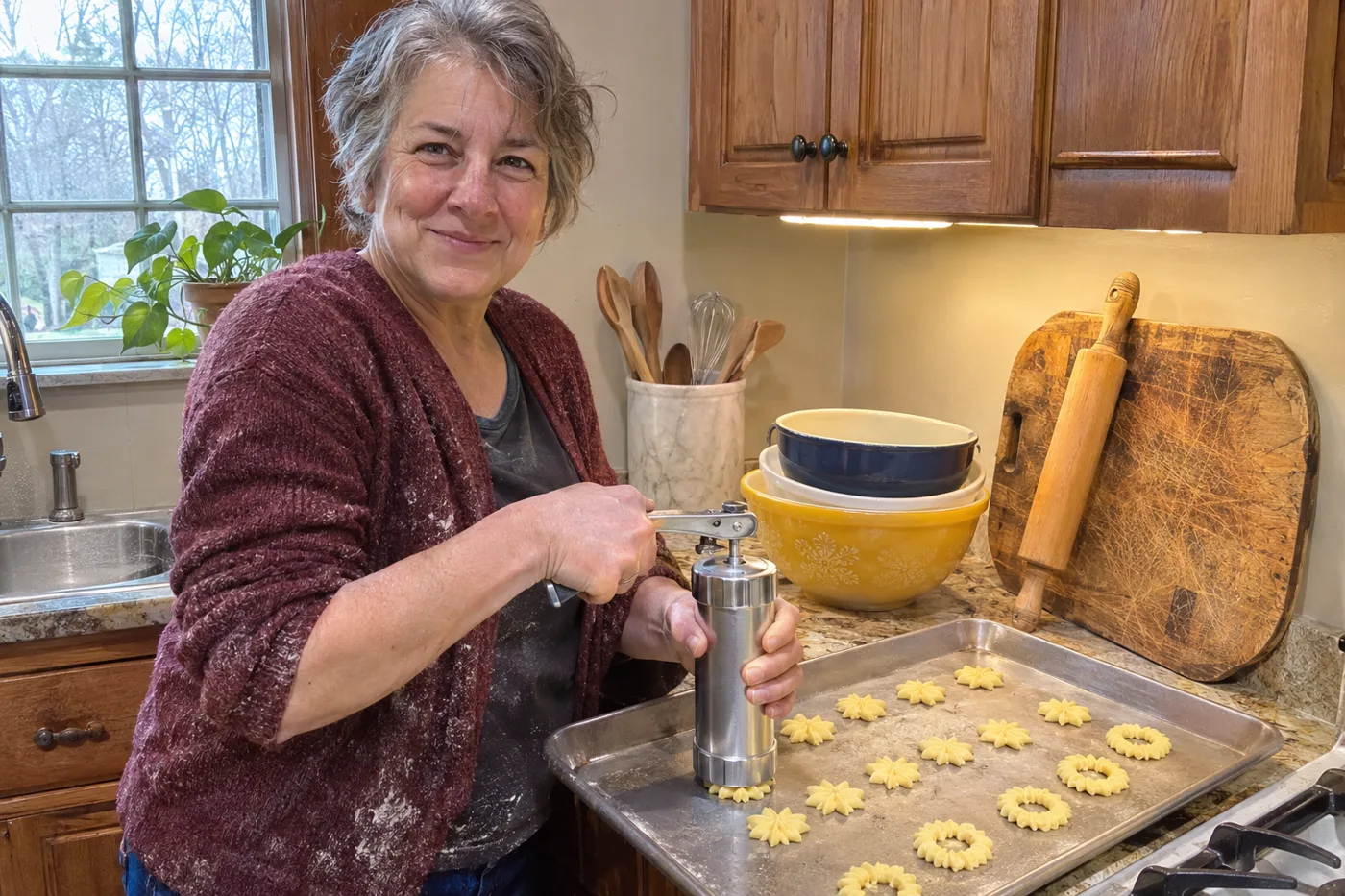
If your family had a cookie press, it may well have been a Mirro, with its heavy aluminum tube and a stack of little discs for trees, wreaths and stars.
The Wisconsin company behind it was once the world’s largest manufacturer of aluminum cooking utensils. That explains why the same press turned up in so many kitchens.
The cookie often gets called Scandinavian. It actually comes from German and Alsatian baking, and the name comes from spritzen, German for squirting, which is exactly what you did with it.
If the press is still in a drawer somewhere, it wants a cool, bare cookie sheet. Grease the pan and the dough won’t let go of the press.
#24 Russian tea cakes, snowballs, wedding cookies

It’s the same cookie under three names, and which one you used probably depended on whose kitchen you grew up in. Butter, ground nuts and a little flour, rolled in powdered sugar while warm and again once cool, so the coat stayed snowy.
Nobody has ever pinned down why one name says Russian. Some say they got renamed Mexican wedding cookies during the Cold War, but the Institute of Culinary Education calls that story only speculation.
The real family tree is older than any of those names, going back to Arabic cookbooks written more than a thousand years ago. Whatever your kitchen called them, the sugar still went down your front.
#23 Stained glass cookies with melted candy centers
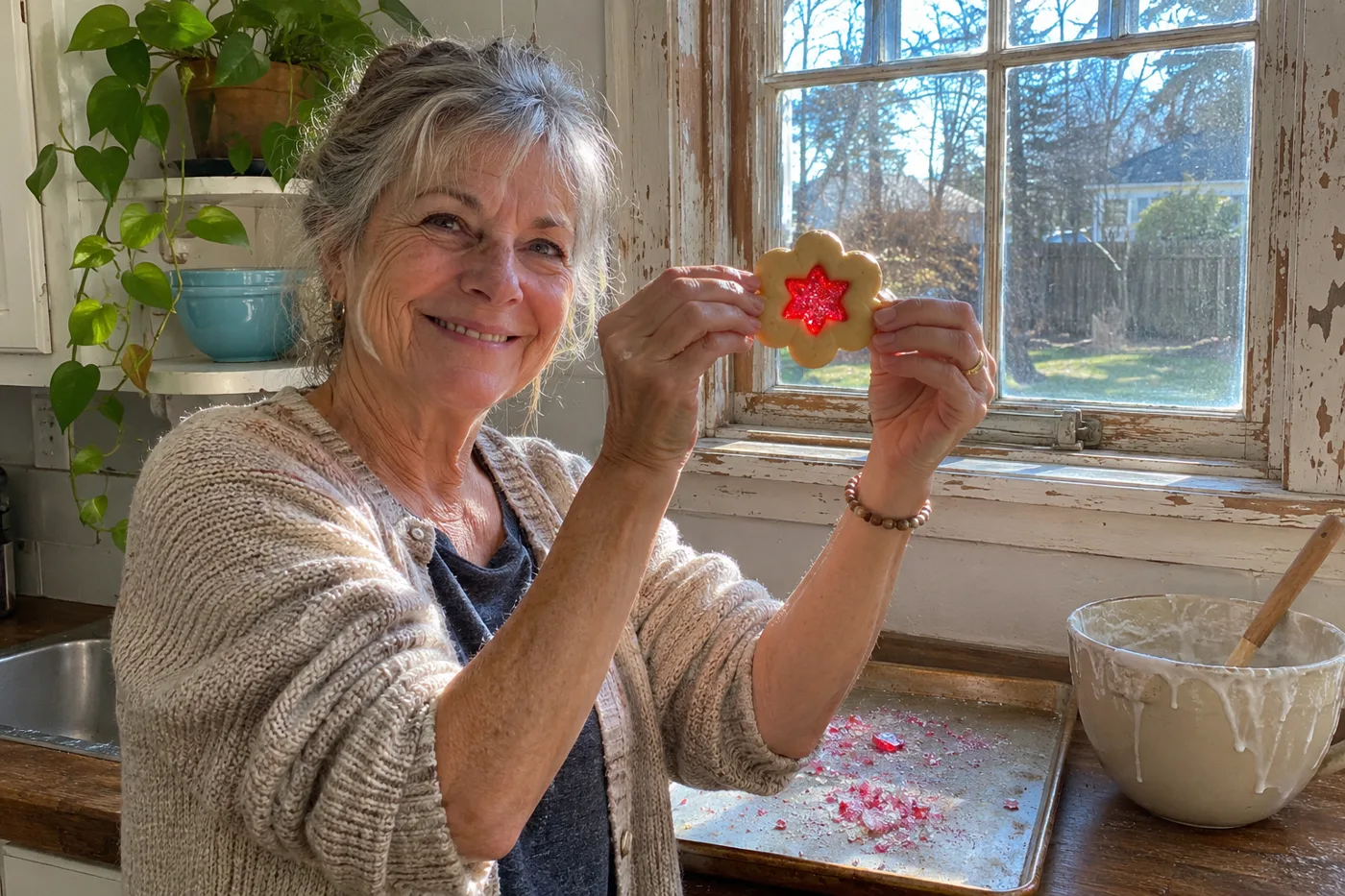
The best job went to whoever got the hammer. Hard candies went into a bag and got smashed to bits, then spooned into a window cut in each cookie. In the oven the candy melted into a little pane of red or green glass you could hold up to the kitchen light.
Those centers have one enemy, and it’s damp. SugarHero warns that the fridge or freezer leaves them “sticky and gooey” from condensation, and in a humid house they can turn tacky right on the counter.
These are cookies for the next two or three days. Bake them close to the party and let the guests do the storing.
#22 Coconut kisses topped with a cherry
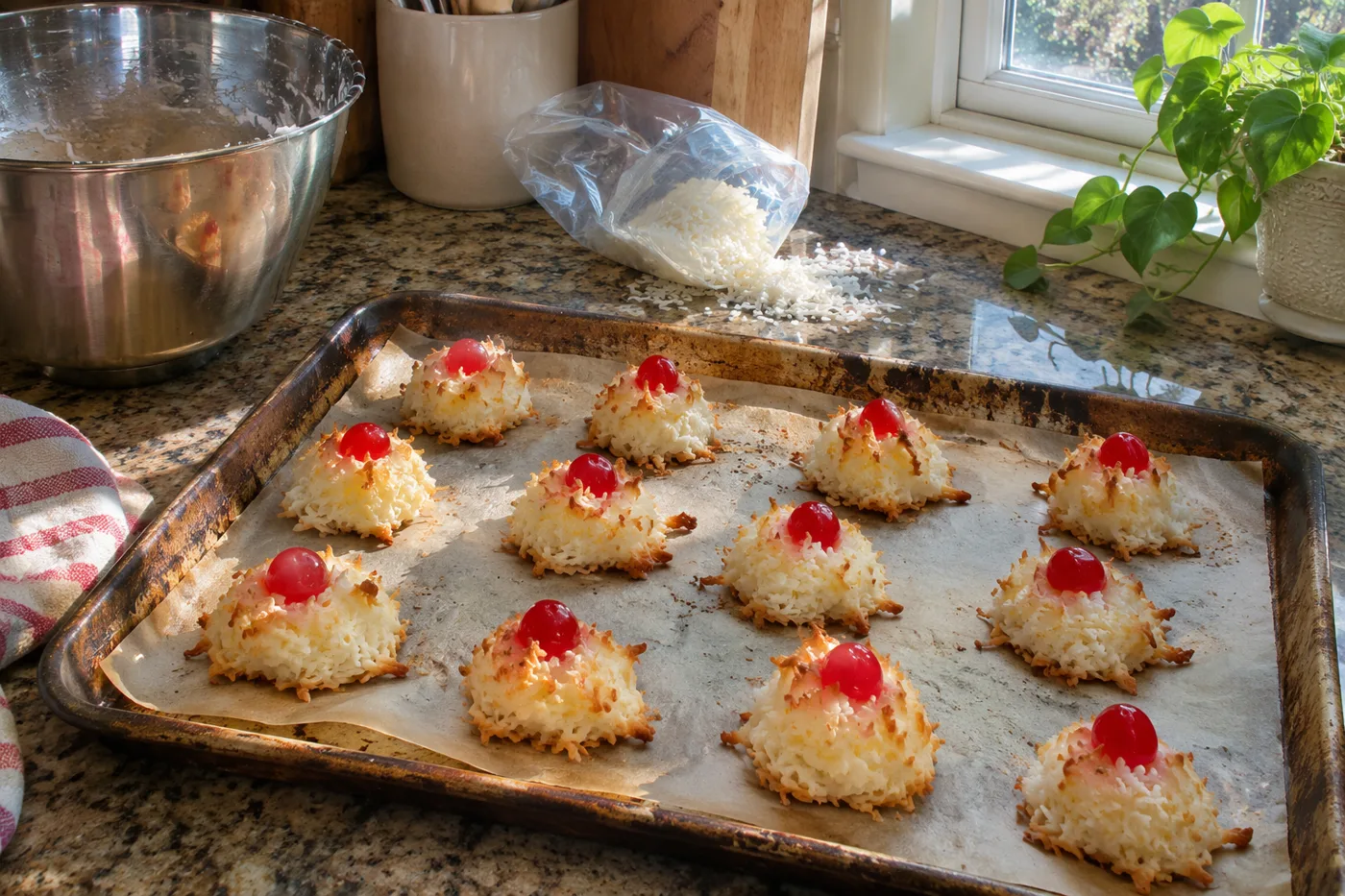
Coconut folded into whipped egg white, baked until the peaks turned golden, with a candied cherry pressed into the top like a button.
Not every family card was as original as it looked. One blogger found his grandmother’s handwritten card for coconut kisses matched almost exactly to a Woman’s Day insert from December 1964, later reprinted in the magazine’s 1965 cooking encyclopedia.
It happened in more than one family: a recipe clipped from a magazine, copied by hand until everyone forgot where it came from, with the cook changing one small thing to make it hers.
So that card in your recipe box may well have started in a women’s magazine.
#21 Candied fruit drops loaded with cherries
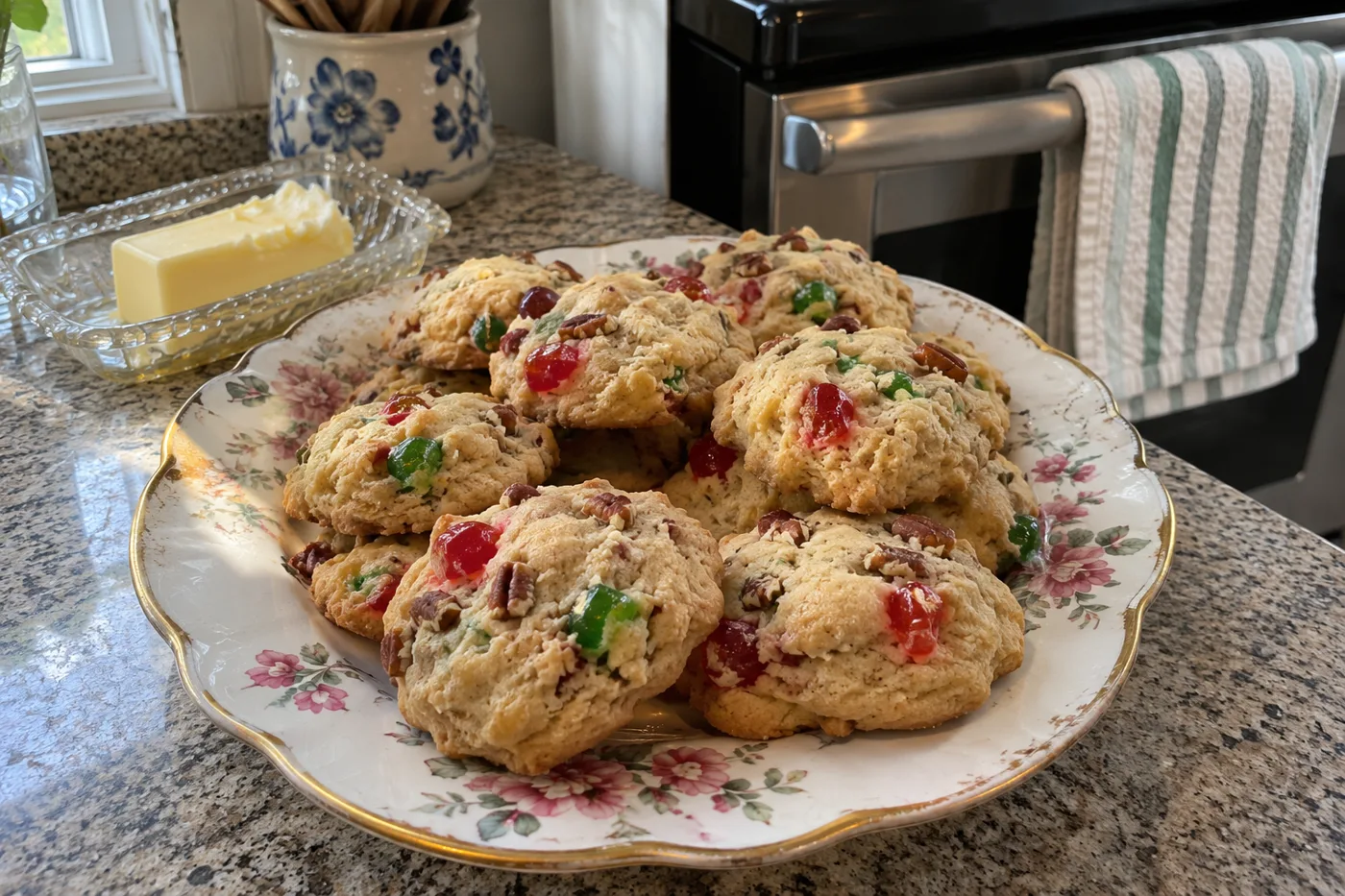
Red and green candied cherries, chopped dates and pecans, held together with just enough dough to call it a cookie.
A well-loved version came from Betty Crocker’s Cooky Book in 1963, where the recipe wore a proud label: “The Best Cooky of 1945-1950.”
One great-grandmother’s card for a fruit-and-nut cookie was marked “expensive” in the margin. That wasn’t fussiness. Dried fruit and nuts were luxuries, and a cookie packed with both was a cookie for company.
#20 Cherry winks rolled in crushed cornflakes
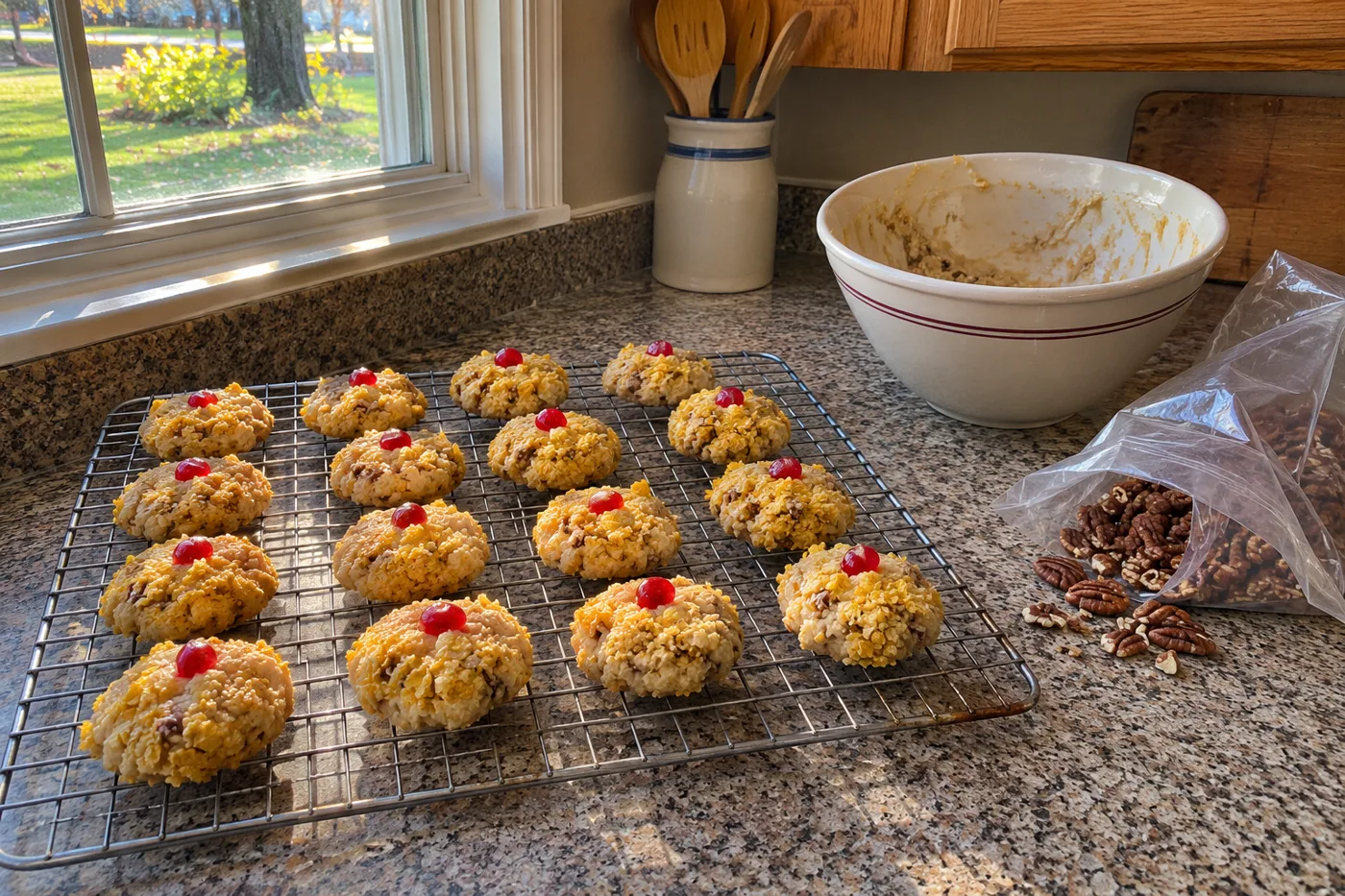
Each ball of dough got rolled in crushed cornflakes and topped with a bit of cherry, so the cookie looked like it was winking at you.
You’d never guess a teenager came up with it. In 1950 the Pillsbury Bake-Off added a junior division, and Ruth Derousseau of Rice Lake, Wisconsin, won $5,000 with Cherry Winks.
That was the junior first prize, not the grand prize you sometimes hear about, and still a small fortune for a high schooler.
The dough is full of dates and pecans, so it’s richer than it looks. Not bad for a teenager’s recipe.
#19 Gumdrop cookies with a secret ingredient
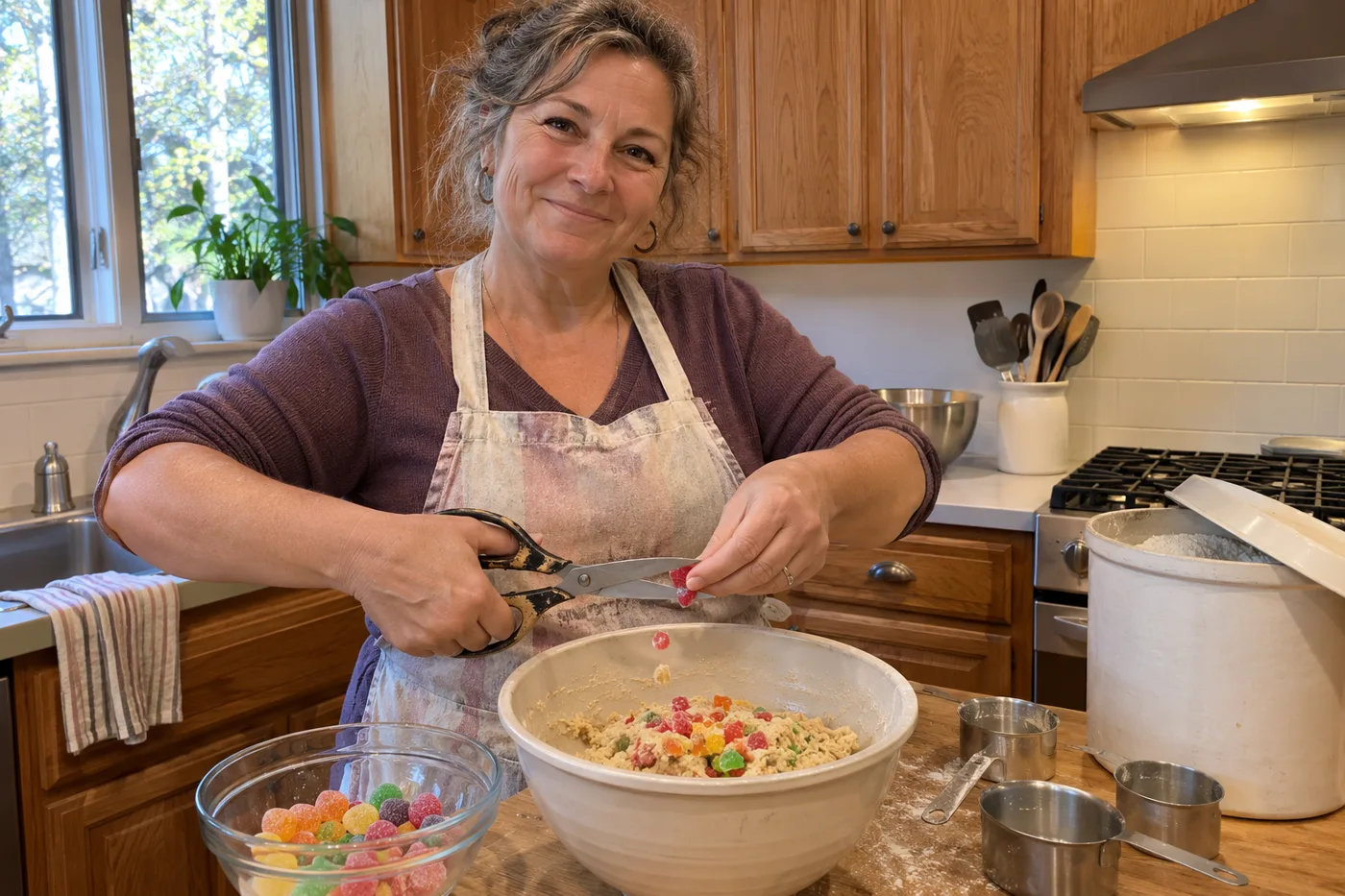
The gumdrops in these often weren’t the fruity kind. They were spice drops, flavored with clove, anise, cinnamon, spearmint and wintergreen, and chopped with kitchen scissors that never quite came clean.
Spice drops are among the oldest kinds of gumdrop still made, which is why they tasted like an old candy dish even in 1965.
The real surprise sat in a 1960s Betty Crocker pamphlet. Its Gumdrop Jumbos called for a quarter cup of ketchup, along with 3½ cups of mini gumdrops. Nobody at the table ever guessed, which was probably the whole idea.
#18 Mincemeat cookies and bars
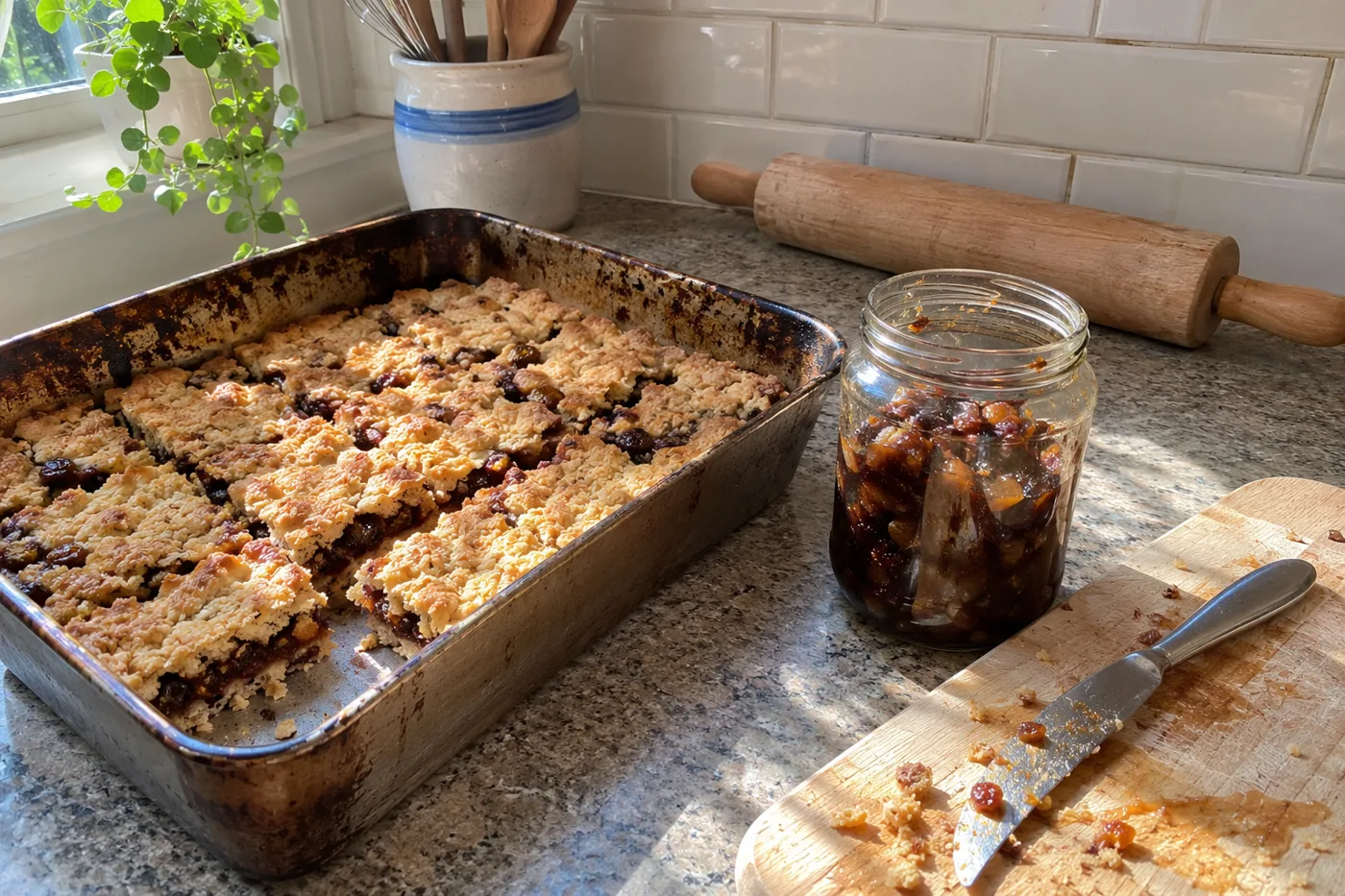
Mincemeat came in a jar or a little box, and the name scared off every child at the table who could read.
The joke was on them. Store-bought mincemeat was being sold mostly without meat by the 1900s, and by the middle of the century most home recipes had dropped it too. Many swapped vegetable shortening in for suet. What was left was raisins, apples, spice and a lot of mystery.
If you want to bake the bars again, None Such says its mincemeat is back, sold seasonally at stores including Publix, H-E-B and Hy-Vee. It also admits many stores may not know they carry it. Ask in the baking aisle.
#17 Rum balls and bourbon balls
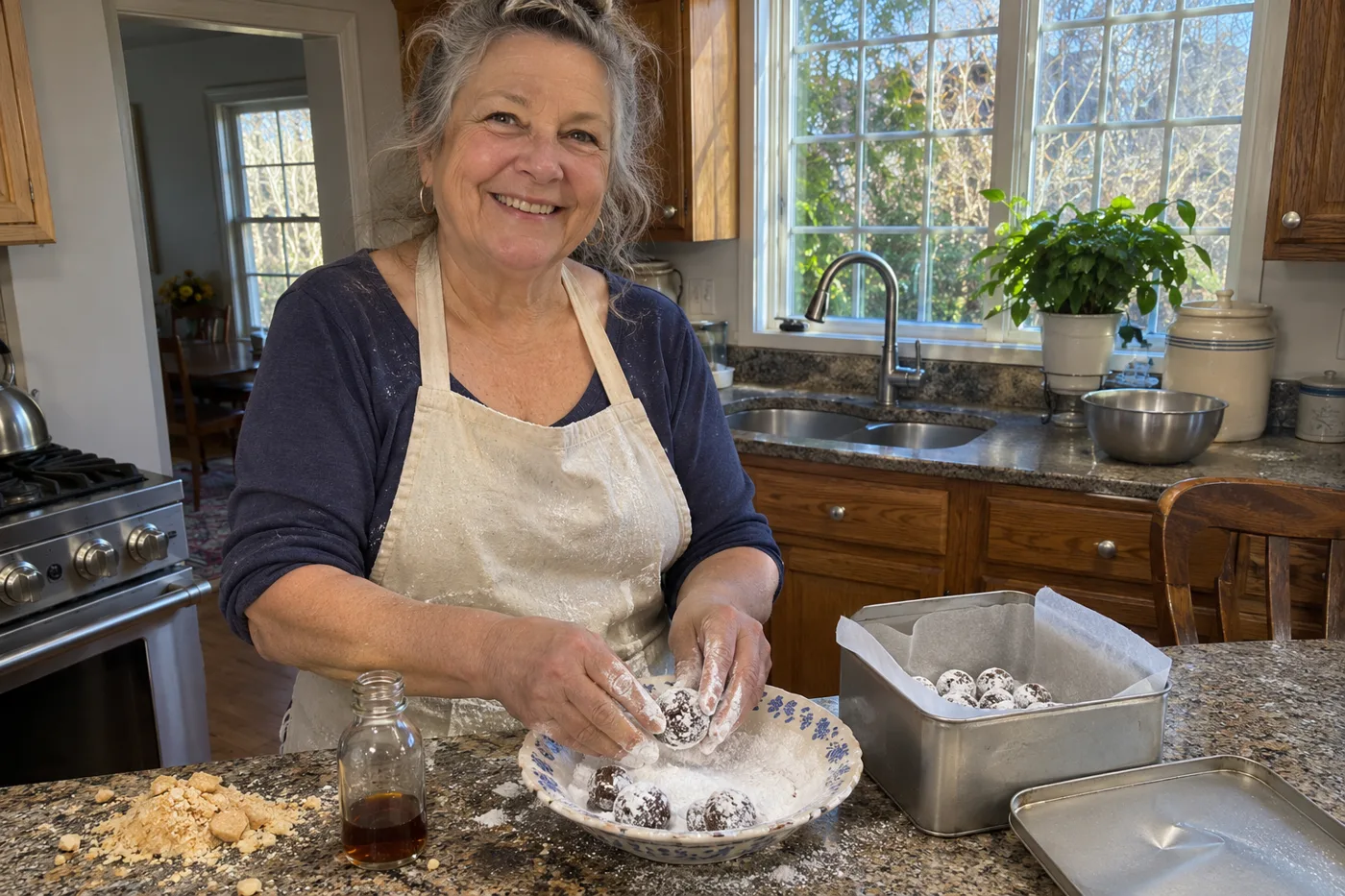
Crushed vanilla wafers, chopped pecans, a little corn syrup and a splash of rum or bourbon, rolled into balls and dropped in powdered sugar. There was no oven involved. Kids were shooed away from that tin, and some of them got in anyway.
The bourbon ball was created in 1938 by Ruth Hanly Booe of Rebecca Ruth Candies. A writer in Spokane traced her own family’s vanilla-wafer version to a relative in Toledo, Ohio, and believes it dates to before the 1940s.
The powdered sugar has a job: it helps hold the alcohol in. Homemade bourbon balls are aged up to a week in a sealed tin and keep about a month. So make them ahead.
#16 Chow mein noodle haystacks
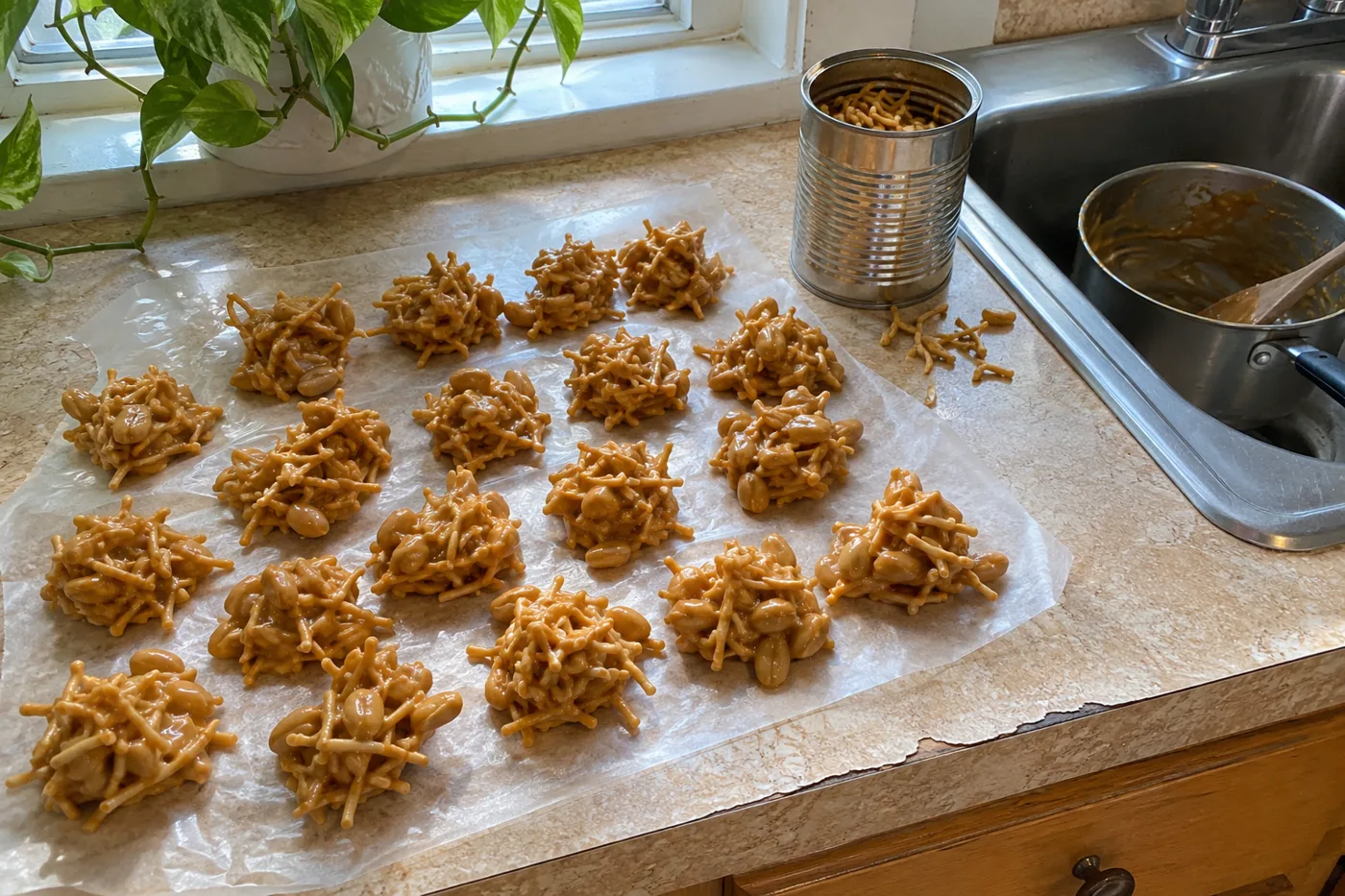
You melted a bag of butterscotch chips, stirred in a can of crunchy chow mein noodles and dropped little piles onto waxed paper. They looked like tiny hay bales and tasted like candy.
The noodles came from the same aisle as the canned chop suey. La Choy, founded in 1922, had them on shelves by the late 1930s. The cookie turned up in the first Betty Crocker’s Cooky Book in 1963 with just three ingredients: butterscotch morsels, chow mein noodles and Spanish peanuts.
Leave the peanuts out and you lose the salty crunch that made the second haystack vanish.
#15 Date pinwheels sliced from the icebox
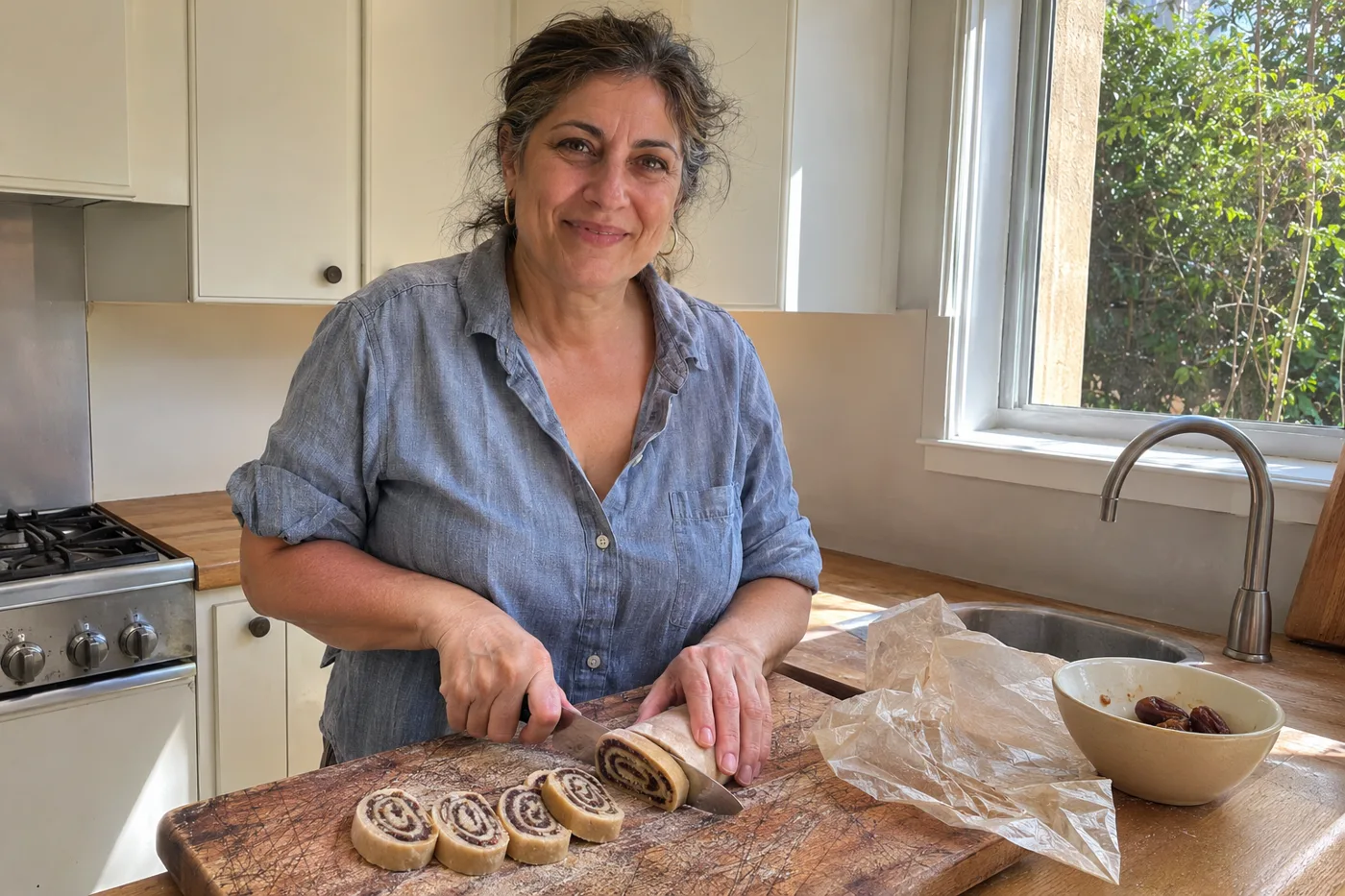
A log of dough wrapped in waxed paper sat in the refrigerator for days, waiting. Inside it, a swirl of cooked dates wound round and round, so every slice came out a little spiral.
Icebox cookies took off in the 1930s, as refrigerators came into homes and more women went out to work. One food writer calls them a 1930s version of the slice-and-bake cookie. This one just came with a swirl of dates.
#14 Butterscotch icebox cookies, sliced thin
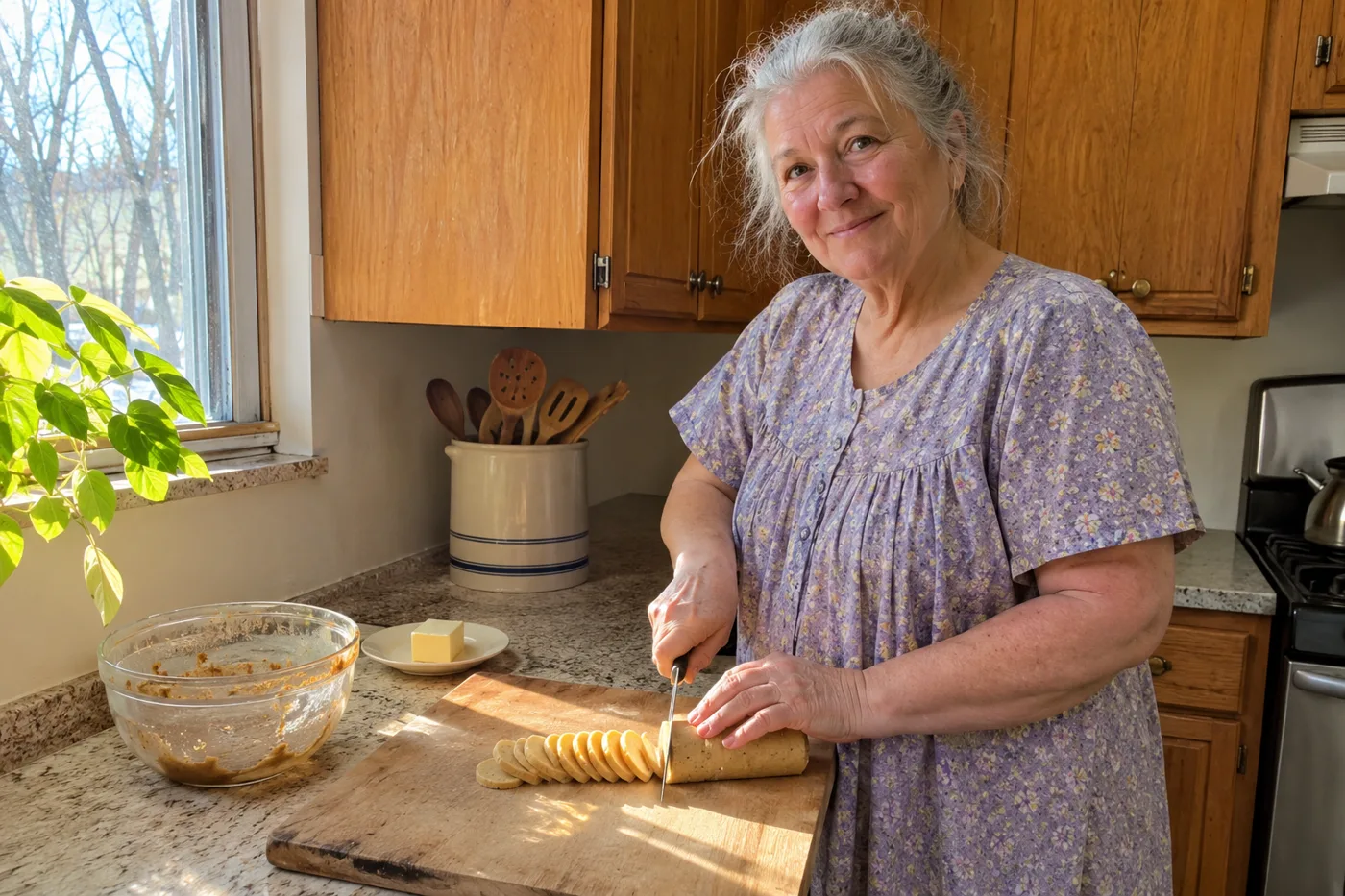
Brown sugar, butter, maybe a handful of nuts, chilled in a roll and sliced almost thin enough to see through. They came out crisp at the edges and tasted like a butterscotch sundae.
Old cards for these can catch you out. A family version from 1936 used brown sugar as its only sugar and called for a 410-degree oven. The baker who shared it found that too hot and dropped it to 375.
Slice them thin, because that’s where the snap comes from.
#13 Seven-layer magic bars
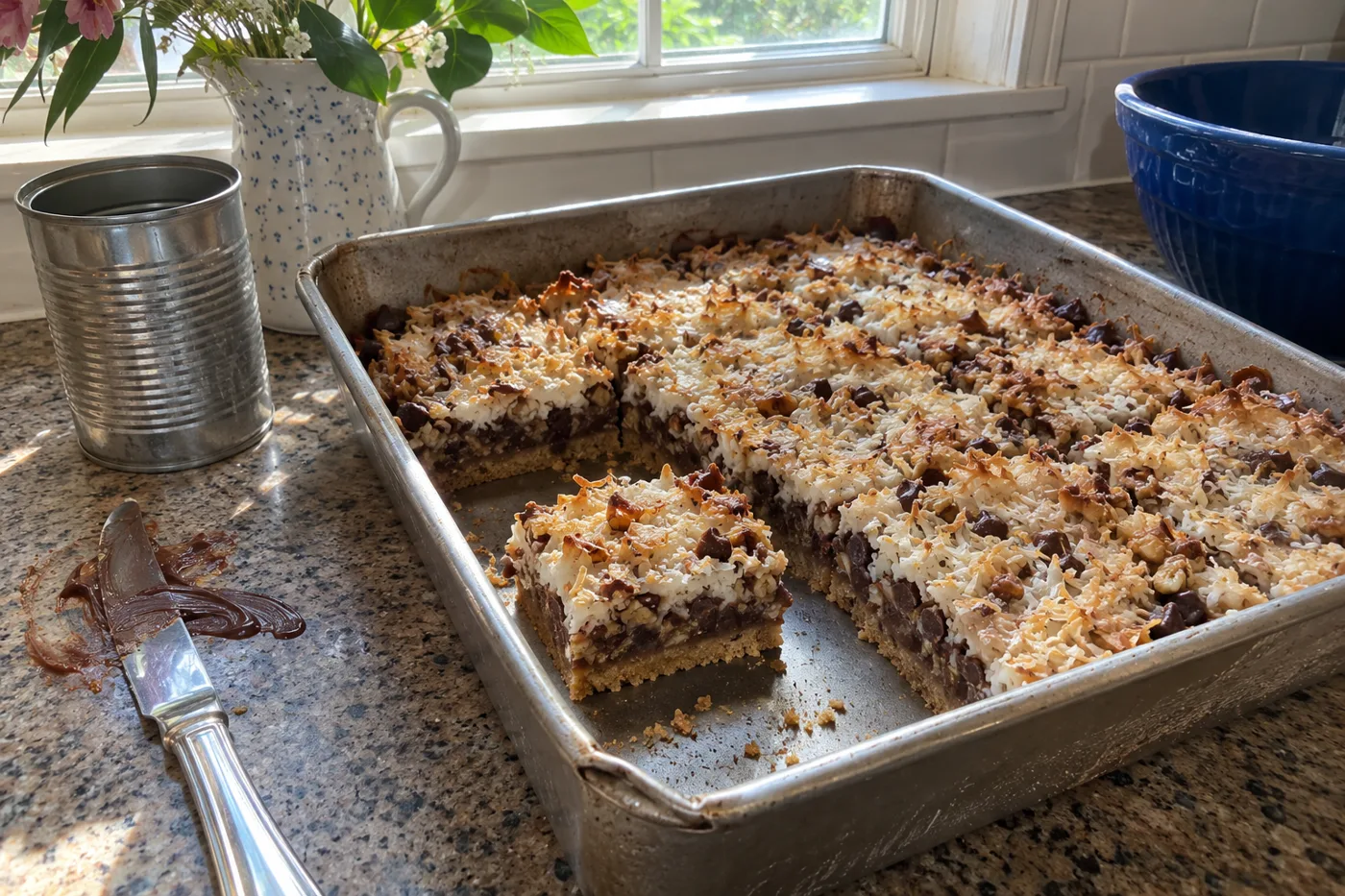
Graham cracker crumbs and melted butter went on the bottom, then coconut, chocolate chips, butterscotch chips and nuts. A can of sweetened condensed milk got poured over the lot. Seven layers, one pan, no mixing bowl.
What you called them depended on where you lived. They went by Hello Dollys, coconut dream bars and seven-layer bars, and the recipe goes back at least to the mid-1960s. Hello Dolly seems to point to the musical Hello, Dolly!, though nobody knows how the name stuck.
Some credit the Eagle Brand label with spreading the recipe everywhere. Before you toss the next can, read the side.
#12 Cake-mix crinkle cookies from a box

A box of cake mix, a couple of eggs, a little oil and a roll in powdered sugar. In the oven the tops cracked open under the snowy sugar, and nobody had to measure flour.
Old recipes can let you down now, because the box shrank. In 2013, Pillsbury cut its cake mix from 18.25 ounces to 15.25, and Betty Crocker downsized too. Anne Byrn, author of The Cake Mix Doctor, said smaller mixes give “less volume and less structure.”
If an old recipe gives you cookies that spread into puddles, compare the mix weight it calls for with the weight on your box, and use a recipe written for the size you have. If the dough is sticky, chilling it or dusting your hands with powdered sugar can make rolling easier.
#11 Jell-O sugar cookies tinted red and green
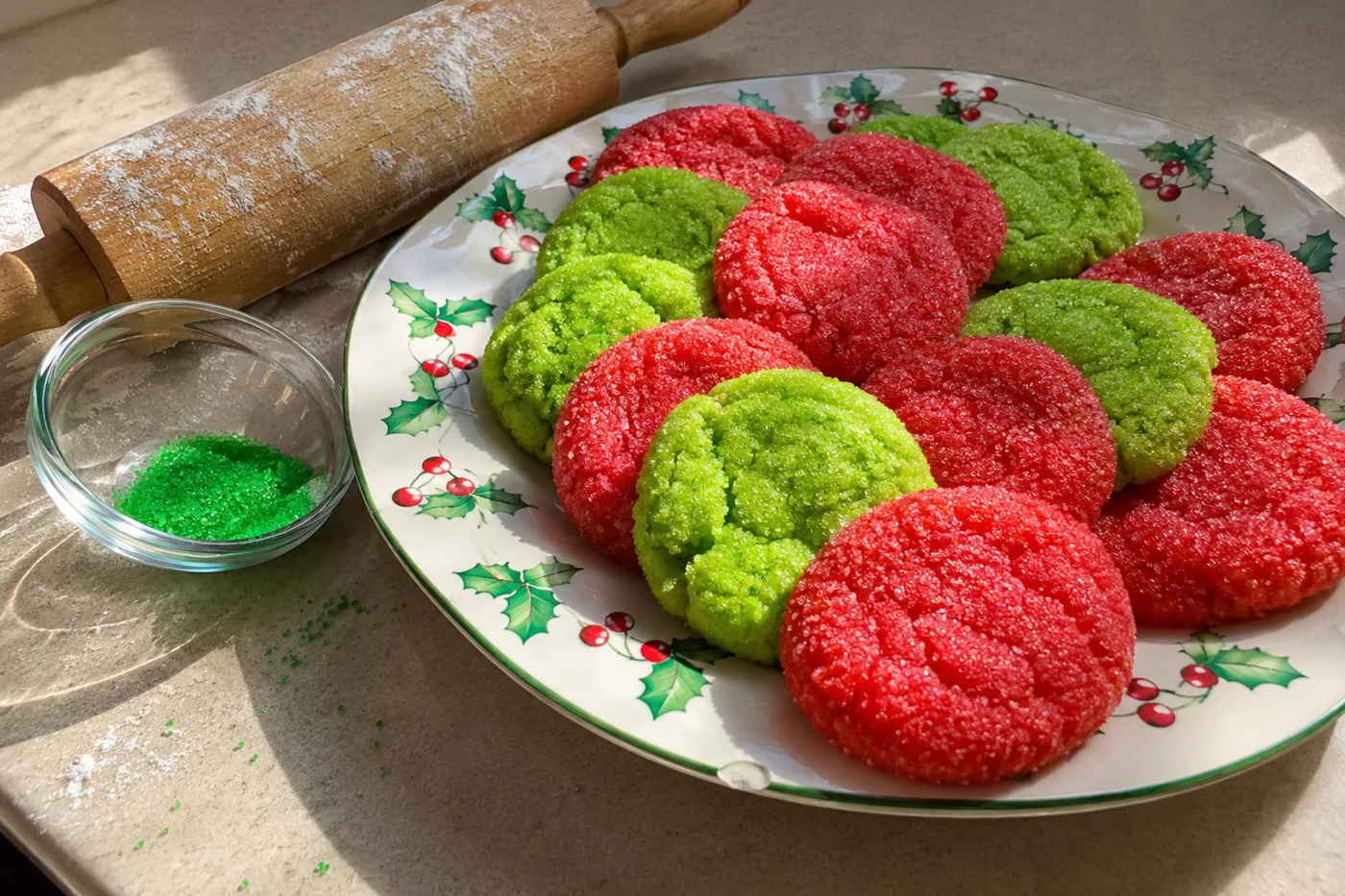
Sugar cookies made with a box of Jell-O came out as bright as Christmas lights, lime green and cherry red, and they smelled like the box.
Using Jell-O in cookies really caught on in the 1960s. A 1970s Jell-O ad pushed Fruity Cookies shaped with a cookie press, with lime and cherry suggested for Christmas. The company’s official recipe today still calls for “3/4 cup butter or margarine” and a 3-ounce box of cherry Jell-O.
That “or margarine” is a time stamp. Through the 1960s, butter lost ground fast, and recipe writers wanted cookies that worked with whatever sat in the refrigerator door.
#10 Melting moments, tender and powdery
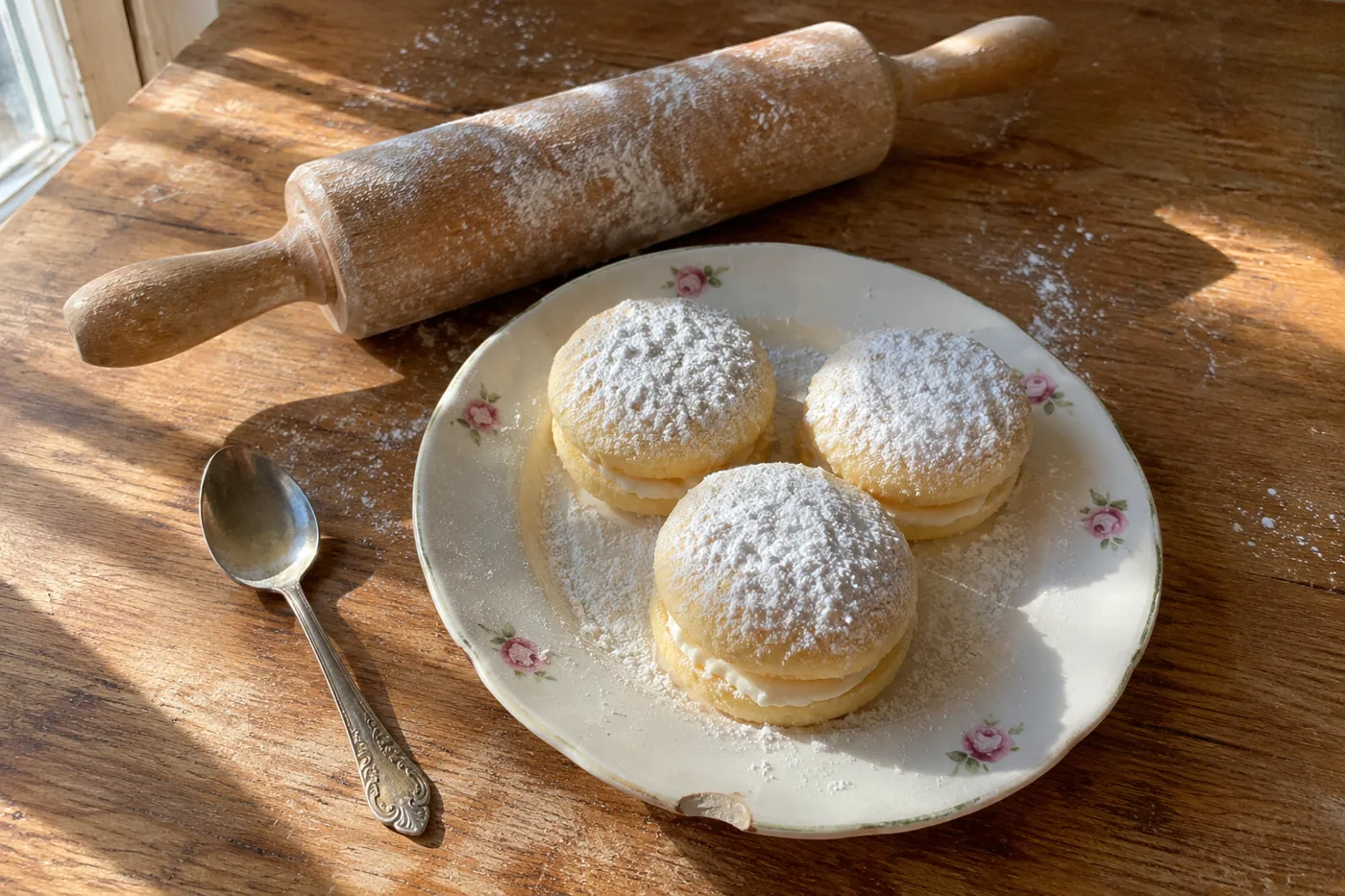
They were pale, tender and dusted in powdered sugar, and gone the second they touched your tongue. The secret was cornstarch, and plenty of it.
The cooks at America’s Test Kitchen found that cornstarch is what makes melting moments so tender, but it leaves behind a chalky residue with each bite. That faint dustiness you remember wasn’t the sugar.
Their fix sounds made up. Their tested version uses cake flour, confectioners’ sugar and ground-up Rice Krispies, which keep the melt without the chalk. Use their recipe, though, not cereal stirred into the old one.
#9 Persimmon cookies from backyard fruit
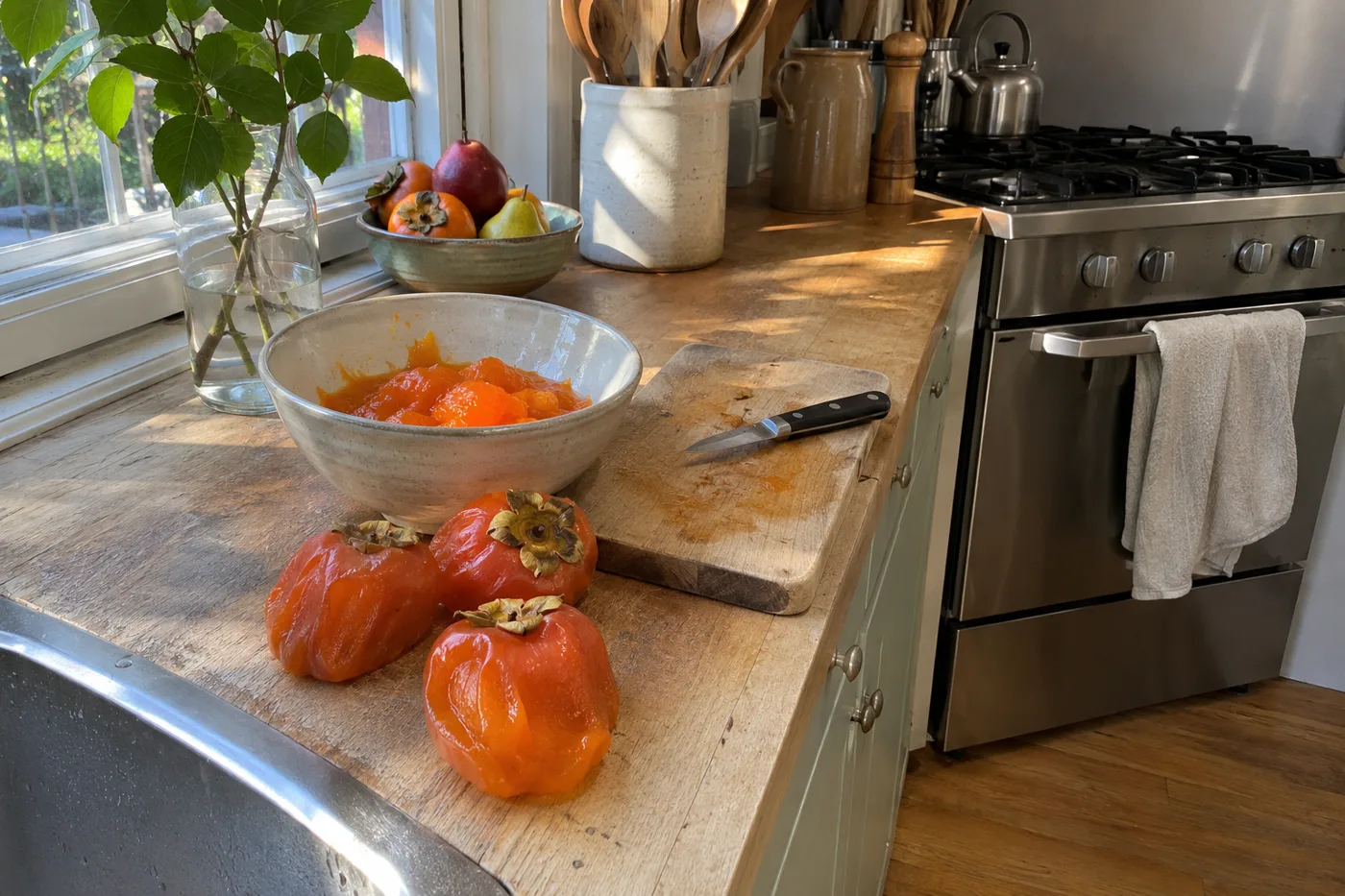
Where persimmon trees grew, fall meant soft orange fruit on the ground and a kitchen smelling of cinnamon a few weeks later. In plenty of places nobody had ever seen one. Where they did grow, persimmon cookies were a sure thing.
The wild American persimmon is so puckery when unripe that people wait for it to soften and drop, then bake with the pulp. That’s what made this a backyard cookie.
At the store today, the pointed Hachiya is the baking kind. It’s ready only when the inside has turned completely to mush and the skin looks see-through. It’ll look ruined, and that’s exactly right.
#8 Springerle and anise drops, dried overnight
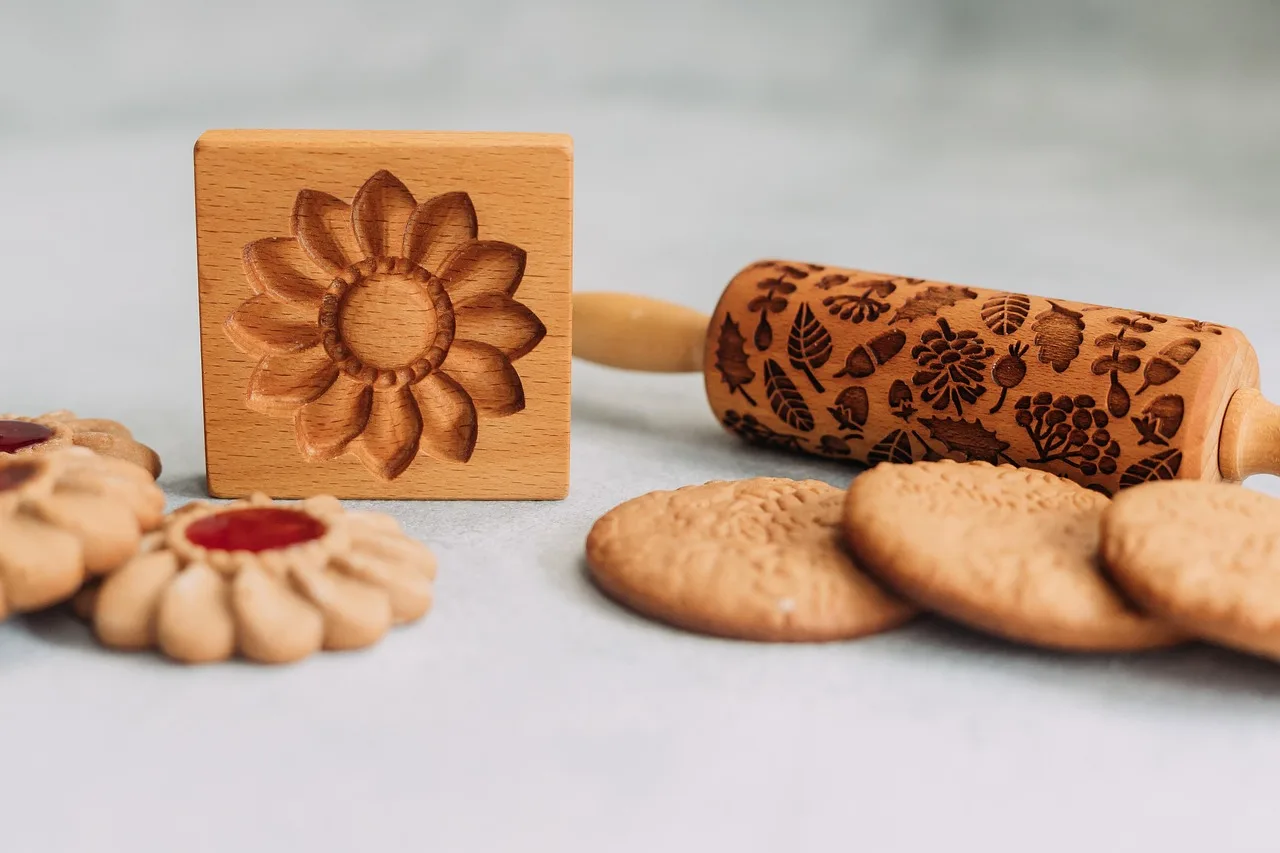
Some American families with German roots made springerle, white cookies with a little picture pressed into the top by a carved rolling pin or block. Then came the odd part. The cookies sat out on the counter overnight, uncovered, before they saw the oven.
For springerle, that rest is the trick. The dough dries for about a day so the picture sets, and in the oven the cookie rises underneath into a little “foot” along the edge. The anise seed went on the baking sheet, not into the dough.
Anise drops, the plainer cousin, often got the same overnight rest. A tester at The Takeout found no difference at all between three hours, eight hours and overnight, as long as the tops felt dry. So the anise drops can go in the same afternoon. The springerle still want their night on the counter.
#7 Pfeffernüsse, the little peppernuts
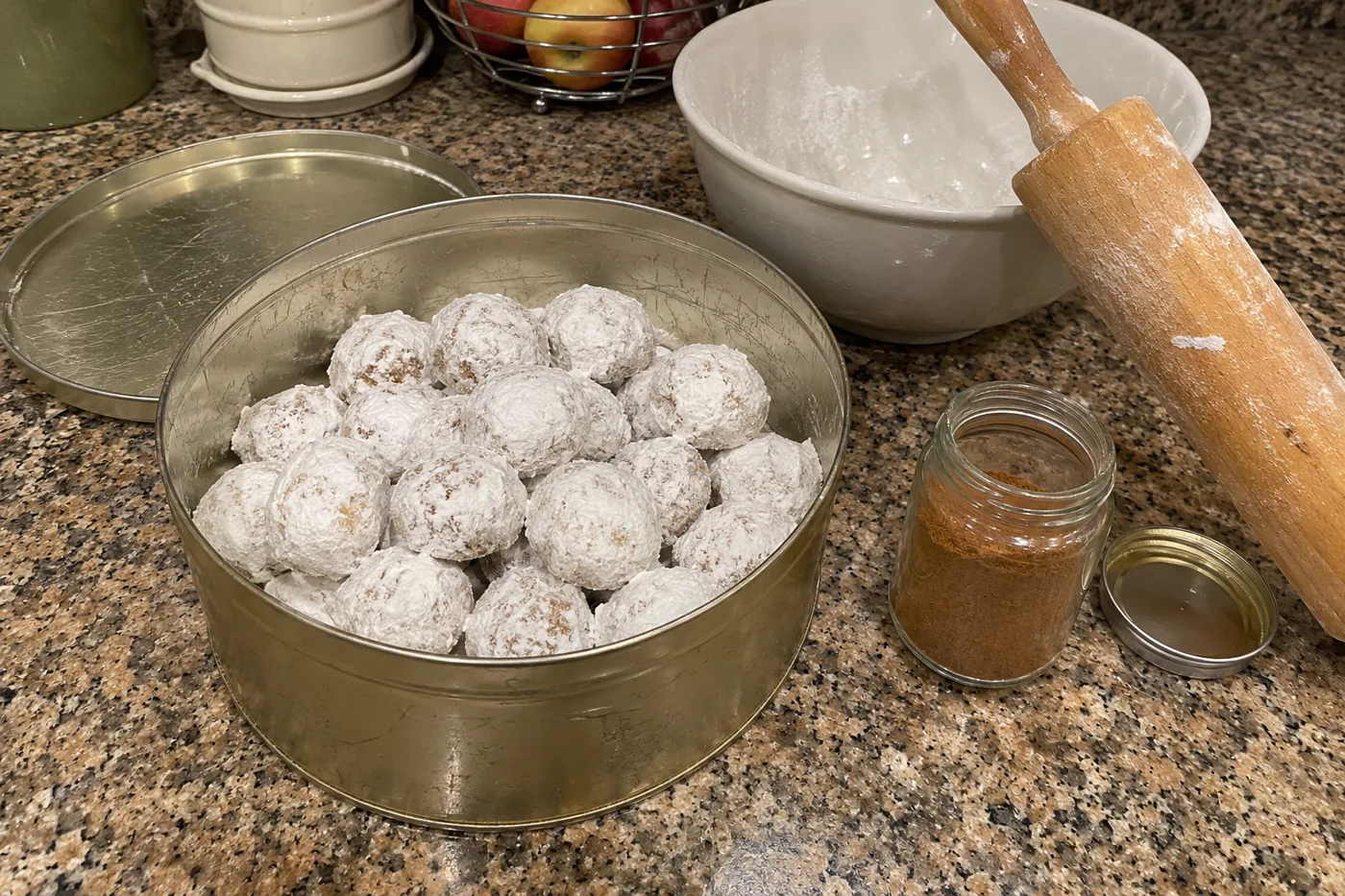
Small, round and buried in powdered sugar, they looked like the gentlest cookie on the tray. Then you bit in.
The name means pepper nuts, and it’s literal. They’re named for the pinch of pepper in the dough. The version baked in the American Midwest came out smaller and harder than the German one, with no eggs at all. Some Mennonite families flavor theirs with peppermint instead of the usual spices.
If yours could have cracked a tooth, that was the recipe working.
#6 Honey cookies, chilled for weeks
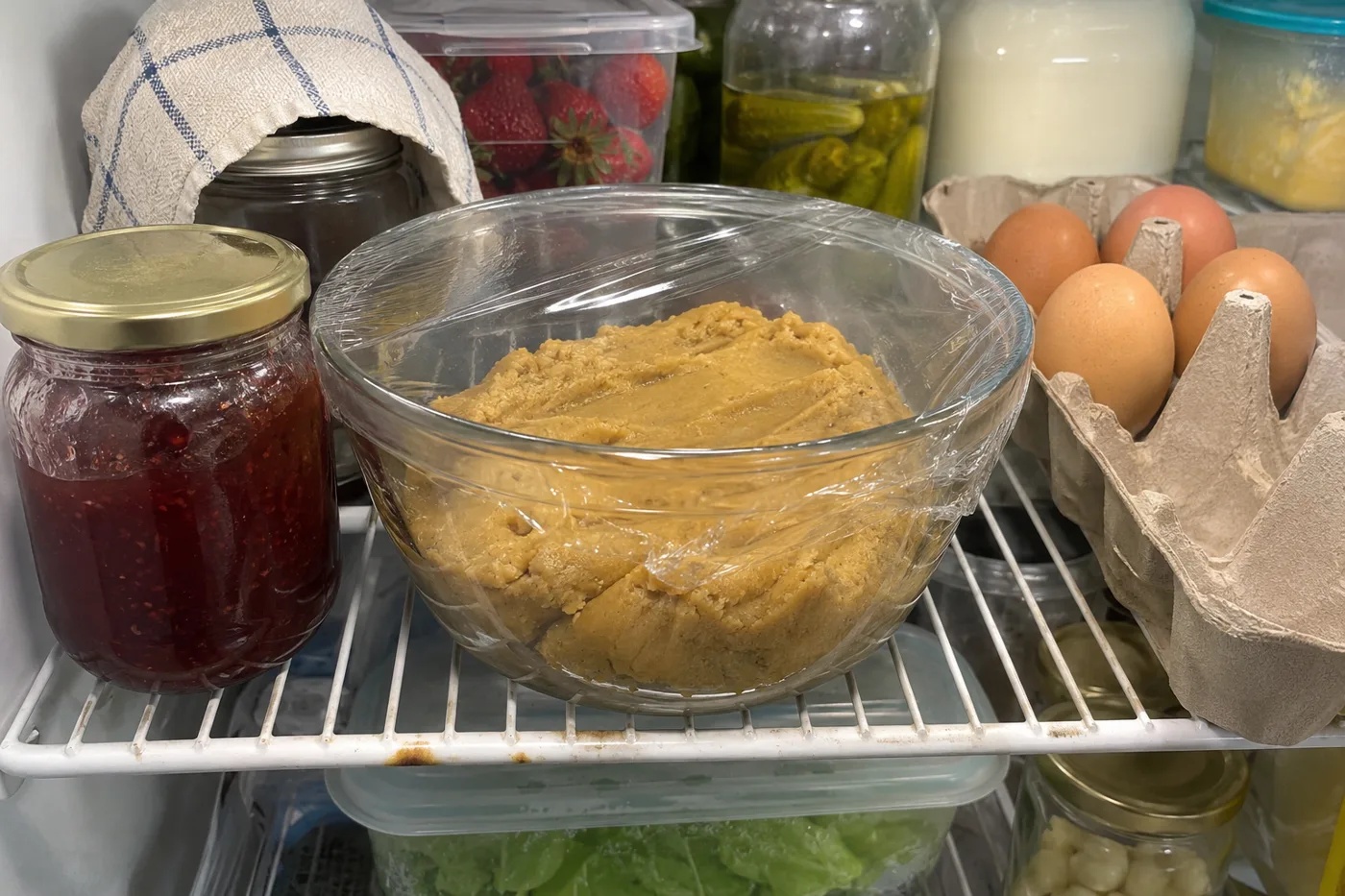
Some recipes took weeks of waiting. You mixed a honey dough, covered it and left it somewhere cool before baking a single cookie.
That wait comes from German lebkuchen, a honey gingerbread that goes back centuries. Bakers found that the resting dough fermented on its own and improved in texture, and it was traditionally started in November for December.
Start it a few weeks out and it’ll be ready well before Christmas.
#5 Cinnamon stars with a meringue glaze
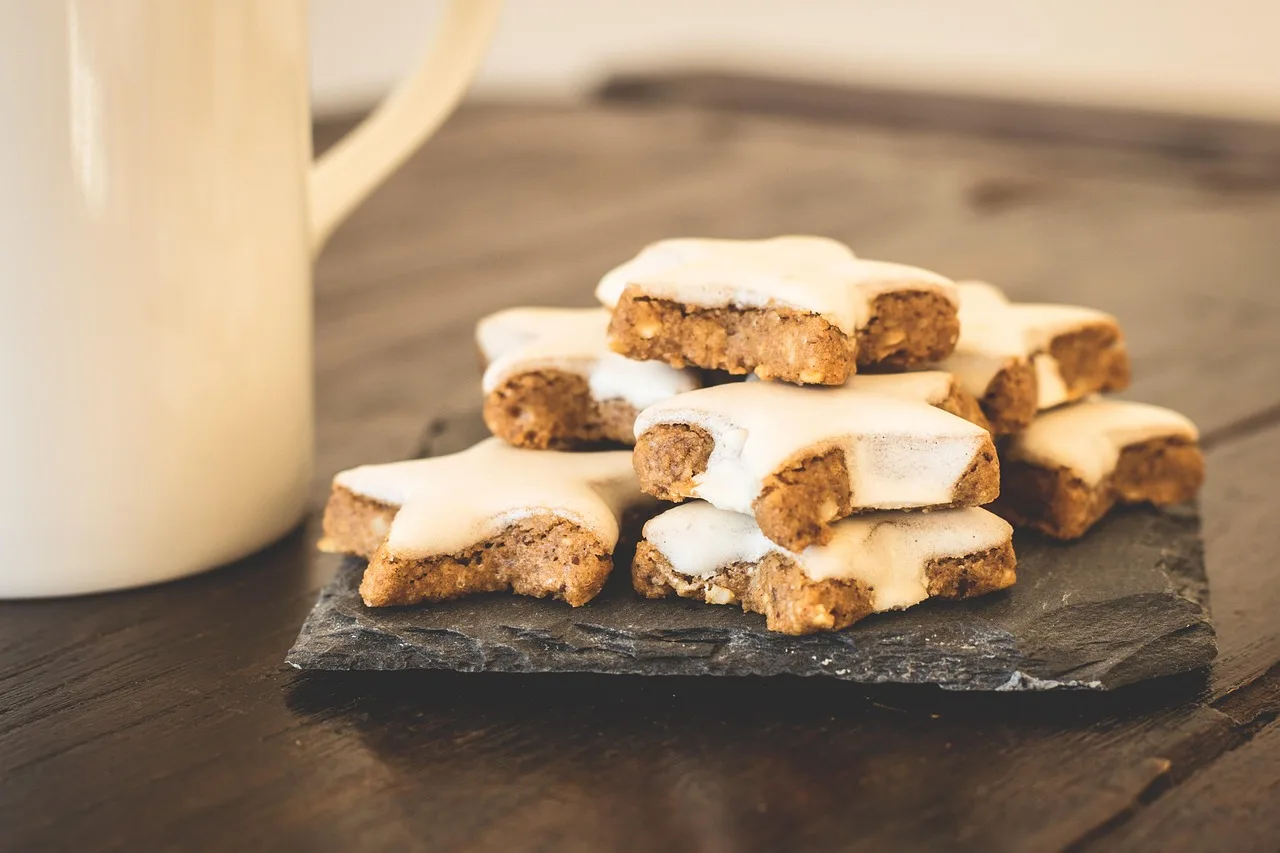
Star-shaped and chewy, with a glaze as white as snow on a roof. They were also among the fussiest cookies anyone made, because the dough is mostly ground almonds and egg white and sticks to everything. They bake at low heat so the glaze stays white.
They come from Swabia in southwest Germany. In this country they stayed a family cookie, and friends down the street often had never seen one.
#4 Swedish rosettes fried on a hot iron
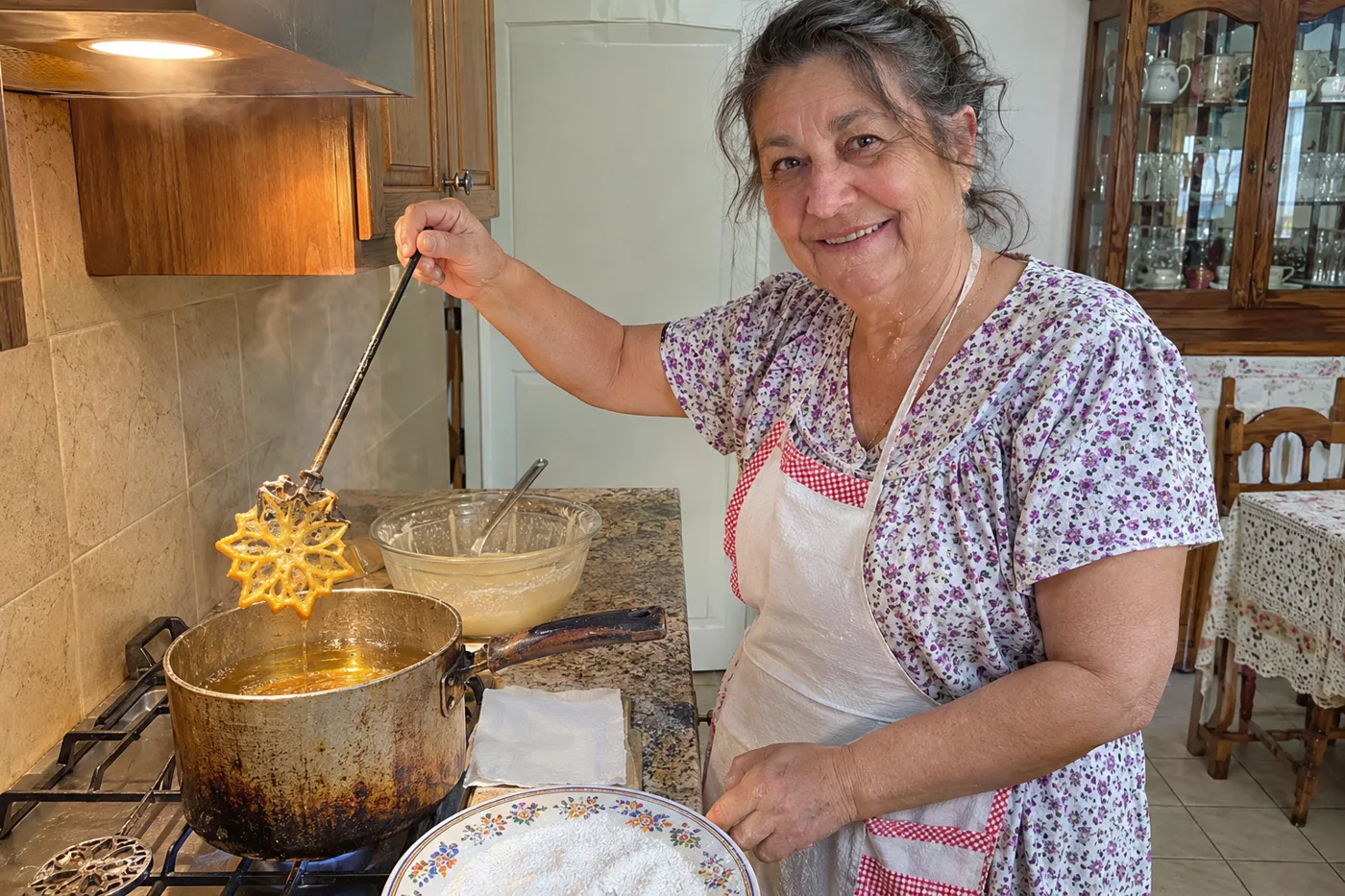
A long-handled iron shaped like a snowflake or a star, a pot of hot oil, a bowl of thin batter and a plate of powdered sugar waiting at the end. Rosettes came one at a time, and nobody minded standing there watching.
In this country, they stayed popular among families with Scandinavian roots.
The old tricks still work. Heat the iron in the oil before each dip, and keep the oil at 375 degrees, because cooler oil makes soggy cookies. Dip the iron only three-fourths of the way into the batter. Let it go over the top, and the cookie sticks to the iron for good.
#3 Walnut kiflies and almond crescents
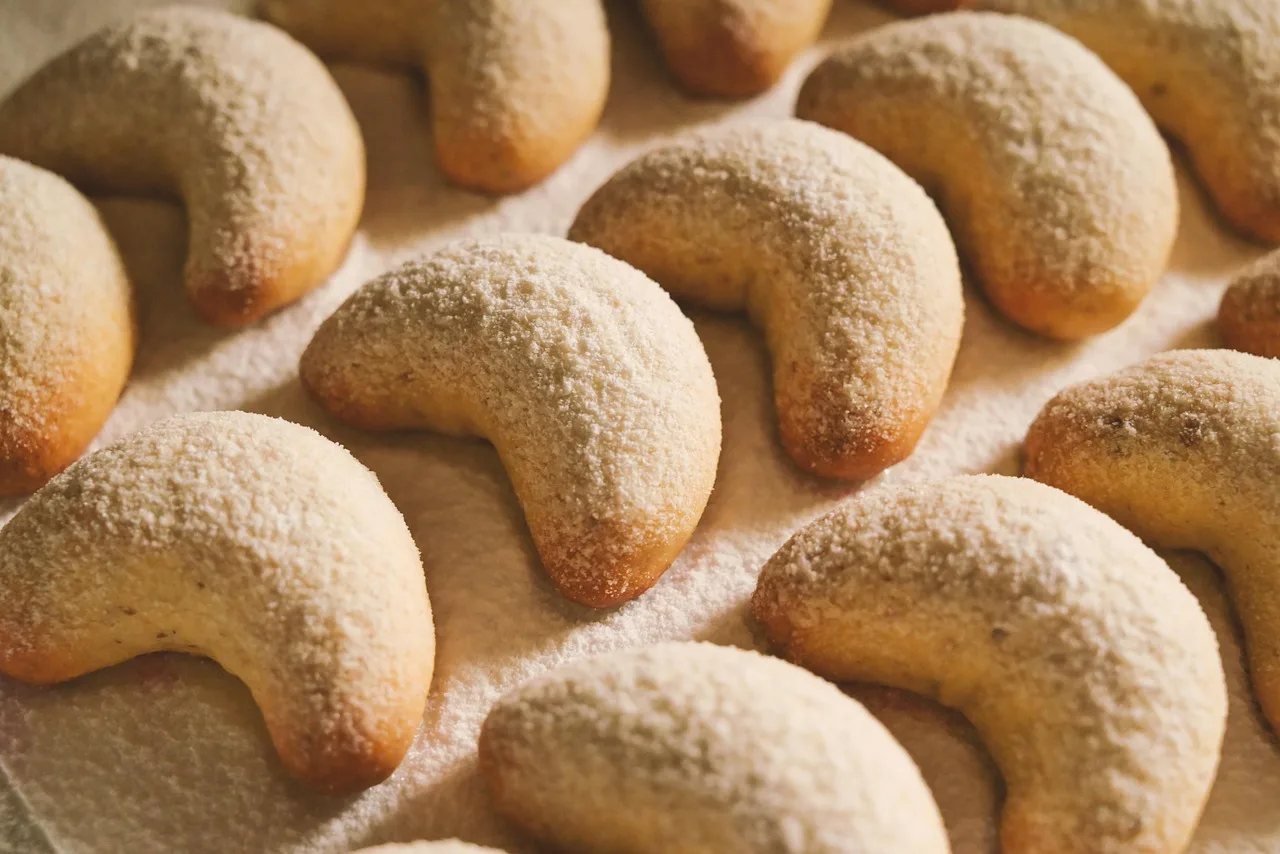
Little half-moons, some filled with ground walnuts, some rolled in vanilla sugar, and the whole kitchen smelled like a bakery. The almond ones got their coat of vanilla sugar after they came out of the oven.
Many American families with Slovak or Austrian roots had their own version, and every one was sure theirs was the real one.
You may have heard the crescent was invented to celebrate beating the Ottoman army at Vienna. It’s a good story, and it may be wrong, since crescent rolls were already recorded in Vienna long before any siege. Not that it mattered at the kitchen table. Everyone already knew whose recipe was the real one.
#2 Cuccidati, Sicilian fig-filled cookies
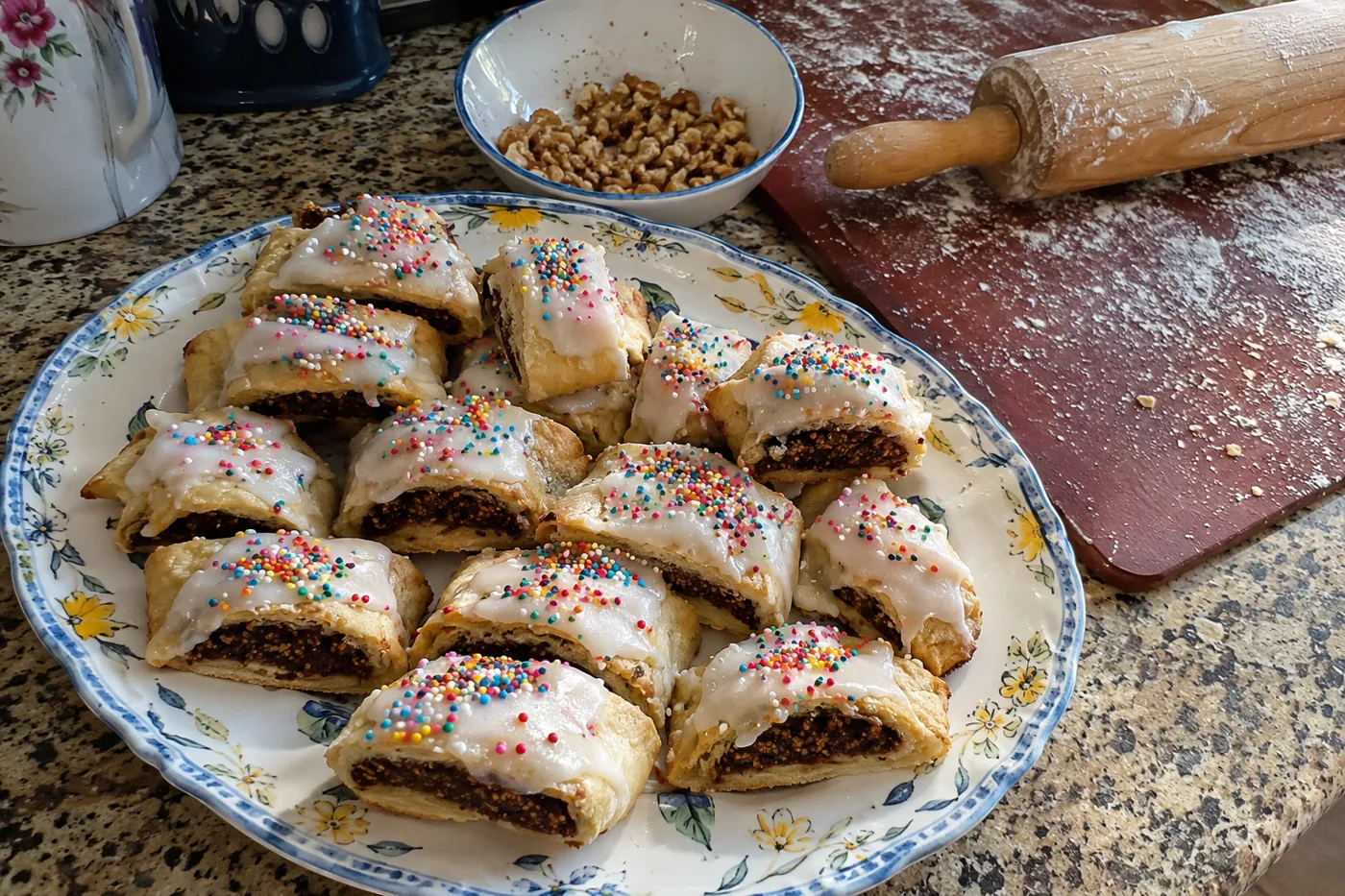
If you grew up near an Italian bakery or a Sicilian family, you may know these. Pastry wrapped around a dark, sticky filling, cut into short logs or bent into rings, iced white and covered in rainbow sprinkles.
The filling is some mix of figs, dates, walnuts, honey, spices and orange or apricot jam. The rings even have their own name, buccellati, which means little bracelets.
The figs and dates hint at where the cookie came from. Sicilian chef Franco Lania says much of the island’s food, especially around Palermo, carries Arabic influences. Over here, they came from that bakery or that family’s kitchen, and you were lucky if a plate came your way.
#1 Pizzelles from Mom’s well-worn iron
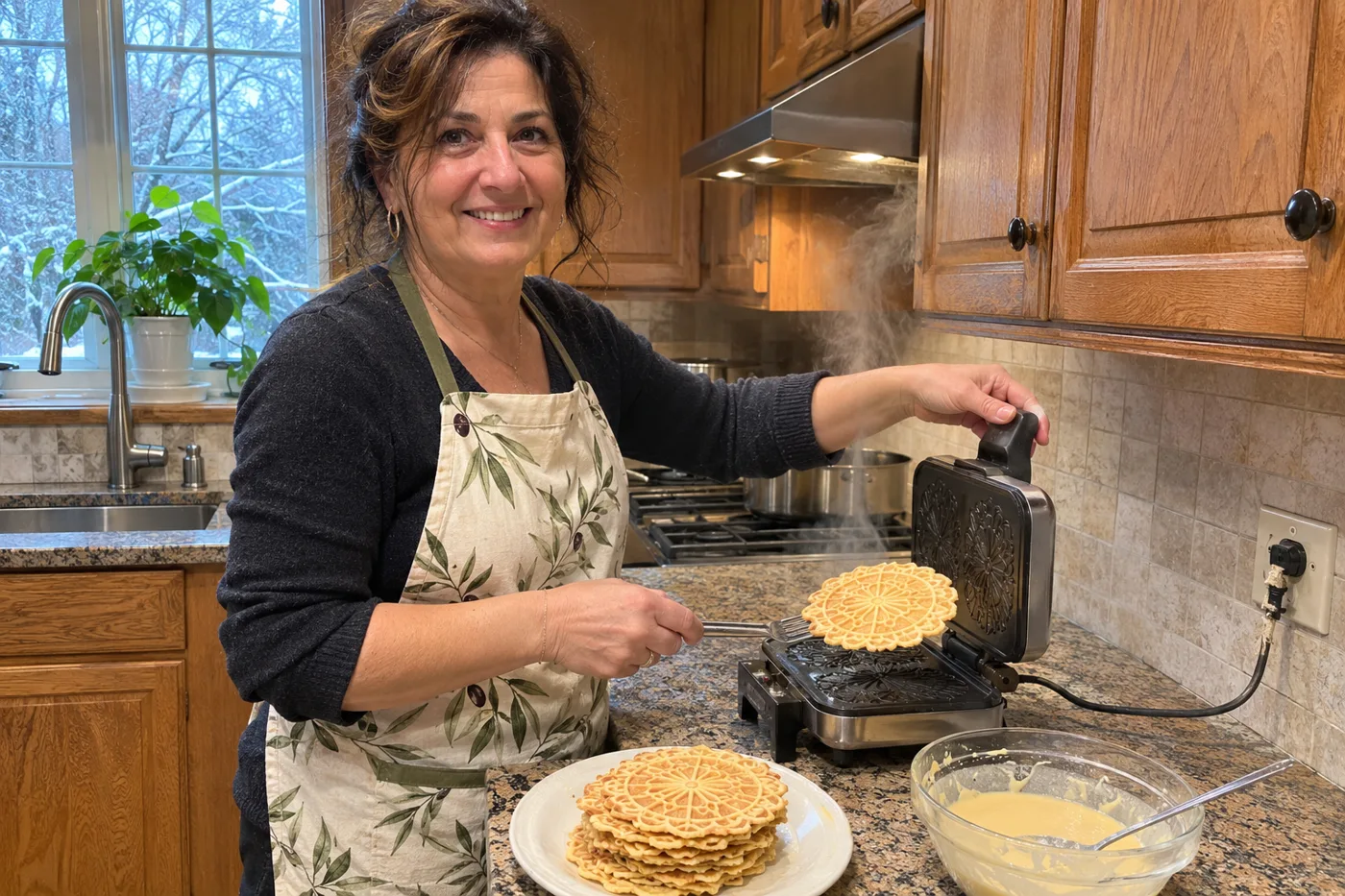
The iron came out once a year, heavy and dark at the hinges. The kitchen filled with the smell of anise and the hiss of batter on hot metal, and thin pizzelles stacked up by the dozen.
They began in Ortona, in Italy’s Abruzzo region, on long-handled irons held over the stove.
If the iron you remember plugged into the wall, its story may run through Steubenville, Ohio. A local history column credits Charles DeMarco with inventing an electric pizzelle iron in his machine shop in the 1950s. He and his wife patented it and sold it nationwide from 1959 to 1969.
When a family house gets cleared out, that iron is often the first thing people go looking for, and some never find it.
Some families got the whole neighborhood saving coffee cans for the pizzelles. If an old can is still sitting in a cupboard, you already know what it’s for.
The bottom line
Here’s a question worth an afternoon: which cookie on that tray do you still tie to one person? If that person is still around, ask them to show you, not tell you.
If they aren’t, the recipe box is the next best thing. Start with the card that has the most butter stains.
Bonus: How to keep an old recipe card from fading away
- Photograph the front and the back before you bake from it. The note that matters is often on the back.
- Bake from a copy and keep the original in a box well away from the stove and the sink.
- In pencil on the back, write who it came from and what your family called the cookie. Names drift, and in twenty years nobody will know that “snowballs” and “tea cakes” were the same thing.
- Don’t laminate it. The heat and plastic can’t be undone, and the card loses its feel.
- Send copies to anyone else who remembers the same tray, so the recipe lives in more than one box.
Questions people also ask
Why do old recipes call for “butter or margarine”?
Because in the 1960s, plenty of kitchens had margarine instead of butter. Butter fell from about 7.5 pounds per person in 1958 to 5.0 pounds by 1972, while margarine climbed to a peak of 12.0 pounds by 1976.
What’s the difference between a pizzelle and a rosette?
A pizzelle is baked flat between the two plates of a hot iron, while a rosette is fried. For rosettes, a metal mold is heated in oil, dipped in batter, then lowered into oil kept at 375 degrees. Pizzelles come from Italy’s Abruzzo region, and rosettes are a Swedish and Norwegian tradition.
Is there really meat in mincemeat?
Not usually. Store-bought mincemeat has been mostly meatless since around the 1900s. These days it’s a seasonal item, so ask in the baking aisle.
Why don’t my old cake-mix cookie recipes turn out the same?
The boxes got smaller, by about three ounces at Pillsbury in 2013. Less mix means less structure, so use a recipe written for the size of box you have.
Related posts:
23 Things Women Over 60 Keep Without Thinking That Professional Organizers Never Would
24 Crafts Every Woman Made in the 1970s That Nobody Does Anymore
22 Things Home Economics Taught Girls in the 1960s That Schools Dropped
17 Things in Your Mother's Sewing Box Worth Keeping
18 Christmas Decorating Habits People Over 60 Still Have That Fire Experts Beg Them to Stop
19 Sewing Skills Your Mother Had That Nobody Has Now

- 24 Things People Over 60 Still Do When Cleaning That Experts Beg Them to Stop - November 6, 2026
- 21 Handmade Gifts From the 1970s Your Grandchildren Have Never Seen - November 6, 2026
- 25 Homemade Christmas Decorations From the 1960s, and What Became of Each One - November 6, 2026

Leave a Reply