The one at #1 is a small daily chore that’s easy to forget when the stand is hidden behind presents, and it keeps a real tree from drying out.
It’s the first Saturday of December. The radio’s on, and your living room floor is covered in boxes: light strings, garland, stockings, the candles that only come out once a year.
Most of what’s in those boxes can stay. A handful of the habits that come out with them can’t, and fire officials warn about the same ones every winter.
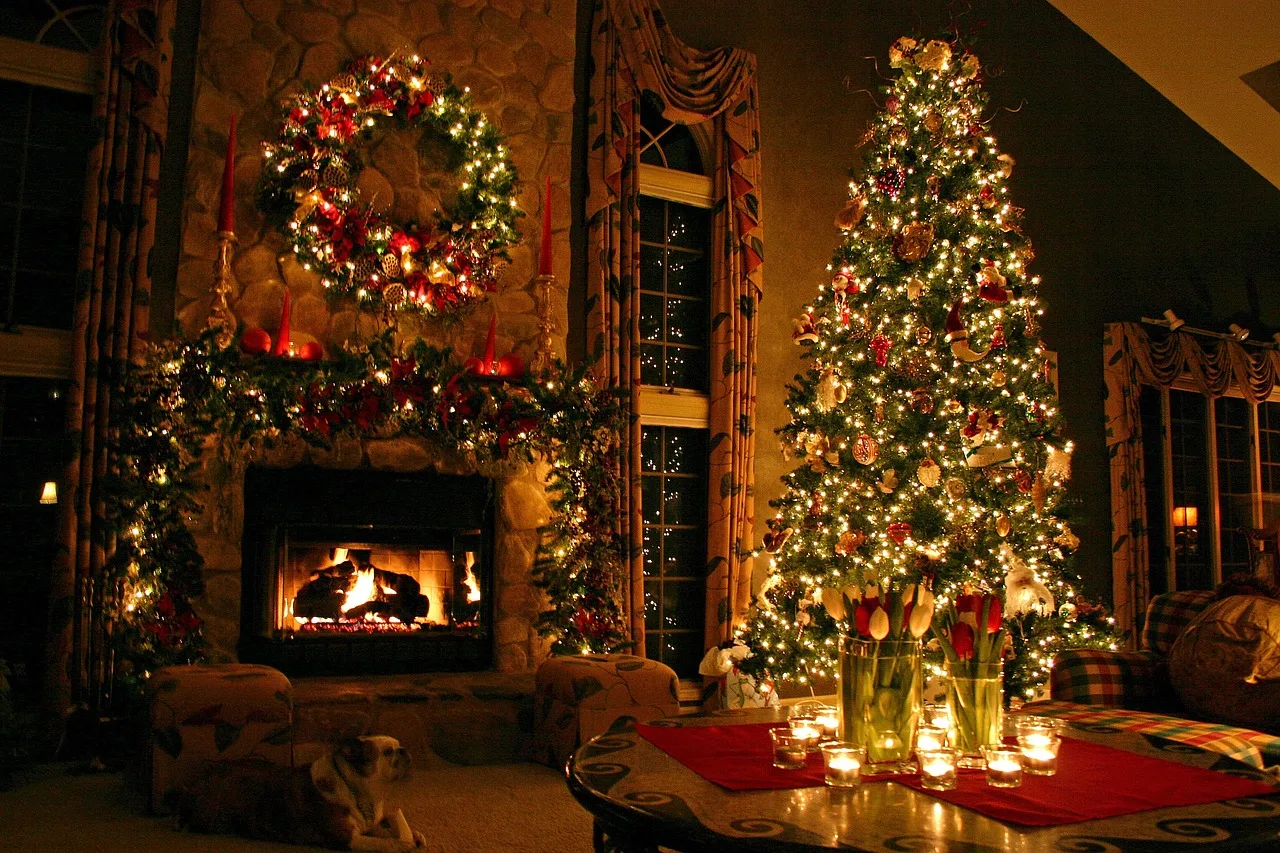
#18 Leaving the tree lights glowing all night
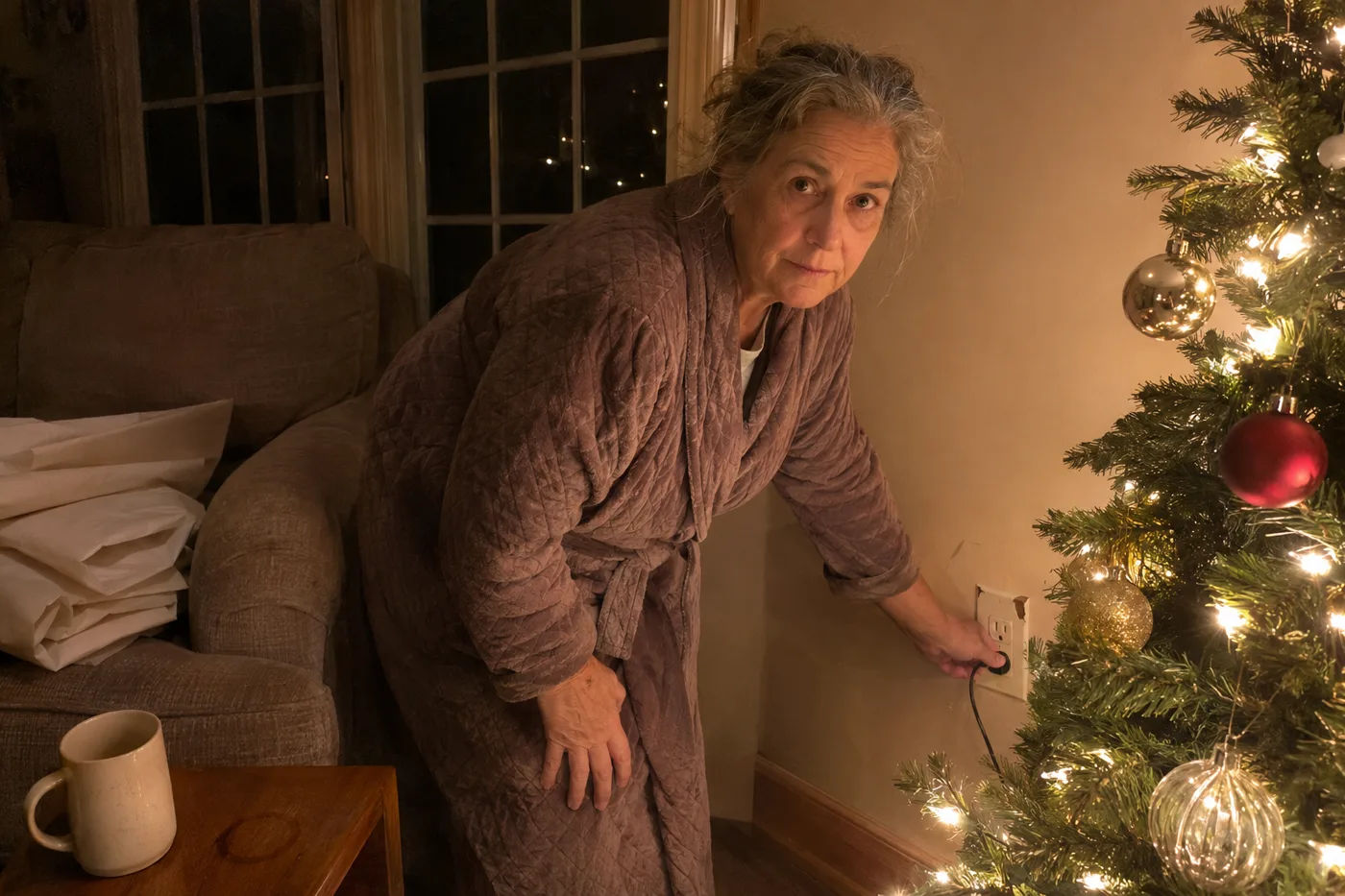
The tree looks its best at 11 p.m. with every other lamp off. That’s exactly when a lot of people doze off on the couch and let it glow until morning.
U.S. fire departments go to about 143 home fires a year that start with a Christmas tree. In nearly one in four, lamps or bulbs started it, fire records from 2020 to 2024 show.
Many people grew up with a simple house rule: lights on only when somebody’s in the room. Fire departments say the same thing. Unplug the lights before you go to bed or leave the house.
Make the plug the last thing you touch before you turn in. The tree will be just as pretty at breakfast.
#17 Lighting a candle, then leaving the room
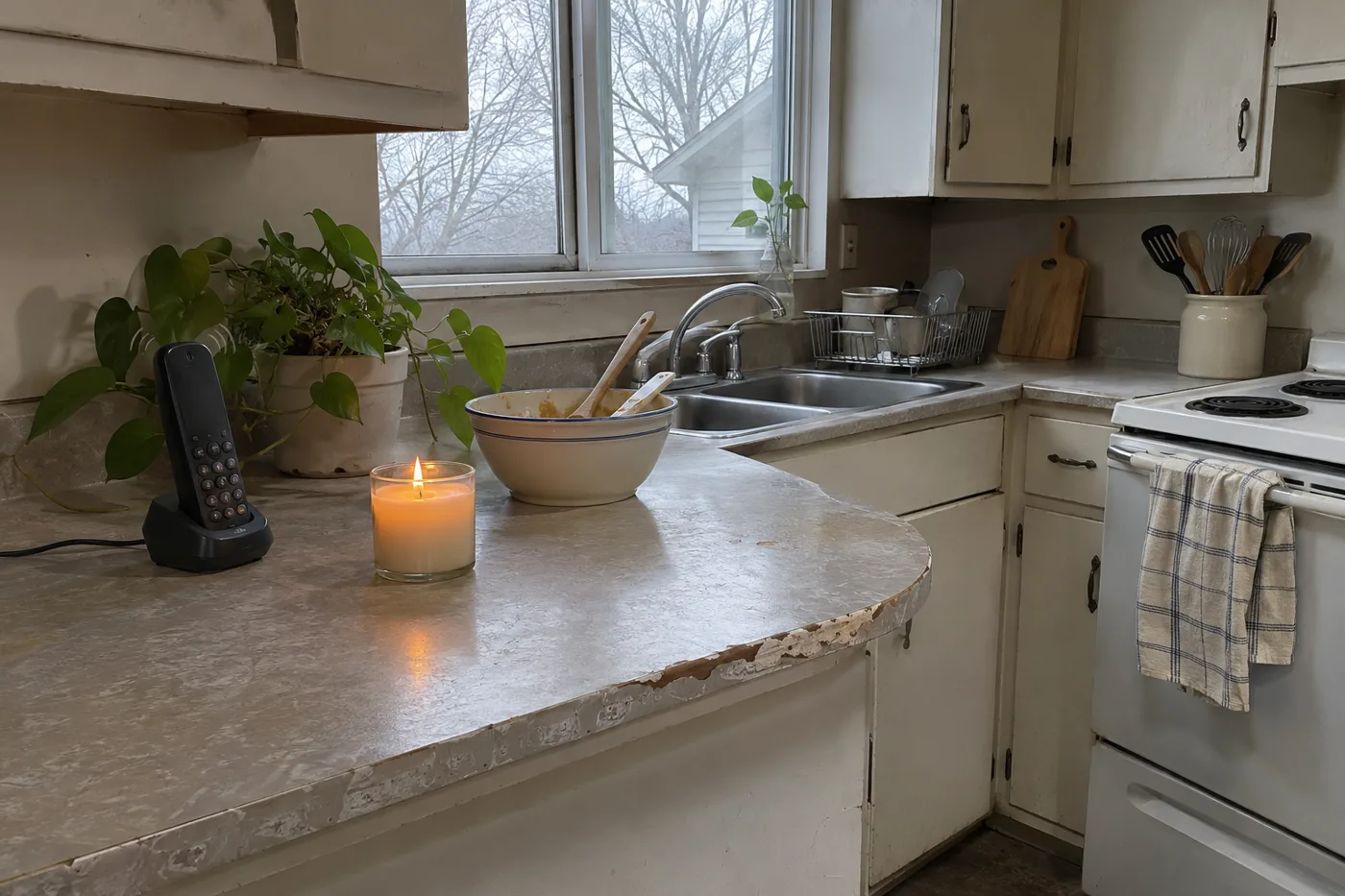
You light the pine candle on the kitchen counter. Then the phone rings, then the dryer buzzes, and forty minutes later you smell it before you remember it.
Everybody worries about the tree, but candles start far more holiday fires. Counting only November and December from 2016 to 2018, the federal safety commission found about 1,100 candle fires a year and about 100 Christmas tree fires.
That works out to roughly 11 candle fires for every tree fire. (The 143 in #18 is a newer count that covers the whole year.)
Falling asleep played a part in 10% of home candle fires. The fix is to blow it out whenever you leave the room or go to bed.
#16 Keeping a Thanksgiving-weekend tree past Christmas

The weekend after Thanksgiving has a pull to it. The leftovers are in the fridge, the lot just opened, and the best trees go first.
The catch is the calendar. Fire officials in Kemah, Texas, say it’s best to discard a cut tree within one month of buying it. A dry tree burns very hot and very fast, the U.S. Fire Administration warns. Bring one home that Saturday and it hits a month right around Christmas.
If you buy that weekend, plan to take it down within a month, or sooner if it starts to dry out.
Either way, shop smart. Tap the trunk on the ground at the lot. A few brown needles from the inside are normal, but lots of green ones dropping means it’s already drying out, says Washington State University tree expert Gary Chastagner.
At home, saw about a quarter inch off the bottom, straight across. An angled or whittled cut drinks less.
#15 Hanging the same light strings without checking them
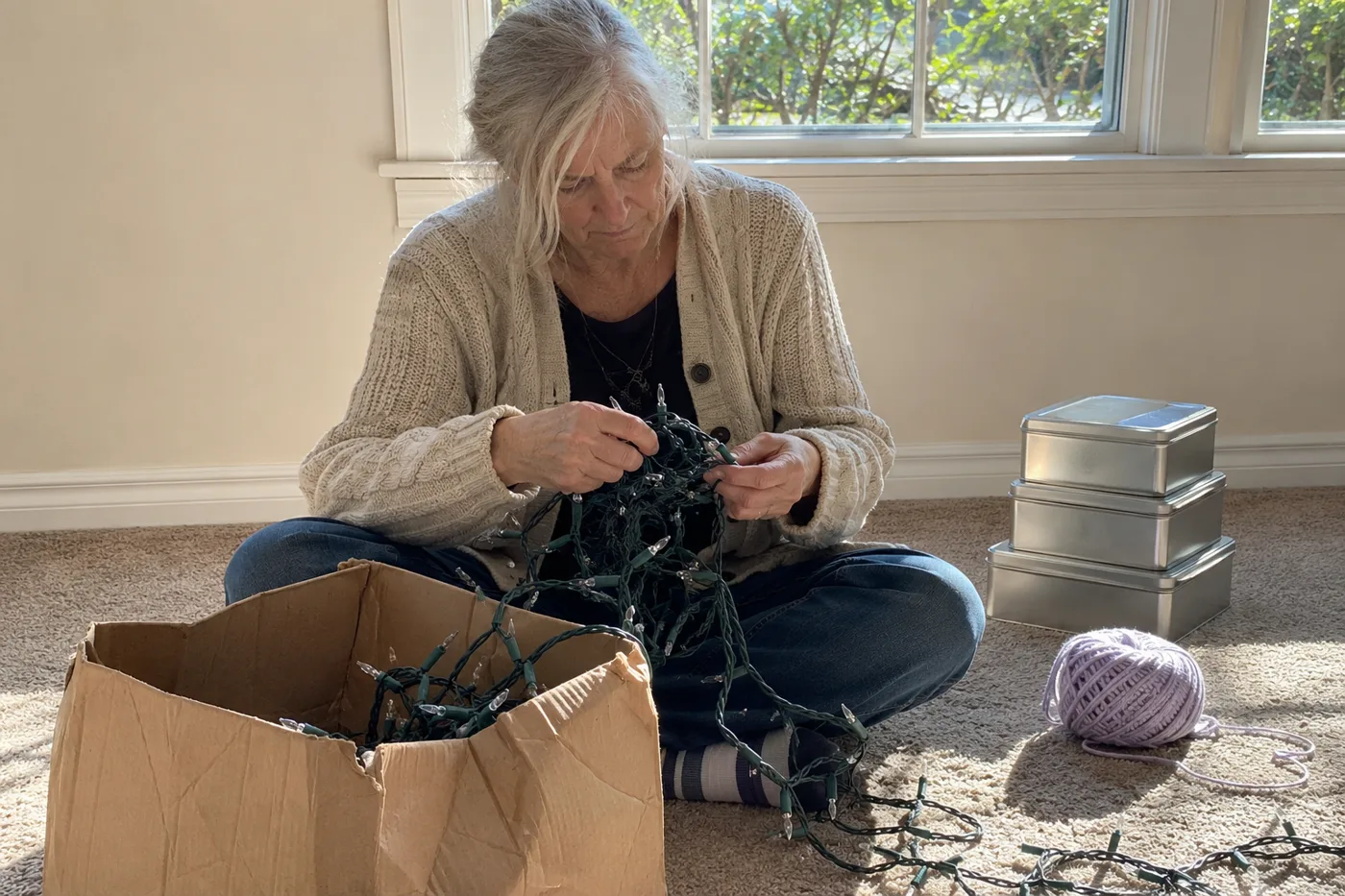
Somewhere there’s a cardboard box of light strings wound into a knot that took three people to make. Every year it comes down, and every year the same strings go right back up. Those lights have seen a lot of Decembers.
Check every string before it goes up. Doug Reynolds, a fire battalion chief in Henrico County, Virginia, says, “You’re looking for broken bulbs, frayed wires, any of those things.” The U.S. Fire Administration says to throw away strings with frayed or pinched wires.
When you buy new ones, look for the UL label on the box. It means the lights met basic safety testing standards.
#14 Three skinny extension cords plugged end to end
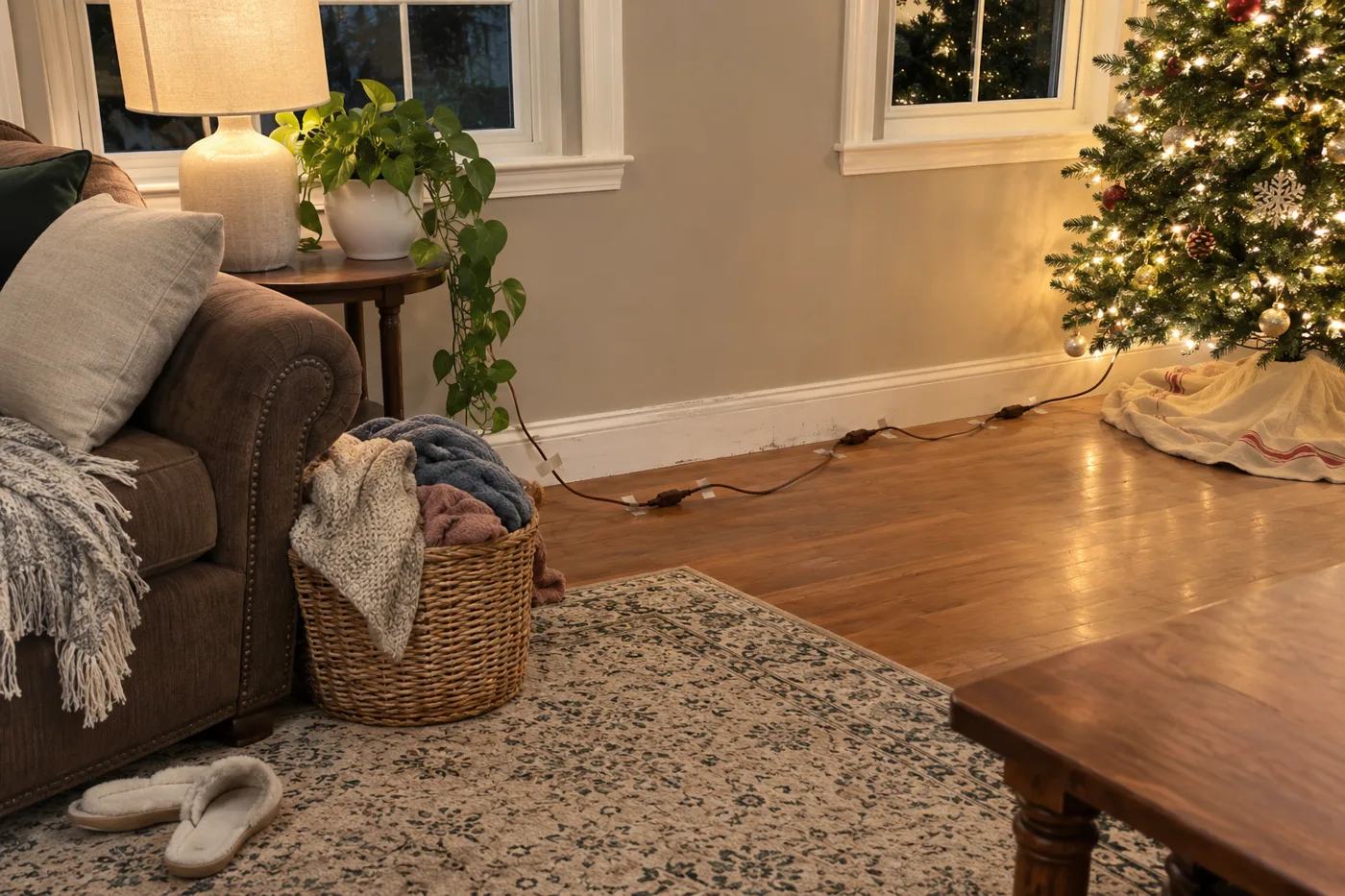
The outlet is behind the couch and the tree is across the room. The junk drawer holds three skinny brown cords, so you plug one into the next into the next, and it reaches.
Firefighters call that a daisy chain. “You’re getting these inexpensive extension cords, and it’s one plugged into another one,” says Reynolds.
Seattle’s fire department puts it flatly: don’t connect one extension cord or power strip to another. Replace any cord that feels hot to the touch.
Use one cord that’s long enough on its own and rated for the lights you’re plugging in. The brown ones can go back in the drawer.
#13 The tree in the bay window, right over the radiator

There’s a reason so many trees end up in the front window or next to the fireplace. It’s the spot people see from the street, and it’s the spot the furniture leaves open. In a lot of older houses, that spot also has a radiator under it.
Fire officials want at least 3 feet between the tree and any heat: fireplaces, radiators, space heaters, candles and heat vents. A floor vent blowing on the trunk counts.
Heat works on the tree slowly, too. Vents, fireplaces and even direct sun dry it out faster, Chastagner says, while turning the room down a little slows the drying and cuts how much water it uses.
Measure once with a yardstick, and you never have to wonder again.
#12 The big old C7 and C9 bulbs
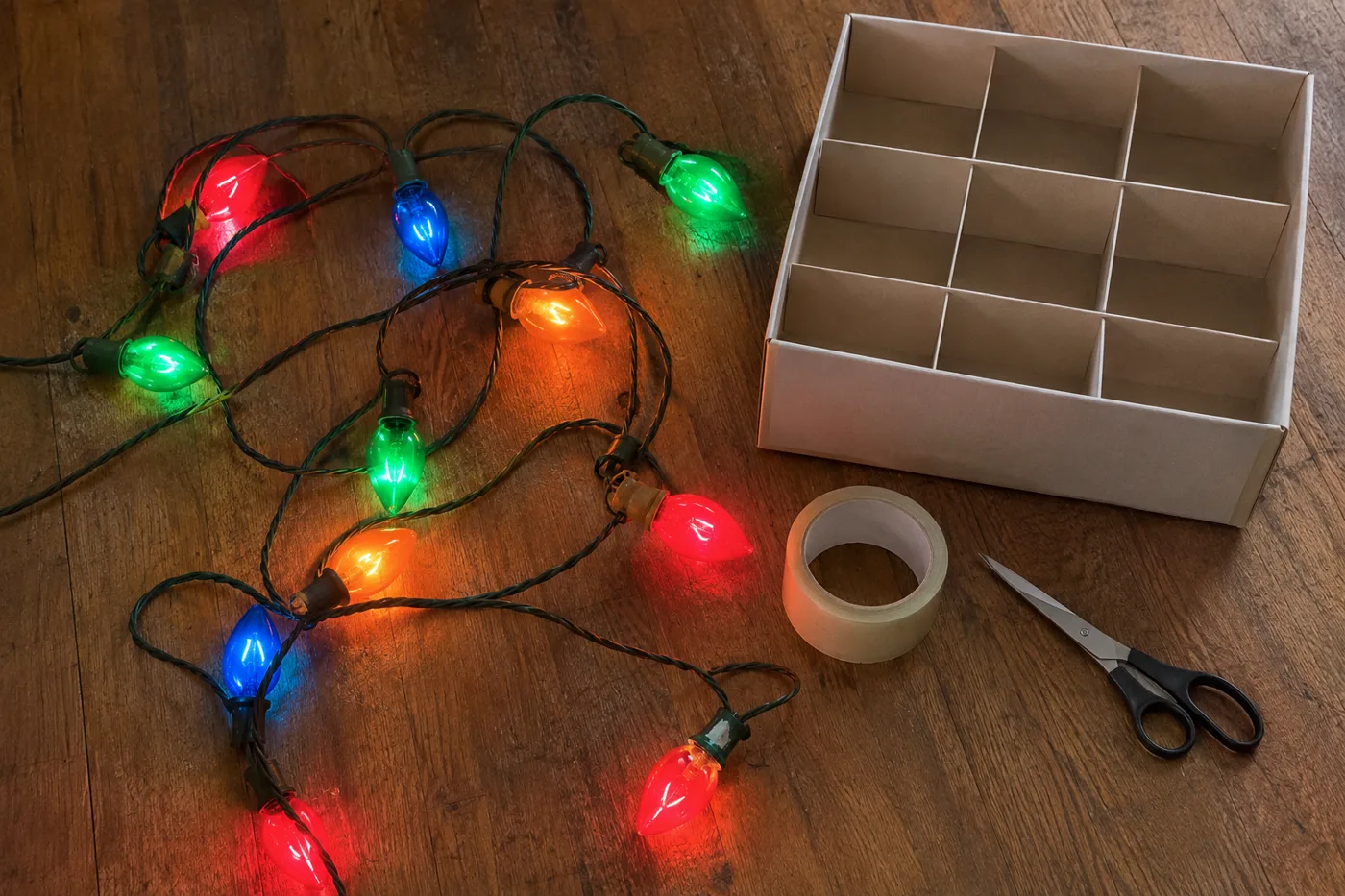
Nothing glows quite like the big old bulbs, the fat red, green, blue and orange ones that got warm in your hand if you held one. That warmth is the whole problem.
An old-style bulb makes light by heating a thin wire until it glows, so a lot of what it gives off is heat, the Department of Energy explains. LED strings, the newer kind, give off far less heat and use about 70% less energy.
That’s heat tucked in among dry needles. Put LEDs on the tree, and let the big old bulbs retire to their box.
#11 The tree still standing in mid-January
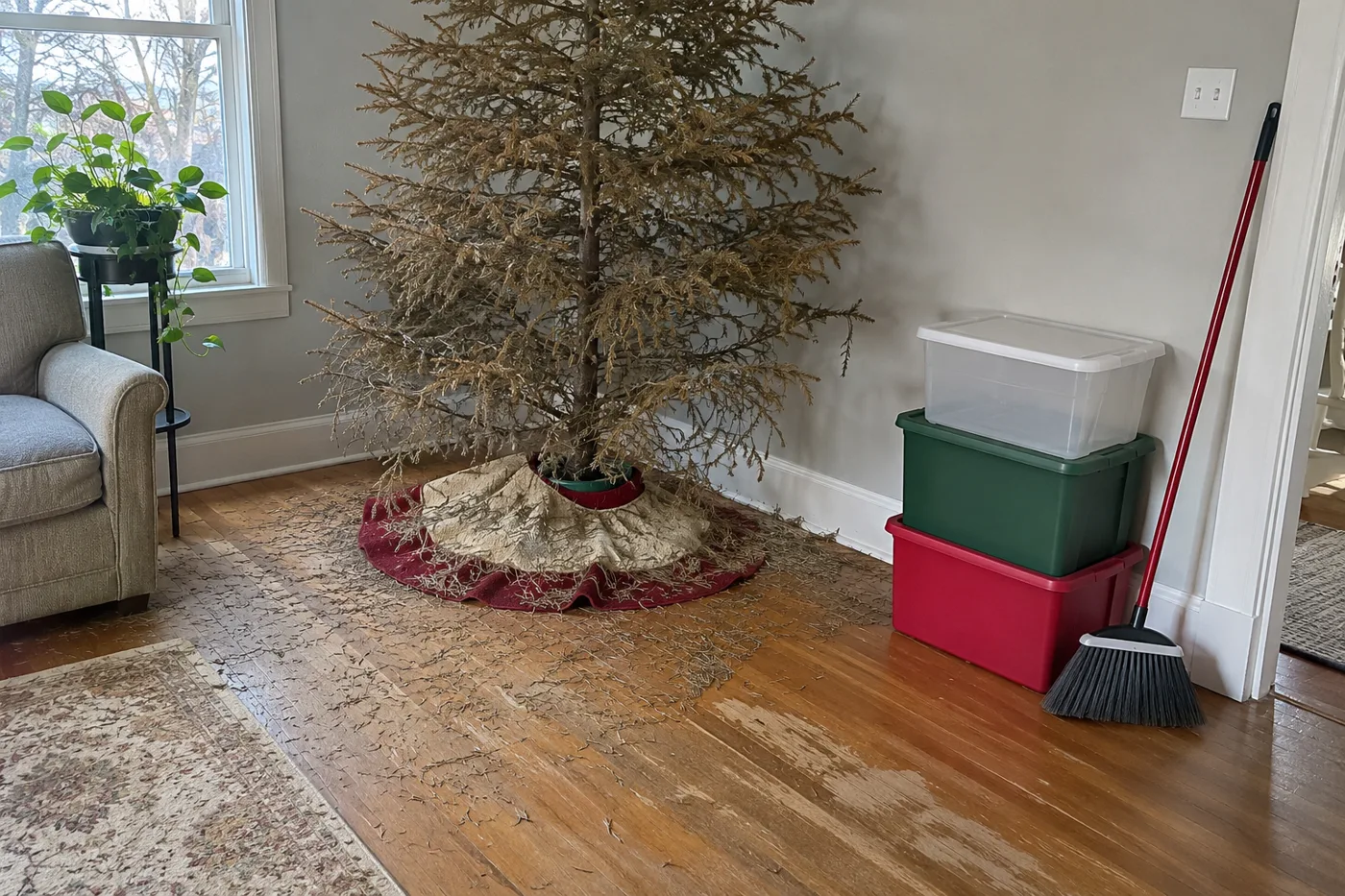
Some houses keep the tree up through Epiphany. Some keep it until the needles hit the carpet every time someone walks past. Some keep it because taking it down eats a whole afternoon.
January is when the risk peaks. 35% of home Christmas tree fires happen in January. “The longer they’re in the home, the more of a risk they present,” says Lorraine Carli of the National Fire Protection Association.
The tree tells you when it’s done. A shower of falling needles means it’s too dry, Kemah’s fire department says.
If you brush past and it rains needles, that’s your cue. Ornaments go back in the box, and the tree goes out the door.
How long is too long
- Get a cut tree out within about a month of buying it
- Use a curbside pickup or a county drop-off site; most counties have a free one
- Don’t park it in the garage or leave it outside to deal with later
#10 Wrapping paper tossed into the fireplace
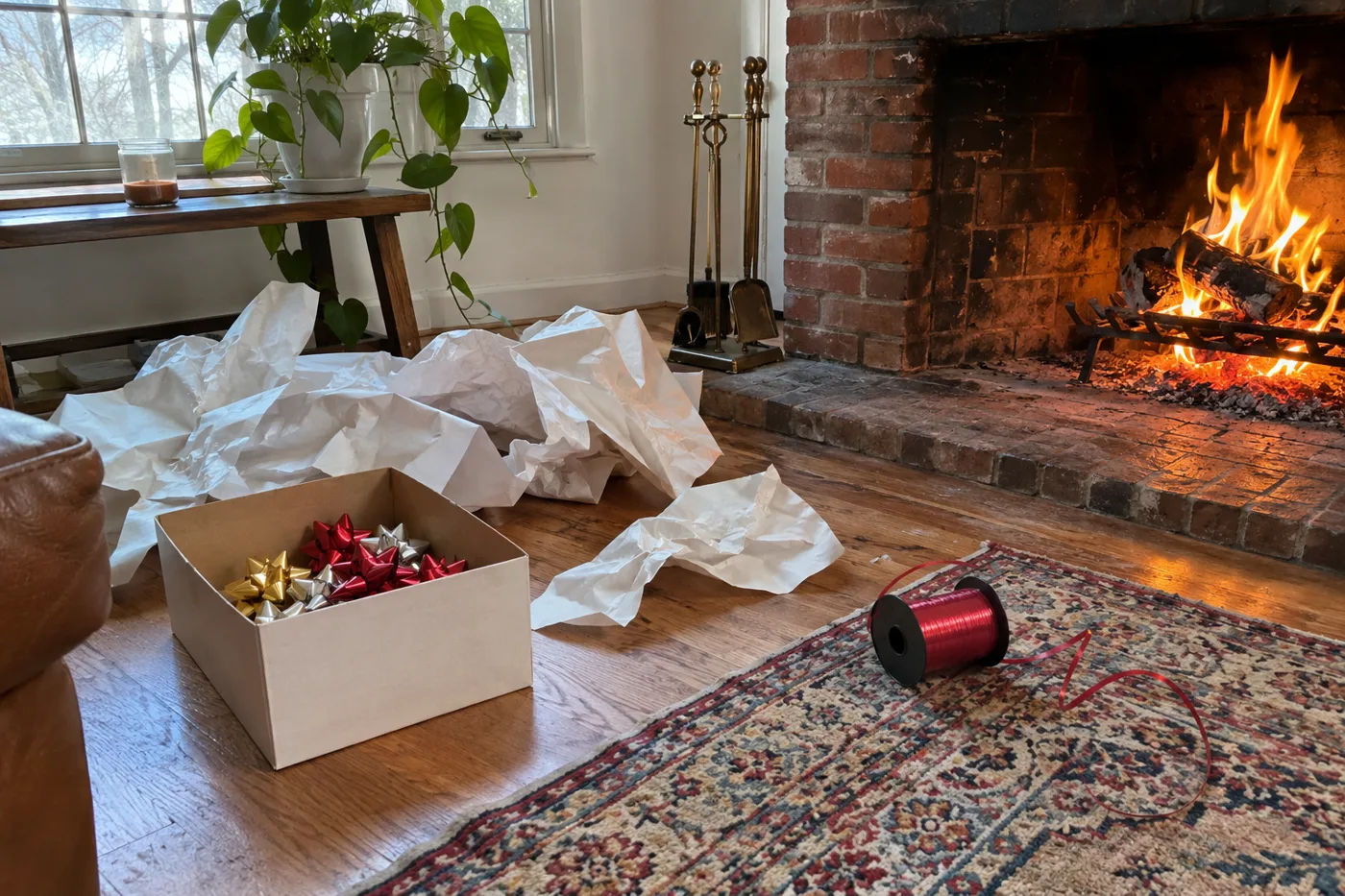
It’s Christmas morning, the paper’s knee-deep, and the fire’s already going. It’s right there, so you wad it up, toss it in and watch it whoosh.
That whoosh is what worries fire officials. Wrapping paper can catch all at once and burn hard, causing a flash fire, the federal safety commission warns.
It can reach higher than you’d think. Burning paper can light creosote, the tarry buildup that coats the inside of a chimney, and creosote catches fire easily, the City of Westbrook, Maine, warns.
Set a big trash bag by the couch before anyone opens a thing. Bows go in a shoebox for next year.
#9 Burning the old tree in the fireplace
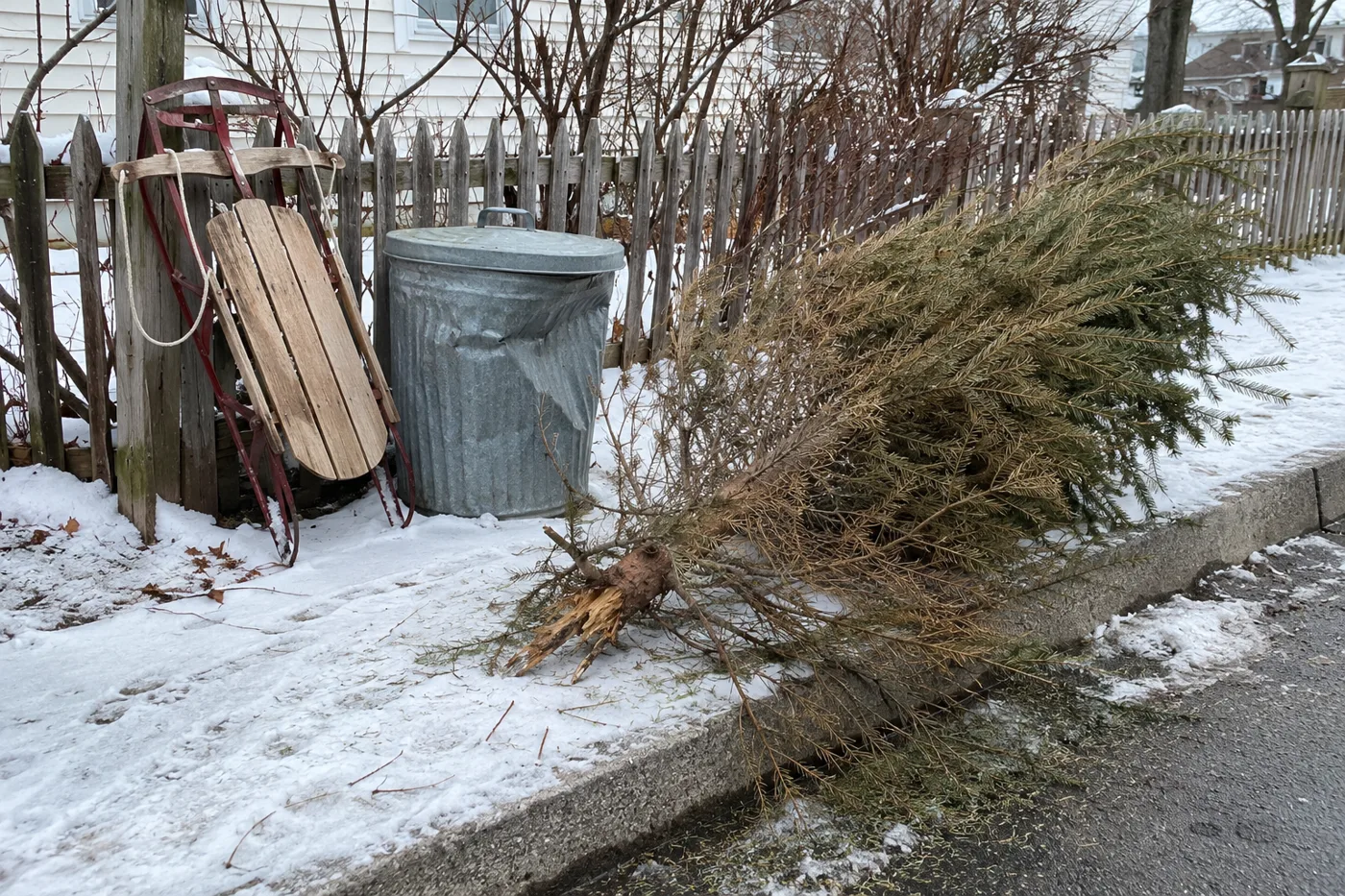
It seems like a tidy way to end the season: the tree goes out the way it came in, through the living room, as one last cozy fire.
Iowa State University’s extension service puts it bluntly. Dry evergreen branches literally explode when burned and could cause a house fire. Burning the tree can also add to the chimney buildup that leads to a chimney fire.
People who’ve burned an old tree outdoors, on a burn pile or a driveway, describe the same scene: a tall column of flame that’s over in about a minute and a half. Now picture that inside a fireplace.
Even the tree growers say never burn one indoors. Many places pick trees up at the curb in the two weeks after Christmas.
#8 Stockings and garland on the mantel while the fire burns
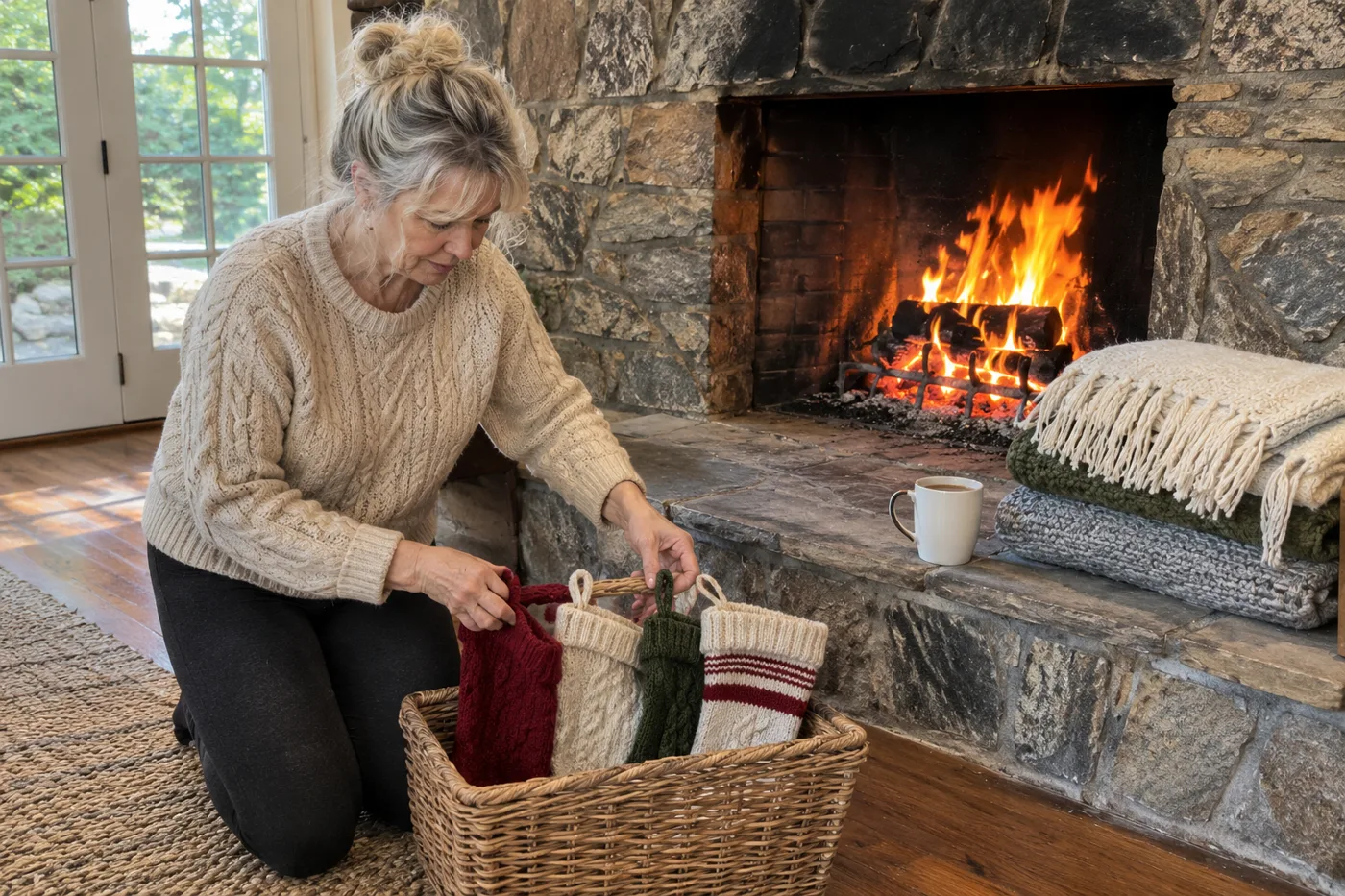
The stockings hang from the mantel and the garland drapes across the top. Then somebody lights a fire, because what else is a mantel for?
Dried evergreens can turn flammable when they sit close to a candle flame or fireplace, Clemson’s extension service warns. Fresh garland that went up soft and green won’t stay that way.
Chimney sweeps suggest moving stockings out of the way before you light the fire and keeping about 3 feet clear around the opening.
Keep a basket at least 3 feet from the fireplace. Stockings go in when the matches come out, and back up when the fire’s cold.
#7 Plugging in the old ceramic tree without checking the cord
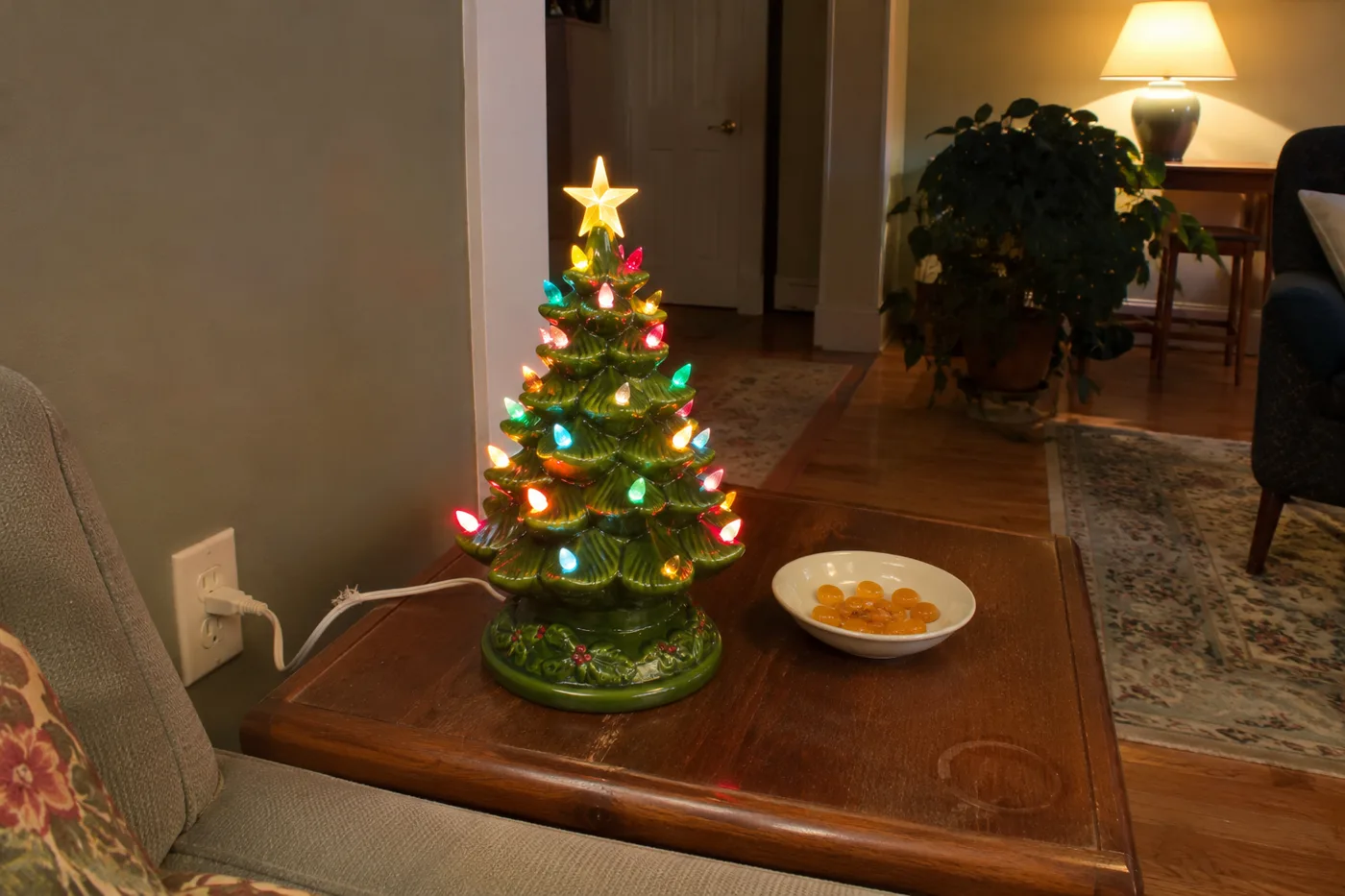
Maybe yours came out of a ceramics class, with green glaze that never went on quite even and little plastic bulbs that light from inside. Maybe it came from a relative’s house. Either way, it’s back on the end table.
One of the first molds for those trees was copyrighted in 1958, and they were everywhere through the 1960s, ’70s and ’80s, Our State magazine reports. That means the cord on yours could easily be forty years old or more.
A ceramic-tree parts shop’s guide says to stop using it if the cord is frayed, the plug is cracked, the switch only works sometimes, or a socket looks scorched.
The shop prefers swapping in a whole replacement light kit over patching parts, and some kits come with LED bulbs. The tree itself never has to change.
#6 A real flame in every window
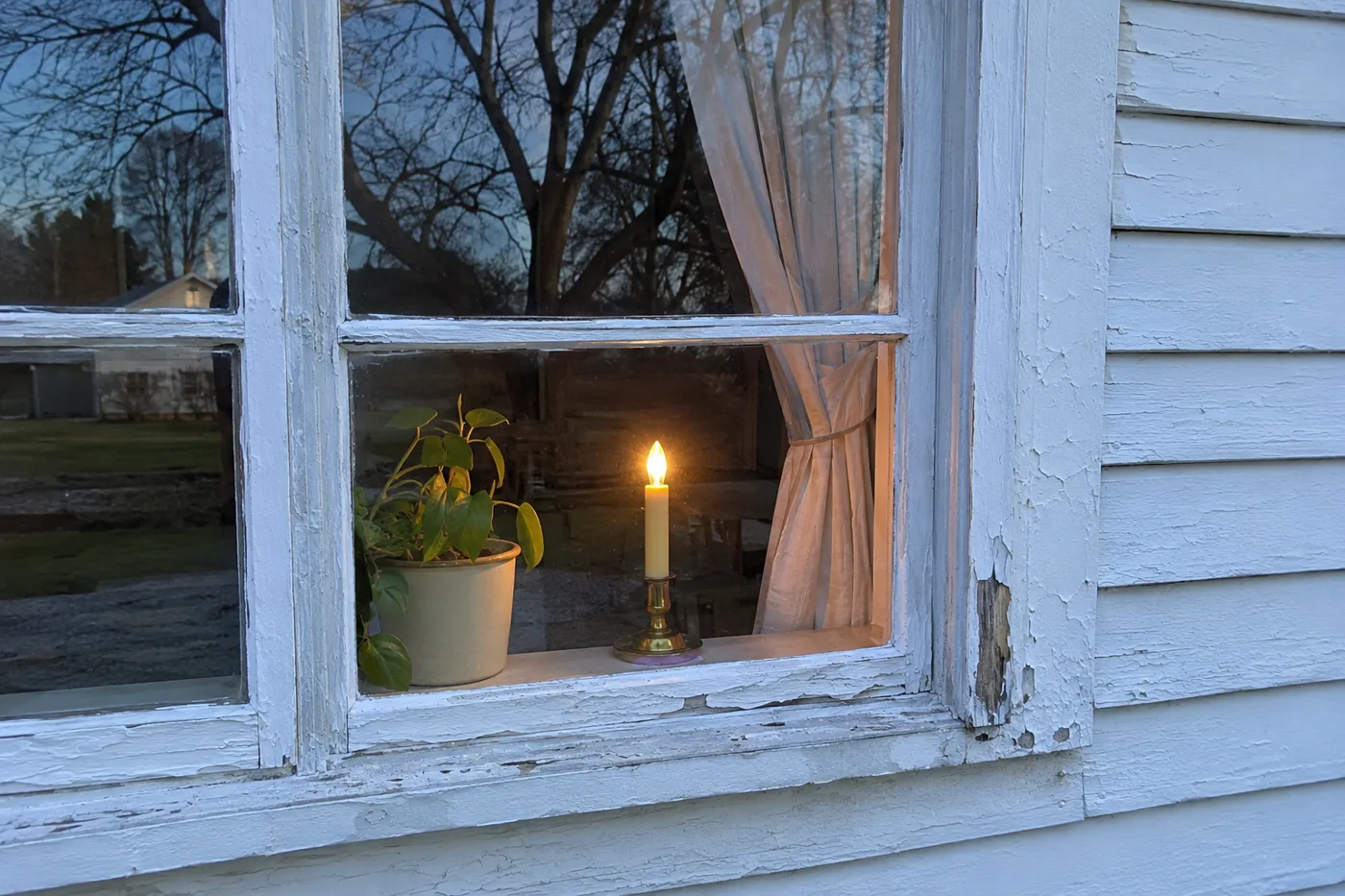
A candle in every window is one of the oldest welcomes there is. On a dark street in December, it still stops people.
The trouble is what’s beside it. Montgomery County, Maryland, firefighters say don’t put lit candles in windows, because blinds and curtains catch easily.
Fire officials want a candle at least 12 inches from anything that burns, and 3 feet from the tree. That’s hard on a sill with curtains on both sides. They suggest battery candles instead.
From the sidewalk, nobody can tell the difference.
#5 Never testing the smoke detector in December
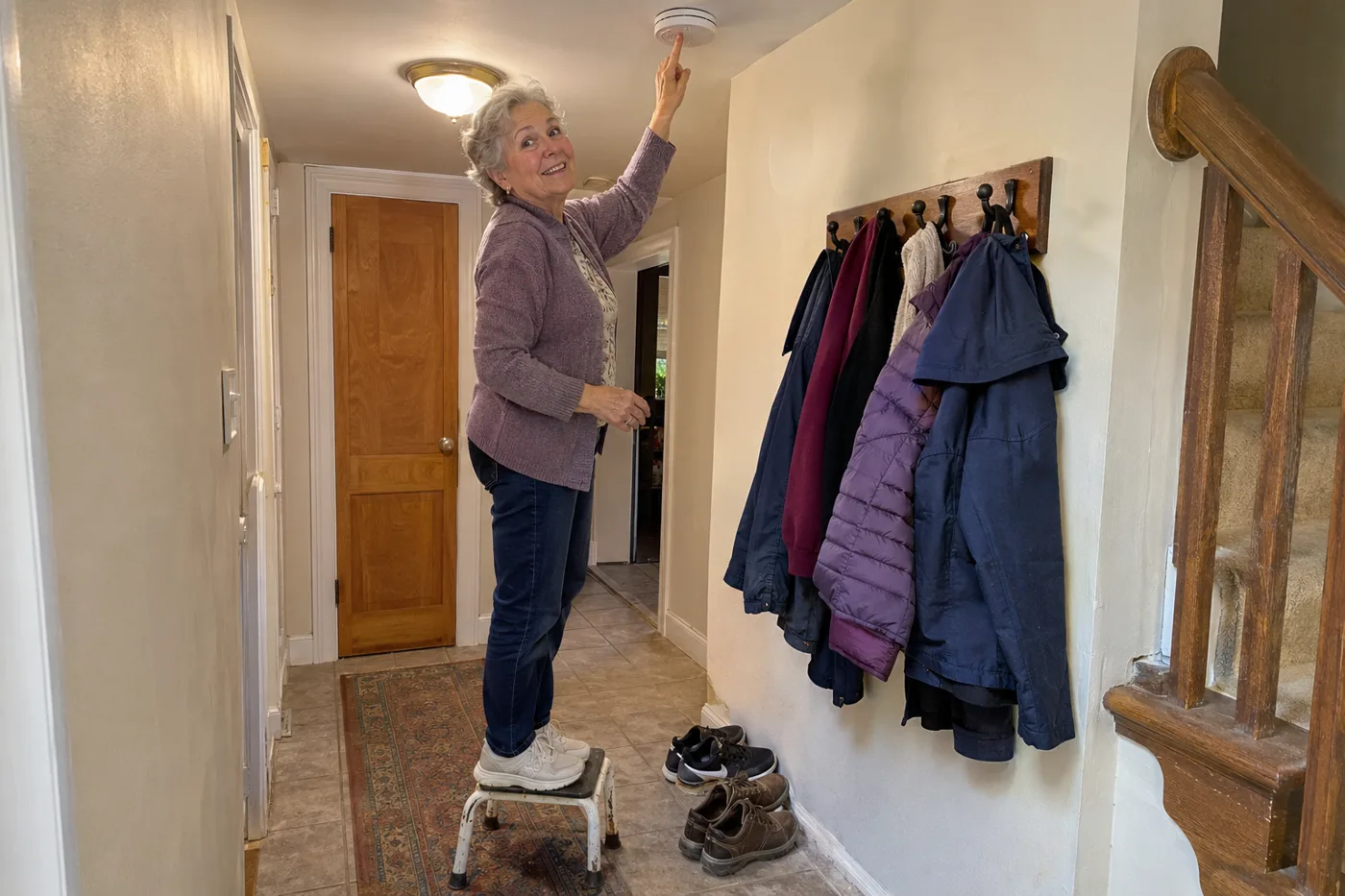
The smoke detector is the one decoration nobody thinks about. It sits up on the ceiling, white and quiet, until it chirps at 3 a.m.
December stacks everything up at once: candles, heaters, holiday cooking, a tree. Nearly three out of five U.S. home fire deaths happened in homes with no smoke alarm or one that didn’t work.
A working smoke detector matters more than any decoration in the room. Test it once a month and change the battery once a year.
Make it part of decorating. The day the tree goes up, press the test button. If it shrieks, it’s working, though a sealed 10-year alarm still gets replaced as a whole unit when its 10 years are up.
If it stays silent, change the battery, or replace the alarm if it’s sealed or more than 10 years old.
#4 Ignoring a warm plug on the pre-lit tree
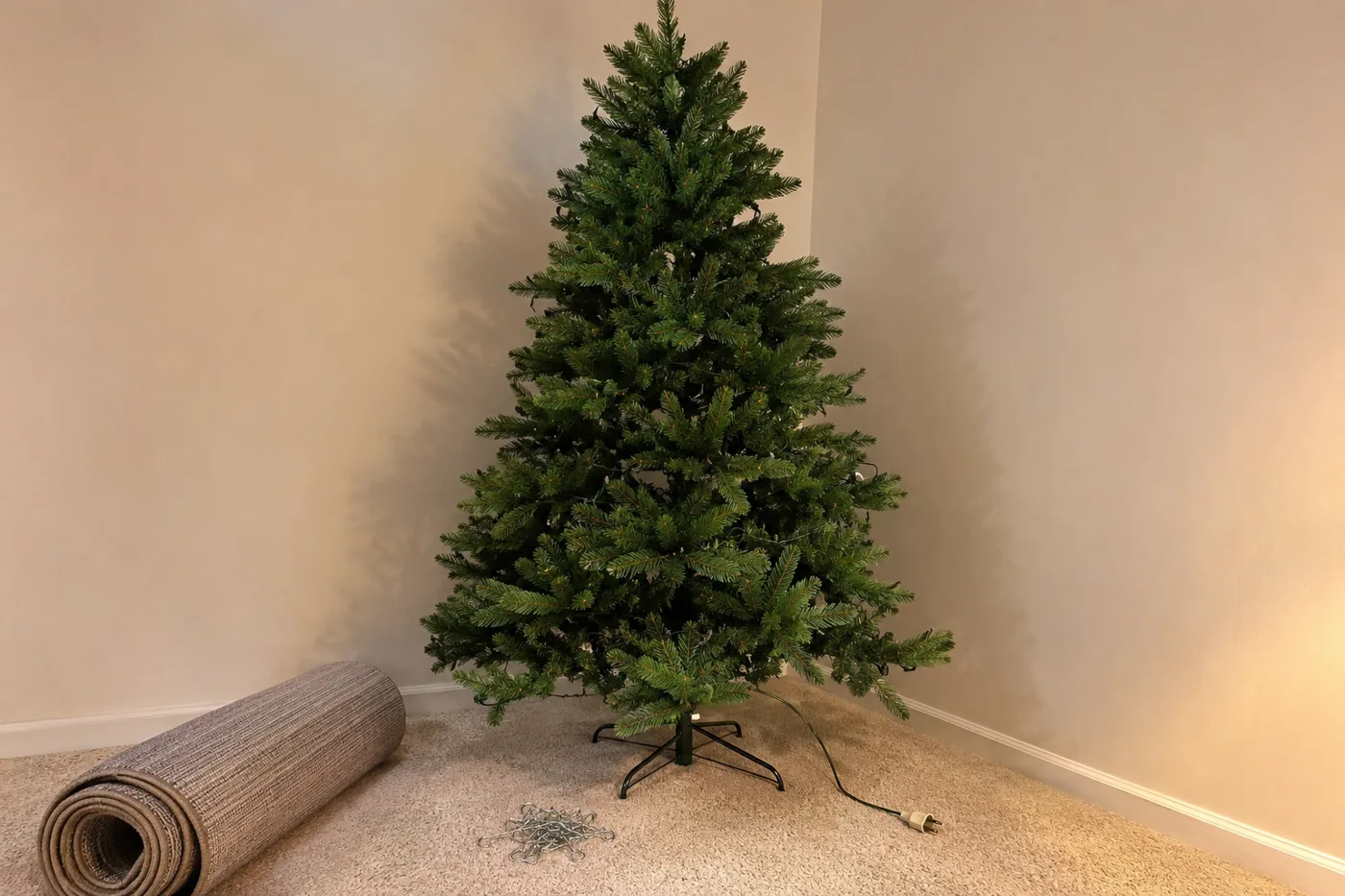
Pre-lit trees were supposed to end the whole tangle-and-test routine. You fluff the branches, plug it in, and you’re done.
But the plug, the base and the little adapters can still overheat. In 2012, about 15,500 Bethlehem Lights pre-lit trees sold by QVC were recalled because the base could overheat.
In 2024, about 44,600 Mr. Christmas wireless tree-light controllers were recalled too, because the piece that plugs into the wall could overheat.
Keep an eye on the plug and the base. If either melts, smokes or feels hot when you go to unplug it, leave it unplugged and stop using the tree.
#3 The space heater tucked beside the tree
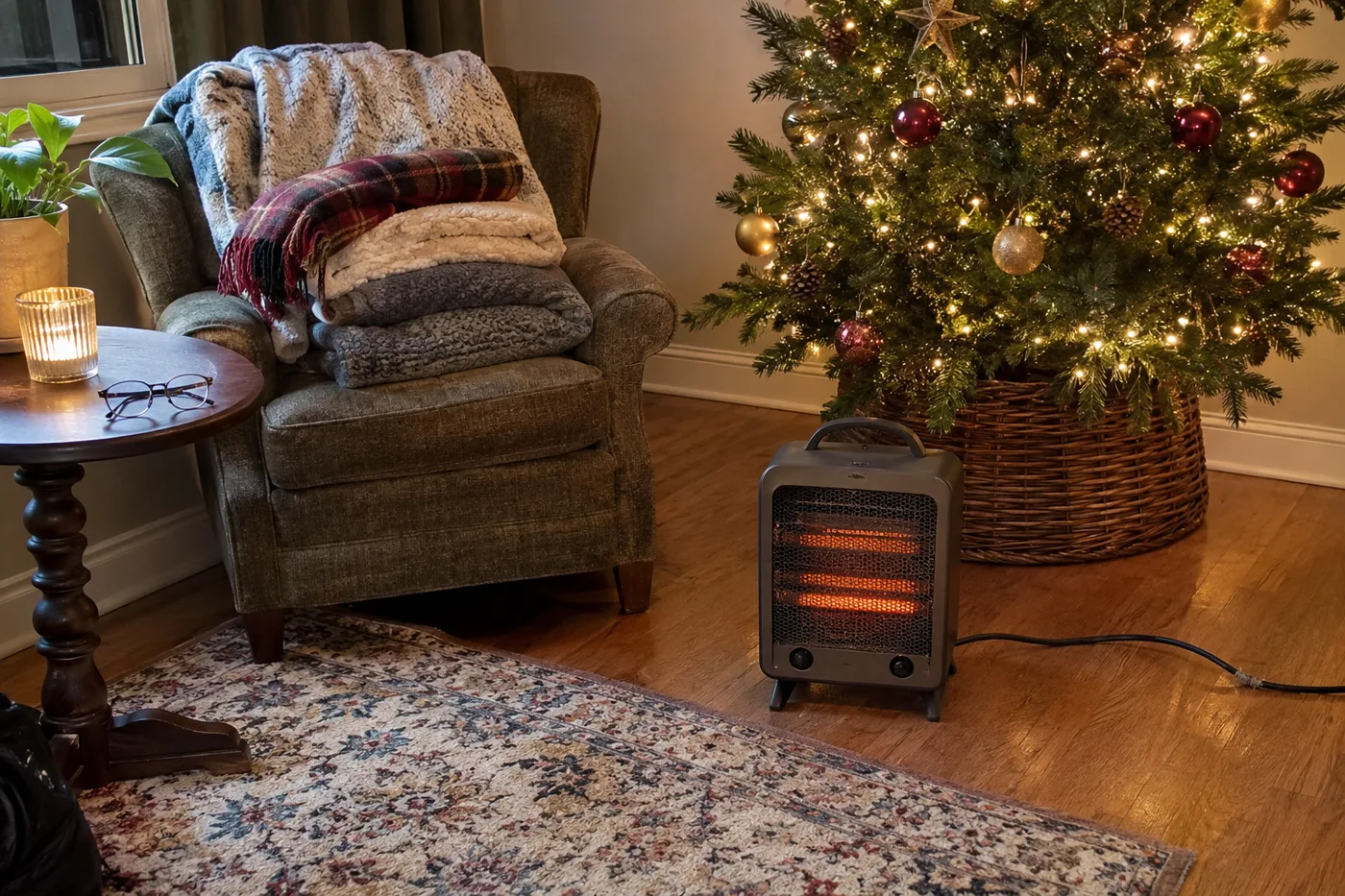
If the living room runs cold, out comes the little space heater. It ends up tucked by the armchair, right near the tree and the pile of presents.
Of all home heating fires, space heaters cause nearly half, but about three out of four of the deaths, Illinois’s fire marshal reports, citing national data. They’re small and easy to move, so they drift too close to things.
Keep it at least 3 feet from anything that can burn, including the tree, the tree skirt and the wrapping. Turn it off when you leave or go to sleep. Plug it straight into the wall, never into an extension cord or power strip.
If the heater can’t reach a wall outlet while keeping that clearance, find it another spot.
#2 Fireplace ashes in a paper bag
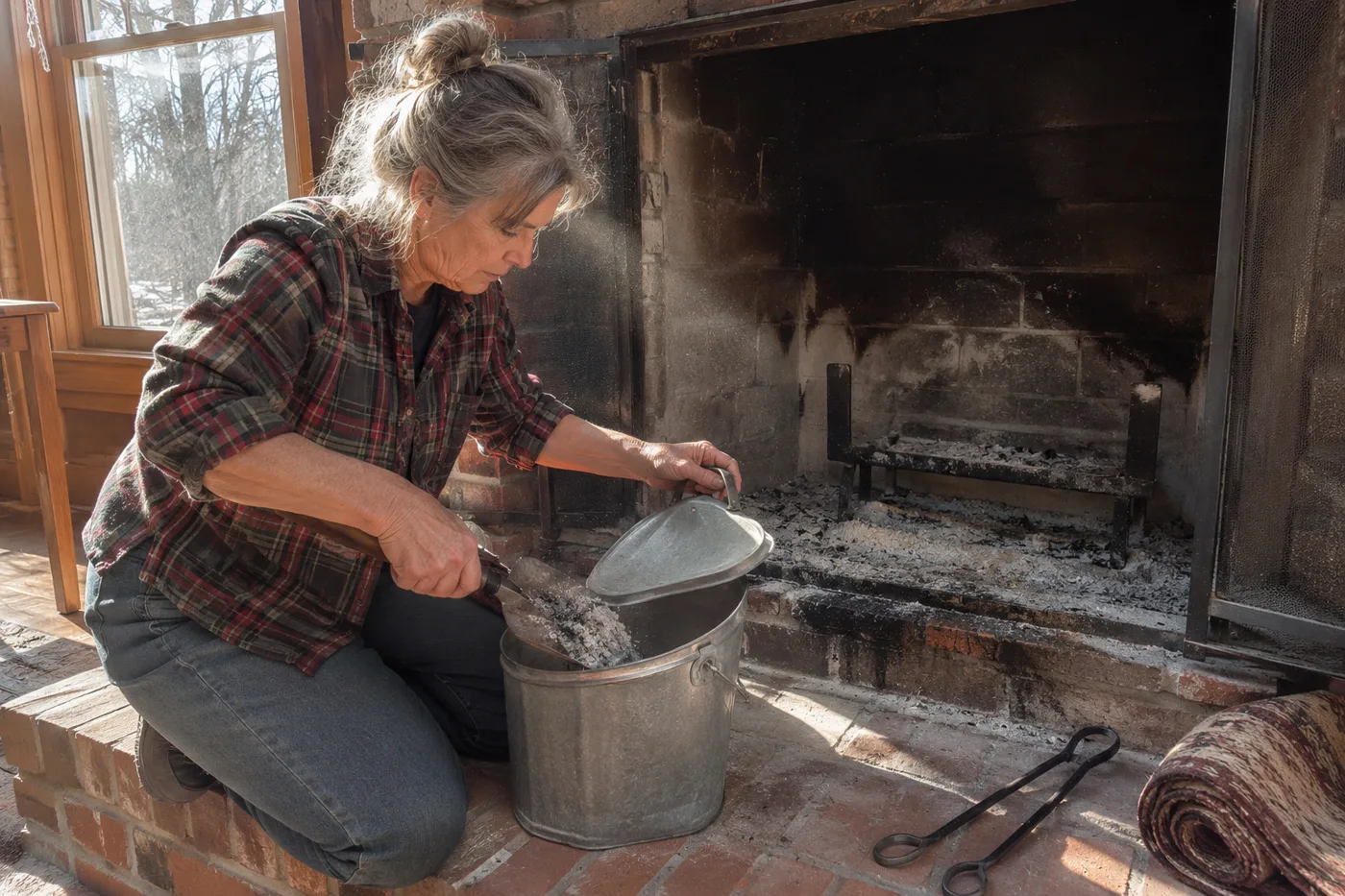
After a night of fires, the hearth is gray with ash and it looks cold. So it goes into a grocery bag, a cardboard box or the kitchen trash, and out the door.
Ashes can stay hot enough to restart a fire for many days, Boise’s fire department warns. It suggests letting them sit where the fire was for about four days before you move them at all.
When they do go, put them in a metal can with a tight lid, set at least 10 feet from the house and any other building. Never use a paper bag, a cardboard box or a plastic bin.
A plain metal can from the hardware store does the job.
#1 Forgetting to water the real tree

The stand is down under the skirt, behind the presents. To check it, you have to part the branches and reach way under, so for a few days in a row, nobody does.
That little bowl of water is what keeps the tree from drying out. In federal lab tests, a dry Fraser fir burst into flames in less than 7 seconds and was gone in a little over a minute. A well-watered one that caught briefly put itself out.
That’s why fire officials say to water your tree every day.
Check the stand every morning along with the coffee. A watering can with a long spout makes it easy.
The water test
- About a quart of water a day for every inch across the trunk
- A 4-inch trunk needs close to a gallon a day
- Fresh needles are hard to pull off and bend without snapping
The bottom line
Pick one familiar habit to change before the decorations go up. It’s usually something you do without thinking at the end of a long day.
Almost none of them mean giving something up. You just change one small move.
Start the day the tree goes up. Press the smoke alarm button, and fill a gallon jug with water for the stand.
Bonus: Five checks most people skip
- Look at the shiny label on the light string: a green UL hologram means indoor use only, and a red one means indoor or outdoor. Outdoors, plug them into a GFCI-protected outlet, the federal safety commission says. GFCI is short for ground-fault circuit interrupter.
- Don’t run cords under rugs. It can crush the insulation and trap heat, and cords are meant for temporary use only.
- Never string together more than three sets of the old-style incandescent lights, the federal safety commission says, and stay under the manufacturer’s limit if it’s lower.
- Keep candles at least 12 inches from anything that burns, greenery included, and 3 feet from the tree. Put a candle out when it has burned down to within two inches of its holder or any decorations around it, and keep wicks trimmed to a quarter inch.
- Hang outdoor strings with insulated staples or hooks, not nails or tacks.
Questions people also ask
Is a real Christmas tree a fire hazard?
It can be, especially once it dries out (see the water test above). Water it every day, keep it at least 3 feet from heat and check its lights before they go up.
How far should a Christmas tree be from a fireplace or heater?
Fire officials say to keep it at least 3 feet from any heat source, including fireplaces, radiators, space heaters, candles and heat vents. Heat also dries the tree faster, so a farther spot keeps it fresh longer.
How often do you need to water a real Christmas tree?
Every day. A Washington State University tree expert’s rule of thumb is about a quart a day for each inch across the trunk, so a 4-inch trunk needs close to a gallon. Check the stand daily so it never runs dry.
Are LED Christmas lights actually safer than the old bulbs?
Yes, mainly because they give off far less heat. The Department of Energy explains that the old bulbs make light by heating a wire until it glows, and LED strings use about 70% less energy. Less heat near dry needles means less fire risk.
Is it OK to leave Christmas lights on overnight?
No. Fire departments say to unplug tree and decoration lights every time you go to bed or leave the house.
How long is it safe to keep a Christmas tree up?
No more than about a month from the day you buy it, and less if it dries out sooner. Fire officials suggest discarding a cut tree within that time, and 35% of home Christmas tree fires happen in January. If needles shower down when you brush past it, it’s too dry.
Related posts:
24 Things Your Grandchildren Will Remember About Your Christmas
23 Thanksgiving Dishes From the 1970s That Faded From the Table
26 Christmas Cookies From the 1960s That Nobody Bakes Anymore
23 Things Women Over 60 Keep Without Thinking That Professional Organizers Never Would
26 Things Grandchildren Remember About Your House That You Never Notice
24 Crafts Every Woman Made in the 1970s That Nobody Does Anymore

- 24 Things People Over 60 Still Do When Cleaning That Experts Beg Them to Stop - November 6, 2026
- 21 Handmade Gifts From the 1970s Your Grandchildren Have Never Seen - November 6, 2026
- 25 Homemade Christmas Decorations From the 1960s, and What Became of Each One - November 6, 2026

Leave a Reply