Stay for #1. It’s a holiday classic with one simple fix that puts it safely back on the table.
The card table went up in the living room the afternoon of the party. Out came the cut-glass relish tray, the fondue pot from the top shelf, the toothpicks with curly cellophane on the ends.
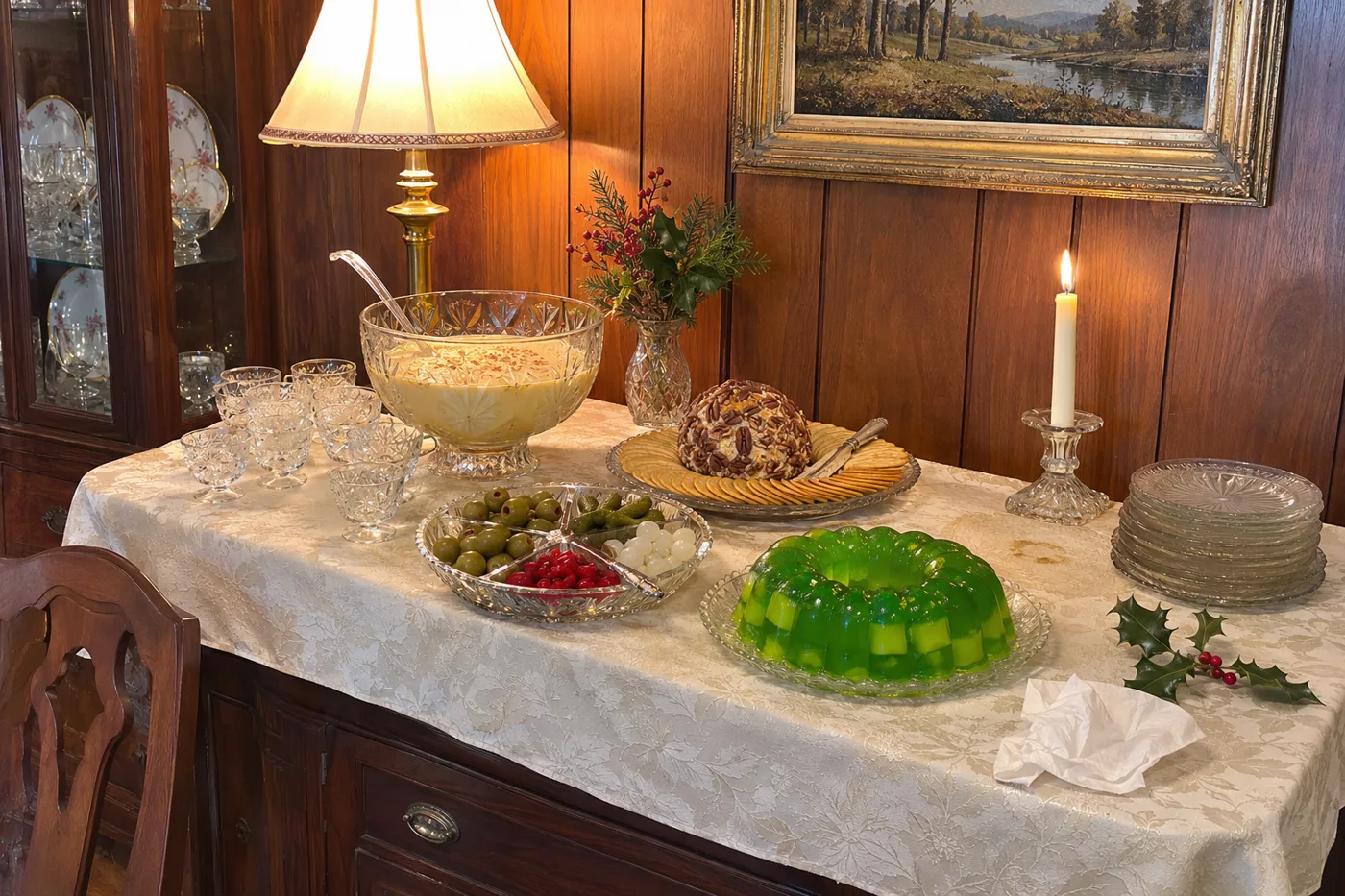
#21 Lime Jell-O with cottage cheese and pineapple
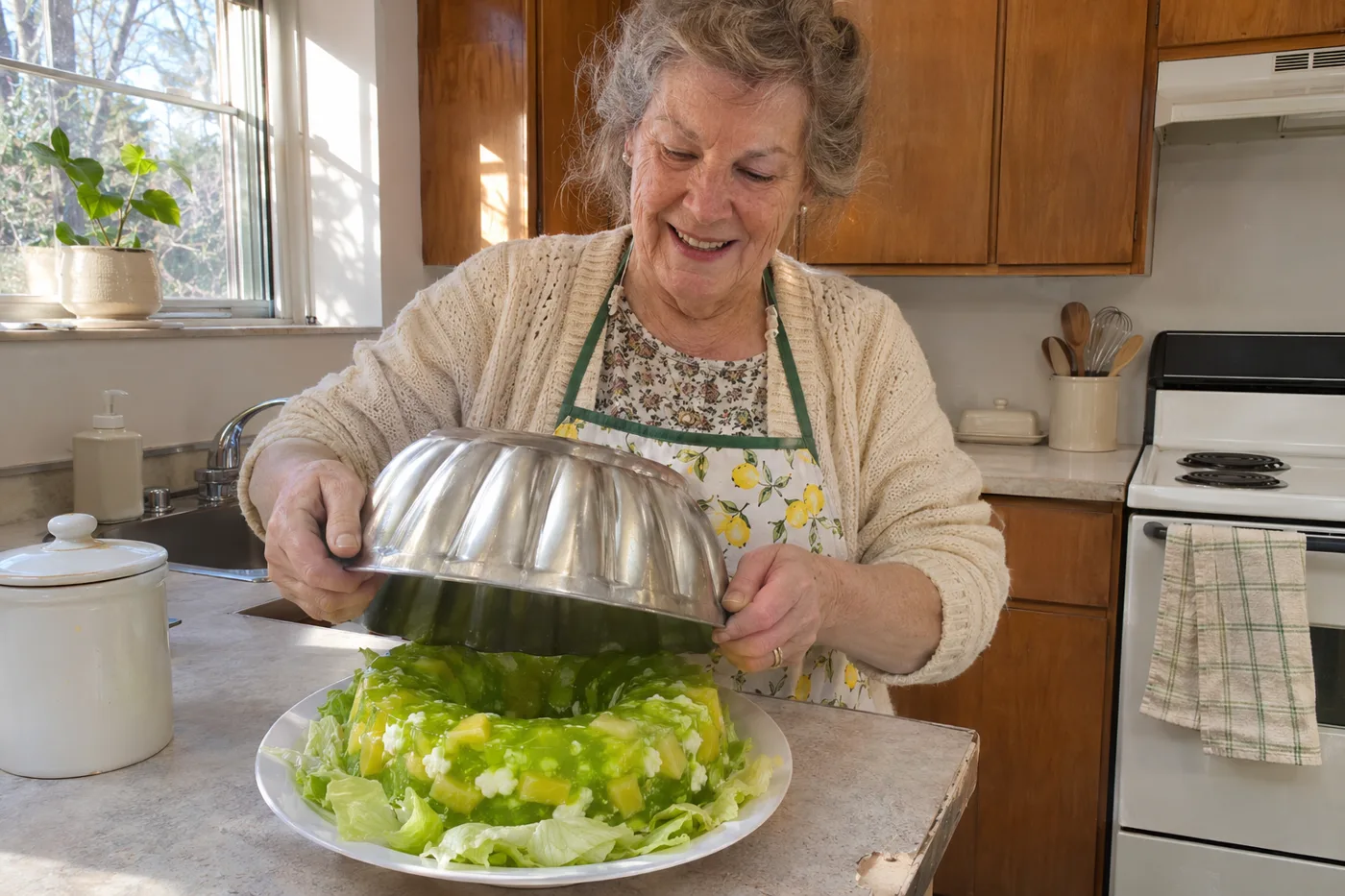
It came out of the ring mold onto a bed of lettuce, green as a traffic light, with little white curds hanging inside like snow in a paperweight. Somebody always asked whether it was a salad or a dessert. Nobody ever settled it.
Of all the cheese-and-gelatin salads that covered American tables for decades, lime Jell-O with cottage cheese and crushed pineapple was especially popular. Gelatin had a long head start, too. By the 1920s, a third of the salads printed in cookbooks contained it.
What sank it was image. By the late ’60s and early ’70s, Jell-O had started to look like factory food instead of fancy food. The lime ring showed up anyway, usually in the same Tupperware carrier, usually carried by the same aunt.
#20 The fondue pot everyone dipped from

Long skinny forks with colored tips. A pot of bubbling cheese in the middle of the coffee table. And a house rule, different in every house, about what happened if your bread cube fell off in the pot.
Fondue had a sales team behind it. The Swiss Cheese Union, the group that controlled Swiss cheese for about 80 years, paid for big ads in the 1970s showing “good-looking Swiss people in ski sweaters partying it up over pots of cheese.”
Chocolate fondue started as a Toblerone promotion in a New York restaurant in the mid-1960s, and in the ’70s it sent a lot of people out to buy pots.
A guest today might eye all those forks in one pot. Fondue fans don’t care one bit. Some of those ’70s sets are still in use. Leave fondue off a list of ’70s party food and somebody will ask where it went.
#19 The cheese ball rolled in chopped nuts
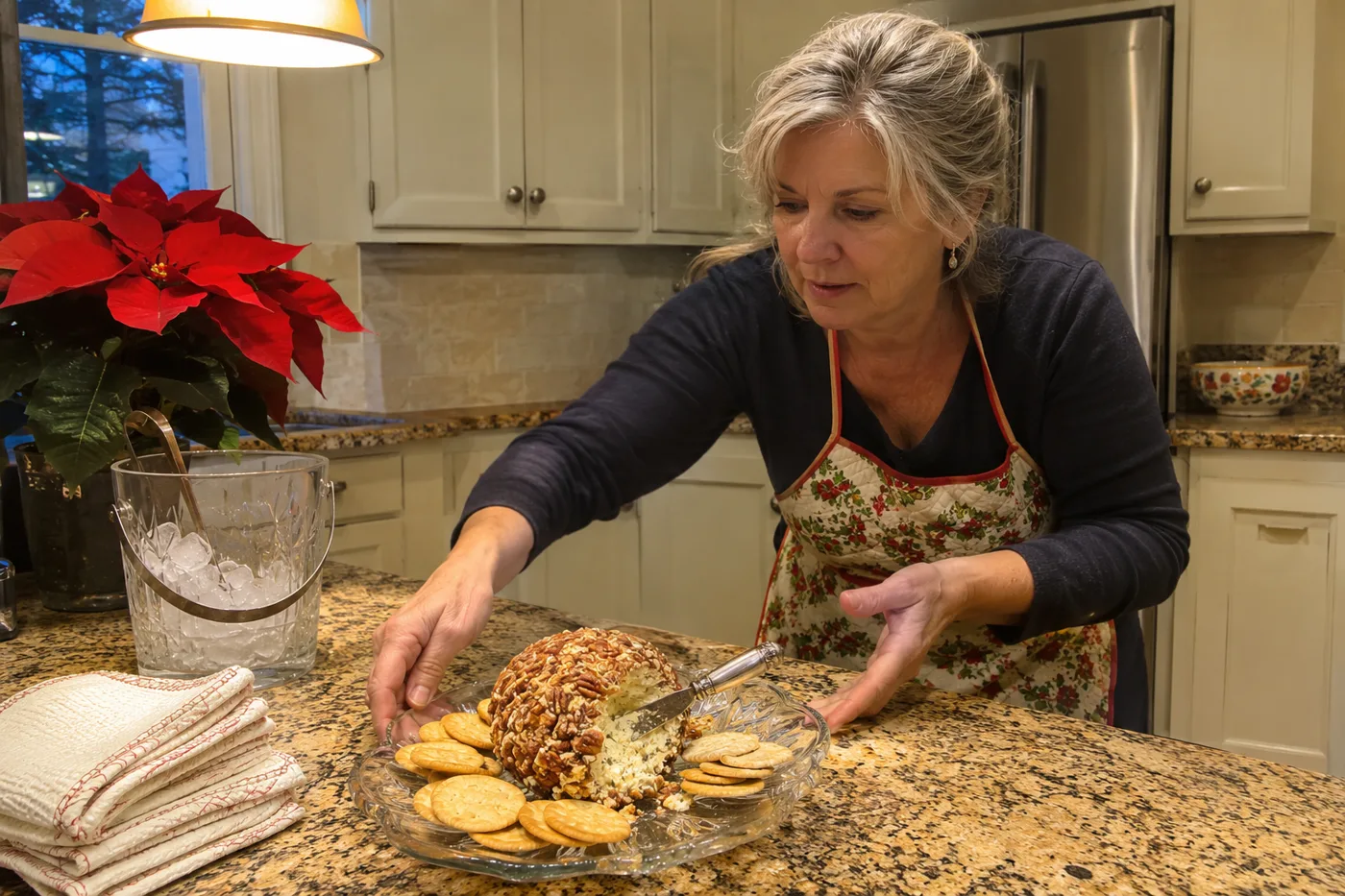
It sat on the good platter with a spreader stuck in the top, crusted in pecans or walnuts, slowly slumping as the room warmed up.
The first documented cheese-ball recipe came from a Minneapolis newspaper columnist in 1944. It fell out of fashion in the late 1980s, when “cheeseball” turned into slang for corny. It came back after Amy Sedaris put one in her 2006 cookbook.
Corny, it turns out, is forgivable.
#18 Meatballs in grape jelly and chili sauce
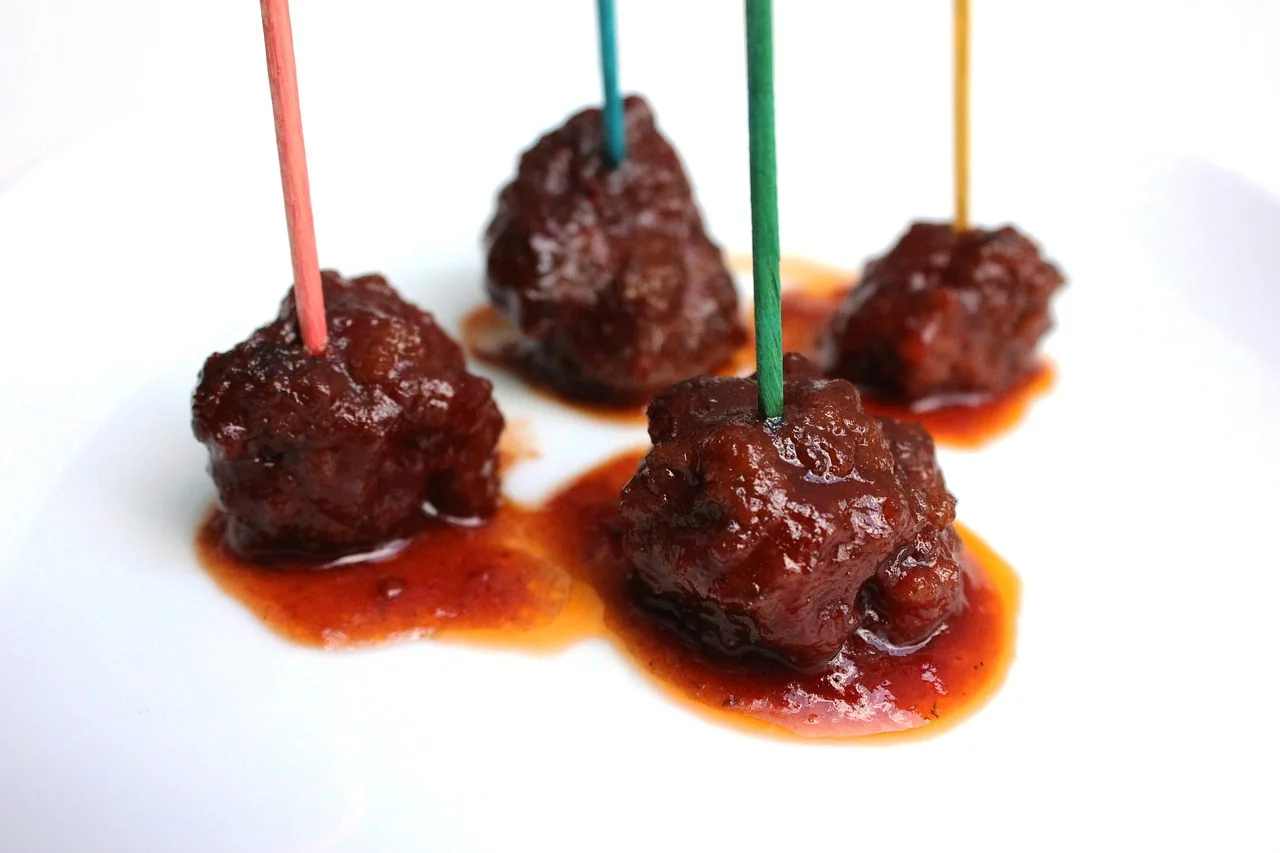
Grape jelly. With chili sauce. On meat. Say it out loud to someone who never had it and watch their face.
Nobody knows who first did it, but the combination was in print by the 1960s. The little meatballs sat in a chafing dish. When the slow cooker came along in the 1970s, a lot of cocktail-meatball recipes moved right into it.
Here’s the twist: they’re good. The recipe sounds wrong and tastes right. Some cooks still make a batch every single holiday, and ketchup can stand in for the chili sauce. The frilly toothpicks are optional, but strongly encouraged.
#17 Canned cranberry jelly, ridges and all
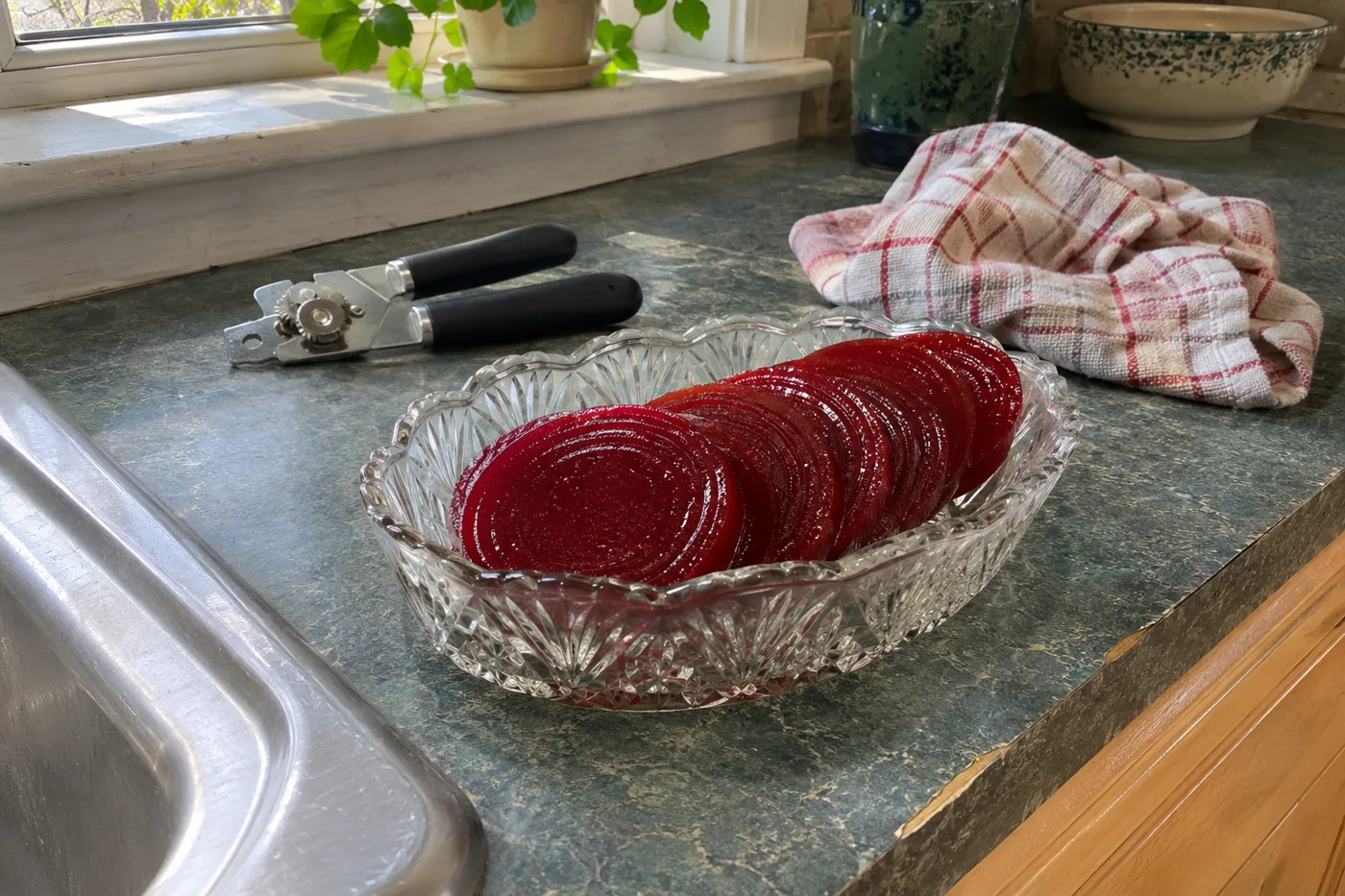
It slid out of the can with a slurp and landed on the dish still wearing the can’s rings. Somebody sliced it neatly along the lines. Somebody else announced it wasn’t real cranberry sauce, then ate three slices.
Jellied cranberry sauce came out in 1941. Fresh-cranberry people have been sighing about it ever since, and losing. In 2022, Ocean Spray’s marketing head said about 77 million cans sell every year.
It isn’t going anywhere. Put it on the cut-glass dish and let it wobble.
#16 Onion soup dip in one big bowl
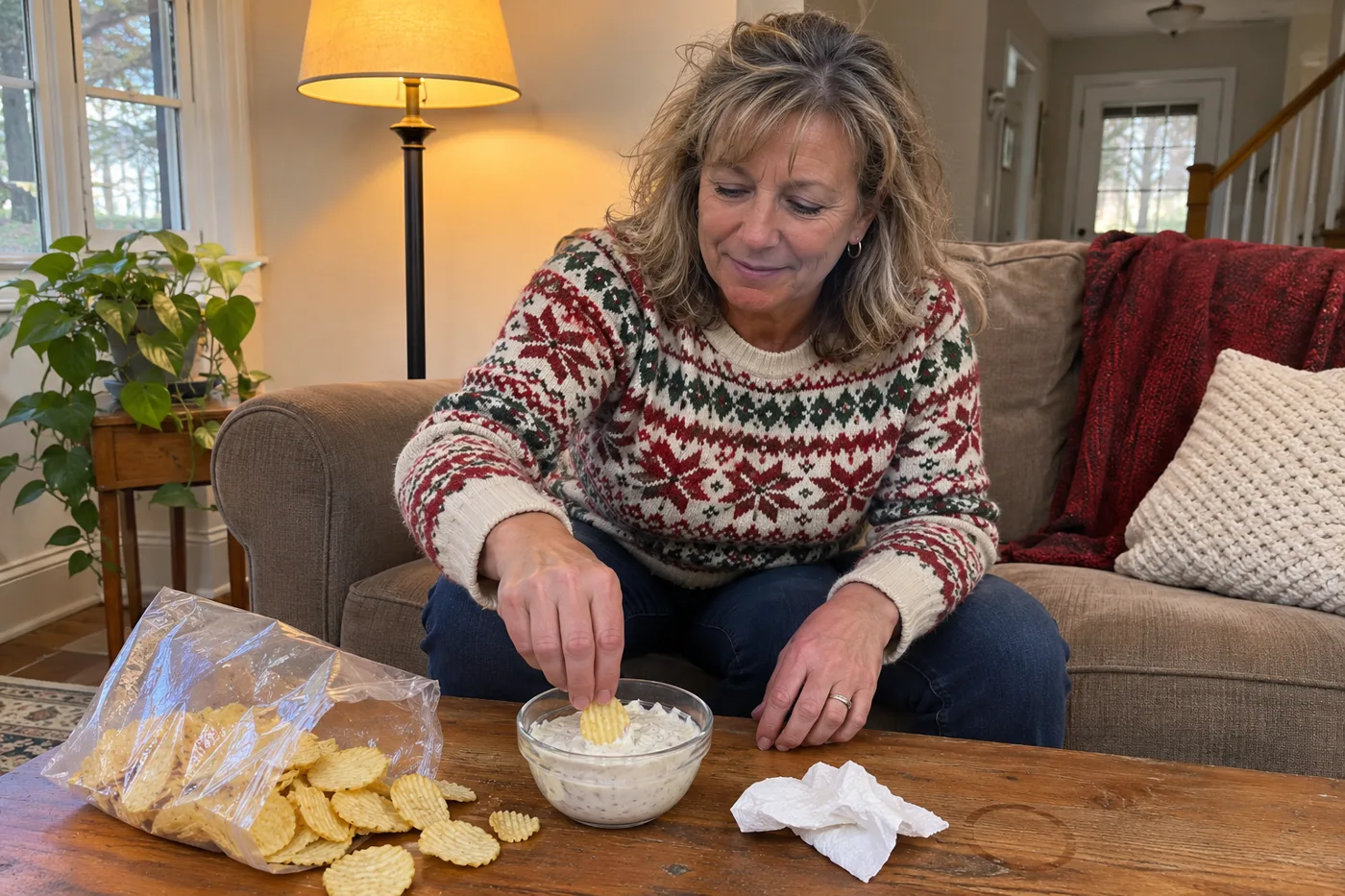
Sour cream, a packet of Lipton onion soup mix, one stir, and a bag of ruffled chips. That was the whole recipe, and it was printed right on the package.
An unknown Los Angeles cook came up with it in 1954. Lipton put it on TV as “Lipton California Dip” in 1955, added the recipe to its soup packages in 1958, and by the 1960s it was being called French onion dip.
The horror is the bowl. Clemson University food microbiologist Paul Dawson had students test double-dipping. Three to six double dips moved about 10,000 bacteria from a person’s mouth into the dip. He hadn’t expected that. “I didn’t think we would be able to detect it,” he said.
A spoon and a small plate for each guest takes care of it.
#15 Fruitcake soaked in liquor and passed along
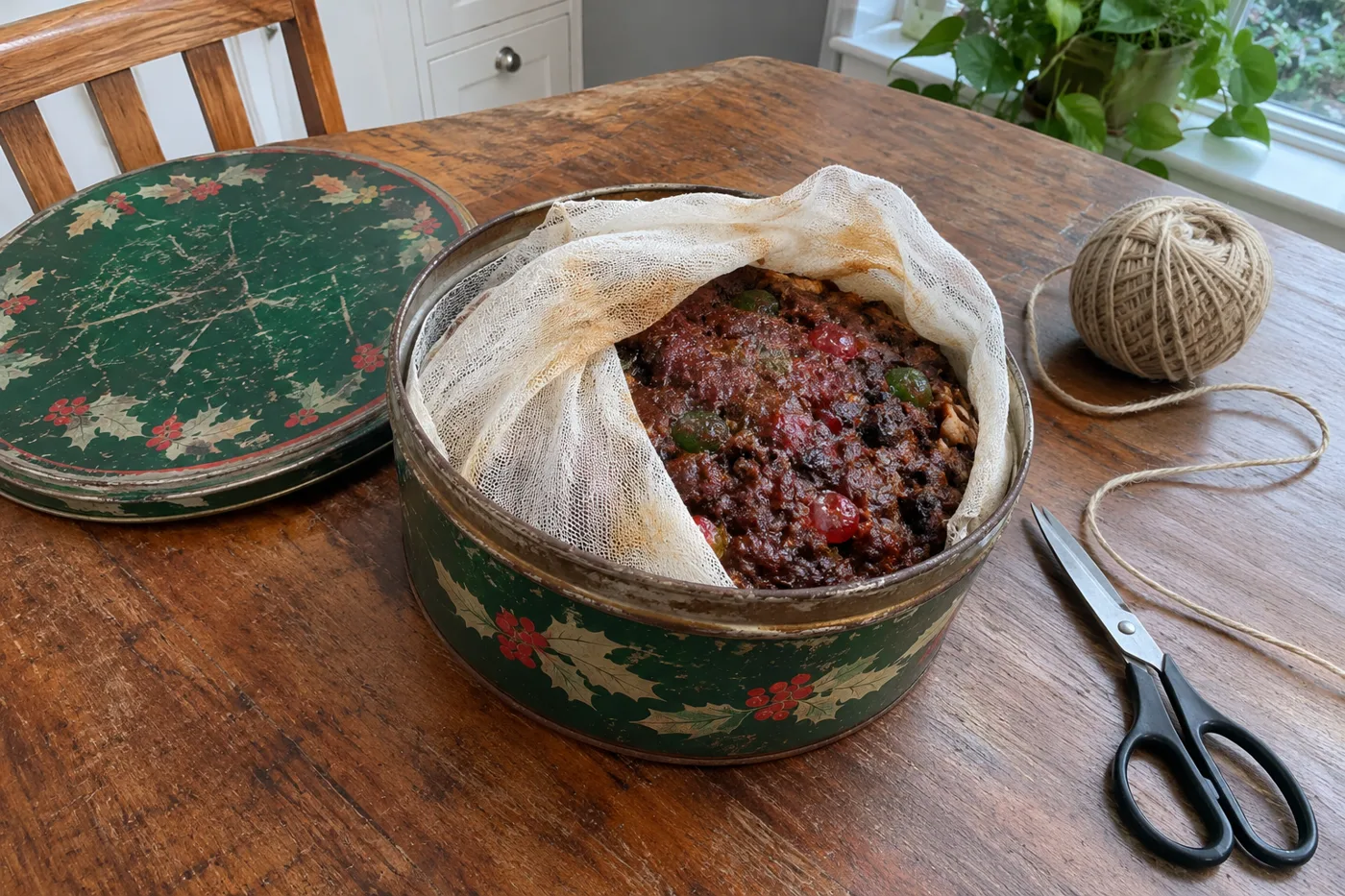
Every December it arrived in a tin. Heavy as a brick, dotted with candied cherries in colors nature never made, wrapped in cheesecloth that smelled like the liquor cabinet.
Johnny Carson famously joked, “There is only one fruitcake in the entire world, and people keep sending it to each other.” He wasn’t far off about how long it lasts.
Bakers age fruitcake by brushing it with brandy, rum or bourbon and storing it in a cool, dark place for up to two months, and the oldest known fruitcake, baked in 1878, is still edible.
Whether anyone wants a slice is a separate question.
#14 Watergate salad with pistachio pudding
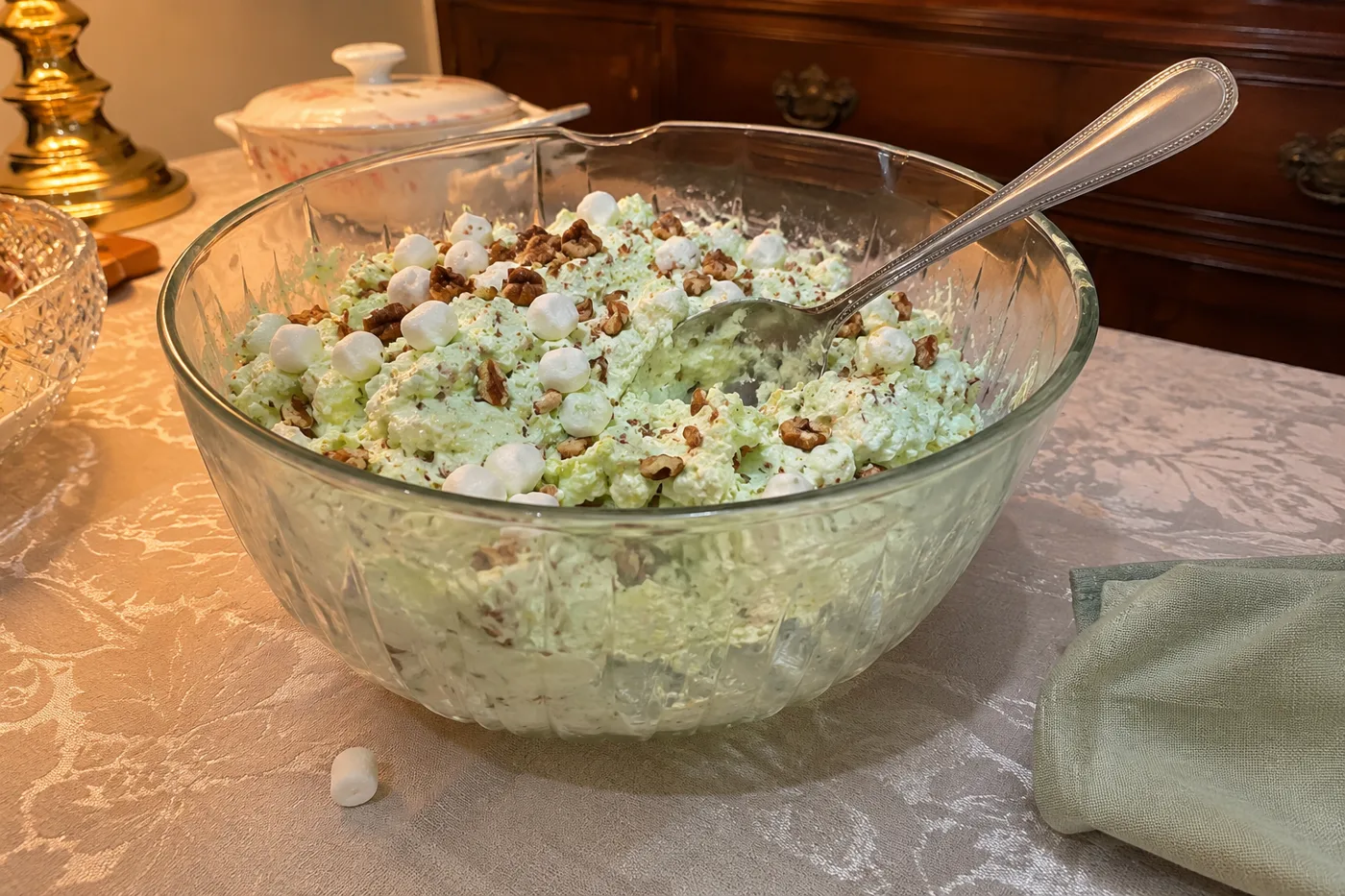
Pale green, fluffy, full of mini marshmallows, crushed pineapple and chopped nuts. It was called a salad, which was generous.
General Foods printed the recipe as “Pistachio Pineapple Delight” in the mid-1970s, around when its pistachio pudding mix launched. How it became Watergate salad is anyone’s guess. Kraft credits an unnamed Chicago food editor, though nobody has found that article.
The other theory is better. It may have borrowed the name from Watergate cake, which came with a “cover-up” icing and was “full of nuts.”
The scandal faded. The salad kept coming to Christmas, in the same glass bowl, with the same serving spoon.
#13 Tomato aspic ring with mayonnaise in the middle
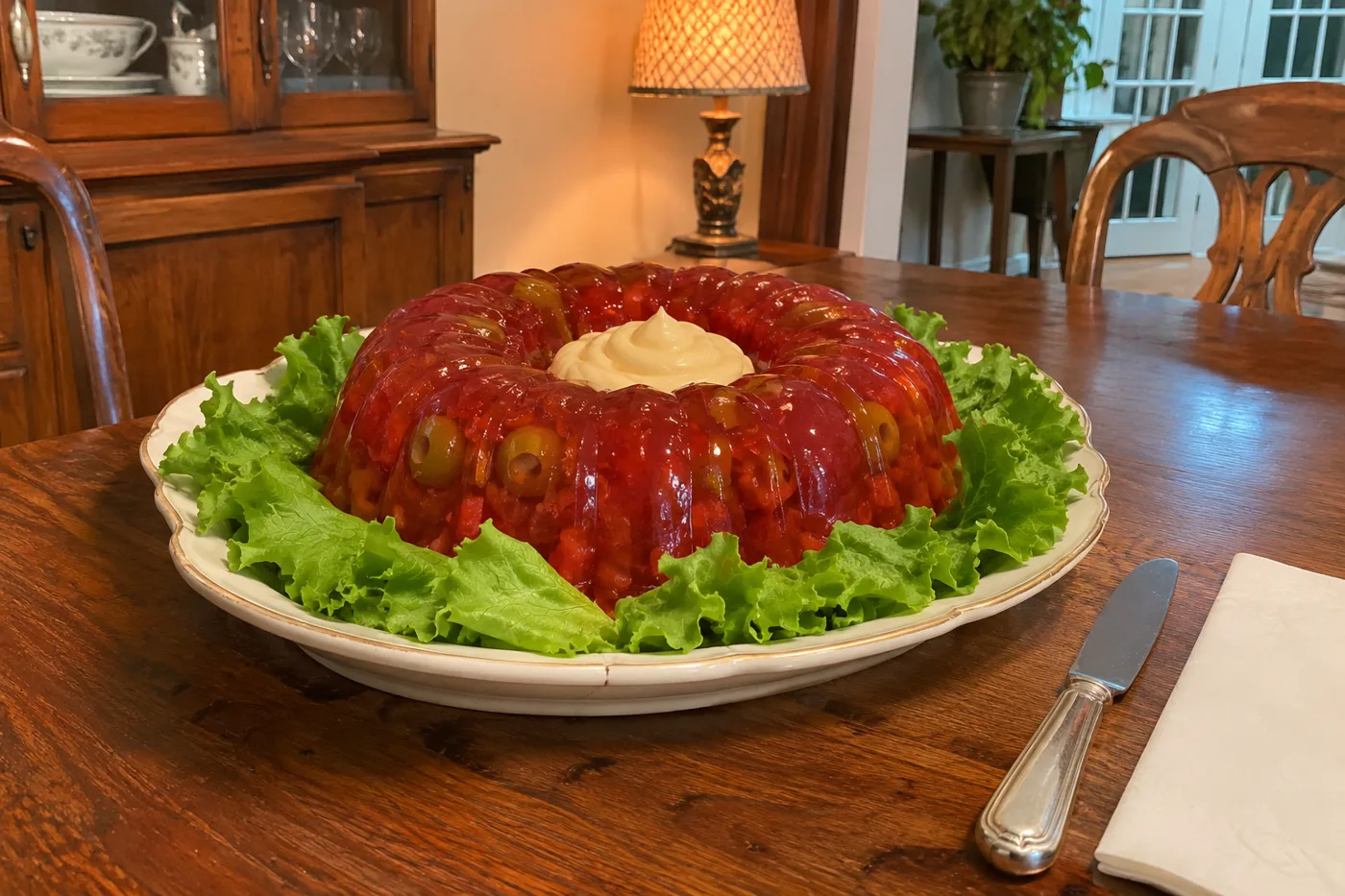
Red, glossy, shaped in a ring mold, with a dollop of mayonnaise sitting in the hole. Sometimes olives or shrimp were suspended inside, stuck in place like bugs in amber.
A lot of kids bit into it expecting cherry Jell-O and got cold, savory tomato instead. They made that mistake exactly once.
Aspic is older than anyone’s family cookbook. The first detailed recipe shows up in a French cookbook from around 1375. Tomato aspic peaked in the 1950s and early ’60s at luncheons and ladies’ club meetings, and Jell-O even sold a “seasoned tomato” flavor in the ’60s.
Some families kept it on the holiday table long after the clubs moved on.
#12 Candle salad, a banana in a pineapple ring
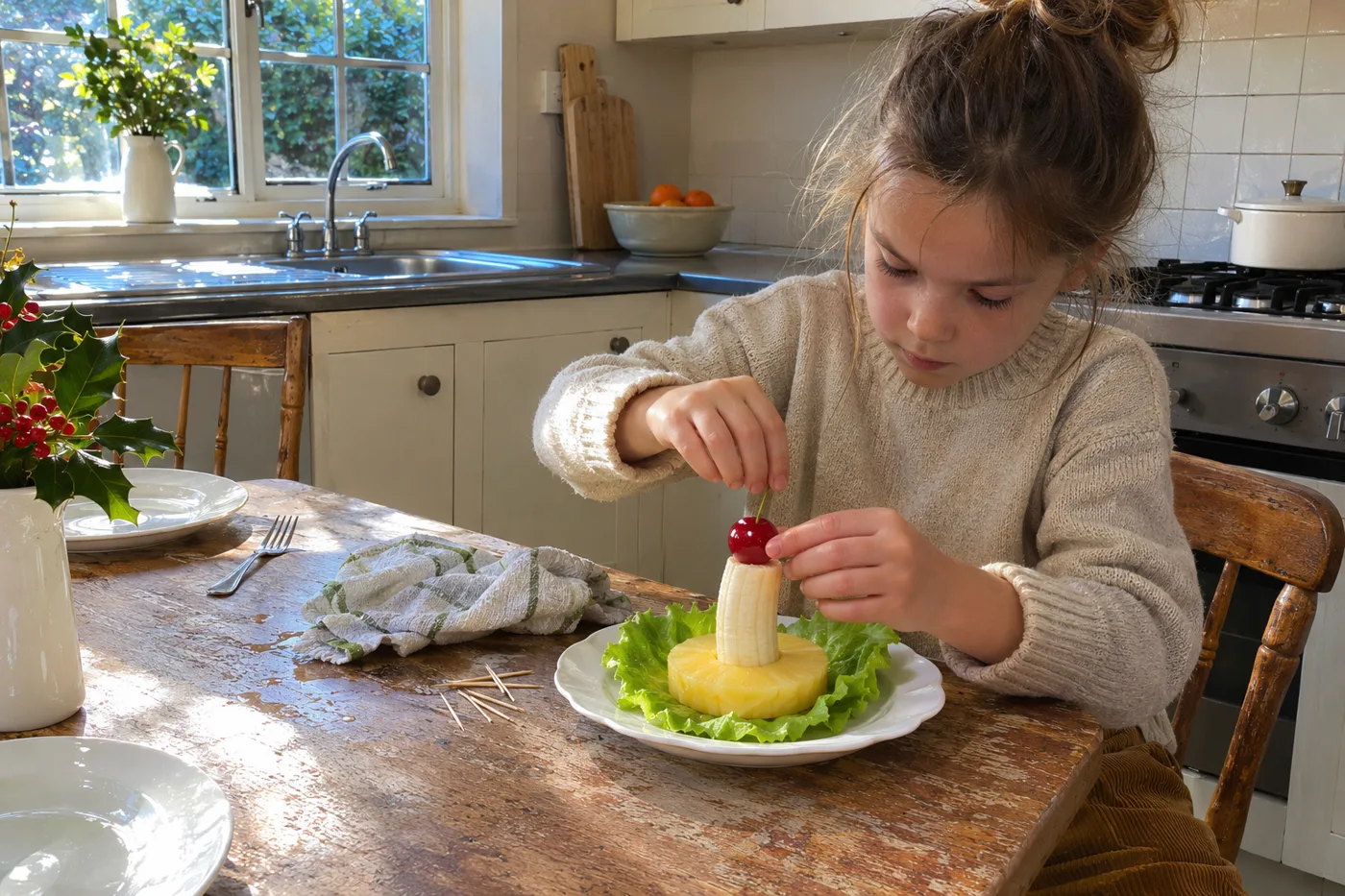
A lettuce leaf, a pineapple ring, half a banana standing straight up in the hole, and a cherry on top for the flame. Children put it together. Grown-ups kept a straight face.
The candle salad goes back to the 1920s and turned up in children’s cookbooks for decades, including A Child’s First Cook Book in 1950. Betty Crocker’s Cook Book for Boys and Girls made its pitch in 1957: “It’s better than a real candle because you can eat it.”
Set one in front of a room full of adults today and listen for the snort. Then watch who eats theirs first.
#11 Celery stuffed with pimento cheese
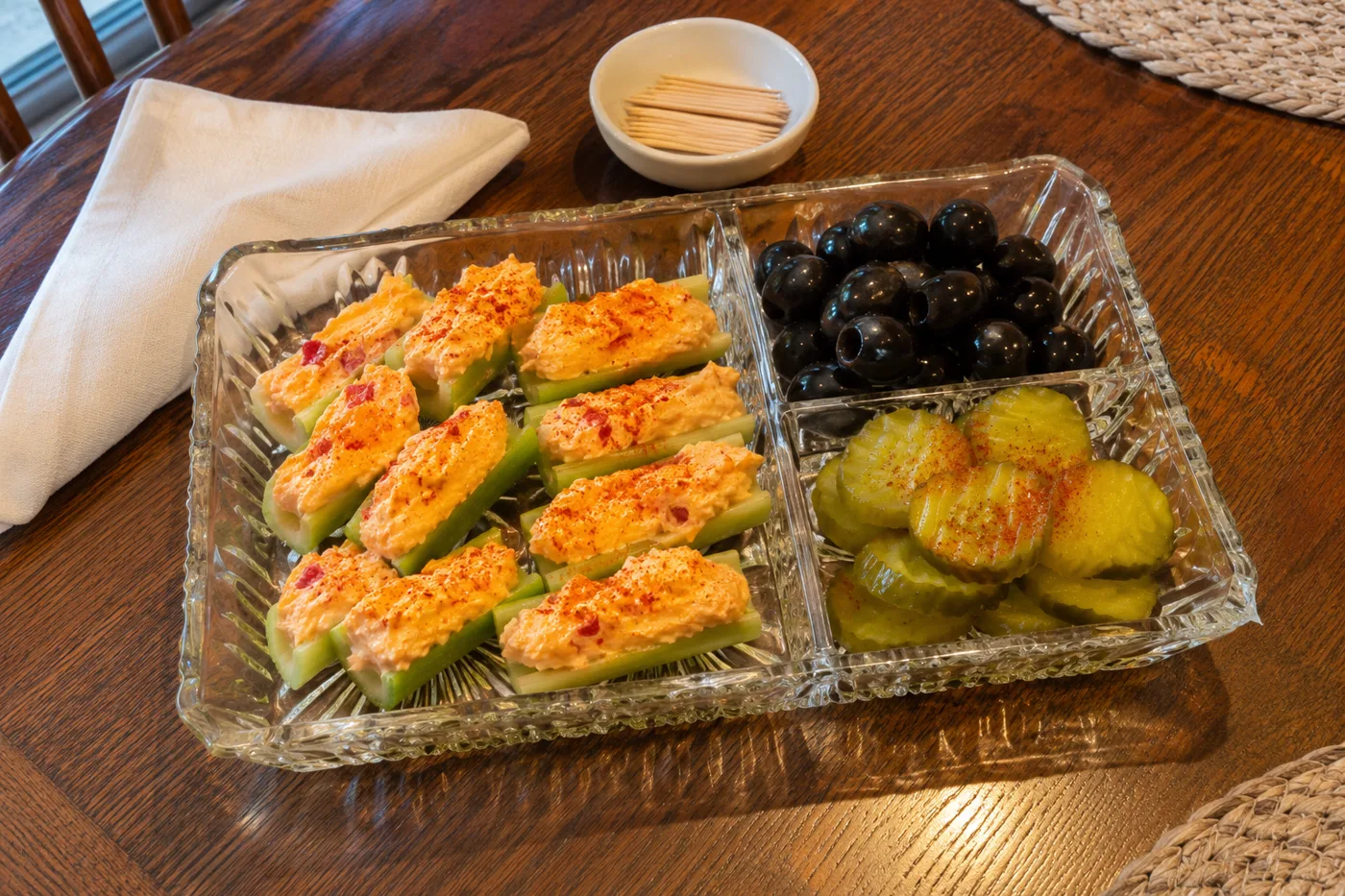
It lived on the divided glass relish tray next to the black olives, carrot sticks and sweet gherkins, smeared into the groove of each celery stalk, with a shake of paprika if someone was feeling fancy.
Celery used to be a luxury. It was once pricey enough to show off in a vase in the middle of the table. As it got cheaper, it became a way to carry cream cheese or, in the South, pimento cheese.
Pimento cheese got around fast. It was sold commercially starting in 1910, and Kraft and Borden kept pushing it for decades.
Those relish trays are still out there, mostly on the top shelf of somebody’s china cabinet.
#10 Mincemeat pie that once held real meat
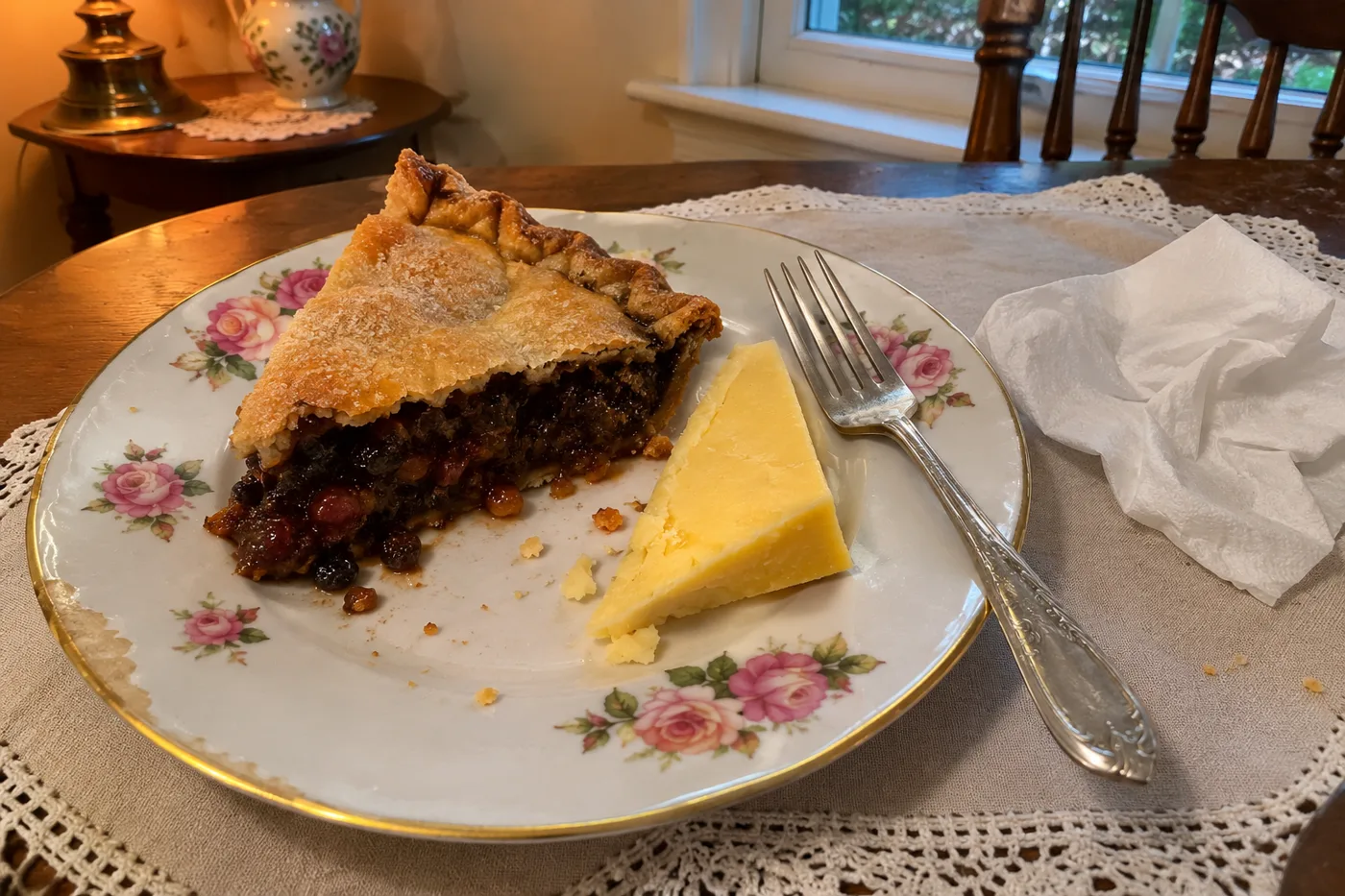
Dark, sticky and heavy with spice, served with a slice of cheddar in some houses and hard sauce in others. Kids took one bite and asked what was in it. The honest old answer was meat.
Mincemeat began as a way to preserve meat, usually mutton, packed in sugar and alcohol. By the middle of the 1900s, store-bought American mincemeat was almost all fruit, but the name stuck around to scare people.
It was big business once. None Such mincemeat, made in Syracuse starting in 1885, was turning out enough for 12 million pies a year by 1925. Then apple pie took over around the 1940s.
An old English custom says a mince pie every day from Christmas to January 6 brings twelve happy months. That’s thirteen pies. Good luck finding thirteen takers.
#9 A crown roast made of hot dogs
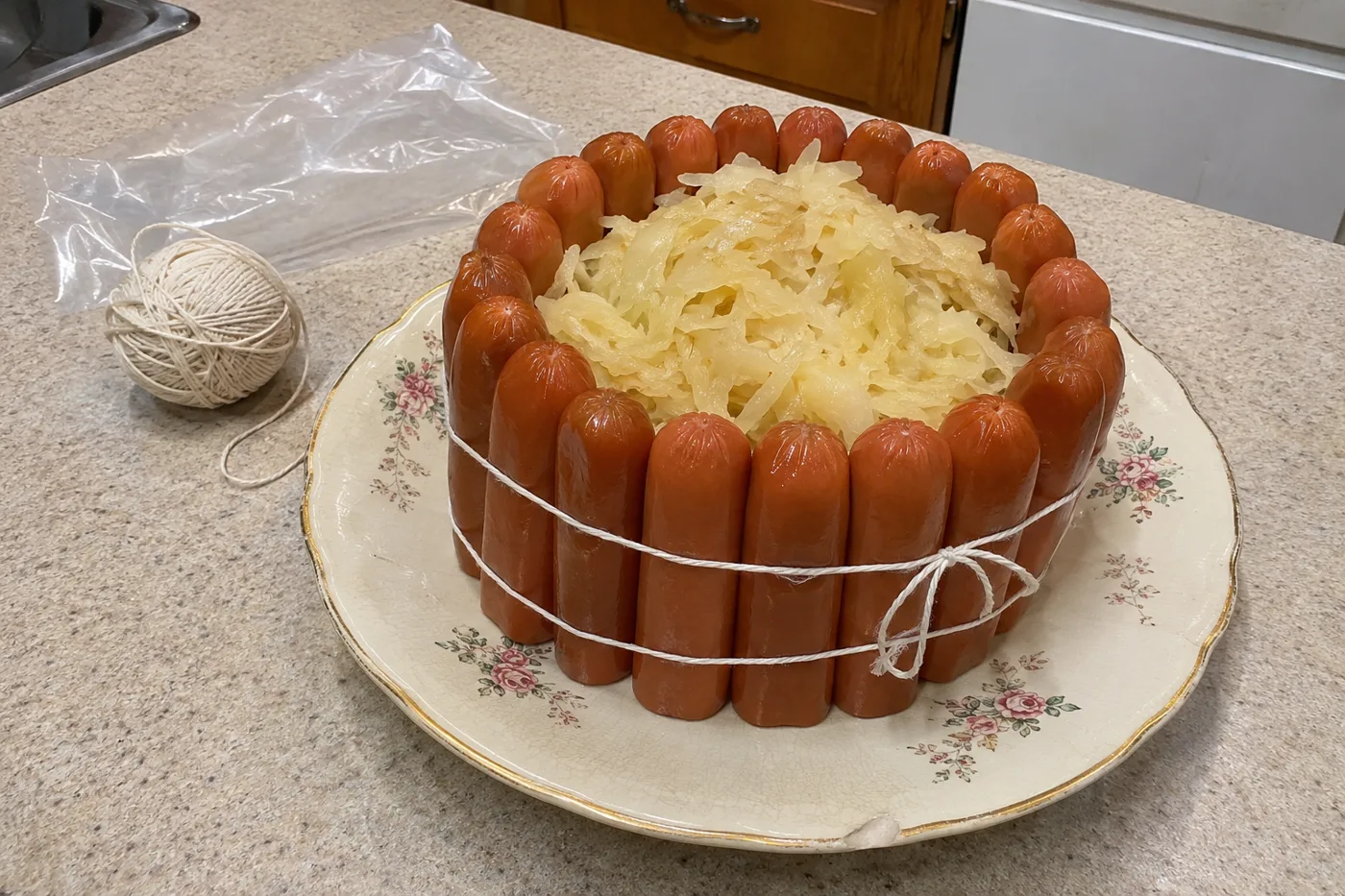
A crown roast was supposed to be the fancy centerpiece. This one was twenty frankfurters stood on end and sewn into a circle, with sauerkraut heaped in the middle.
Nobody made this up later for a laugh. The 1950 Culinary Arts Institute Encyclopedic Cookbook printed it with a straight face: “A crown roast of wieners is an ideal solution for guest problems when the budget is low.”
It hung on, too. Weight Watchers still posts a 1969 version online, with the franks leaned around a mound of cabbage slaw.
If you ever want to make one, you’ll need twenty hot dogs, a needle and kitchen string, and a crowd that likes a joke.
#8 Rumaki, bacon-wrapped chicken livers
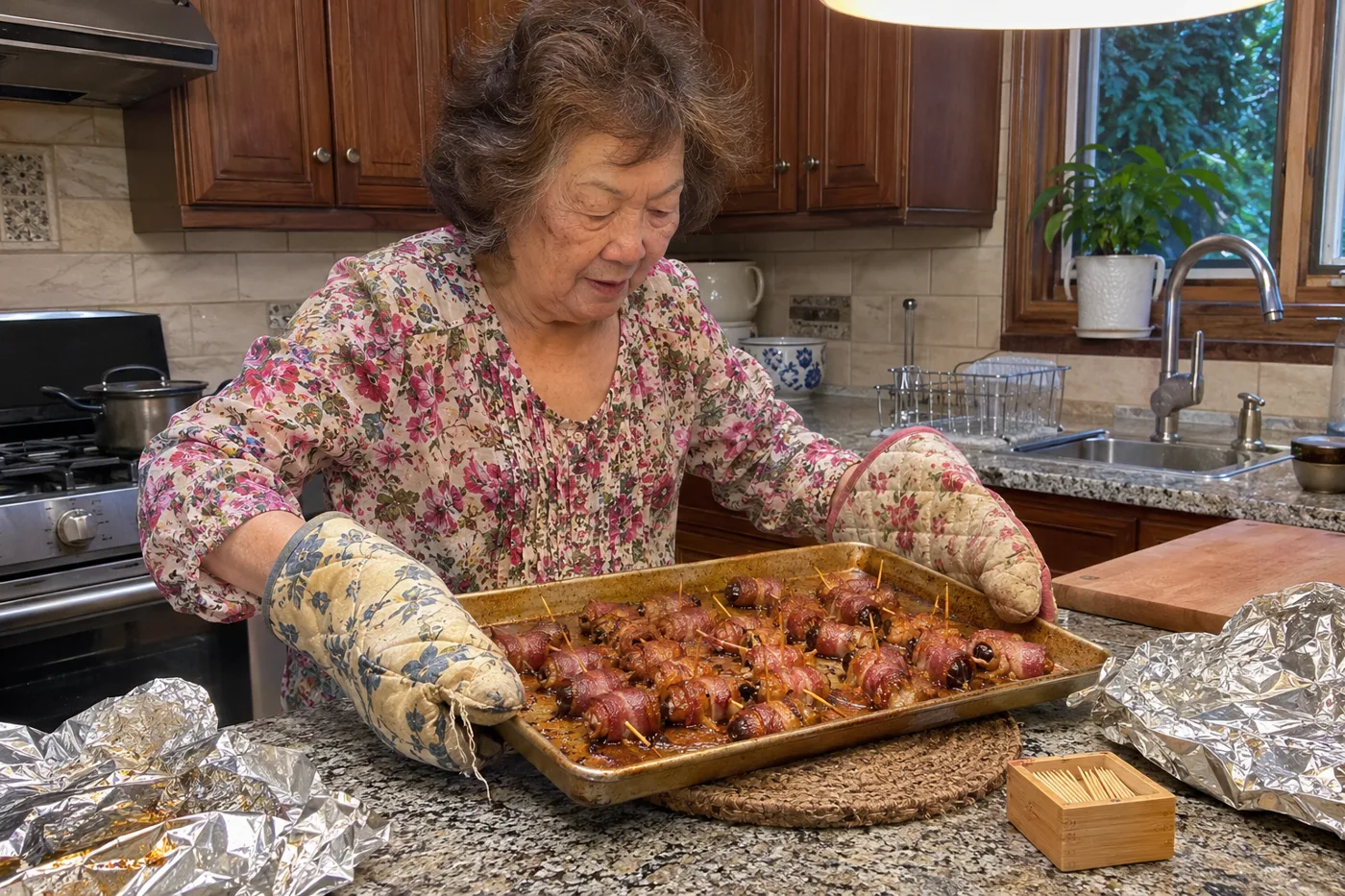
Bacon wrapped around a slice of water chestnut and a nugget of chicken liver, all held together with a toothpick and passed around on a tray. It felt very Hawaiian, or at least very tiki bar.
That’s where it came from. The earliest known record of rumaki is a 1941 Don the Beachcomber menu from Palm Springs: “Spiced Chicken Liver, Water Chestnuts wrapped in crisp Bacon.” Trader Vic’s and other Polynesian restaurants made it a hit in the ’50s and ’60s.
The name may come from the Japanese harumaki, meaning spring roll.
Try passing a tray of chicken livers at a party today and count the takers.
#7 Spray cheese on a cracker
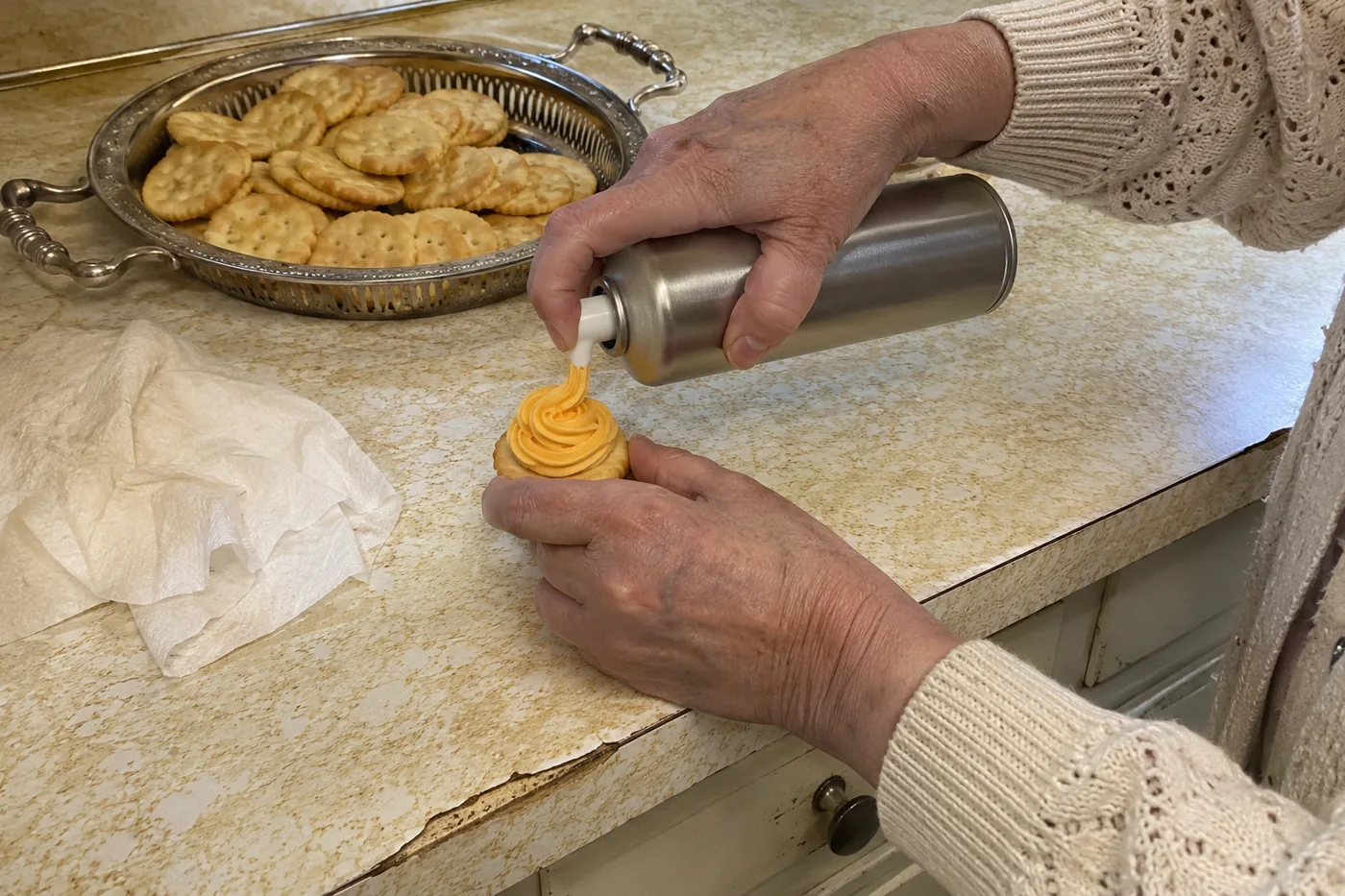
The can went pfft, and out came an orange ribbon, swirled onto a Ritz in a little rosette. Kids fought over who got to hold the can. Some skipped the cracker entirely.
Nabisco started selling it in 1965 as Snack Mate. It didn’t become Easy Cheese until 1984. But a 1966 ad called it “instant cheese for instant parties.” Try saying that to a room of guests today with a straight face.
#6 Dried chipped beef chopped into cream cheese
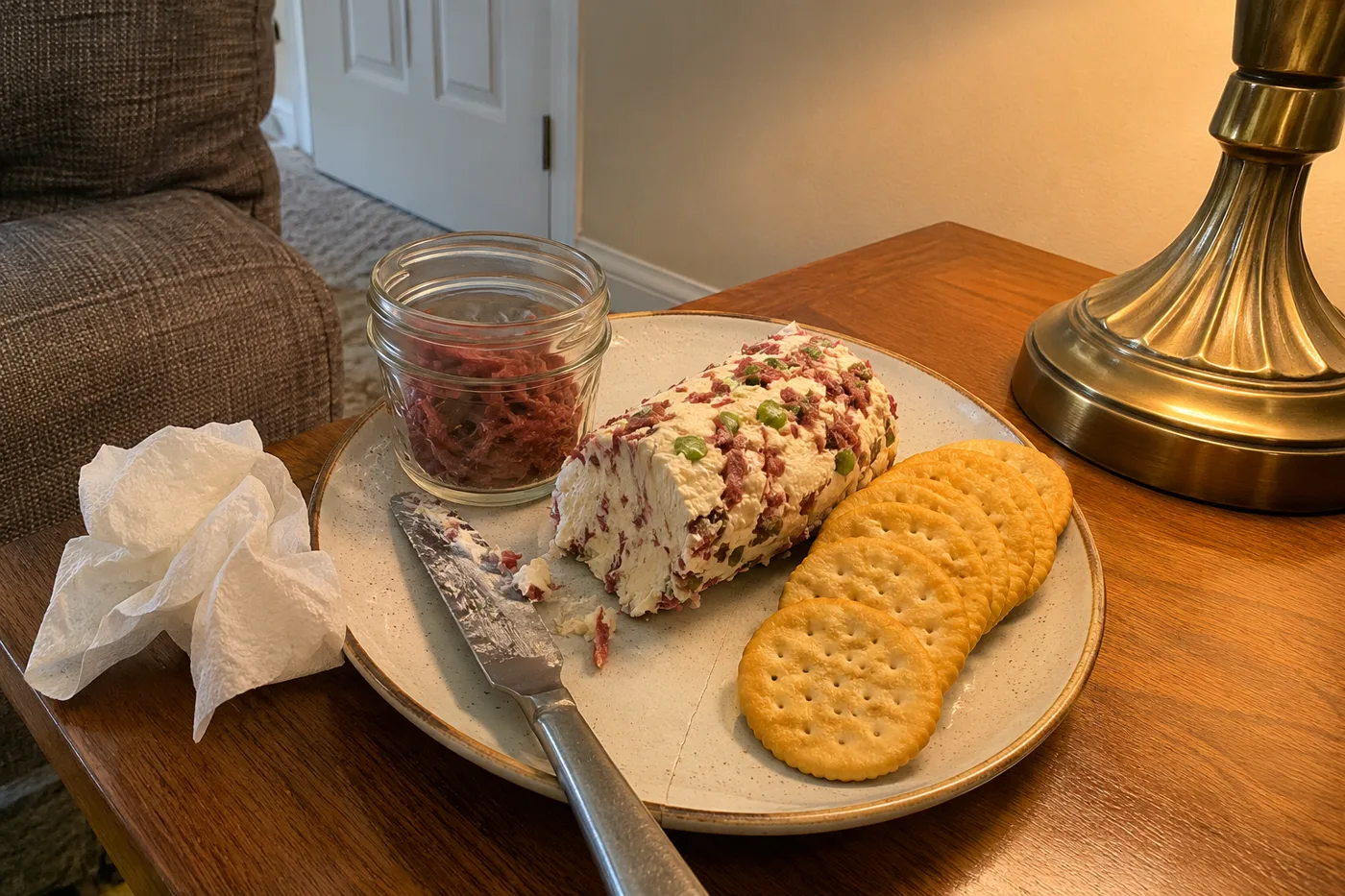
It came in a little glass jar, thin and pink and salty, then got chopped up with cream cheese and green onion into a dip or a log. In some houses, the same jar went over toast in a cream sauce for breakfast.
Chipped beef goes back at least to the 1910 Manual for Army Cooks.
It was popular in 1930s homes, then fell out of favor after World War II. By the mid-1990s, it was hard to find in supermarkets.
That dip never needed extra salt.
#5 Velveeta melted with a can of Ro-Tel
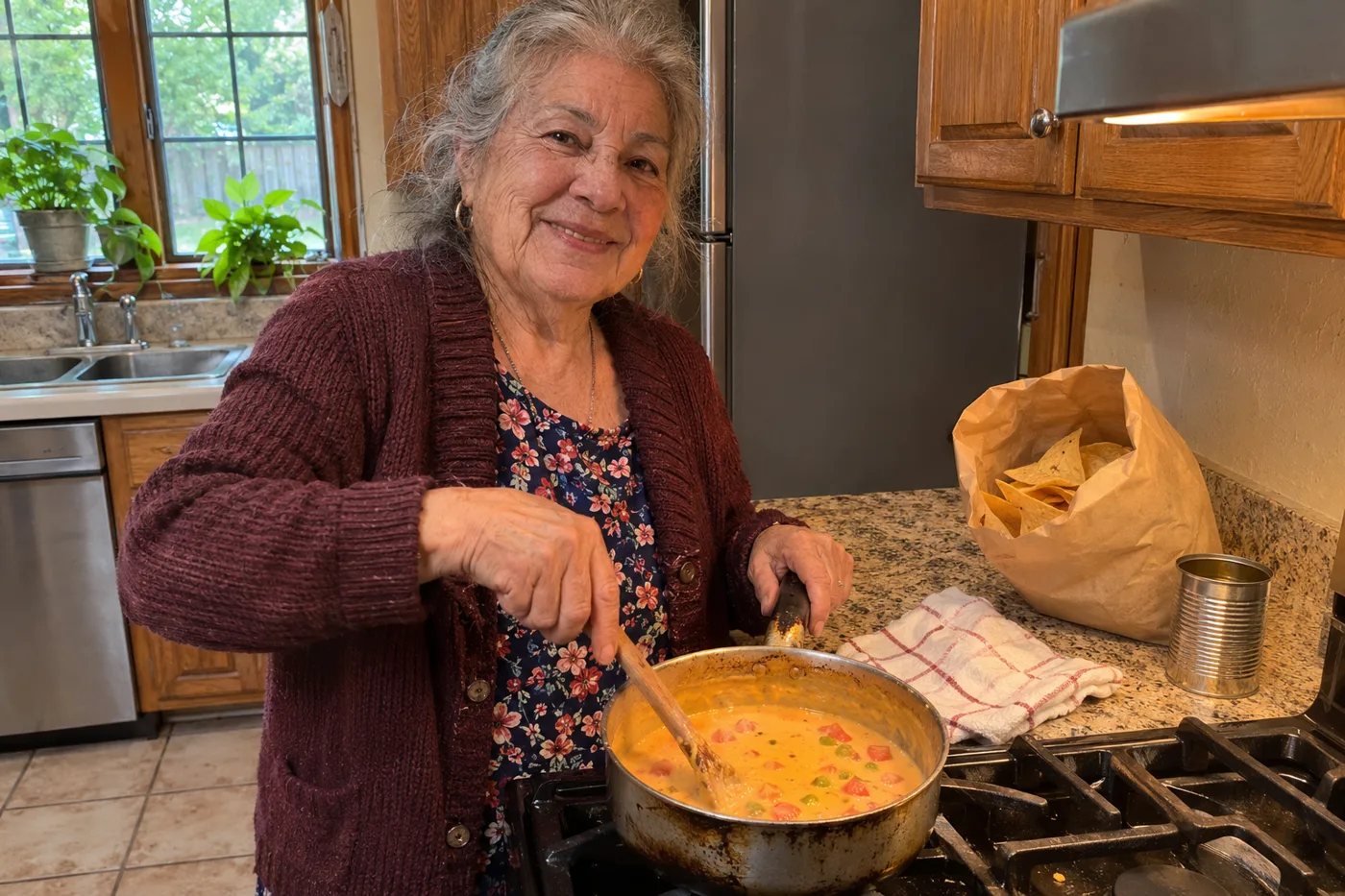
A brick of Velveeta, a can of Ro-Tel tomatoes and green chiles, a saucepan, and a bag of tortilla chips. Ten minutes later you had a smooth queso.
It’s older than most people guess. Food historian Robert F. Moss found the earliest recipe naming both in the Pittsburgh Press in 1958: “1 lb. Velveeta cheese with 1 can Rotel tomatoes and chili.”
Velveeta itself dates to 1918. In 2002 the Food and Drug Administration (FDA) sent a warning letter because Velveeta contained milk protein concentrate, so it didn’t fit the government’s definitions of cheese. The label changed to “pasteurized prepared cheese product,” a term the FDA has never formally defined.
Nobody standing over the saucepan has ever asked.
#4 Pickled herring in sour cream
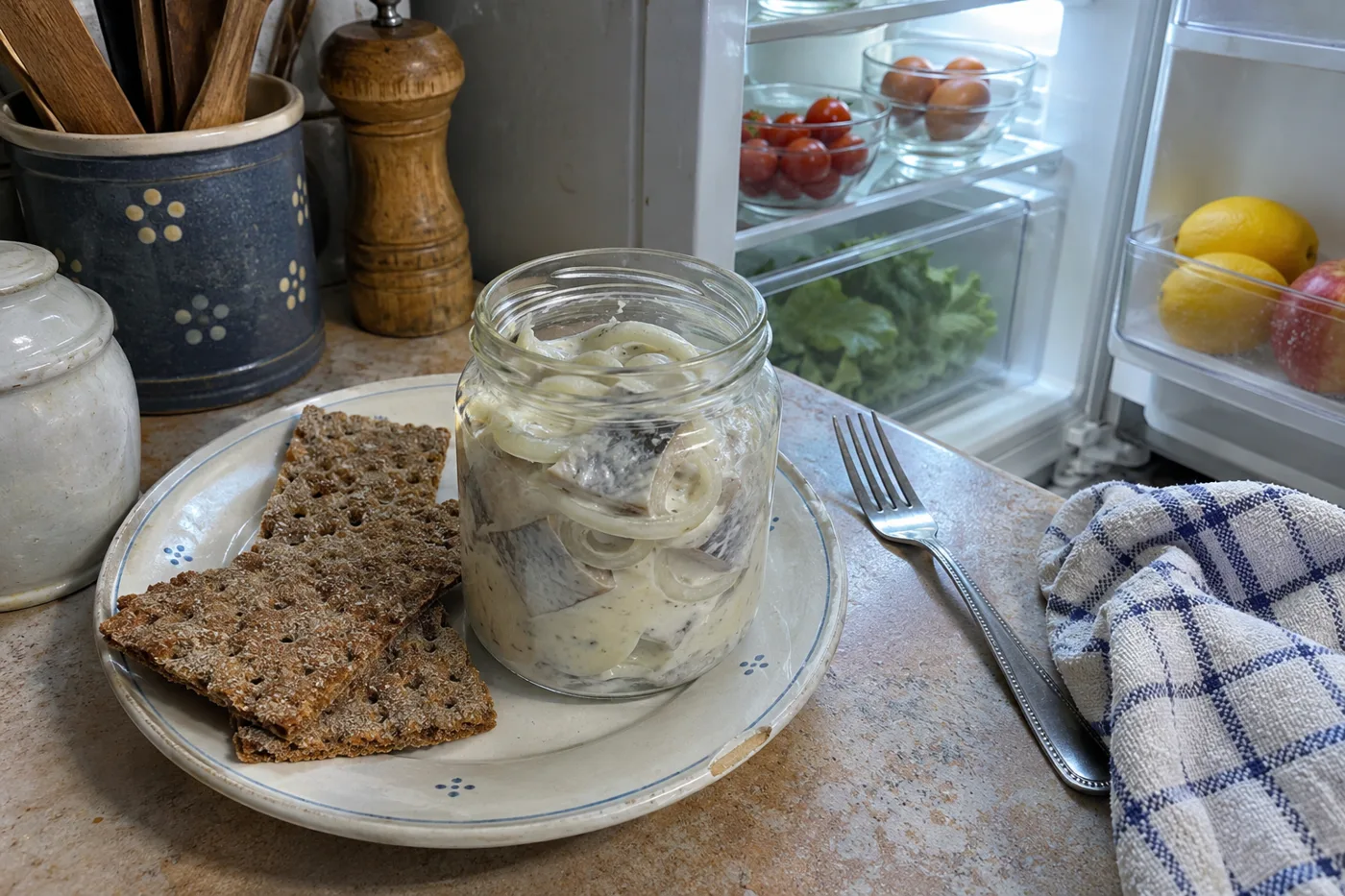
The jar came out of the refrigerator door, onions and all, and went on a plate with rye crackers. Half the room wouldn’t go near it. The other half stood guard.
In plenty of families, especially ones with roots in Northern or Eastern Europe, herring was the whole point. It’s one of the twelve dishes traditionally served on Christmas Eve in Russia, Poland, Lithuania and Ukraine.
In Poland, Germany, the Czech Republic and parts of Scandinavia, it’s eaten at midnight on New Year’s Eve for a prosperous year.
Guests may wince, but herring is winning. Olsen Fish in Minneapolis, the Midwest’s best-selling brand, says its herring sales “have been growing every year.”
#3 Hot Dr Pepper with a lemon slice
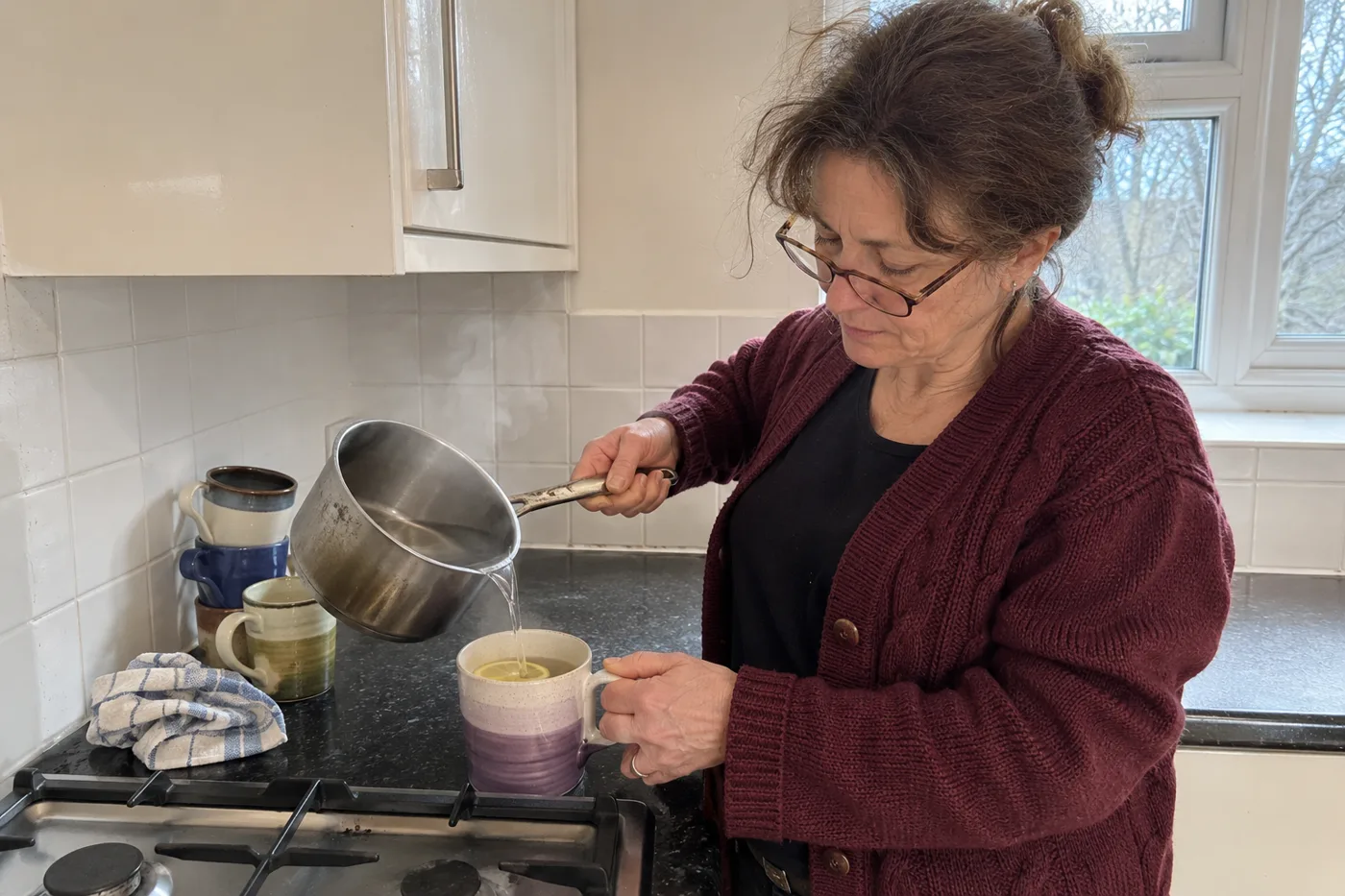
A saucepan of Dr Pepper on the stove, steam rising, poured into mugs over a thin slice of lemon. It sounds like something a kid would invent on a dare. In a lot of houses, it was simply the Christmas drink.
It started with a joke. In 1958, a Dr Pepper route salesman cracked during a blizzard that they needed a winter drink, and company president Wesby R.
Parker came up with one. He found that going past 180°F scorched the flavor, and that the lemon needed its rind. It stayed a holiday favorite through the 1970s.
Pour a mug this December and see who asks for seconds.
#2 Liverwurst molded and frosted like a pineapple
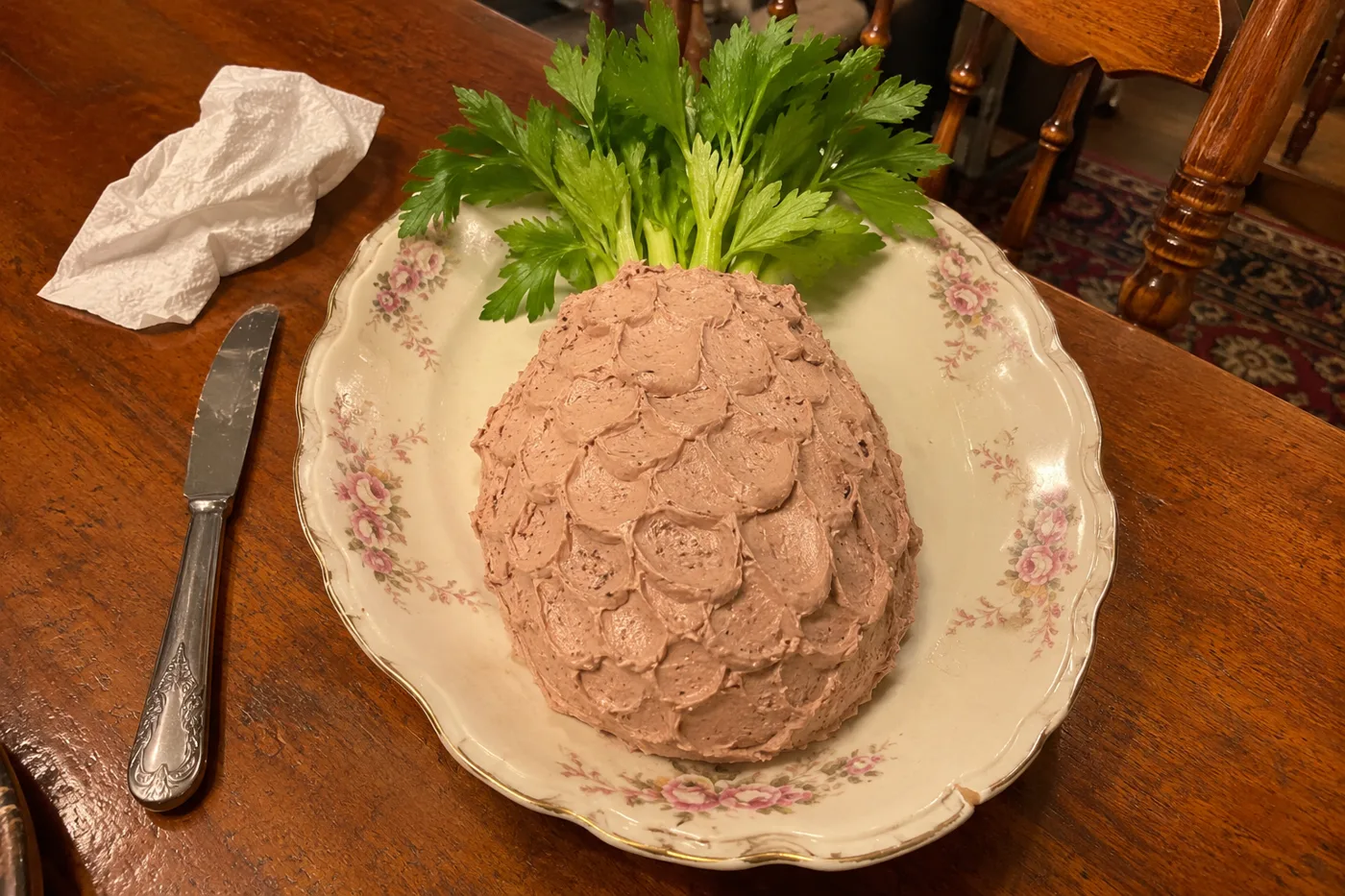
It sat in the center of the table looking like a pineapple. Then somebody cut into it.
This was no oddball recipe from a back page. The “liver sausage pineapple” was on the first page of the appetizer section of a Better Homes and Gardens New Cook Book.
The method was clever, in its way. Liverwurst got mashed with lemon juice and Worcestershire, molded over a jelly jar so it would stand up tall, then “frosted” to look like the real thing.
A guest today reaching for pineapple and getting liver would have a story to tell for years. Somewhere, somebody’s uncle still tells it every Christmas.
#1 Homemade eggnog made with raw eggs
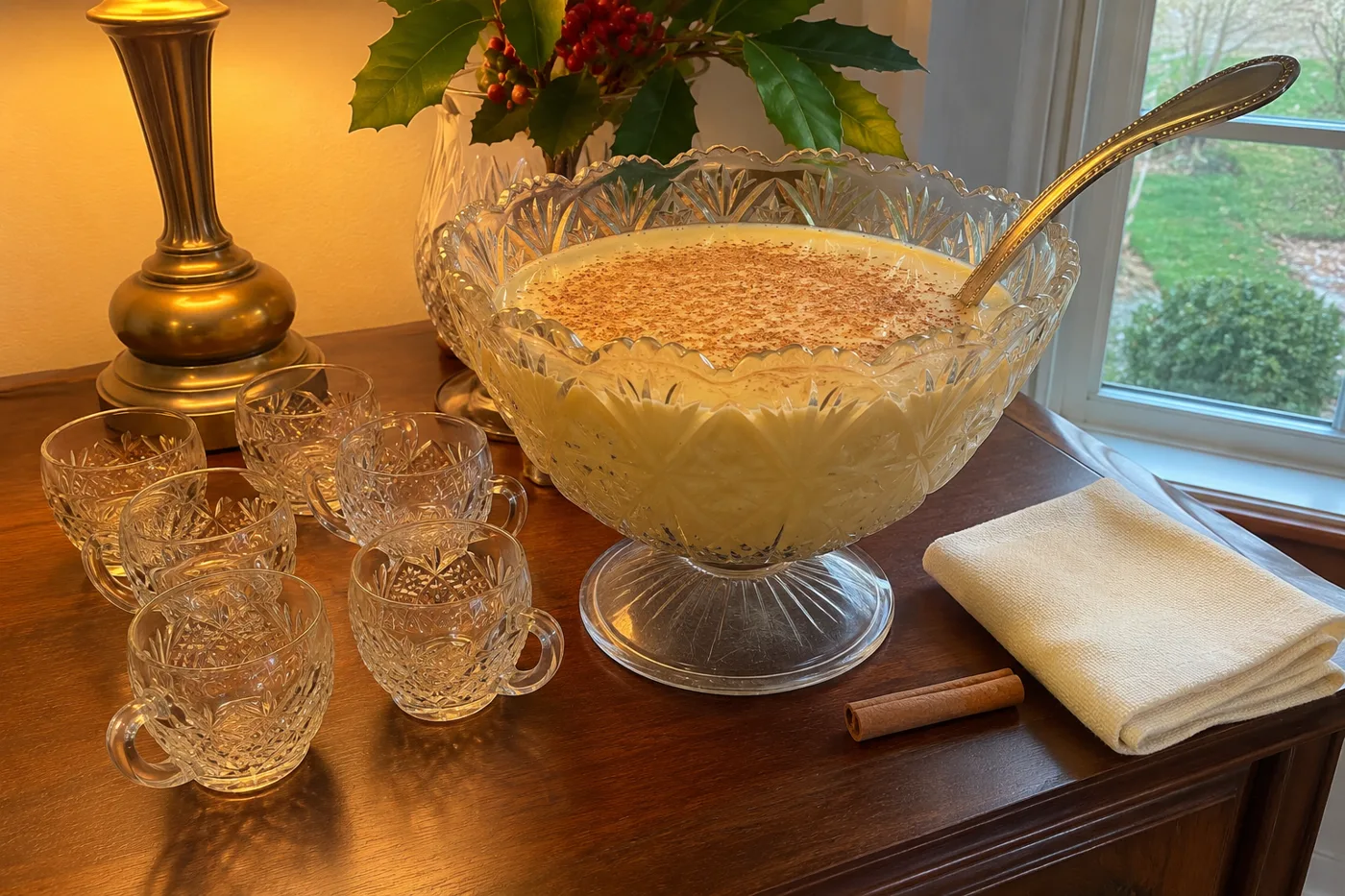
The punch bowl came out of the box in the basement. Eggs got cracked straight in and beaten with sugar, milk and cream, then came a generous pour of bourbon or rum and a grating of nutmeg on top. The grown-ups’ cups got an extra splash.
Most people figured the liquor took care of any germs. It doesn’t. The FDA says you can’t count on the alcohol to kill salmonella, a food-poisoning germ, so the eggs get cooked first.
That goes even for pasteurized eggs. Food-safety officials still say to cook the eggs and milk first. The fix is easy, and the punch bowl gets to stay.
Grate the nutmeg on top, same as always.
The cooked-base fix
- In a saucepan, cook the eggs with half the milk until a thermometer reads 160°F.
- Then stir in the rest of the milk and the other ingredients.
- Read the full method from Iowa State before you start.
The bottom line
So was it really that bad? Not in every house. Not everyone who lived through those years ever saw a hot dog crown roast. A good bit of the party food never left, either.
Here’s a question worth a minute: which one of these would you make again, if someone else did the dishes? If you still have the old recipe box or a church cookbook with spattered pages, find the card with the most stains on it.
That’s the one somebody kept asking for.
Bonus: Five more dishes that crowded the same buffet
- Look for Ambrosia, the fruit salad that now often comes with mini marshmallows and coconut, and tell anyone who calls it new that it goes back at least to an 1867 cookbook called Dixie Cookery.
- Ask your guests what they called ham-and-pickle roll-ups: Midwest sushi, Iowa sushi, Lutheran sushi and even frog eyes, depending on where they grew up.
- If chicken à la king in pastry shells turns up, you’re looking at a reception staple: it was so common at 1950s receptions that Calvin Trillin wrote “the whole country seemed to be awash in chicken à la king.”
- Search online for Bologna cake, stacked layers of bologna and cream cheese from the South, and you’ll see its comeback, though it may have started as a joke.
- Check the back of the pantry for Spam. Its billionth can sold in 1959, and Hormel said more than nine billion had sold as of 2022.
Questions people also ask
Is it safe to make eggnog with raw eggs?
Federal food-safety officials say to skip raw eggs. The FDA and the U.S. Department of Agriculture (USDA) both recommend cooking the eggs with half the milk to 160°F before adding the rest of the milk, even if you use pasteurized eggs. Alcohol can’t be counted on to kill salmonella. If you buy eggnog instead, check the label: some refrigerated or frozen ones aren’t made with pasteurized eggs.
When did fondue pots become so popular?
Chocolate fondue, invented in a New York restaurant in the mid-1960s as a Toblerone promotion, caught on in the 1970s and led many people to buy fondue pots. Around the same time, the Swiss Cheese Union ran big ad campaigns selling cheese fondue abroad.
Why is it called Watergate salad?
Nobody knows for sure. General Foods printed the recipe as “Pistachio Pineapple Delight” in the mid-1970s, and Kraft says a Chicago food editor renamed it, though that article has never been found. Another theory says it borrowed the name from Watergate cake, which had a “cover-up” icing and was “full of nuts.”
Does double-dipping a chip really spread germs?
Yes. A Clemson University study found it moves bacteria from a person’s mouth into the bowl. A spoon and a small plate for each guest solves it.
Is pickled herring still a Christmas tradition?
Yes. Olsen Fish in Minneapolis, the Midwest’s best-selling herring brand, says its herring sales have been growing every year. Herring is still one of the traditional Christmas Eve dishes in Poland, Russia, Lithuania and Ukraine.
Related posts:
25 Church Bazaar Crafts Every Town Sold That Nobody Makes Anymore
27 Things in Your Home Right Now That Should Have Been Thrown Out
26 Church Cookbook Desserts That Nobody Makes Anymore
24 Things Your Grandchildren Will Remember About Your Christmas
19 Holiday Traditions Women Over 60 Have Quietly Stopped Doing
19 Sewing Skills Your Mother Had That Nobody Has Now

- 24 Things People Over 60 Still Do When Cleaning That Experts Beg Them to Stop - November 6, 2026
- 21 Handmade Gifts From the 1970s Your Grandchildren Have Never Seen - November 6, 2026
- 25 Homemade Christmas Decorations From the 1960s, and What Became of Each One - November 6, 2026

Leave a Reply