Stay for #1, and why the old recipe card reaches for a can.
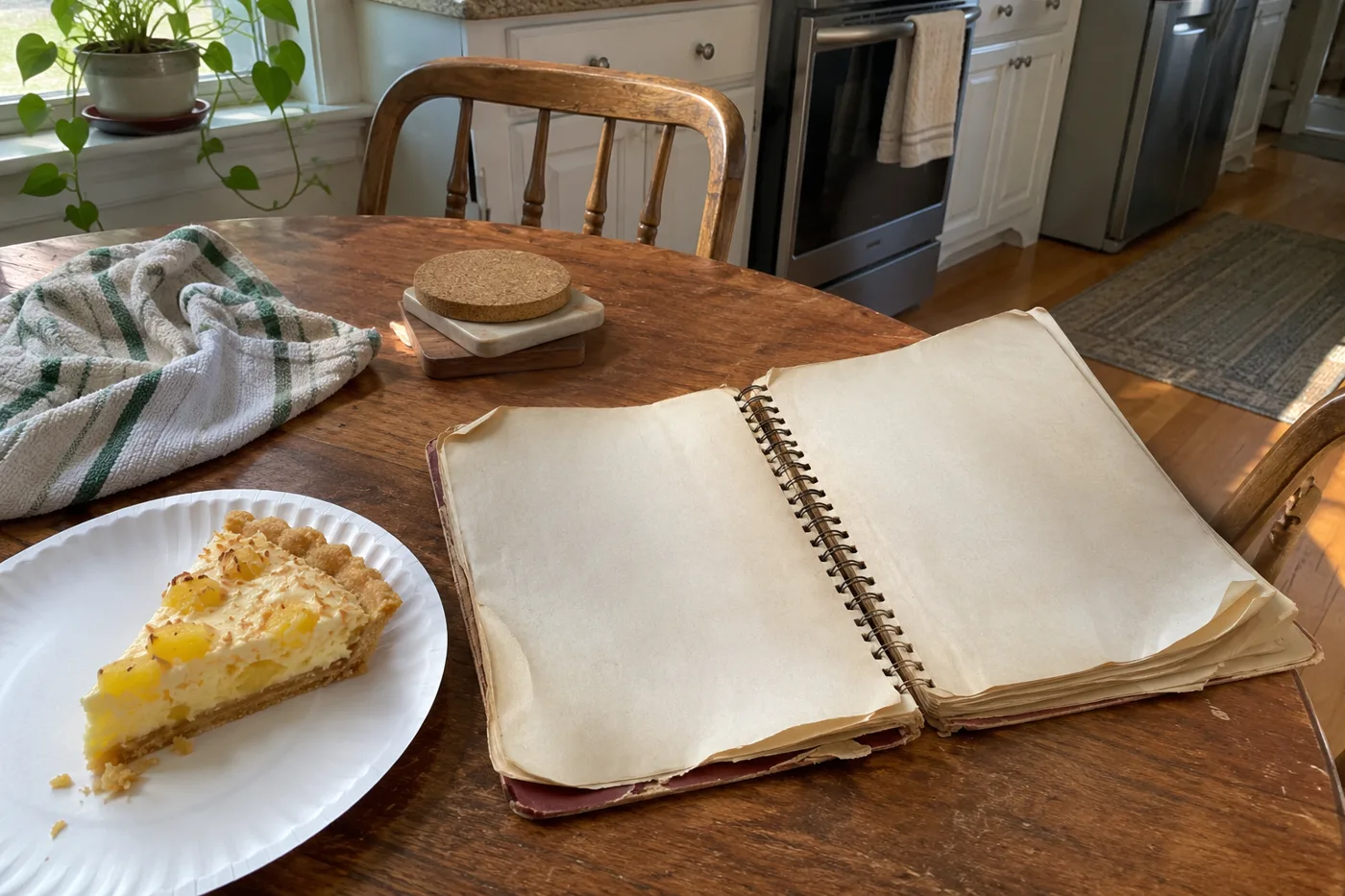
Somewhere there’s a spiral-bound cookbook with a plastic comb spine, a few pages glued together by something that boiled over years ago, and a woman’s name printed under every recipe. The pastor’s wife. Somebody’s aunt. The kindergarten teacher.
People trusted those books for one simple reason. Nobody sent in a bad recipe with her name printed right under it. So why do so many of the good ones hardly get made now?
#26 German chocolate cake, the birthday-cake classic
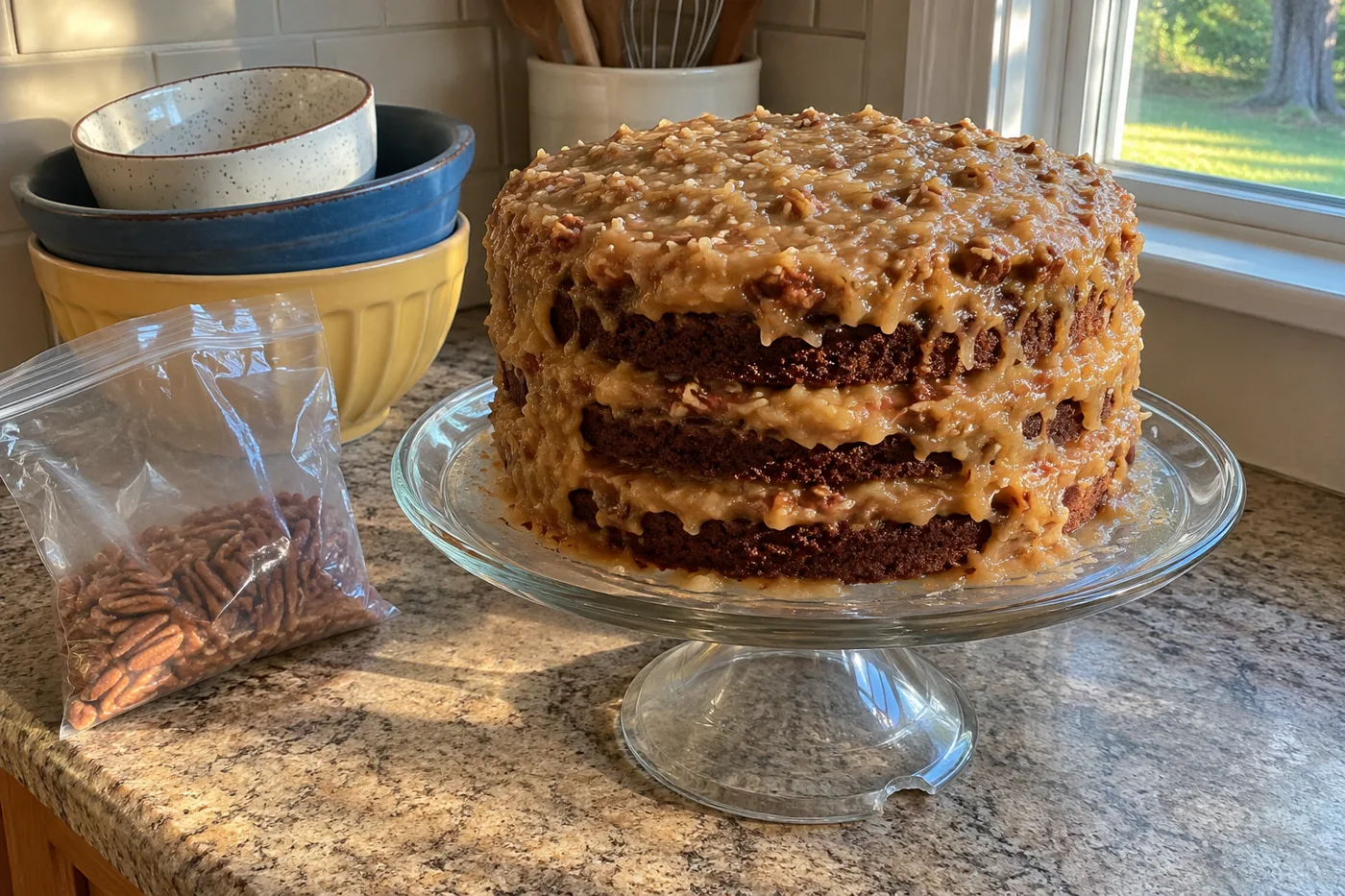
Plenty of people remember German chocolate cake as the birthday cake, the one with the gooey coconut-pecan frosting you picked at when nobody was looking.
For a lot of people it was the first cake they ever baked on their own.
It has nothing to do with Germany. The cake is named for Samuel German, who created a dark baking chocolate in 1853 for the Baker’s Chocolate Company. Later printings dropped the “‘s” from “German’s,” and the cake picked up a homeland it never had.
It went national in 1957, when The Dallas Morning News ran it as its Recipe of the Day, sent in by a Dallas homemaker signed “Mrs. George Clay.” Sales of that baking chocolate are said to have jumped by as much as 73%.
So the next time someone calls it a fancy European cake, you can tell them it’s a Dallas newspaper recipe named after a chocolate maker’s last name.
#25 Ambrosia salad in a cut-glass bowl
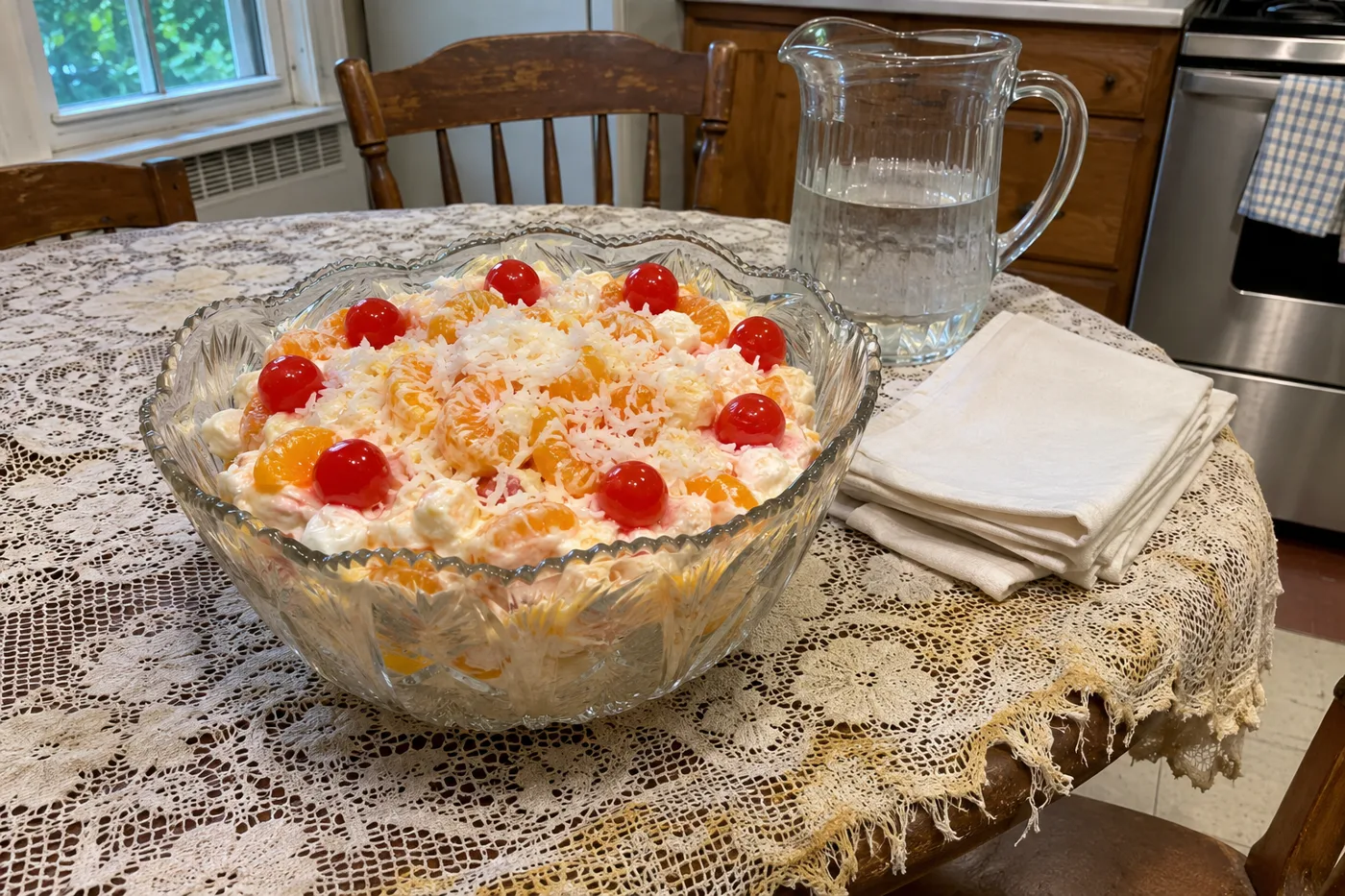
It came out of the refrigerator in the good cut-glass bowl, the one that seemed to appear only on holidays. Orange sections, coconut, little marshmallows, and if somebody was feeling fancy, a ring of maraschino cherries on top.
Ambrosia is older than almost anything else on the potluck table. The earliest known mention is in an 1867 cookbook called Dixie Cookery, and it began as a Southern fruit salad.
The extras came later. Cooks kept piling on marshmallows, sour cream and cherries for decades, and some added heavy cream or yogurt too.
If the cut-glass bowl is still in your china cabinet, a can of mandarin oranges, a bag of mini marshmallows and a cup of coconut would still fill it the way they used to.
#24 Watergate salad, the mint-green potluck fluff
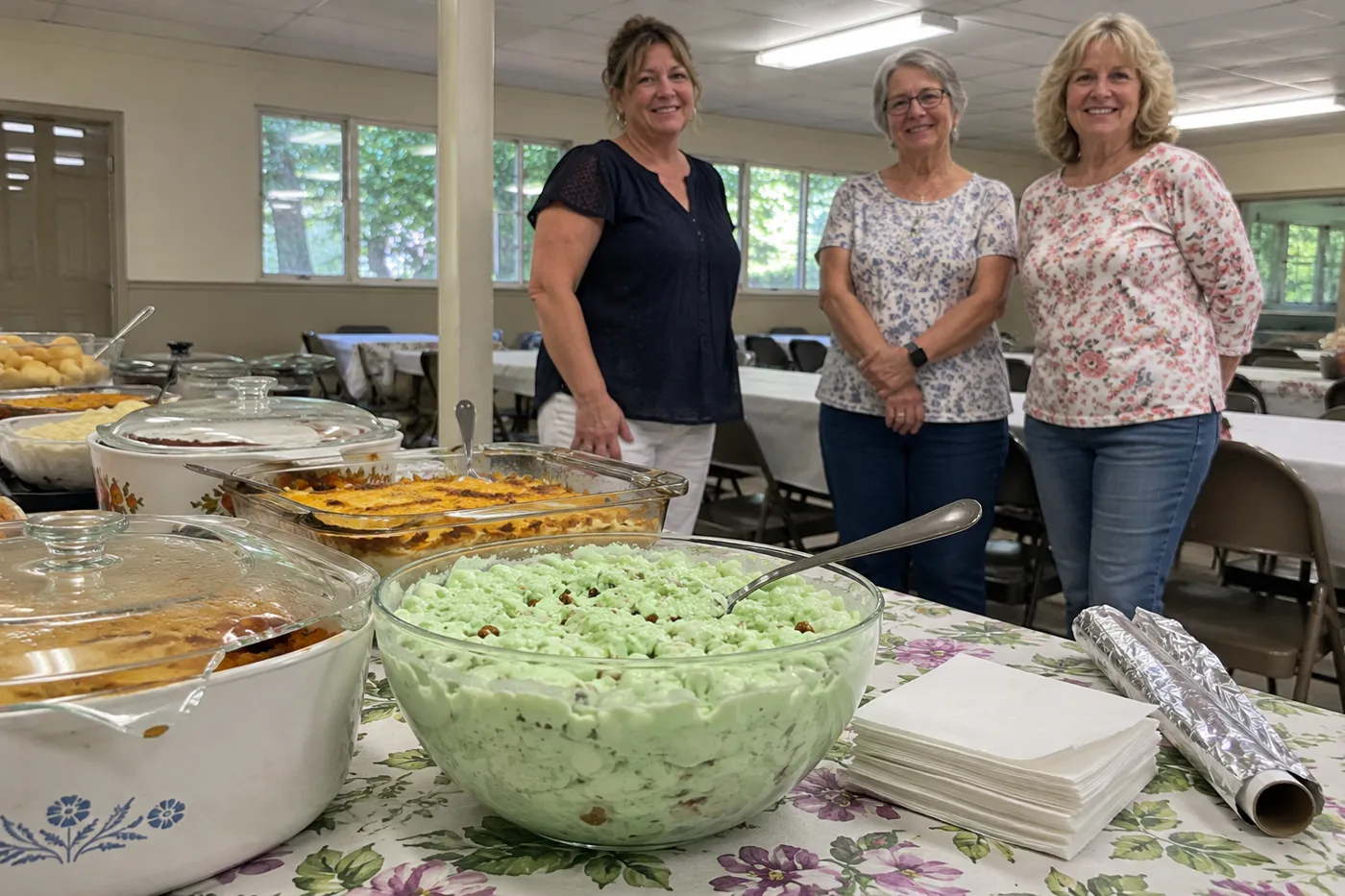
Pistachio pudding, crushed pineapple, nuts, mini marshmallows and a tub of whipped topping, stirred until the whole bowl turned a green you won’t find in any garden.
Kraft first printed it in the mid-1970s as “Pistachio Pineapple Delight.” Nobody called it that for long. Kraft itself can’t explain the name that stuck. “There are several urban myths regarding the name change, but we can’t substantiate any of them.”
One story ties it to a “Watergate cake” with a nut-and-icing “cover-up.” Another credits a Chicago food editor nobody has ever managed to identify.
Both of its shortcuts were fairly new. The pistachio pudding mix had just come out, and Cool Whip only dated to 1966.
#23 Strawberry pretzel salad sealed to the edges
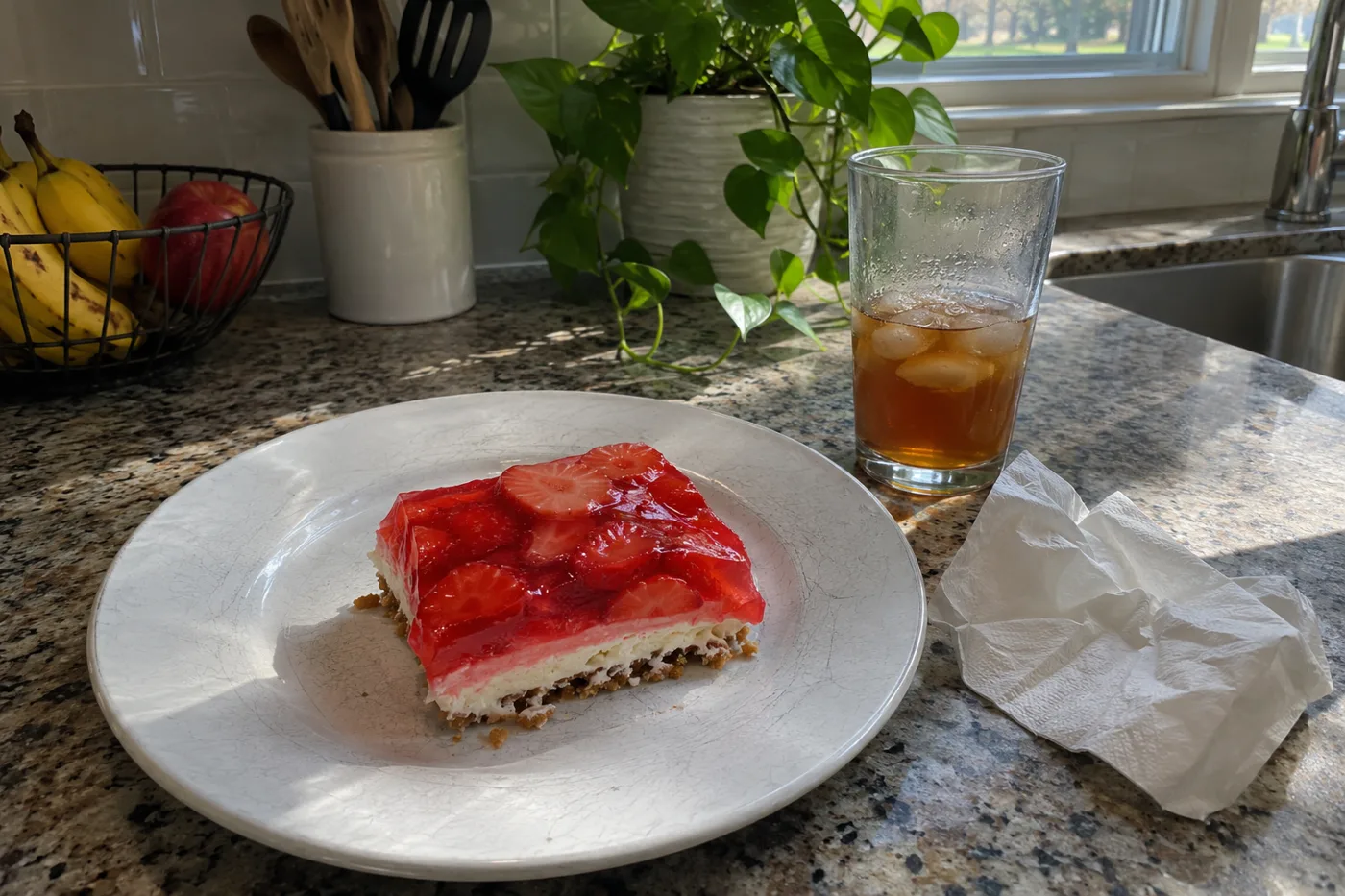
Salty pretzel crust, sweet cream cheese middle, bright red strawberry gelatin on top.
The common story traces it to The Joys of Jell-O, a promotional cookbook first printed in 1961. By 1966, two million Americans had ordered a copy. Some writers couldn’t find the recipe in early editions, so treat that part as legend.
The trick is in the middle. Recipe developer Natasha Kravchuk of Natasha’s Kitchen puts it plainly: “When you spread, make sure you go all the way to the edges to create a seal.”
Skip a corner and the gelatin seeps down and softens the pretzel crust. That soggy pan you remember from some long-ago supper probably came from a crust that wasn’t sealed all the way around.
#22 Banana pudding with real baked meringue
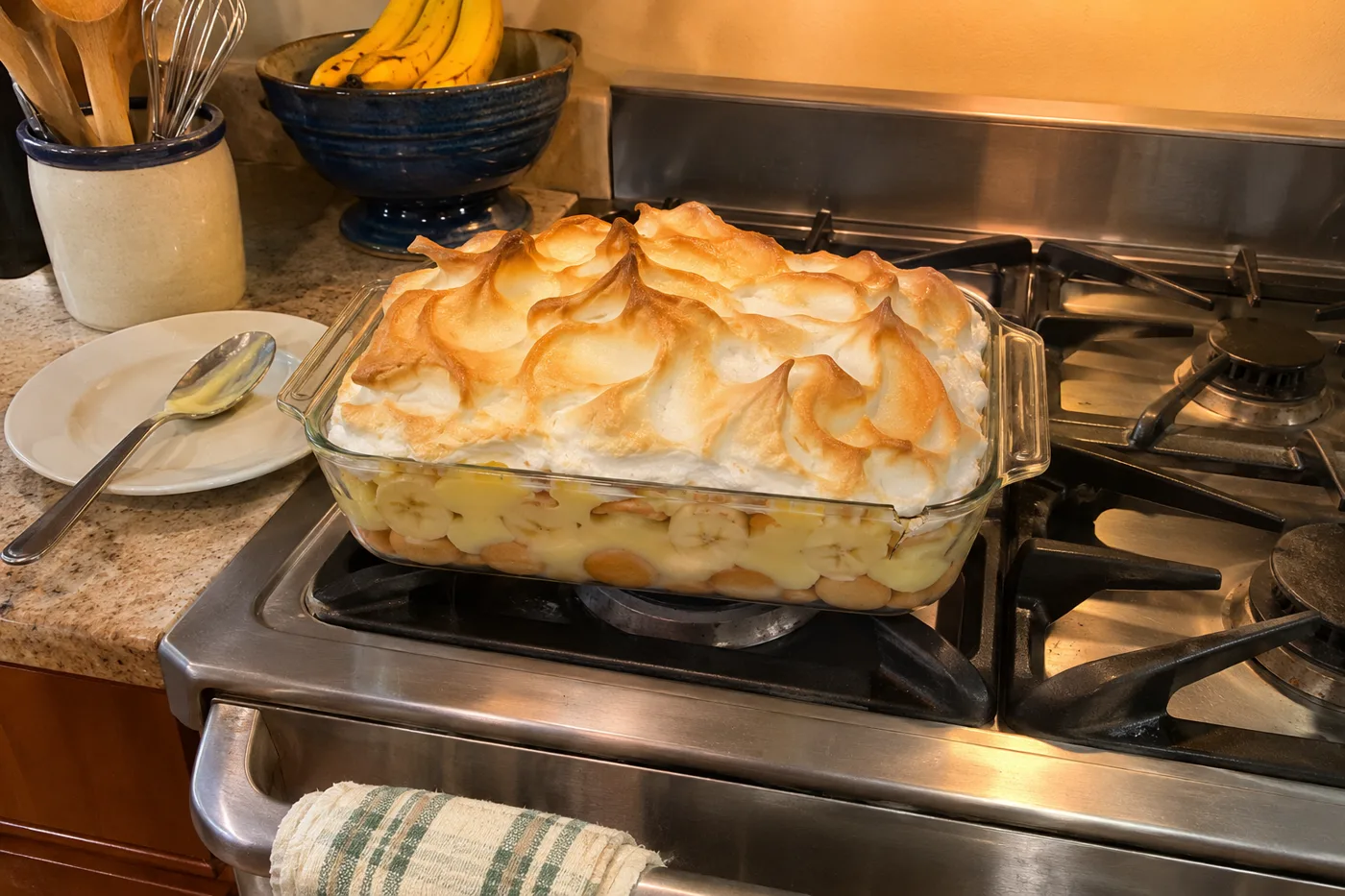
Banana pudding never left the potluck. The version with a tall, golden meringue, baked until little beads of sugar wept off the peaks, is the one that went missing.
It’s an old dish. Banana pudding was popular across the country by the 1890s, made mostly with sponge cake. Vanilla wafers came in 1920, when a Mrs. Laura Kerley printed a recipe using them in a Bloomington, Illinois, newspaper. By the 1940s, a banana pudding recipe was printed right on the vanilla wafer box.
So if your bowl wore a meringue, you got the fussier recipe. Somebody stood at that counter separating a lot of eggs.
#21 Jell-O poke cake in bright color stripes
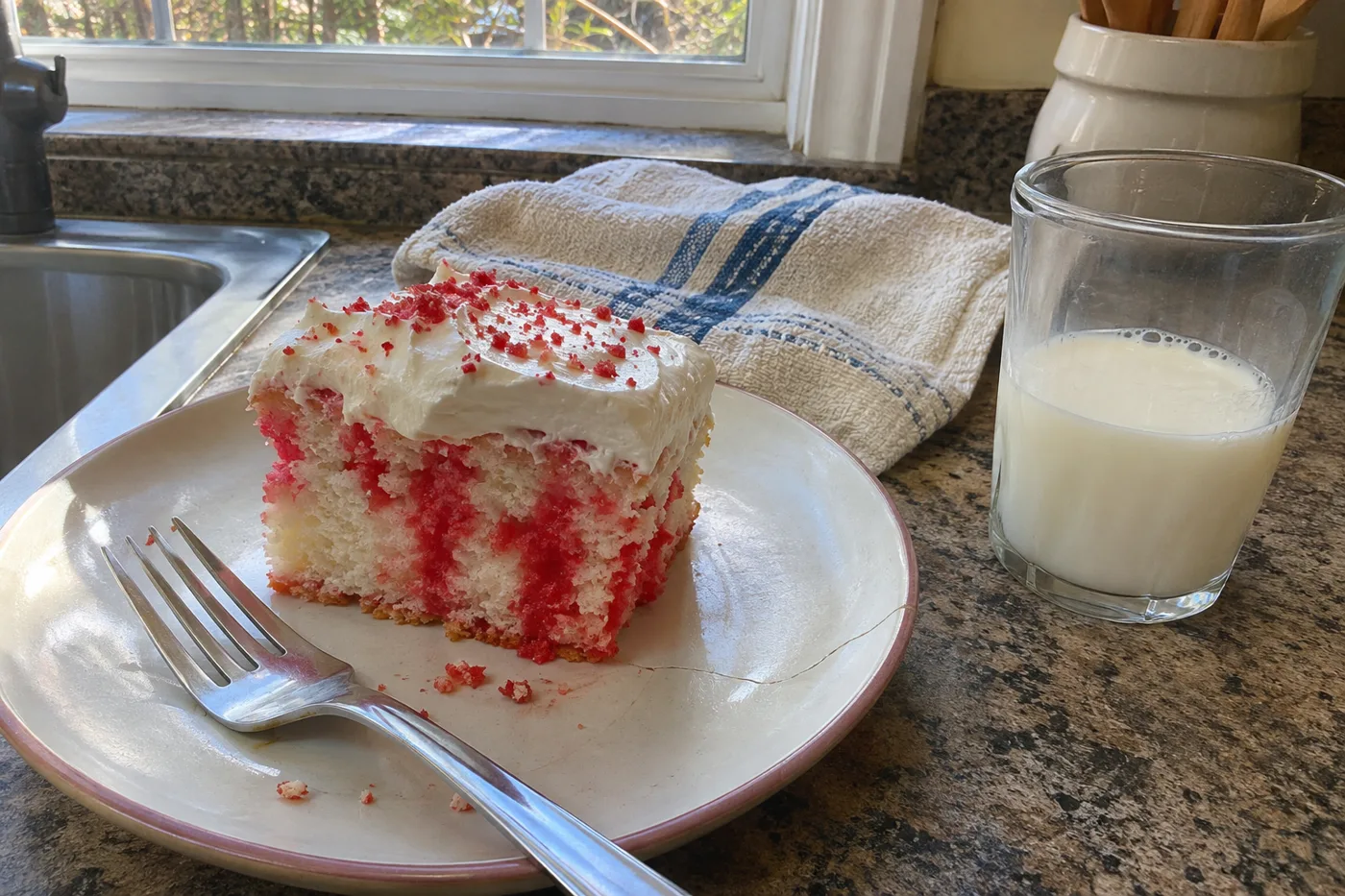
You’d cut into a plain white cake and find red stripes running straight down through it, like somebody had drilled it for oil.
They had. With a fork, or the handle of a wooden spoon.
The poke cake came out of General Foods’ test kitchens and first appeared in Jell-O ads and recipe booklets in 1976. The first flavor was raspberry. Strawberry became the most requested. A pudding version followed in 1981.
Why invent it? Gelatin salads were falling out of style, and the company wanted people reaching for the little boxes again. It worked so well the cake landed in church cookbooks as if somebody’s grandmother had thought it up herself.
#20 Pineapple upside-down cake baked in cast iron

The skillet came out of the oven, a plate went on top, and somebody brave flipped the whole thing in one motion. Then everyone held still to see whether the cherries stayed in their pineapple rings.
In 1925, the Hawaiian Pineapple Company, later Dole, held a recipe contest. More than 60,000 recipes came in. About 2,500 of them were for pineapple upside-down cake.
Picture that. Twenty-five hundred women in twenty-five hundred kitchens, all flipping the same cake, each one sure it was hers.
The same history calls it “essentially a skillet cake,” which explains the cast iron.
#19 Texas sheet cake, frosted while still warm
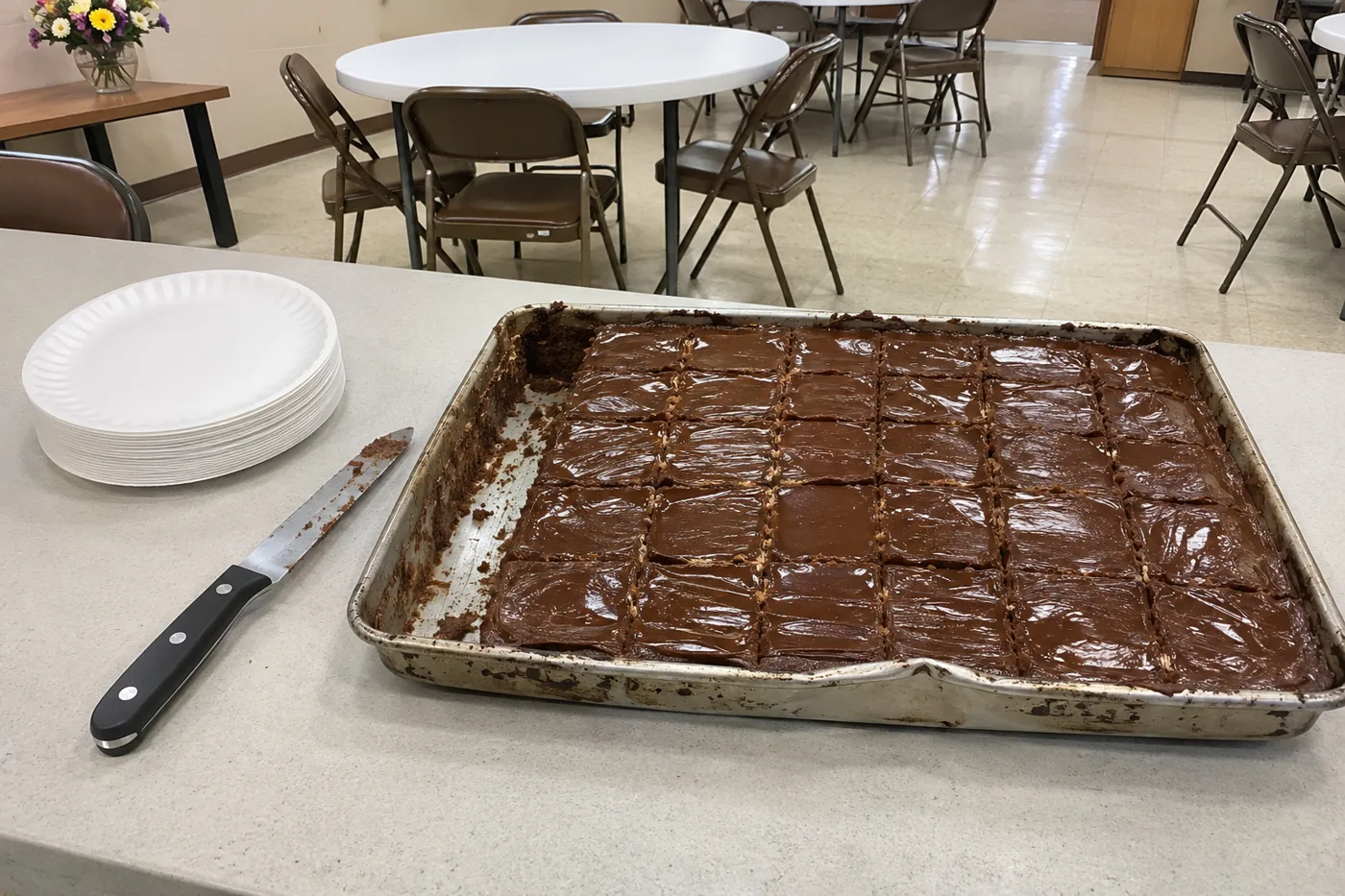
Chocolate, buttermilk, an enormous flat pan, and frosting poured on while the cake was still warm so it set into a thin, fudgy layer.
Nobody knows who named it. You may have heard Lady Bird Johnson invented it. Historians checked her archived recipes and found no evidence she did.
The earliest printed reference turned up in the Galveston Daily News in 1936. It’s also gone by Texas sheath cake, buttermilk brownies and Mexican chocolate cake.
The pan is the giveaway. It’s large, but only about an inch tall. Thin cake, wide pan, every slice with a corner’s worth of frosting.
#18 Cherry chocolate cake from a cake mix
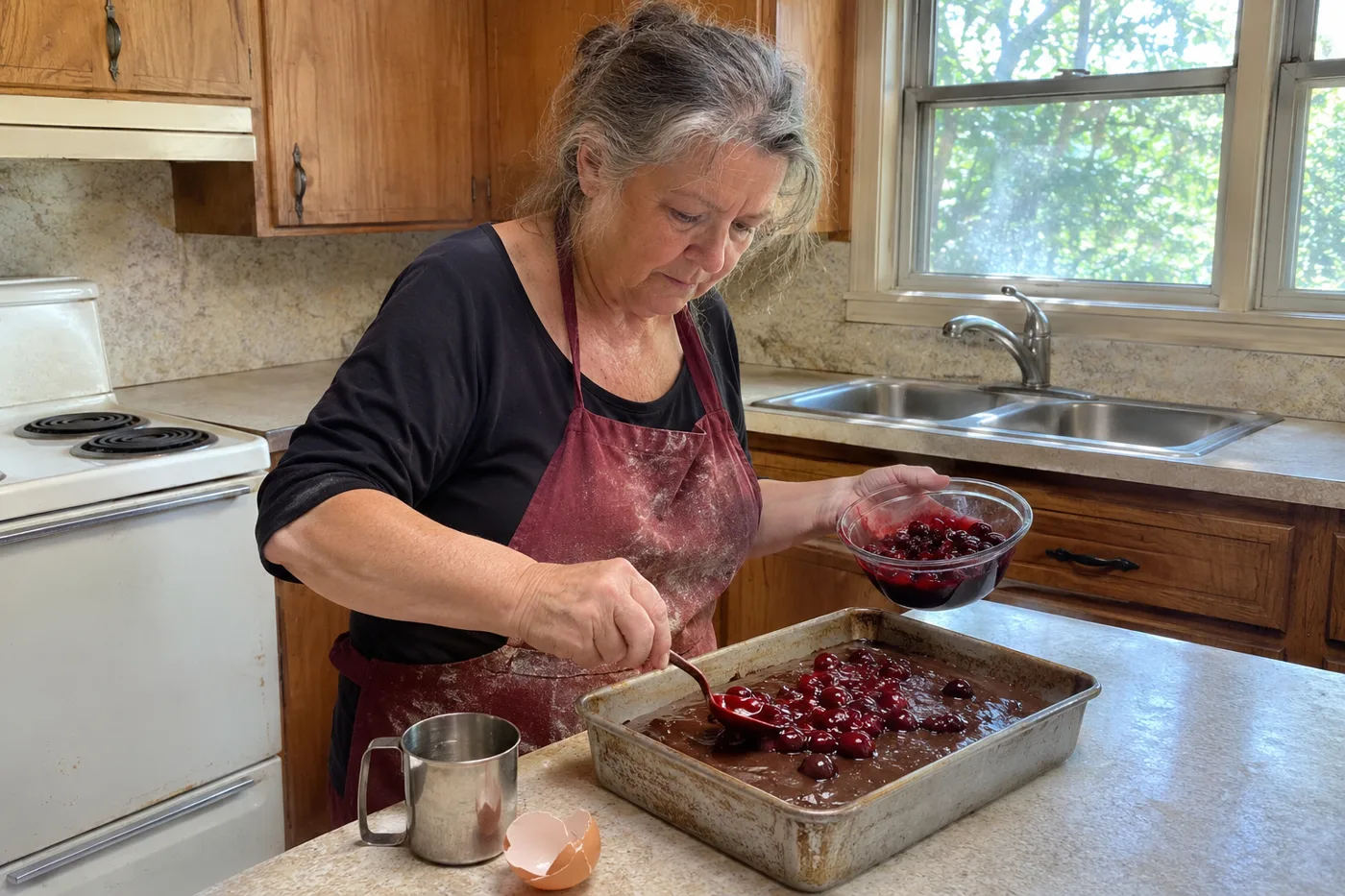
A box of chocolate cake mix, a can of cherry pie filling, a couple of eggs. That was the whole recipe.
It’s been riding along to church functions for decades.
If you’ve made the old recipe lately and it came out flat, the box may be the problem. By 2013, Pillsbury’s had gone from 18.25 ounces to 15.25, and Betty Crocker’s had shrunk too. Same recipe card. Smaller box now.
#17 Mock apple pie made from Ritz crackers
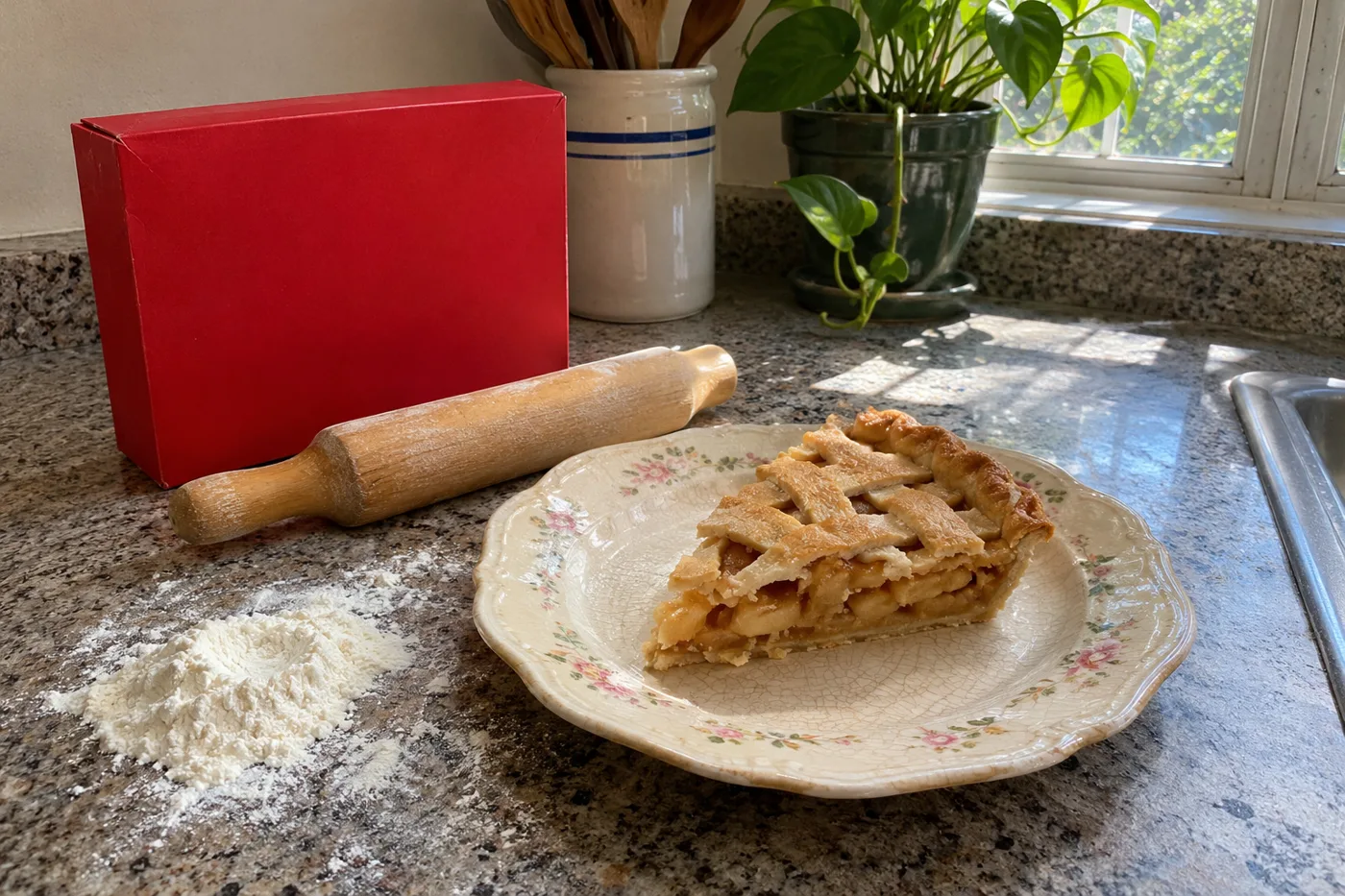
It looked like apple pie. It smelled like apple pie. Then somebody told you there wasn’t an apple in it, and you went back for a second slice to check.
Mock apple pie is older than Ritz crackers by nearly 80 years. A “cracker pie” ran in the Saturday Evening Post in 1857. It was made with “four square or six round crackers,” sugar, and a teaspoon of tartaric acid to fake the apple’s tang.
Ritz came along on November 21, 1934, at 19 cents for a one-pound box. Within three years it was the world’s bestselling cracker, and by World War II the pie recipe was printed on the box.
So the women fooling the church supper with crackers were carrying on a trick from before the Civil War.
#16 Tomato soup spice cake, the secret ingredient
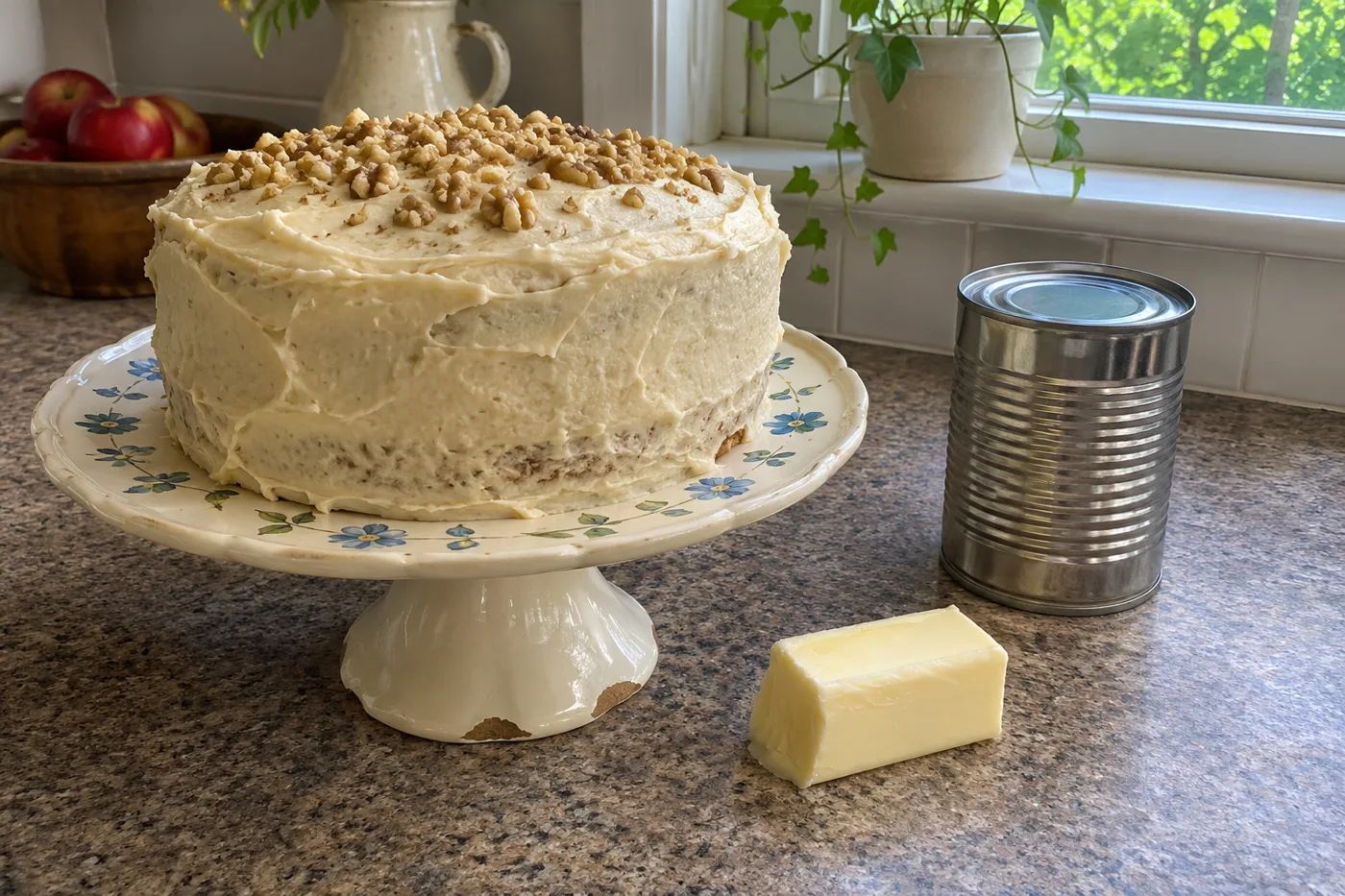
Somebody always asked for the recipe, and the baker always smiled before she answered: a can of tomato soup.
Campbell’s traces the cake back to a cookbook from around the late 1920s or early 1930s. In 1960, it became the first recipe ever printed on a Campbell’s soup label.
It doesn’t taste like tomatoes. The soup is there for moisture, and the spices do the rest.
#15 Chocolate mayonnaise cake for extra moistness
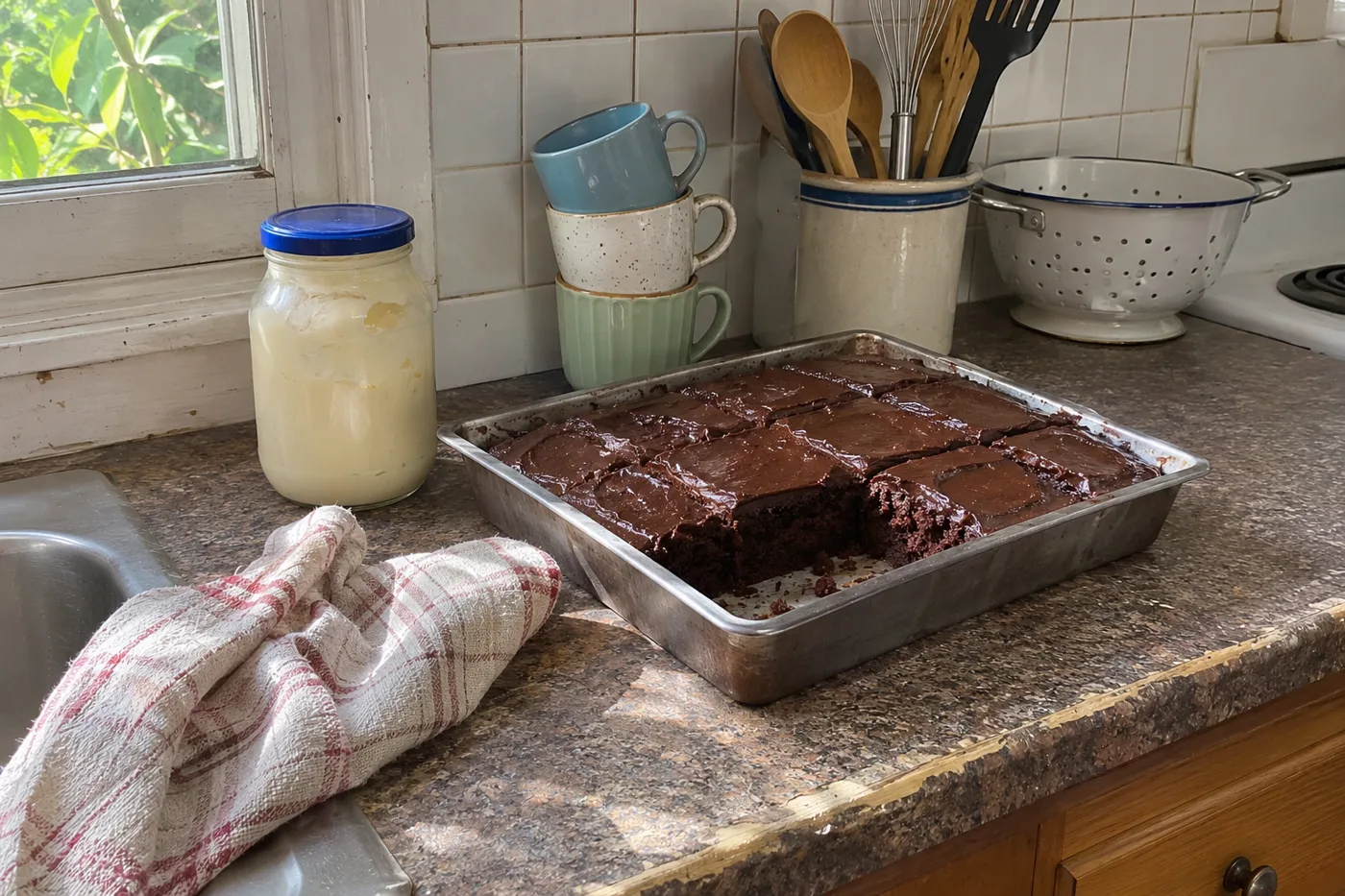
Lots of church cookbooks had one, and every kid who read the ingredients said “Ew.”
Then they ate a piece.
Mayonnaise is mostly oil, eggs and vinegar. That’s the fat and eggs a cake needs anyway, already whipped together in a jar. One history credits the cake to a Mrs. Paul, wife of a Hellmann’s sales distributor, who used mayonnaise in place of butter. It caught on during the Depression and again with 1940s rationing.
Old recipes often say “Hellmann’s (Best Foods).” It’s the same mayonnaise under two names: Best Foods west of the Rockies, Hellmann’s east of them. The church book was quietly telling you which side of the mountains you lived on.
#14 Chocolate wafer icebox cake, sliced on the diagonal
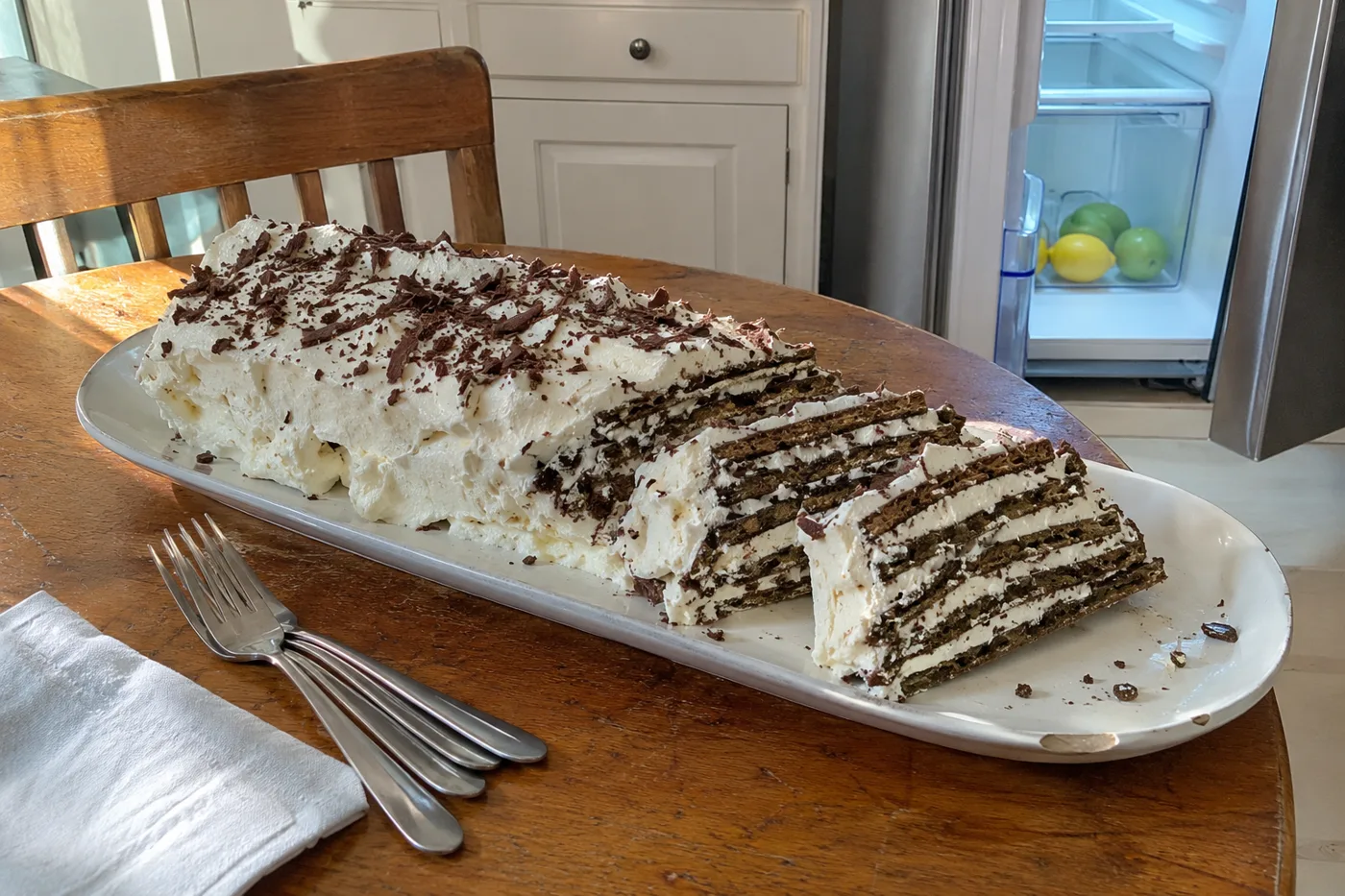
Thin chocolate wafers stacked with whipped cream into a long log, left overnight in the refrigerator, then sliced on the diagonal so every piece showed its stripes. It looked like a day’s work. It was mostly a night’s wait.
That was the point. A 1938 Nabisco cookbook put the icebox cake on its cover, and the recipe later went right on the package. Food historian Megan Elias says companies came up with recipes like this to make refrigerators seem “indispensable.”
Some people still name it as a potluck favorite. The catch: Nabisco stopped making Famous Chocolate Wafers in early 2023, after nearly 100 years.
So if your church book calls for them, you’re holding instructions for a cookie you can’t buy anymore.
#13 Divinity candy that falls apart on rainy days
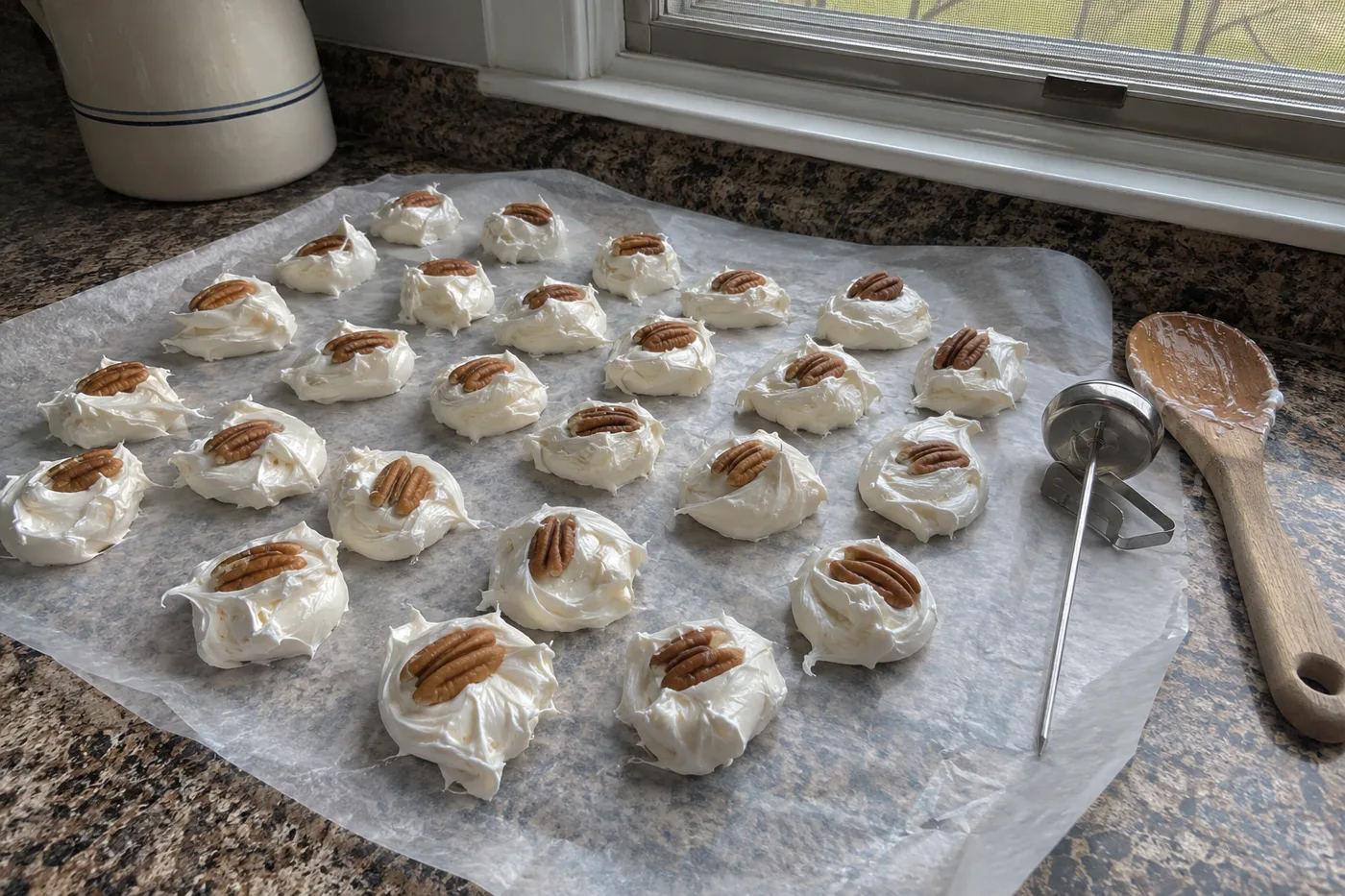
White, glossy little mounds on wax paper, a pecan pressed on top. And at least once, a batch that never set at all and got eaten with a spoon.
Blame the weather. One candy guide is blunt: “Do not even attempt to make Divinity Candy unless the humidity level is less than 50 to 60%.” Humid air can keep the boiled sugar from firming up. If you try anyway on a damp day, the same guide says to use a little less water.
Divinity goes back to the early 1900s, and Karo corn syrup printed divinity recipes in its brochures. The favorite story about the name says the first person to taste it called it “divine.”
The cooks who never failed at it were checking the sky before they ever lit the burner.
#12 Wacky cake mixed right in the baking pan
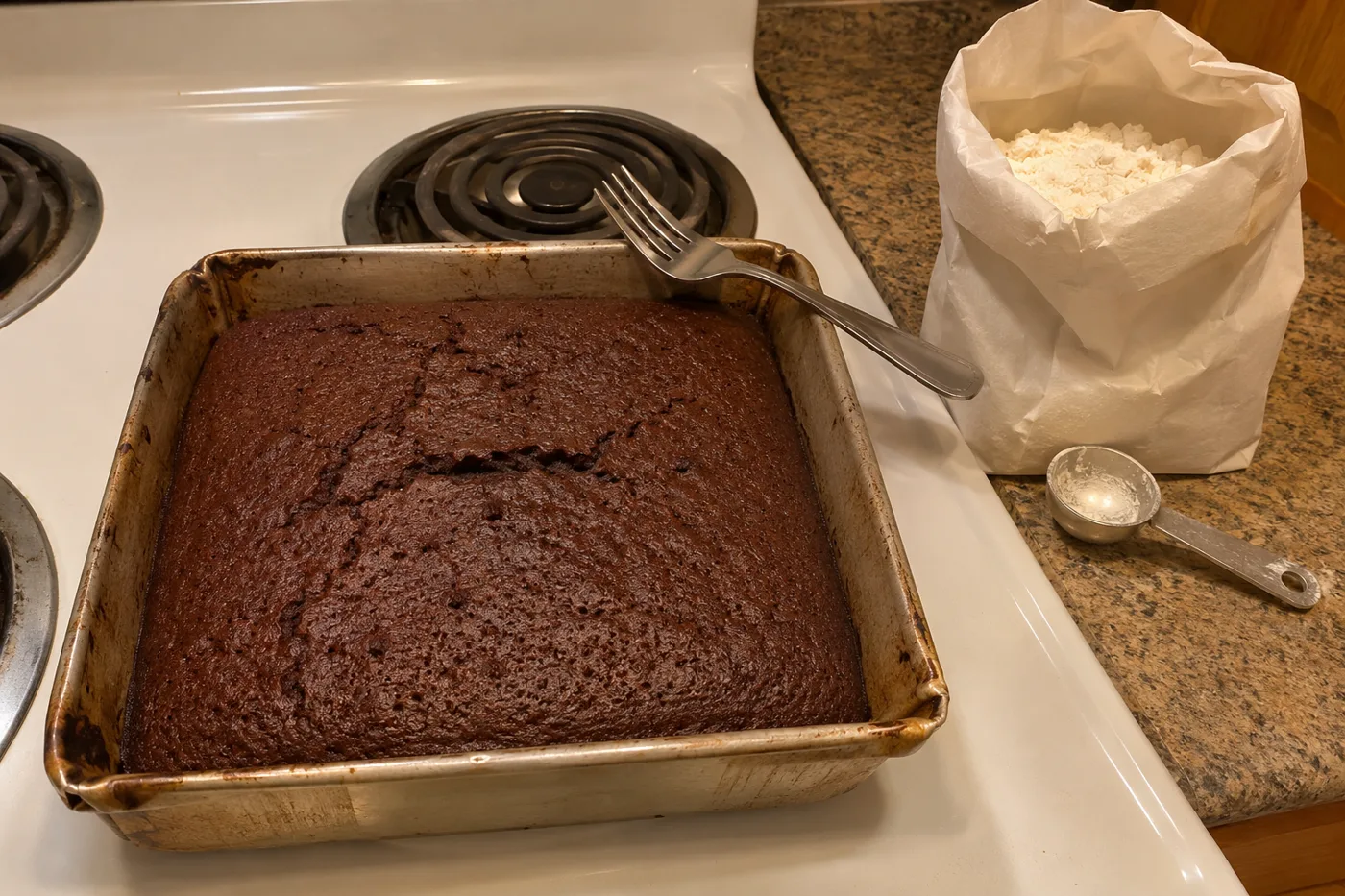
No mixing bowl. Plenty of people remember the dry ingredients going straight into the pan, then the wet ones poured in and stirred with a fork. The whole thing slid into the oven in the same dish it was mixed in.
No eggs, no milk, no butter either. Baking expert Odette D’Aniello explains that “vinegar and baking soda create lift,” and the oil supplies the fat.
These cakes go back further than most people guess. In World War I they were called “War Cake,” and the government’s own Food Administration handed out the recipes.
They came back in the Depression, again with World War II rationing, and once more during pandemic quarantines.
#11 Seven-layer magic cookie bars from one pan
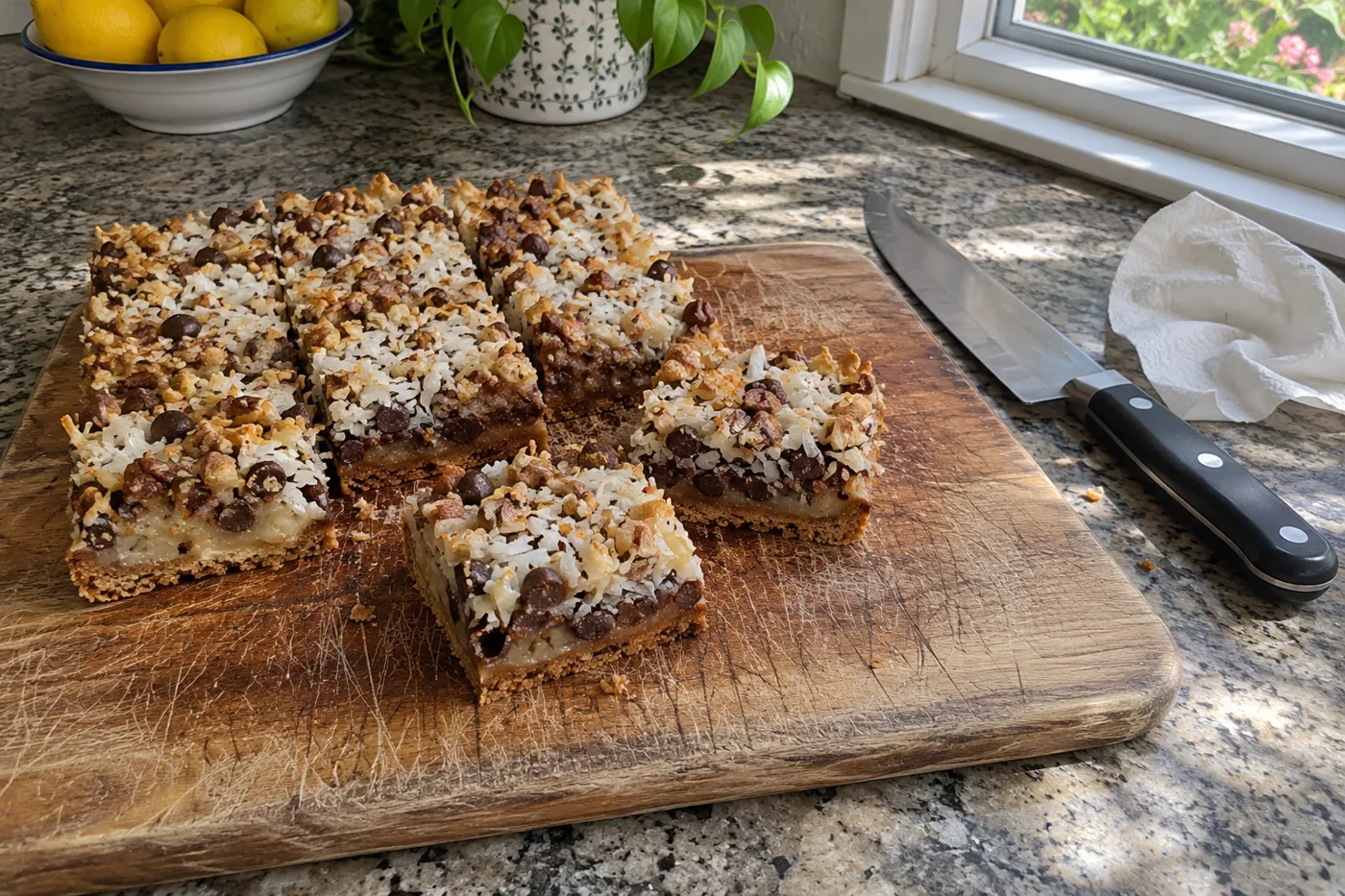
Graham cracker crust on the bottom, then chocolate chips, coconut and nuts, with sweetened condensed milk poured over the whole pan. It baked into something you had to cut with a sharp knife and eat over a napkin.
Eagle Brand put the recipe on its packaging, and the bars went by a lot of names: magic cookie bars, seven-layer bars, coconut dream bars, Hello Dolly bars.
A “Hello Dolly Cookies” recipe ran in an Ada, Oklahoma, paper in July 1965. That September, the famous food columnist Clementine Paddleford printed a similar one from an 11-year-old girl who’d learned it from her grandmother.
Any real tie to the Hello, Dolly! musical? Nobody’s ever proven one. The 11-year-old, on the other hand, made the papers.
#10 Chess pie and chess cake, the pantry dessert

Chess pie and chess cake share a name, but they’re different desserts.
The cake first. Tipper Pressley, who shares Appalachian cooking on her Celebrating Appalachia channel, first ate chess cake on the dessert table at homecoming and decoration day dinners, which are church reunions. Later she found the recipe in a cookbook a local school sold to raise money, sent in by a woman from her church.
Her version uses a box of yellow cake mix as the crust, and there’s no icing to smear on the drive. Why she reaches for it: “It’s just so easy to make. It’s ingredients I usually always have on hand.”
Now the pie. The earliest printed chess pie recipe found so far is from 1866. Where its name came from, nobody can agree.
Three stories behind the name “chess pie”
- It was “chess-cake,” meaning cheesecake, shortened over time (cookbook author Marion Flexner’s 1938 theory)
- “Pie chest” slowly wore down into “chess”
- It was simply “It’s jes’ pie”
#9 Angel food cake cooling upside down
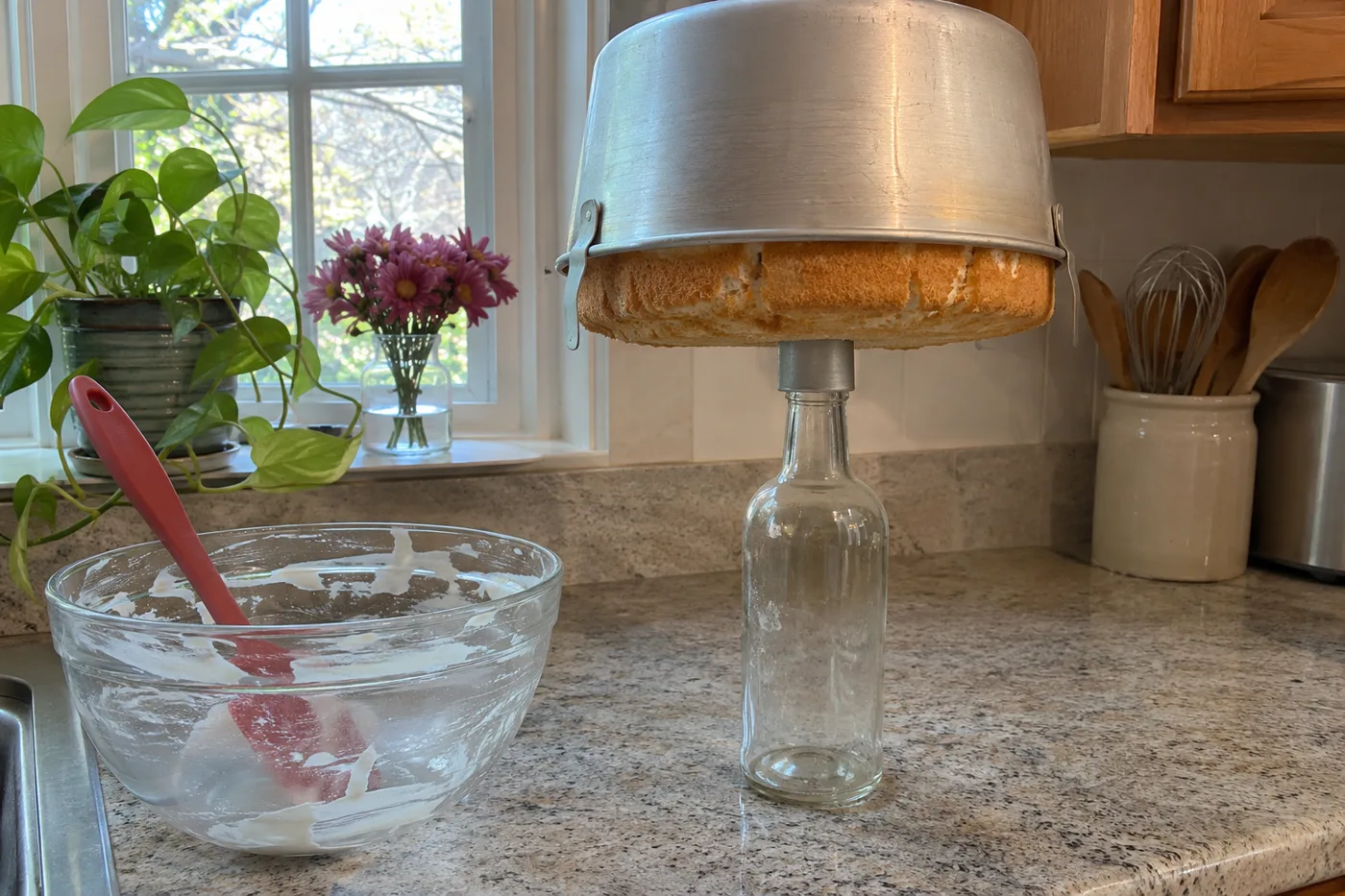
The tall tube pan, turned upside down on the neck of a bottle to cool, looking like it would drop any second. It never did. That was the trick.
The pan wasn’t greased, on purpose. Bare metal gives the batter something to cling to so it doesn’t slip down the sides, and hanging it upside down keeps the air bubbles from collapsing. The first documented “angels’ food” appeared in an 1878 cookbook called The Home Messenger.
The cake only became practical once the rotary egg beater came along after 1870. Before that, somebody beat those whites by hand.
Folklore credits Pennsylvania Dutch cooks using up the whites left over from making noodles. The fanciest cake at the supper may have started as a way to waste nothing.
#8 Rhubarb custard pie, the “pie plant” pie
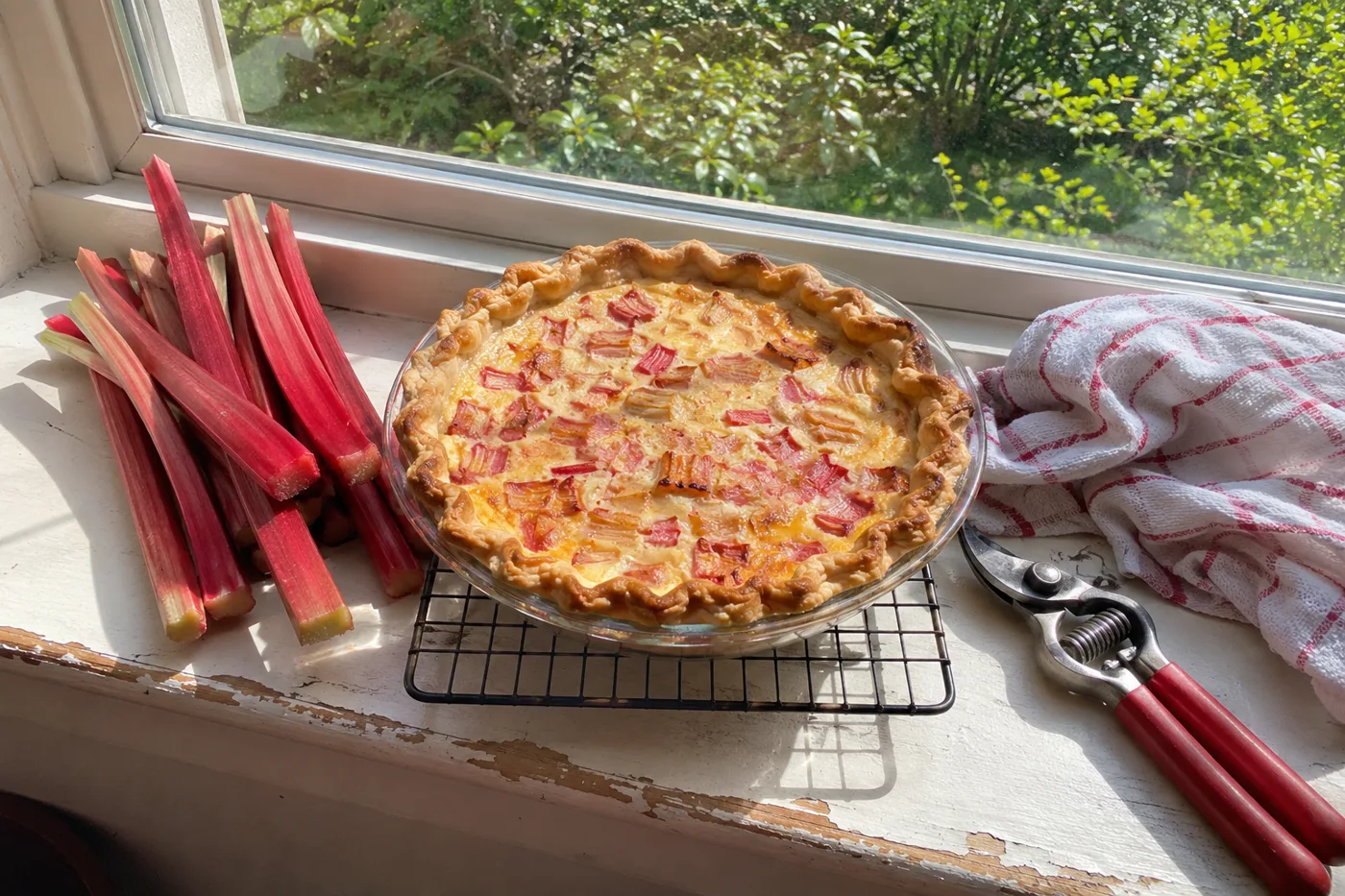
In a lot of yards, it came back by the back fence every spring: huge leaves, red and green stalks, and somebody already asking when there’d be pie.
That’s why so many people grew up calling rhubarb the “pie plant.” Pie filling was simply its most popular use. Baked into a custard of eggs and sugar, the sour stalks went soft and mellow.
The leaves never made it to the kitchen. They contain oxalic acid, which makes them toxic, so they got chopped off right there in the garden.
Say “pie plant” to the right crowd and somebody will tell you exactly which corner of the yard theirs grew in.
#7 Scripture cake, baked straight from Bible verses
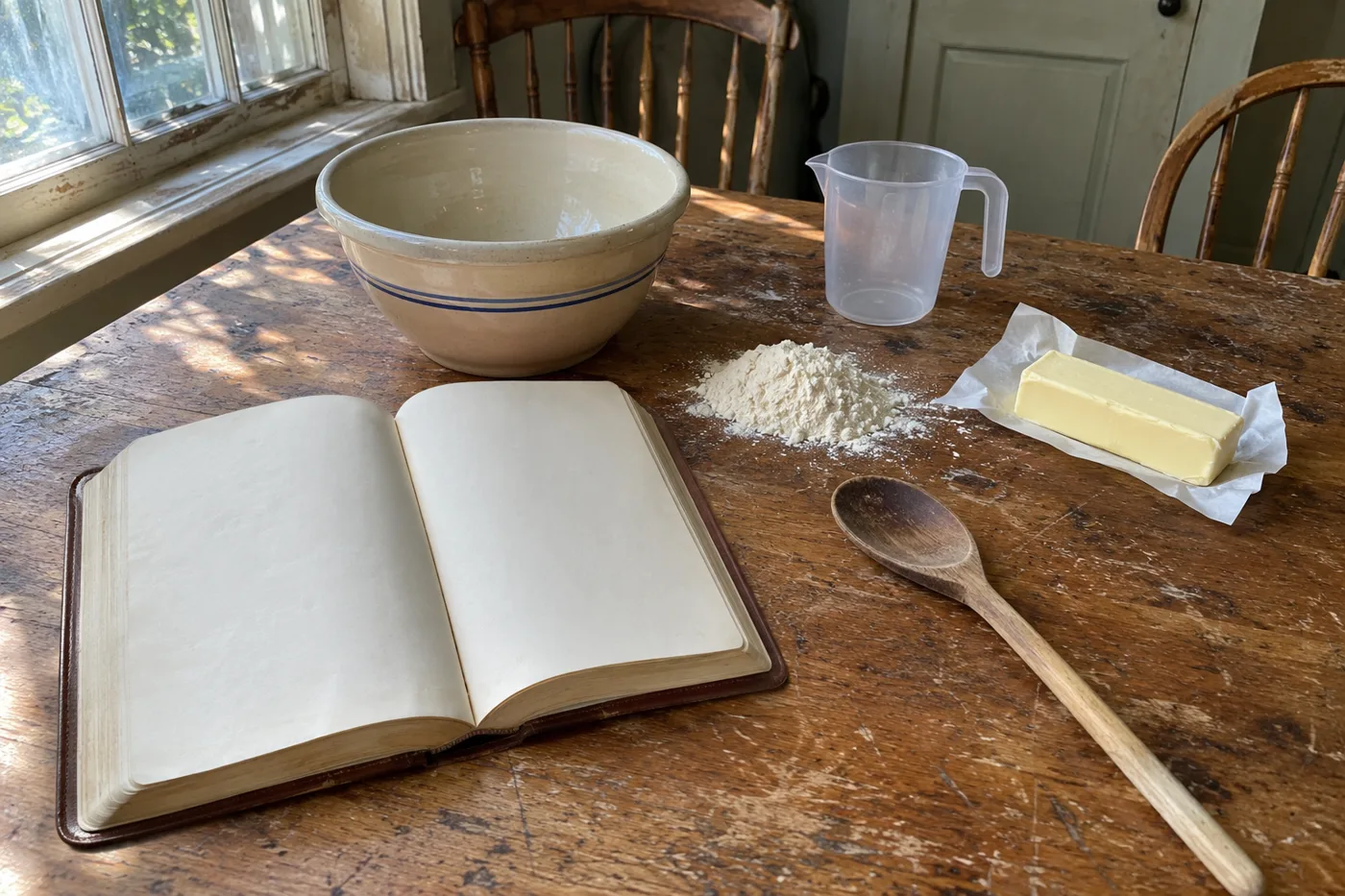
The recipe didn’t say “butter.” It said Judges 5:25, and you had to go look it up.
Scripture cake listed its ingredients as Bible verses. Eggs were Jeremiah 17:11. Honey was 1 Samuel 14:25. Flour was 1 Kings 4:22, and spices were 2 Chronicles 9:9. Nobody baked it without a Bible open beside the mixing bowl.
It may have started in Britain in the 1700s, but it truly took hold here. Among American community cookbooks from the late 1800s and early 1900s, scripture cake showed up in more than half of them.
#6 Popcorn balls at Halloween and Christmas
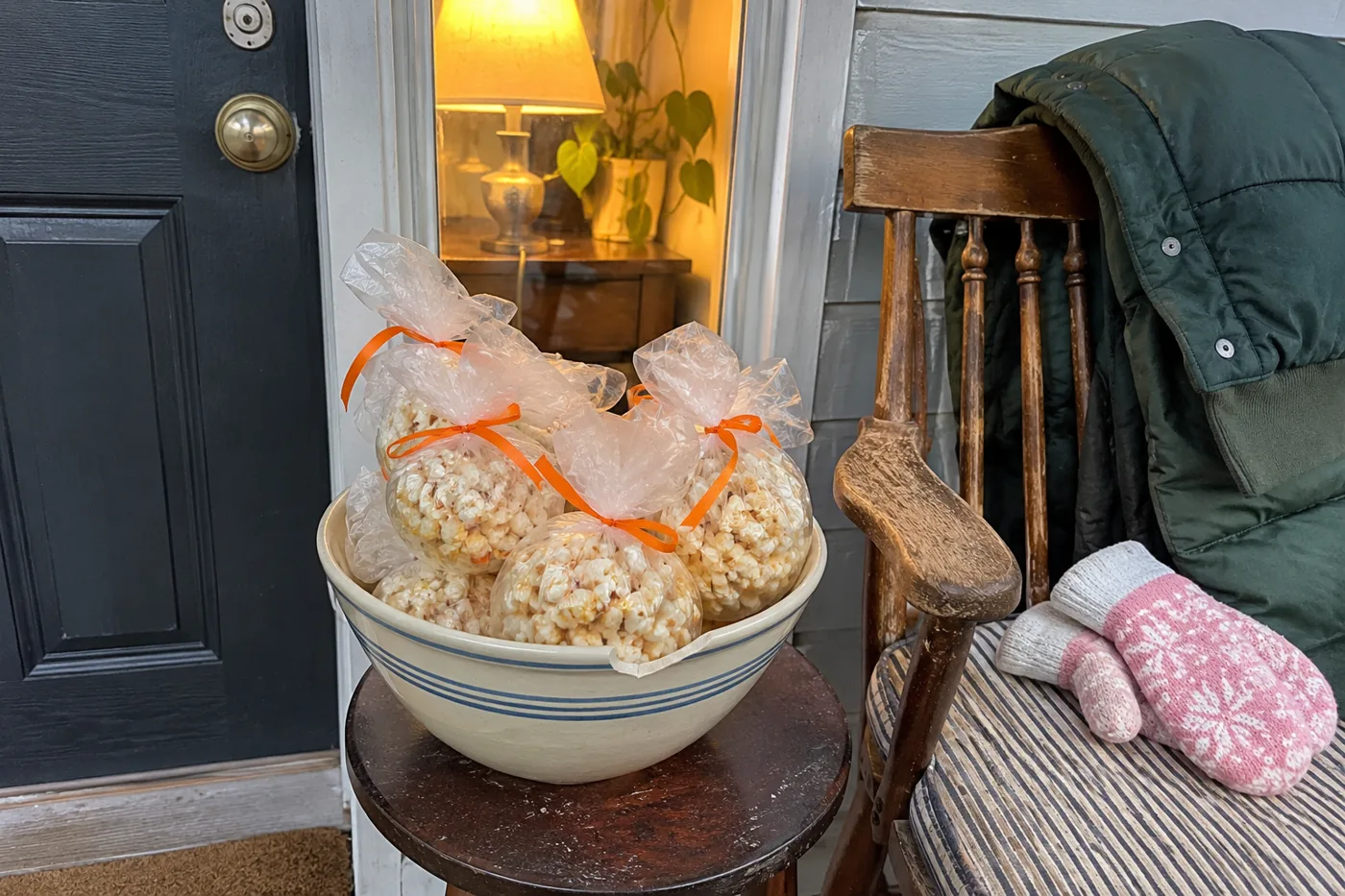
Buttered hands, a big pot of syrup, and popcorn balls lined up on wax paper to cool. Some went out the door to trick-or-treaters. Some got wrapped and tied with ribbon at Christmas.
Then they vanished from the candy bowl. Halloween historian Lisa Morton says prepackaged candy took off in the 1950s, sold as a way to spare mothers from making treats. Fear of tampering followed, even though sociologist Joel Best later found those stories were largely myth.
The popcorn balls never did a thing wrong.
#5 Dark fruitcake wrapped in a brandy-soaked cloth
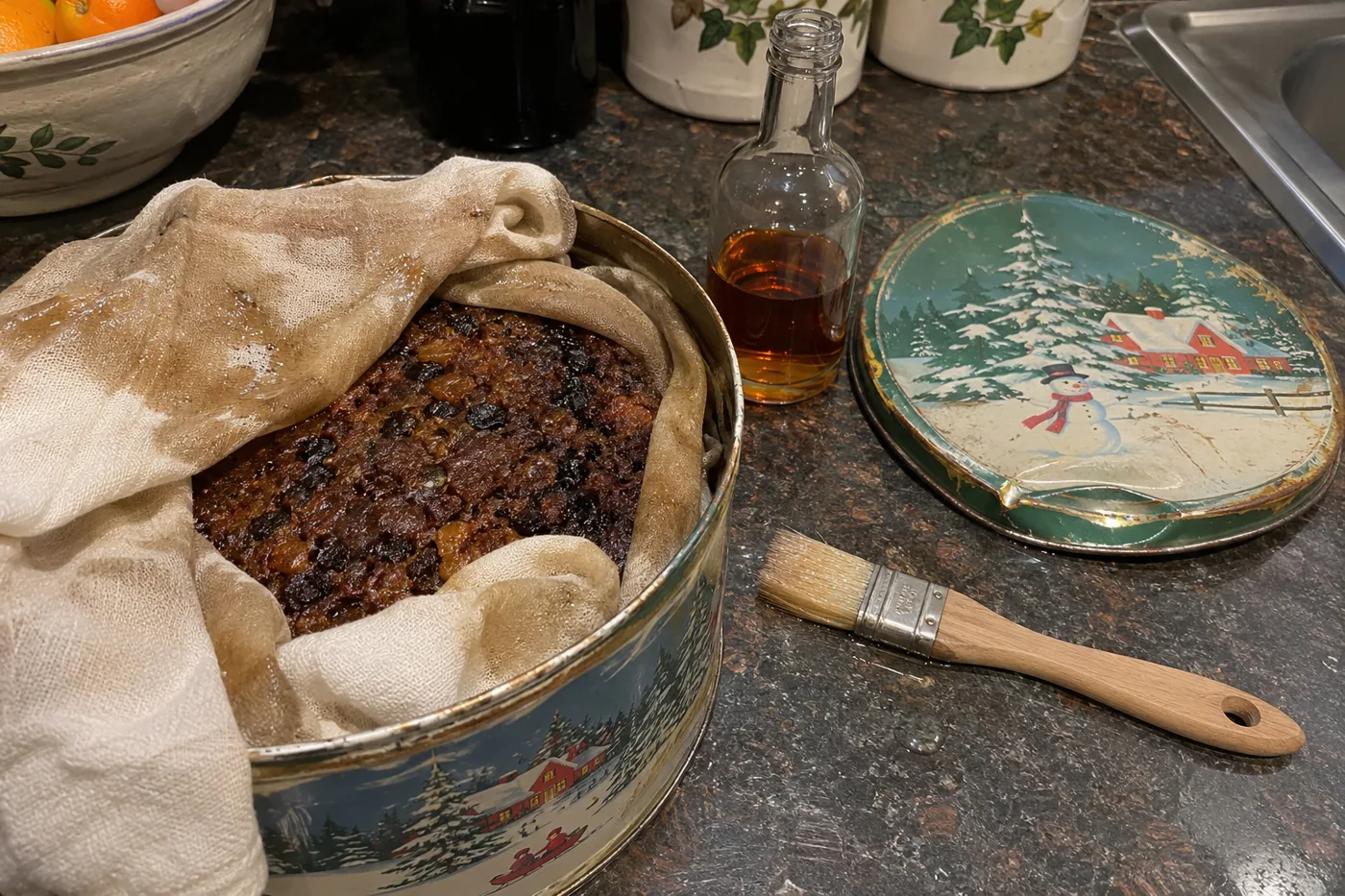
It got baked well ahead, wrapped in a cloth soaked in brandy, and tucked into a tin somewhere cool. Every so often somebody unwrapped it and gave it another splash.
American fruitcakes were traditionally soaked in brandy or liqueur, and a brandy- or wine-soaked cloth stretches their life.
A cake that keeps that long may explain Johnny Carson’s line that “there is really only one fruitcake in the world, passed from family to family.”
Most store-bought American fruitcakes today are alcohol-free. The homemade one in the tin, with its weeks of brandy, was a different animal entirely.
#4 Racy cakes renamed clean for the church cookbook
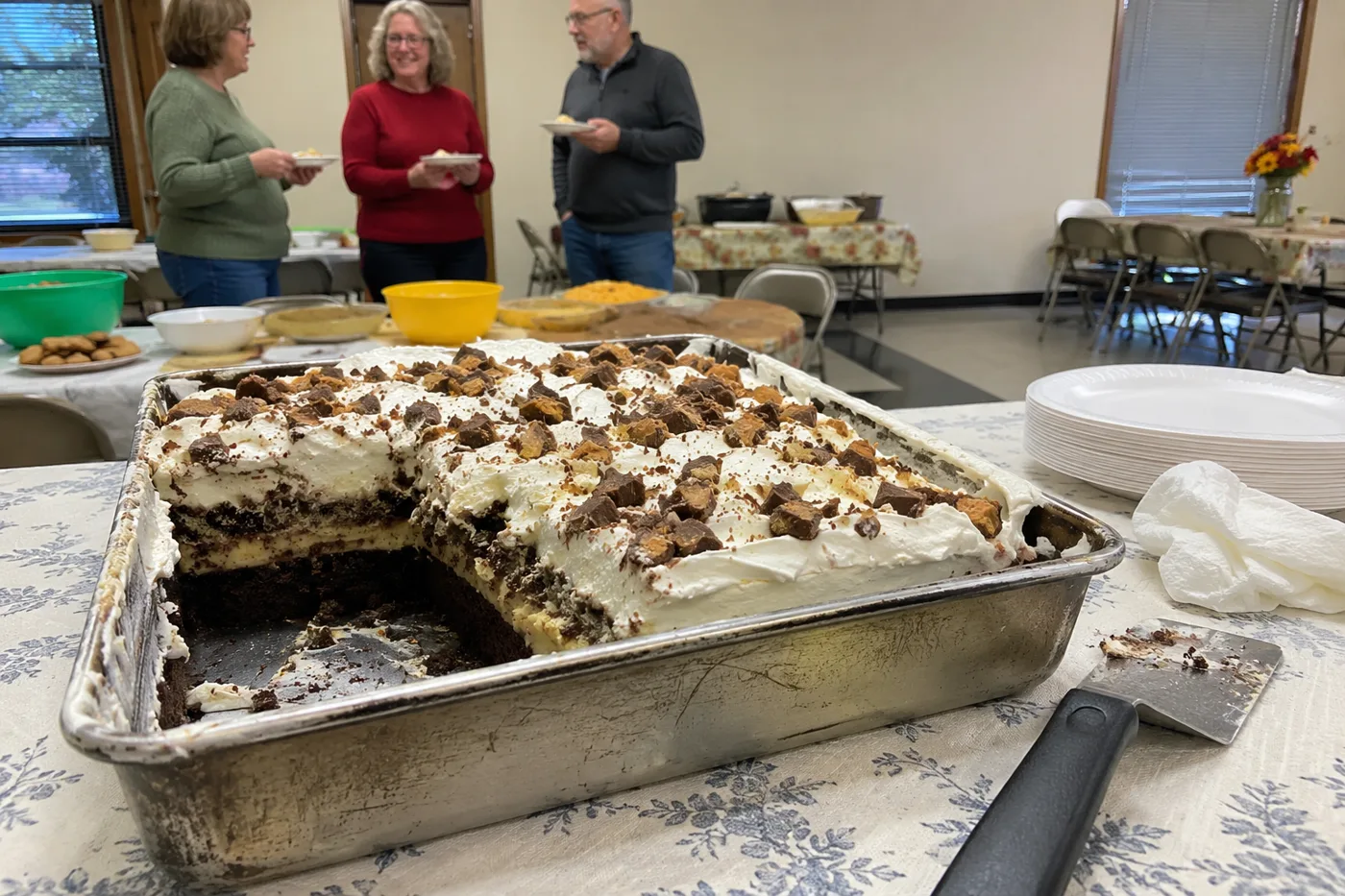
Somebody set a pan on the potluck table, and when you asked what it was called, she lowered her voice.
The cake known as “Better Than Sex” got its start in June 1981. Newspaper food writers swapped recipes at a gathering in St. Louis, according to food historian Bonnie McDowell.
By the time it reached the church cookbook, it had cleaned up considerably. It became “Better than Robert Redford,” or just “Better than Redford.” Some books dropped the comparison and called it “Holy Cow Cake.”
Sex in a Pan got the same scrubbing. One United Church of Canada cookbook lists it as “Ecstasy in a Pan,” and other church books called it “Heaven in a Pan.”
Same pan. Same layers. Only the name went to Sunday school.
#3 Vinegar pie, the pantry pie with no fruit
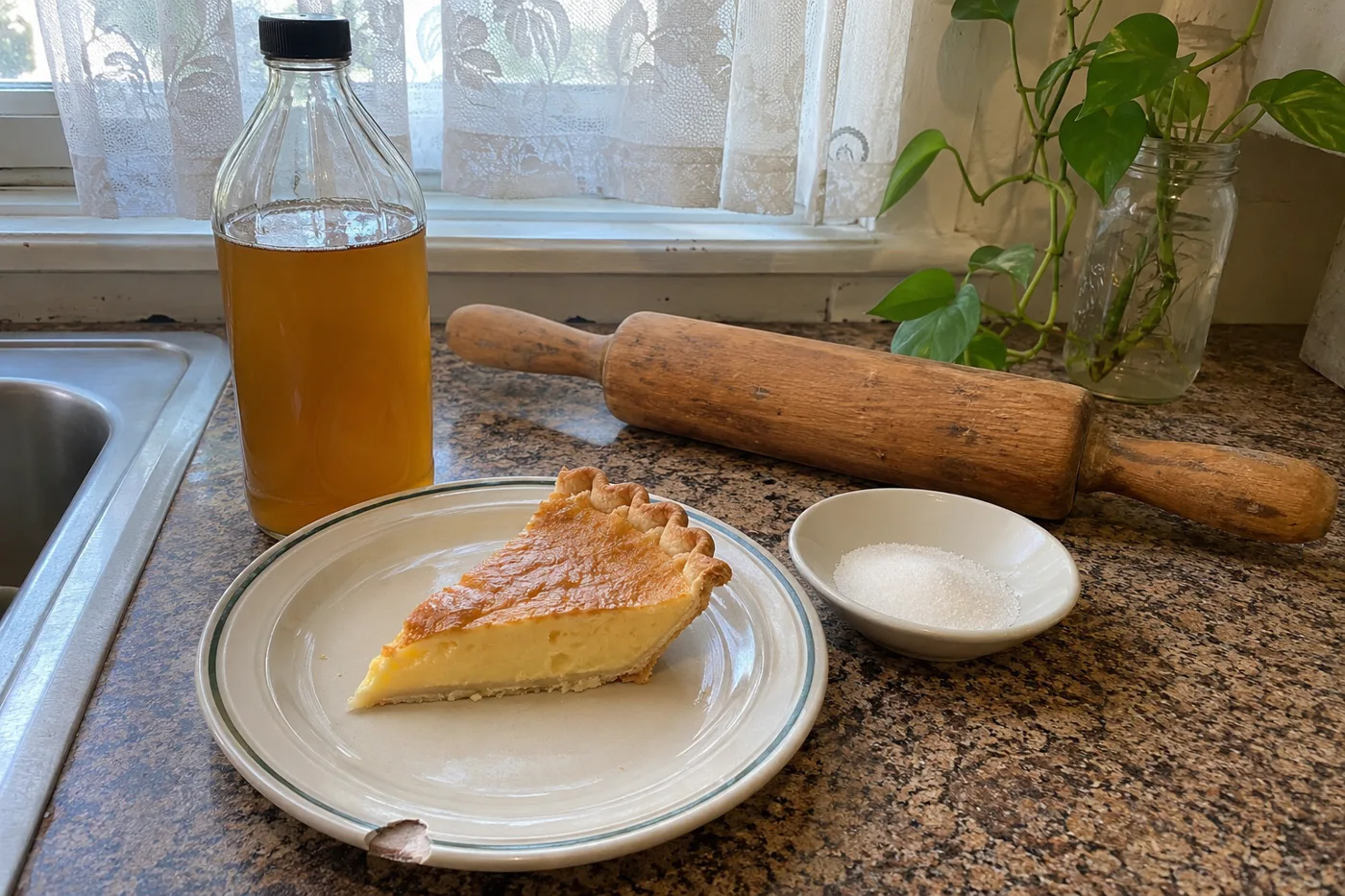
No lemons in the house, and no money for them. So the cook reached for the cider vinegar.
Vinegar pie was the stand-in for lemon meringue. Lemons were imported and costly, and vinegar gave the filling that same tart bite. Food historian William Woys Weaver points to an 1882 recipe from Detroit.
It hung on through the Depression as a “desperation pie,” including in many African-American households. By the 1980s, it had mostly faded, partly out of pride. Nobody wanted to serve the pie that told the table money was tight.
In 2026, Texas creator Sonja Norwood of Wick’d Confections, who competed on Food Network’s Christmas Cookie Challenge, opened her series on lost Black American recipes with vinegar pie. She says Black families were likely making it before the Great Depression.
#2 Black bottom pie with its chocolate layer
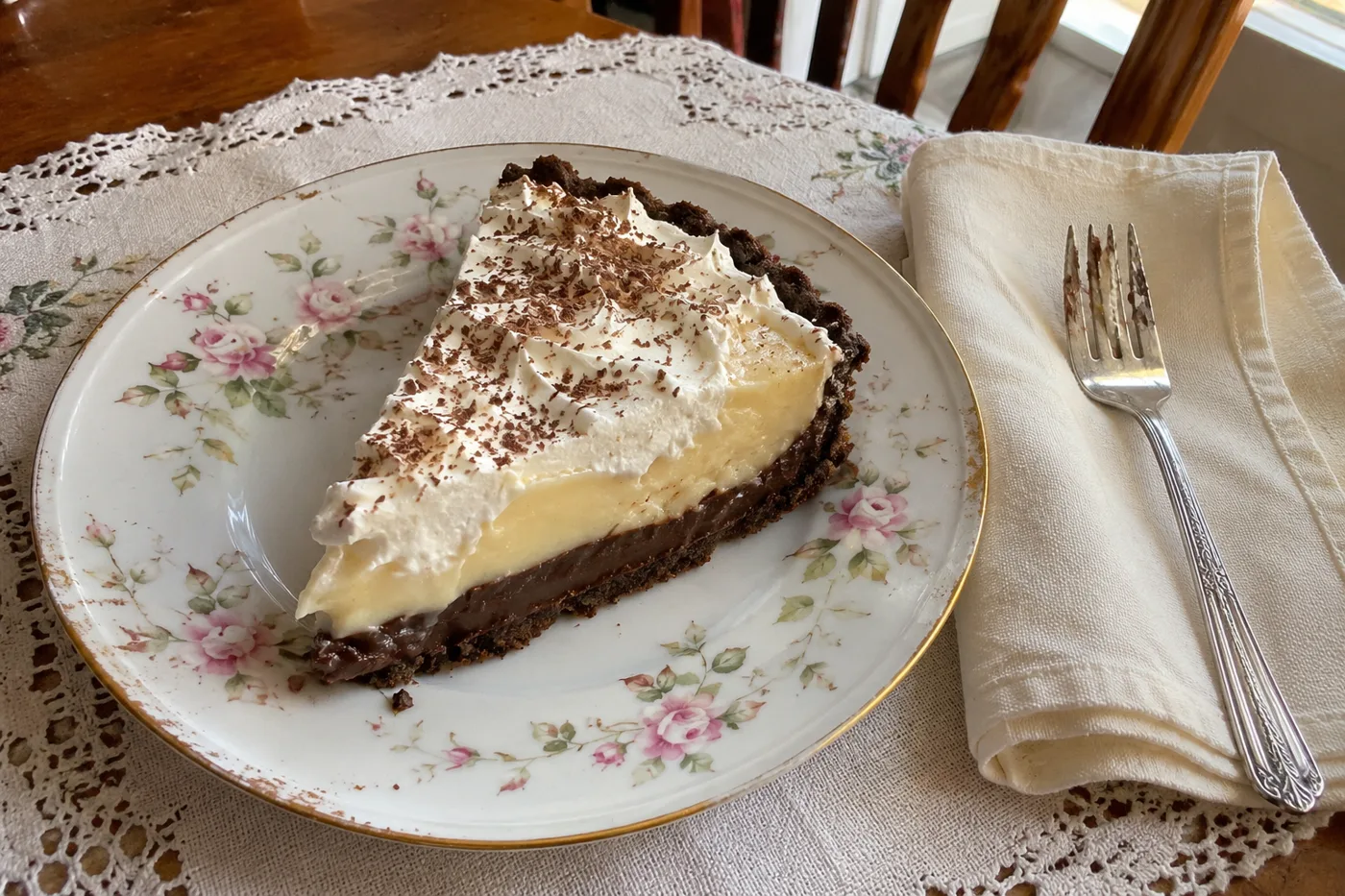
Cut a slice and there it was: a dark chocolate layer on the bottom and a pale custard on top. It looked like two pies that had agreed to share one crust.
The name turned up in a Salt Lake Tribune ad for “Black Bottom Cake” in 1927, and on a pie in a Texas newspaper in 1931. A 1932 California column offered “Vanilla or rum flavoring,” which gave some church kitchens a decision to make.
Its biggest fan may have been author Marjorie Kinnan Rawlings. In Cross Creek Cookery in 1942, she called it “the most delicious pie I have ever eaten.”
Then she went further: “I hope to be propped up on my dying bed and fed a generous portion.” Not many recipes come with a reference letter like that.
#1 Pineapple cheese pie from after-church tables
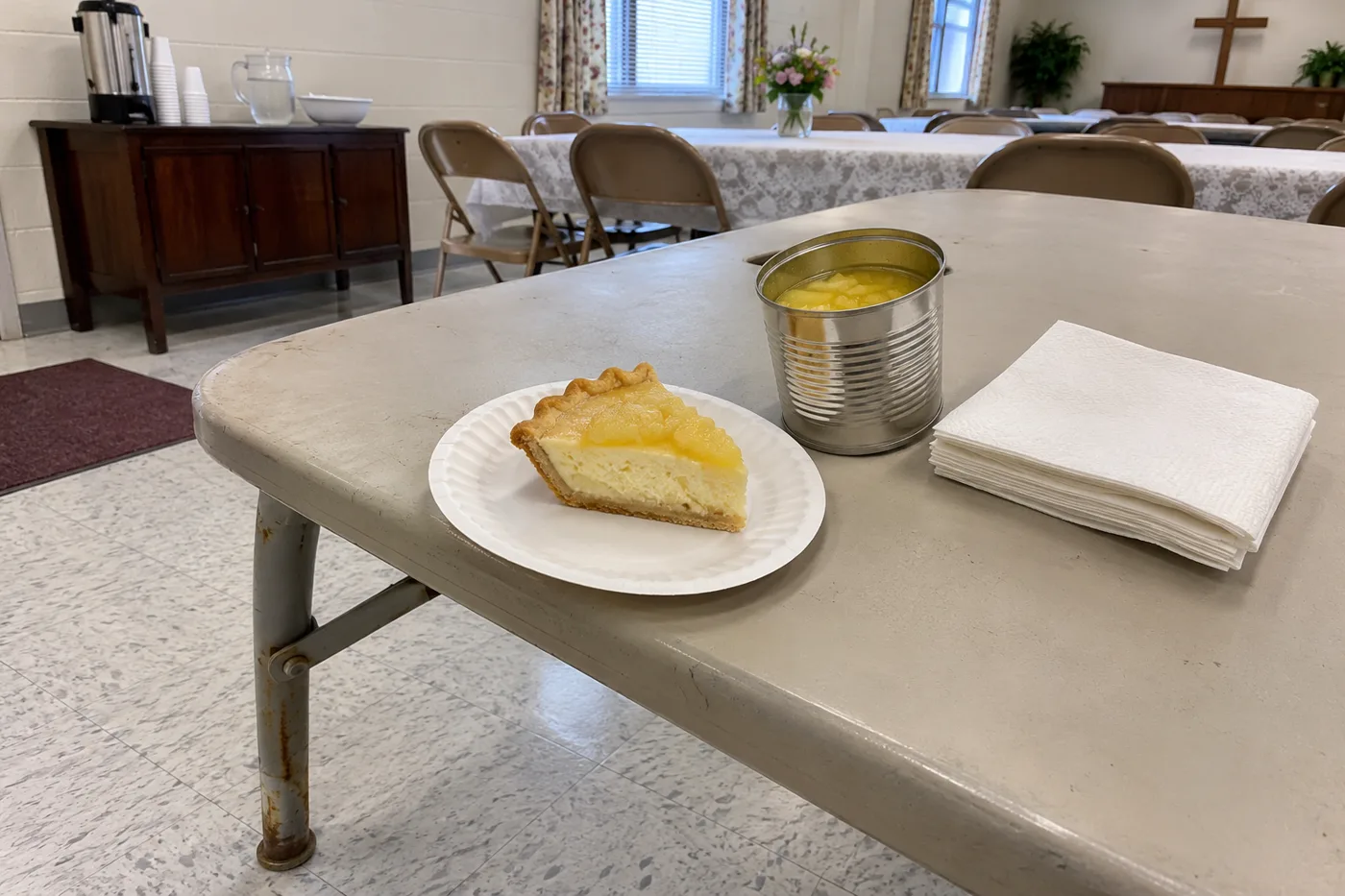
Picture the table after the service: folding legs, paper plates, and a pie that looked like cheesecake but cut like custard, with crushed pineapple baked right into it.
Some people who grew up with it haven’t had a slice in about 25 years. Others remember it only from childhood.
Sonja Norwood, the creator from #3, says the pie came out of Black church communities once canned pineapple became easy to buy. It lived at after-church tables, not in bakeries.
“A lot of these recipes came from Black women in church communities, passed around, shared from one kitchen to another,” she says. And why it faded: “Cheesecake became the standard. No bake pies got popular, and store bought desserts are just easier.”
If your recipe card calls for canned pineapple, stick with it. Fresh pineapple can turn milk bitter, and the heat of canning knocks out the enzyme that does it.
The can opener was part of the recipe.
The bottom line
The books were about the names. A friend’s mother, the pastor’s wife, the woman who sat two pews up, each printed under the dish she was proudest of.
If you have one of those books on a shelf, open it to the page with the worst stain. That’s the recipe somebody actually made, over and over. Read the name at the bottom out loud.
Bonus: Three things to know when you cook from an old church cookbook
- When a recipe says “sweet milk,” pour ordinary fresh milk. Old recipes said it to tell it apart from buttermilk.
- For buttermilk pie, start with a plain custard pie and swap in buttermilk. An 1893 line put it exactly that way: “Buttermilk pie is made by substituting buttermilk for sweet milk in custard pie.”
- If chess pie and buttermilk pie taste like cousins, check the filling. Chess fillings often use buttermilk, vinegar or lemon for tang and cornmeal to thicken.
Questions people also ask
Why did icebox desserts become so popular in the mid-1900s?
Food historian Megan Elias says companies created recipes like the chocolate wafer icebox cake in the 1920s and ’30s to make refrigerators seem “indispensable.” Icebox desserts grew even more popular once refrigerators became standard in most kitchens by the 1950s and 1960s. Many of these recipes were printed right on the packages.
What does “sweet milk” mean in an old recipe?
Ordinary fresh milk. Old recipes used the term to set it apart from buttermilk.
Should I use fresh or canned pineapple in an old pie recipe?
Canned. Fresh pineapple mixed with milk can turn very bitter because of an enzyme called bromelain. Canned pineapple is heated hot enough to knock out the enzyme, so it won’t make dairy taste bitter.
Why do old cake mix recipes come out flat now?
Often it’s the box. By 2013, Pillsbury’s mix had shrunk from 18.25 to 15.25 ounces, and Betty Crocker’s shrank too. Cookbook author Anne Byrn said smaller mixes “result in cakes with less volume and less structure, making them shrink while cooling and crumble when sliced.”
Do Americans really use less sugar than when these cookbooks were printed?
Less refined sugar, at least. USDA’s Economic Research Service counted 102.3 pounds of refined cane and beet sugar available per person in 1972 and 68.4 pounds in 2023. That measures supply, not exactly what people ate, and part of the drop is corn syrup replacing sugar in factory-made foods.
Related posts:
17 Things in Your Mother's Sewing Box Worth Keeping
23 Things Women Over 60 Keep Without Thinking That Professional Organizers Never Would
24 Crafts Every Woman Made in the 1970s That Nobody Does Anymore
24 Things People Over 60 Still Do When Cleaning That Experts Beg Them to Stop
23 Things People Over 60 Still Do When Decorating That Designers Beg Them to Stop
19 Holiday Traditions Women Over 60 Have Quietly Stopped Doing

- 24 Things People Over 60 Still Do When Cleaning That Experts Beg Them to Stop - November 6, 2026
- 21 Handmade Gifts From the 1970s Your Grandchildren Have Never Seen - November 6, 2026
- 25 Homemade Christmas Decorations From the 1960s, and What Became of Each One - November 6, 2026

Leave a Reply