Hang on until #1. It’s the hardest one to say out loud, and two widows say it better than anyone could.
The alarm used to go off before five on Turkey Day. Slippers, robe, the little oven light glowing, and a cold, heavy bird waiting in the roaster for its big moment. If you ever did the dawn turkey, you could do it half asleep, and some years you did.
Then, for a lot of women, came the year the alarm didn’t get set. Dinner still happened. Nobody called the authorities. Thanksgiving traditions have been slipping away like that, one at a time, and the holiday is still the holiday.
#17 Hosting the whole family every single year
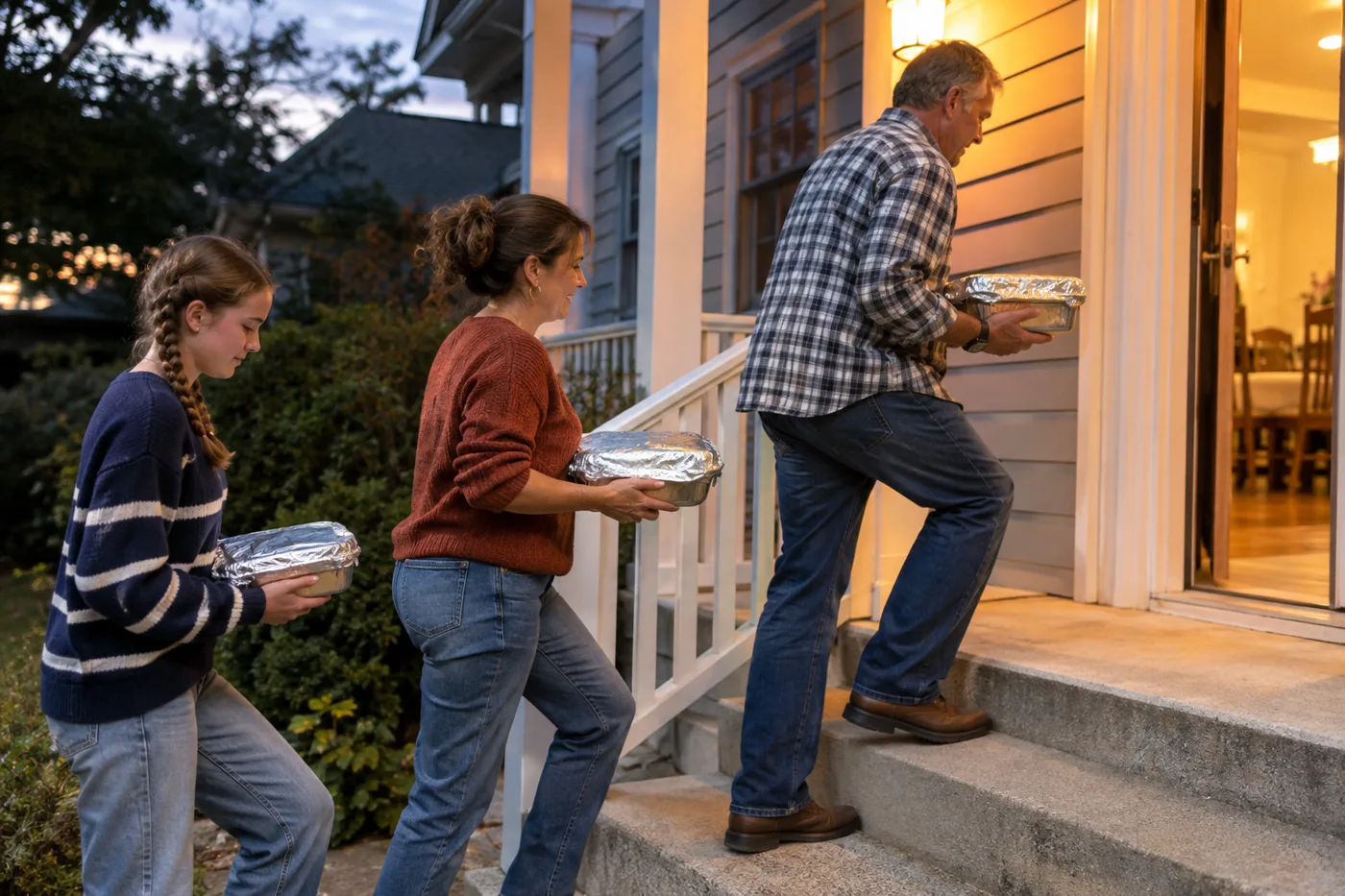
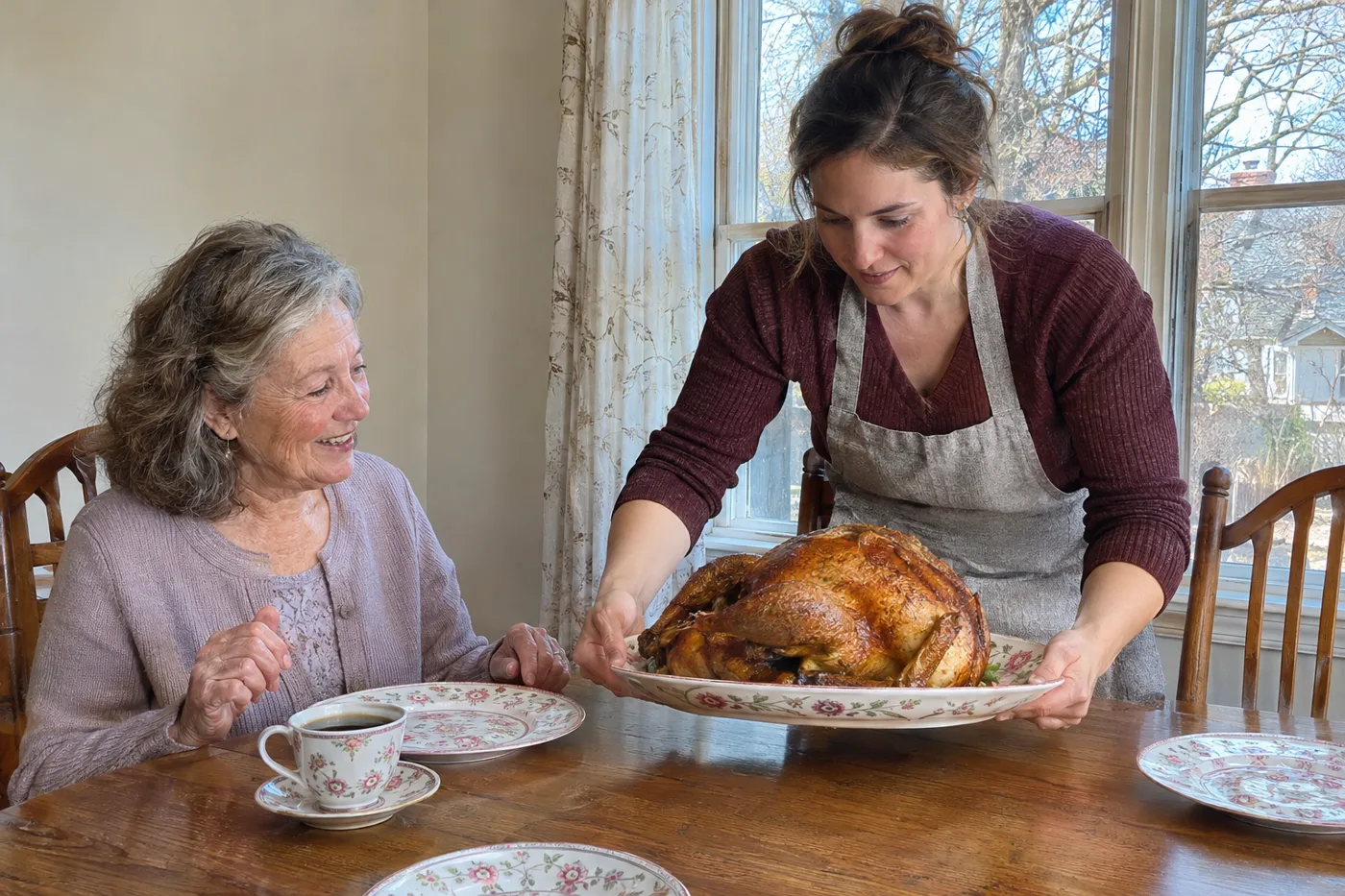
Often the big one goes first: hosting Thanksgiving for everybody, at your place, year after year. Some hand it off entirely. Others rotate it, or keep the turkey and farm out everything else.
It wears thin for a reason. On an ordinary day with no holiday involved, women 75 and over spend about an hour more on household chores than men their age, according to the government’s American Time Use Survey for 2025. Between 65 and 74, it’s about 44 minutes more. That’s a regular weekday. Stack a full family dinner on top of it and the math gets obvious.
AARP keeps a short list of signs it’s time to stop hosting. One you’d guess: the host needs days to get back to normal afterward. The other catches people off guard. The younger guests start to feel guilty about always being on the receiving end. Your generosity can be the very thing making them squirm.
AARP’s fixes are simple: rotate hosts, or share the jobs. The gathering itself is the part worth guarding. “Traditions help create meaning in our lives, and help find and establish family connections,” says William C. Torrey, a psychiatry professor at Dartmouth Health.
Notice what he left out. Nothing about whose oven it happens in.
#16 Cooking every last dish from scratch

You can stop making every dish from scratch without anyone eating cold cereal. The quiet switch is buying part of the meal, or all of it, already cooked.
The everyday numbers explain the pull. On an average day, women spend about 55 minutes on food prep and cleanup and men about 31, across all ages, in the 2025 time-use survey. That’s a normal Wednesday. Thanksgiving Wednesday is its own animal.
What a heat-and-serve dinner costs, as listed in November 2026:
| Meal | Feeds about | Starts at |
|---|---|---|
| Publix Complete Turkey Dinner | 15 | $139.99 |
| Publix Complete Turkey Breast Dinner | 8 | $79.99 |
| Cracker Barrel Heat n’ Serve Turkey Feast | 8 to 10 | $189.99 |
| Cracker Barrel Turkey Family Dinner | 4 to 6 | $119.99 |
The big Publix dinner works out to under $10 a person. It comes with a fully cooked 16 to 18 pound turkey, cornbread dressing, mashed potatoes, gravy, cranberry orange relish and something called Marshmallow Delight, which sounds like it walked straight out of a 1962 church supper.
What can trip you up: prices vary by store, and the deadlines differ. Publix wants online orders at least 48 hours ahead, and its last pickup in 2026 is Wednesday, November 25, because its stores close on Thanksgiving. Cracker Barrel hands meals out through November 29, Thanksgiving Day included, while supplies last. And Publix only helps if there’s one near you.
A clever middle ground is buying the dinner and making the one dish everyone asks you for. Put it in your own bowl. Nobody checks.
#15 Hauling out the good china and silver
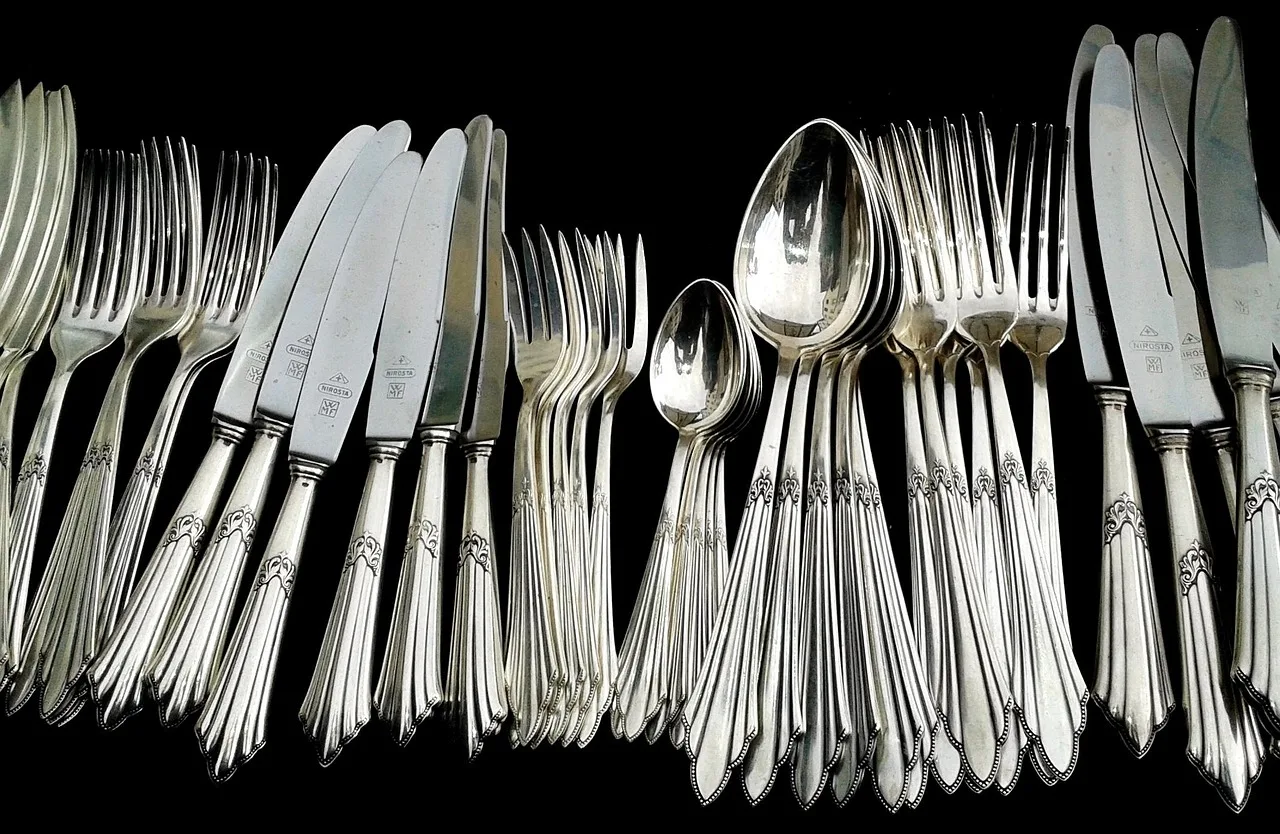
The good china and silver used to come out once a year. Unwrapped from newspaper, counted, washed before anybody ate off it, then washed again by hand afterward. Two rounds of dish duty for one meal.
Women who’ve stopped the ritual tend to go one of two ways. Some put the once-a-year pieces away for good. Others go the opposite direction and use them on a plain Tuesday.
If the silver comes out on a Tuesday, it goes back in the drawer washed by hand. Flatware maker Reed & Barton advises against the dishwasher for sterling, since detergent can pit and permanently discolor it, and recommends hand-washing silver plate too.
The catch with everyday china is the dishwasher, and the rules are fussier than the stamp on the bottom lets on.
Is it dishwasher-safe?
- Gold or platinum rim: hand wash only, every time
- China older than 15 to 20 years: keep it out of the dishwasher entirely, Samsung advises
- A “dishwasher safe” mark may cover the china itself, not the shiny trim
- Heat and harsh detergent wear the metal band down a little with every cycle
#14 Keeping dinner on Thursday no matter what
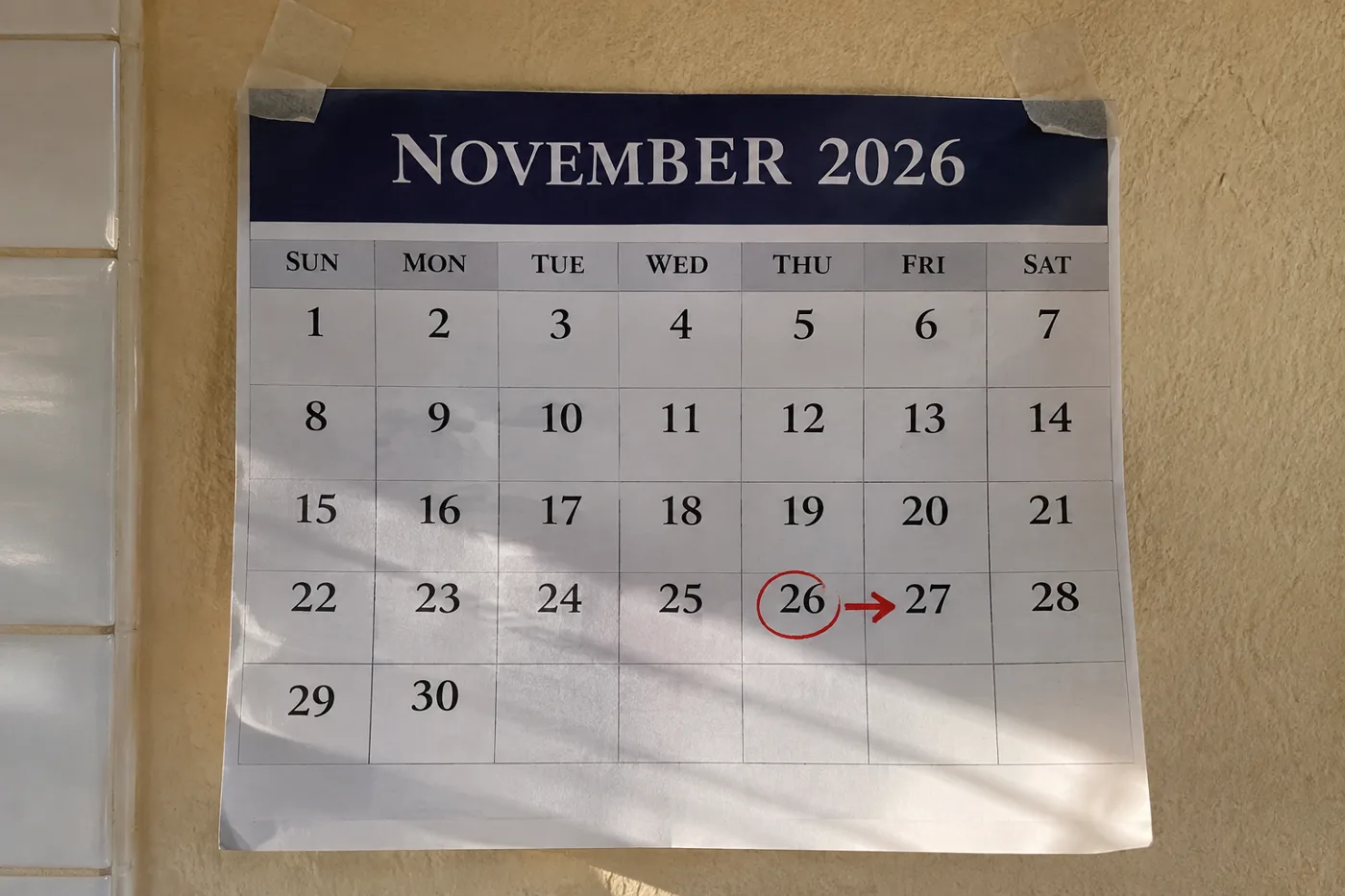
The fourth Thursday of November never moves. Everybody’s work schedule does.
In YouGov’s 2025 Thanksgiving poll, 68% of working Americans said they get the day off. That leaves a lot of people who don’t. Eleven percent of workers said they’d changed when they celebrate because of their job, and 8% said someone in their circle can’t come because of work.
Some jobs barely loosen their grip on the day. In a 2014 survey, 39% of retail workers and 31% of health care workers said they had to work Thanksgiving. Old numbers, but if anyone you love runs a register or works a hospital floor, they’ll ring true.
So some families split the holiday. In Reddit’s Thanksgiving forum and on YouTube, a few people describe moving part of the meal to Friday so nobody has to dash between houses on Thursday. In one family it began so a mother who worked retail could still sit down to a holiday dinner of her own.
What can make it wobble: Friday is a workday for plenty of others, and a certain relative may take a day-late turkey as a personal insult. Give everyone a few weeks’ warning and a plate to take home.
A Friday bird tastes exactly like a Thursday one. Possibly better, since the cook slept.
#13 Putting the stuffing inside the bird

The push to stop this one came from the USDA.
The USDA’s food safety office says it plainly: “For optimum safety, stuffing a turkey is not recommended.” The turkey can hit a safe 165°F while the stuffing packed inside still hasn’t gotten hot enough to kill bacteria, so the agency says to bake it in a casserole dish instead.
If you still stuff the bird, its stuffing guide wants a food thermometer reading 165°F in the very center of the stuffing, and the turkey resting 20 minutes before you spoon it out.
The pan has a perk the bird never offered: edges. Crisp, buttery, browned edges, now the most fought-over spoonful of the whole meal. For plenty of families the stuffing and gravy were the real main course anyway. Now there’s more crunch to pour the gravy over.
 You might also like26 Church Cookbook Desserts That Nobody Makes Anymore
#12 Boxes of fall-only décor in storage
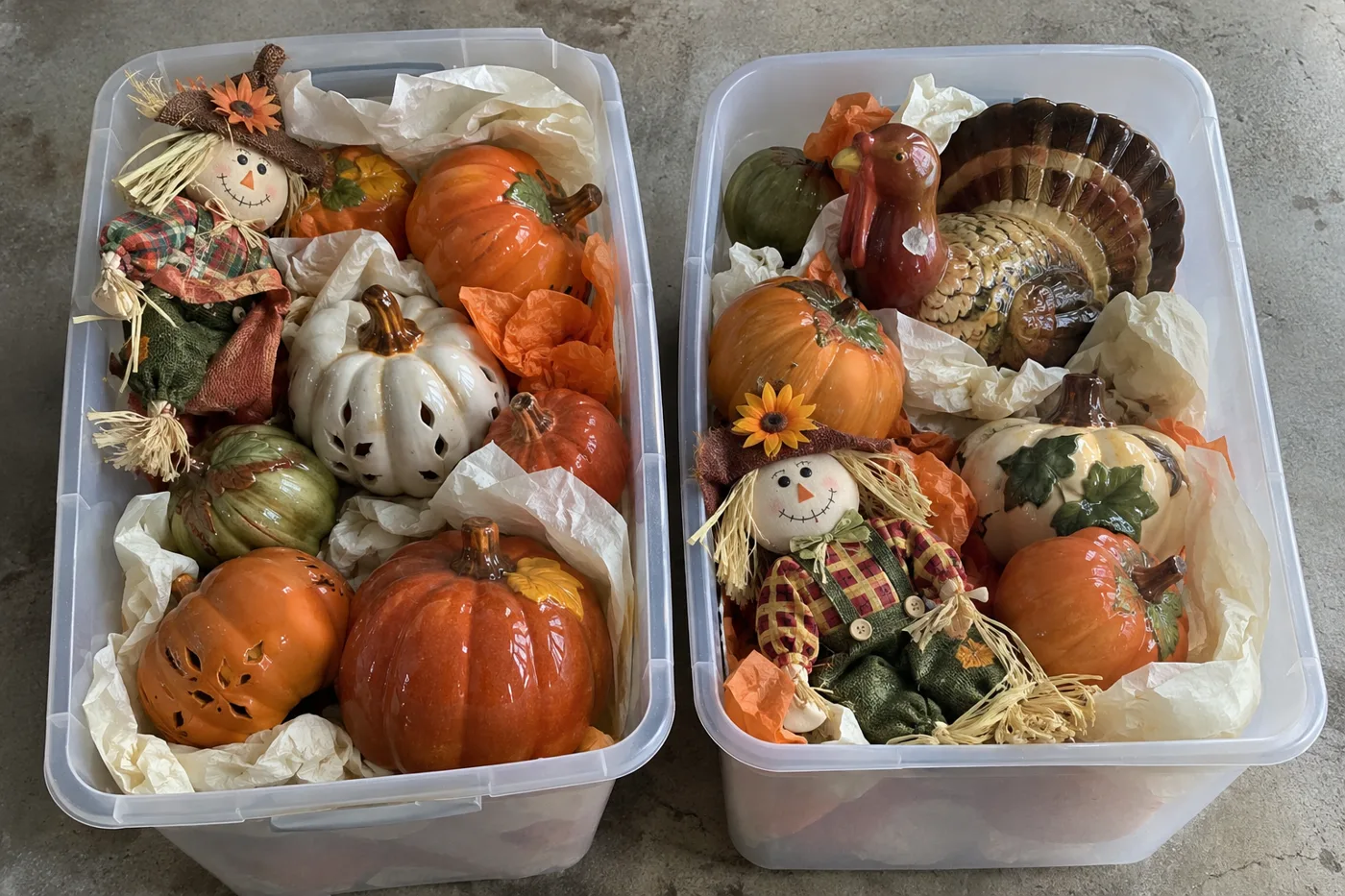
Gourds. The ceramic turkey with the chipped wattle. Three scarecrows in descending sizes. Paper leaves that shed glitter every time you look at them. Fall décor has a way of multiplying in its boxes between one November and the next.
Cutting back doesn’t have to mean a purge. “Organization is not about being a minimalist,” says professional organizer Nikki Boyd. The goal, in her words, is your things “not overwhelming you, not costing you money, not stressing you out.”
Her own rule is a fixed amount of room. “I give myself certain zones in my house that I’m allowed to keep dishwear because once it fills up, I have to move something on,” she explains. Her fall dishes get their own section, and the section doesn’t grow.
The same thinking works for décor. Decide how many bins you’re willing to store. Two, say. When they’re full, something leaves before anything new comes in, including that adorable pumpkin at the craft store.
Boyd’s other trick is timing. Writing about holiday decorating in 2026, she put it this way: “I let go of pieces as I brought them out, instead of promising myself I’d do it in January.” Sort while you unpack, when you can see what you actually reached for.
She also stores decorations by color, so she only brings down what she’s using that year. If the orange-and-brown box stays taped shut until next fall, the house won’t file a complaint.
#11 Cooking a full feast for two

The smaller the crowd, the sillier a whole turkey looks. If it’s two of you, or one, the numbers make the case on their own.
A big bird has a hidden cost before it ever sees the oven: refrigerator space. The USDA’s thawing guide allows about a day in the fridge for every 4 to 5 pounds, so a 16 to 20 pound turkey takes up residence for 4 to 5 days. That’s most of the week with the milk balanced on top of it.
The small-table answer is usually a bone-in, skin-on turkey breast, the cut OXO suggests for two to four people, or Cornish hens at 1 to 2 pounds apiece. A hen each looks festive on the plate and leaves no carcass to wrestle into the trash. Smaller hens roast in about an hour at 350°F. One catch: a frozen breast still needs a day in the fridge for every 4 to 5 pounds, so start an 8 pounder thawing about two days ahead.
What you give up: dark meat, the wishbone and a few days of sandwiches. Some people want exactly those things. A Reddit poster whose parents and brother have all died says Thanksgiving is still their favorite holiday, so they cook a full turkey dinner for themselves.
How much turkey for a small table?
- The USDA says to allow about 1 pound of whole turkey per person
- Two people need roughly 2 pounds
- The smallest whole bird on the USDA’s chart is 8 to 12 pounds, four to six times that
- A 4 to 8 pound turkey breast roasts in 1½ to 3¼ hours at 325°F, against 4¼ to 4½ hours for an 18 to 20 pound bird
#10 The menu nobody is allowed to change
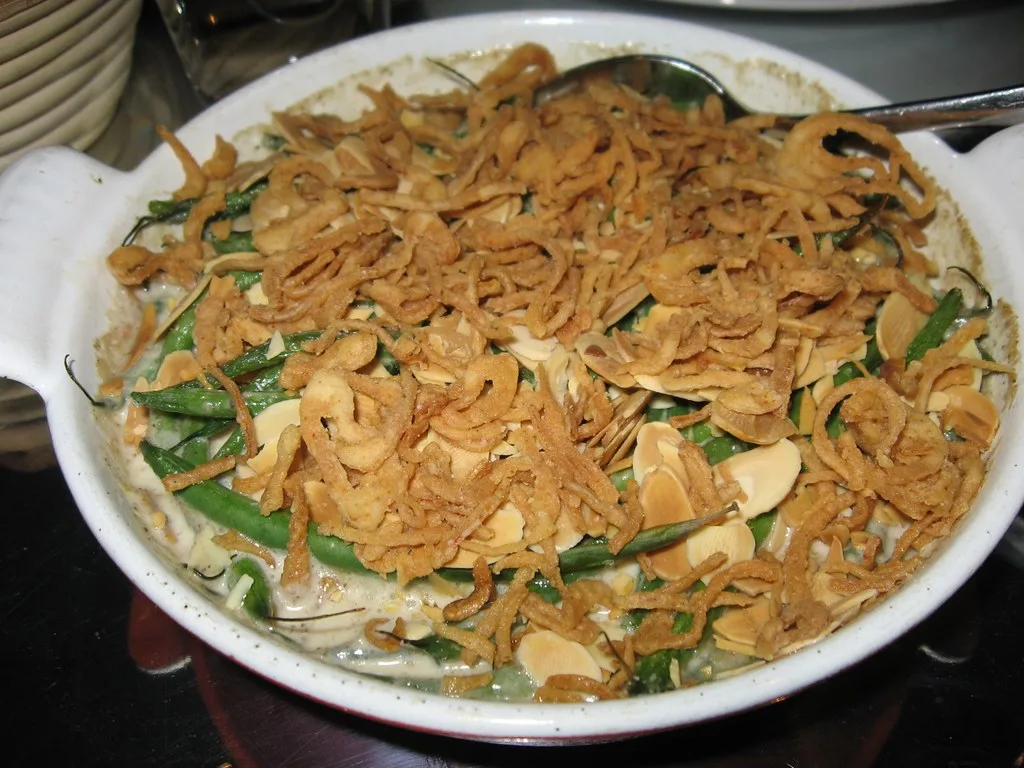
Every family has the dish you’re not allowed to touch. Try leaving it off once and watch the faces.
When Reddit asked which tradition nobody in your family can change, two threads with more than 1,100 comments kept circling back to the menu. One family’s lineup hasn’t budged since the mid-1990s. In another thread, a mother-in-law blew up over a dessert a guest dared to bring.
The funny part is how young some of those sacred dishes are, and where they came from. Green bean casserole was invented in 1955 by Dorcas Reilly at Campbell’s in Camden, New Jersey. It was first called “Green Bean Bake,” it had six ingredients, and her original recipe card now sits in the National Inventors Hall of Fame in Akron, Ohio. A recipe card. In a hall of fame.
Campbell’s own 2026 report says the dish lands on more than half of Thanksgiving tables nationally. Naturally, that’s the soup company talking.
Rick Rodgers, author of Thanksgiving 101, put the whole thing in one line: “Many of the things we eat don’t have much to do with the history of Thanksgiving, but more with the history of advertising.”
Keep that in your pocket for the next person who acts like a new side dish betrays the Pilgrims. The gentlest way to loosen a locked menu is to leave the sacred dish alone and set one new thing beside it. If the new bowl is scraped clean by the end of the night, it’s in.
#9 Giving every spare bed to overnight relatives

For years it meant every bed made up, the sofa bed hauled open, and somebody’s teenager on an air mattress that was flat by 2 a.m. Then the morning line for the bathroom.
That’s quietly shifting. In polls done for the hotel industry, the share of overnight Thanksgiving travelers planning a hotel stay rose from 22% in 2021 to 30% in 2023, while those staying with family or friends fell from 68% to 59%.
And there are a lot of travelers to put somewhere. AAA expected a record 81.8 million people to go at least 50 miles from home over the 2025 holiday.
In one Reddit thread pushing back on crowded relatives’ houses and long drives, about half a dozen people chimed in that most of their extended family already sleeps elsewhere. Nobody’s hurt. Everybody sleeps.
What makes it work: say it early, before anyone books a flight. If money’s tight for someone, offering to cover a night at a nearby motel can soften it.
#8 Refusing any help with the cooking
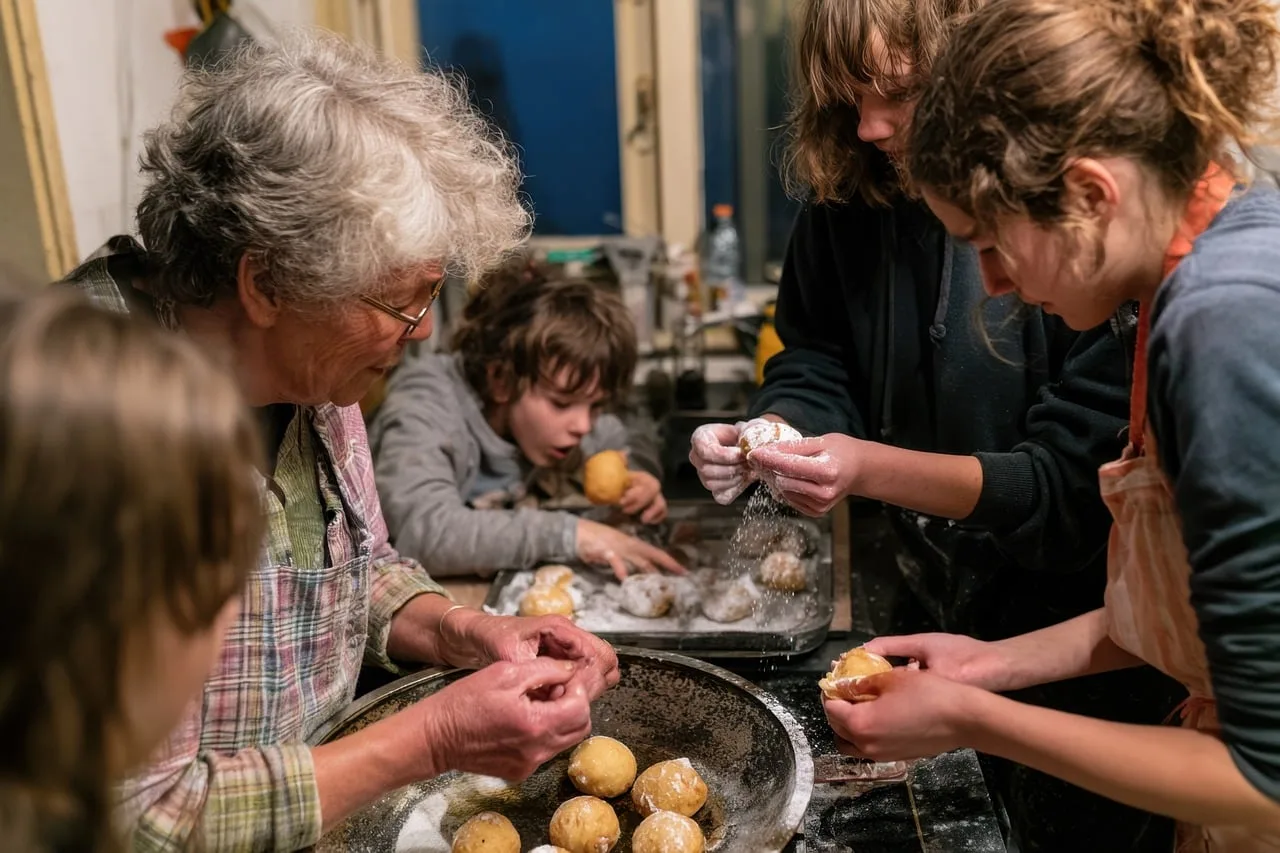
You know the scene. Someone says, “Sit down, relax, we’ve got this,” and five minutes later you’re back at the stove, stirring the gravy you were told not to stir.
A few hosts on Reddit describe exactly this: older relatives told to sit and rest who keep wandering back in. It’s practically an Olympic event.
The work hasn’t spread out as much as you’d hope. In YouGov’s 2025 poll, 29% of women said they’d do all or most of the Thanksgiving cooking, against 19% of men. Adults 45 and up were more likely than younger ones to be the main cook, 28% to 20%. And of the people cooking everything, 71% also do all the cleanup.
If you’re ready to let go of a little, the trick is in the asking. “Can I help?” gets an automatic “No, I’m fine.” A specific job doesn’t.
- Hand someone the potato masher and walk away.
- Give the rolls and the timer to one person, and only that person.
- Assign the cleanup to whoever didn’t cook. In writing, if necessary.
#7 Paper Pilgrim hats and feather headbands
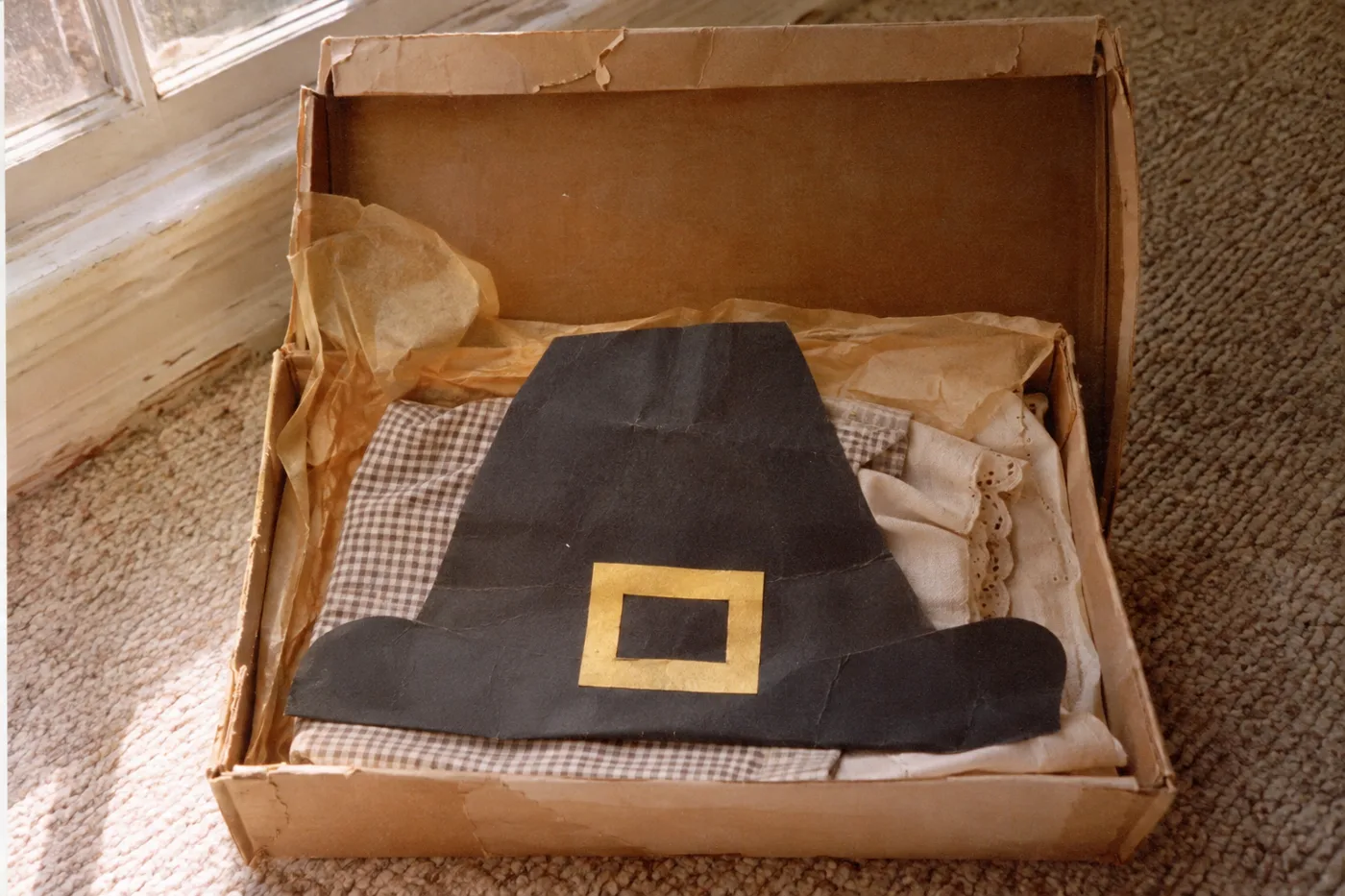
If you went to grade school in the ’50s, ’60s or ’70s, you probably made one. A black construction-paper Pilgrim hat with a gold buckle. Or a paper-bag vest and a headband of paper feathers. It came home crumpled in your book bag and went straight onto the refrigerator.
Schools have been dropping them, slowly and unevenly. Arlington, Massachusetts, ended Colonial costumes in its public schools in 2018, the AP reported. Montana, back in 1999, was among the first states to require teaching tribal histories, and Washington and Oregon followed.
Crystal Power, a social studies coach for Arlington’s schools, explained what they wanted instead: “We don’t want the coloring books of the Pilgrims and the Native Americans… We want students to engage with what really happened.”
It’s far from everywhere. Ed Schupman of the National Museum of the American Indian said, “Progress seems to be gaining momentum, but there’s still a lot of work to do.”
So if a child in your life brings home a very different Thanksgiving craft than you did, that’s the reason. Your old hat isn’t contraband. It might still be in a box somewhere, buckle and all.
 You might also like21 Holiday Party Foods From the 1970s That Would Horrify Guests Today
#6 Black Friday doorbusters at dawn

There was a stretch when Black Friday meant a parking lot in the dark, a thermos, and the newspaper circular folded into your coat pocket with the deals circled in pen. Then it crept into Thursday itself.
How it rose and fell:
- 2008: About 2,000 shoppers broke through the doors at a Long Island Walmart’s 5 a.m. opening and trampled a temporary worker, Jdimytai Damour, to death.
- 2011: Kohl’s, Best Buy, Macy’s and Target opened at midnight.
- 2014: Several chains opened at 5 or 6 p.m. on Thanksgiving Day.
- 2020: Target closed on Thanksgiving because of the pandemic, then made it permanent in 2021.
- 2026: Walmart, Target and Best Buy are all reported closed on Thanksgiving Day, November 26.
Target’s CEO, Brian Cornell, summed up the turn: “Thanksgiving store hours are one thing we won’t ‘get back to’ when the pandemic finally subsides.”
So if you quit the dawn doorbuster, the biggest stores ended up quitting Thanksgiving right along with you. The doors open Friday. Thursday is back to being Thursday.
#5 The relish tray of celery and olives
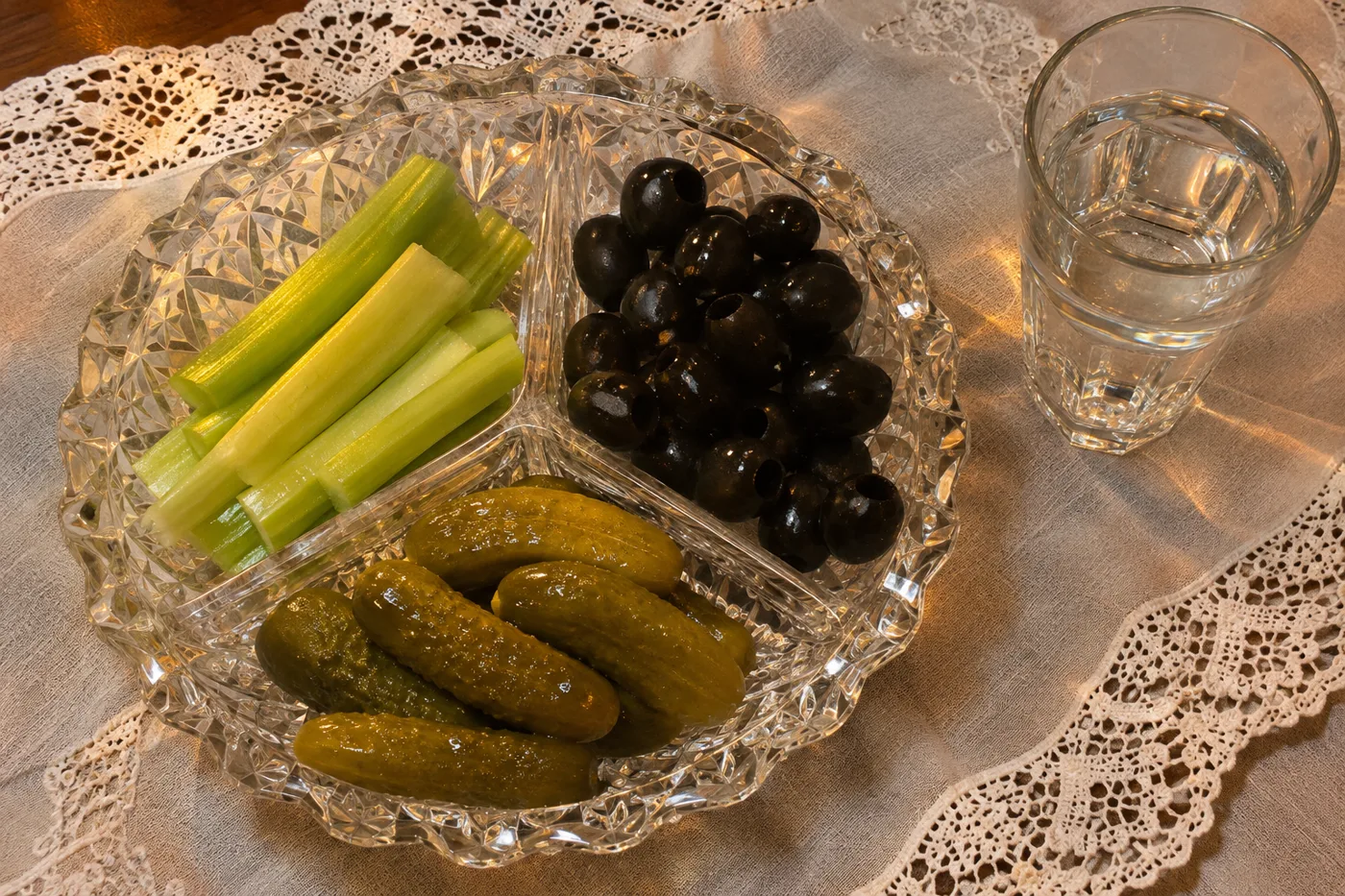
Before the turkey ever came out, there it sat: a cut-glass dish with three little sections. Celery sticks in one, black olives in another, sweet pickles or radishes in the third. Somebody always wore the olives on their fingertips.
That tray had a remarkable run. Celery and olives were Thanksgiving essentials from the late 1800s into the 1950s, according to a Boston.com history, then faded starting around 1974 as starters like shrimp cocktail took over.
Why celery, of all things? It used to seem fancy. Lucy Long of the Center for Food and Culture says celery and olives let ordinary families copy European-style multi-course dining, which she calls “an idealized performance.” Celery was once served standing up in ornate celery vases; the divided glass relish dish that replaced it traces back to 19th-century “pickle castors” used in wealthy homes. A vase. For celery.
Then celery got a new reputation. Culinary historian Andy Smith ties the decline to celery becoming a “health and diet food.” Hard to feel festive about the thing you ate next to cottage cheese all week.
If the old relish dish is still around, it’s a sweet little thing to bring back. Marinated olives, spiced pecans, those tiny pickles from the fancy aisle. The dish won’t mind.
#4 Carving the turkey at the head of the table
Picture the famous Thanksgiving painting. Norman Rockwell’s, with the giant turkey and the whole family beaming. Now picture the carving.
You can’t, because nobody’s doing it. In Freedom from Want, the grandmother in her apron is setting the turkey down, the grandfather stands beside her, and no one is shown carving at all.
A few more things most people never knew about it:
- Rockwell painted it in November 1942, working from photos of his own cook presenting the family’s real Thanksgiving turkey that year.
- It ran in the Saturday Evening Post on March 6, 1943. March.
- The original isn’t in the Smithsonian. It hangs at the Norman Rockwell Museum in Stockbridge, Massachusetts, which owns all four of his Freedoms paintings.
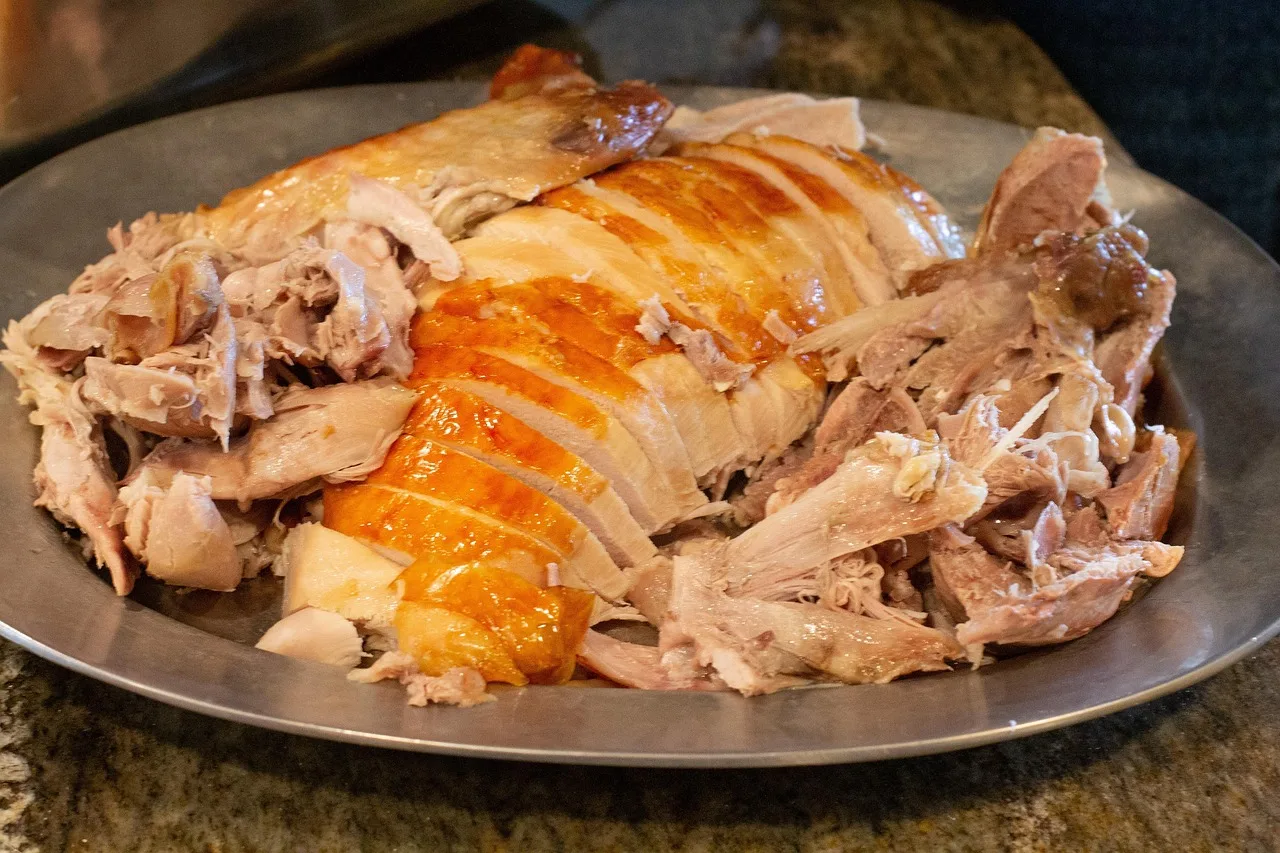
So the big tableside carving show, with someone sawing away while everyone’s potatoes go cold, was never actually in the picture. If anyone in your family ever made a production of it, you’re allowed to retire it. Carve at the counter, out of sight, and bring it in already sliced on a platter. The plates stay hot, and nobody watches a grown adult wrestle a drumstick.
#3 The family recipe that lives in your head
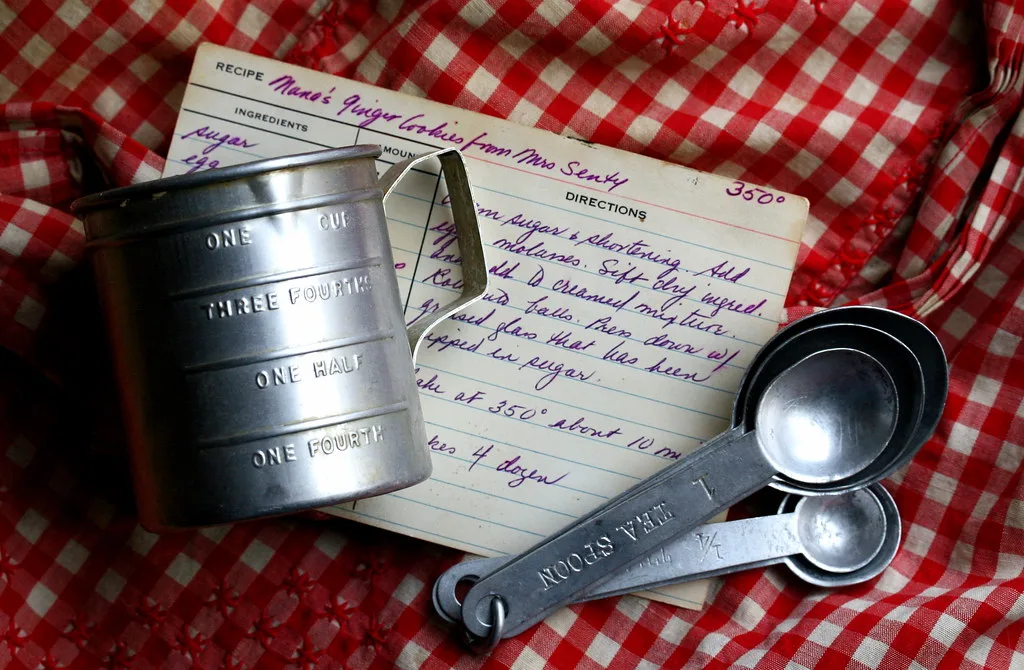
Ask for the stuffing recipe and you’ll hear something like, “Oh, a little of this, until it looks right.” Wonderful. Completely useless.
In the Thanksgiving threads and videos we read, “Can I have the recipe?” came up about five times. People want it. The quiet change is finally writing the family recipe down, or saving the stained card in someone’s handwriting before it falls apart.
Mary Lynn Ritzenthaler, the National Archives’ former chief conservator, has simple rules for a recipe card:
- Keep it flat. “Do not make additional folds in the paper, and store it flat.”
- Slip it into a clear polyester sleeve if it’s coming anywhere near the stove.
- Skip the old magnetic photo albums. They discolor paper.
- Scan it. She calls scanning “a good way to preserve a collection.”
Rachel Gordon, who writes for the Library of Congress, adds a lovely touch: photograph the handwritten card so it sits right next to the typed version. You keep the handwriting and get a copy anyone can read.
She also says to test it first. “Old recipes, or those that haven’t ever been written down don’t always meet modern expectations when it comes to measurements or cooking temperatures.” A “slow oven” and “butter the size of an egg” made perfect sense to whoever wrote them.
Cook it once, then pencil your fixes onto the copy. Never the original.
#2 Handing the whole meal to the next generation
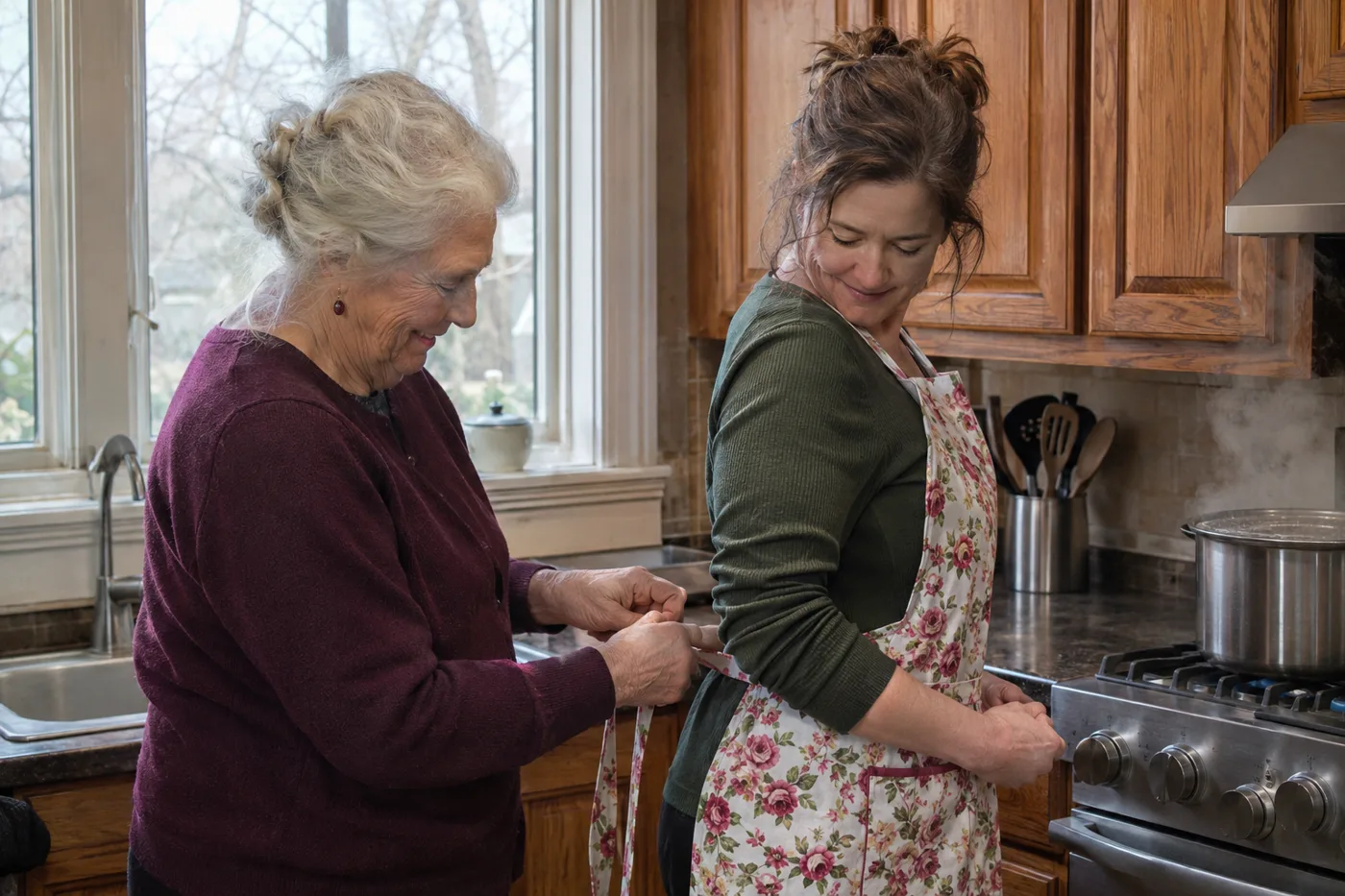
For some women, the biggest change is passing the meal itself to someone else. A daughter, maybe. Or a son, a niece, or a neighbor who’s been eyeing your roaster for years.
It happens all kinds of ways. In the Reddit threads and videos we read, four people described the cooking moving to the next generation. In one, a mother simply announced it was her daughter’s turn. In another, a grown child took over as the parents got older. In two, a late mother’s dish became the child’s job.
AARP writer Susan Moeller wrote about handing Thanksgiving to her grown children, and what changed and what didn’t. They now serve “cake instead of pie (Mon dieu!) while keeping up traditions that really matter, like welcoming everyone to their tables.”
The menu shifted. The welcome didn’t.
Social health expert Kasley Killam suggests marking the handoff instead of letting it slide by: give your holiday apron to the new host, or make a toast at dinner and officially pass the baton.
If the handoff is years off, you can start small. A parent of grown children, posting on Reddit’s r/thanksgiving, describes a friend who started teaching her kids to cook Thanksgiving around age 10 by assigning each one a dish to learn and make every year.
When it’s time, tuck the gravy recipe into the apron pocket before you hand it over.
#1 The first Thanksgiving without him

Not everyone reading this has lost a husband, and not everyone had one. But for the women who have, the first Thanksgiving without him is the tradition that stops whether you choose it or not. His chair. His joke at the same moment every year. The way he carved, or sang, or dozed off before the pie.
Hospice workers who help families through this give advice that sounds a lot like permission. VITAS Healthcare, a hospice provider, says plainly that “someone else can fulfill the role of your loved one.” And if “you usually went to the deceased’s house for holiday dinner, this year you may decide to go someplace different or stay at home.” If you’d rather not sort it out alone, VITAS also runs free grief support groups open to anyone, whether or not your loved one was its patient. The number is 800-582-9533, any hour.
Women who’ve been through it add something the experts can’t. A widowed mother of four sons wrote on r/thanksgiving that her family still does her late husband’s silly turkey ritual: “My husband died in 2011. We still do this every year in remembrance of him.”
Another widow was facing her first Thanksgiving without the husband who’d sung along to the same song with her for more than 40 years. She wrote:
“I believe the best thing about a tradition, is how it brings close those who are no longer with us.” A widow on Reddit’s r/thanksgiving, in her own post
A simple way to sort the day, whoever it is you’re missing:
Stop, keep or hand off
- Stop what you can’t face. A hospice chaplain’s advice, shared by Heart to Heart Hospice: you don’t have to do what you did last year.
- Keep one thing that still feels like them, and keep it on purpose.
- Hand off a job, or the whole meal. The same hospice suggests ordering meals in and cutting back on commitments.
- The chaplain’s other half: you don’t have to repeat this year next year, either.
Keep reading
 26 Christmas Cookies From the 1960s That Nobody Bakes AnymoreSee all 26 →
More you’ll enjoy
 23 Thanksgiving Dishes From the 1970s That Faded From the Table
 22 Things You’re Saving That Your Children Will Throw Away
 19 Holiday Traditions Women Over 60 Have Quietly Stopped Doing
The bottom line
Go back down the countdown and count how many of these you’ve already let go. Then count the ones you’re still doing only because stopping would feel strange.
That second number is the interesting one. Some of those are worth keeping forever. Some are the 5 a.m. alarm in disguise.
If you can’t tell which is which, skip one and see who notices. Usually nobody does. And if someone does, you’ve just found the person to hand it to.
Bonus: Five small fixes for the parts you’re keeping
- Scrape plates, don’t rinse them. ENERGY STAR says rinsing before the dishwasher raises the total water and energy used, and to run full loads, since a dishwasher uses about the same either way.
- Gravy on the good linens: scrape it off, then cover the spot with baking soda or cornstarch for at least 30 minutes before any water touches it, then work in dish soap and wash. Keep the iron and dryer away until it’s gone, since heat can set the stain for good.
- Cranberry is a dye stain, so it’s different. Rinse with cold water from the back of the cloth, don’t scrub, pretreat with detergent, then soak in oxygen bleach.
- Read the turkey label before you brine. Some birds are already brined or “self-basted.”
- If you’re the one on the road, leave early. For 2025, AAA and INRIX named the worst driving windows as Tuesday noon to 9 p.m., Wednesday 11 a.m. to 8 p.m. and Sunday 11 a.m. to 8 p.m., with early morning the best time to go.
Questions people also ask
How do you tell your family you’re not hosting Thanksgiving anymore?
Tell them as early as you can, and say it as a decision, not a request for permission. Therapist Robert Taibbi advises doing it “as soon as possible… So people have a heads up,” he told TIME, and psychotherapist Sarah Greenberg warns that if you need your family’s approval, “your message may come off as confusing, uncertain or unclear,” she told PureWow. That advice was first given about skipping gatherings, but it fits stepping down as host too. Offering a smaller role, like bringing a dish, can soften the news.
How do you pass down Thanksgiving to your kids?
Talk about the change openly, keep the few traditions that matter most, and mark the handoff itself. AARP suggests rotating or sharing the hosting as a first step, and social health expert Kasley Killam suggests giving the new host your holiday apron or making a toast to pass the baton. Expect the menu to change; Susan Moeller found her grown children kept what mattered, like welcoming everyone, while swapping pie for cake.
How much turkey do I need for a small Thanksgiving for two?
Two people need about 2 pounds of turkey, going by the USDA’s guide of about 1 pound of whole turkey per person. The smallest whole birds on the USDA’s chart weigh 8 to 12 pounds, which is why small households often roast a turkey breast or Cornish hens instead. A 4 to 8 pound breast takes 1½ to 3¼ hours at 325°F, and all of it should reach 165°F on a food thermometer.
How long are Thanksgiving leftovers good for?
Leftovers are good for 3 to 4 days in the refrigerator, as long as they went in within 2 hours of cooking, or within 1 hour if it’s above 90°F. After that, the USDA says to freeze them. Its easy reminder is that the Monday after Thanksgiving is the last day to eat them, which in 2026 is November 30. Reheat them to 165°F.
Can you buy a fully cooked Thanksgiving dinner?
Yes, grocery chains and restaurants sell heat-and-serve Thanksgiving dinners. Publix’s Complete Turkey Dinner for about 15 people starts at $139.99, and its turkey breast dinner for 8 starts at $79.99. Prices vary by store, and Publix needs orders at least 48 hours ahead, with its last pickup the day before Thanksgiving.

- 17 Thanksgiving Traditions Women Over 60 Have Quietly Stopped - November 24, 2026
- Small Projects, Big Difference: 10 DIY Ideas for an Organized and Happy Home - November 23, 2026
- Preparing a Household Inventory Before Moving to Another State - November 23, 2026