Spot the holiday leftover mistakes that quietly spoil your turkey, gravy, stuffing and pie, and fix each one.
The habit at #1 ignores a clock that started hours earlier.
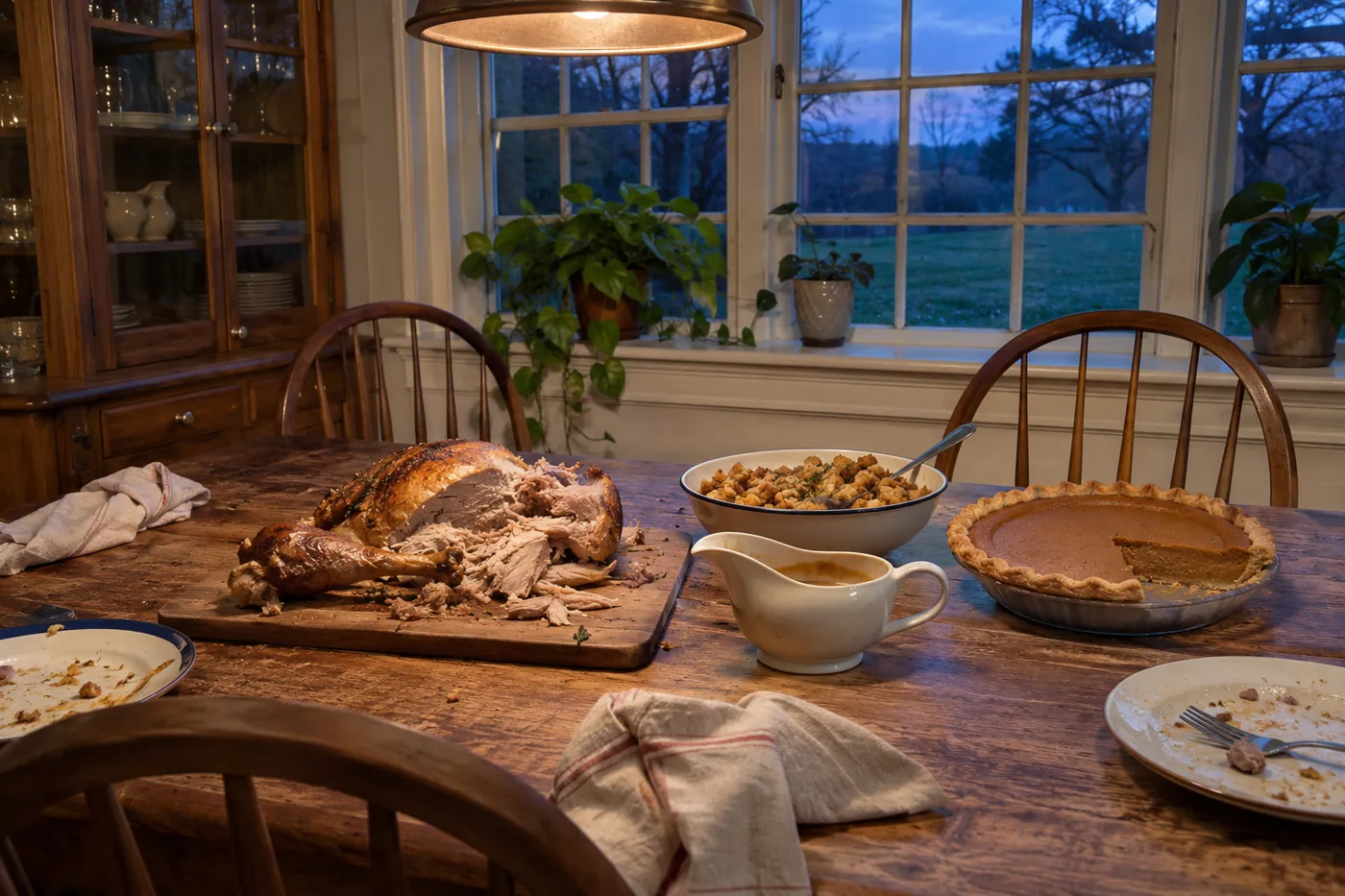
It’s a little after eight on Thursday night. The dishwasher is churning through its second load, the good serving spoons are soaking in the sink, and the turkey sits on the carving board under a loose tent of foil, picked down to a ragged ridge on one side. The couch is calling. This tired hour decides whether your Thanksgiving leftovers turn into four good days of sandwiches and soup, or spoil quietly and go to waste by Monday.
#16 Trusting a sniff to say it’s still good
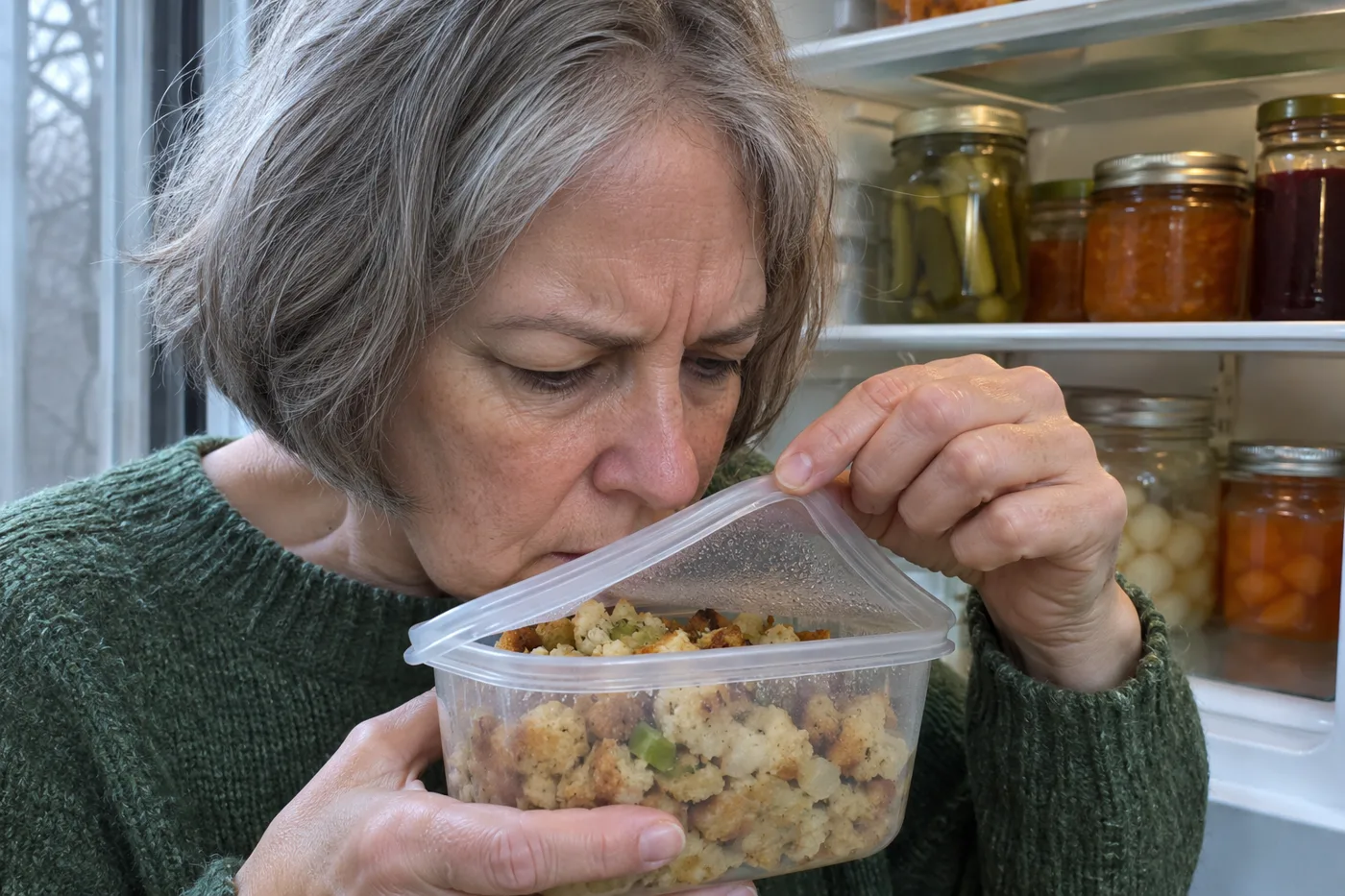
You pry up the corner of the stuffing tub on Saturday, lean in, take a sniff and shrug. Smells like stuffing. Into the microwave it goes.
That sniff can’t clear anything. Washington State’s health department lists “Leftovers are safe to eat if they look and smell okay” among its food safety myths, because the bacteria that make people sick don’t change a food’s taste, smell or look.
Reheating doesn’t always rescue it, either. With one germ, Staph, the CDC puts it plainly: “Even though cooking can kill Staph, it does not destroy the toxin in the food.” That kind of food poisoning tends to hit suddenly, usually 30 minutes to 8 hours after eating.
The CDC says custards, baked goods and sandwiches are among the riskiest foods for Staph. That’s most of a Thanksgiving weekend right there.
A tub that smells sour still goes out, of course. A tub that smells fine has passed no test at all, so the old saying holds: when in doubt, throw it out. Better still, never be in doubt, which is what the roll of masking tape at #13 is for.
#15 Eating turkey sandwiches until it’s gone
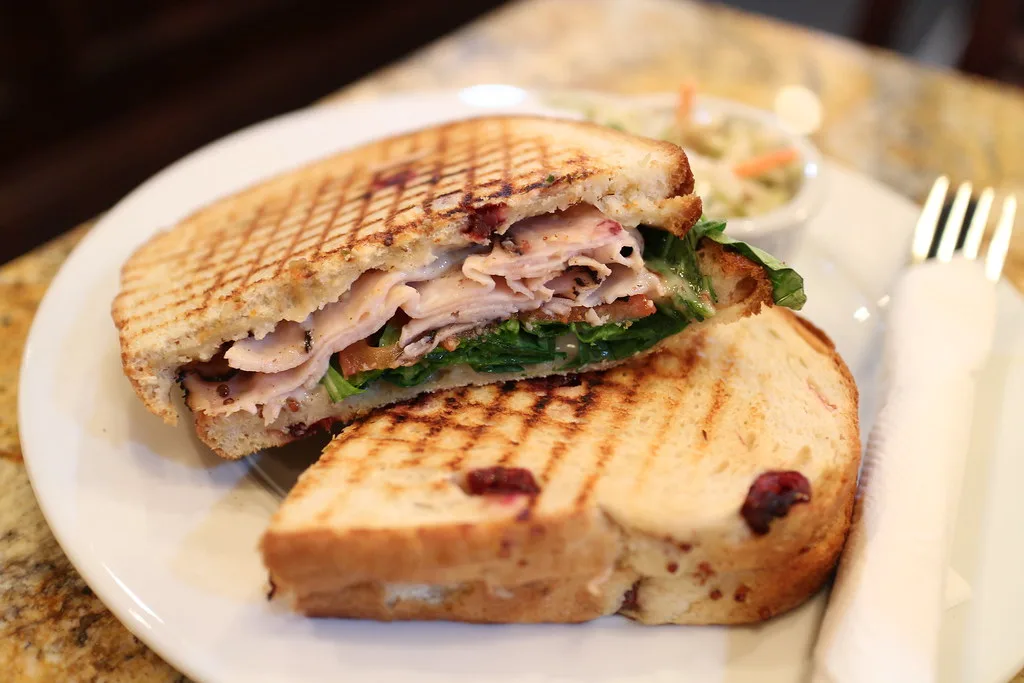
Every household seems to have its own leftover deadline. Under one TikTok video about Thanksgiving leftovers, commenters’ cutoffs included Saturday at noon and four days at most.
The real answer is shorter than “until it’s gone.” The CDC says to eat cooked turkey and dishes made with it within 3 to 4 days, soup and casseroles included, and to freeze whatever you won’t get to. Clemson University’s Home & Garden Information Center puts the outer edge at four days, too.
Dr. Jessica Kiss, a family physician who answers health questions on TikTok, doesn’t soften it: “So the CDC advises three to four days max and then you toss it.”
So if your house rule is Saturday noon, you’re comfortably inside it. If it’s “until it’s gone” and you roasted a big bird, three to four days in the fridge won’t get you there, and the freezer at #5 will.
One catch: that count assumes the turkey went into the fridge promptly. If it sat out all afternoon, the clock was already running before you wrapped it, which is the whole story at #1.
Did you know?
A germ called C. perfringens causes almost 900,000 cases of food poisoning in the US each year, the CDC estimates, and most outbreaks happen in November and December, often traced to turkey and roast beef.
#14 Microwaving the whole tub again and again
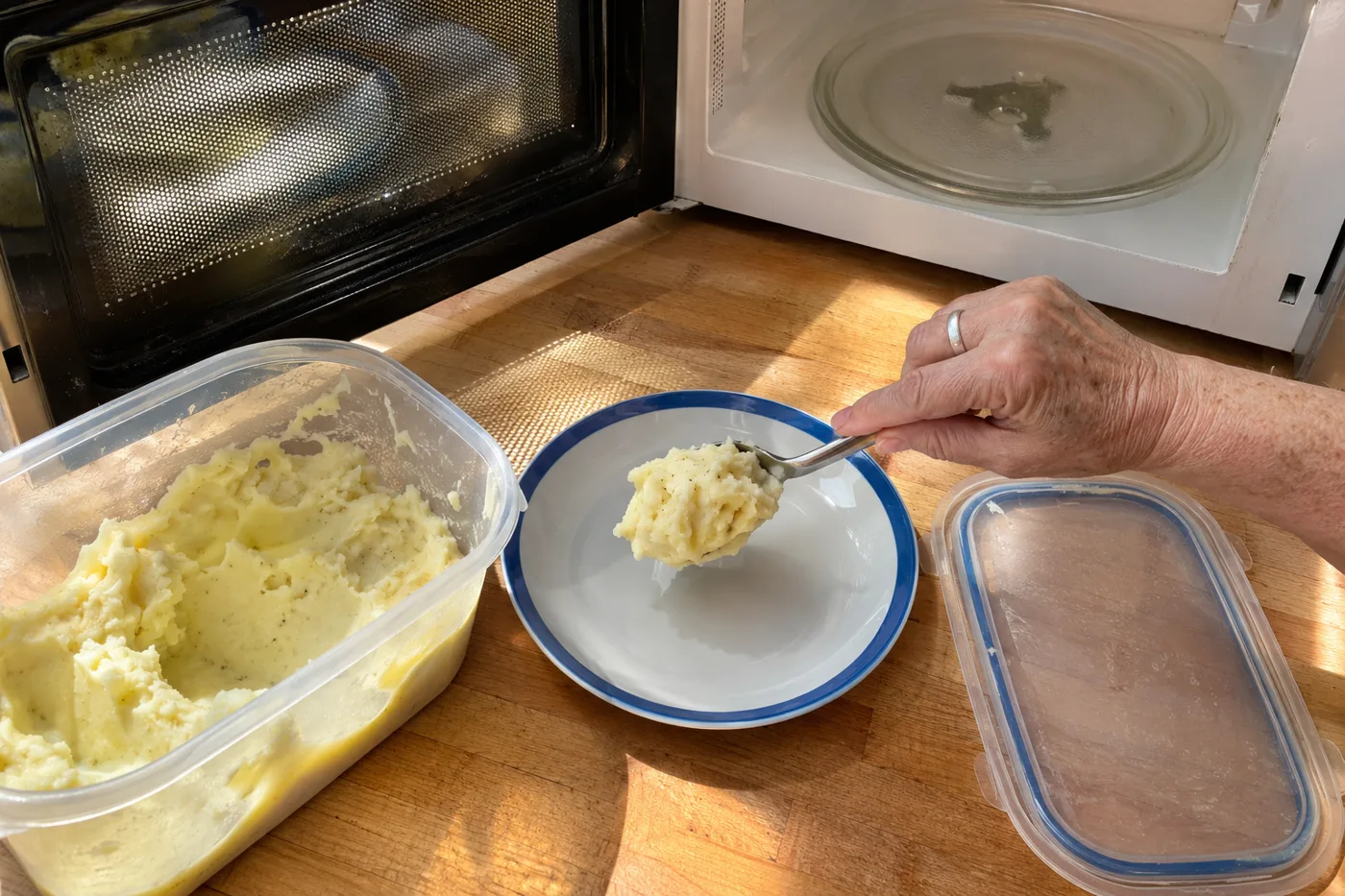
Heat only what’s going on your plate. The big tub of mashed potatoes that goes in the microwave on Friday, again on Saturday and again on Sunday gets warmed up and cooled down three times over.
Eat Smart, Move More, Weigh Less, a program whose website carries NC State and North Carolina Department of Public Health logos, says “It’s best practice to reheat leftovers only once.” The fix takes two steps:
- Spoon today’s portion onto a plate or into a small dish, and put the big container straight back in the fridge.
- Heat that portion until it’s steaming all the way through. If you have a food thermometer, reheat to 165 degrees.
If a reheated portion goes back in the fridge, the same program says to get it there within 2 hours.
A casserole that’s set into one solid block works the same way: cut out a square with a spatula and warm just that. The rest stays cold and dull in the fridge, which is exactly where you want it.
#13 Unlabeled tubs with no date
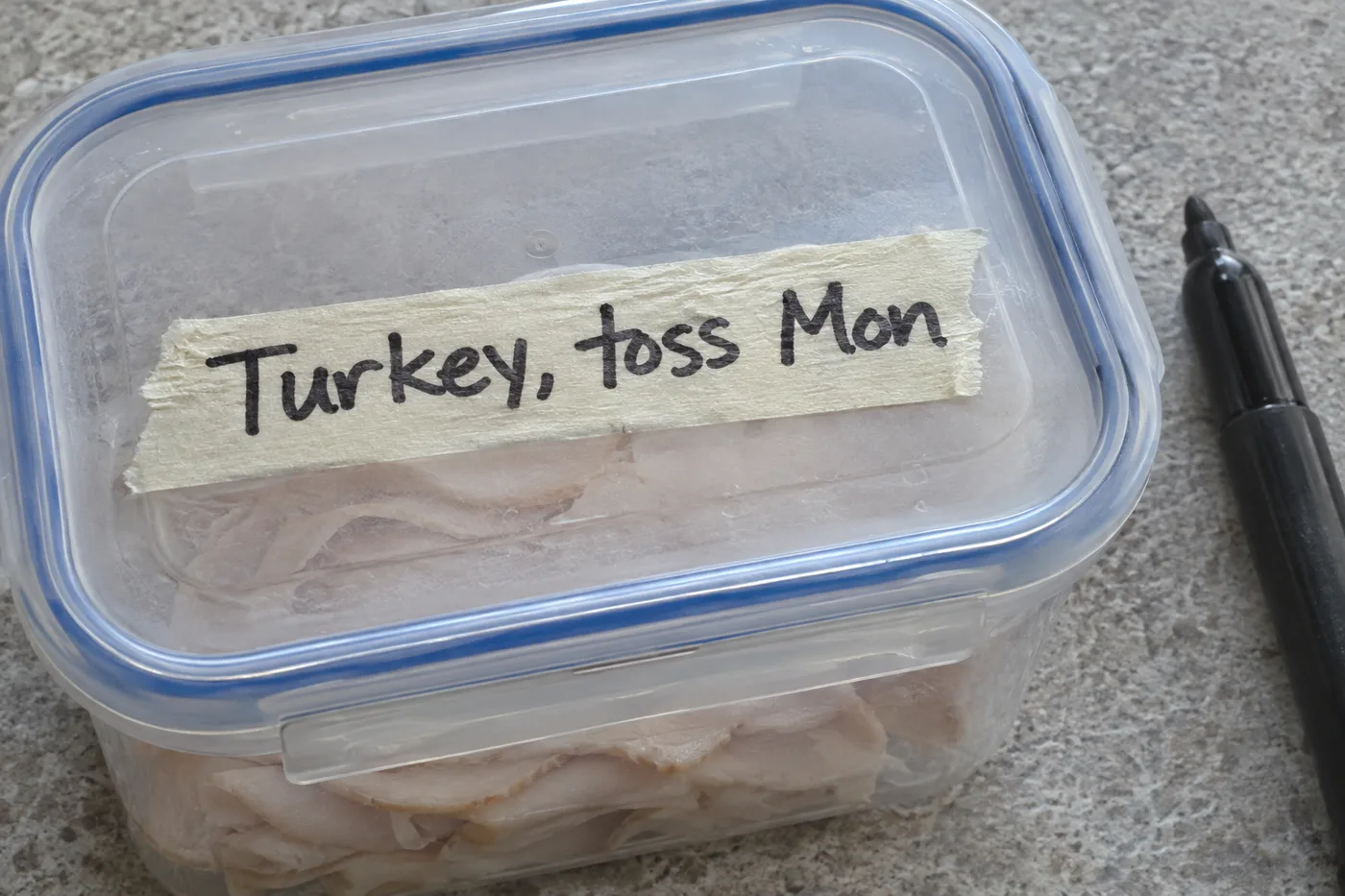
Every fridge grows one eventually. It’s at the back, behind the pickles, and it holds something tan. Gravy? Squash soup? Was that Tuesday’s, or the Tuesday before?
Clemson’s extension service says to “Put a piece of tape on the container and write the date on the tape.” Masking tape and a marker, kept right by the fridge, will do it.
Nebraska Extension suggests writing what it is, plus either the day you made it or a throw-away date. Go with the throw-away date. “Turkey, toss Mon” means nobody has to count days on their fingers at seven in the morning.
A commenter on a TikTok video about take-home plates summed it up: “A quick label with the contents and date makes these so much easier to grab later.”
The freezer needs labels even more, since everything turns the same frosty beige in there. New Zealand’s Love Food Hate Waste program has the best line on it: “Label the container so you don’t end up with a freezer full of UFOs (unidentified frozen objects).”
#12 Storing gravy like it keeps all week
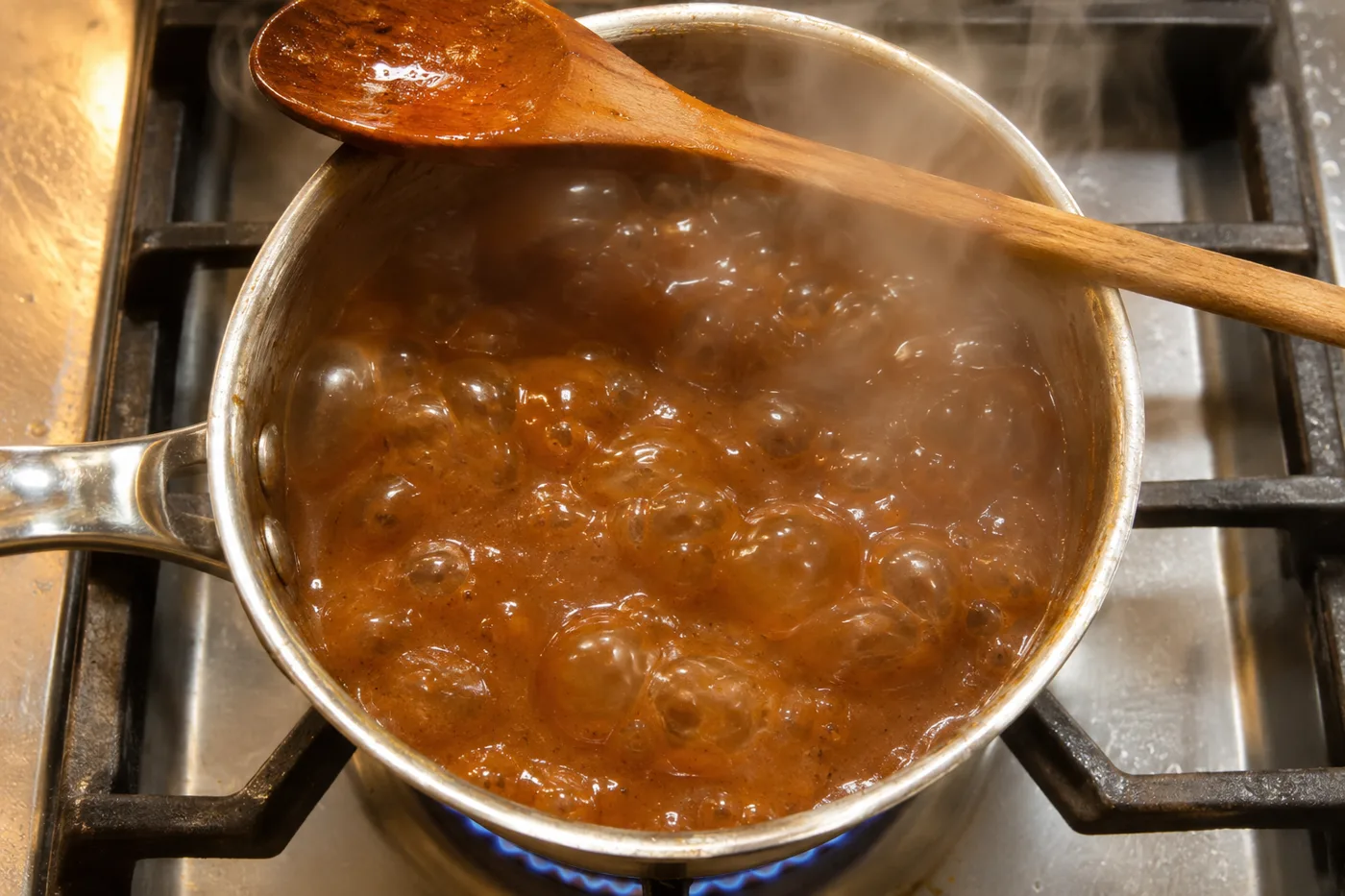
Gravy has the shortest life of anything on the Thanksgiving table. Clemson’s chart gives gravy and meat broth 1 to 2 days in the fridge, so Thursday’s gravy is good for Friday and Saturday at most.
When you warm it up, a gentle simmer isn’t enough. University of New Hampshire Extension says to bring gravy to a rolling boil.
Stuffing runs on the same short schedule. Illinois Extension says to use leftover stuffing within 1 to 2 days and reheat it to 165°F.
That makes Thursday night the time to split the gravy boat in two: what you’ll pour on Friday’s plate goes in the fridge, and the rest, if it’s flour-based, goes in the freezer. Clemson gives gravy 2 to 3 months frozen, and America’s Test Kitchen says flour-based gravy keeps up to two months, so plan on two.
 You might also like26 Church Cookbook Desserts That Nobody Makes Anymore
#11 Wrapping leftovers in flimsy plastic
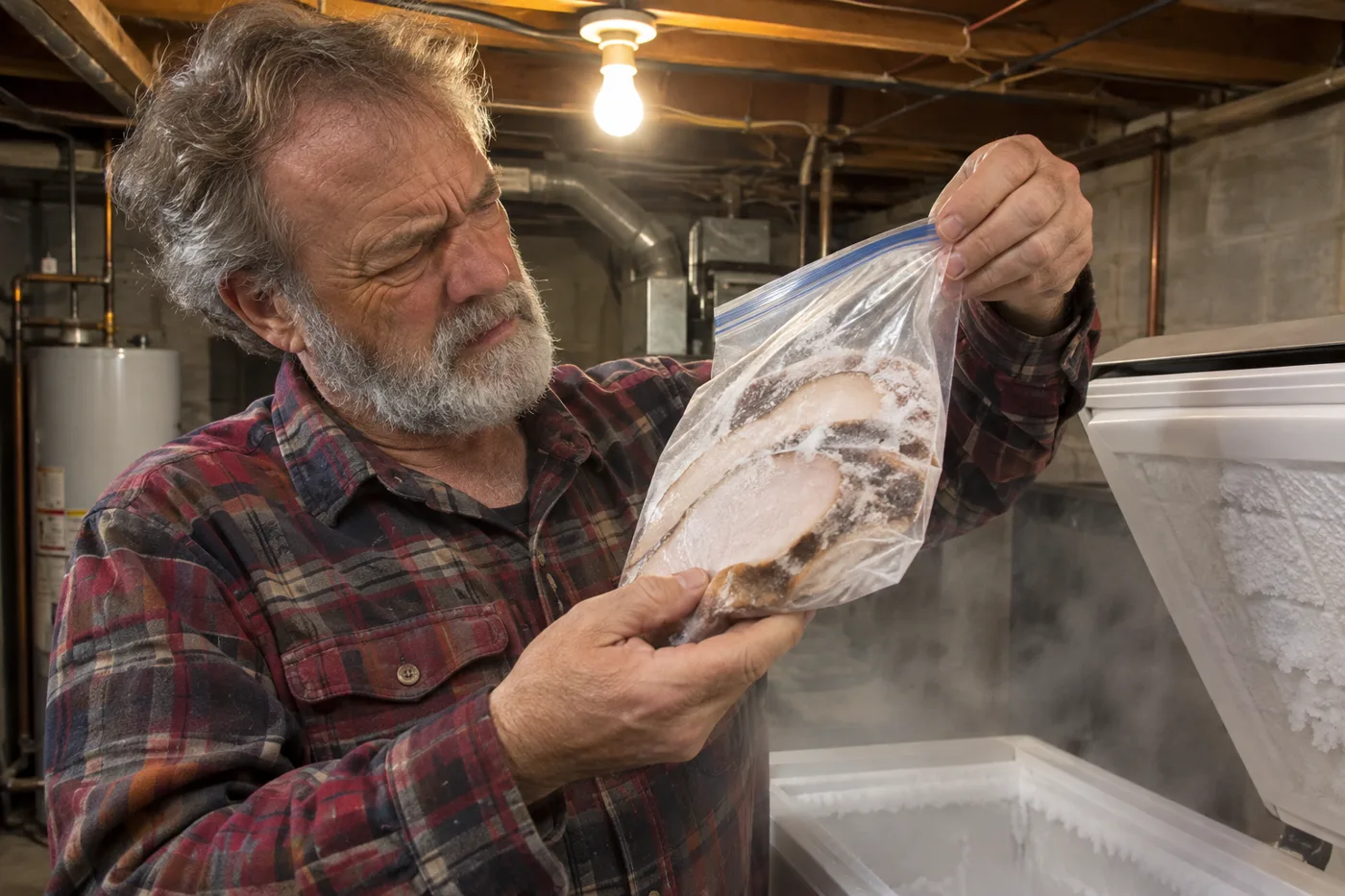
You dig a bag of turkey out of the freezer in February, and the edges are gray, dried out and furred with frost. Is it trash?
Usually not. Iowa State University’s AnswerLine says “Freezer burn affects food’s quality but not its safety.” Air got to the food and dried it. Trim away the mildly burned spots and use the rest. Pieces that are badly freezer-burned are the ones to throw out.
Keeping air out is the whole game. Mississippi State Extension suggests:
- Bags or wrap labeled for the freezer
- Pressing out the extra air before you seal
- Leaving about ½ inch at the top of containers for expansion
- Laying bags flat so they freeze thin and thaw faster
Flat bags of turkey also stand up in the freezer like files in a cabinet, which you’ll appreciate when you’re looking for the one marked “gravy.”
#10 Reheating turkey until it’s dry as cardboard
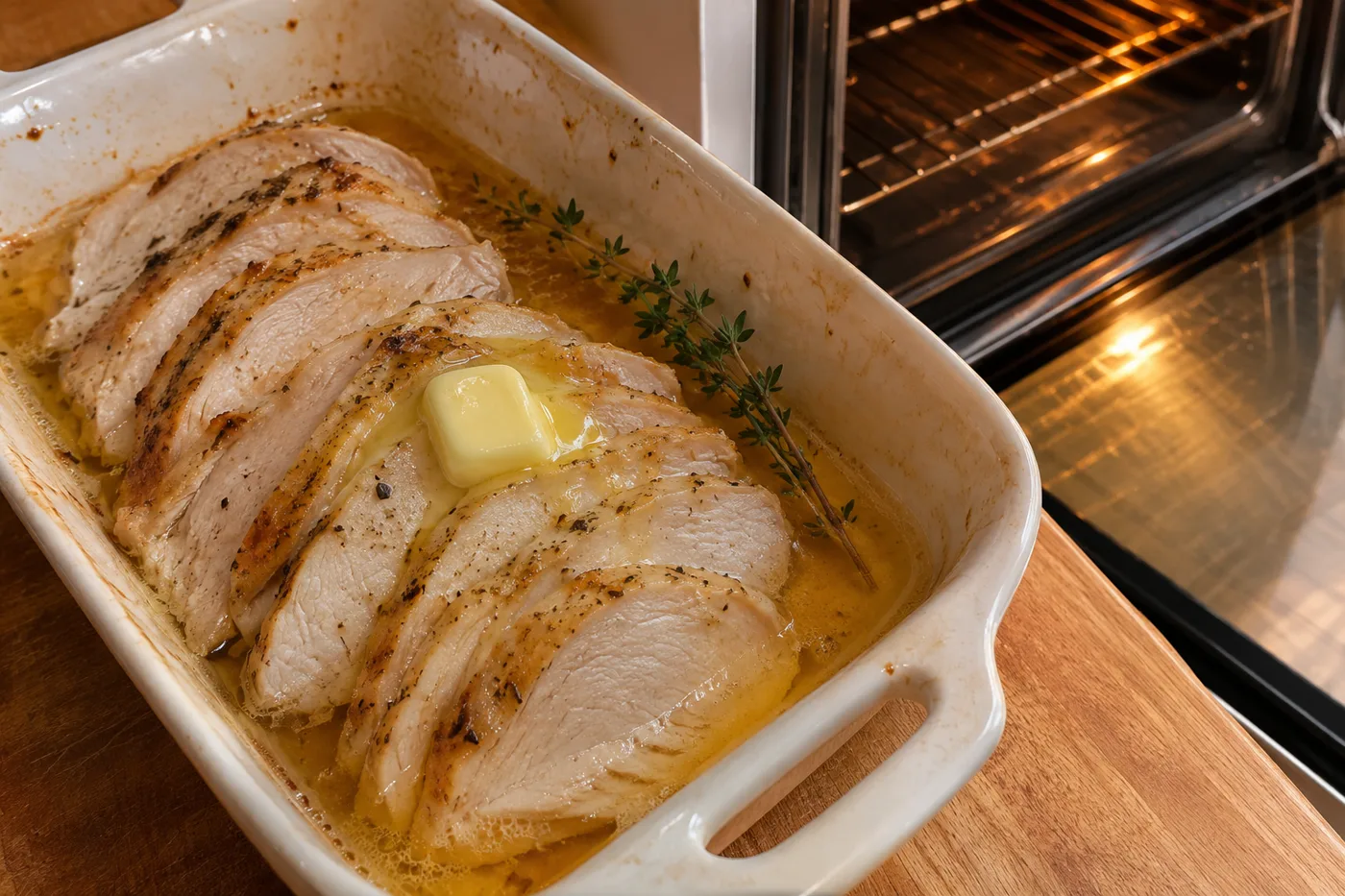
Start by skipping the microwave. America’s Test Kitchen warns that “Microwaves heat aggressively and unevenly.”
Jim Hagy, owner of Chef’s Market, told Simply Recipes: “The best way to reheat turkey is in a shallow pan of broth with a pad of butter.” Chef Dean Harper, in the same piece, lays out the method:
- Put the slices in a shallow dish with just enough broth “to create some steam,” so the slices don’t dry out.
- Cover it and heat at about 325°F.
- Start checking after about 15 minutes.
If you’d rather go low and slow, America’s Test Kitchen wraps slices in foil and warms them in a 275°F oven.
Whatever a recipe says about temperature, check that your leftover turkey reaches 165°F with a food thermometer.
Did you know?
Washington State’s health department calls “microwaves kill bacteria” a myth. The heat is what does the killing, and when a microwave heats unevenly, it leaves cold spots behind.
#9 Not setting your own share aside before dinner
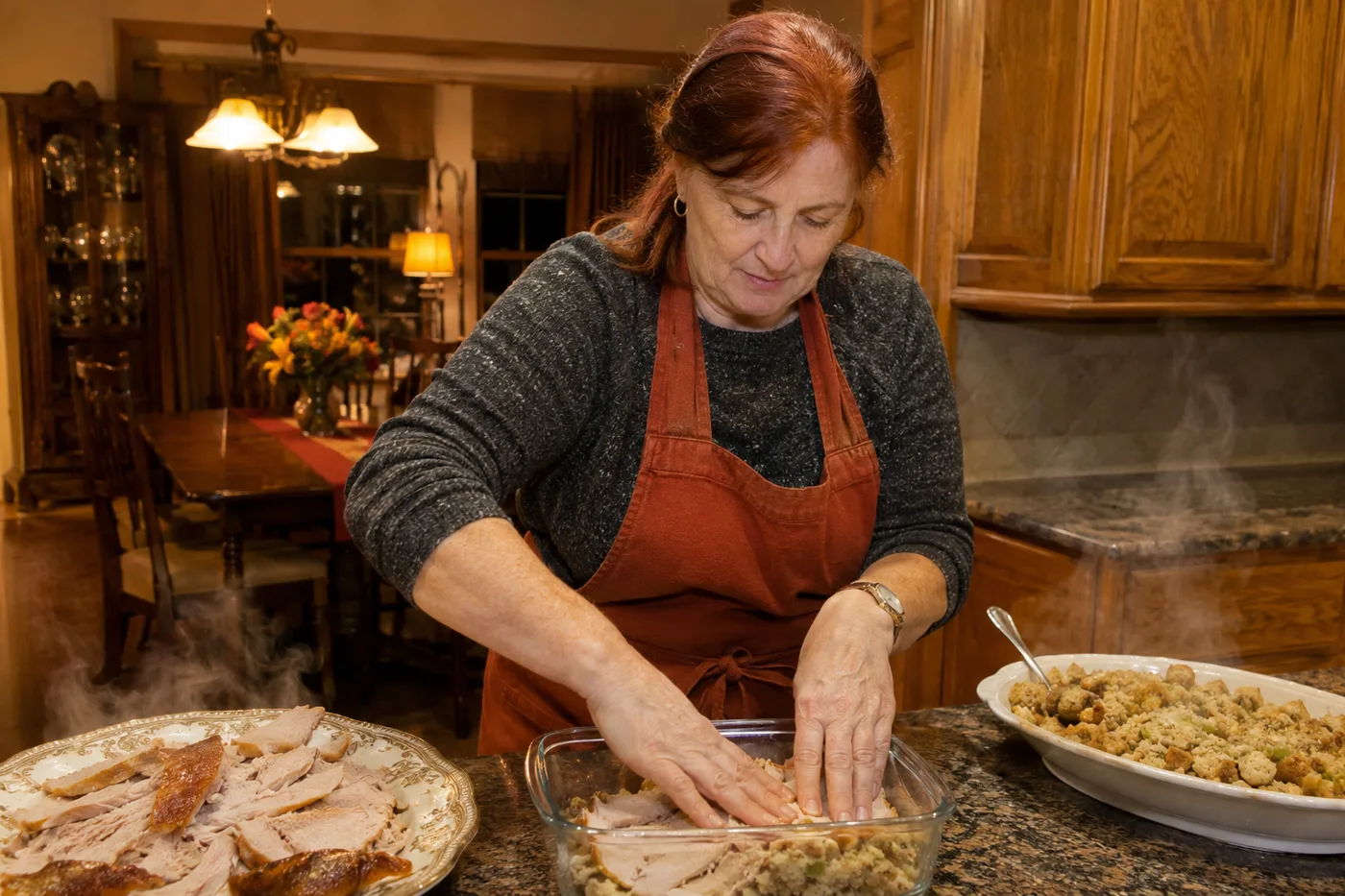
If you’ve ever hosted, you may know the moment. The last car pulls away, and you’re at the sink with a greasy platter, a bare carving board and one lonely drumstick. Everyone went home with the good stuff.
The fix happens before anyone sits down. A commenter advising a holiday host on Reddit’s etiquette forum put it this way: “Also, wrap up/put in storage containers the portion you want to keep as leftovers and put them away before you serve dinner.”
There’s a quiet bonus. Food that goes straight into the fridge never sits on the buffet at all, so your share is the freshest leftover in the house.
If it feels selfish, it isn’t. Courtney Opalko, a certified etiquette expert, told Southern Living: “The host absolutely gets to decide whether or not to offer leftovers and what goes home with guests.” She also suggests quietly tucking away the last slice of pie rather than arguing over it.
#8 Refrigerating the whole turkey on the bone
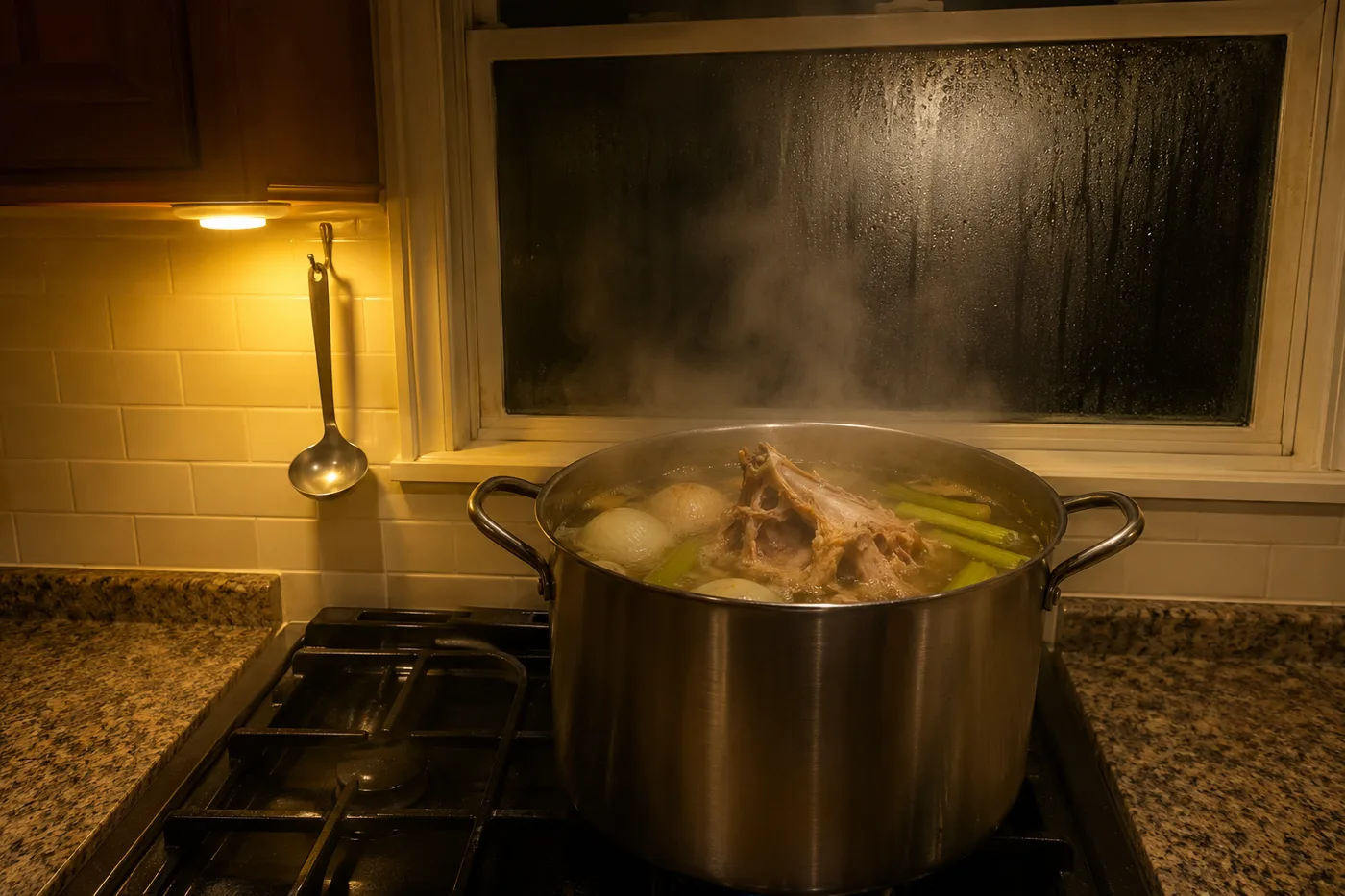
A whole bird on its platter is a big, dense thing, and the middle takes a long time to chill. The CDC says to cut a big cut like a turkey into smaller pieces so they cool quickly.
You don’t have to carve it into tiny pieces. UNH Extension’s advice is to slice the breast meat, and “legs and wings may be left whole.”
Then look at what’s left, because the bones are the best leftover of all. Simmer the carcass into stock that night, or, if you’re too tired, freeze the whole carcass and make stock later, as America’s Test Kitchen suggests.
When the stock is done, Penn State Extension says to cool it fast in a sink of ice water, stirring often. It keeps up to three days in the fridge. For longer, freeze it in a freezer container or wide-mouth jar and leave some space at the top.
The same move works on a holiday ham. As a home cook wrote on Reddit’s AskReddit: “Yesterday I made soup stock from the hambone – now in the freezer for some savory soup in the approaching winter months.”
#7 Forgetting the guests most at risk
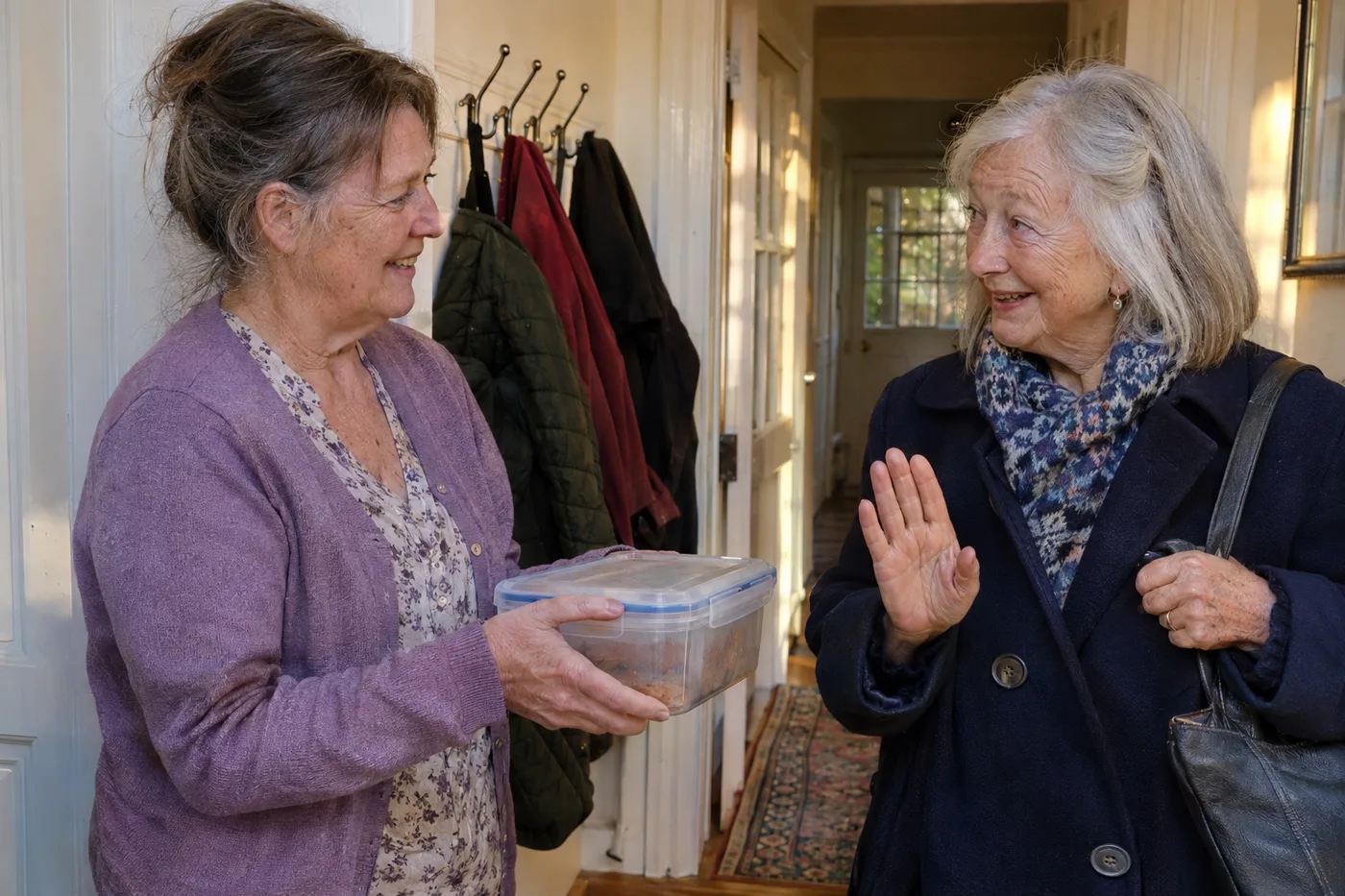
For some guests, a take-home plate carries more risk. The CDC names the groups most likely to get seriously sick from food poisoning:
- Adults 65 and older
- Children under 5
- People with weakened immune systems, including from diabetes, liver or kidney disease, chemotherapy or radiation
- Pregnant women, who are 10 times more likely to get a foodborne infection called Listeria
If anyone at your table fits that list, think twice before pressing a second container on them. On a Reddit forum for people with Crohn’s disease, a member with a weak immune system and a four-hour drive home described being urged to take several containers anyway. Their confession will sound familiar to anyone who’s been on the receiving end: “I always feel guilty, but I just toss them out when I get home.”
That’s good food wasted and a guest feeling bad about it. Give these guests the freshest food, packed right after dinner and kept cold for the drive, or let a polite “no, thank you” stand.
 You might also like21 Holiday Party Foods From the 1970s That Would Horrify Guests Today
#6 Driving leftovers home without a cooler
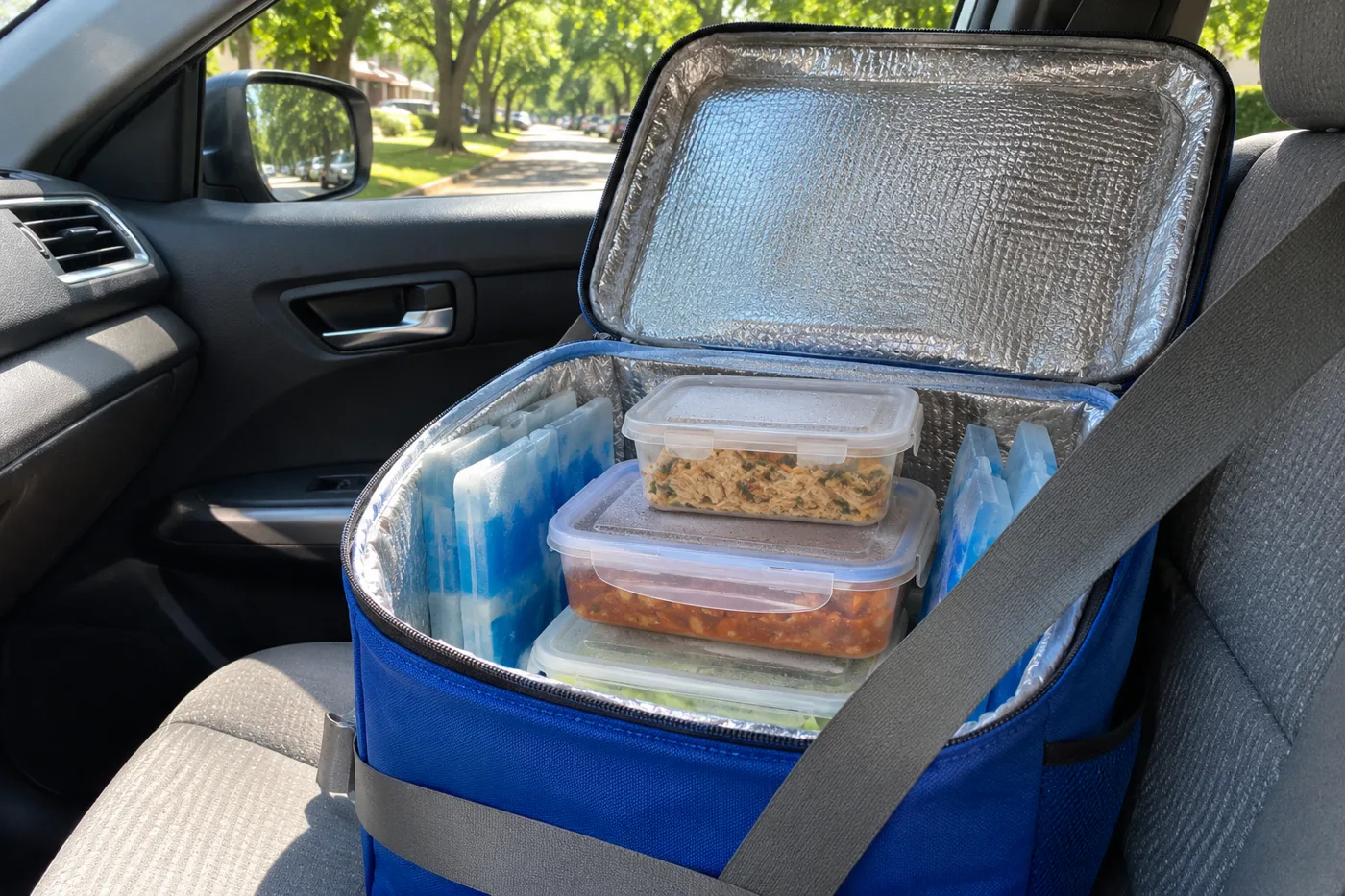
Pack the cooler before you pack the car. On a long drive, the 2-hour limit still applies, and it drops to 1 hour if the food sits somewhere hotter than 90°F, like a hot car.
Clemson’s travel advice is simple:
- Use a cooler packed with plenty of ice or gel packs, enough to keep food at 40°F or below.
- Ride it in the passenger section, not the trunk.
- Swap in fresh ice as soon as it starts melting.
- If the ice is gone and the meat or poultry feels warm, throw it out.
How much this matters depends on where you’re driving. The National Weather Service warns that the temperature inside a vehicle can rise 20 degrees in as little as 10 minutes, and 50 degrees in an hour. That figure comes from its hot-car warnings about a parked car in warm weather, so it fits a warm-weather Thanksgiving better than a snowy one. Still, a sunny parking lot at a rest stop is not a refrigerator anywhere.
Some replies to that Reddit post at #7 suggested a cooler with freezer packs and reheating well. If you’re hosting, a bag of ice by the front door makes a handy send-off for anyone with a long drive.
#5 Waiting until Sunday to freeze
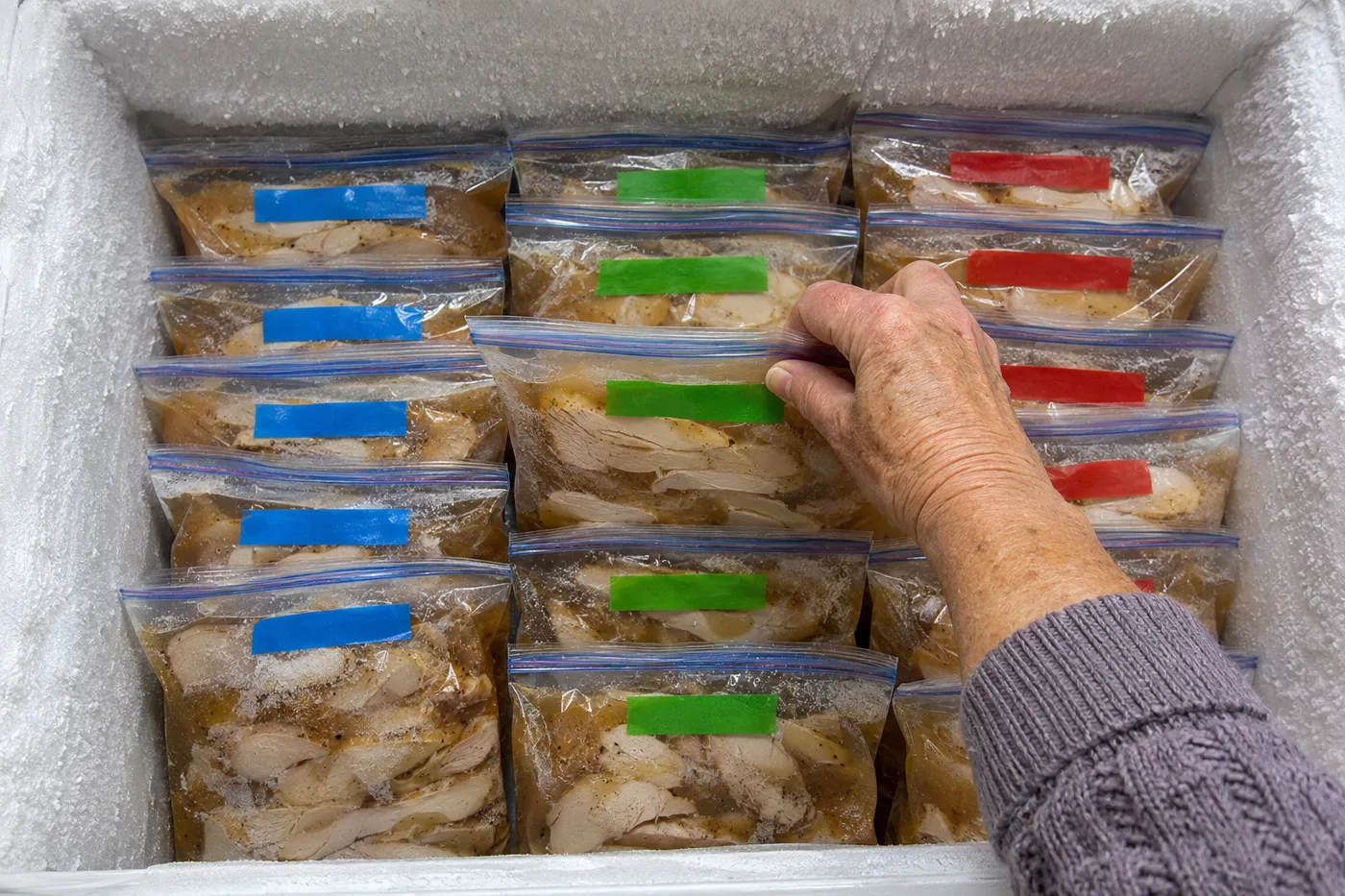
When does the freezer decision get made at your house? If it’s Sunday, the gravy and stuffing have already run out of days, and the turkey has a day or so left.
Make the call on Friday. Go dish by dish and decide what really gets eaten by Sunday, and what goes into the freezer now while it’s at its best. Commenters on TikTok and Reddit go even earlier: freeze it Thursday night, and one says their family freezes the dressing right away. Others pack lunch-sized portions.
Here’s the part that takes the pressure off. Nebraska Extension says leftovers keep frozen for 2 to 6 months, but those numbers are about taste and texture, not safety. Food kept at 0°F or below stays safe, as Iowa State’s AnswerLine points out.
Thursday to Monday at a glance
- Thursday dinner is day zero.
- Gravy and stuffing: eat or freeze by Saturday.
- Turkey, potatoes and pie: eat or freeze by Sunday night, Monday at the latest.
- Frozen turkey: best within about 4 months, or about 6 if it’s covered in broth or gravy, according to UNH Extension.
#4 Freezing everything, even what won’t thaw well
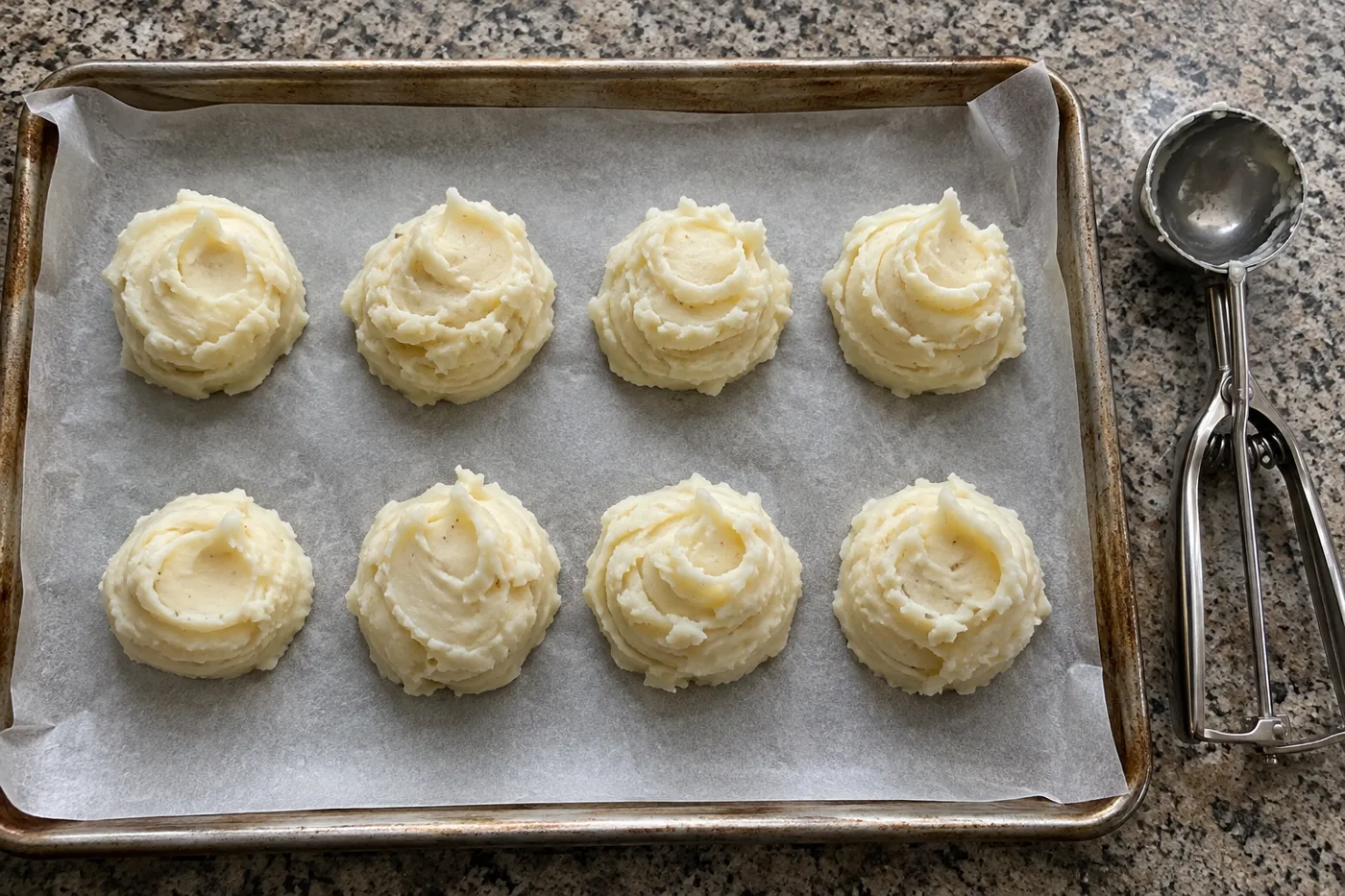
Turkey, mashed potatoes, cranberry sauce and fruit pie come back from the freezer just fine. Cream pie, cream gravy, green bean casserole and dressed salad come back as something you won’t want to serve.
Before you freeze leftovers, check the dish against this:
| Dish | Freeze it? | What to expect |
|---|---|---|
| Turkey | Yes | Good for months |
| Mashed potatoes | Yes | Freeze in 1-cup portions |
| Cranberry sauce | Yes | Take it out of the can first |
| Fruit pie | Yes | Up to 4 months |
| Stuffing | With care | Reheat in the oven to re-crisp |
| Flour-based gravy | With care | Up to 2 months; may separate |
| Pumpkin or pecan pie | If you must | Soggy crust, may separate |
| Cream or custard pie | Skip | Watery and lumpy |
| Cream-based gravy | Skip | May curdle |
| Green bean casserole | Skip | Mushy beans |
| Dressed salad | Skip | Limp and waterlogged |
The table draws on America’s Test Kitchen, Iowa State’s pie guide, Mississippi State Extension and the National Center for Home Food Preservation.
The surprise is the potatoes. Baked or boiled potato chunks come out of the freezer, in the National Center’s words, “soft, crumbly, water-logged, mealy.” Mashed potatoes hold up. So if you made both, the chunks are the ones to eat this weekend, and the mashed ones go in the freezer, scooped into 1-cup mounds on parchment the way America’s Test Kitchen does it.
And that jiggly log of cranberry sauce with the ridges from the can? America’s Test Kitchen is firm: “Don’t freeze it in the can.”
#3 Leaving the pumpkin pie out overnight
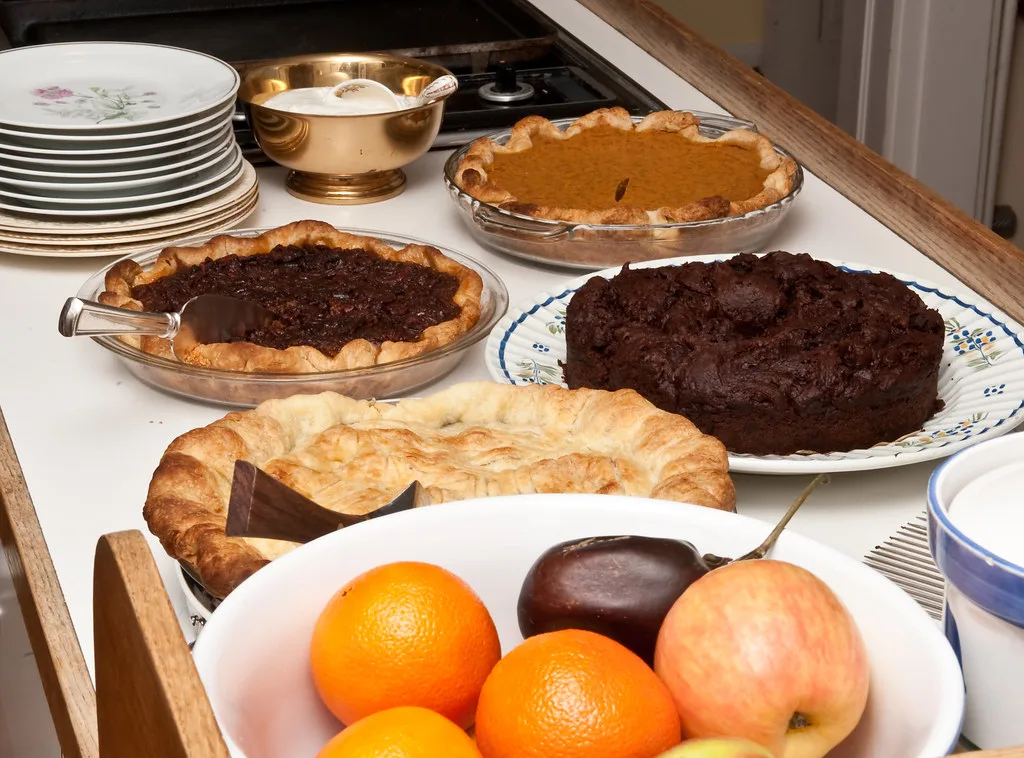
Midnight, and the dessert lineup is still on the sideboard under a dish towel: apple, pumpkin, pecan. Only one of them gets to stay out.
It’s the apple. Iowa State’s AnswerLine says fruit pies made with sugar are “food-safe at room temperature for up to two days,” then can go up to two more days in the fridge.
The pumpkin needs the fridge within two hours. So do custard and cream pies, and pecan pie made with eggs. Beth Reames, a nutritionist with the LSU AgCenter, groups them together: refrigerate within two hours of preparation, and don’t leave them out more than two hours while serving. Under all that sugar and crunch, pecan pie made with eggs is an egg pie.
Once they’re chilled, pumpkin and pecan keep up to four days, per Iowa State.
Store-bought pumpkin pie is its own case. Reames says those can sit at room temperature on display but should go in the fridge once you cut them, and she adds: “Check the label on commercially baked pies for storage requirements.” Iowa State’s AnswerLine adds that bakery pumpkin and pecan pies made with fresh ingredients need the fridge like homemade ones. Only commercially made pies sold unrefrigerated, with preservatives, can sit out, so the label decides.
Did you know?
Egg- and milk-based pies, pumpkin and custard among them, should be baked to at least 160 degrees, according to Reames at the LSU AgCenter, so the pie that needs the fridge afterward needs real heat first.
#2 Waiting for hot food to cool before refrigerating
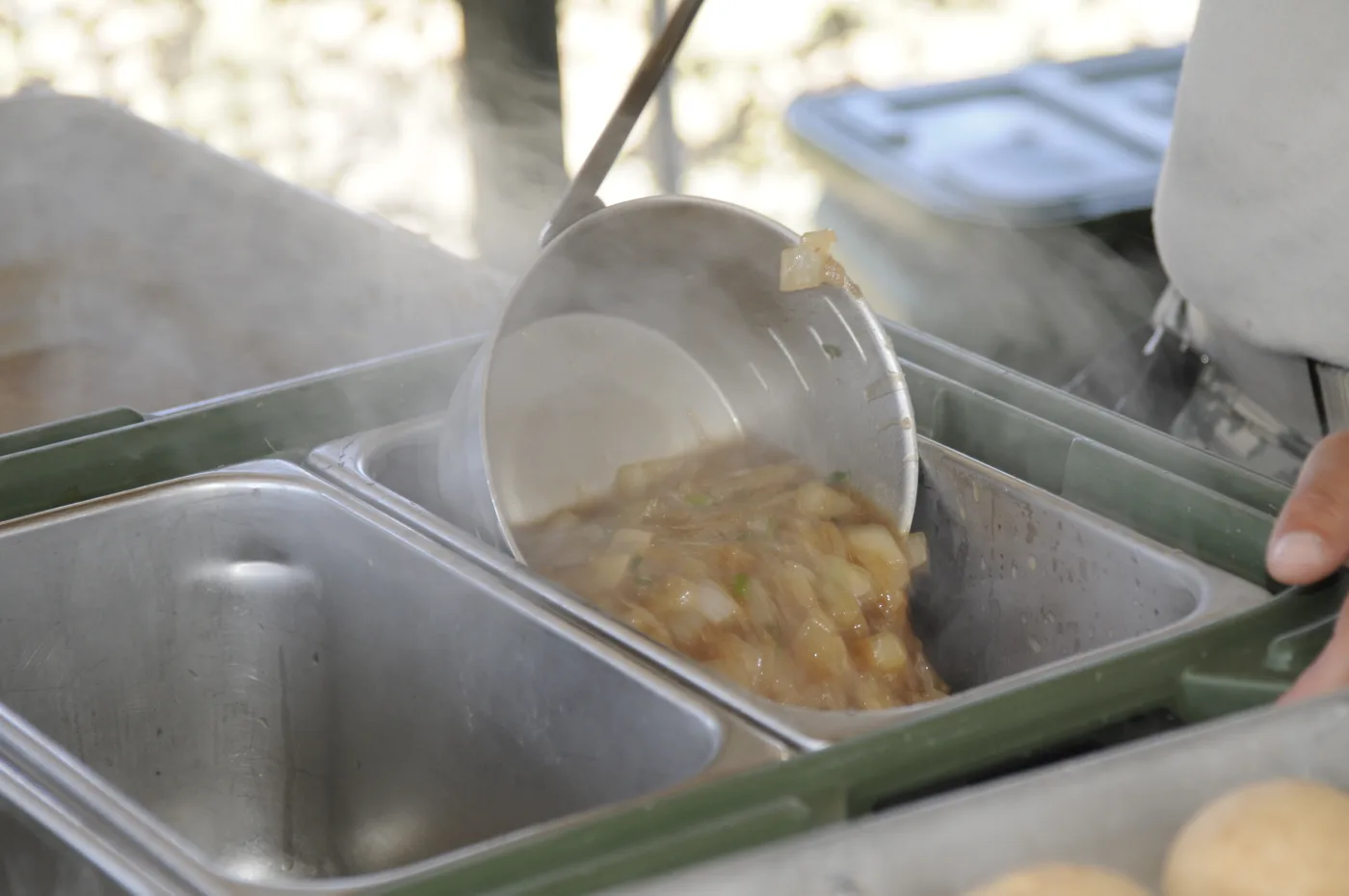
If you grew up watching a pot of turkey soup sit on the back of the stove until bedtime, cooling before it was allowed near the refrigerator, you learned a habit worth dropping.
Washington State’s health department lists “You shouldn’t put hot foods in the refrigerator” as a food safety myth. Waiting just keeps the food longer between 40°F and 140°F, the danger zone.
What matters is how deep the food sits, not how hot it is. The method:
- Divide big batches into small, shallow containers. Clemson says liquids should sit no more than 2 inches deep. Nebraska Extension says food in each pan or storage container needs to be 3 inches deep or less.
- Put them in the fridge right away, still hot. That’s fine.
- Never slide a big stockpot in whole. Clemson’s warning is blunt: it will take too long to cool down.
#1 Packing take-home plates after the food sat all afternoon
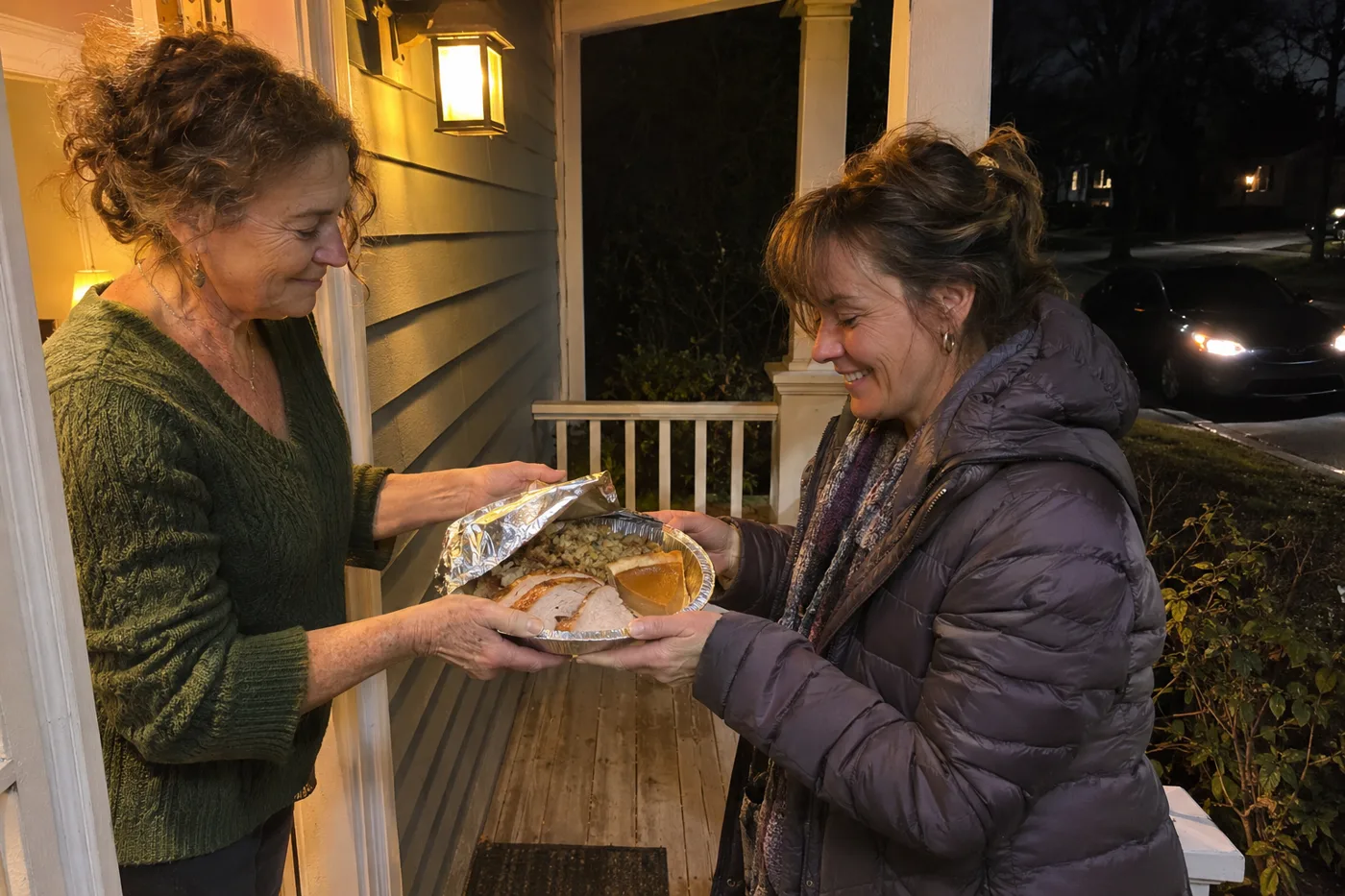
It’s eight o’clock. Coats are on, someone’s warming up the car, and you’re tearing off sheets of foil and building plates from platters that have been on the buffet since three.
“So that bird’s been sitting out cooked for hours at this point.” Dr. Jessica Kiss, family physician, on TikTok
The CDC says to refrigerate leftovers within 2 hours of cooking. The clock also starts when food comes out of anything that was keeping it hot. If the food sits somewhere hotter than 90°F, like a hot car or a picnic, the limit drops to 1 hour.
University of Florida Extension’s Brenda Marty-Jimenez names a Sterno warmer as an example of that kind of appliance, and says to throw out perishable food left at room temperature for more than two hours. Tarrant County Public Health in Texas says to refrigerate prepared foods, including desserts made with eggs, milk or cream, within two hours and to discard perishables left out longer.
Put those together and you get the part nobody mentions at the door. A take-home plate’s clock started when the food left the oven, not when you filled the foil. Turkey out of the oven at 2:30 and dinner at 3 means the bird needed to be in the fridge by 4:30. By eight, it’s long past that, and the car ride home still lies ahead.
Guests notice, too. Under a take-home-plate video on TikTok, commenters point out how long the food has been sitting by the time anyone offers it.
The fix is to move the packing up:
- Pack plates right after the first round of helpings, while everything is fresh, and keep them in the fridge until goodbyes.
- Set up a packing station early. A host who has cooked Thanksgiving and Christmas for 60-plus people wrote on Reddit’s r/thanksgiving: “Before we cleaned up dinner I would put out take out containers, masking tape and markers for people to load up what they wanted.”
- Ask guests to bring their own tubs. Commenters on that same Reddit thread and on TikTok suggest guests bring a food-storage container, and say meal-prep containers beat the little divided trays.
- For a table that grazes all evening, put out smaller platters and refill them from the fridge, so nothing sits for hours.
Then the foil plate that leaves at eight o’clock has been cold since five, and the bird that went in the fridge by 4:30 is still good for Sunday’s sandwich.
Keep reading
 26 Christmas Cookies From the 1960s That Nobody Bakes AnymoreSee all 26 →
More you’ll enjoy
 23 Thanksgiving Dishes From the 1970s That Faded From the Table
 17 Thanksgiving Traditions Women Over 60 Have Quietly Stopped
 22 Things You’re Saving That Your Children Will Throw Away
The bottom line
When the turkey comes out of the oven this year, glance at the clock on the stove and say the time out loud to whoever is carving. Two hours from that moment, the platter goes in the fridge, whether or not anyone is still picking at it.
It’s worth the fuss. The federal Economic Research Service’s 2010 food-loss figures work out to about 12.6 pounds of poultry per American lost at the consumer level in a year. That’s a national estimate covering every kind of poultry, all year, and it counts cooking loss along with spoiled leftovers. Still, it’s a good-sized bird.
So think about your own table. Which dish do you always make too much of, the one that’s still in the fridge on Wednesday? That’s the one to portion out and freeze on Thursday night, before anyone even asks for seconds.
Bonus: Five small moves for the freezer, the bird and the weekend
- Check that your freezer is set to 0°F or lower, and leave room around what you put in so the cold air can circulate, as Iowa State’s AnswerLine recommends.
- Thaw frozen leftovers in the fridge. Nebraska Extension says it’s slower but the leftovers stay safe the whole time, and if you thaw in the microwave, keep right on heating to 165°F.
- Thaw frozen turkey stock in the fridge or straight in the pot as it heats, never on the counter, as Penn State Extension advises.
- Spoon the stuffing out of the bird into its own dish before you carve, as Illinois Extension recommends, so it isn’t left sitting inside the carcass.
- Next year, size the bird to the table. N.C. Cooperative Extension agent Julie Sawyer passes along the National Turkey Federation’s guide of ¾ to 1 pound of uncooked turkey per person, and says to buy more only if you want leftovers.
Questions people also ask
How long are Thanksgiving leftovers good for in the fridge?
Cooked turkey and dishes made with it keep 3 to 4 days in the fridge, according to the CDC. Stuffing and gravy are shorter: Illinois Extension says to use stuffing within 1 to 2 days, and Clemson gives gravy the same 1 to 2 days. Anything you won’t eat in that time should go in the freezer.
What is the 2 2 2 food rule?
It’s a cautious rule from New Zealand’s Love Food Hate Waste program: get leftovers in the fridge within 2 hours, eat them within 2 days or freeze them, and keep them frozen up to 2 months for best quality. It isn’t a US government rule. US guidance, like the CDC’s, allows 3 to 4 days in the fridge for cooked turkey.
Can you freeze stuffing, mashed potatoes and gravy?
Yes, with limits. America’s Test Kitchen rates mashed potatoes as freezing well and stuffing as acceptable, and says flour-based gravy freezes up to two months while cream-based gravy doesn’t freeze well. Mississippi State Extension notes that even flour-thickened gravy can separate.
Is it safe to eat leftovers that sat out overnight?
No. Food left out more than 2 hours should be thrown out, says Washington State’s health department, because some bacteria make toxins that cooking heat doesn’t destroy. Reheating it the next morning won’t make it safe.
Does pumpkin pie need to be refrigerated?
Yes, homemade pumpkin pie needs to go in the fridge within two hours of preparation, says LSU AgCenter nutritionist Beth Reames. Commercially made pumpkin pies sold unrefrigerated, with preservatives, can sit out until they’re cut, so check the label. Bakery pies made with fresh ingredients need the fridge. Among homemade pies, only fruit pies made with sugar can stay on the counter, for up to two days, per Iowa State.
Can you reheat leftovers more than once?
It’s best to reheat leftovers only once, says the Eat Smart, Move More, Weigh Less program. Take out just the portion you’ll eat, heat it to 165°F, and leave the rest of the container cold. If a reheated portion does go back in the fridge, get it there within 2 hours.
Related posts:
30+ Cozy Winter Soup Recipes To Keep You Warm In
Holiday Magic in 25+ Scandinavian Christmas Recipes
Autumn Appetites: 20+ Keto Appetizers for Fall
15 Gadgets and Dishes From Mom's 1970s Kitchen (One May Still Be in Your Cabinet)
DIY Flavor Hacks to Elevate Your Everyday Meals
30+ Best International Christmas Sweets Recipes To Savor

- 16 Leftover Habits That Quietly Spoil Your Thanksgiving Turkey, Gravy and Pie - November 25, 2026
- A Weekend Plan for a Cooler Patio Deck or Porch - November 25, 2026
- Rent or Buy a Pressure Washer? A Homeowner’s Guide to Big Home Tools - November 25, 2026