Save room for #1. By the time the wig craze peaked, a startling share of American women owned more than one of them.
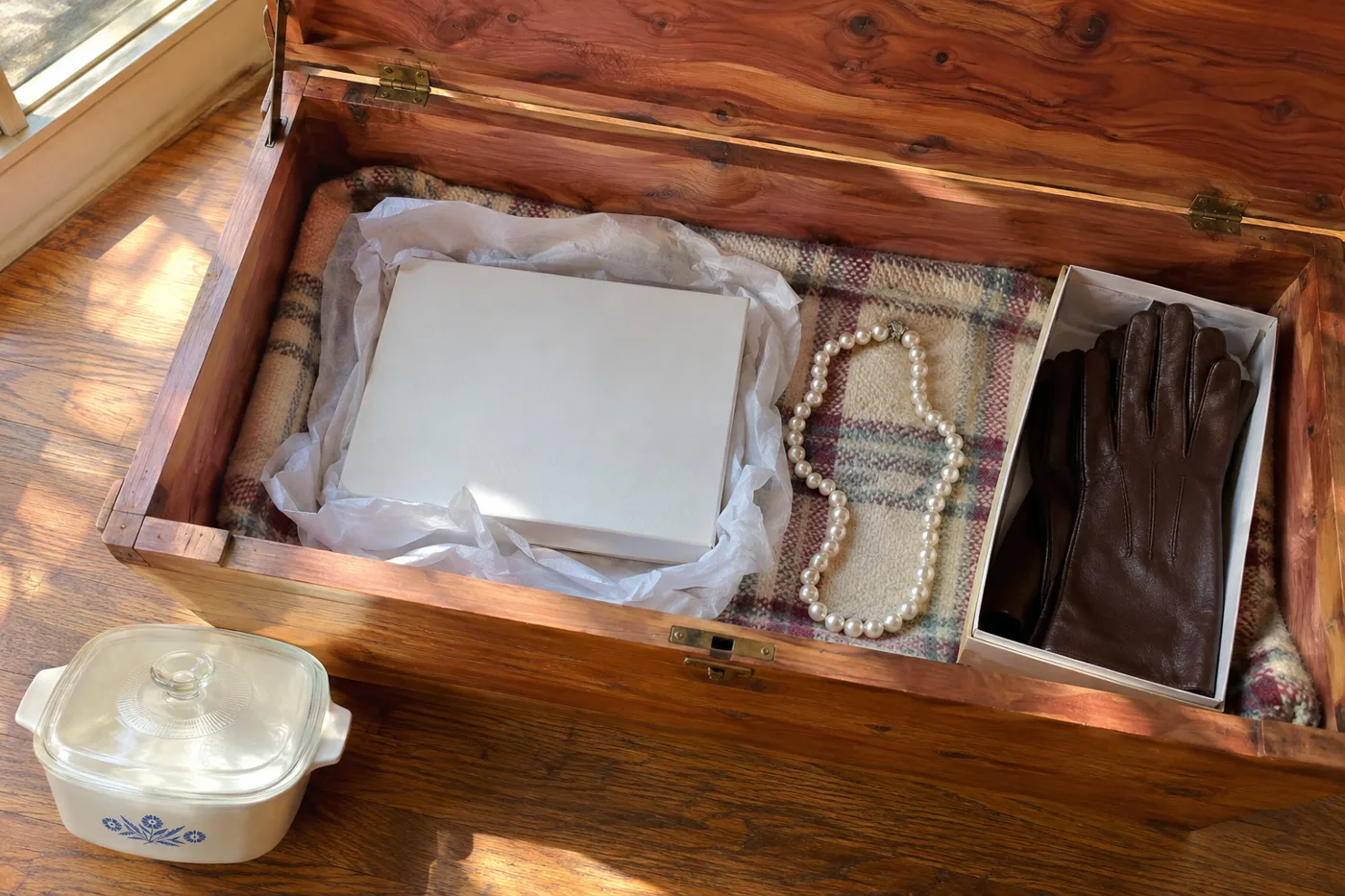
Lift the lid of a cedar chest and the smell reaches you before anything else does. Under the folded baby blanket sits a flat white box, its tissue paper gone soft as an old flannel shirt. Inside is something a grown woman unwrapped about sixty years ago. Most lists of 1960s Christmas gifts for women head straight for the toy aisle. That box never came from there. It came with a tag that said To Mother, or To Sis, or just her name.
#17 Boxed embroidered handkerchiefs from an aunt
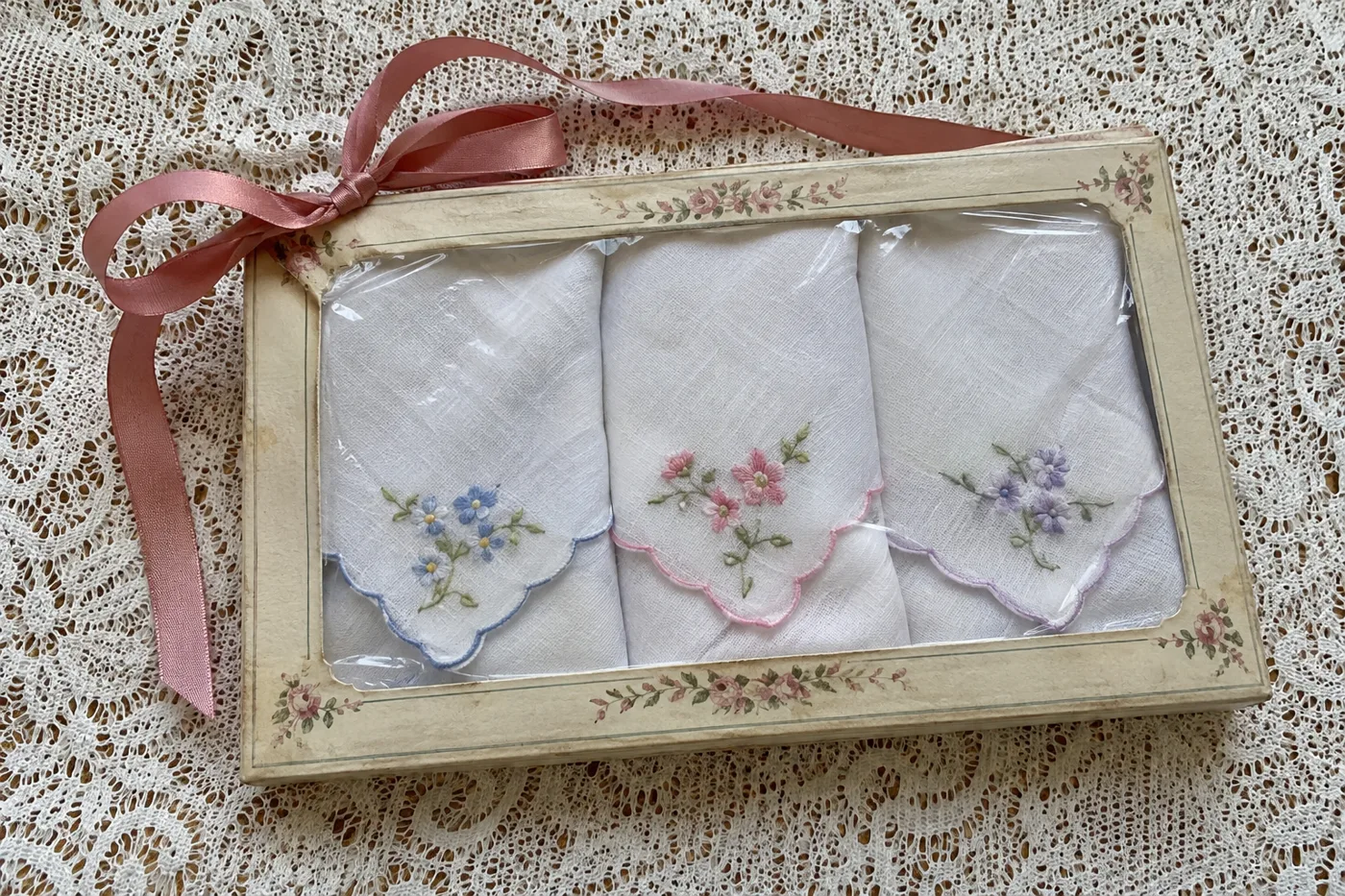
You know the box: three folded squares under a cellophane window, each with a little flower stitched in one corner. It was the gift an aunt could pick up in five minutes that nobody could ever call thoughtless.
The hankie was already losing, though. Kleenex didn’t even start out as a handkerchief replacement. Kimberly-Clark first sold it in 1924 for wiping off cold cream.
In the 1930s the company went after cloth. Its ads cast fabric hankies as damp and disgusting and claimed tissues cost less than laundering them.
It had help from a doctor. Back in 1912, a Dallas physician published research showing handkerchiefs carried germs, including tuberculosis bacteria. After that, a soggy square of cotton in your purse was a harder sell.
The gift box kept coming every Christmas anyway, and a lot of those hankies stayed folded exactly as they arrived. Back in the early 1900s, brides-to-be were thrown whole “handkerchief showers.” By the 1960s, a hankie was mostly something you gave.
#16 Nylon stockings in a flat gift box
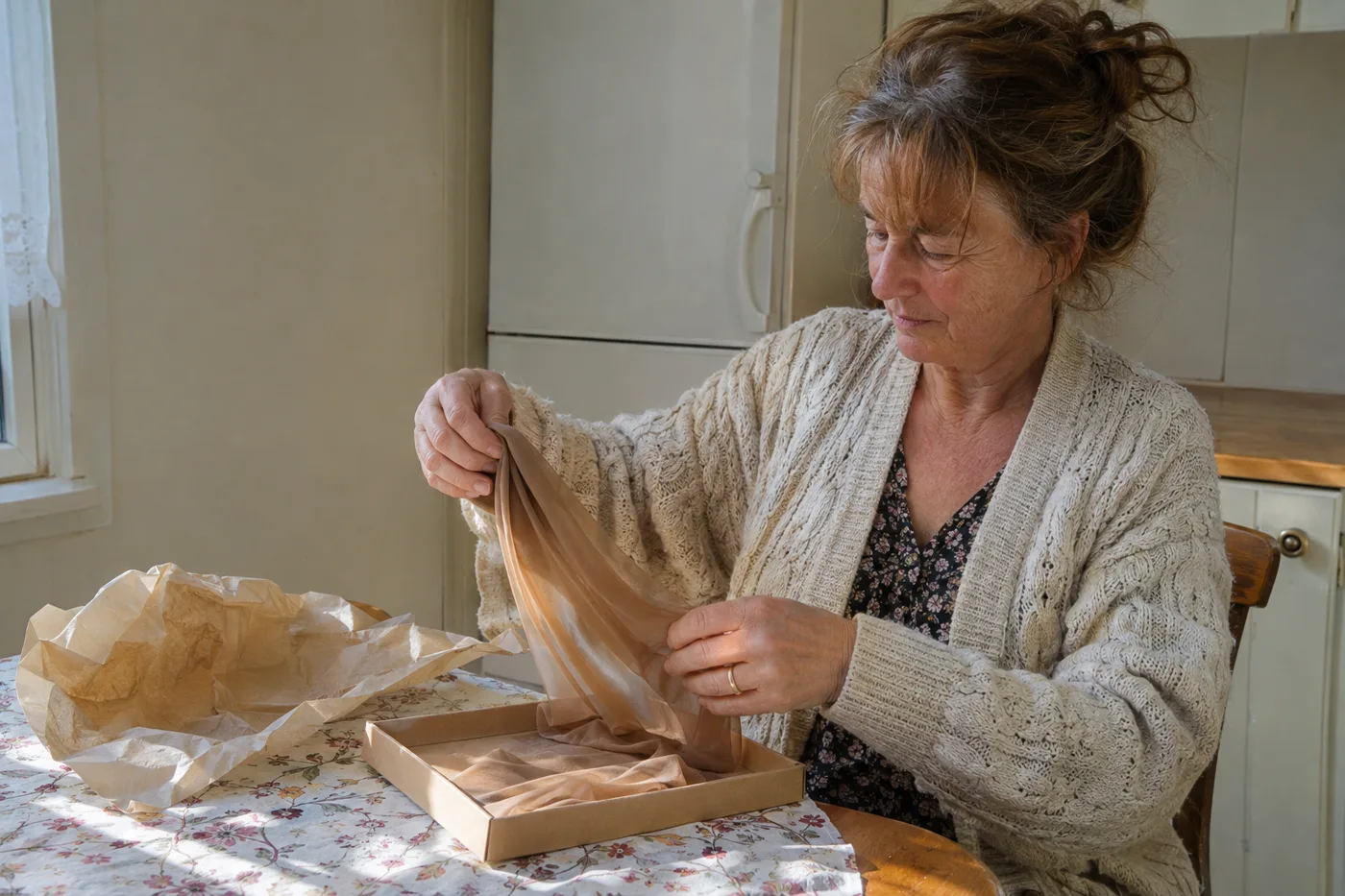
You could tell this one before the paper came off. Stockings came in a thin, flat box, each pair folded around a sheet of cardboard so it wouldn’t snag.
They weren’t cheap. In 1965 newspaper ads gathered by the Norwood Historical Society, a pair of Berkshire stockings ran $1.35 to $1.65 at regular price, about $14 to $18 in today’s money. A three-pair box cost $3.19 to $3.79, or about $34 to $41. That’s a real present.
The thing that ended this gift had been dreamed up years earlier, and not by an engineer. Glen Raven’s own company history says “the wife of Glen Raven’s President proposed a pair of stockings that were one piece, like a pair of pants.”
Allen Gant Sr. developed the result, called Panti-Legs, in 1953, and it reached the open market around 1959. Then hemlines shot up with the miniskirt, and a garter belt simply couldn’t keep up.
In 1970, pantyhose outsold stockings in the US for the first time, according to the history of pantyhose. The flat stocking box slid to the bottom of the gift pile and never really climbed back.
What an old dollar is worth today
- $1 in 1960 is about $11.40
- $1 in 1963 is about $11.03
- $1 in 1965 is about $10.71
- $1 in 1970 is about $8.70 (see the 1960 conversion)
#15 The electric percolator bubbling on Christmas morning
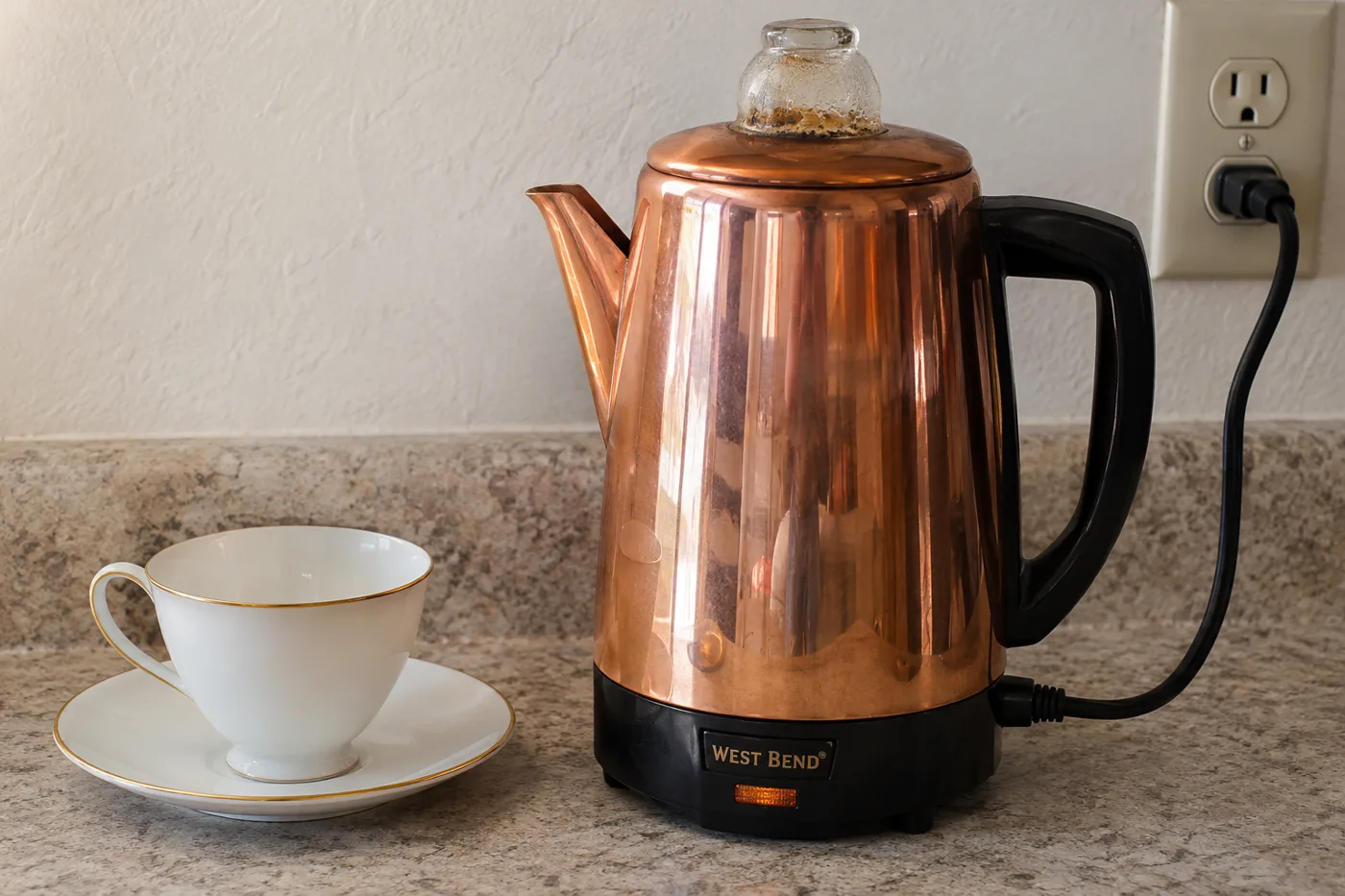
You heard it before you smelled it. First a gulp, then a steady blip, blip as coffee jumped into the little glass knob on the lid. On Christmas morning it meant somebody was already up.
West Bend’s Flavo-Perk went electric in 1949, and a year later it turned fully automatic as the Flavo-matic. In 1951 it cost $13.95 and came in pink, blue or copper. Pink coffee pots. It was a different world.
Presto pushed further in 1958 with what it called “the world’s first automatic, submersible stainless steel coffee maker.” In plain words: you could dunk the whole thing in the dishwater. For labor-saving kitchen appliances, that was a real selling point.
So why did that wonderful sound disappear? All that boiling. Even the history of Mr. Coffee admits percolators often made “bitter and burned tasting coffee.”
Mr. Coffee’s drip machine came out in 1972. Joe DiMaggio became its spokesman in 1973, and by April 1974 it had sold more than a million units.
Hang on to that DiMaggio name for a minute.
#14 A cultured pearl necklace, the big gift
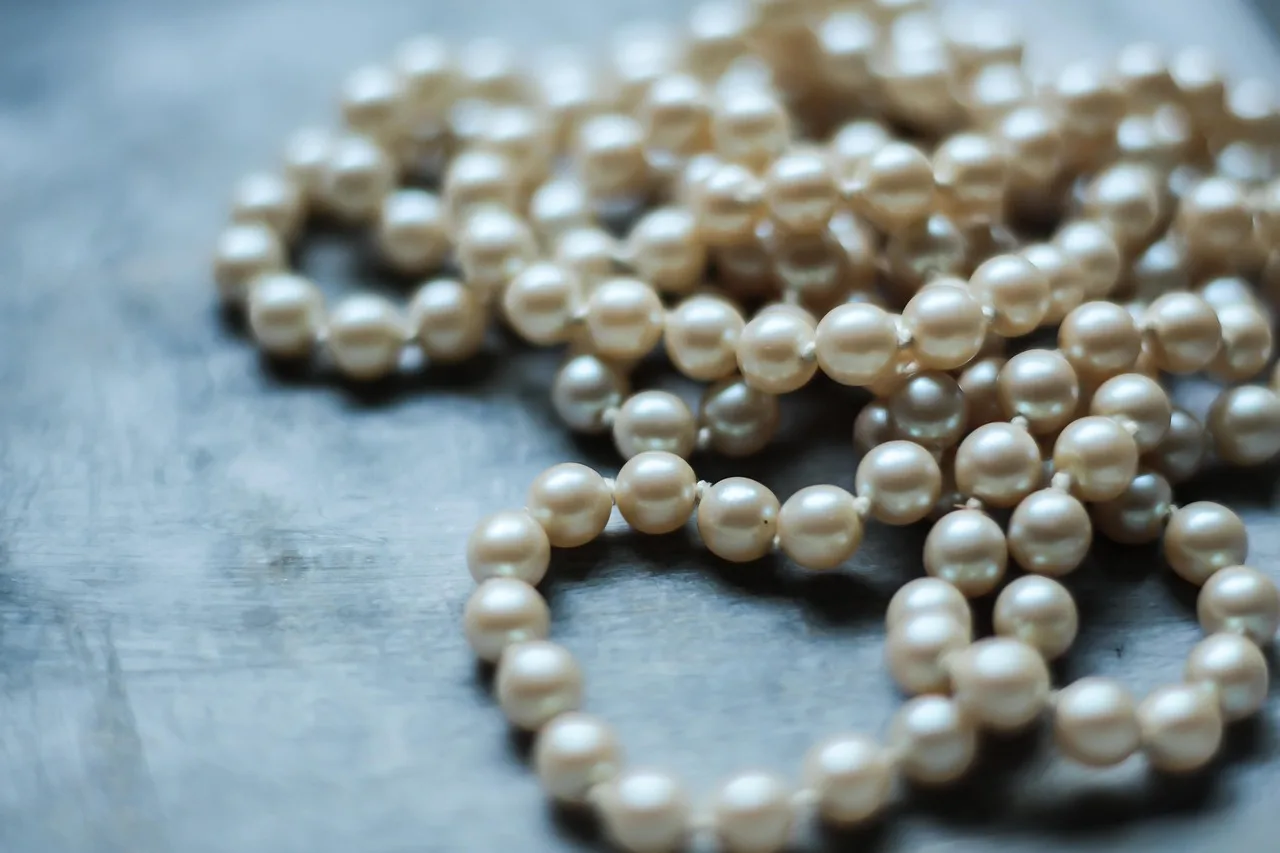
This one came in a long, narrow box. A strand of cultured pearls, meaning farmed rather than found, was the gift that said somebody had been saving up.
Mikimoto patented his method for growing them in 1908, and round cultured pearls first went on sale in 1921. Faster harvests put them within reach of ordinary buyers.
Then came the famous strand. In 1954 Joe DiMaggio gave Marilyn Monroe a Mikimoto necklace as a honeymoon gift, and demand for Japanese pearls took off. By 1962 one American pearl dealer was running an ad that said, simply, “We’re overwhelmed.”
Got a strand and wondering if it’s real? Rub one pearl lightly along the edge of your front teeth. Real pearls “often feel slightly gritty,” while many smooth glass or coated fakes feel slicker.
Treat it as a first guess. The same page, citing a study from the gem lab GIA, warns that “a fake can pass the test just as easily as a genuine pearl can fail it.” If the gritty feel has you hopeful, a jeweler can give you a real answer.
#13 Leather gloves in a gift box
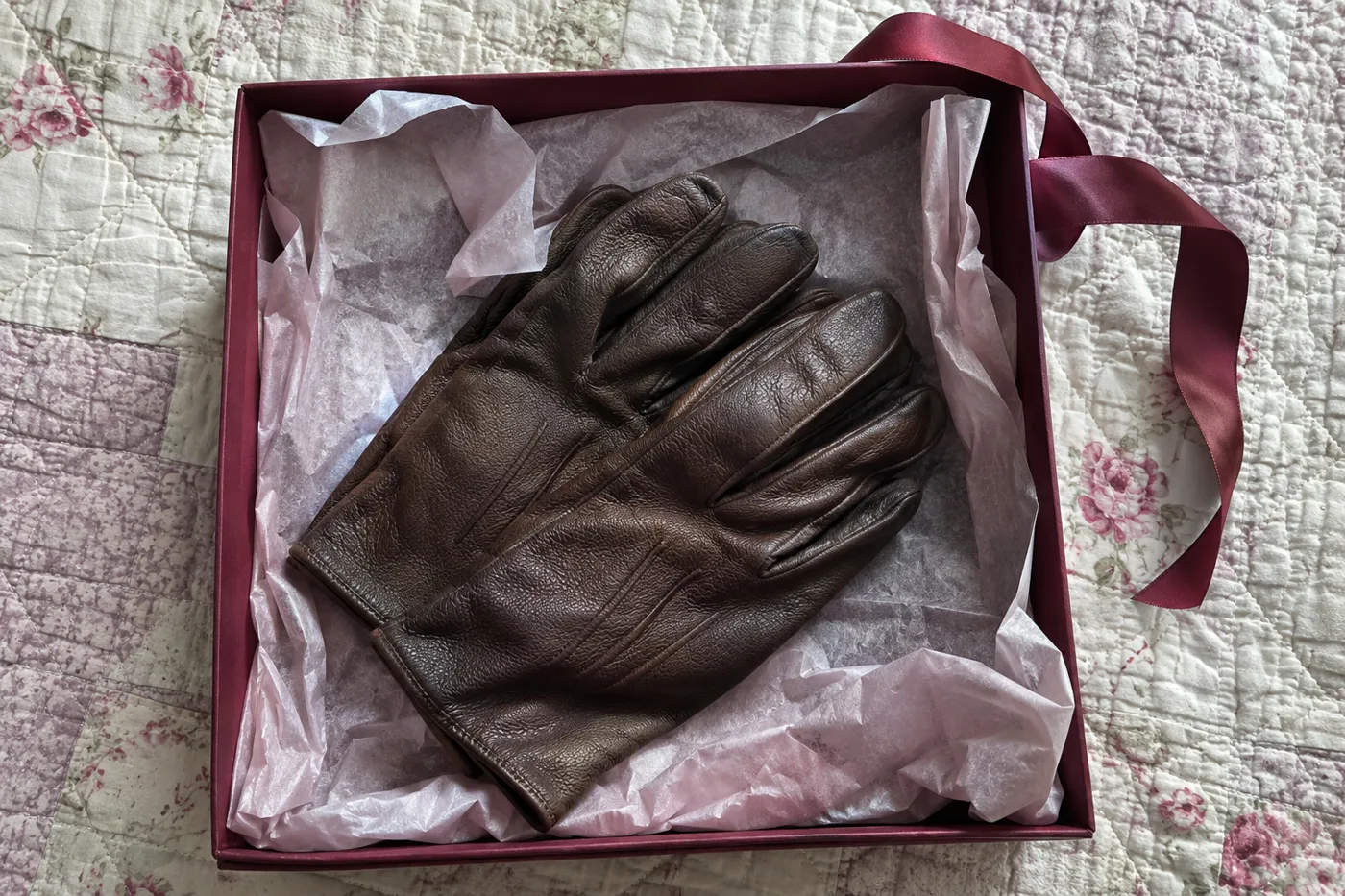
Gloves were the safe present that also had a job. Church, a wedding, a trip downtown: a lady pulled on her gloves.
Then the young stopped bothering. By the mid-1960s, the “youthquake” was tossing out the old dress codes, and gloves lost their standing. In 1969 the New York Times wrote that “gloves have been threatening to become as extinct as hats, at least with young women.”
 You might also like22 Things You’re Saving That Your Children Will Throw Away
#12 A bonnet hair dryer in a pink hatbox

The 1962 GE portable dryer came in a pink hatbox. It was styled by hat designer Sally Victor, had four heat settings, and wore an oversized bonnet cut to fit over big rollers. Click Americana’s collection of old ads shows how much glamour got packed into one appliance.
The idea wasn’t old. The home bonnet dryer only arrived in 1951, a small box that pushed warm air down a hose into a cap. By the 1960s every brand wanted in, and the names alone tell you the mood:
- Schick Petite Salon, 1962
- Lady Norelco Professional, 1964
- Lady Sunbeam Mist & Sauna, 1969
You sat under it with a magazine and the hose snaking down to the floor, and the phone could ring three times before you heard a thing. Today hood dryers live mainly in salons.
#11 A pink Princess telephone for the bedroom
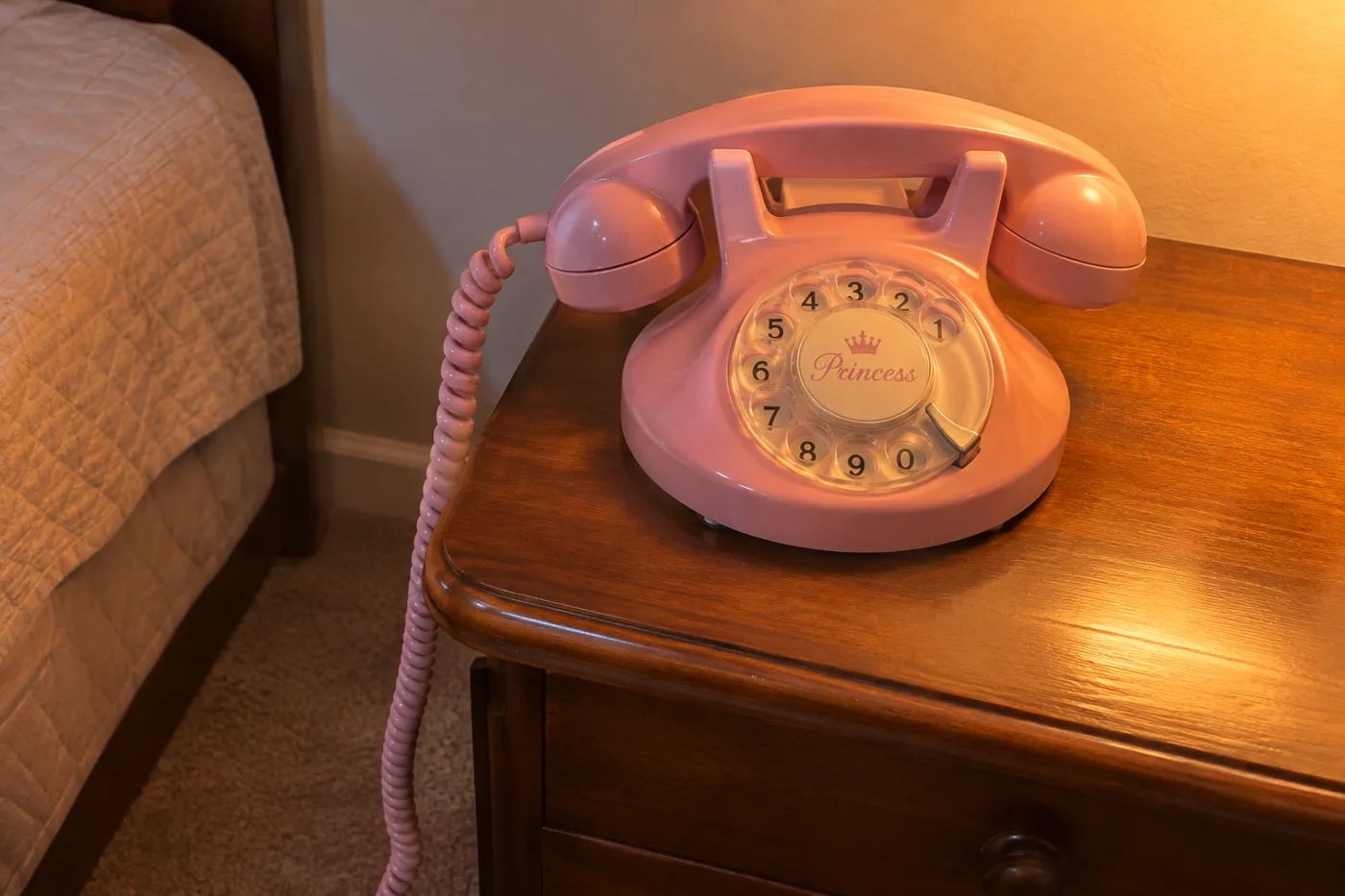
This was a gift that came with a monthly bill. Back then you didn’t own your phone. You leased it from the phone company, and the Princess cost extra every month on top of the standard black model.
Bell brought it out in 1959. Henry Dreyfuss designed it small and curvy, in white, beige, pink, blue or turquoise, and the slogan was “It’s little!…It’s lovely!…It lights!” It was pitched straight at “teenage girls and women”, for the bedroom.
To sell it, Bell’s saleswomen wore tiaras. By Christmas 1960, a Princess phone ad was running in the Saturday Evening Post as a holiday present.
The Henry Ford museum says the Princess marks “the transition of the telephone from a strictly utilitarian device to a fashionable home accessory for middle class America.” That’s a fancy way of saying a phone became something you wanted to be seen with.
You remember the cord stretched across the hall and under a closed door. Bell kept making the Princess until 1994.
If you still have an original rotary-dial Princess, it won’t work on AT&T’s current landline replacement, AT&T Phone Advanced. The plan’s own page says it excludes rotary phones.
#10 A Kodak Instamatic of her own
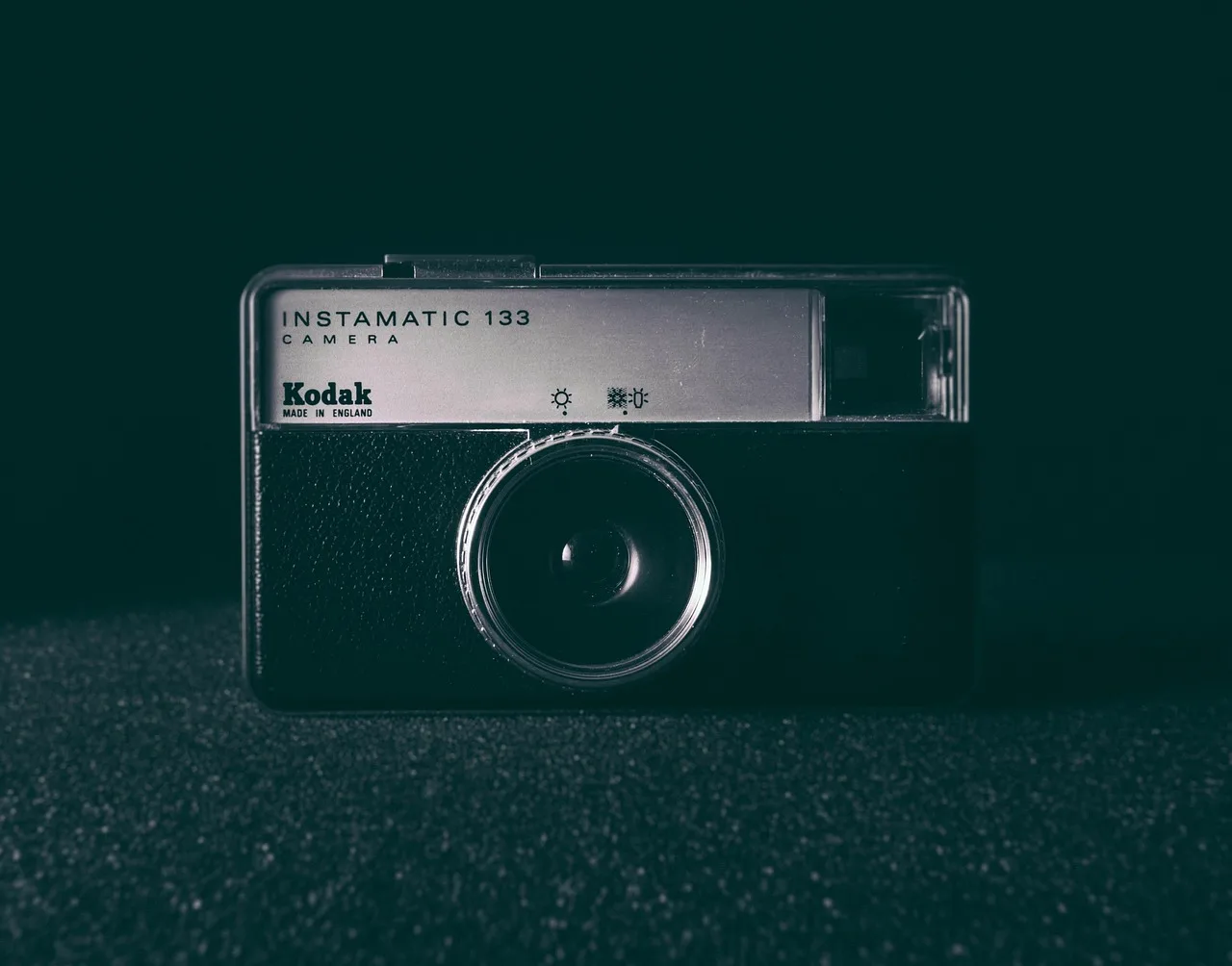
Somebody always ended up behind the camera at Christmas, and very often it was the same woman who’d also cooked the dinner. An Instamatic meant she finally had a camera that was hers.
Kodak launched it in March 1963 at $16, about $176 today. Then it went everywhere. The George Eastman Museum counts 7.5 million sold in the first two years, and more than 50 million worldwide by 1970.
Flashcubes came along in 1965, the little four-sided cube that turned after every shot and left the whole room blinking at blue spots. Battery-free Magicubes followed in 1970.
So if it seems like every family’s holiday snapshots from those years look the same, there’s a reason. They were taken on the same camera, in millions of living rooms at once.
#9 Blue Cornflower CorningWare casserole
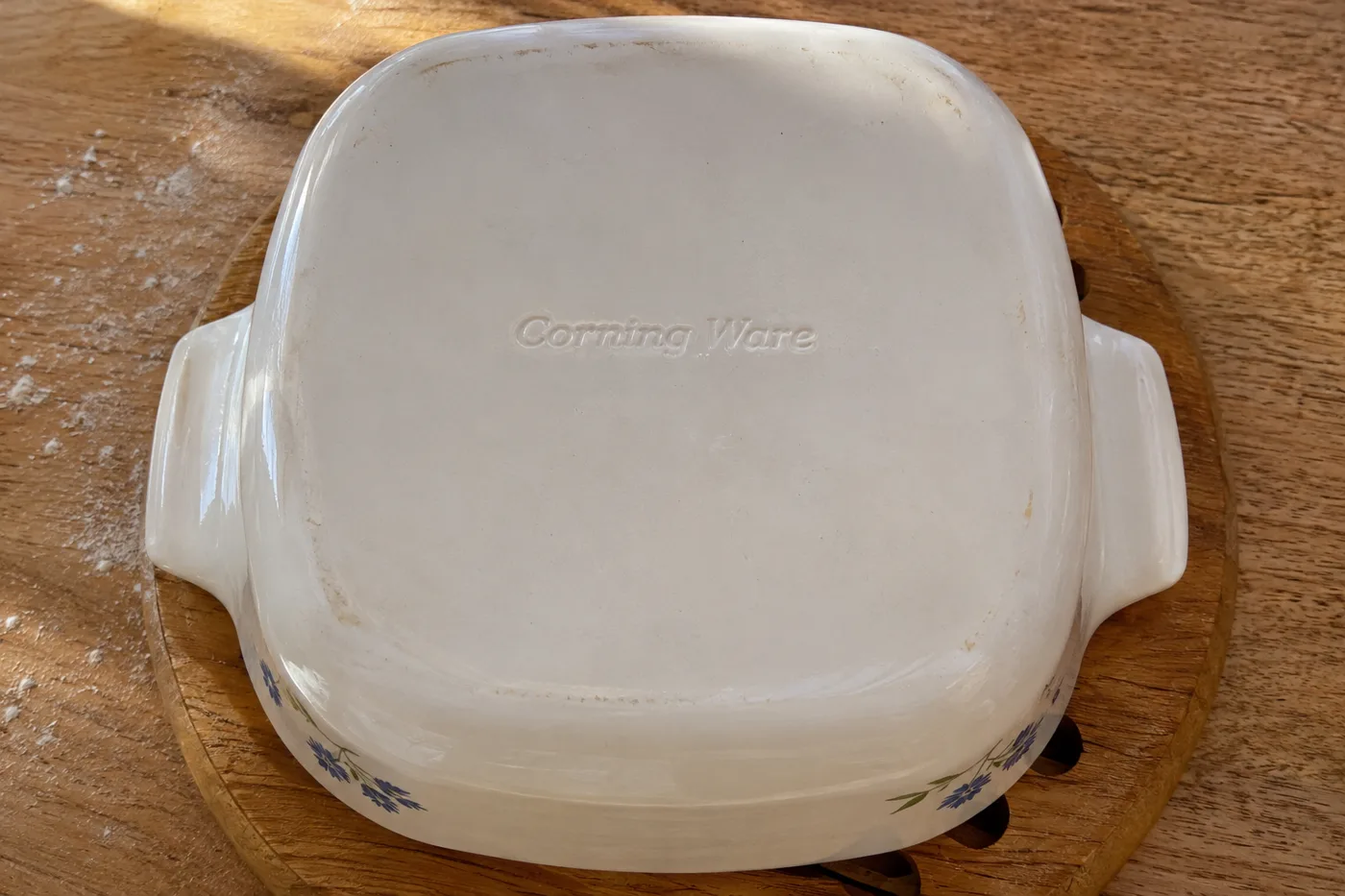
The white dish with the little blue flowers was in stores by November 1958, just in time for Christmas. The first set was “a skillet, three sauce pans and four covers.”
It was made of Pyroceram, a tough, heat-proof material that Corning scientist S. Donald Stookey stumbled on by accident in 1953. The cornflower replaced an earlier wheat design and stayed Corning’s trademark look for about 30 years.
Want to know if yours is the real vintage kind? Flip it over and read the stamp:
- “Corning Ware,” two words: made before 1998, true Pyroceram
- “Corningware,” one word: made from 1998 to 2008, and it’s stoneware, a different material
That check tells you what it’s made of, not what it’s worth. House Digest calls Blue Cornflower “an affordable secondhand item,” which is good news if you’re hoping to replace a lid and bad news if you’re hoping to sell.
#8 The electric carving knife for the turkey
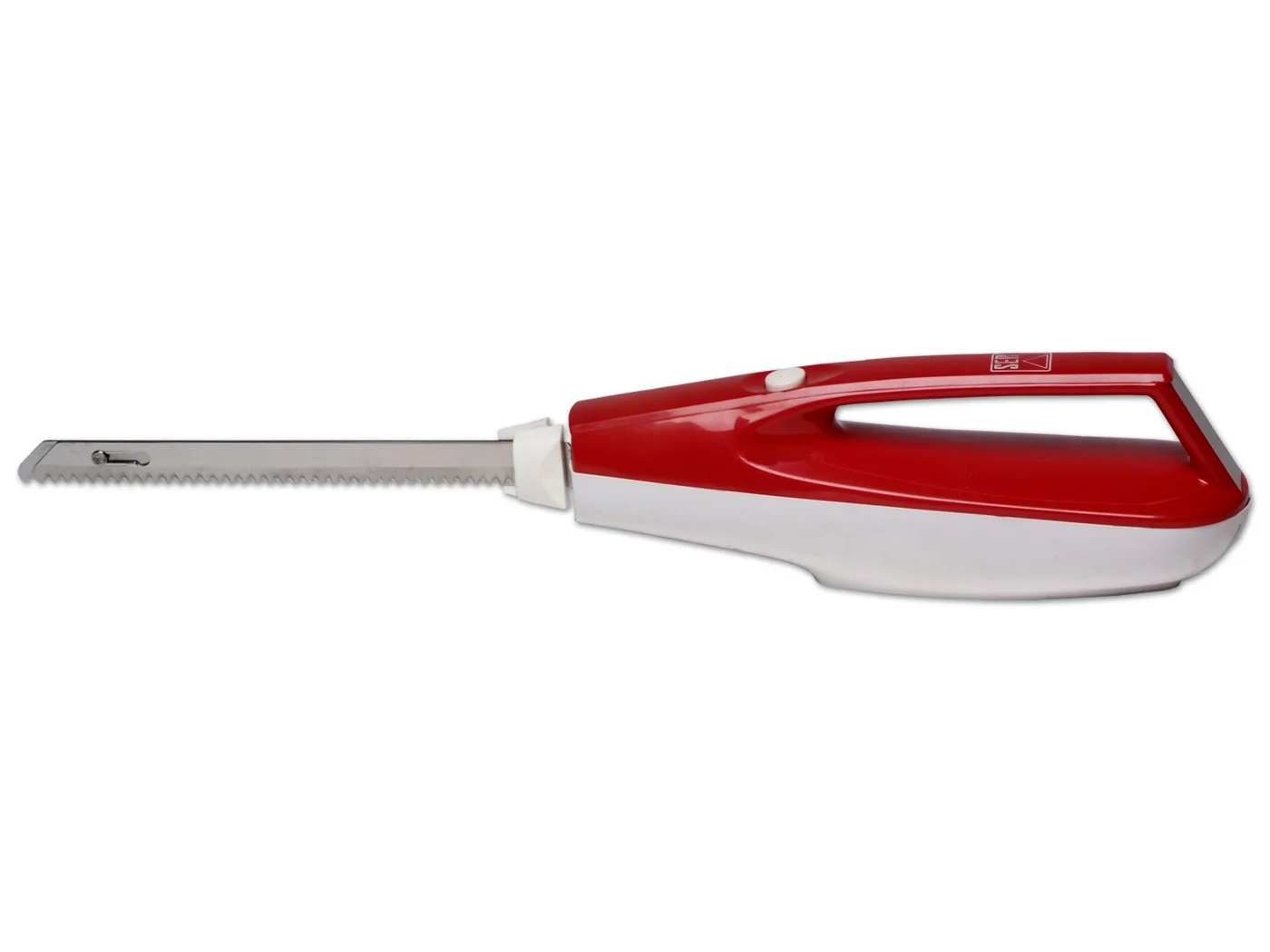
On Nov. 17, 1966, Christmas shoppers in the basement of Macy’s in New York stopped to watch “Roberta the robot” slice away with an electric carving knife. Roberta was not actually a robot.
The knife itself was brand new. Jerome L. Murray patented it in 1964, and it caught on in the late 1960s once companies like Black & Decker started making it. By 1971, one in three American families owned one.
It looked like the most labor-saving gadget of all, as long as you didn’t count the cleanup. The blades had to be taken apart and washed after every single use.
That buzz at the head of the holiday table didn’t last. If one turns up still in its box, now you know why.
#7 A pocket transistor radio under the tree
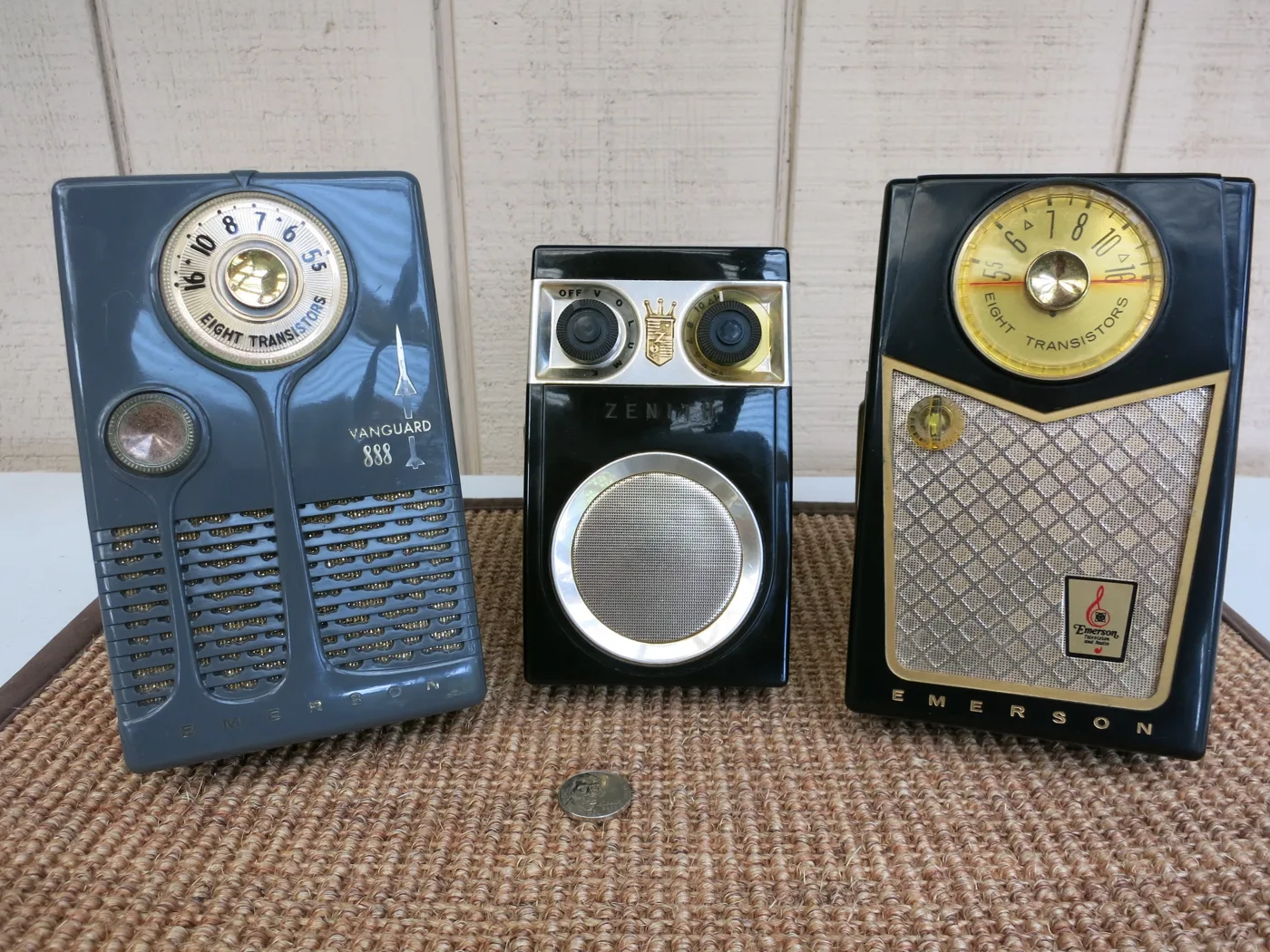
It fit in a coat pocket and played the Top 40 under the covers long after lights out. For a teenager it was freedom. For a grown woman, it was the ball game or the news while she ironed.
The first one wasn’t cheap. Texas Instruments unveiled the Regency TR-1 in October 1954 for $49.95.
Then Japanese makers moved in, and by the 1960s a transistor radio cost around $15, about $171 today. Suddenly it was a birthday present, or a Christmas one.
A Reddit post about a multi-city time-zone radio from the Sears Christmas Wish Book drew this comment:
“Wow….does that bring back memories! I had one just like it!” A commenter on Reddit’s r/60s
 You might also like19 Holiday Traditions Women Over 60 Have Quietly Stopped Doing
#6 A rhinestone brooch on the winter coat
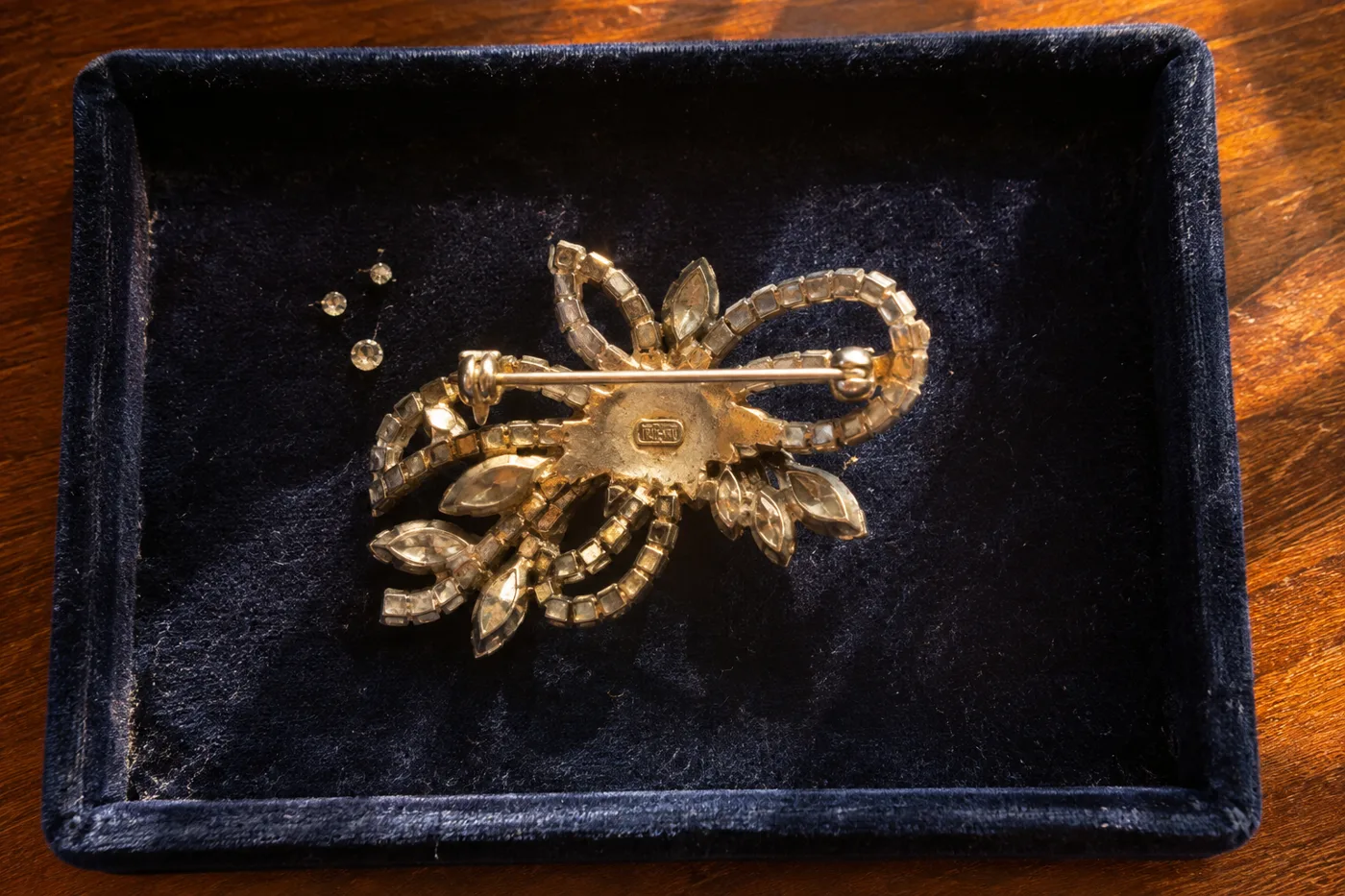
A brooch on the lapel finished a good coat. It wasn’t only for church, either. A German jeweler’s history of the brooch notes that brooches “in the 1960s… were worn in everyday professional life.”
Then, in the same history’s lovely phrase, the brooch “disappeared without a sound in grandma’s jewellery box.” Jewelers turned plenty of them into earrings.
If one’s sitting in a box now, it’s probably costume jewelry. Probably. Katy Willis, writing for Wealthy Single Mommy, lays out how to spot a designer piece:
- Turn it over and look for a maker’s mark: Trifari, Coro, Weiss, Lisner, Juliana or Hattie Carnegie
- Check for sturdy hinges, safety clasps and clean soldering
- Watch for the giveaway: “Cheap brooches often use flat, obviously plastic stones that scratch easily.”
Before you call it costume
- Antiques appraiser Dr. Lori, on CBS Pittsburgh, examined a small floral pin and found it was “manufactured in silver by a fine jeweler.” If you think a piece might be sterling silver, have it looked at.
- Peter Planes, a watch appraiser on Antiques Roadshow, told one owner a watch was “worth much more because you save the box and all the paperwork for it.”
- That was a man’s watch, but the lesson carries: keep the original box and paperwork with the piece.
- A receipt tucked in the box counts as paperwork too.
#5 A mink stole over the good coat
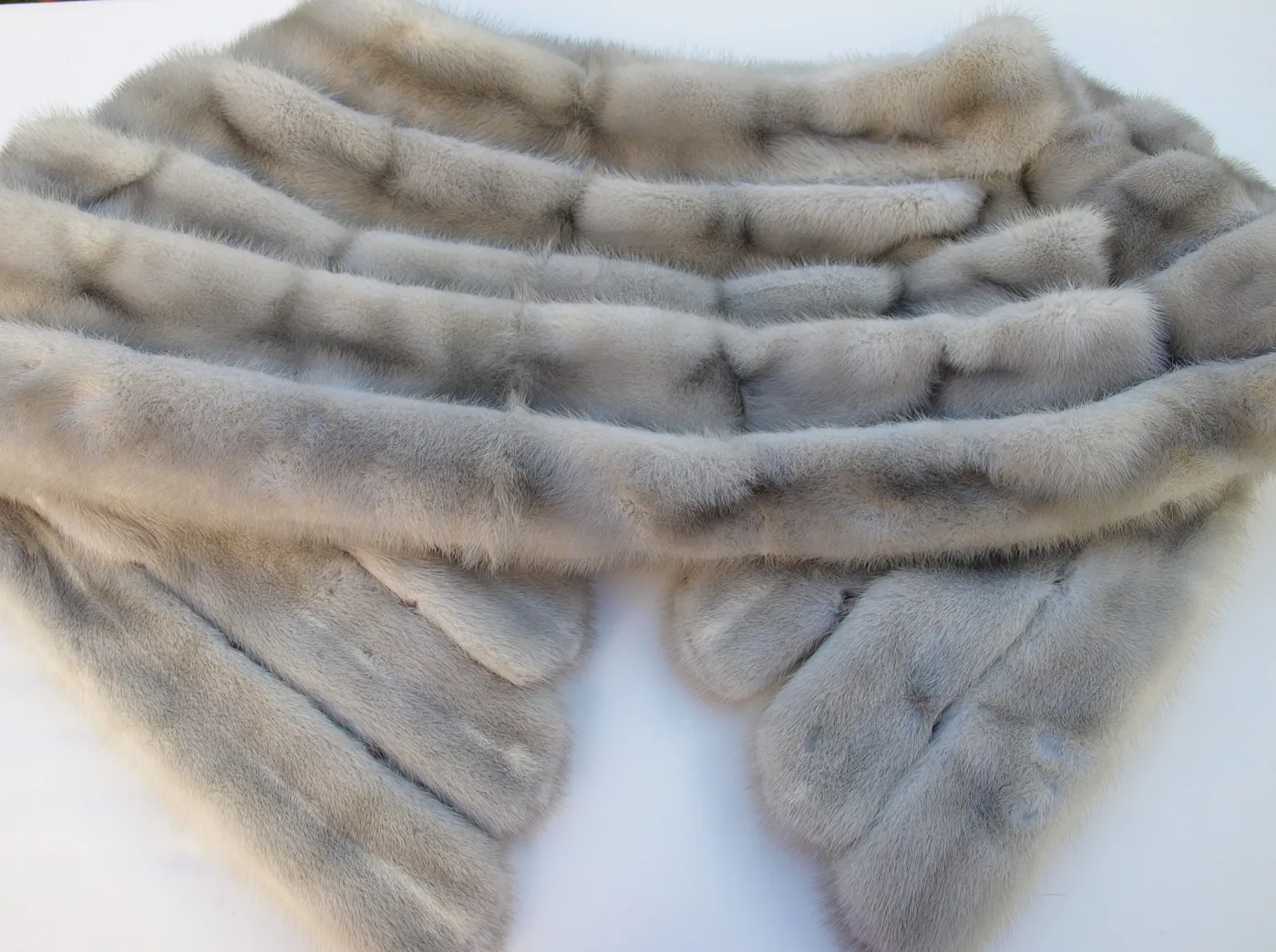
This is the one people hope will pay for a cruise. It won’t.
Across 60 recent sales of mid-century mink stoles and wraps, tracked through October 2026 by the resale-price site UnderpricedAI, the median sale price was $49.49. The middle half of sales landed between $28 and $83.
Here’s the part that trips sellers up. Those sales closed about 46% below what people were asking. So if you’re pricing a vintage stole, look at what similar ones actually sold for, not what they’re listed for.
Fifty dollars for something that once made a woman feel like a movie star. Run your hand down that satin lining, and you may decide it’s staying in the cedar chest after all.
#4 A cigarette case and matching lighter
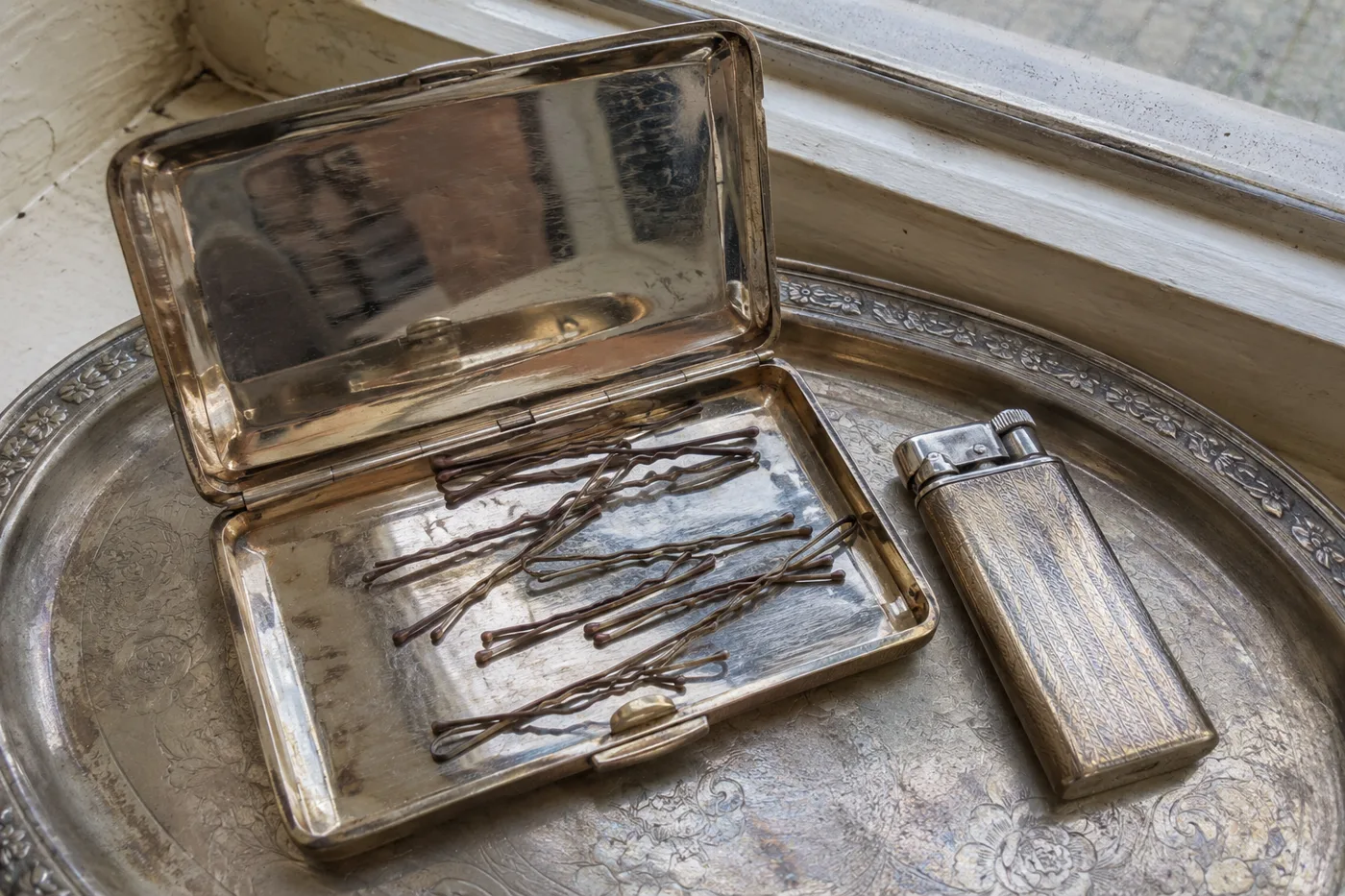
Cigarettes really were a Christmas gift. The Saturday Evening Post’s roundup of popular 1960s presents includes a Lucky Strike holiday ad from 1960.
A pack averaged 26 cents in 1960, about $3 today, and a carton about $2.50, or roughly $28.50 now.
Then, on Jan. 11, 1964, Surgeon General Luther L. Terry released the first big report. His committee had reviewed more than 7,000 articles, and it named smoking a cause of lung and voice box cancer in men. For women, it said only “probable cause” of lung cancer.
Women’s habits barely budged. From 1965 to 1979, smoking among US women fell only from 34% to 30%, while men’s dropped from 52% to 38%.
Plenty of those cases outlived the habit and ended up holding bobby pins.
#3 China earned one dish at a time
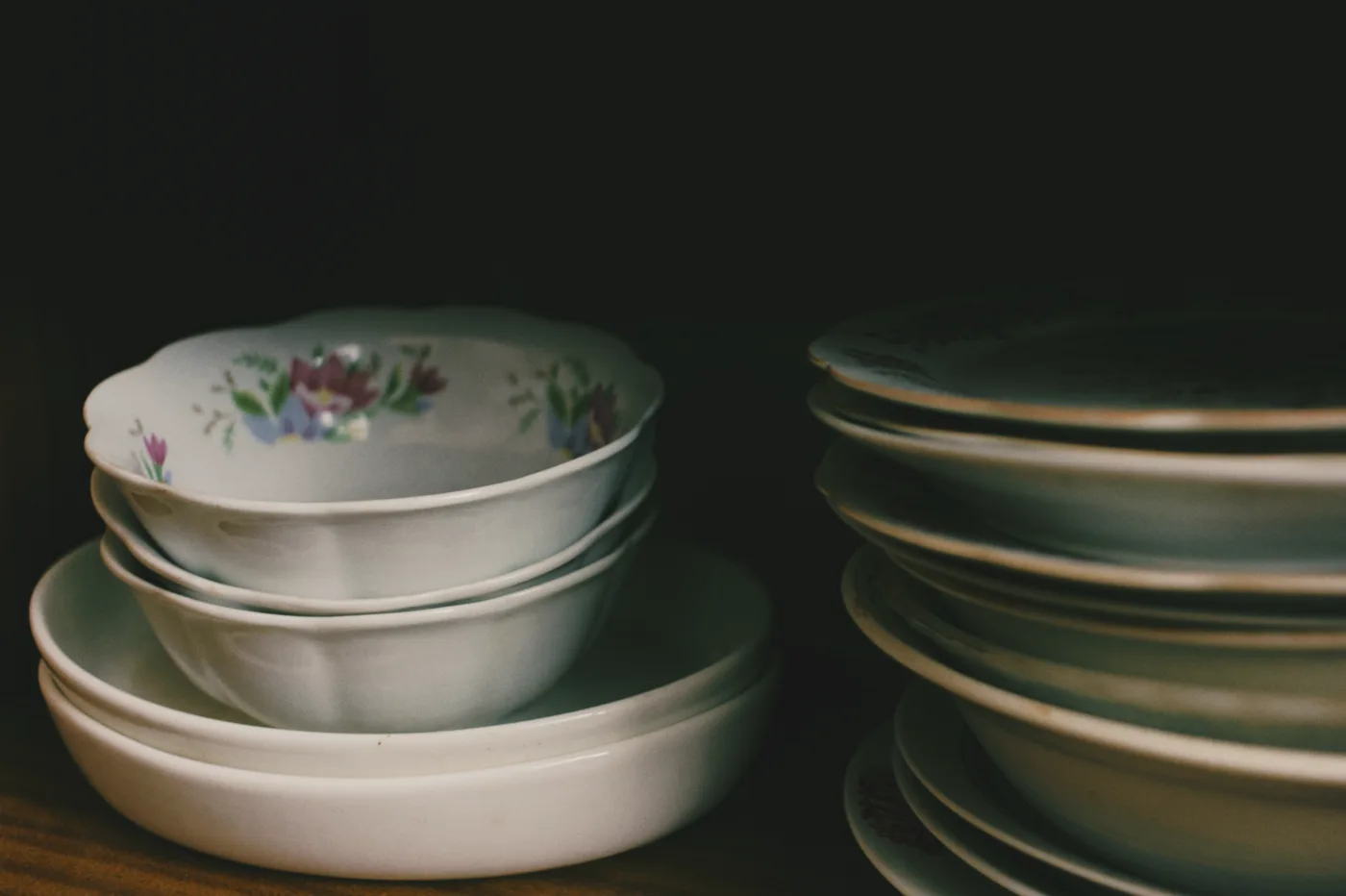
Not every set of good dishes came wrapped. Some of it was earned, a plate or a saucer at a time, and nobody remembers that system existed until somebody mentions it.
At the movies it was called Dish Night. On slow nights, theaters gave every woman a piece of china. The theaters paid about 5 cents a dish. Keep going for a year, 52 weeks, and you walked out with a full set.
Grocery stores ran the same game, handing out dishes with purchases into the 1970s. Whole companies existed for it. Royal China of Sebring, Ohio, was in business mainly to make giveaway dishes.
These were everyday home goods as holiday presents, just paid for slowly. By the time company came for Christmas dinner, a family could set a matching table without ever having bought a plate.
Flip one over. If the back says Royal China, there’s a good chance it started life as a giveaway.
#2 Gifts paid for with licked Green Stamps
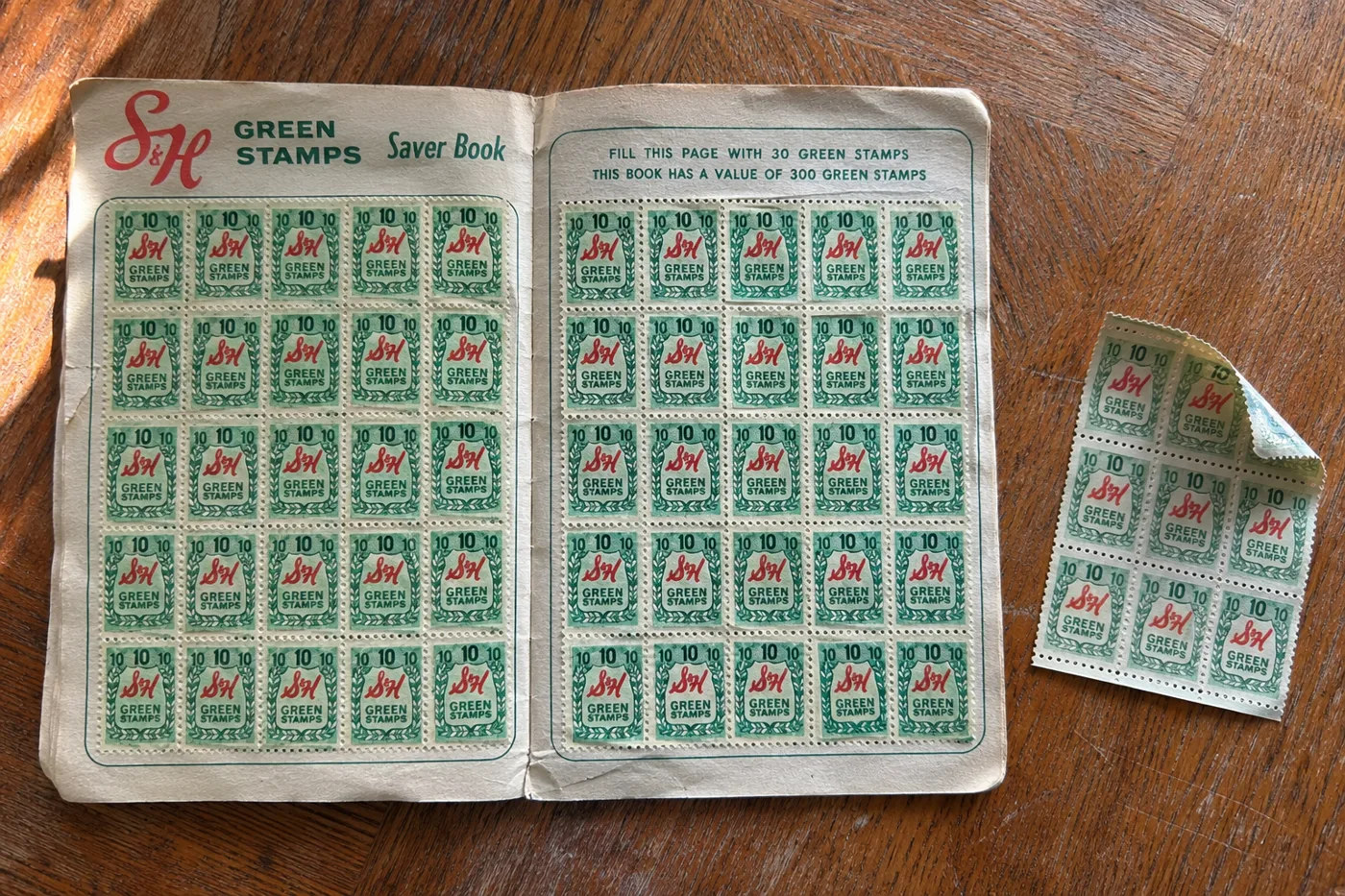
You remember the taste of that glue. S&H Green Stamps came one for every 10 cents you spent, and it took 1,200 to fill a book, 24 pages of 50.
That means one full book stood for $120 of shopping. Then you opened the catalog. A fake-fur bathmat, writer Rainey Knudson points out, cost 4½ books, which comes to $540 in shopping.
Now the stores’ side. In 1963, a store paid about $2.45 for the stamps to fill one book. That’s about 2 cents for every dollar you spent. It was a good deal for the stores.
It was a big deal, too. In the 1960s, S&H issued more stamps than the Post Office and mailed out 35 million catalogs a year. Plenty of Christmas presents came straight out of those pages, “free.”
Did it change how people shopped? One shopper quoted in Knudson’s newsletter put it plainly:
“I found myself buying things I didn’t need so I could fill out the books.” A shopper, quoted by Rainey Knudson
The program shrank in the 1970s, and its last version, Greenpoints, ended on Oct. 4, 2020.
#1 A wig, because it was the 1960s
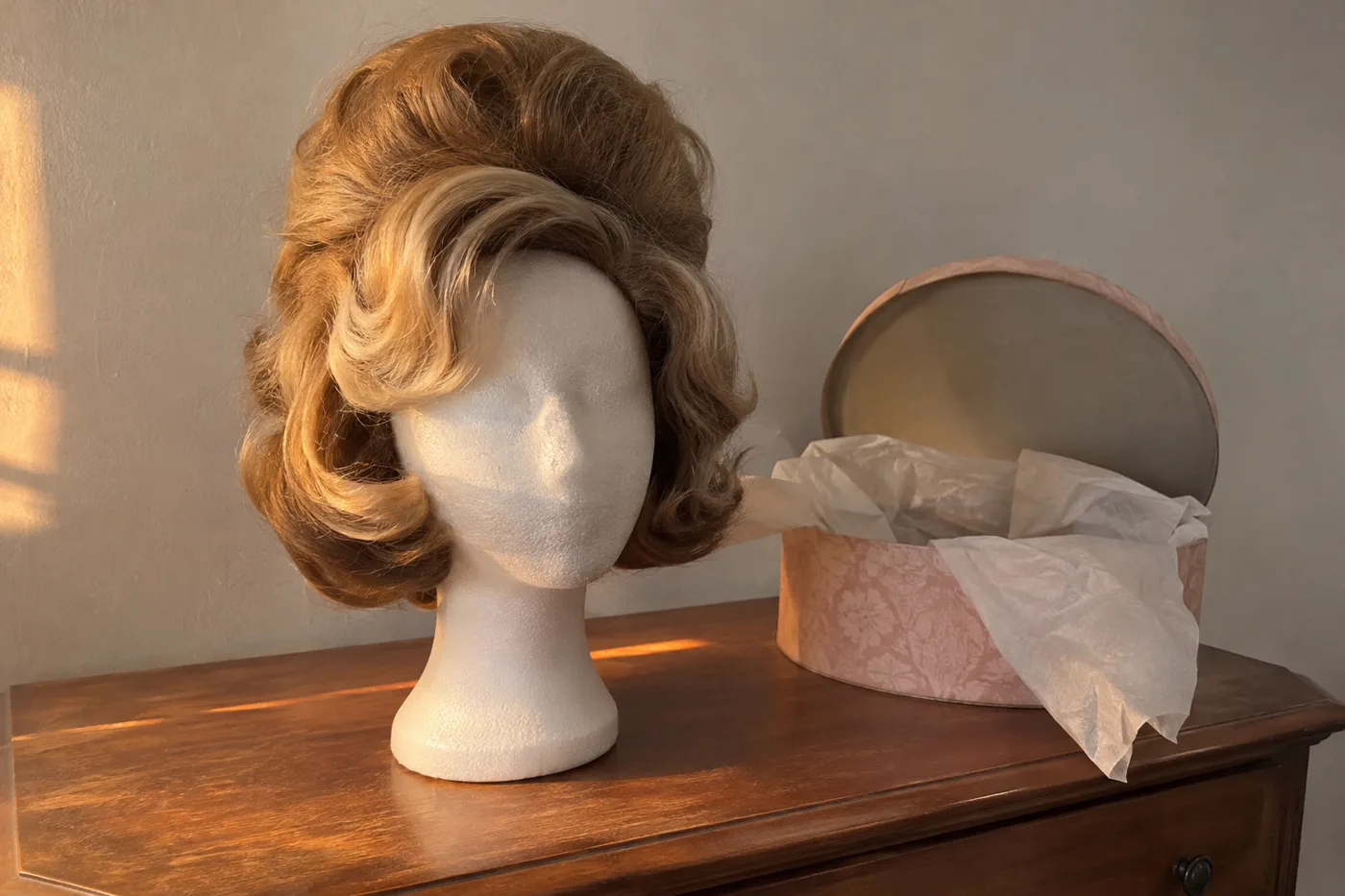
Remember the New York Times fretting that gloves would go the way of hats? Hairdresser Kenneth Battelle gave TIME the answer by early 1970: “Wigs are the hats of the ’70s.”
He wasn’t exaggerating. The US wig market grew from under $10 million a year in 1960 to $1 billion within a decade. At the peak, more than 40% of American women owned more than one wig. Not one wig. More than one.
The country was importing more than a million wigs a month from Asia to keep up. One maker, Abbott Tresses, saw its stretch-wig sales jump from $200,000 to $10 million in a single year. Its sales head, Max Moskowitz, told TIME: “It’s like a fairy tale.”
And they weren’t hard to afford. In 1970 the average wig cost $25, about $218 today. A designer stretch wig by Adolfo or Halston ran $30, about $261. The buyers, TIME reported, were mainly career women between 25 and 50.
So a wig box under the tree wasn’t wild at all. It sat on the dresser on its foam head, ready for church, the office, or a Saturday night when the rollers weren’t going to cut it. If one turned up at your house, you were in very good company.
Keep reading
 26 Christmas Cookies From the 1960s That Nobody Bakes AnymoreSee all 26 →
More you’ll enjoy
 26 Things Grandchildren Remember About Your House That You Never Notice
 25 Church Bazaar Crafts Every Town Sold That Nobody Makes Anymore
 24 Crafts Every Woman Made in the 1970s That Nobody Does Anymore
The bottom line
Look back over these and a pattern jumps out. Most of them kept a woman presentable, kept the coffee coming, or came free with the groceries.
A few slipped through that were hers alone: the Princess phone, the radio, the camera. Gifts for talking, listening and remembering.
If someone had asked what you wanted most for Christmas back then, what would you have said? You might still remember. Write it on a gift tag this year.
Bonus: Four more finds to check before you give them away
- If there’s an Avon bottle shaped like a car, from the most sought-after Avon figural line, leave it full and in its box. Avon started promoting these figural bottles in 1965, and one collector guide warns they “should not be purchased in an attempt at an investment,” but full, mint-boxed ones bring the best prices.
- An original bottle of Evening in Paris perfume dates from 1969 or earlier, because that’s when Bourjois discontinued it. The scent that came back in 1991 was reformulated as Soir de Paris.
- Check powder compacts for Elgin American, Volupté, Stratton, Coty or Max Factor. Most vintage compacts sell for $25 to $300, and collector Laura M. Mueller says serious buyers want compacts of a “particular genre,” such as one shape or one cosmetic house.
- Found an old price tag, receipt or catalog page? Type the price and year into the BLS inflation calculator and read it out loud to whoever’s helping you sort.
Questions people also ask
What were popular Christmas gifts for women in the 1960s?
Period Christmas ads pitched the Princess telephone to women, alongside clock radios, portable stereos and portable typewriters. Home hair dryers were sold as gifts too. The Saturday Evening Post’s review of its own 1960 to 1964 Christmas ads includes the Princess phone, Sylvania clock radios and Smith-Corona typewriters. GE’s 1962 hair dryer came in a pink hatbox made for gift-giving.
How much would a Christmas gift from the 1960s cost in today’s money?
A dollar spent in the 1960s is worth roughly $9 to $11 today, depending on the year. A $10 gift bought in 1960 would cost about $114 now, while a dollar from 1970 is worth about $8.70. You can check any price yourself on the BLS inflation calculator.
Are my mother’s 1960s Christmas gifts worth anything today?
Most are worth modest sums rather than a windfall. A mid-century mink stole had a median sale price of about $49 across 60 recent sales, and Blue Cornflower CorningWare is valued mainly as an affordable secondhand find. Designer brooches, real silver and pieces still in their original box and paperwork are the ones worth having looked at.
What was the Sears Christmas Wish Book?
The Wish Book was Sears’ yearly Christmas catalog, and it officially took that name in 1968. That year it ran 605 pages, and 380 of them were gifts for adults, not toys. The first Sears Christmas catalog, in 1933, had only 87 pages.
What’s a good Christmas gift for a woman who already has everything?
An experience or something that gets used up usually lands better than another object. Researchers Cindy Chan of the University of Toronto and Cassie Mogilner of UCLA found that experiential gifts like concert tickets strengthen relationships more than material ones. One commenter in r/Gifts said of an outing: “I am almost 60 and would love that.”

- 17 Christmas Eve Traditions From the 1960s That Quietly Disappeared - November 24, 2026
- 16 Old Christmas Ornaments That Could Be Worth Real Money - November 24, 2026
- 17 Christmas Candies From the 1960s That Disappeared From Grandma’s Candy Dish - November 24, 2026