Keep going to #1. The biggest price in the whole box went to something most people wouldn’t even file under ornaments.
The box comes up from the basement with its corners gone soft. The tissue inside has turned the color of weak tea. Somebody lifts out a silver ball with a little dent pressed into one side and says, “The thrift store will take all of this.”
Hold that thought. The vintage Christmas ornaments worth money often look exactly like the ones you’d toss. The difference is usually a cap, a stamp, a weight in your palm, or a box nobody thought to keep.
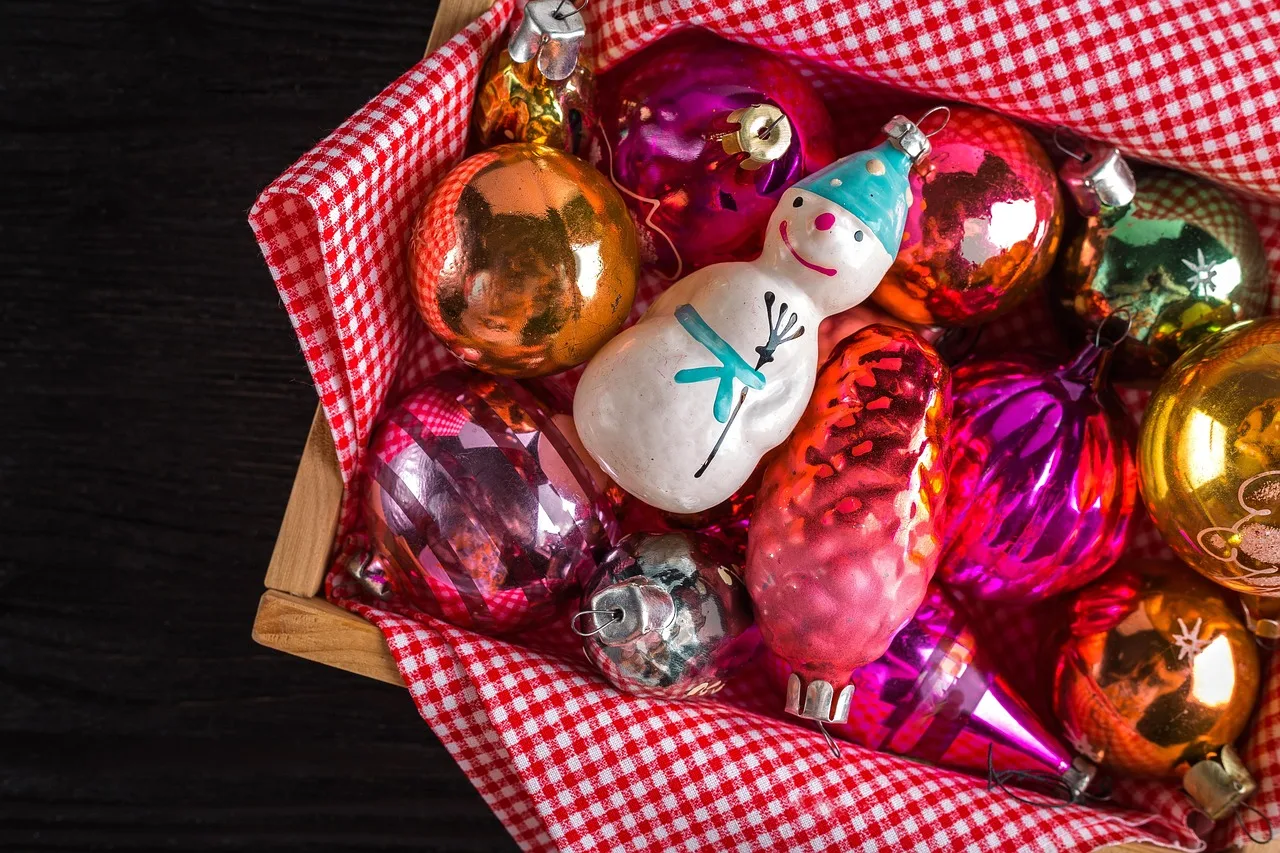
#16 Shiny Brite balls still in their original box
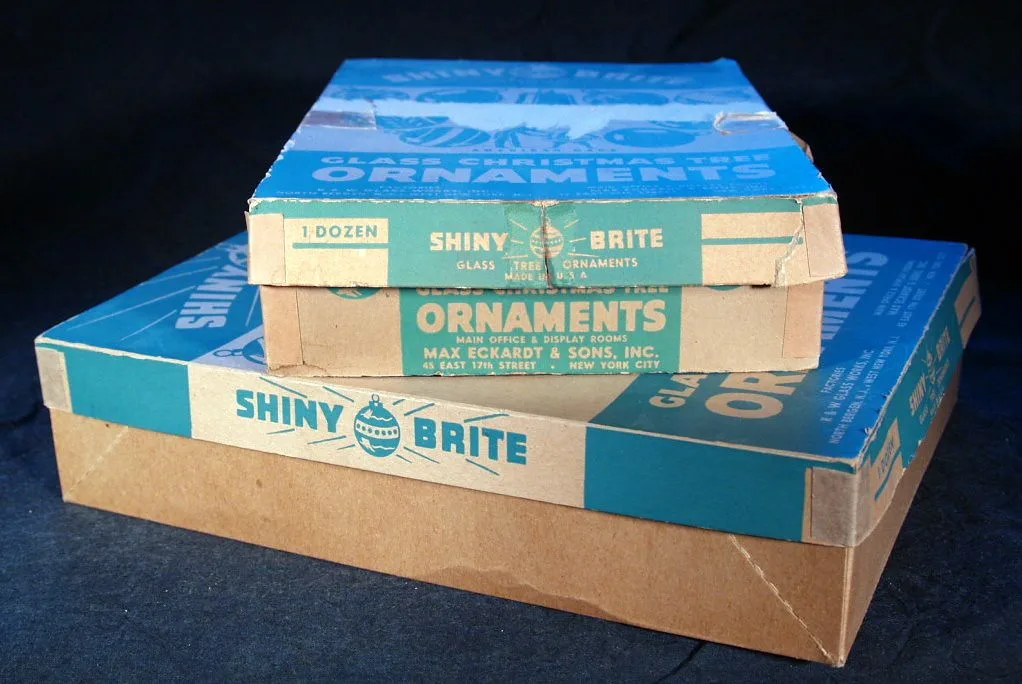
The box can be worth more than the balls. A loose ball brings only a few dollars, by one price guide’s estimates. Put a dozen back in their original box and that same guide jumps to $25 to $60. A second guide goes as high as $120 for a full original box.
| What you have | Estimated price |
|---|---|
| Loose plain ball | $2 to $5 |
| Loose stenciled or striped ball | $4 to $10 |
| Original box of 12, plain | $25 to $45 |
| Original box of 12, stenciled or mixed | $35 to $60 |
| Newer reissue box of 12 | $15 to $30 |
| Newer reissue, loose | $1 to $4 |
| Empty original box | $5 to $12 |
Those flimsy cardboard dividers and the cellophane window add about $10 to $20 to a dozen on their own. Faded paint, on the other hand, drops a ball to a dollar or two.
Now the catch. Christopher Radko’s company bought the Shiny Brite name in the late 1990s and put out the first reproductions in 2001, in packaging that reads “Radko presents Shiny Brite.” Reissue boxes have barcodes and recent copyright dates. Originals have thin glass and crimped metal caps marked “Made in U.S.A.”
Here’s the delightful part. Those balls started life on machines built to make light bulbs. By the 1950s, one retrofitted machine at Corning’s Pennsylvania plant could turn out 1,000 glass bulbs a minute, which then went to New Jersey to be painted under the Shiny Brite name. During the war years, they sold for 10 cents each.
#15 Hallmark Keepsake ornaments marked first in series
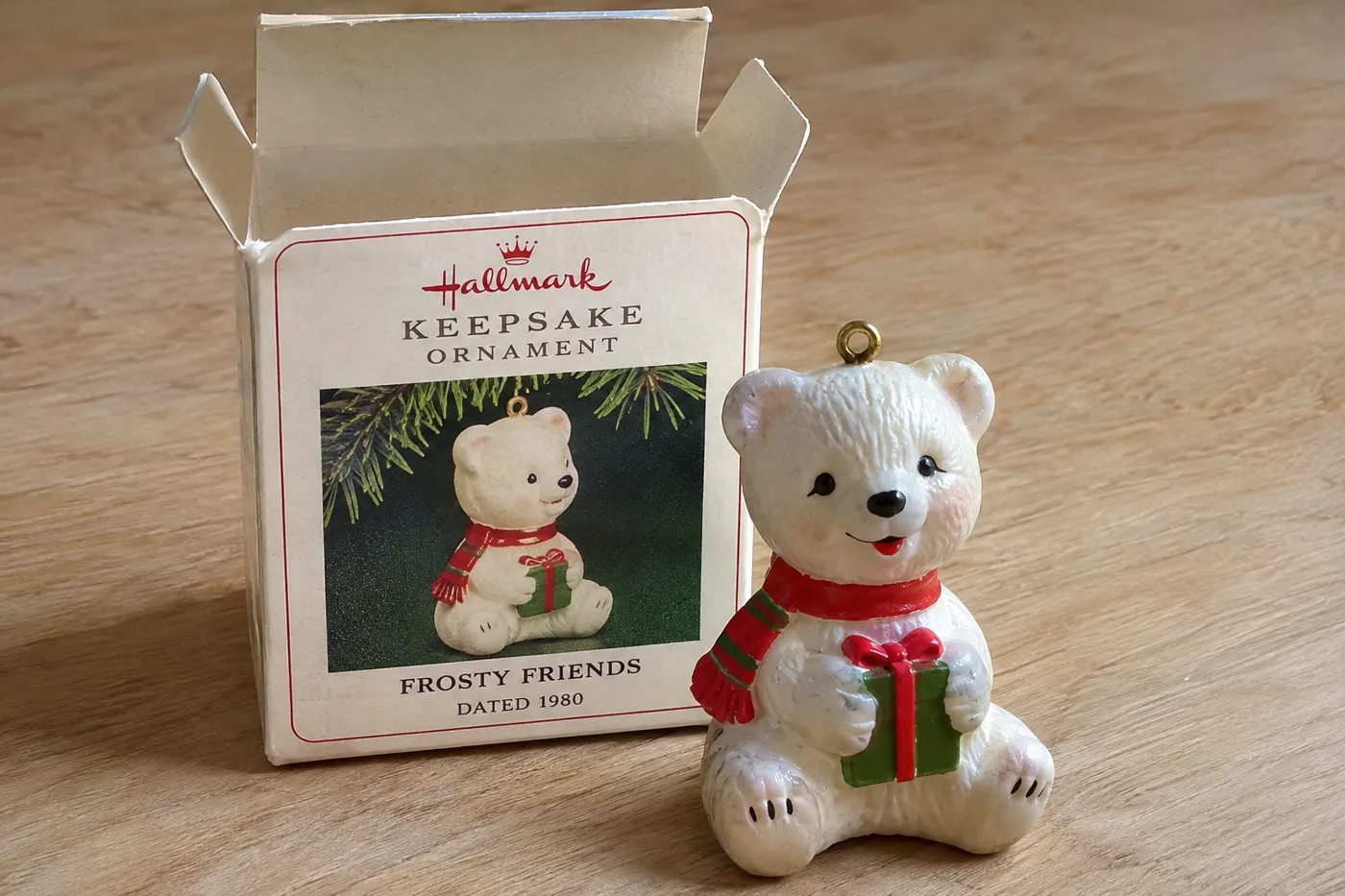
Hallmark started small. In 1973 it launched 18 Keepsake ornaments, six glass balls and 12 yarn figures. Since then it has made more than 10,000 designs and adds 300 to 500 every year.
That’s why a box of dated Hallmarks usually isn’t a jackpot. There are simply a lot of them out there.
The ones that pay are the first in series, the opening piece of a set collectors kept adding to year after year. Frosty Friends #1, “Cool Yule,” from 1980, has a value range of $500 to $700. The first Holiday Wildlife ornament, “Cardinals,” from 1982, runs $100 to $400.
Kat, who resells Hallmark ornaments in lots on eBay as The Nurse Flipper, puts it bluntly: be very careful when you pick up Hallmark ornaments, and research them first.
Condition and the box move the price a lot. One guide estimates the 1981 Rocking Horse first edition at $250 to $600 in mint shape, and puts a “good” piece at 40 to 60% of mint value. A Rocking Horse in just “good” condition lands closer to $100 to $360.
#14 Bubble lights that bubbled on the tree
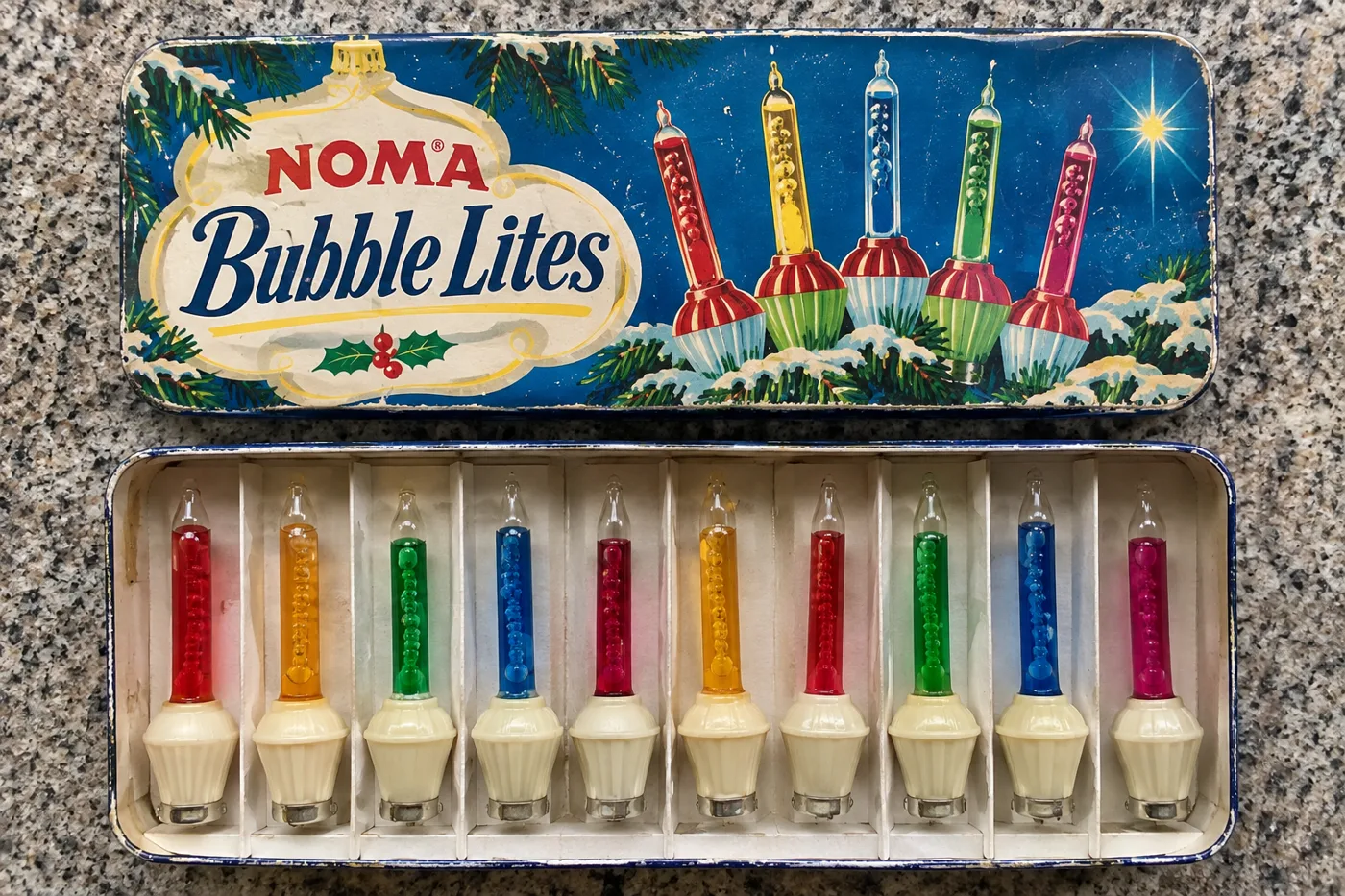
You remember the wait. The lights went on, and for a long minute nothing happened. Then one little tube started fizzing, then another, and somebody always had to tap the one that wouldn’t go.
Carl Otis filed the patent in 1941, and it was granted on July 4, 1944. NOMA paid him 3 cents for every light and made more than 25 million in the first two years. That works out to more than $750,000 for one inventor, three pennies at a time.
What they bring now, by one guide’s estimate:
- A loose working light: $5 to $15
- A working NOMA boxed set of 7 to 9: $40 to $100
- A set that doesn’t work: $15 to $40
A dead set still sells. Old wiring can crack with age, and cracked insulation is a fire risk. The Consumer Product Safety Commission says to throw out any light set with frayed wires or cracked sockets rather than use it. If you sell, list it as untested and let the buyer decide.
#13 Shiny Brite balls with a paper cap
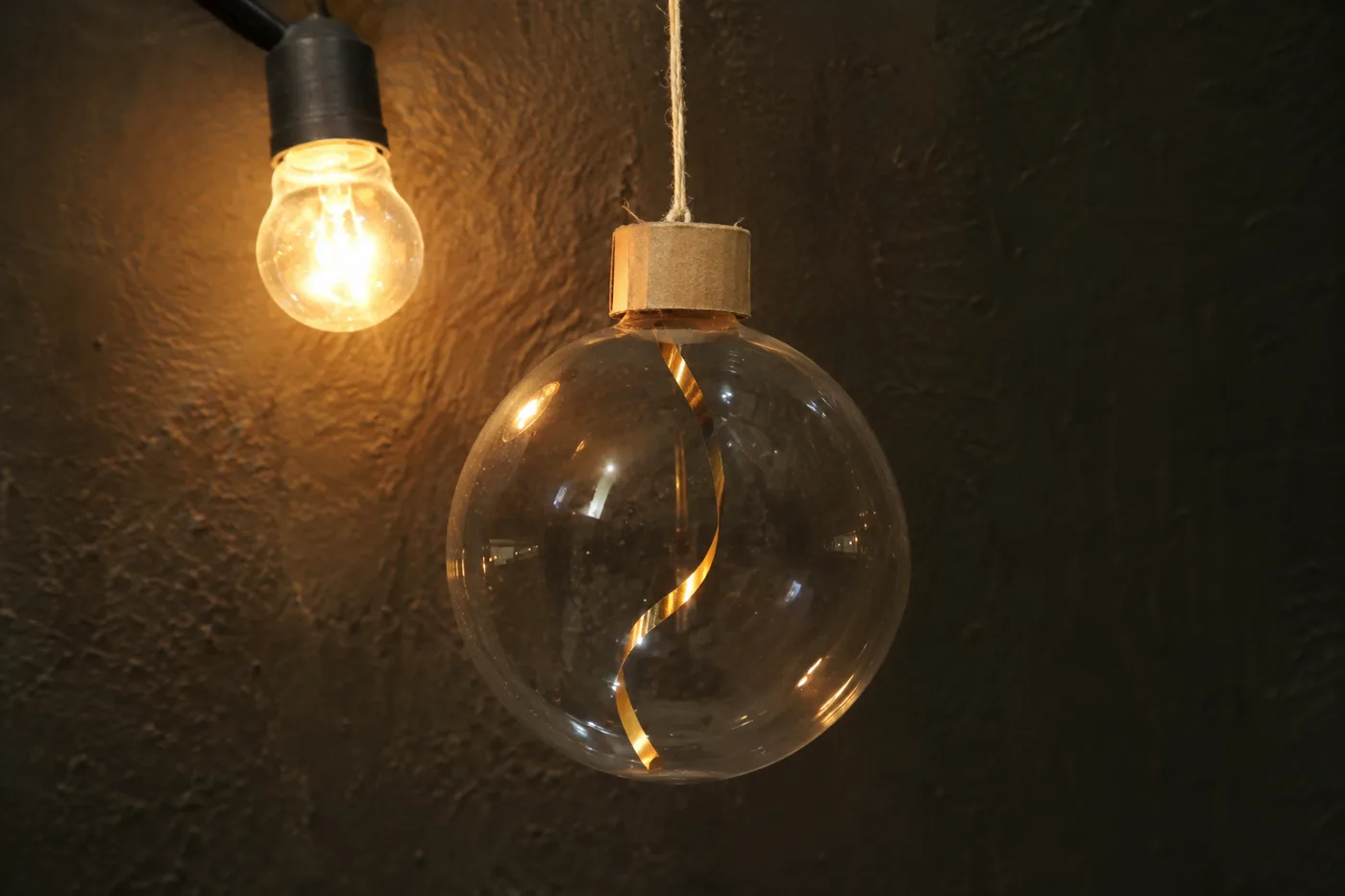
When nearly all American metal went to the war effort in 1942, Shiny Brite switched to cardboard tops and string hangers. The silver lining inside the glass went too, because the chemical used for it was banned. So the makers left the balls clear; some wartime pieces have a small strip of tinsel tucked inside to give them a bit of shine.
That’s why collectors call them unsilvered ornaments. If you’ve ever wondered why a few balls in the box look half-finished, that’s the reason.
One guide estimates wartime pieces at $5 to $12 loose and $30 to $75 for a box of 12. A set of 12 unsilvered Shiny Brites, bells included, was reported sold on eBay for $374.99. That’s the far end, not the usual.
Doctored pieces turn up too. The Tinsel Box lists the warning signs: a cap that looks “too shiny, clean, or fitting oddly,” bright new glitter, glossy touch-up paint, or fresh decoration painted over old damage.
Caps get lost and swapped from ball to ball over the years, so a cap alone doesn’t prove the date. A paper cap still on a clear ball with tinsel inside is a much better sign.
Dating a glass ornament by its cap
- Brass loop cap: before 1920
- Metal cap marked “Made in US of A”: before 1942
- Paper or cardboard cap with a string hanger: about 1942 to 1946
- Metal cap marked “Made in the USA”: after 1946
#12 Indent and reflector ornaments
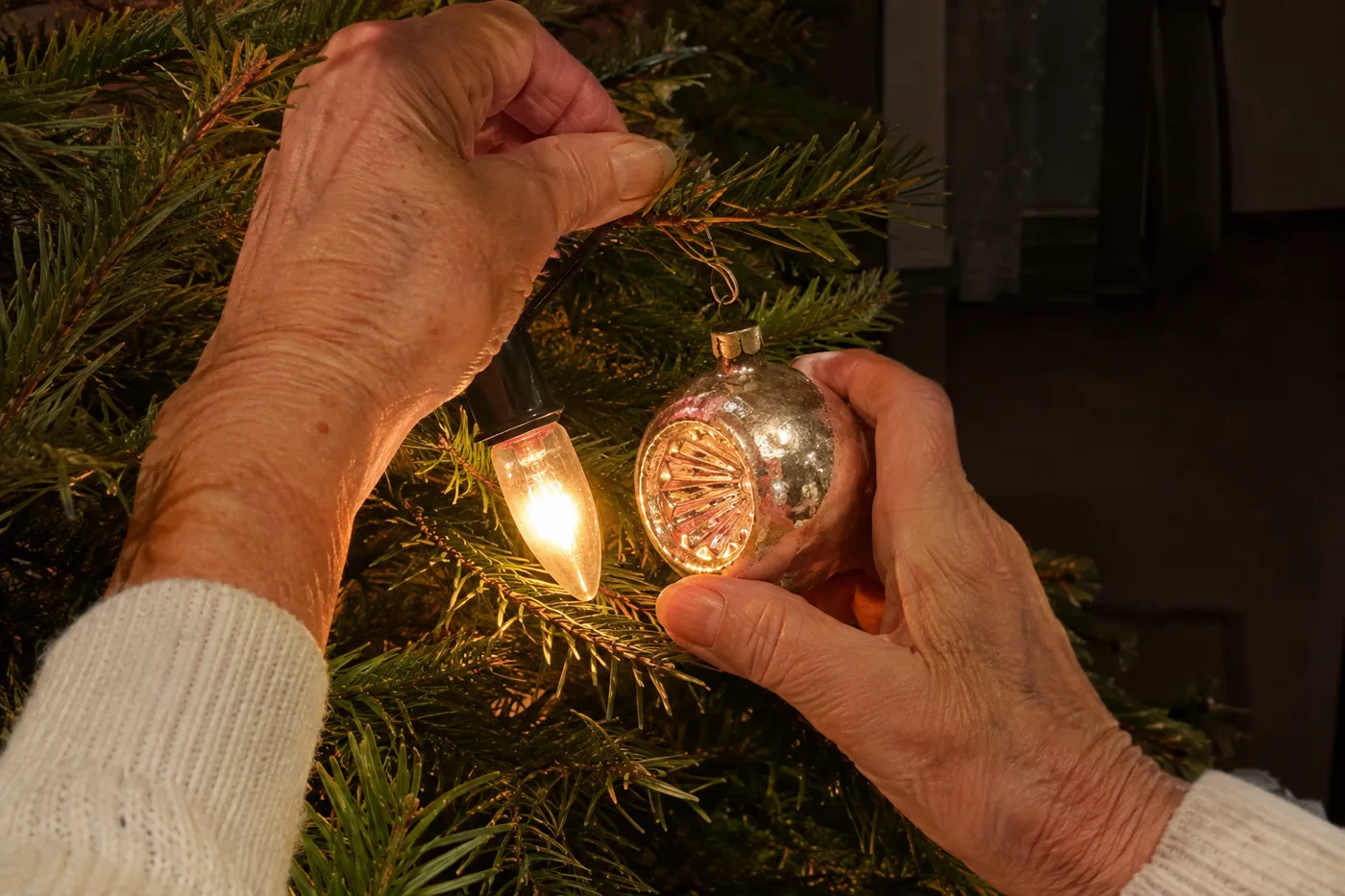
You probably did this without thinking. You found the ball with the deep dimple pressed into its side and hung it right next to a bulb.
That pressed-in hollow is exactly what makes it an indent ornament, and it shows up on balls, teardrops, bells and lanterns. German-made ones are among the most collected.
Loose indented Shiny Brites are estimated at $5 to $12 each, a few dollars better than a plain ball. The German question is harder. Without a box, a label or a known history, The Tinsel Box warns that the country of origin “can be difficult to confirm.” The box is your proof, so it goes wherever the ornaments go.
 You might also like22 Things You’re Saving That Your Children Will Throw Away
#11 German spun cotton animals and little people
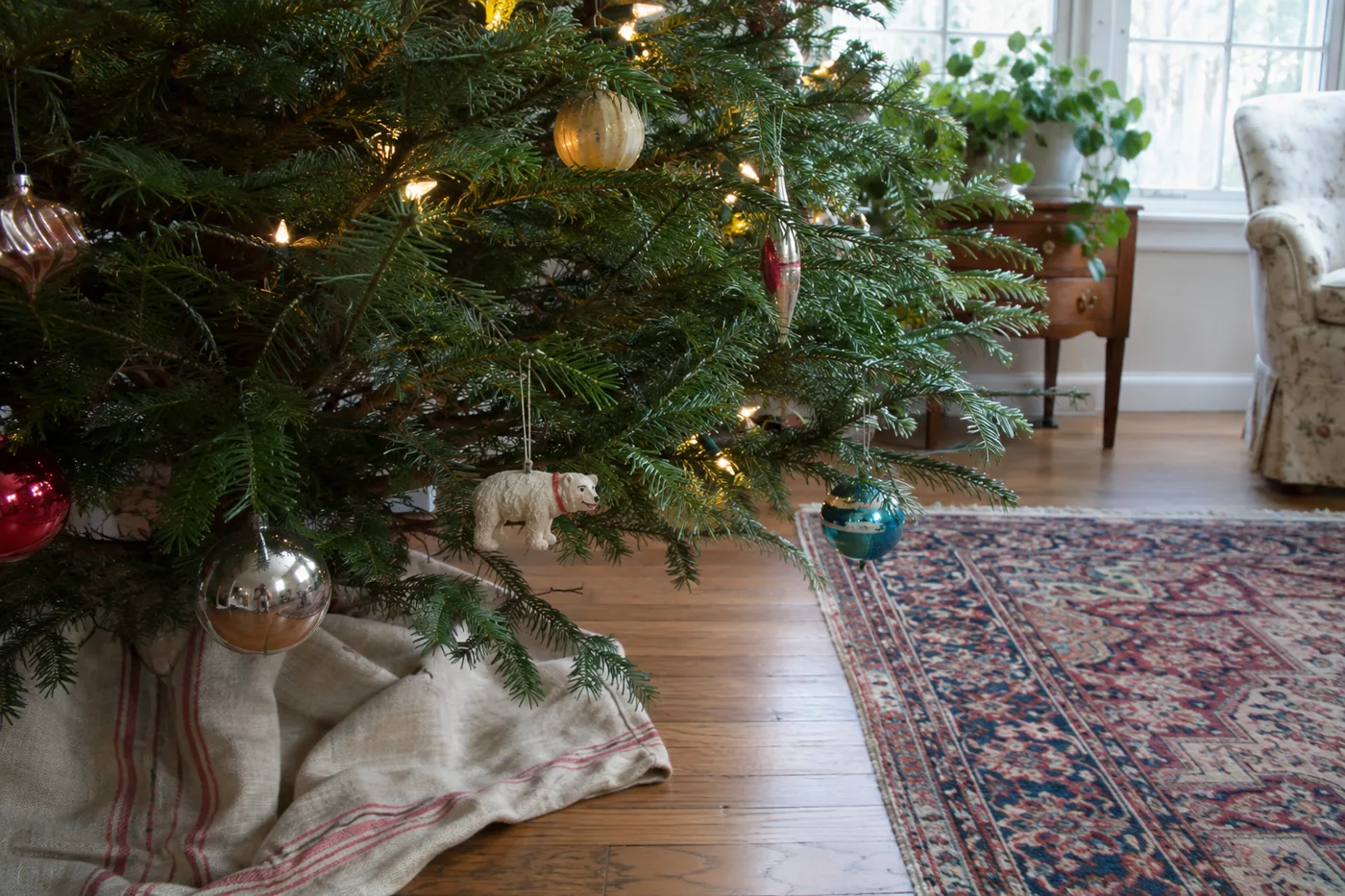
These look like they shouldn’t have survived. Puffs of cotton wound into a lamb, a little girl, a polar bear, with faded paper faces or tiny painted features.
They lasted longer than the glass because of where they hung. Jerry Arnold, a longtime antique ornament collector, says “the most sought after cotton ornaments are the little animals and people,” and that they were “generally hung around the bottom of the tree because they didn’t break.”
So the low branches, the ones in reach of small hands, wagging tails and curious cats, got the pieces that could take a knock. The glass up top was the stuff that didn’t make it.
A German spun cotton polar bear was reported sold on eBay for $158. If yours looks grubby, resist the urge to freshen it up. Never put water on spun cotton. A soft brush is all it gets.
#10 Glass birds clipped onto the branch
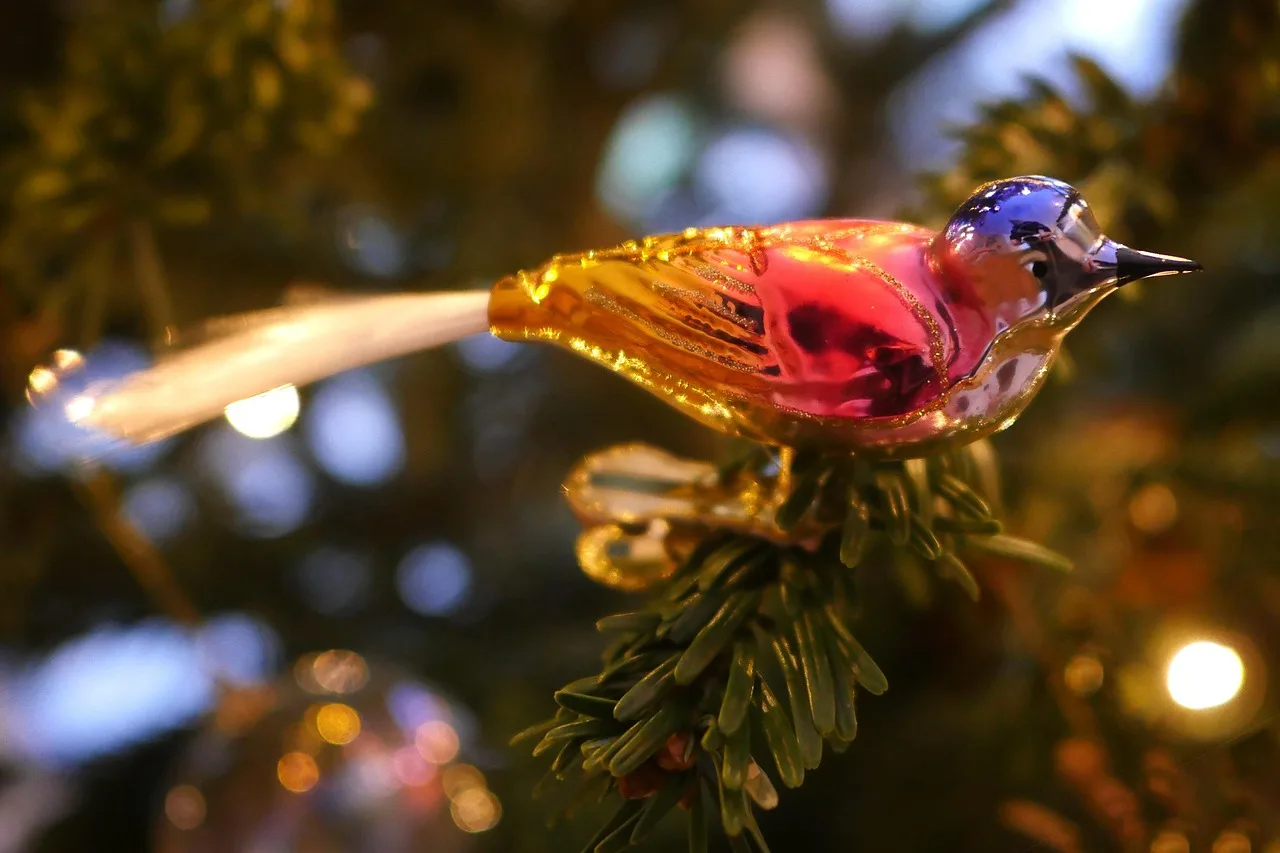
The bird with the spun-glass tail is the one to check twice. That fine, brushy tail is the first thing to snap off, so a bird that still has it is the prize.
Pre-1940 German birds with spun-glass tails are estimated at $150 to $600. By comparison, a 5½-inch West German clip-on bird from the 1950s was reported sold for $40.
Here’s what trips people up. The little sprung wire clip doesn’t tell you much on its own, because sprung clips had become standard by the 1930s. Look for a “West Germany” mark instead, which means the bird was made between 1949 and 1990. No mark, a full tail and a German look is when it’s worth asking a dealer.
#9 Plastic spinners mistaken for cat toys
Not everything good in the box is glass. Remember the twisty, see-through plastic shapes that hung above a bulb and turned slowly all evening? The heat rising off the old tree lights was what kept them spinning.
Don Heiden, a full-time online seller who goes by The Auction Professor, holds one up and points out that this is one a lot of people miss, because it’s plastic.
His point is that people see them loose in a box, decide they’re cat toys, and toss them. Even a single loose spinner sells well, he says, so don’t wait to find a whole set. Pull them out of the junk pile, and look up sold listings for spinners or twinklers before you name a price.
#8 The star topper that spun from heat
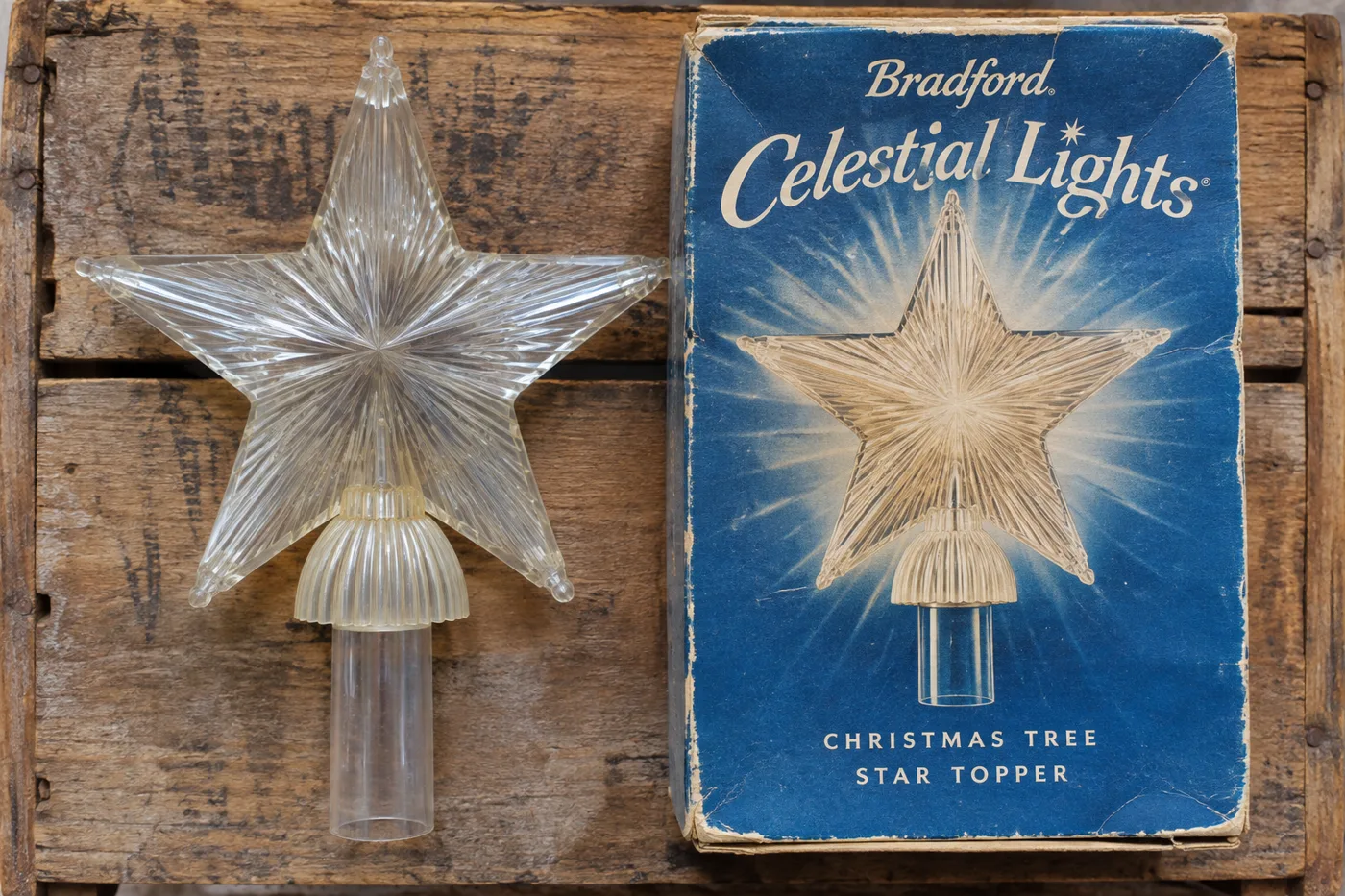
If you had one, you remember lying on the floor watching colored dots slide across the walls. It looked like a little motor was turning it.
There’s no motor. The Bradford Celestial Lights topper, made from the 1950s into the 1970s, has a plastic cylinder that turns “when the heat of the ‘night light’ bulb radiated through fins on the top.” Early versions threw dot patterns. Later ones threw stars.
An original brings $150 to $300 or more. An ordinary lighted plastic star or angel topper, by comparison, is estimated at $15 to $50. So if your topper spun, it’s in a different league.
Copies exist, and one commenter on Collectors Weekly says reproductions “do not project the color on to the walls of a room like the Bradford does.” Don’t plug in an old one to check. A photo of its fins and any label on the base tells a buyer plenty.
#7 Fruit and nut ornaments with painted faces
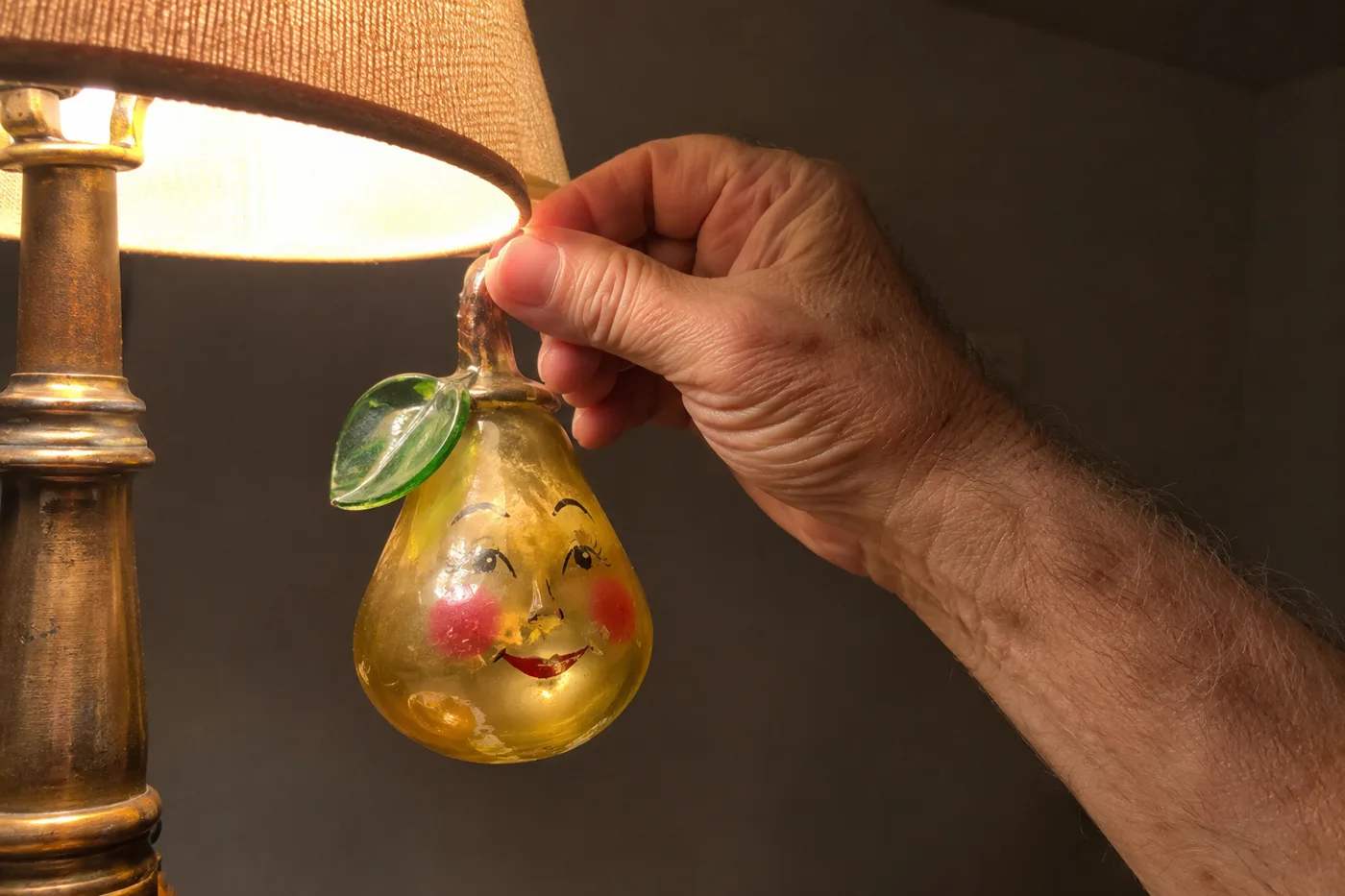
A pear with rosy cheeks. A walnut with a little grin. These figural ornaments are some of the most charming things in any old box, and the oldest German ones are estimated at $40 to $150 for fruit and vegetables made before 1940.
But Don Heiden warns that reproductions of these smiling figures still come out of Europe and look nearly identical to the originals. Before you pay much for one, he says, make very sure it isn’t a reproduction.
Then he adds the twist. Age alone doesn’t set the price. Some limited editions from the 1990s now sell for more than century-old glass. So the newer-looking pear might be the valuable one, and the ancient one might be the copy.
One clue that helps: on genuinely old pieces, the paint sits on the surface rather than looking thick and plastic-coated. Hold it under a lamp and look at the cheeks.
 You might also like19 Holiday Traditions Women Over 60 Have Quietly Stopped Doing
#6 Astronaut ornaments from the moon landing Christmas
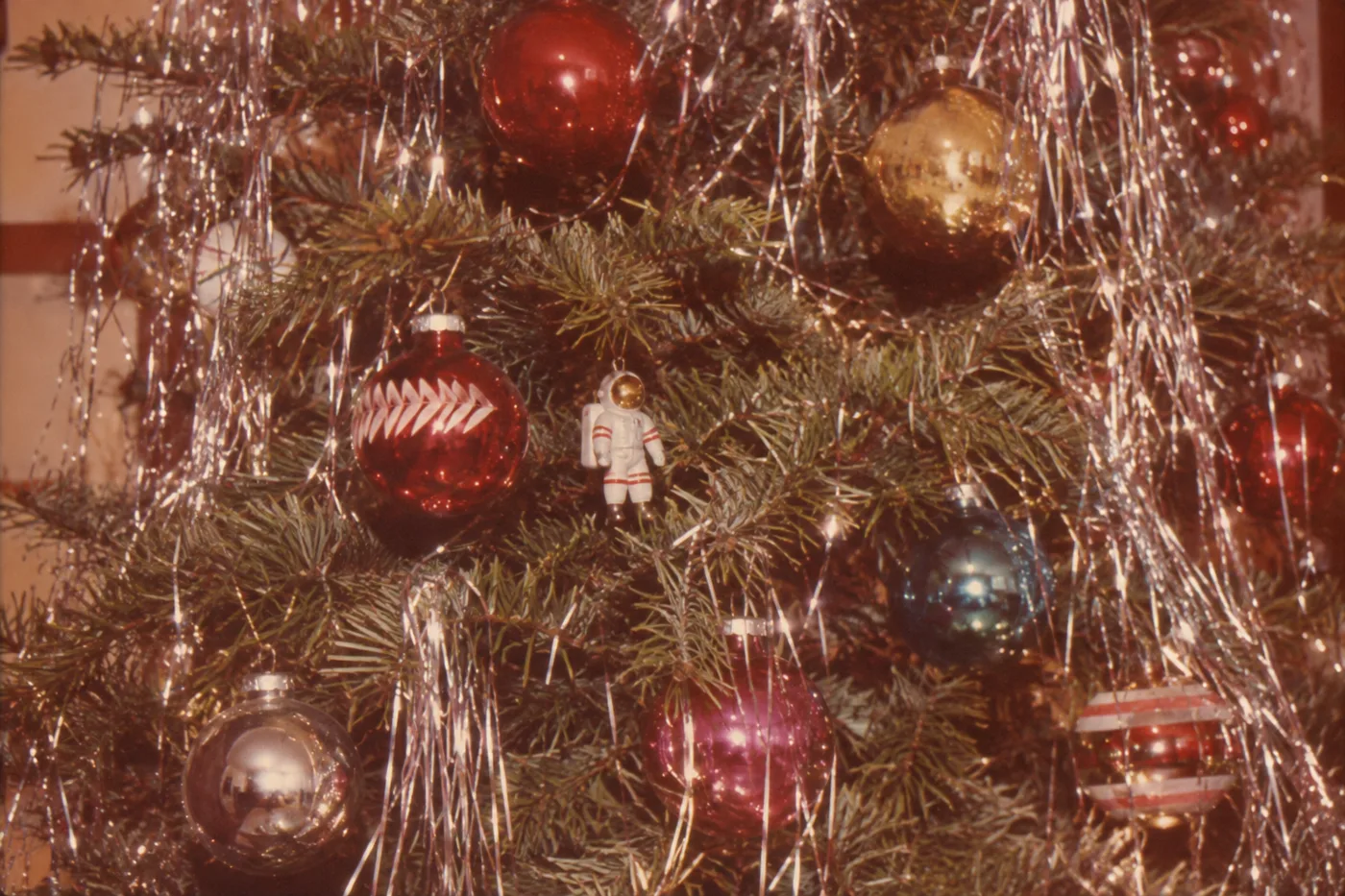
Almost nobody puts these on a list, and that’s exactly why they’re worth a look. If the box has a little spaceman, a rocket or a capsule tucked in among the glass balls, it may date to one particular year.
Dr. Lori V., an antiques appraiser, explained it on a TV segment: NASA astronaut ornaments were very popular the Christmas after the July 1969 moon landing. She says today’s interest in space travel is pushing them up again.
#5 Hallmark ornaments that were recalled or made for one event
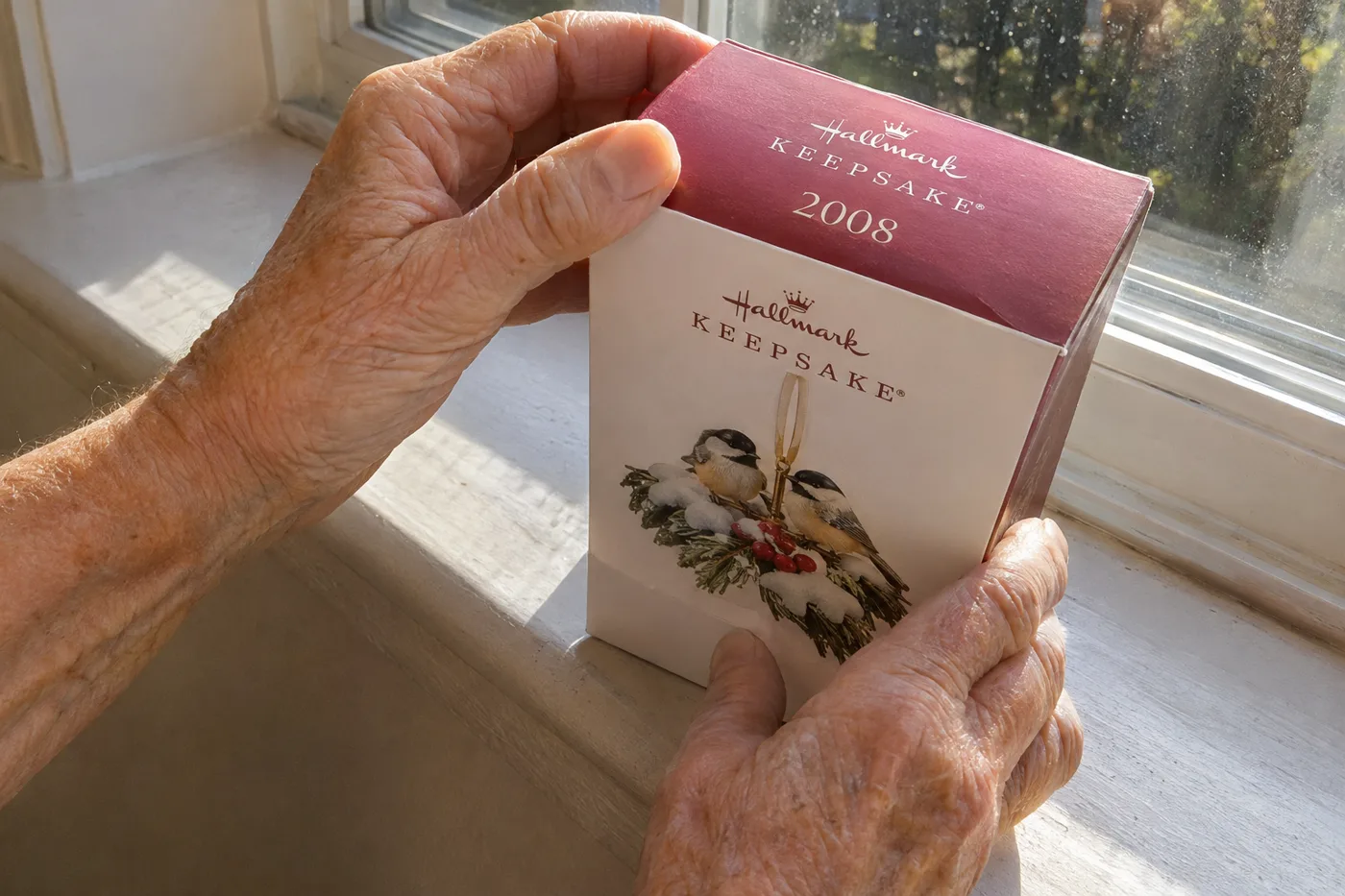
A handful of Hallmark ornaments bring thousands, and they usually look no fancier than the rest. What they share is that very few people ever got one.
A 2013 ornament called “Christmas at Kirlin’s” was a convention exclusive, with fewer than 100 made for Kirlin’s 65th anniversary. Its value range is $2,200 or more. A 2020 Scarlett O’Hara ornament was pulled before release, but “a handful slipped through the net,” and it runs $1,800 to $2,000. A 1992 Mary Engelbreit tin Santa was recalled after about 24 were made, and sits at $700 to $900.
Kat, the eBay reseller, says the same thing about her own best sale: it was recalled, and that’s why it sells for so much. She adds that repaints and event exclusives raise the value too.
One caution before you get excited about a recall notice. In 2024, Hallmark recalled about 11,100 Cad Bane Star Wars ornaments because the paint “did not fully dry before packaging” and mold grew. With that many out there, it’s no rarity. If you have one, the refund is the sure thing, and you don’t need a receipt: take it to a Hallmark Gold Crown store or use the postage-paid return label from hallmark.com.
#4 The country stamped on the box
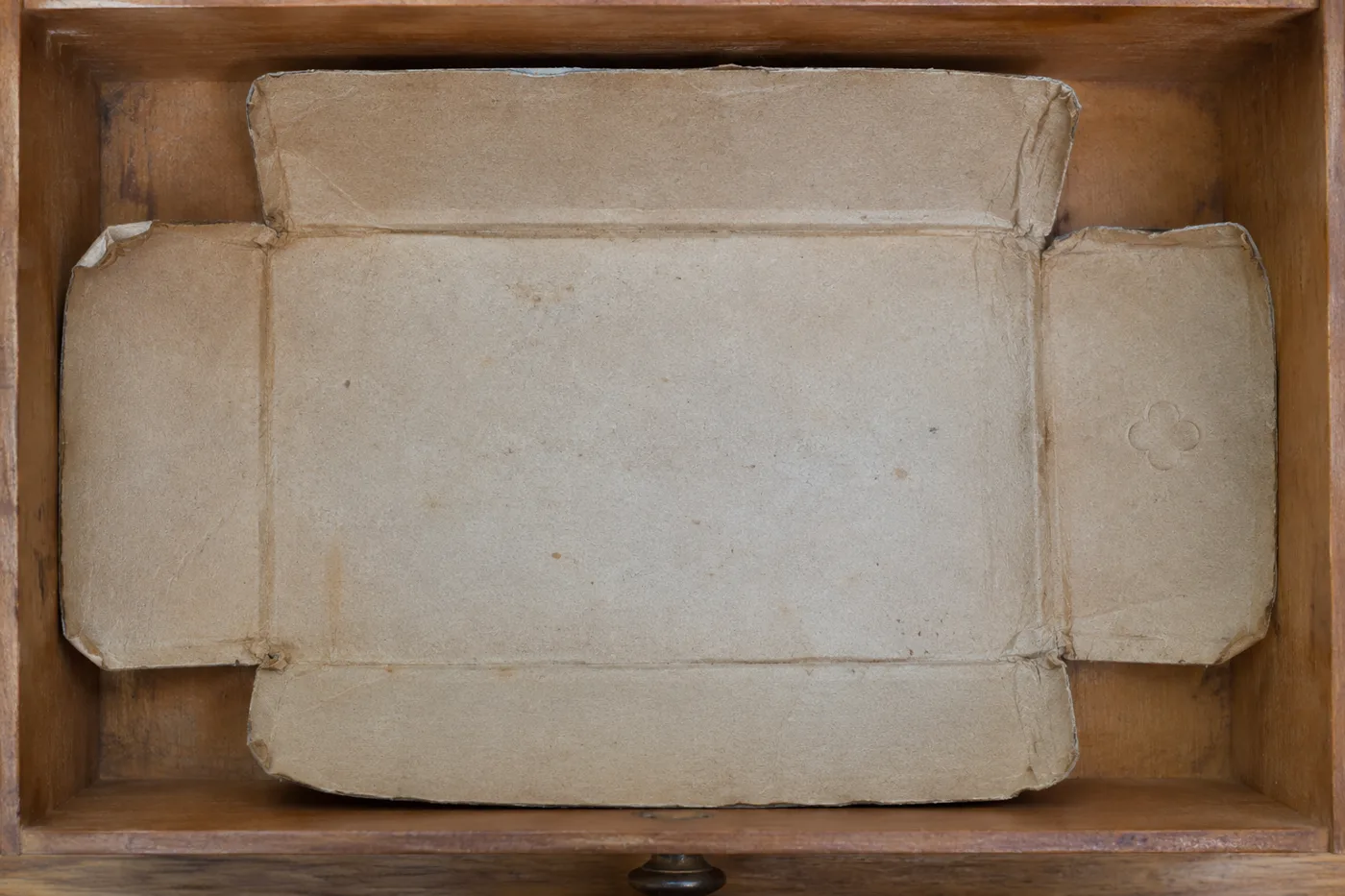
Turn the box over before anything else. That faded stamp can do more to date an ornament than any expert eye.
It matters more now because so few decorations come from those places anymore. In 2024, China supplied 86.8% of the Christmas decorations the U.S. imported. Even Old World Christmas, a company that started out making ornaments in Germany, moved its production to China in 2000.
So a West Germany or Occupied Japan stamp almost always means the piece is decades old.
Notice the trap in the second line. A box stamped Made in Germany could be over a century old or could have been bought at a gift shop any time after 1990. The style, the cap and the box itself have to settle that one.
What the stamp tells you
- “Germany” alone: before 1921
- “Made in Germany”: 1891 to 1940, or after 1990
- “West Germany”: 1949 to 1990
- “Occupied Japan”: 1945 to 1952
#3 Dresden cardboard animals that look like toys
It’s a flat little cardboard fish, or a stag, or a tiny carriage with gold edges. It doesn’t look like it belongs on a tree. It looks like it fell out of a child’s play set.
Ask collectors to name the most valuable vintage Christmas ornaments, and this is where they point.
“The holy grail of Christmas ornaments are the Dresdens.” Jim Morrison, founder and curator of the National Christmas Center, on Antiques Roadshow
Dresden ornaments are made of very thin embossed cardboard, pressed so finely that, in Jerry Arnold’s words, “you can actually see the fur on the animals.” The real ones date from about 1870 to 1910. Morrison says rarer pieces reach $500 to $1,000, and one sold for $10,000.
Not every flat cardboard piece is the real thing, though. Eastern European imitations made between 1920 and 1950 sell for under $25. Look closely at the detail. Fur you can see, crisp gold edges and paper-thin cardboard point toward the real thing.
#2 The heavy glass kugel ball
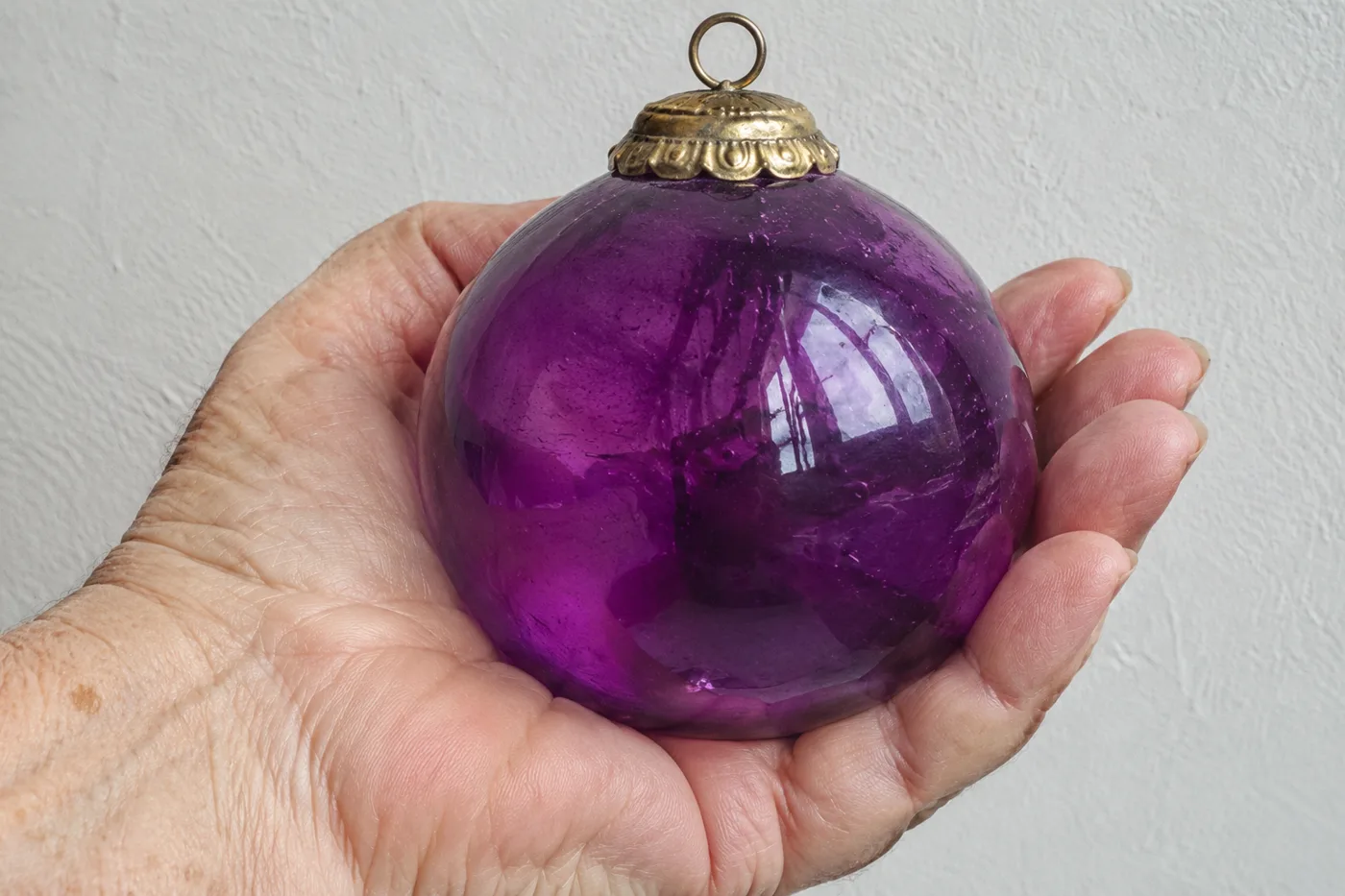
Pick it up. If your hand dips a little, pay attention.
Kugel is German for “ball,” and these thick-walled glass ornaments are often too heavy for a branch. Many hung in windows or from beams instead. The glass runs 1 to 5 millimeters thick, with the color mixed right into it.
They’re almost never marked, so the test is in your hands. Don Heiden says you judge them by the weight, the construction and, above all, the metal mounting piece at the very top. The Vintage Tree adds the signs of a genuine one:
- An original brass cap that sits flush or nearly flush against the glass
- Thick wire inside the cap bent into a V or clover shape
- Dark aged spots in the silver lining
Silver and some greens are the common colors. Amethyst, orange and pale blue are the rare ones.
As for prices, a lot of seven antique kugels sold at auction for $468.75 in 2023, buyer’s fee included, against an estimate of $200 to $300. That’s about $67 a ball. A big red 8-inch kugel was reported sold for $1,000, though that one is the exception.
#1 A papier-mâché Belsnickel Santa candy container
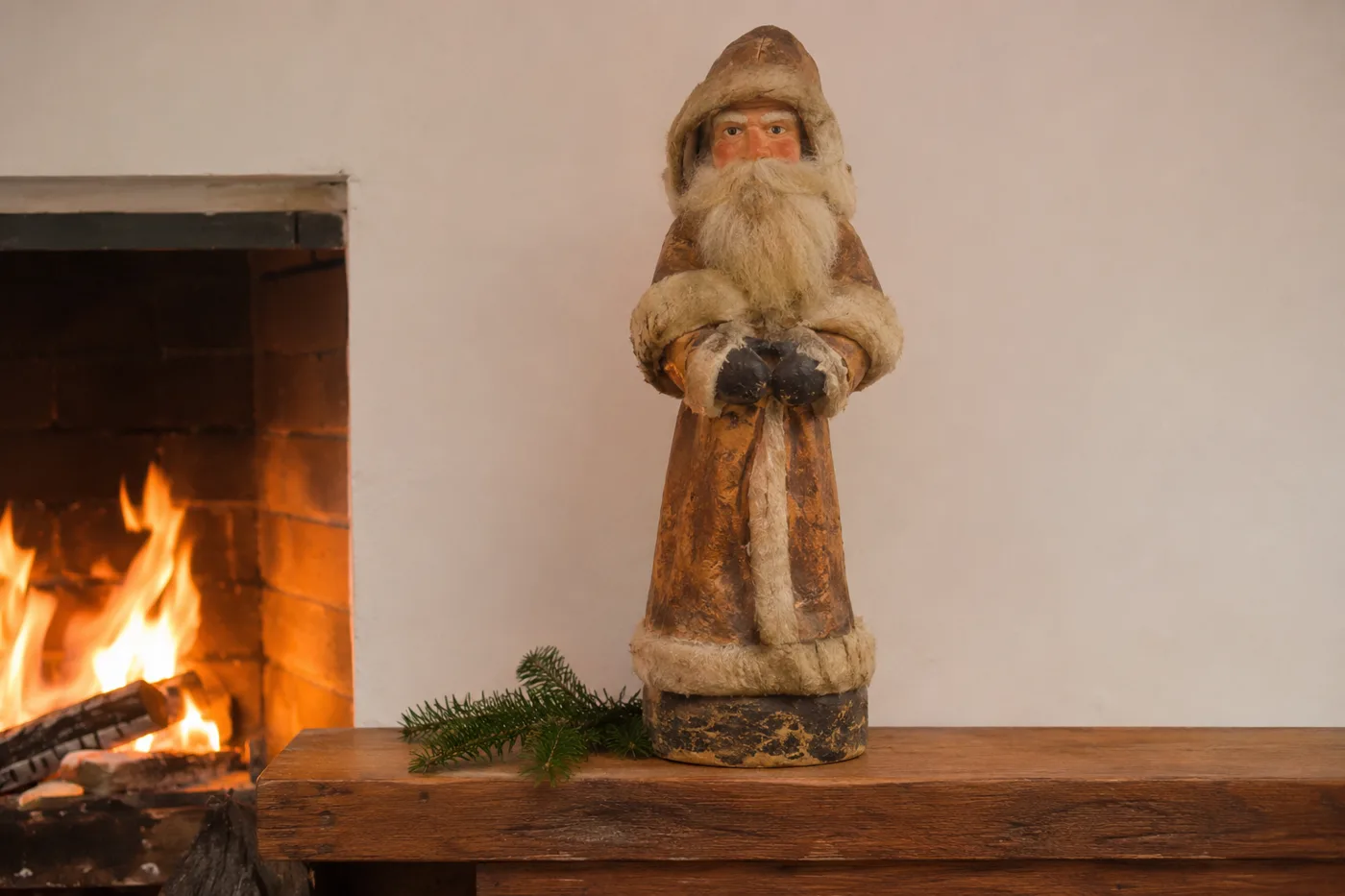
This is the one most people wouldn’t even think to check. It’s a stern old robed Santa made of molded papier-mâché, often hollow inside for candy, and it may be sitting in the bottom of the box because it never fit on a branch.
German makers turned out these Belsnickels from the 1870s until World War I. Red robes are the most common. Purple is the rarest.
In 2024, a 12½-inch German Belsnickel candy container with a rabbit-fur beard went up at auction with an estimate of $800 to $1,200. After 30 bids, it sold for $7,995, more than six times the top of its estimate.
Look at the fine print on that one, too. The auction house noted that its little feather tree was likely a replacement and its base might be later. It still brought almost $8,000 with parts that may not be original.
And that’s not the ceiling. Belsnickels have sold at auction for $19,000 in 2020, $22,500 in 2016 and $25,000 in 2021. If yours is chipped, faded or missing a bit of fur, put it somewhere safe and get it in front of an auction house before anyone decides it’s junk.
Keep reading
 26 Christmas Cookies From the 1960s That Nobody Bakes AnymoreSee all 26 →
More you’ll enjoy
 26 Things Grandchildren Remember About Your House That You Never Notice
 25 Church Bazaar Crafts Every Town Sold That Nobody Makes Anymore
 24 Crafts Every Woman Made in the 1970s That Nobody Does Anymore
The bottom line
Joe Meyers, who chairs the collectors’ club Golden Glow of Christmas Past, says “the holy grail is whatever is near and dear to the collector and varies from person to person.” That works both ways. A buyer might pay well for a piece you’d never miss, and the dented ball you love might bring two dollars.
So make three piles: sell, keep, and check further. The check-further pile gets anything heavy, anything cardboard, anything with a German or Japanese stamp, and anything Santa-shaped that isn’t glass.
Whatever you decide, decide it before the box leaves.
Bonus: Four things to do before anything leaves the box
- Take a close photo of every cap and every stamp before you pack anything for a buyer, because caps get swapped and you’ll want proof of what you had.
- Write down where each piece came from on a slip of paper and tuck it in the box, since a known history helps prove a German or early piece when the label is gone.
- Take fees off the top before you set a price: eBay’s 12 to 15% means a $100 sale leaves you about $85 to $88.
- Whatever you keep, wrap it in acid-free tissue and store it somewhere cool and dry, never in plastic bags, the attic or the basement.
Questions people also ask
Are old Hallmark ornaments worth anything?
Some are. First-in-series pieces like 1980’s Frosty Friends #1 have a value range of $500 to $700, and convention exclusives like 2013’s “Christmas at Kirlin’s” run $2,200 or more. Hallmark has made more than 10,000 designs since 1973.
How can you tell how old a Christmas ornament is?
Start with the country stamp and the cap. “Germany” alone suggests before 1921, “West Germany” means 1949 to 1990, and a U.S. paper cap points to about 1942 to 1946, according to The Tinsel Box and Vintage Green Antiques. Caps can be swapped over the years, so use more than one clue.
How do you price vintage Christmas ornaments?
Price them against sold listings, not asking prices, because what sellers hope for and what buyers pay can be far apart. Most single antique ornaments bring only $10 to $30. Condition matters a lot: a piece in good but worn shape brings about 40 to 60% of what a mint one does.
Where is the best place to sell vintage Christmas ornaments?
eBay tends to bring the highest prices, though its fees run about 12 to 15%. Etsy, estate sales, antique shows and Facebook Marketplace are other options. For rare pieces, the collectors’ club Golden Glow of Christmas Past runs a members’ marketplace and an annual convention.
Should you clean old ornaments before selling them?
No, beyond a light dusting. The Tinsel Box says to avoid water on antique glass and anything with painted details, and to use a soft cloth or makeup brush instead.
How can you tell if a vintage ornament is a reproduction?
There’s no single surefire test, so look for several signs together. Reissued Shiny Brite boxes carry barcodes and recent copyright dates, and newer pieces tend to look, in Jerry Arnold’s words, “very shiny, no flaws, no imperfections.” Caps that look too clean or fit oddly are another warning sign.

- 17 Christmas Eve Traditions From the 1960s That Quietly Disappeared - November 24, 2026
- 16 Old Christmas Ornaments That Could Be Worth Real Money - November 24, 2026
- 17 Christmas Candies From the 1960s That Disappeared From Grandma’s Candy Dish - November 24, 2026