Fourteen door ideas, from a classic wreath to a hallway-friendly one for apartments, with what each does in wind and cold and how to hang it without damage.
Have a storm door? Hold on for #1. The air trapped behind the glass can get far hotter than the air outside.
The wind picks up after dark, and there it is again: a soft thump against the front door, then the faint scrape of a wire frame dragging across the paint. You told yourself that hook would hold, and it did. The loose part is the bottom of the wreath, swinging free every time a gust comes up the street. Once you know that, you can decorate a door for Christmas almost any way you like. Wood, glass, metal or a hallway door, it can stay pretty until the needles give up.
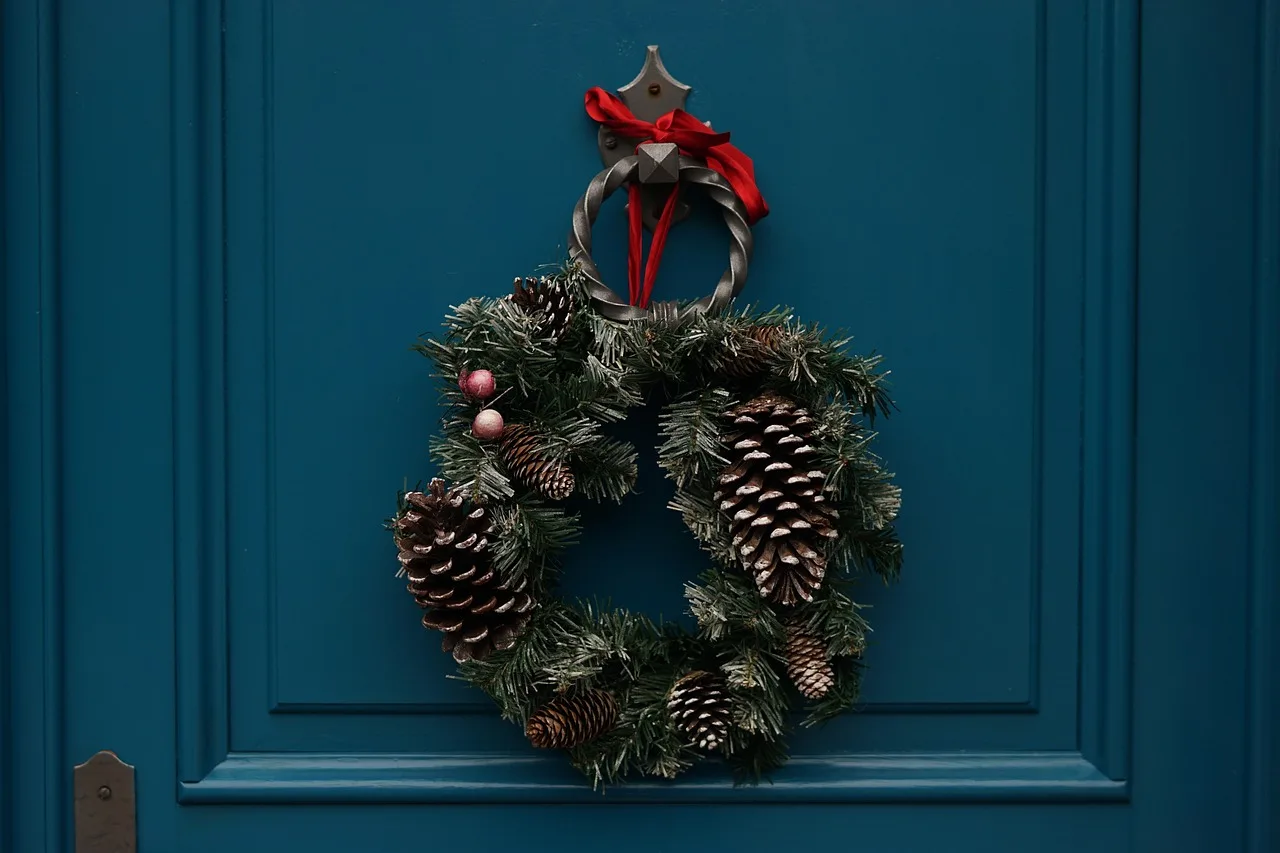
#14 Classic evergreen wreath with a red bow
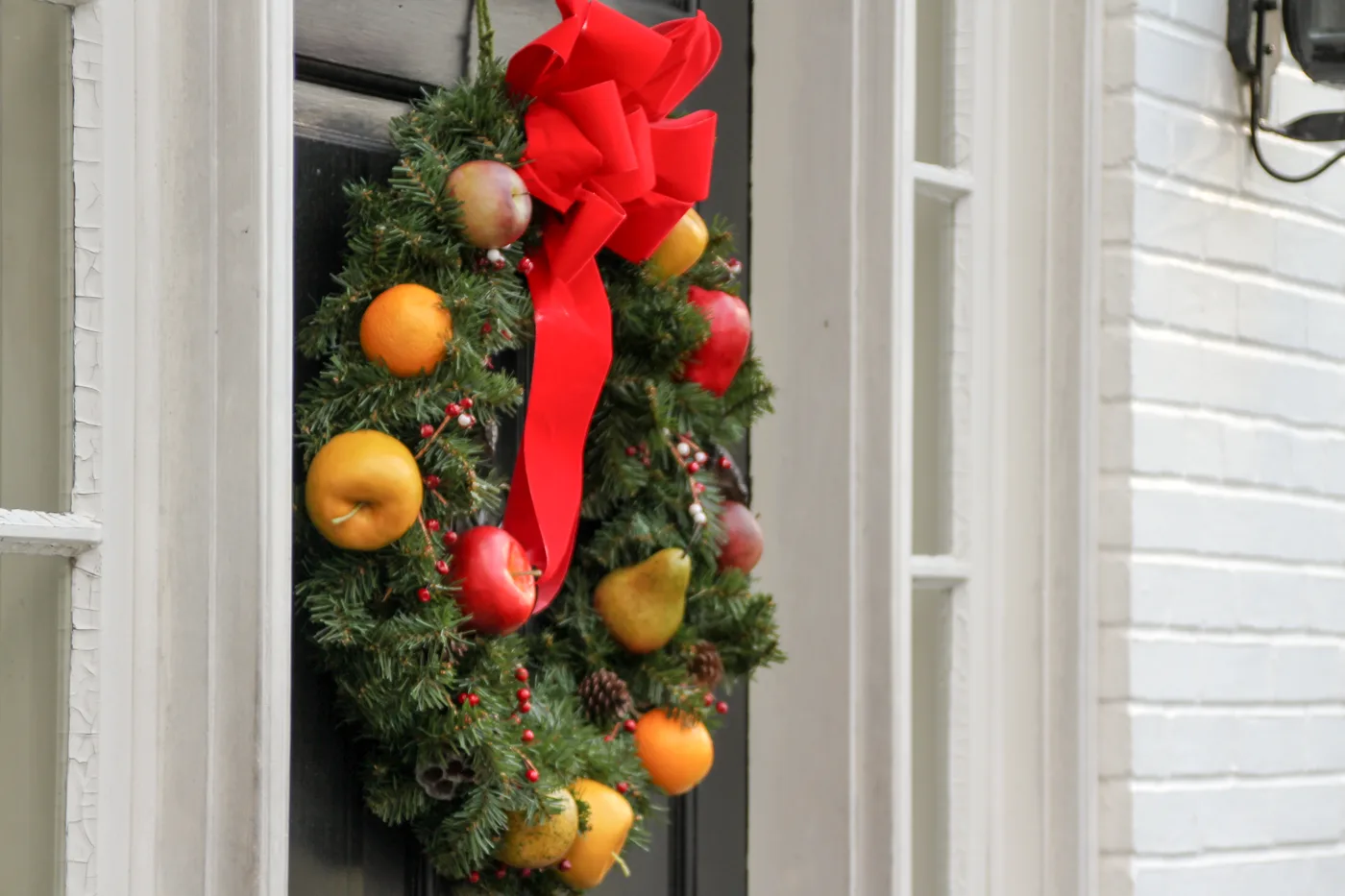
Start with size, because that’s the mistake you can see from the street. A door company’s rule is a wreath about two-thirds the width of your door, measured edge to edge without the trim. A 36-inch width is a common door size, and on a 34- to 36-inch door that’s 22 to 26 inches across. A-1 Doors & Mouldings says a 24-inch wreath is “a safe choice.”
Center it side to side, with its middle at about eye level or centered on the door’s top panel. Then walk out to the sidewalk and look before you commit. A wreath that seemed enormous in the store can shrink to a cookie on a big door.
The greens matter as much as the size. Here’s how the usual ones hold their needles, according to Clemson Extension’s guide to fresh greenery:
| Green | Needles | Worth knowing |
|---|---|---|
| Fir | “Excellent” | Fraser and balsam stay fresh longer |
| Pine | “Excellent” (most pines) | Dries out faster indoors than Fraser or balsam, per Minnesota Extension |
| Spruce | “Poorer” | Blue spruce holds better than others |
The fir tip comes from University of Minnesota Extension, which points to Fraser fir and balsam for wreaths and garland because they stay fresh longer.
Now the part the pretty-picture pages skip. A wreath left up into spring is prime real estate. “Door wreaths appeal to many backyard birds because they provide stable, sheltered platforms,” says Ben Haywood, director of community science at the National Audubon Society, quoted on AOL. House finches nest from April to July, and a door wreath suits them fine.
If you open the door one spring morning to a tiny cup of twigs and a startled bird, leave it alone “until the young have fledged,” Haywood says. The U.S. Fish and Wildlife Service is firmer: active nests with eggs or chicks “may not be touched or destroyed without a permit.” Haywood’s prevention advice is flat decorations, or a wreath that only hangs outside nesting season. A wreath still on its hook in late March is a vacancy sign.
#13 Garland arched around the whole door frame
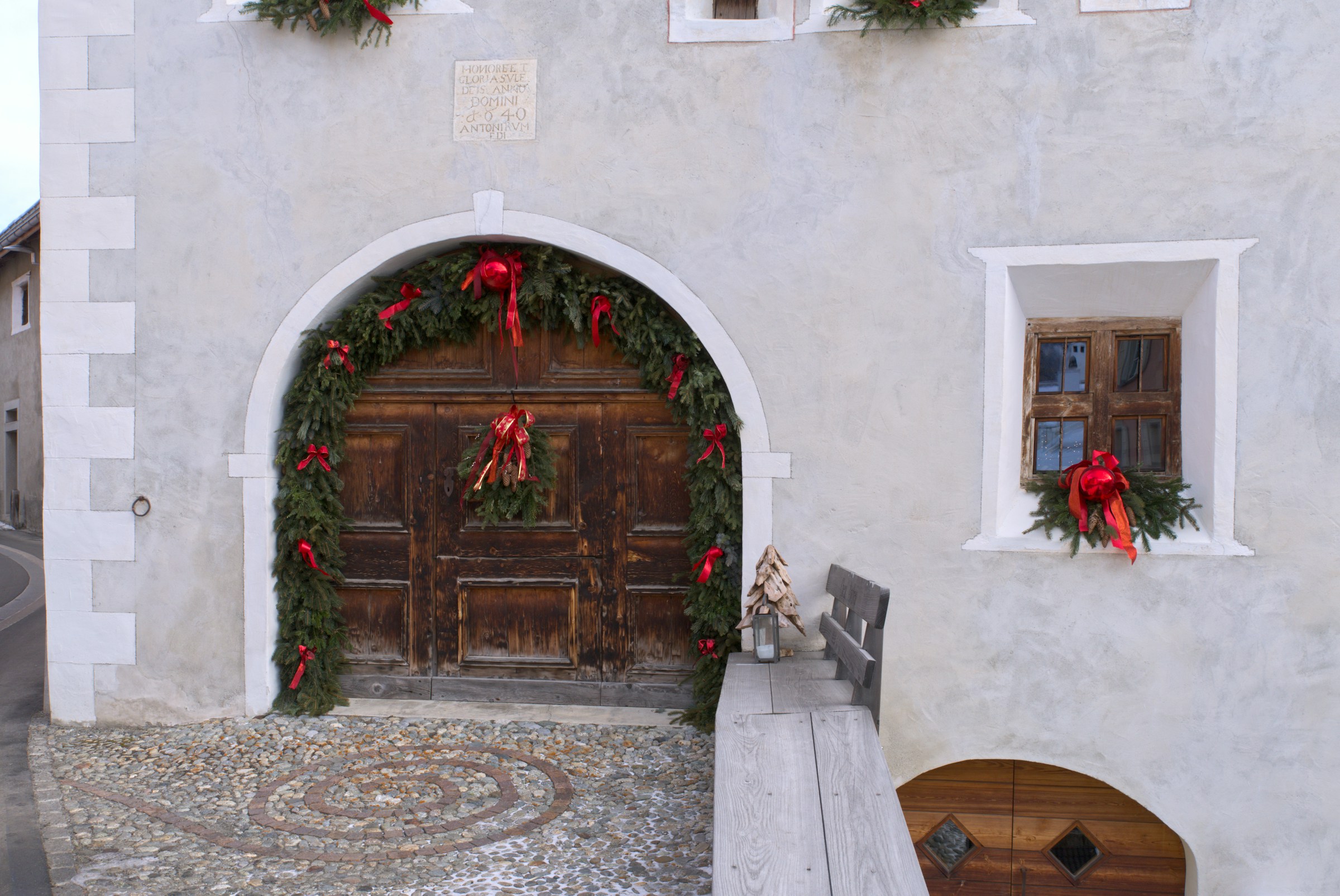
Buy more than you think you need. A standard doorway 3 feet wide and 7 feet tall takes about 17 feet of garland to run up one side, across the top and down the other, according to the Bless’er House blog. Add more if you want it to pool on the step.
Her no-nail method uses Command Cable Bundlers, small clips that go on with adhesive strips. Space them every 6 to 12 inches, closer for a heavy garland. Press each strip for 30 seconds, press the clip on for another 30, then wait a full hour before you hang anything. That hour is the hard part.
Your wall decides whether adhesive hooks will work at all. A Montana building-supply store lists the surfaces for Command Outdoor products as painted wood, metal, glass, vinyl siding and smooth tile, and doesn’t recommend them for brick or stucco. Cold matters too, and the sticking test for that is in the box at #3.
On brick, a blogger at Renovated Faith found adhesive strips wouldn’t stick. So she hot-glued three large Command hooks right to the brick and tied the garland on with pieces of fishing line about 2 feet long.
All of this happens at the top of the door frame. Lay the garland out on the step first, then work from the ground or a step stool so you’re lifting, not reaching.
Falls and holiday decorating – About 14,900 people were treated in emergency rooms for holiday decorating injuries in what the U.S. Consumer Product Safety Commission (CPSC) calls the 2023 season, Nov. 1, 2022, to Jan. 31, 2023. That’s about 160 a day. – “Nearly half” involved falls. By our estimate, that’s roughly 6,700 to 7,450 falls in one season. – The season before, the count was about 14,800, with “over 40%” from falls. – The figures cover every kind of holiday decorating, indoors and out, so a door arch is only one small slice of them.
#12 Front door wrapped in ribbon like a present
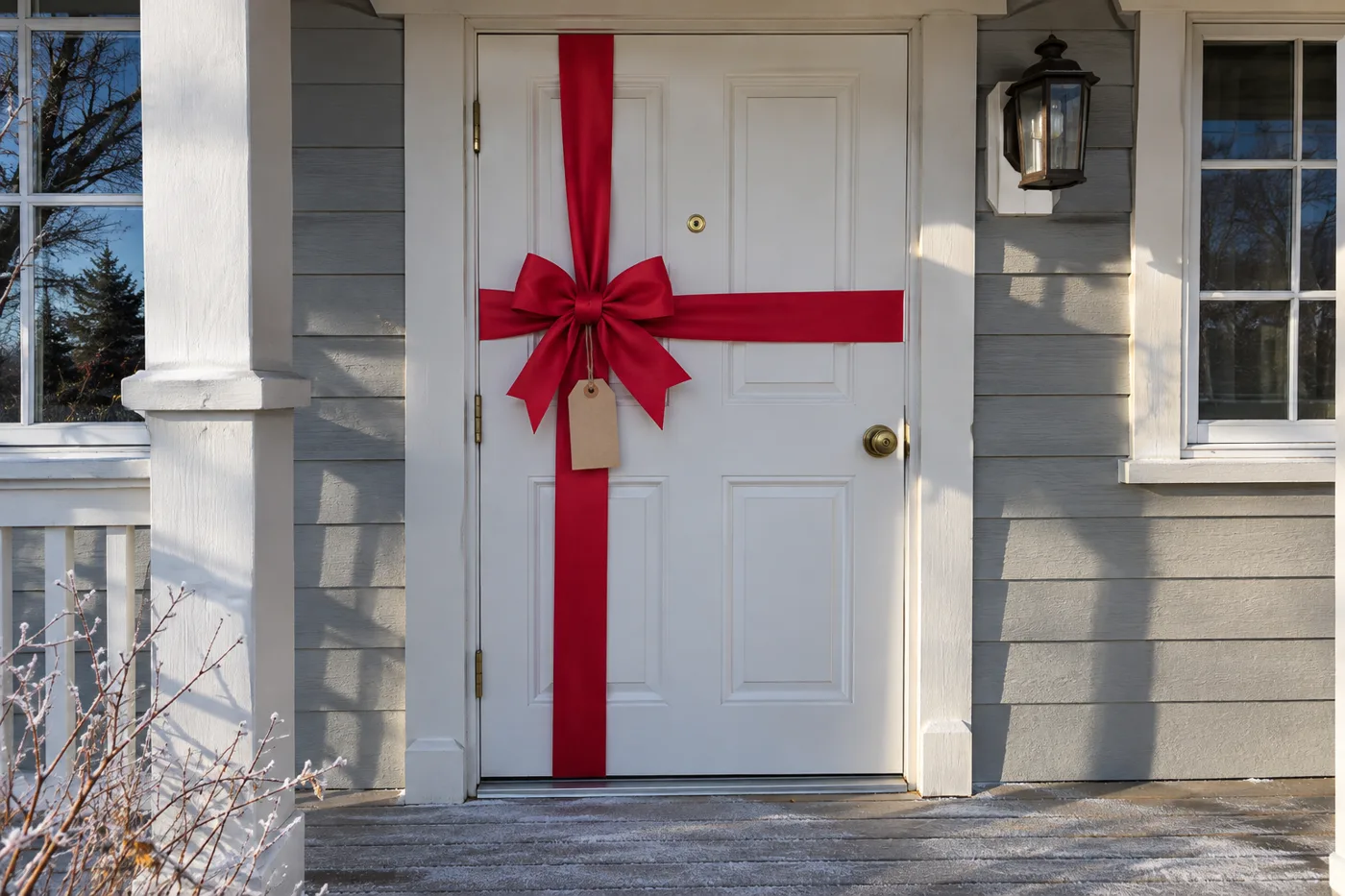
The gift-wrapped door looks like a whole afternoon’s work. It’s two strips of ribbon, some tape and a bow. Here’s the method from Liz on Call:
- Run one strip of ribbon top to bottom and one side to side.
- Wrap each end around the door’s edge and tape it so no tape shows on the back.
- Fix a big bow where the strips cross, using a pipe cleaner.
- Hang a tag cut from card stock with removable strips.
She doesn’t say how much ribbon to buy, so we worked it out for a standard 36-by-80-inch door. About 3½ yards covers the two straps, with a few inches to wrap each edge. A ribbon shop’s guide puts a large statement bow at 6 to 8 yards. So plan on roughly 9½ to 11½ yards, and more if you wrap all the way around to the inside.
Before you tape anything, go inside and look through the peephole. Some viewers of ribbon-door posts on TikTok and Reddit said a ribbon across the door would block the peephole or hide the handle. “This is gorgeous but I’d have to skew it one way or the other cause I need my peephole,” one viewer wrote. Several commenters said they would move the cross off-center.
Commenters caught one more thing. If you wrap the ribbon clear around, it leaves a cross on the inside face of the door too. Some people loved that. Others would slide it to one side. Decide while the tape is still in your hand.
Did you know?
Ribbon sold for outdoor use is made to “better withstand bad weather,” yet its maker says that outdoors “ordinarily you will get at least one season” from it.
#11 One oversized velvet bow, no wreath
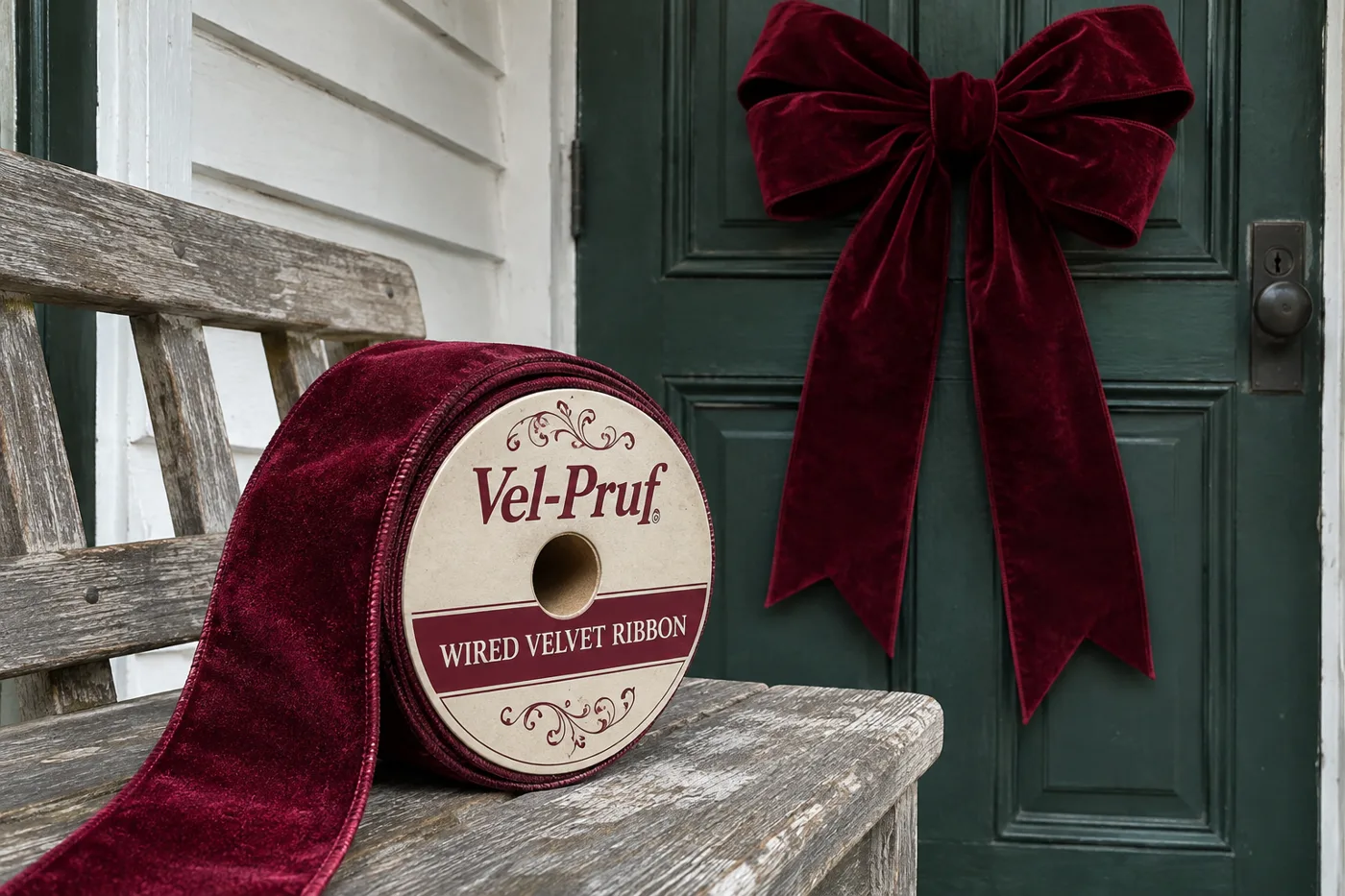
With a single big bow, the ribbon decides whether it still looks plump in January.
Wired ribbon is the one for outdoors. It keeps its shape better and lasts longer, says American Ribbon Manufacturers. Unwired ribbon can work if you make smaller loops and more of them.
For velvet, look for a poly-backed kind made to live outside. That same maker’s Vel-Pruf is one, made in the USA in widths from 5/8 inch to 6 inches. It comes on 25- or 100-yard rolls for $9 to $93, depending on size and color. At 6 to 8 yards per statement bow, a 25-yard roll makes about three, which covers the front door and a neighbor’s.
A few more weather-resistant habits:
- Cut the tails at least one-third as long as the bow is wide, the ribbon shop guide advises, so it doesn’t look stubby from the street.
- Every ribbon fades in time, so a bow under a roof or out of the afternoon sun keeps its red longest.
- Store ribbon flat inside a thick book between seasons. The old phone book finally has a job.
Then there’s the bow that comes out of storage looking sat on. Untie it and run a flat iron on its lowest setting slowly down the ribbon, twice, then retie it, eHow suggests.
Readers who tried a dryer trick on crushed bows had mixed luck. One found jumbo bows only came back on low heat, and another said it didn’t work at all. A third suggested a hair dryer instead, with gloves on, because melted ribbon can burn skin. The flat iron is the surer bet.
 You might also like22 Things You’re Saving That Your Children Will Throw Away
#10 Southern magnolia leaf wreath
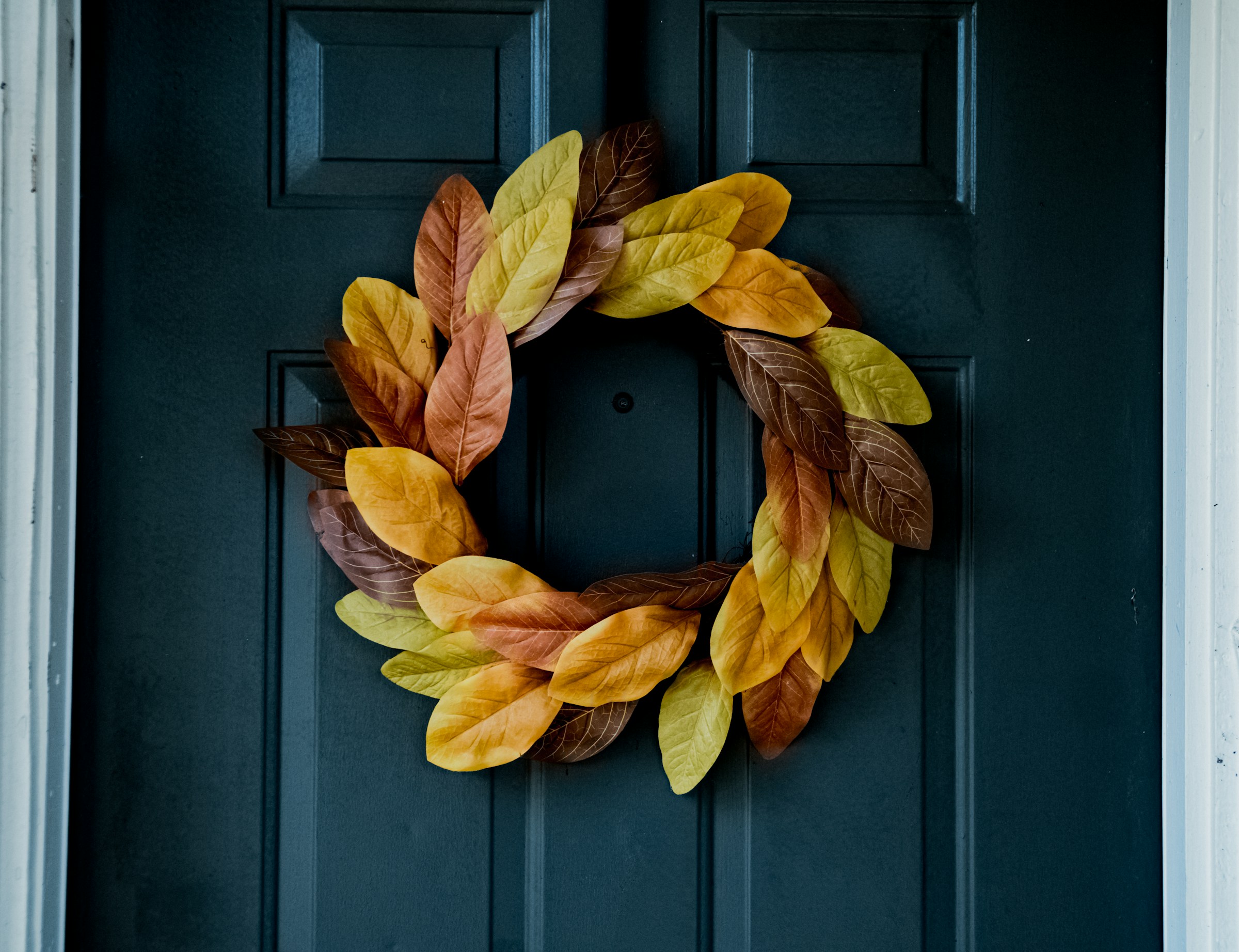
Most fresh wreaths spend the season slowly dying. A magnolia wreath dries, and that’s the plan. “The leaves are supple when they first arrive, then dry over the course of 10 to 14 days,” Julie U. Roth, co-owner of The Magnolia Company, told Southern Living. Some of her customers have kept theirs in good condition “for decades.”
That makes it the in-between answer to faux greenery vs fresh greenery: real leaves with staying power. Clemson Extension says magnolia leaves “hold up very well, even without water.”
The surprise is underneath. Turn a leaf over and the back is either pale green or a fuzzy rusty brown. Clemson’s magnolia guide names trees grown for that color, like ‘Bracken’s Brown Beauty’ and ‘Claudia Wannamaker’ for rusty brown and ‘Kay Parris’ for a coppery velvet. Set a few leaves brown side out and the wreath goes two-tone with no ribbon at all.
The leaves run 5 to 10 inches long, so even a modest wreath reads from the curb. If you grew up in the South, there may well be one of these trees in the yard or down the block. It grows quickly, so you can cut branches selectively and the tree replaces them the next growing season. Farther north, you’ll be ordering one, and it will arrive soft and green and finish drying on your door.
#9 Planters flanking the door, frozen in place
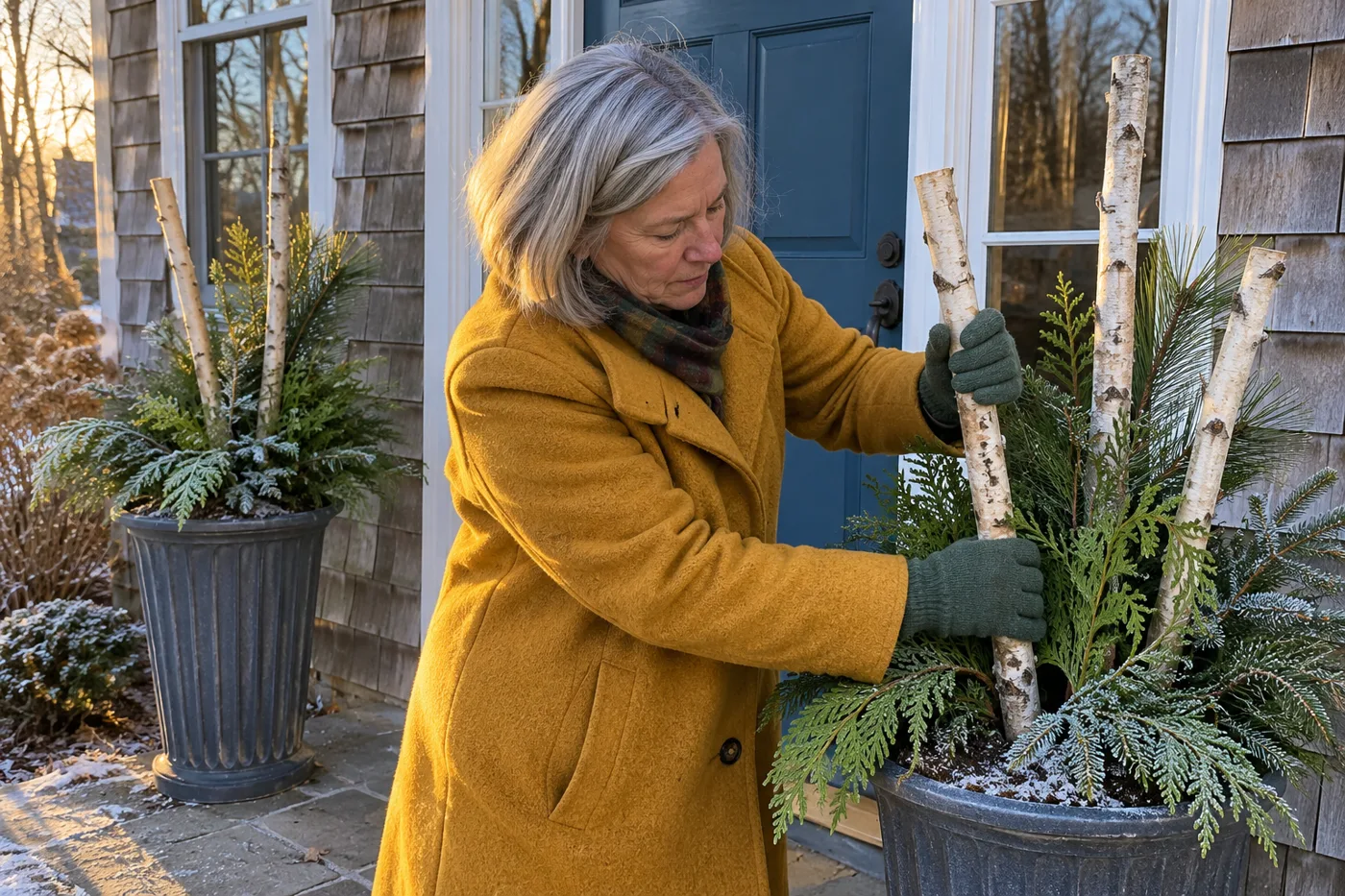
The trick that holds a door planter’s arrangement in place all winter is ice. Landscape designer Shannon Gage sets cut branches in topsoil, though sand or floral foam work too. Then she says to “add water and place it outside to freeze.” Once frozen, the pot holds the whole arrangement for the winter.
Her mix:
- Cedar, balsam and pine as the base
- Red or yellow dogwood and birch limbs for height
Terracotta can crack in the cold, she warns, so slip a plastic pot inside the terracotta and plant into that.
University of Minnesota Extension says spruce tips pushed into soil and watered in can “last all winter until spring arrives,” because the frozen soil keeps the tips from drying out. During a long thaw, water them the way you’d water summer flowers.
A matched pair, one on each side of the door or at the bottom step, does more for an entrance than one big pot ever will.
#8 Ornament clusters wired into the garland

Plan on about 8 ornaments for every foot of garland. That’s the rate the Renovated Faith blogger landed on: 150 shatterproof ornaments on 18 feet, each fixed with a 3-inch piece of craft wire. For the 17-foot doorway arch in #13, that’s about 135.
She sticks to non-glass ornaments on garland “in case any fall off.” Outdoors there’s a second reason. “Glass does not like freeze and thaw,” says the ornament shop St. Nick’s, which calls shatterproof “the reasonable choice” for a door wreath or railing garland.
Shatterproof has a shelf life of its own. Plastic finishes “can fade and scuff in sun and sleet over a few seasons,” the same shop says.
And the old silvered glass ornaments stay inside. That shine is silver coated on the inside of double-walled glass through a tiny hole that was then sealed, The Glass Museum explains. If damp gets past the seal, the silvering goes cloudy, fades, peels and finally disappears. Bohemian glassworks were making them from about 1860, so if you inherited a few, they may be older than anyone who ever hung them.
#7 Outdoor outlet first, then a dusk timer
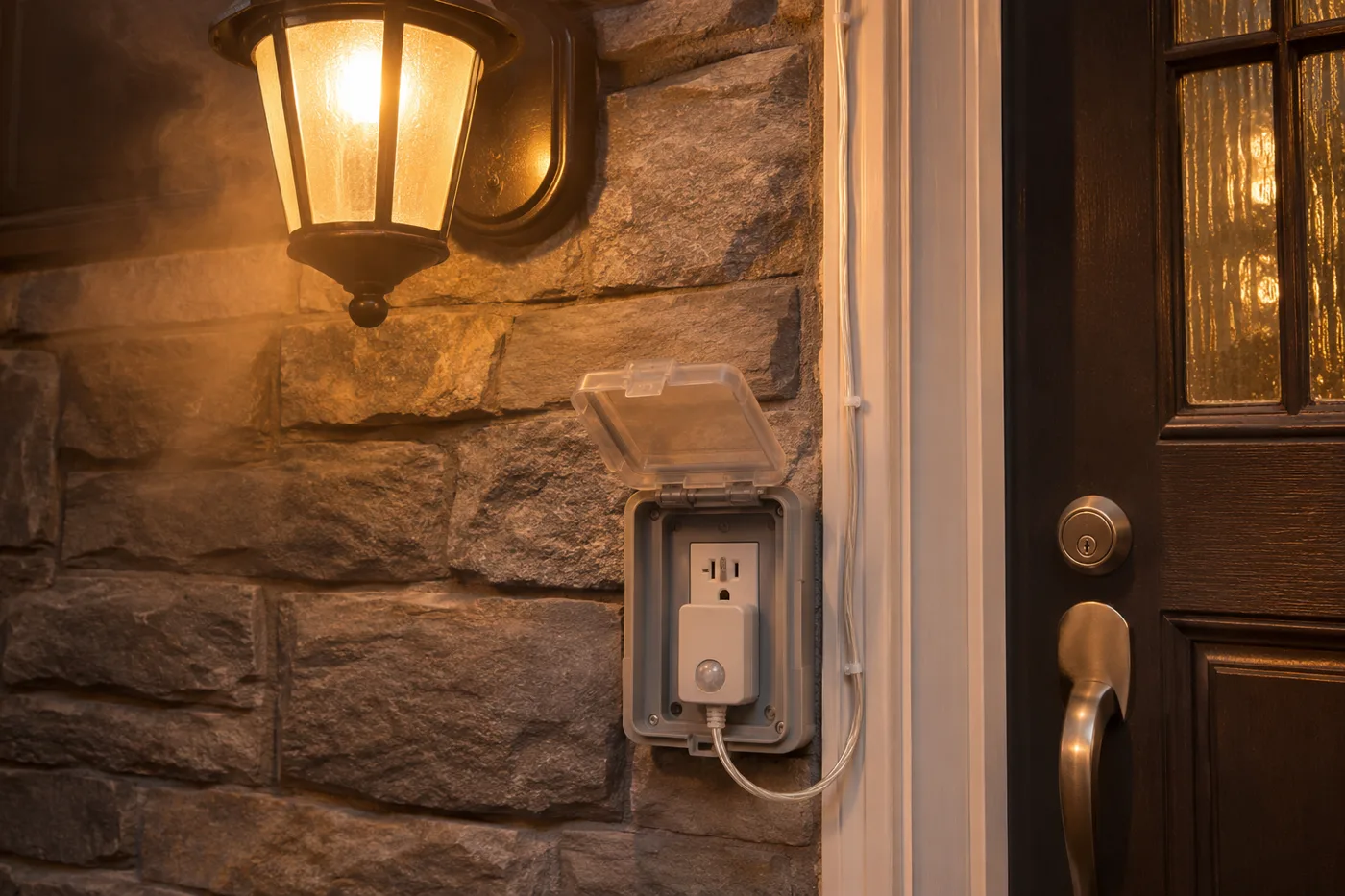
Start with the outdoor outlet, before you buy anything for outside. If the nearest outlet is around the corner of the house, that changes what you buy, and it may send you straight to #6.
The outlet should be GFCI-protected. The CPSC says outdoor lights should carry a label certifying outdoor use and plug only into a GFCI outlet or a portable GFCI.
For old-style incandescent lights, the CPSC’s limit is never more than three sets strung together.
Then add the piece that keeps you indoors on a cold evening: a photocell timer. It switches on at dusk and off at a set hour or at dawn, so it follows sunset as it shifts without you resetting a thing. The same shop says to keep every plug connection up off the ground.
Fort Oglethorpe, Ga., Police Chief Keith Sewell recommends timers as well, and police there advise against running cords through windows or doors.
Did you know?
A 100-light LED strand typically draws just 4 to 7 watts, according to the lighting shop The Christmas Light Emporium.
#6 Battery string lights worked into a wreath
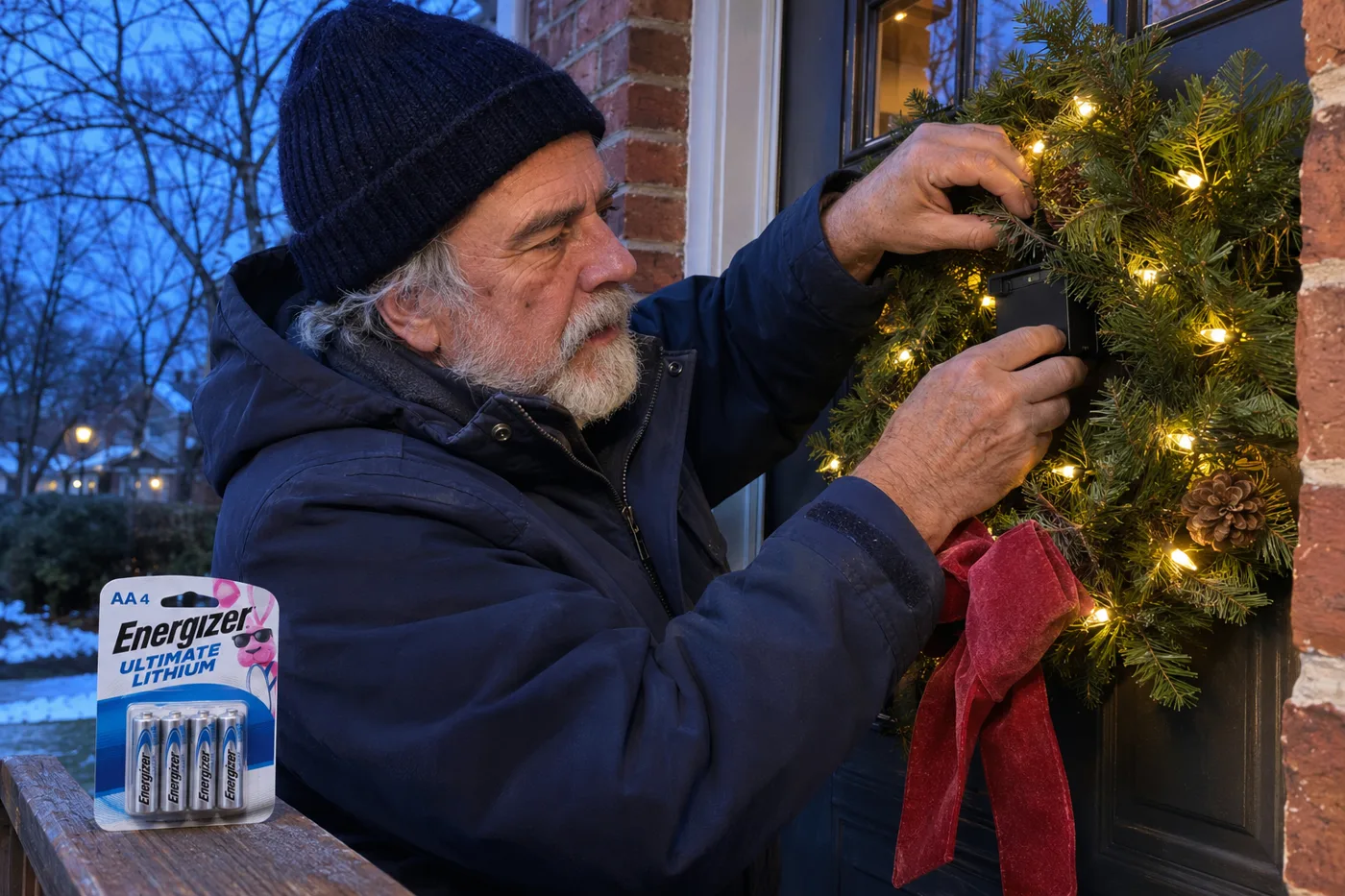
No outlet near the door? Battery-operated lights tucked into the wreath do the job, as long as the batteries can take the cold.
In a cold-weather test by the trail-camera shop TrailCamPro, an Energizer alkaline AA gave only 33% of its capacity at 5°F, while an Energizer Ultimate Lithium AA kept 97%. That test wasn’t about wreath lights, but our takeaway for a wreath on a cold, windy door is simple: buy lithium.
The alkalines aren’t ruined. Their lost power comes back once they warm up, so bring them inside and put them in the TV remote.
 You might also like19 Holiday Traditions Women Over 60 Have Quietly Stopped Doing
#5 Wreath held by magnets on a glass door
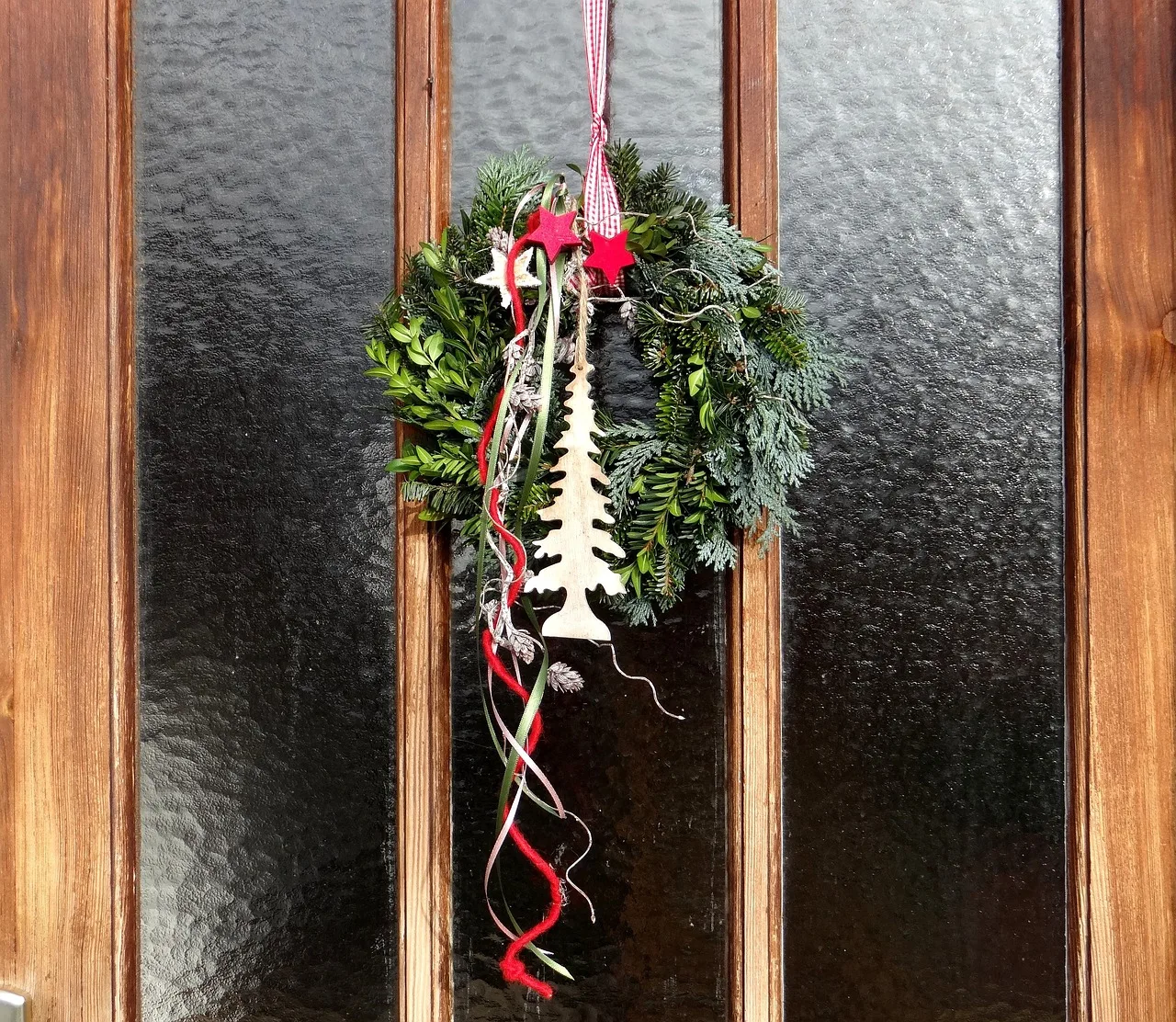
A front door that’s mostly glass gives you nothing to hook into, and drilling is out. One homeowner who decorates only their front door solved it bluntly, on Reddit’s r/ChristmasDecorating: “I bought two 1600lb fishing magnets and placed one on each side of the glass to hold it in place without having to drill into or damage my door.”
The version made for wreaths is a two-piece magnetic hanger. One magnet goes inside the glass and the hook magnet goes outside, with the pane sandwiched between, Stealthe Decor explains. Nothing sticks to the paint and nothing pierces the door. Check your glass first, though. Haute Decor sells its Attract two-piece hanger for single-pane glass, and its Amazon listing says it won’t work on double-pane or thick glass.
Some magnetic hooks mount on the door’s frame instead of the glass, and those need a steel frame. Before you order one, test your frame with a small magnet. If it doesn’t stick, as with aluminum, a magnetic hook won’t hold on that frame.
#4 Vintage Flexible Flyer sled leaned by the door
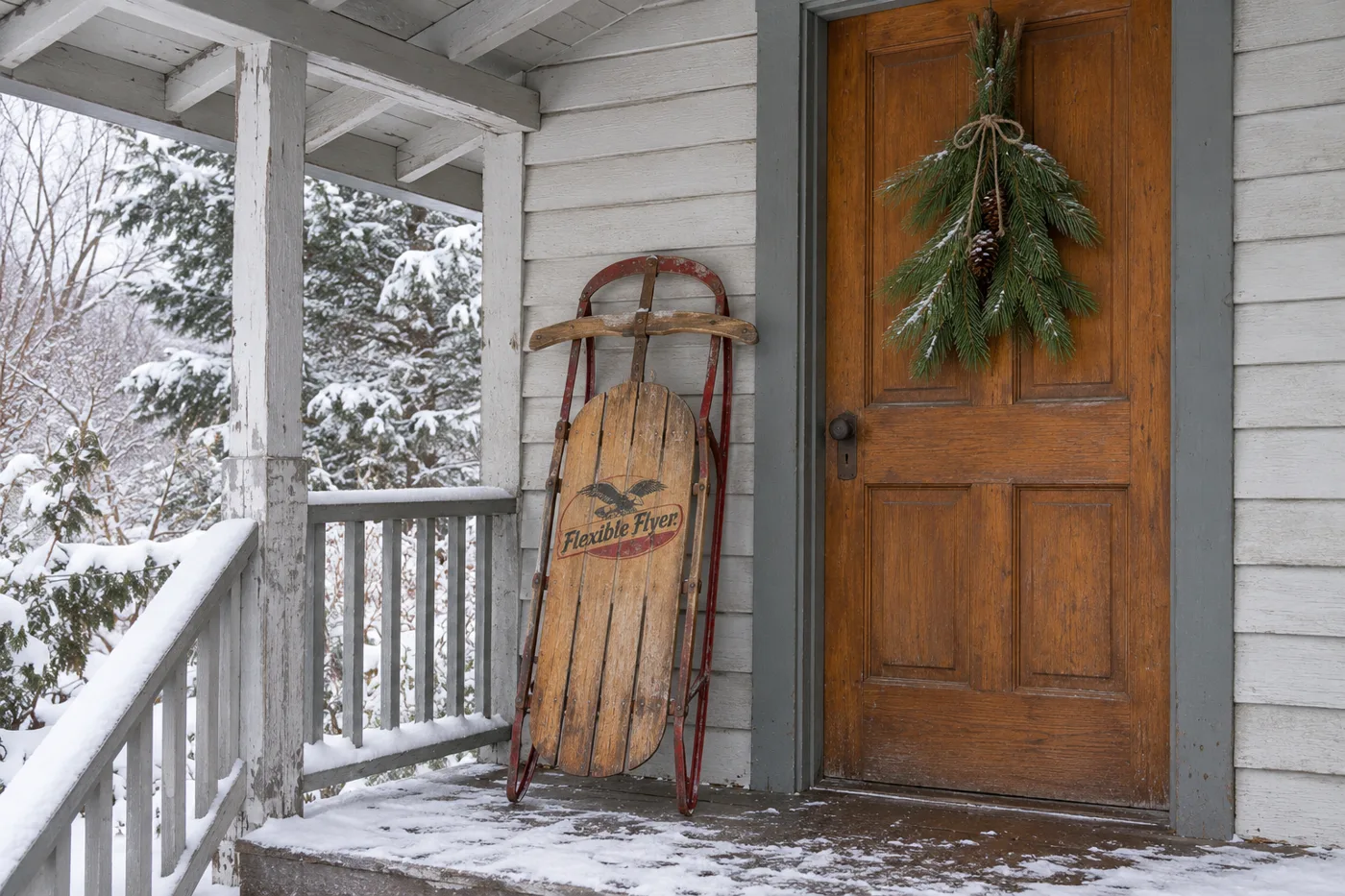
A wooden sled propped beside the door says winter before anyone reaches the bell. If there’s one in your family, you may remember it as the sled you could actually steer.
That was the whole idea. Samuel Leeds Allen of Philadelphia patented the Flexible Flyer on Aug. 13, 1889, and the Hagley Museum and Library calls it “the first steerable runner sled.” His company made farm equipment, and Allen held almost 300 patents.
The sled’s later life wandered. Here’s where it was made:
- Philadelphia, until the S.L. Allen factory closed in 1968
- Medina, Ohio
- Mississippi, then Olney, Illinois
- China, where most are still made, with some made in Maine
Today a company called Paricon, Inc. owns the name. So if your sled went down its first hill before 1968, it came out of Philadelphia.
If you have a porch roof or an overhang, lean it there. If not, carry it in before a storm and back out when it clears.
Did you know?
Stores turned the Flexible Flyer down for years, until Wanamaker’s and Macy’s began selling it around 1900. In 1915 about 120,000 sold, with almost 2,000 in a single day, Hagley says.
#3 A second tie that limits wreath banging
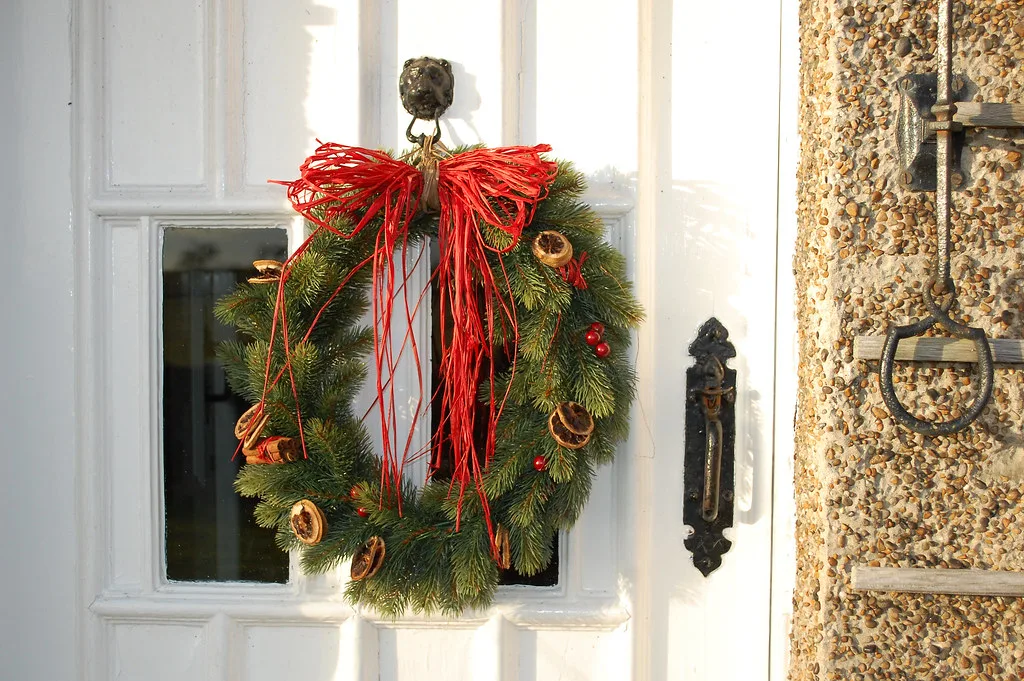
Most wreaths hang from one point at the top, which leaves the bottom free to swing. The fix from Russell Wreaths is a second, loose tie near the lower back of the wreath. Fasten it to something secure, never to the decorations. “The lower tie should limit movement, not pull the wreath down,” the company says.
Then pad wherever the frame touches the door. A felt pad, a soft sleeve or a clear bumper does it. Check everything after the first strong wind, when you’ll find out what moved.
On a glass pane, there’s nothing to tie to, so the glass itself does the work: a second suction hook mounted upside down holds the bottom of the wreath against the glass, or fishing line runs from the bottom, House Digest reports. TikTok creator Jessica Cole shared the fishing-line trick: “Because the wreath is strapped tight on two ends, it moves less in the wind!”
Both suction cups and adhesive hooks need the right temperature to grip.
The cold-day sticking test – Command Outdoor products are listed for temperatures from minus 20°F to 125°F, but put them on above 50°F when possible. Strips applied at about 20°F will “never reach full strength,” the store warns. – Clean the spot with rubbing alcohol first, and wait an hour before the wreath goes on. – Suction cups bond above 40°F, says the maker, Adams. Wash the cup in warm soapy water and rub a tiny dab of Vaseline on the rim. – Press the cup now and then to “burp” out air that creeps in as the temperature swings.
#2 Apartment door with an over-door hanger
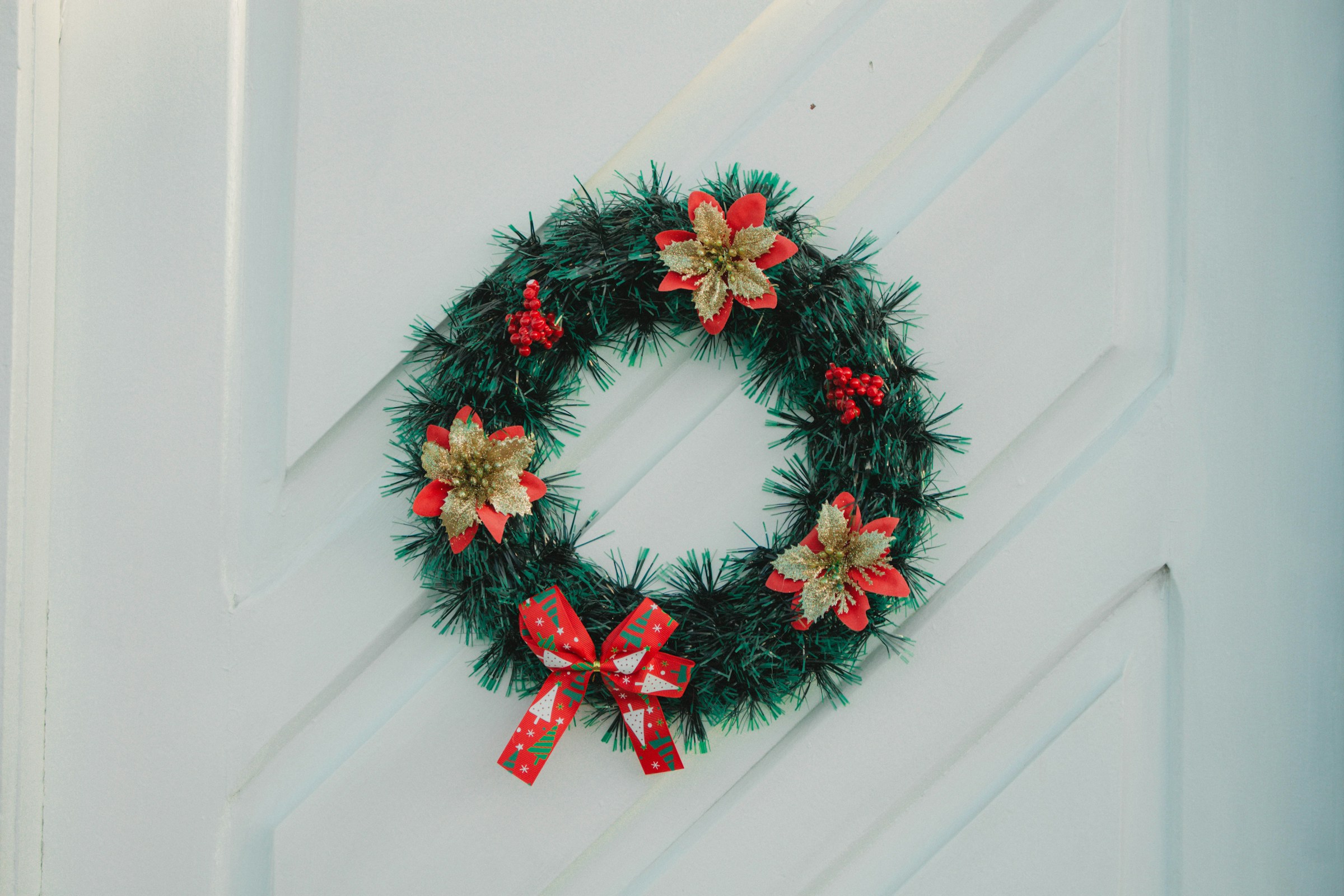
Ask the building before you buy anything for a hallway door, because the answer can be anything from a wreath to nothing at all. On an industry forum thread about five years old, where property managers compared their policies, the range was wide:
- Debbie Turner Gallogly’s residents have “only a wreath or small decoration allowed on their doors.”
- Karen Mallinger accepts decor “if it doesn’t block the door and doesn’t extend into the path of the hallway.”
- Another manager’s leases bar hanging anything on the door.
- And Rachel Lynette Payton wrote: “Fire inspector came by said all of these things outside doors have to go.”
The fire inspector is the wild card. A Joint Commission rule for healthcare settings, cited in a facilities-management article on fire codes, says “decorations cannot obscure a door or interfere with its operation,” and the local fire code official decides which rules apply to a given building. You can’t sort that out from the hallway, so the property office is your first call.
Once you have a yes, an over-the-door hanger works on solid wood or fiberglass doors “if the door still closes without resistance,” Russell Wreaths says, and then you check the latch. Hang it, shut the door from the hallway side and listen for the click.
Thick wreaths, wide baskets and bulky signs can bump the wall, the frame or the peephole, a renter decor site warns. In a hallway, a slim wreath beats a fat one. Many apartment doors are metal, which makes a magnetic hook a no-adhesive option. Test with a small magnet first, since aluminum won’t hold one.
#1 Wreath on a storm door’s glass
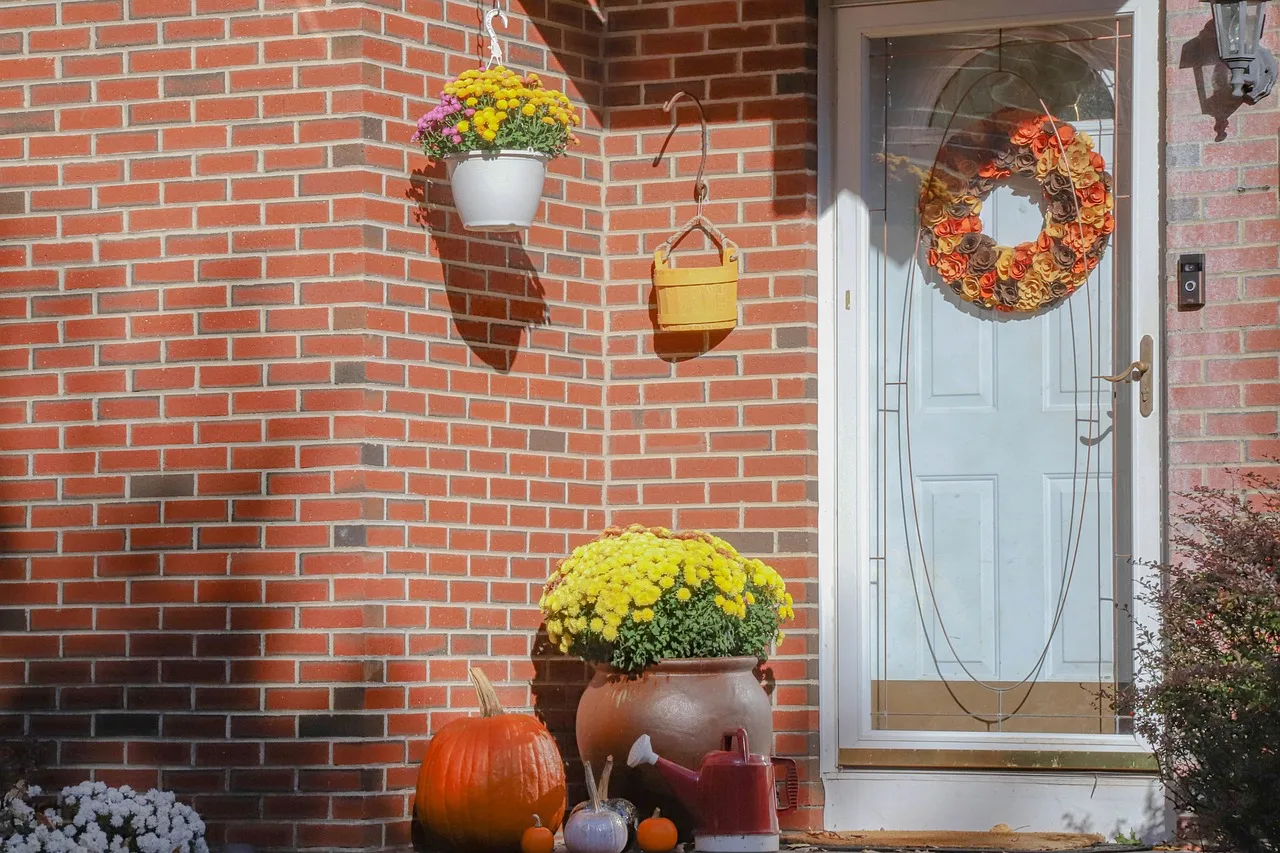
A storm door gives you two doors to decorate and one surprise. The air trapped between the storm glass and your front door can heat up “far beyond the outdoor temperature,” says the window and door company Nashville’s Windows and Doors. It rates the risk high on south- or west-facing doors with little shade, especially dark ones, and low on north-facing or porch-shaded doors.
That matters because the obvious spot for a wreath is the front door itself, right inside that gap. Fresh greens don’t do well in heat and sun. Lynch Creek Wreaths says “direct sunlight drastically shortens lifespan,” and Lynch Creek Farm owner Andy Hunter told Southern Living that a shaded spot such as a porch or portico is ideal, preferably with the wreath protected from west-facing exposure.
So if your door faces south or west in full sun, a fresh wreath will do better somewhere shaded.
The door company’s own fix for the heat is a storm door whose glass slides open to a screen.
For hanging it on the storm door, the storm-door maker Cheney Door lists four ways and calls the over-the-door wreath hanger the easiest and safest. It rests on the frame and “never touches the glass,” Stealthe Decor adds.
| Method | Best for | Watch for |
|---|---|---|
| Over-the-door hanger | Storm door frames | Must sit flush, not rock; never on sliding doors |
| Ribbon loop over the top | No hook showing | Small adhesive hook inside holds it |
| Zip ties | Doors with a metal grille | Felt underneath so nothing scratches |
| Suction cups | Plain glass | Clean, dry glass; see the box at #3 |
Whichever you pick, open and close the door a few times afterward. A hanger that rubs at the top lets you know on the very first swing.
Keep reading
 26 Christmas Cookies From the 1960s That Nobody Bakes AnymoreSee all 26 →
More you’ll enjoy
 26 Things Grandchildren Remember About Your House That You Never Notice
 25 Church Bazaar Crafts Every Town Sold That Nobody Makes Anymore
 24 Crafts Every Woman Made in the 1970s That Nobody Does Anymore
The bottom line
Before you buy a single bough, step out to the sidewalk around three in the afternoon and look at your door. Is the sun on it? Does the wind come around that side of the house?
Those two answers make most of the choices for you: fresh or faux, inside the storm glass or out, one tie or two. A shaded door can take almost anything. A sunny, windy one wants a magnolia wreath, wired ribbon and a second tie at the bottom.
Then think about the door you walked up to as a child, the one where you knew Christmas had started at that house. What was on it, and did it make it all the way to New Year’s?
Bonus: Five small habits that keep the door fresh longer
- Before you buy a fresh wreath or garland, bend a needle. It should flex, not snap, Clemson Extension says.
- For greens you arrange yourself, crush the ends of woody stems and soak everything in water overnight before you start, also from Clemson.
- Spritz the cut ends every two or three days, the way Lynch Creek Wreaths advises.
- If birds start scouting your wreath in early spring, before any nest is there, hang reflective bird tape or aluminum foil nearby, a deterrent suggested by University of Missouri extension wildlife specialist Robert Pierce in the same AOL piece.
- Store a faux wreath somewhere cool and dry and avoid the attic, because temperatures swing there, per Nearly Natural. The Renovated Faith blogger found ornaments hot-glued to her wreath came loose when it was stored in the attic, so she now keeps it in a closet.
Questions people also ask
What wreath to put on the front door after Christmas?
A winter wreath of fresh-cut greens with winterberry, rose hips, curly willow or dried seed pods can stay up after Christmas. Katherine Tracey, who owns the Massachusetts garden shop Avant Gardens, says winter wreaths of fresh-cut greens “will last well into February,” and suggests skipping the red bow. She warns that broadleaf evergreens such as boxwood “desiccate quickly, especially indoors.” Take it down before April, when house finches begin nesting.
How long does a fresh wreath last outside?
A fresh wreath lasts about 6 to 8 weeks outdoors in colder northern areas and 4 to 6 weeks in dry or southern areas, says Lynch Creek Wreaths, compared with about 3 weeks indoors. Some cold-climate customers report theirs lasting through March. Direct sun “drastically shortens lifespan,” Lynch Creek says.
When should you put up outdoor Christmas decorations?
No official body we checked sets a date, but early or mid-November, before snow and ice arrive, is a sensible time for outdoor pieces. “I put the lights on the house in November, much safer to do it before the chance of snow increases,” a homeowner wrote on r/christmas. A mild day also helps adhesive hooks, since strips applied at about 20°F will “never reach full strength,” a Montana retailer warns.
Can you use an anti-wilt spray on a wreath?
Wilt-Pruf’s maker says it can be used on wreaths and garland, but Clemson says not to use these sprays on cedar, juniper berries or blue spruce. Wilt-Pruf, an anti-desiccant, can be mixed 1 part to 10 parts water and sprayed when it won’t freeze on the foliage, the maker says. Clemson Extension warns these sprays can damage the waxy coating that gives cedar and blue spruce their color. Wilt-Pruf itself says to wait on cedar, arborvitae and cypress until they’ve toughened up for winter.
How much ribbon do you need to wrap a front door?
For a standard 36-by-80-inch door, plan on roughly 9½ to 11½ yards. About 3½ yards covers the two straps, and a ribbon shop’s guide puts a large statement bow at 6 to 8 yards. Wrapping the ribbon all the way around to the inside of the door takes more.
Can a landlord stop you decorating your apartment door?
Building rules can limit what goes on an apartment door, and they vary from allowing only a wreath to allowing nothing on the door at all, judging by property managers comparing their policies. Fire-safety rules can come into it as well, and the local fire code official decides which ones apply to a given building. Ask management before you hang anything.
Related posts:
18 Christmas Decorating Habits People Over 60 Still Have That Fire Experts Beg Them to Stop
15+ Easy DIY Macrame Christmas Decorations To Make In
30+ Best Christmas Salad Recipes to Make This Holiday Season
35+ Christmas Fudge Recipes to Make Your Holiday Sweeter
30+ DIY Christmas Gift Baskets To Bring Joy to Your Loved Ones
20 Sweet & Sparkly 4th of July Cookies to Whip Up

- 17 Make-Ahead Christmas Day Appetizers, With the Day to Make Each One - November 26, 2026
- 14 Ways to Decorate Your Front Door for Christmas, Even a Storm Door or an Apartment Door - November 25, 2026
- 16 Leftover Habits That Quietly Spoil Your Thanksgiving Turkey, Gravy and Pie - November 25, 2026