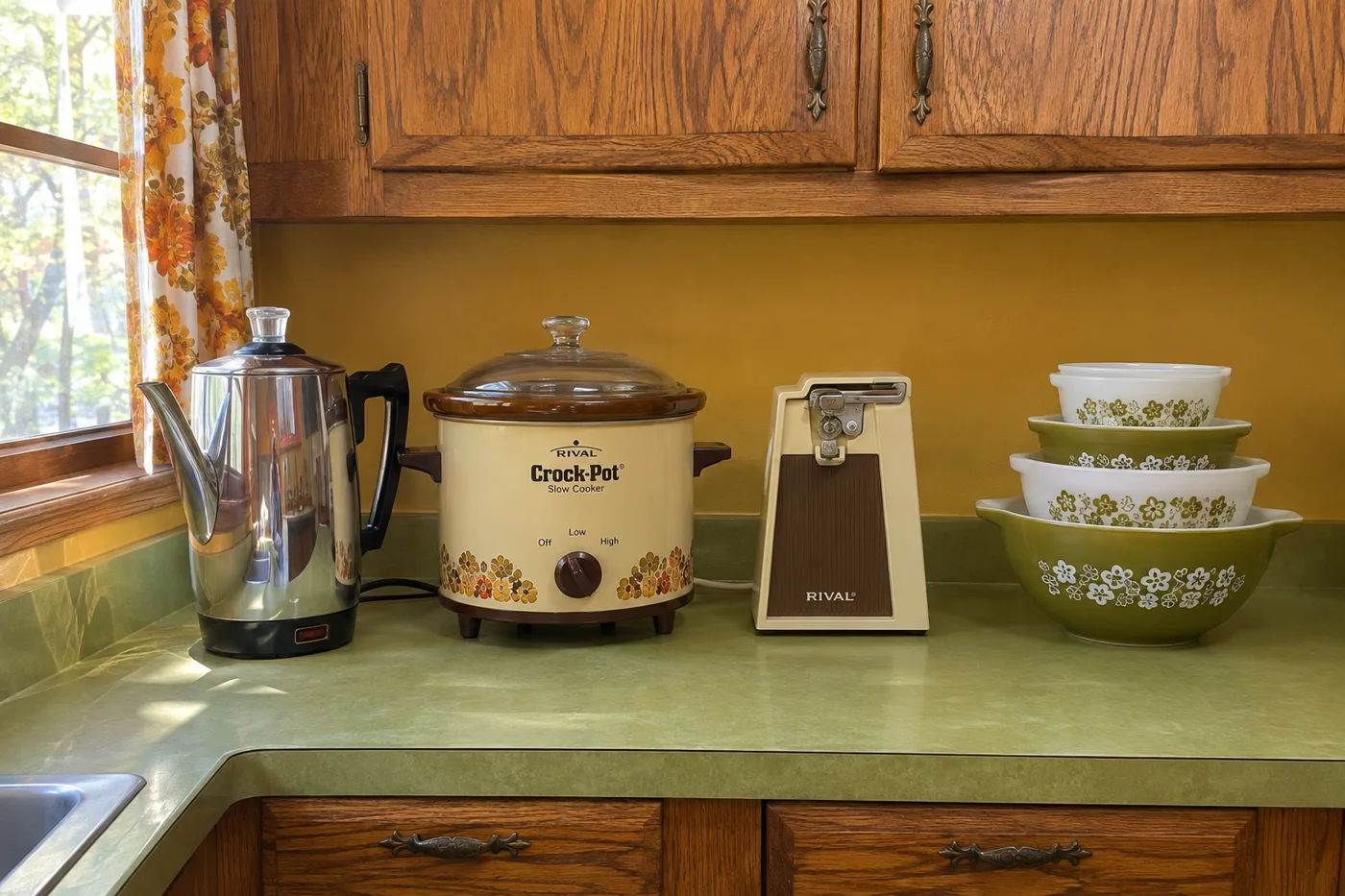
Walk through Mom’s kitchen one piece at a time, from the can opener on the counter to the CorningWare casserole that may still be in your cabinet.
Save #1 for last. It comes with a quick way to tell whether the one you might still have really dates from the 70s.
Somewhere behind the roasting pan and the platter that only comes out twice a year, there’s a low cabinet shelf nobody has emptied in ages. Reach to the very back and your fingers bump something heavy you’d know in the dark.
Some 1970s kitchen gadgets you’d swear every mom owned turn out to have been in surprisingly few houses.
#15 Electric can opener on the counter
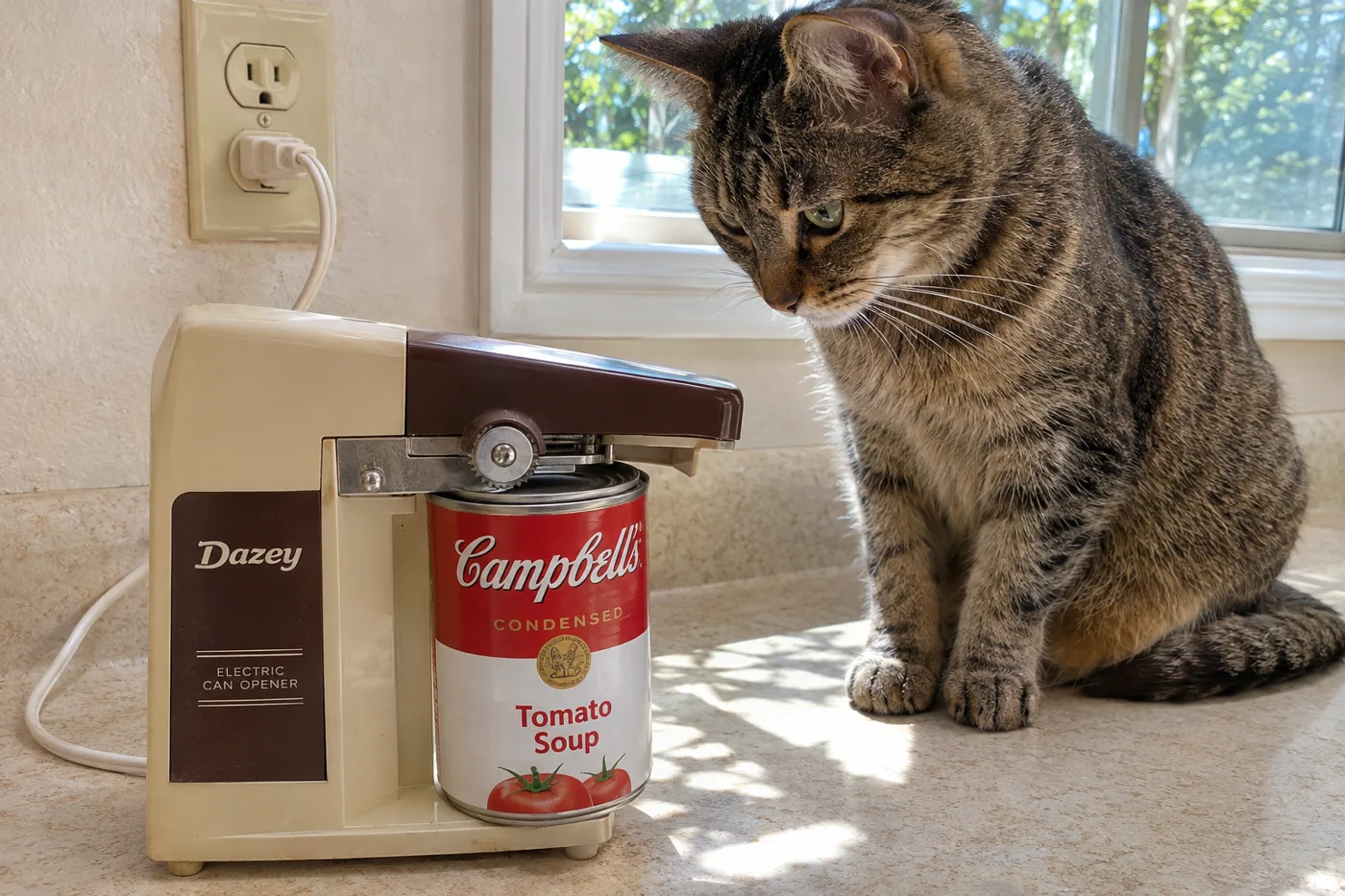
It sat on the counter, plugged in all day, and it had one job. You set the can under the wheel, pressed the lever, and the whole thing hummed while the can turned itself in a slow circle. If there was a cat in the house, the cat arrived before the can was done.
The part most people ignored was the back. The Smithsonian keeps an avocado-green Dazey Model 552 with chrome trim and a sharpening groove behind the opener, lined with a shaping stone.
On some models, that slot you thought was a vent was for sharpening knives.
Freestanding electric openers arrived in the late 1950s. Rival made its first one in 1957 and added a removable “Click N’ Clean” cutting part in 1968.
If you picture one tucked up under a cabinet, move that memory forward a decade. The under-cabinet model didn’t come out until 1983. In the 70s, the electric can opener took up real counter space and nobody minded.
If one is still around, try the lever or button near the wheel before you scrub. That wheel may lift right out, which was the whole idea.
#14 The electric percolator gurgling on the counter
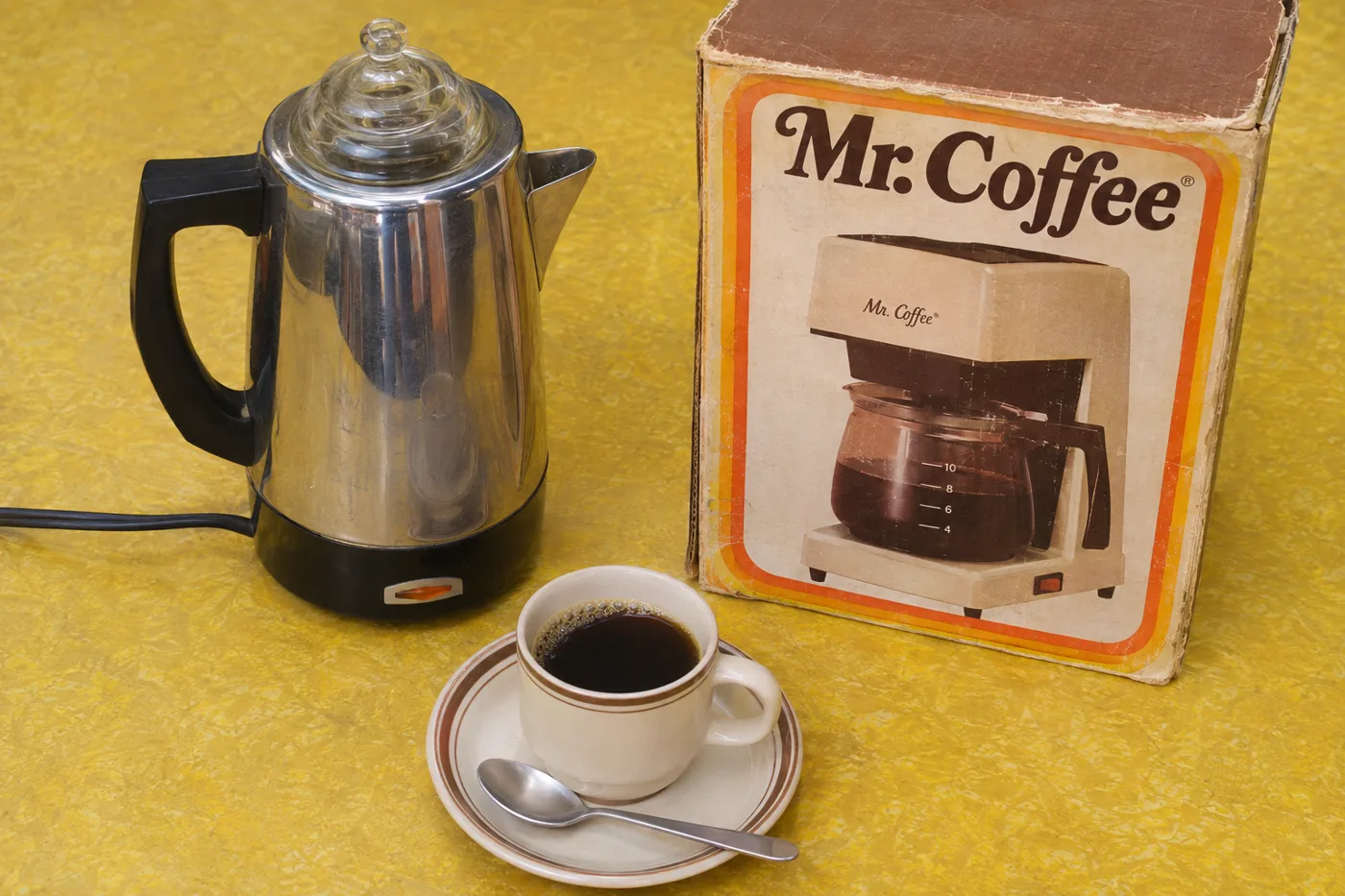
You could hear it from the next room. A gulp, a pause, another gulp, and coffee jumping up into the little clear dome on top. When the gulping slowed, the coffee was ready.
The electric percolator had a long run. Then, early in the 70s, its popularity “plummeted,” squeezed by better instant coffee and the new electric drip machines.
Mr. Coffee was one of those drip machines. It came out in 1972 for about $40 and sold a million machines by April 1974. Joe DiMaggio became its spokesman in the mid-70s. By 1979 the company held over half the automatic drip market.
So the percolator you picture on the counter all decade may have spent the second half of it on a back shelf, as drip machines took over. If yours is headed for an outlet again, there’s a quick cord check in #3.
#13 Tupperware and the party that sold it
Somebody’s living room. Folding chairs borrowed from next door, a card table covered in bowls and canisters, and a hostess pressing a seal down, lifting one corner and letting the air out with a little burp. Then everybody had to try it. You went home with something, if only to be polite.
By the 1960s and 70s, those parties were “firmly embedded in suburban American life.” Where you lived, it may have been a cousin’s apartment or a church friend’s farmhouse instead of a suburb, but the burp was the same.
The colors changed with the times, too: pastels gave way to avocado green, harvest gold and burnt orange.
The patents ran out in the 1980s, and in 2024 Tupperware Brands filed for Chapter 11 bankruptcy.
Did you know?
Earl Tupper made Brownie Wise a vice president in 1951 and pulled Tupperware out of stores. By 1954, about 20,000 people were selling it through her home-party network.
#12 The Presto Hot Dogger
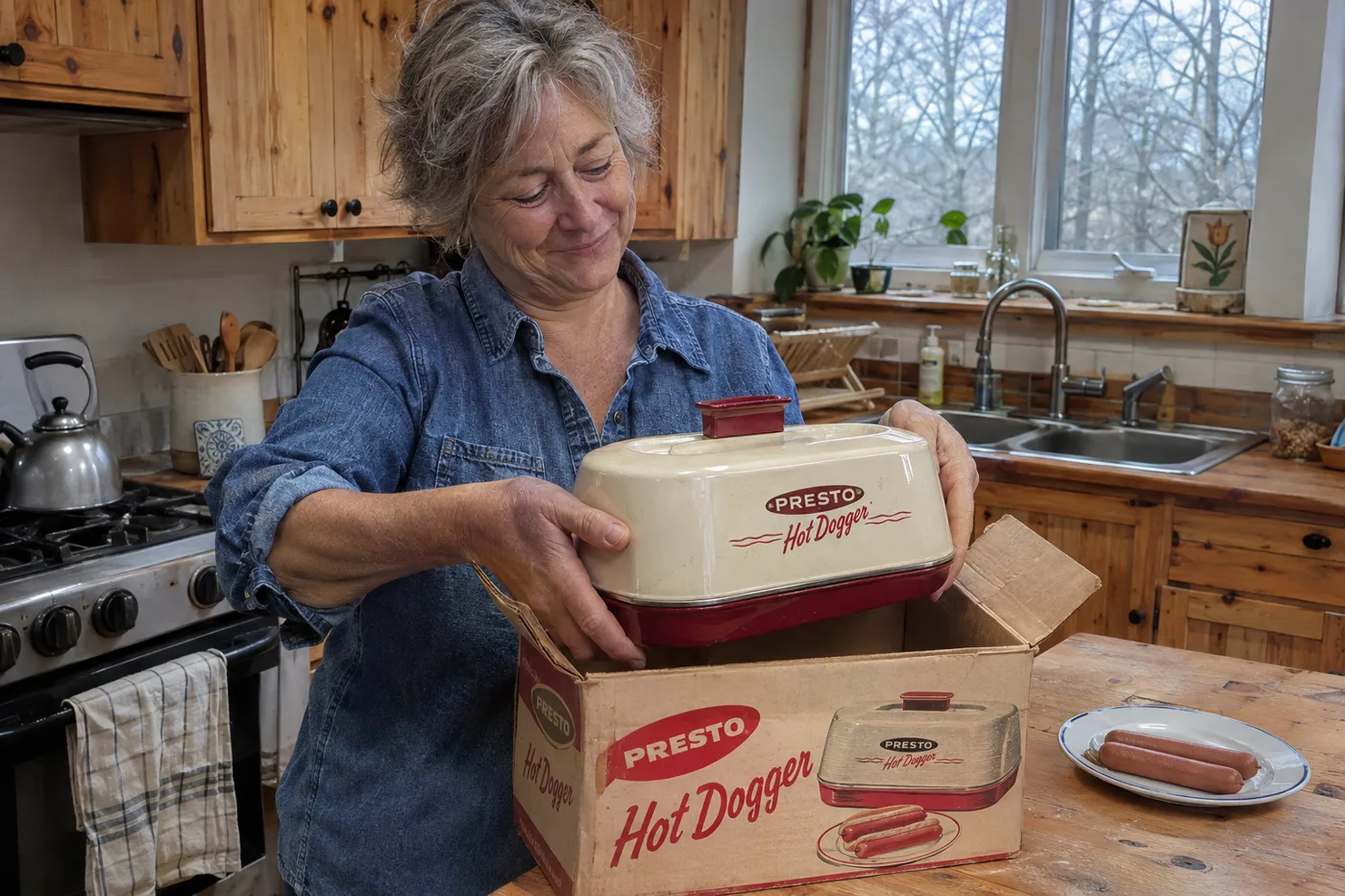
It was a small appliance that cooked hot dogs and nothing else.
Commenters on a TikTok video about 1970s gadgets remember it two ways: fondly, from childhood, and as the thing that made the hot dogs taste bad. Both can be true at once. If you begged for one and then quietly went back to the stove, you were not alone.
Presto introduced the Hot Dogger in the 1960s or early 70s, part of a whole parade of new appliances. Presto’s “mini-appliances” started with the PrestoBurger in 1974, and then the fryers arrived, named like a family reunion:
- FryBaby, 1976: two cups of oil, two servings
- FryDaddy, 1977
- GranPappy, 1978: family size
So if you remember a FryDaddy, it had a baby and a grandpa.
#11 The electric carving knife at Thanksgiving
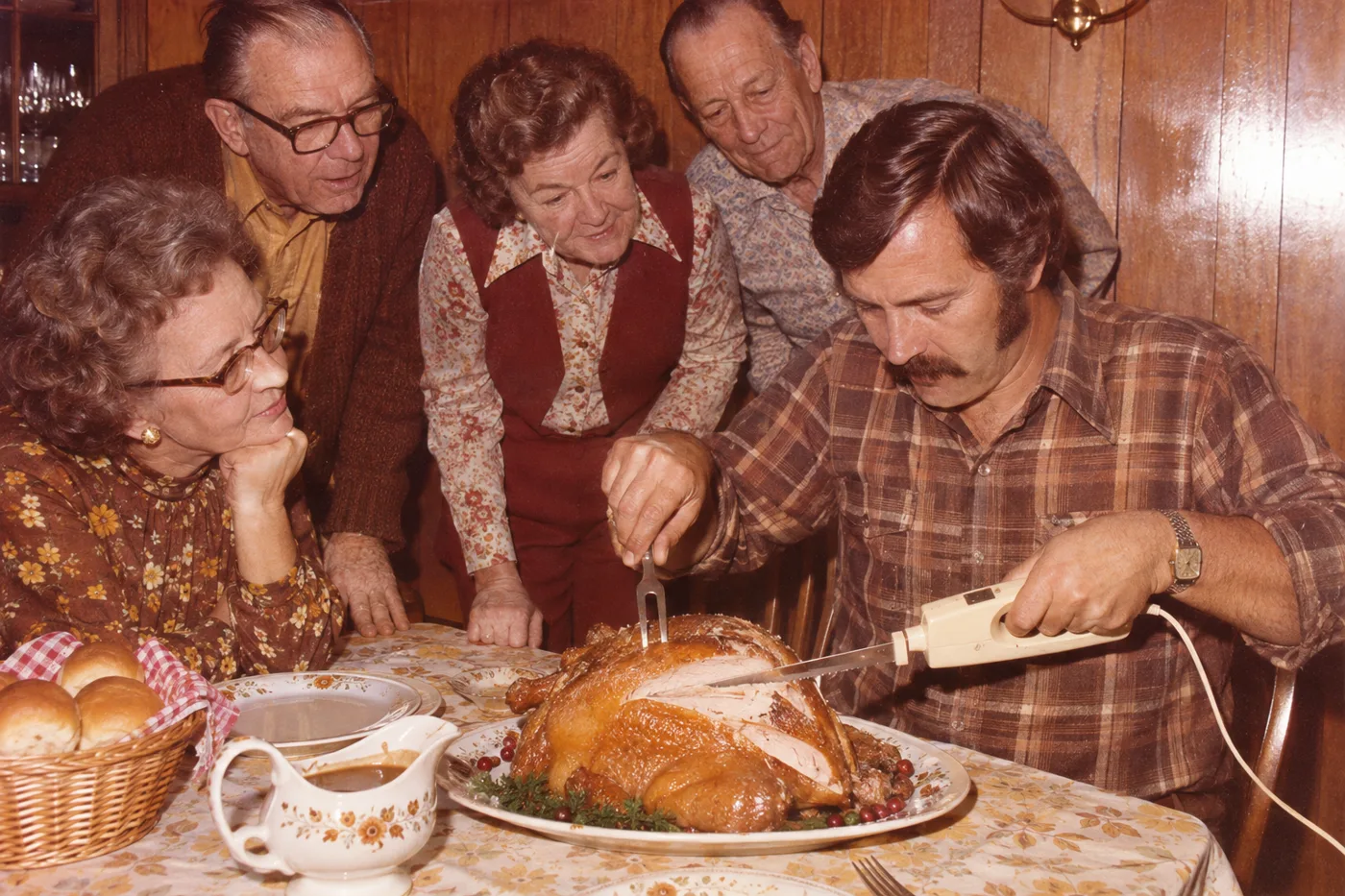
That buzz from the head of the table meant the bird was out and somebody had been handed the knife.
It exists because people hated carving. In the 1950s, GE’s housewares chief, William H. Sahloff, ordered a survey of the “most unpleasant jobs in the home,” and carving the roast made the list. GE’s answer was two serrated blades sliding back and forth, run by a motor on ordinary 120-volt house current. It reached stores in the mid-1960s and rode the holiday turkey right into the 70s.
If yours is still around, count the blades before the big day.
 You might also like22 Things You’re Saving That Your Children Will Throw Away
#10 The popcorn popper with the butter well
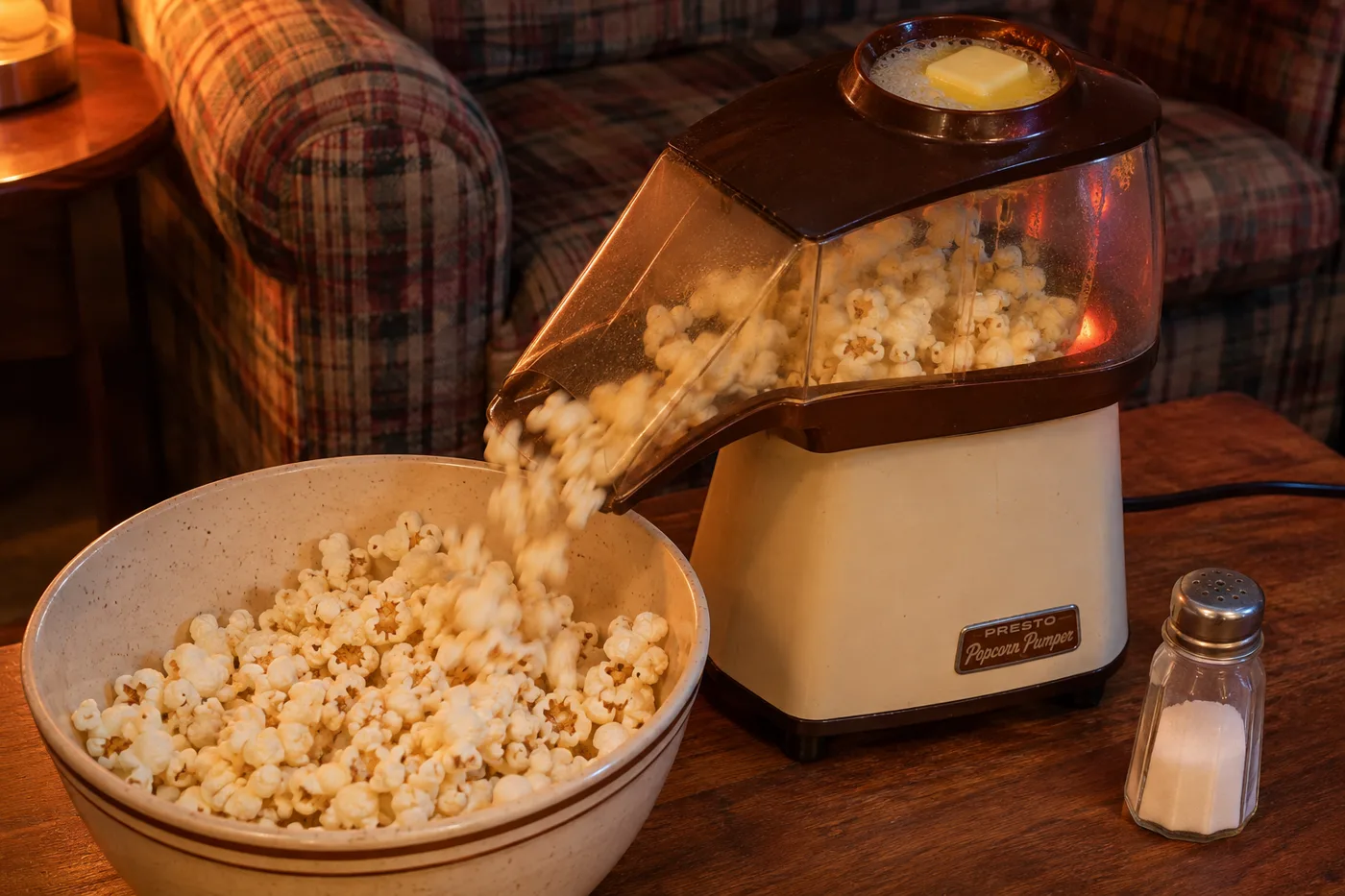
Friday night, the TV on, and the popper rattling with oil and kernels until the cover started to lift. The bowl came out greasy and the whole house knew what was happening.
Hot-air poppers came later. They were “the hot new things back at the end of the ’70s,” and many had a little well on top where butter melted.
The roar of hot air and the dribble of melted butter mostly belong to the end of the 70s and after.
Presto’s hot-air PopCornNow came out in 1978, and West Bend’s Stir Crazy popper shows up in an ad from 1979.
#9 The Veg-O-Matic and the hand chopper
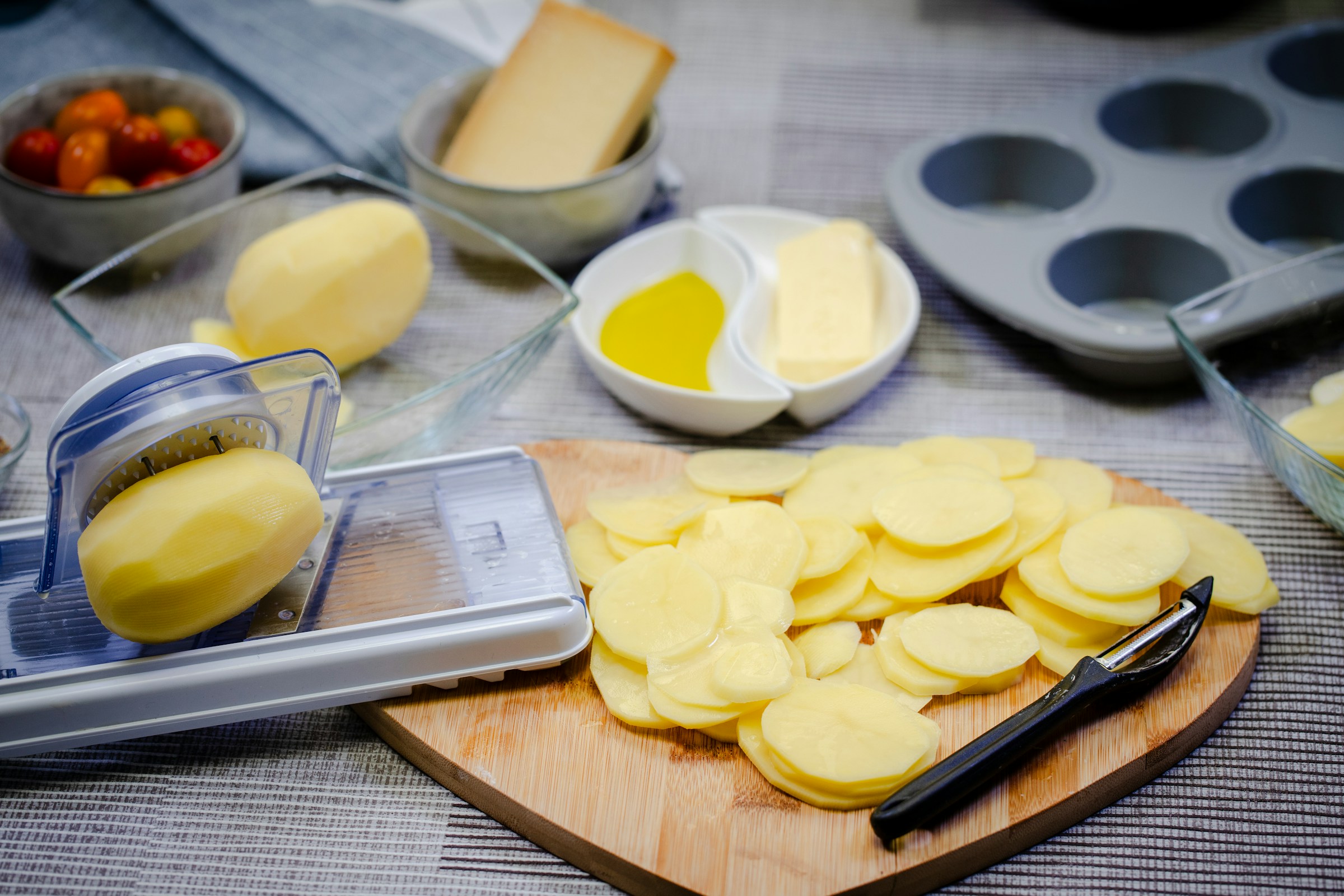
“I still have and use a Veg-O-Matic. I have all of the blades and the sharpener, and I’ll never give it up.” A longtime owner, in TikTok comments on a 1970s gadgets video
That’s TV-ad loyalty for you. The Veg-O-Matic “sold over nine million” and brought in $50 million, and some of those machines are still working. Another TikTok commenter says they make fries with theirs.
Someone who grew up with a 70s kitchen wrote in the same comments: “We had a chop-o-matic. I couldn’t tell you how much coleslaw my mom made with that thing.”
If you still have a Veg-O-Matic and the body looks yellower than you remember, that’s the plastic yellowing, a characteristic of ABS deterioration.
Did you know?
A design museum’s record dates its Veg-O-Matic to 1969, even though the design itself goes back to 1960 and the patent was filed in 1963.
#8 Pyrex bowls in bright colors
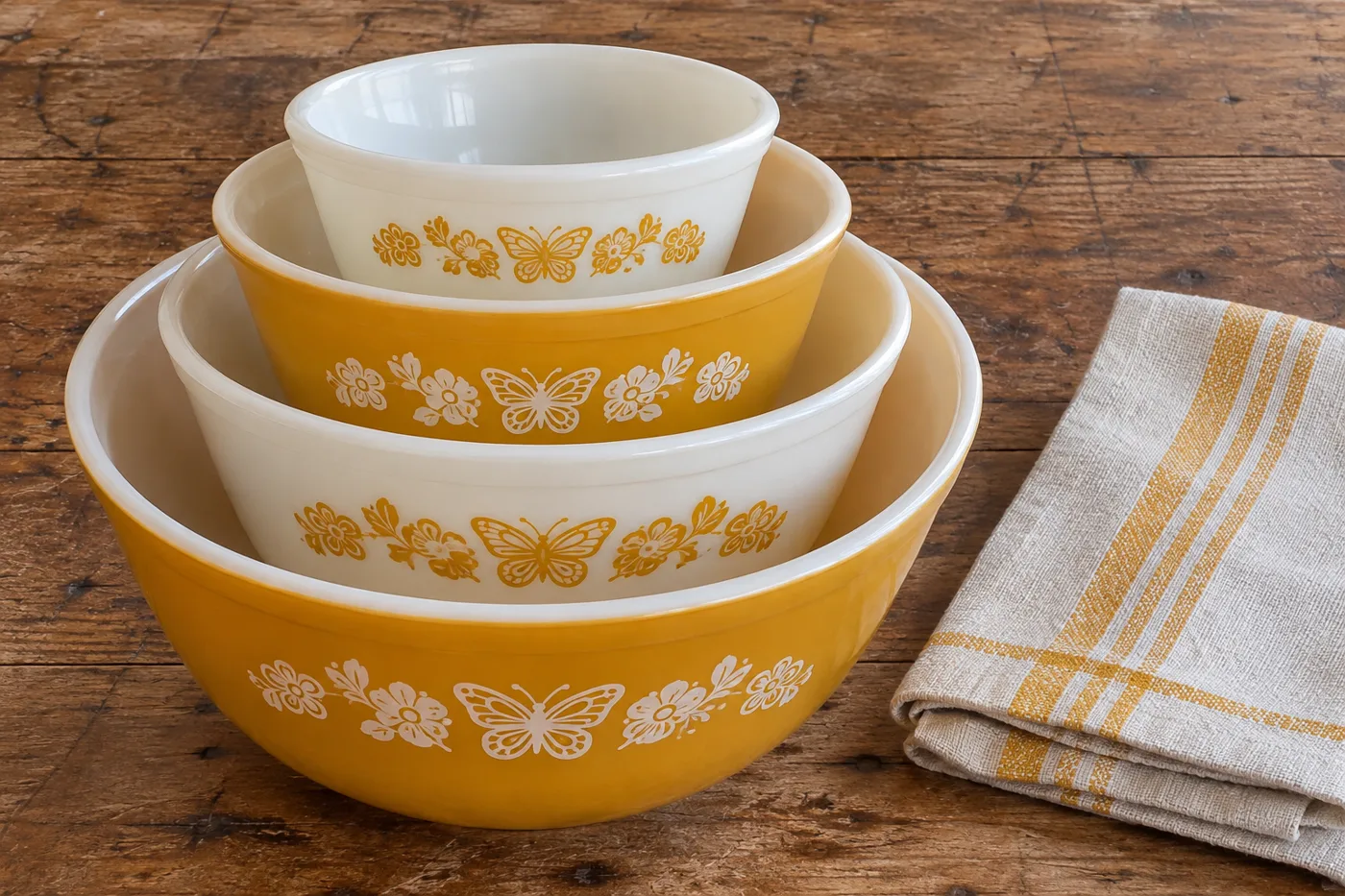
If you have a set of Pyrex bowls that nest one inside the other, the print on the side is your first clue to their age. Turn one so the pattern faces you and match it to a name.
The Corning Museum of Glass lists these 1970s patterns:
- Butterfly Gold, made 1972 to 1981 to match the Corelle dishes of the same name
- Homestead
- Old Orchard
- Woodland
- Autumn Harvest
- Old Town Blue
- Friendship
Then there’s the logo. You may have heard that all-caps PYREX means one kind of glass and lowercase pyrex means another. The library at the Corning Museum of Glass says the switch “signified a re-branding” in the late 1970s, and that it “is not a conclusive way to determine” what the glass is made of.
So the logo gives you a rough date, but it can’t tell you what the glass is.
If you still use your bowls, keep them out of the dishwasher. The museum’s chief conservator, Stephen Koob, says it slowly etches the glass, and that damage can’t be repaired. Warm water, a soft sponge and a clean detergent do the job.
#7 The salad spinner drying the lettuce
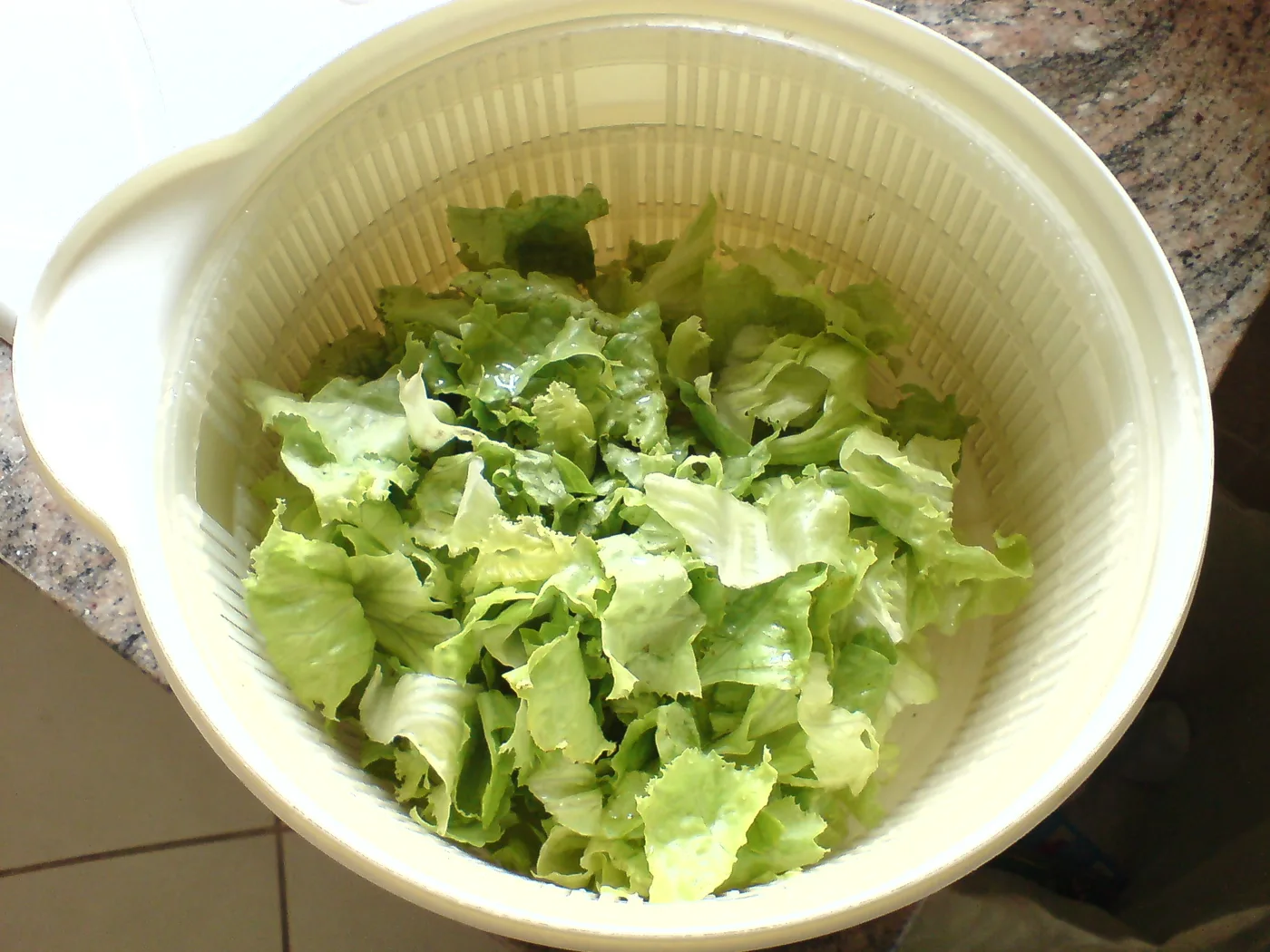
Before it came along, lettuce got patted dry in a dish towel, or it didn’t get dried at all and the dressing slid right off into a puddle.
The salad spinner is a 70s newcomer. Moulinex founder Jean Mantelet filed a patent for a “Salad Dryer” in 1971. Two years later, Gilberte Fouineteau patented one with a basket that lifted out and no post up the middle. Mouli brought a crank model to the U.S. in 1974.
Critics were not impressed. They called it “another gourmet gadget.”
Then sales quadrupled in five years, with about 500,000 sold in 1978. So if you rolled your eyes at one in 1975, you were with the critics, and if you bought one anyway, you had a lot more company.
#6 The fondue pot on party night
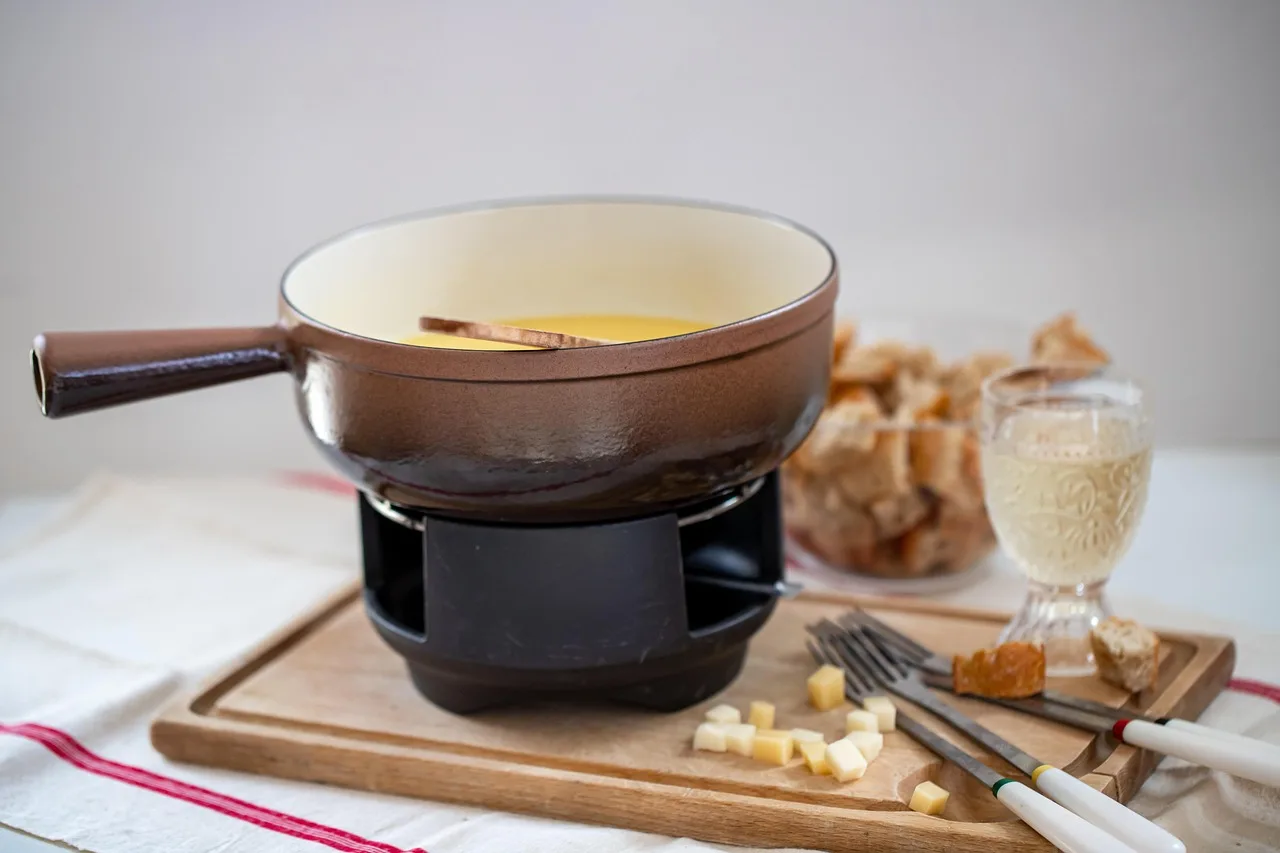
Long skinny forks, a pot of melted cheese in the middle of the coffee table, a basket of bread cubes, and then somebody’s bread sliding off into the pot.
There were rules for that. A 1969 Life magazine article set the penalties: a woman who dropped her bread kissed someone, and a man bought the drinks. Sets were sometimes given as wedding presents, so the pot may have arrived with a card taped to the box.
Then comes the question people still ask about old ones: where’s the plug? Many fondue pots never had one. The pot sat on a little stand over a candle or a spirit lamp. If yours has no cord, look for the stand and burner before you decide it’s missing something. If you light it again, know that BOSKA, which makes fondue burners, says its reusable burners take denatured alcohol or gel fuel. It warns that the alcohol can flare up when lit and burns with a flame that’s hard to see, so you can’t easily tell when it’s out. Gel is safer, but it can still cause burns.
Fondue had a sales push behind it, too. A Swiss cheese group promoted it as a national dish in the 1930s to sell more cheese, and showed it off at the New York World’s Fairs in 1939 and 1964. Its American popularity peaked in the 60s and 70s, and the parties started to fade by the mid-1970s.
If yours is heavy enameled cast iron, it has museum company. The Smithsonian American Art Museum holds a Copco fondue pot designed by Michael Lax, from about 1970, in cast iron with porcelainized enamel.
 You might also like19 Holiday Traditions Women Over 60 Have Quietly Stopped Doing
#5 Every dish washed by hand
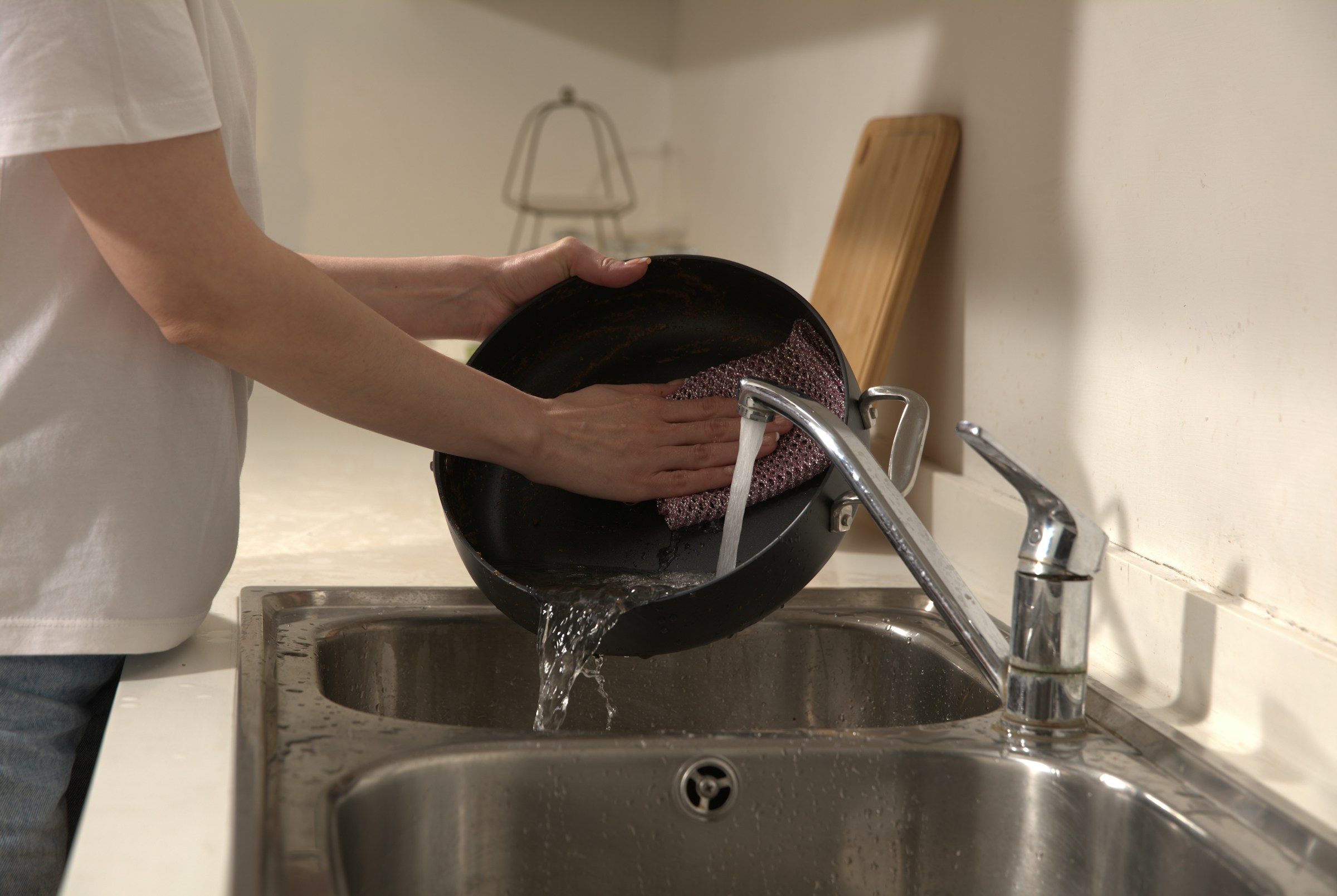
Somebody washed, somebody dried, and somebody always disappeared the minute dinner ended.
In the 70s kitchen, that was the normal end of a meal. In 1978, only 35% of American homes had a dishwasher, according to the federal energy survey. About 50 million homes, roughly two out of three, did every plate, glass and pot by hand.
The dishwasher was slow to catch up. It reached only 43% of homes by 1987, and 59% by 2009.
So if you grew up with a dishwasher in the 70s, your house was in the minority. If you grew up with a damp dish towel over your shoulder, you were with most of the country.
#4 The countertop microwave hardly anyone had
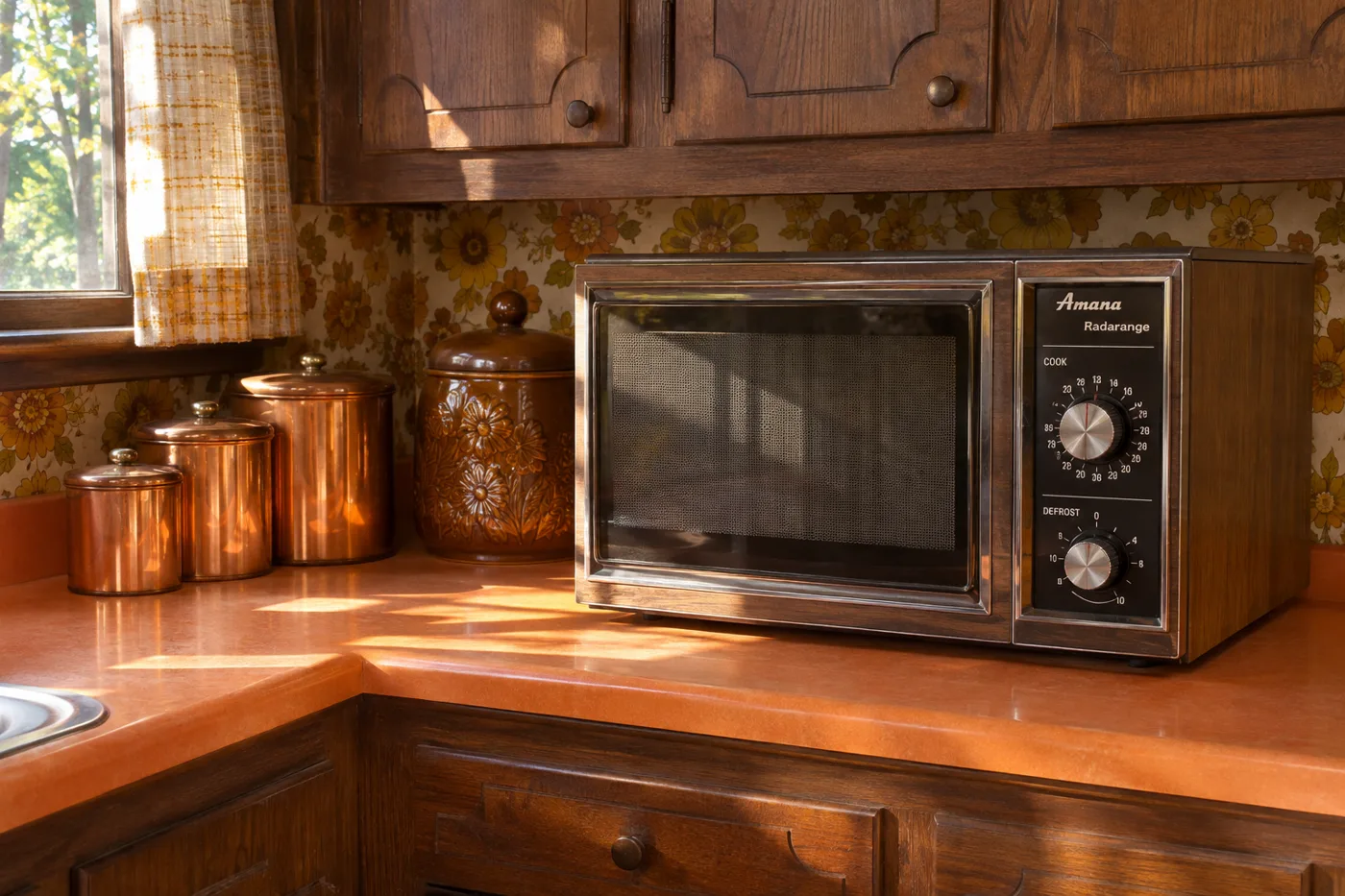
It’s easy to picture one on every counter by the late 70s, humming away over a cup of leftover coffee. In 1978, about 1 in 12 homes had a microwave, roughly 6.2 million of them.
They weren’t cheap and they weren’t trusted. Amana’s Radarange reached home countertops in 1967 at $495, which counted as affordable next to the $1,295 Tappan model of 1955. In March 1973, Consumers Union said none of the 15 ovens it tested could be called “completely safe.”
The kind mounted over the stove got its start in 1978, with GE’s Spacemaker. By 1987, 61% of homes had a microwave. It’s really an early-80s arrival that memory files under the 70s.
Here’s what American homes really had, from the federal household survey:
| Appliance | 1978 | 1987 |
|---|---|---|
| Stove and oven | 99% | 99% |
| Refrigerator | 100% | 100% |
| Separate freezer | 35% | 34% |
| Microwave | 8% | 61% |
Of the appliances in the federal survey, only the stove and the refrigerator were in nearly every home in 1978. The survey has no figures for smaller gadgets.
#3 The electric skillet for bacon and pot roast
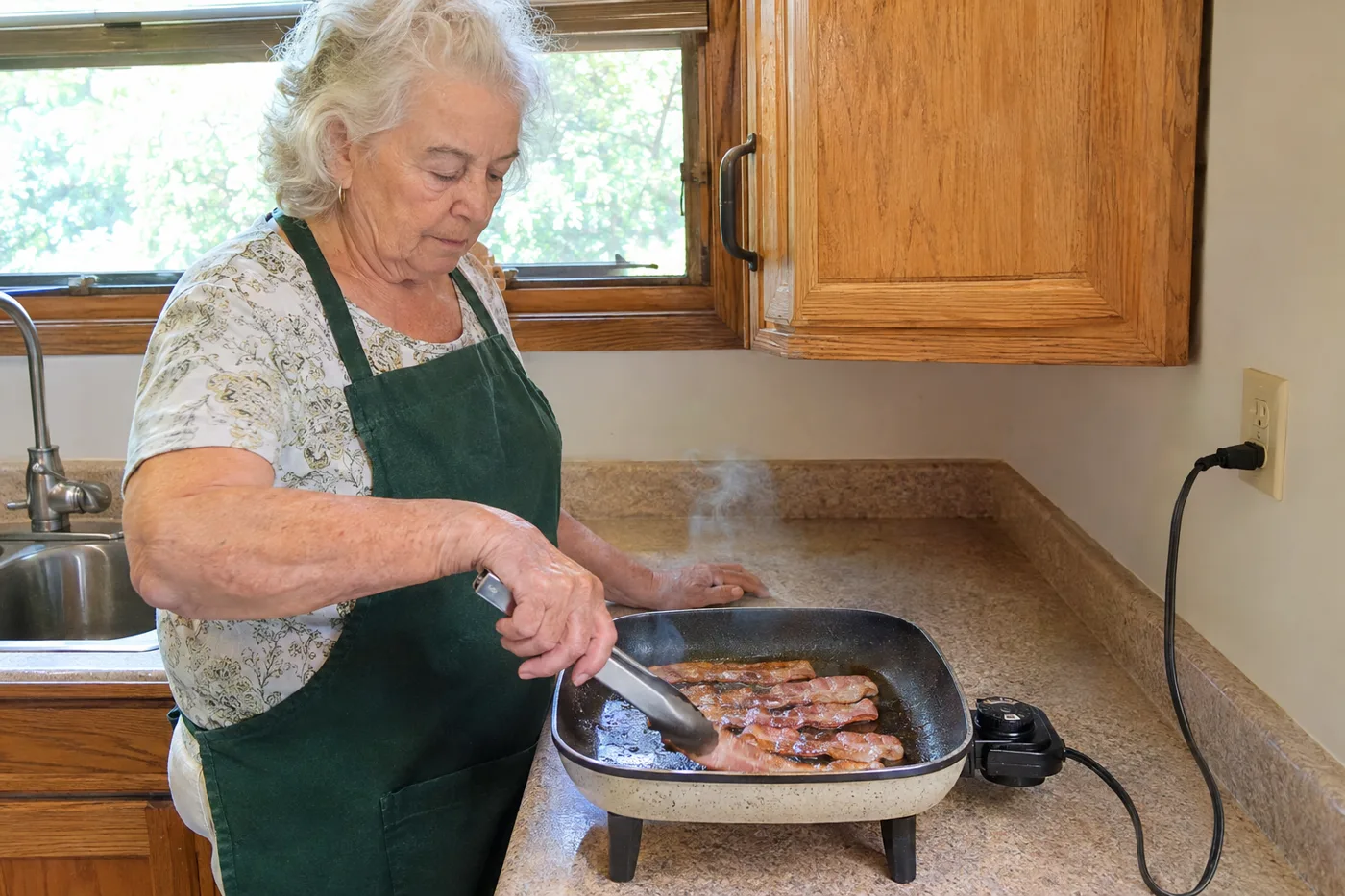
A square pan with a cord and a heat dial, sitting on the counter with a pot roast in it. It feels like pure 70s, but it’s older than that.
By December 1953, Sunbeam had brought out “the first electric frying pan with an automatic heat-control unit.” It went up to 400°F, could be washed whole, and cost $24.95.
Ask people about it and they answer with food. In TikTok comments on a 1970s kitchen video, people remember a pot roast, a grandmother’s good meals, and missing their mom.
“The electric skillet is the best for making bacon. I still use the exact one to this day.” Someone who still cooks with the original, in the same TikTok comments
The Electrical Safety Foundation International’s appliance safety tips advise checking cords, plugs and connectors for breaks and not repairing a damaged cord yourself.
#2 The Crock-Pot, the working mother’s shortcut
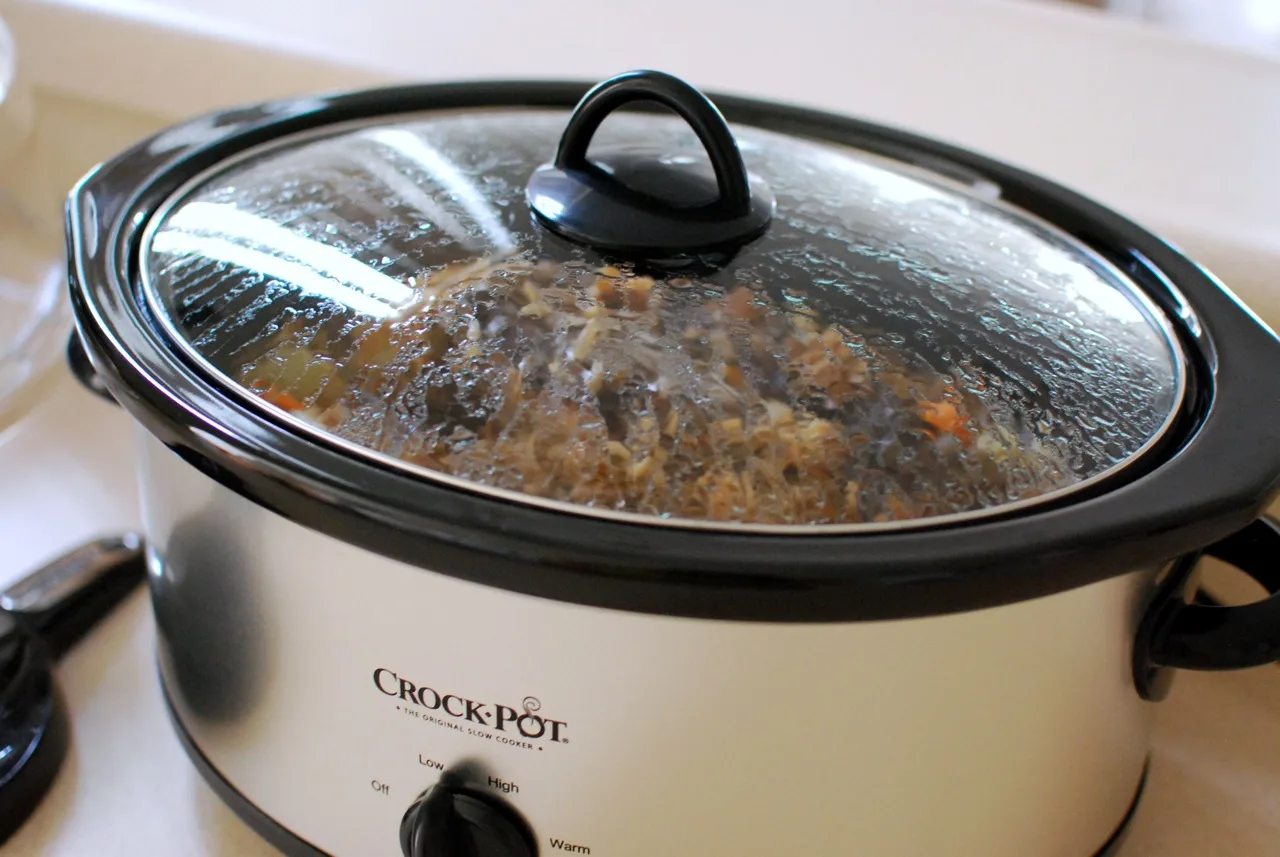
Put it on before work, come home to dinner. It arrived as millions of women were heading into the workforce, and the Crock-Pot slow cooker was “an instant hit”.
It started life as a bean cooker. Rival bought a Chicago company, Naxon Utilities, in 1970, and its Bean Pot came with the deal. Rival renamed it the Crock Pot and launched it at the 1971 National Housewares Show in Chicago, for about $25. Rival’s top product had been the electric can opener from #15, until the Crock-Pot passed it.
Then sales went up like a rocket and came down almost as fast:
- 1971: $2 million
- 1973: $23 million
- 1975: $93 million, the peak
- 1977: $32 million
Want to date yours? If the crock doesn’t lift out, it’s an early one. The removable stoneware insert came three years after the 1971 launch.
And the color may surprise you. The very first 1971 model was red, not harvest gold.
Did you know?
Irving Naxon’s idea for a slow cooker came from cholent, a Sabbath stew that Jewish families in Lithuania left cooking overnight in the bakery’s ovens. He applied for the patent in 1936.
#1 The CorningWare Spice of Life casserole
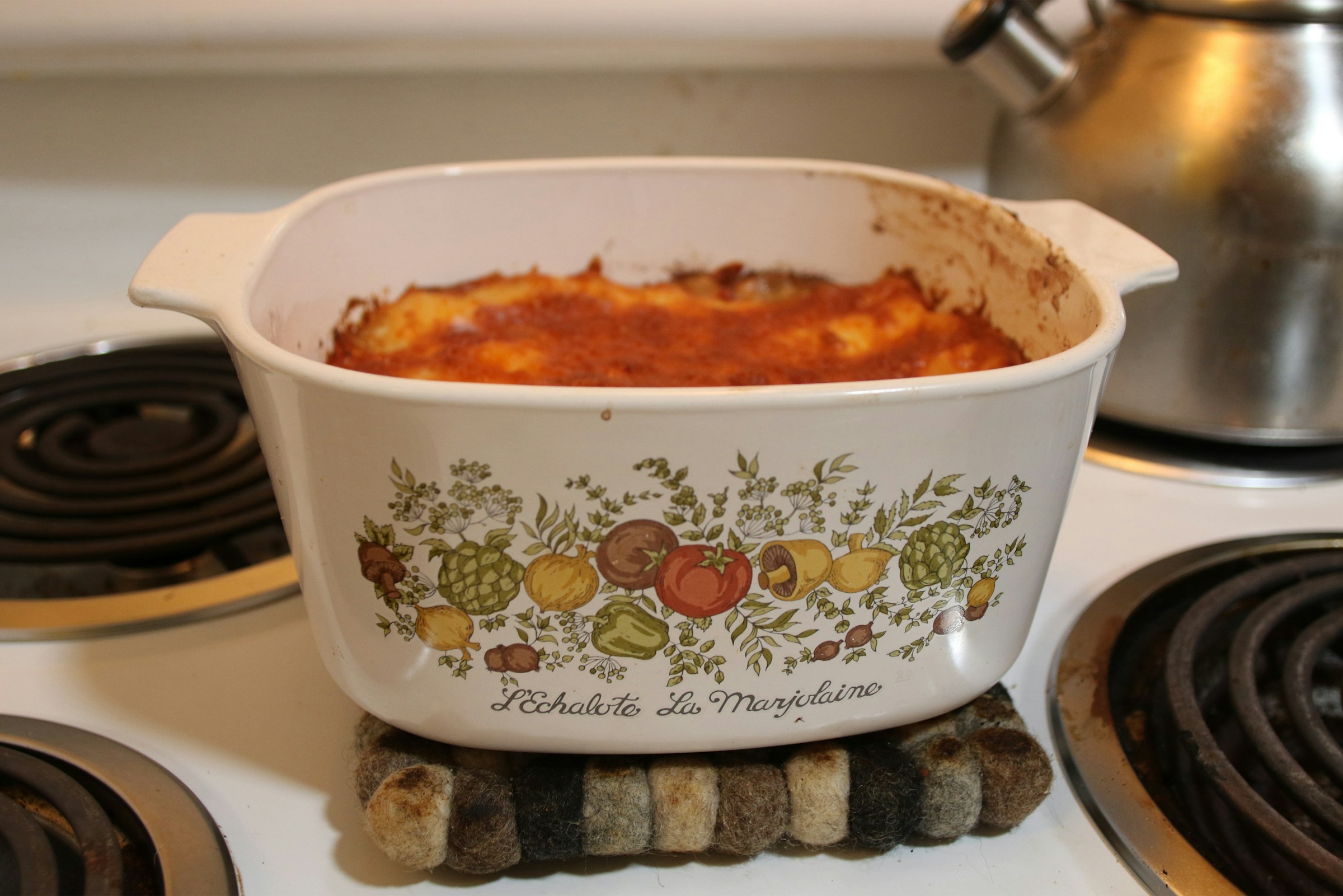
White, heavy, with a muted pattern in browns, rust and sunflower yellow. It went into the oven with macaroni and cheese and came out looking exactly the same, year after year. There’s a fair chance it’s still on that low shelf.
Dr. Lori Verderame, a Ph.D. antiques appraiser, calls CorningWare Spice of Life “among CorningWare’s most produced and purchased ovenware line.” In a video filmed at a Florida antique mall, she explains that many families got it as part of a larger set and hardly used it, so pieces often turn up in good condition. That’s why yours may look almost new.
Close to 80% of American households collected S&H Green Stamps in the 1960s and 70s, and the catalogs listed Corningware. As someone remembering those years put it in TikTok comments: “A lot of those things would have been purchased by turning in Green Stamps if you had that in your area.”
If your casserole is the blue cornflower one instead, look at the rim. Dr. Lori has a quick tell for the later pieces: “When you have the lip and the dip, you know you’re in the 1980s.” The earlier ones have neither.
She’s firm about the rest, too. “Get the lid even if you’re never going to use it,” she says, and turn the dish over: “So you got to look at the marks. The marks matter.” The underside gives the pattern name and production numbers. For vintage pieces, she suggests display over oven use, but a care guide for CorningWare Classics says its Pyroceram pieces can be used in the oven, under a broiler and on a rangetop. The same guide says to retire any piece that’s chipped or cracked, and to keep the glass lid away from a burner or any direct flame.
Is your casserole from the 70s? – Spice O’Life, also called French Spice: about 1972 to 1987. – Blue Cornflower: about 1958 to 1988. Small handles mean an older piece, and those are worth more than the 1980s versions. – An original lid usually has a ring and “Made in the USA” information on it. – “Not for Stovetop Use” on the bottom means it isn’t Pyroceram, the glass-ceramic the classic dishes were made of.
What happened next explains why yours is worth keeping. U.S. Pyroceram production ended when the plant in Martinsburg, West Virginia, closed. The brand came back in 2001 as stoneware bakeware, and Pyroceram only returned in 2008, as CorningWare StoveTop, made in France.
Keep reading
 26 Christmas Cookies From the 1960s That Nobody Bakes AnymoreSee all 26 →
More you’ll enjoy
 26 Things Grandchildren Remember About Your House That You Never Notice
 25 Church Bazaar Crafts Every Town Sold That Nobody Makes Anymore
 24 Crafts Every Woman Made in the 1970s That Nobody Does Anymore
The bottom line
Many of these pieces came from a neighbor’s living room, a book of licked stamps, a wedding table or a TV pitch at ten o’clock at night.
Each one came with an occasion, and often a person, attached.
So which one came into your house through a stamp book, and who licked the stamps?
Bonus: Three old-school tools home cooks still reach for
In a long Reddit thread on which old-school gadgets are worth using, home cooks keep coming back to a few simple tools.
Try a mortar and pestle. Cooks in that thread still recommend it, and one says it has become rare.
Look for a hand-cranked rotary cheese grater, the kind with a drum you turn. It’s another tool those cooks say earns its drawer space.
Keep a cheap coffee grinder just for spices and never put coffee in it. More than one cook in the thread does exactly this.
Questions people also ask
What kitchen gadgets were popular in the 1970s?
The big new arrivals of the 1970s with real sales behind them were the Crock-Pot, the Mr. Coffee drip machine and the salad spinner. Crock-Pot sales hit $93 million in 1975, Mr. Coffee sold a million machines by April 1974, and about 500,000 salad spinners sold in 1978. Fondue’s U.S. popularity peaked in the 1960s and 1970s, and Presto added the FryDaddy in 1977 and the hot-air PopCornNow in 1978.
When did the Crock-Pot come out?
Rival launched the Crock Pot in 1971 at the National Housewares Show in Chicago, for about $25. It was a renamed version of Irving Naxon’s bean cooker, which Rival had bought in 1970. The removable stoneware insert followed three years after the launch, so a crock that doesn’t lift out is an early model.
Did people have microwaves in the 1970s?
Very few did. Only 8% of U.S. households had one in 1978, about 1 in 12, and that rose to 61% by 1987. Amana’s countertop Radarange had been around since 1967, at $495, down from $1,295 for the 1955 Tappan.
How can I tell if my CorningWare is vintage?
Check the pattern and the dates first: Spice O’Life dates to about 1972 to 1987, and Blue Cornflower to about 1958 to 1988. Smaller handles on Cornflower mean an older piece, and the marks on the underside give the pattern name and production numbers, says appraiser Dr. Lori Verderame. A piece marked “Not for Stovetop Use” isn’t Pyroceram, and the U.S. line moved to stoneware in 2001.
Is it safe to use a vintage electric skillet or percolator?
Check the cord, plug and connectors for breaks before you plug it in, and don’t repair a damaged cord yourself, per the Electrical Safety Foundation International.
Were old kitchen appliances really built to last longer?
Some lasted longer and some didn’t. A Norwegian study tracking appliances since 1950 found refrigerators, freezers, dishwashers and dryers kept steady lifetimes, while washing machines fell from 19.2 years to 10.6 and ovens from 23.6 to 14.3. Researcher Kamila Krych explained the oven part: “Ovens used to be very durable… because oven design is very simple.”
Related posts:
24 Things Your Grandchildren Will Remember About Your Christmas
The Difference Between a Beautiful Kitchen and a Kitchen That Actually Works
20+ Felt Christmas Crafts to Make with Kids This Holiday Season
15 Stylish Christmas Outdoor Decoration Ideas
20+ Awesome DIY Geometric Craft Ideas To Make
17+ Mesmerizing Moroccan Home Decor That Are Exquisite

- 15 Gadgets and Dishes From Mom’s 1970s Kitchen (One May Still Be in Your Cabinet) - November 25, 2026
- 17 Christmas Eve Traditions From the 1960s That Quietly Disappeared - November 24, 2026
- 16 Old Christmas Ornaments That Could Be Worth Real Money - November 24, 2026